Finally the last of the garden is in. Corn. I was going to plant a variety called ‘Silver Queen’ but that takes 82+ days and I’m planting so late that I don’t think I have time for it to harvest since that would put me in mid September. So I’m planting a variety called ‘Spring Treat’ which takes only 68 days to maturity. If any of you get a late start on your veggies, just look at the package where it says how many days it matures in and get a variety that takes less time-that way you can still get lots of veggies this season.
Category Archives: VEGETABLES
tomatoes ready to come out of wall of waters
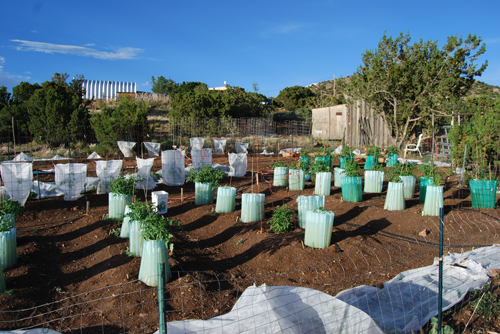
tomatoes in wall of waters and row cover
Here are the tomatoes in wall of waters and some under row cover. I am ready to take the wall of waters off as many of them have grown out of the wall of waters. 61 tomatoes total. Most of the ones that I planted in early May are doing great considering they had to weather freezing temps at nights and incredible winds. Now it is blistering hot but they love the heat!
unusual radish shapes!
LAVA’S RADISHES
My friend Lava had extra radishes she grew and since I didn’t grow any and it is getting hot and the radishes bolt, she told me to go over to her garden and pull some. To my surprise I found some very large wierd shapes. Here are a few of them.
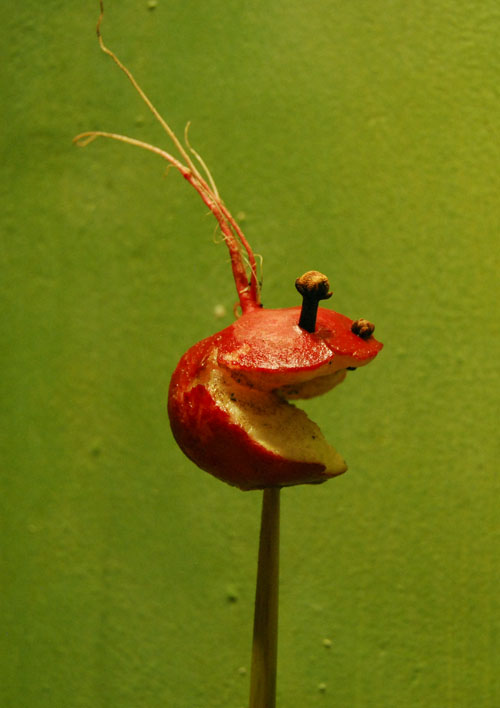
RADISH HEAD
This one on the left had split and looked like a Tim Burton character. I added some cloves for eyes and nostrils but it was already there just waiting for my imagination to enhance it. I like the roots for hair.
Cracking in a radish indicates it is over-mature and will probably be bitter but this one was too much fun to care.
The one below on the right looks like a butt. She got booty! Amazing what a radish can create (at least in my mind). Need I say more…
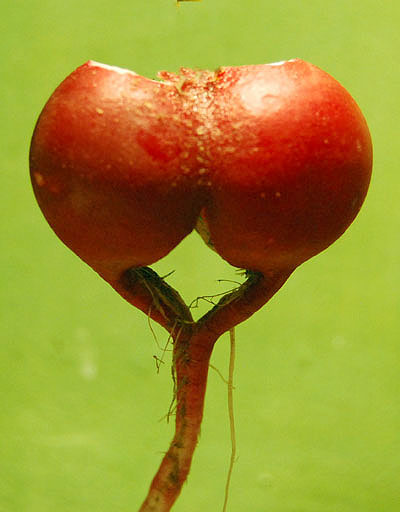
RADISH BUTT!
Radishes can split if they get watered inconsistently or with a sudden rain storm.
Radishes are also a deterrent against some pests such as cucumber beetles and carrot rust flies. They are a good organic pest control if planted around veggies that get those pests.
The last of the tomatoes are finally in. Phew..
Yesterday I planted 10 more tomatoes to make a grand total of 61 tomatoes! That’s it-I’m done planting tomatoes-no mas! I still have to put in the corn, winter squash, and giant pumpkins which should be done by the end of the weekend. The end of the big push is in site!
Lettuce patch update

lettuce patch shade cover
Here is my shade cloth over the lettuce patch. I also am going to put bird netting around the raised bed to keep out the rabbits. This morning I thinned again (third time) my romaine (now 5 inches tall) and butter lettuce about 5 inches tall). I want to see if I get some big heads of romaine and butter heads but it is a lot of work always thinning them to make room for them to grow. I am hoping the butter lettuce won’t bolt with the warm weather.

looper and lettuce damage

closeup of lettuce looper
I also found some small loopers (caterpillars) on some of the lettuce so I will spray with BT (Bacillus thuringiensis) today-an organic pesticide that won’t hurt bees or birds or humans and is specific to gets rid of caterpillars that do damage on our crops. Notice the holes in the lettuce and the little dark spots are frasse (poop). So if you see frasse- look for the loopers.
A few of the arugula are bolting but it bolts with the first bit of warm weather. I’m giving everything that bolts and the ends with roots to the chickens. I also picked Provencal lettuce mesclun which is wonderful and easy. I didn’t have to thin but one time. That plus you just cut off the tops of the lettuces and waa laa-instant salad. It should comeback 3 or more times. I am putting a shade cloth over the bed as I had some friends tell me they were able to have lettuce in the summer with it over them.
I also tried a new spinach for me called Bordeaux which I am very disappointed with. Very small leaves are sorta wimpy-not much there so I’m going to try some summer type of spinach that supposedly won’t bolt and have bigger more succulent leaves. Gonna try Tyee spinach. Suppose to resist bolting in the heat.
Lastly, pick your lettuce first thing in the morning after watering it the night before. To clean lettuce after I thin it, I pull it out roots and all and cut off the leaves above the the dirt and roots-less rinsing. Then in the kitchen I put it in some bowls of clean water to move debris and use a salad spinner to remove excess water. I put the lettuce into a zip loc freezer bag with a damp paper towel folded up. This help keep it from getting limp.
giant tomatoes in garden
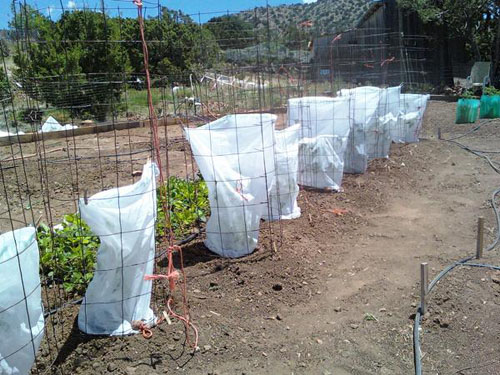
giant tomatoes in tomato sacks
I finally planted my giant tomatoes that I’ve been growing in the house since March. Looking good-all are over 2 foot tall. I have five ‘Big Zacs’ and 6 ‘Nick Harps’. I put on some row cover tomato sacks (like potato sacks) that I sewed up last year to protect them from the leafhopper early in the season. The leafhopper carries bacterial wilt disease but if you protect your tomatoes when they are young, they can quite often resist the disease. The young tomato plants succumb easily to bacterial wilt. The sacks also help them from getting sunburned when you first put them out.
eggplants and peppers in
I planted the shishito and padron peppers and the fairy eggplants. I still have to plant the Thai yellow egg eggplants that are just begging to go into the ground. They have been inside under lights since March-April and I have been trying to wait patiently till the nights warm up but I’m afraid I’m not very good at waiting. I guess I got spoiled last year with such a mild Spring. Everything was planted and up by now. Not this year! Today was the right time.
When planting the shishito peppers one of mine already has small peppers and it is still May! It is one of the ones I started in March. Peppers love heat. Today is going to be 81 degrees so they should love that!
giant pumpkins ready to go

baby giant pumpkin leaves
Here is a picture of one of my baby giant pumpkins. The first leaves to come out on any plant are called cotyledons. These are the roundish ones in the picture growing on the left and right side of the plant. Notice how big they are! Most cotyledons are about the size of your fingernail. These are 3 inches across. The first true leaf is also out and is the biggest one in the picture as well as the beginning of the second one at the top of the picture. The vine will grow in the direction of the second leaf. This is good info to know as it will help you place the pumpkin in the direction you want it to grow (instead of into a fence). Notice the shape of them-they are the shape of all the rest of the leaves to come only smaller. When the leaves grow up they will be huge- 12-18 inches across! When the giant pumpkin have their first 2 true leaves, they are ready to go into the ground. Mine are ready but I’m not.
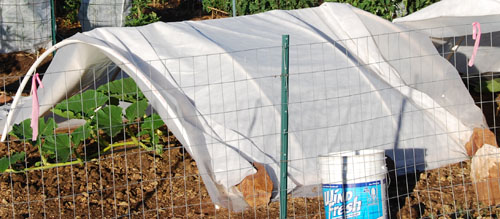
low tunnel 09
I have to partially rebuild my low tunnels that I will put the baby pumpkins in. A low tunnel is like a small hoop house only much shorter. They are meant as a temporary measure to protect the plants. I will cut them in half as I don’t think I need them to be so big this year. As soon as that happens, those puppies are going in the ground.
Strawberries looking great!
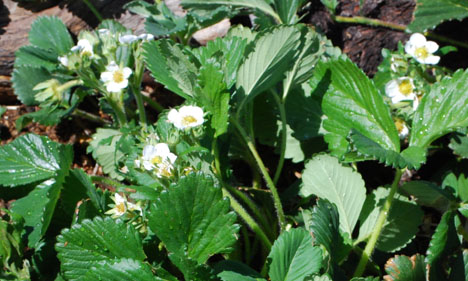
strawberry flowers
Strawberries are looking great with lots of flowers and fruit (still in the green stage but coming) My friend Michelle who gave me a bunch of starts last spring, told me to pick off all the flowers last year to let the plants grow more and that I would get a better crop of strawberries this year-she was right! It killed me last year but glad I listened. So far the birds aren’t interested in the strawberry patch but I’m gonna put up some little hoops over the strawberries and put some bird netting on them to keep those birds out. I just have to do it before those strawberries turn red!
winter squash and corn
Last year I tried some squash (winter) in with my corn and it didn’t do very well. The squash was green enough but seem to grow slower in the shade of the corn and never produced one squash. So this year I’m going to plant them close-but in 2 separate beds positioned so the corn won’t shade it.
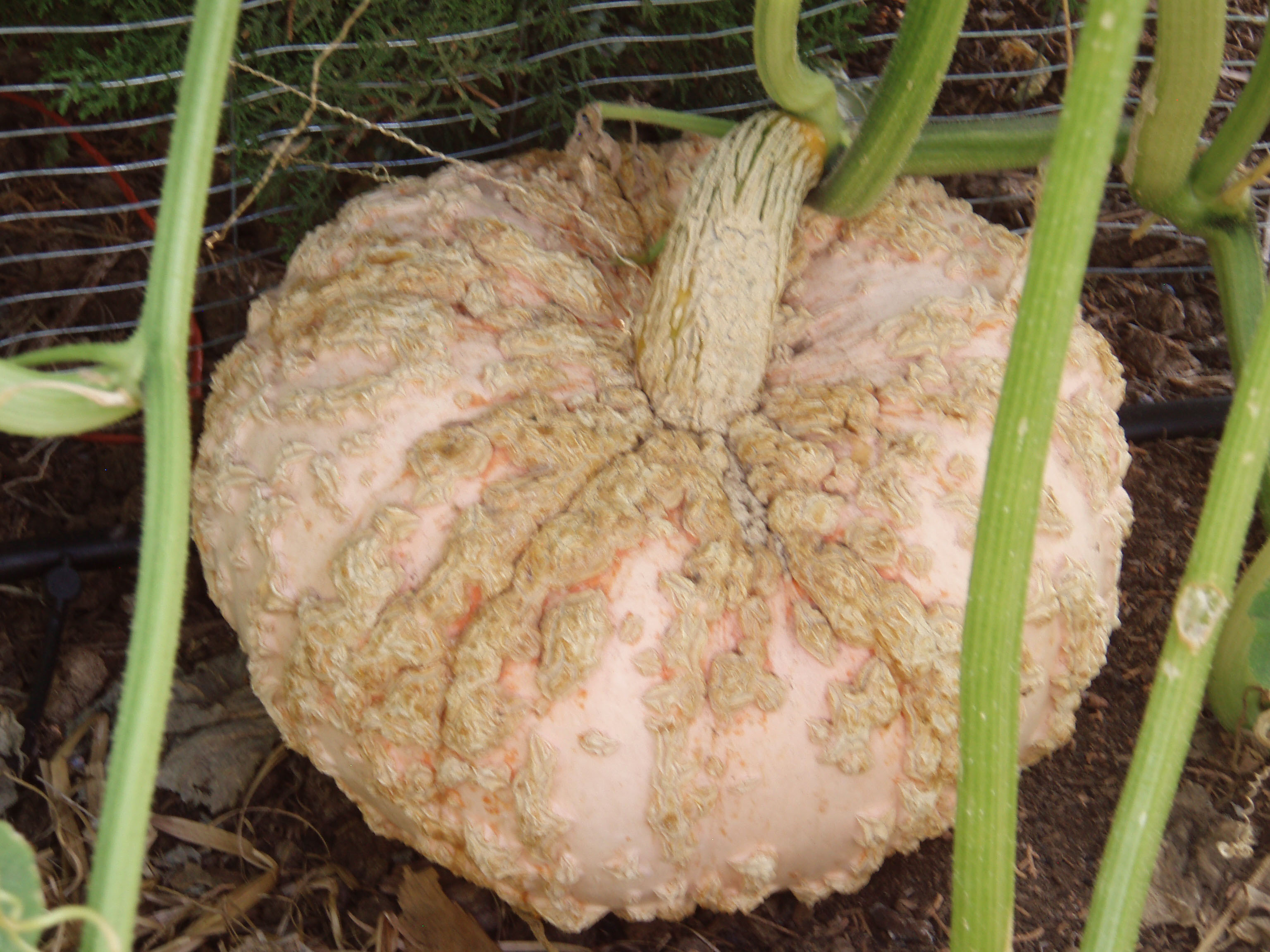
Last year's winter squash-Galeux de Eyesines
This year for winter squash, I’m going to plant Marina di Chioga (an Italian heirloom and Galeux de’ Eyesines (a french heirloom that gets bumps that look like warts-the more bumps, the higher the sugar content!) and let them sprawl. They can take over where the giant pumpkins were last year since I am moving the pumpkin patch to a new bigger area this year.
Shishito and Padron peppers

shishito peppers
Today I got some more holes ready for the Shishito peppers and a new variety for me called Padron peppers. Most are not hot but an occasional one might have a little heat. I don’t grow the famous green or red chili pepper famous in New Mexico in my garden as I’d have to plant my whole garden with chili peppers so I buy them from the Hatch chili farmers since I buy them by the bushel! The Shishito pepper is from Japan and is green and about 2-3 inches long and kind of skinny. I found it at the Santa Fe Farmer’s Market 2 years ago where it was $10/lb and thought I’d better grow my own at that price. The Padron pepper is from Spain and is also green and a little blockier in shape and used in Tapas. I like to sautee them in a good olive oil and sprinkle rock salt over them and serve them as an horderves.
summer squash and cucumber seeds in
When I think of all the things I still need to do in the garden, I’m overwhelmed. So I break all the things I need to do into bite size projects and surrender that it will get done when it gets done. Yesterday I was down in the main garden preparing some holes and adding amendments with composted horse manure, fertilizer, rock phosphate and mycorrhizal in it. Today I planted the summer squash and cucumber seeds in them. Thirteen of my 35 tomatoes look pitiful. Luckily I have some more to replace them which I will do by the end of the weekend. They either froze or thrashed by the wind-tough winter and spring. Tomorrow I need to focus on a glassblowing workshop we are doing so looks like I wouldn’t get back to it till Saturday.
All Star giant tomato lineup ready to plant!
Well here are my all star giant tomatoes that are going out as soon as I harden them off in the next few days now that the nights are finally in the high 40’s. They were out for about 45 minutes today in the sun and breeze today and that was enough for them. I brought them in and watered them with some organic seaweed and superthrive while they are going through the transition to help reduce stress. Maybe I should drink the stuff to reduce my stress (just joking)!

giant tomatoe plants ready to plant!
I have in my lineup for giant tomatoes (6) Big Zacs (seeds from Totally Tomatoes), (1) N. Harp (that came from a 4lb+ tomato), (2) N. Harps (that came from a 5lb+ tomato), and (3) N. Harps (that came from 7lb+ tomato)! Nick Harp is a phenomenal giant tomato and giant pumpkin grower in the midwest that was kind enough to supply me a few of his seeds. Thanks Nick! I can’t wait to see what these will do this year!
lettuce bowl ready to eat!
Here is the inside lettuce bowl I started on April 4th-now 32 days later.

Lettuce bowl 32 days later on May 16
The outside lettuce patch is looking real good too. Peas aren’t flowering yet and cauliflower is still little but arugula and lettuces are ready for a real salad! Chickens won’t get these anymore. Looks like I won’t have to buy greens for awhile. Gonna make me a salad tonight!
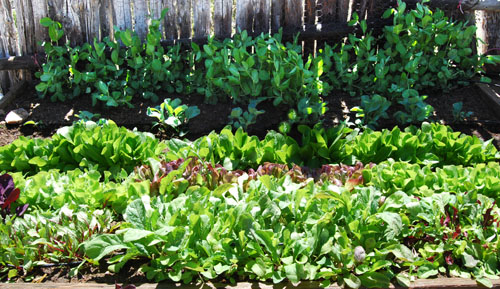
lettuce patch May 16
warm season veggies-here we come!
May 15th is fast approaching and is the average last frost date for Santa Fe and the time for putting your warm season vegetables in the ground. I sneaked some of mine in earlier but that is still a gamble in case we get one of those late frosts (we did) that plus the spring winds have been horrible this year. Never the less, I do grow some late season tomatoes that take 80-90 days to get fruit so I take the gamble on them and stick those transplants in early with the help of wall of waters and row cover. And of course my giant pumpkins take 5-6 months to grow so they need all the time they can get in the ground before that first fall frost hits even though I start them inside! So that takes care of the ones I sneak in early but what about the main vegetables crops?
For all summer squash, winter squash, cucumbers, beans, corn, I plant seeds directly in the ground (following directions on the package) as they will germinate quickly in the warm soil and will grow very quickly barring the birds from eating the seedlings. To prevent that, I put some LIGHTWEIGHT row cover (you can get it at the nurseries) over them until they are over the seedling stage and the birds aren’t interested anymore. It comes in big sheets but you can cut it up for smaller areas or it can cover the whole raised bed. Tack it down with some rocks so the wind doesn’t carry it away! Lightweight row cover is from -.01 to .03 in thickness. The handy thing is you can water right through it and it keeps bugs out.
For the majority of my tomatoes and all peppers and eggplants, I will transplant my plants that I started earlier inside or buy plants from the nurseries. When I plant them put them in a hole where I add some compost and maybe Yum-yum mix to get them going and create a well around them so the water is collected instead of running off.
So let’s talk tomatoes for a minute. Why? Well what is a vegetable garden without those homegrown, sweet tomatoes? Let’s face it, it is the main reason most of us have a vegetable garden. You want to put in tomatoes that are decent size plants. The reason being that they take a long time to grow to produce fruit and our season here is Santa Fe is so short that we need all the help we can get. Plus they take a long time to get them to a decent size which is very important to get that head start. So I started some in March and I also buy some. So as a rule of thumb, if I’m growing say an Oregon Spring tomato that takes 65 days to produce fruit, I might buy them in 4 inch pots but if I’m growing a Brandywine tomato that takes 80 days I will definitely spend the money and buy the gallon size. When deciding which tomatoes you want to grow, look at the amount of days it will take to get some fruit. When the tag or description says 80 days, that means it will take 80 days to become a mature plant that produces blossoms, and then it takes another 70 -80 days to produce mature fruit depending on pollination date. So let’s say a Brandywine plant is planted on May 15th outside, blossoms sometime in June-July, you should get some tomatoes 70-80 days later which puts us sometime in September! Why try to grow a tomato that takes that long? Flavor. The longer it takes, the better the flavor! They have more time to develop those sugars needed for great flavor. If I had a normal size garden (which I don’t but most of you do), I might try one or two of those longer varieties and I would try a few 65 day varieties and would have the bulk of my tomato varieties in the 70-80 day range. That way I hopefully will get some tomatoes early, mid and late season. That’s the thinking anyways!
So now you have everything up and growing what else can you do to help yourself get the best veggies? For one, I became a believer of drip systems a few years back after being a hand waterer for years. I put a simple drip system in and saw my yield at least double and it saves on water because it puts the water in the root zone. Another good reason for doing drip is that if you water from overhead, you could be encouraging some diseases from splashing the soil on them (there are soil borne diseases) or powdery mildew later in the season.
Next I would put a couple of inches thick of mulch in my wells (not in May when the soil is colder and your plants are trying to get warm) but by late June when it really heats up around here. Just put it over your drip system. This will help keep your water from evaporating. I like straw (not hay-it produces too many seeds) as it is lightweight and if you turn your soil over in the fall after harvest, it will break down for the next season. When you first put straw down, I do water it from the top so it won’t blow away and then let the drip work underneath it (so make sure it works before you cover it with straw).
So let’s talk fertilizer. I stay away from chemical fertilizers as they can hurt or kill your beneficial microbes that keep your soil healthy and help your plants grow and stay healthy. So stay away from Miracle Gro and the likes of that. I use more natural fertilizers-both organic fish emulsion and organic seaweed fertilizer together. The reason I use both is the fish emulsion is a general all purpose fertilizer but the seaweed has very little fertilizer but trace elements our veggies need to grow big and healthy. I put them together in a 5 gallon container and use it as a drench in my wells around the plants. Sometimes I also just spray the seaweed on the leaves for a foliar feeding. I fertilize once or twice a season except for giant pumpkins which get fed once a week. Believe it or not, as a giant pumpkin grower, they are the only fertilizers I use.
So what are you waiting for? Get busy and happy gardening!

