Tomato seeds planted inside-March 21

Bleaching pots before use

drying on an OLD towel

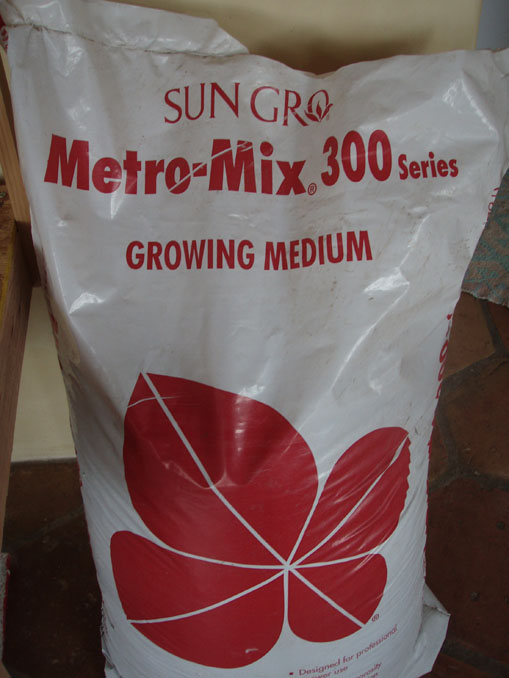
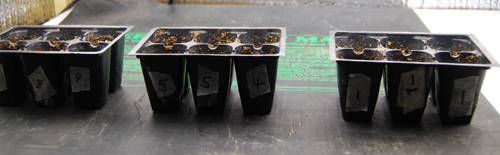
Last evening I planted my tomato seeds-both heirloom and hybrid seeds. I brought out and set up the light boxes and heating mats last week. Before planting my seeds, I always clean the little pots with some bleach water that I use for starting tomato seedlings. It’s important to disinfect the pots because you don’t want your plants to pick up any soil borne diseases. I use about a 10%  bleach to water ratio.  I use the kitchen sink and try to not get dirt everywhere from the used pots. The trick is to convince your partner that it is ok! Just tell them you are disinfecting the sinks out (which is true)! I picked up the seed starting soil-Metro mix 300 from Agua Fria Nursery last week. It comes in a big bag but you will be planting up into larger containers in a few days after the second set of true leaves appear and besides if you have any left over, you can use it for next year. I’ve bought many seed starting soil mixes (usually at the big box stores) and hate the way the water rolls off of the soil when you first go to use it. With this soil mix (Metro Mix 300) I just plant the tomato seeds about 1/4 inch deep and water it all at once. It saves time and anything that saves time I like!

Metro Mix 300

After I water the seeds, I put them under my lights and on top of a heating mat which is great for warming the soil for the seeds to germinate. I’m starting the tomatoes later this year because last year I started the first week of March and they got too big-about 3-4 feet tall because I couldn’t put them out with the cold spring we had.  This year I’m hoping to get them transplanted into the garden around mid April (with protection) weather permitting. Why do I think I might be able to get them in early this year? We are in a La Nina which generally means warmer weather in spring but less rain. By planting them later if I have to, they shouldn’t be as big as last year.

seeds on heat mat

Master Gardener Tomato Disease Sheet

Hey Master Gardener Interns! I want to let you know you all were awesome with some great questions and suggestions. I really enjoyed the classes. I thought I’d put it in my post below so others can read it as well as the pdf here TOMATO DISEASES in case some of you didn’t get one.  (It’s easier to print off the pdf than the post). This is not a complete list of tomato diseases in New Mexico but some of the most common. Also the HERB SHEET is two posts back for you to get.

TOMATO DISEASES/PROBLEMS

EARLY BLIGHT (Alternaria solon) SOILBORNE FUNGAL DISEASE
Most tomatoes are susceptible to Early Blight which usually develops in early summer, after heavy rains or when it is humid and warm.
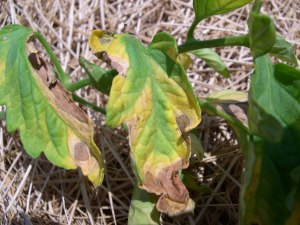
SYMPTOMS: Leaves at the base of the plant near the ground develop dry looking, irregularly shaped brown patches surrounded by concentric
rings. The best prevention is prune off the affected leaves as soon as you see them. I prune off all branches and leaves within 18 inches of the ground to try to prevent this as it is a soilborne disease. Early Blight overwinters in the soil. Remove affected plants and clean up fall garden debris as it overwinters in plant residue. Wet weather increase likelihood of getting this disease.
CONTROL: Protectant fungicides-Copper or sulpher can prevent further development of it, Green Cure (potassium bicarbonate), and Serenade (QST 713 strain of Bacillus subtilis), a biofungicide helps more to prevent
disease and is not a cure. Also spacing plants farther apart for good air circulation may help. Good sanitation and disposal of plants at end of season are important.

SEPTORIA LEAF SPOT

SEPTORIA LEAF SPOT (Septoria lycopersici) NOT SOILBOURNE-FUNGAL DISEASE
Septoria leaf spot can occur and any stage of a tomato plant development especially after heavy rains or when it is wet and warm. Spores are spread by windburn rain, insects, splashing rain
SYMPTOMS: It’s usually observed first on the lower leaves. Leaves that are heavily infected have small circular brown spots, turn yellow, dry up and drop off. The fungus is not soil inhabitant but can persist from one season to the next if the debris from the diseased plant is not removed and ends up in the soil.
CONTROL: Copper fungicides, Green Cure (potassium bicarbonate), Serenade (QST 713 strain of Bacillus subtilis), a biofungicide, helps more to prevent disease.

Bacterial Wilt

BACTERIAL WILT-SOILBORNE DISEASE
Soil borne and waterborne pathogens that causes leaves to wilt in day only to recover at night and then complete sudden wilting of plant.
TEST: Cut a four inch long section from low down on the stem and suspend this cutting in a jar of water. If a cloudy, milky ooze comes out, this in an indication of bacterial wilt. Dried leaves may remain green.
CONTROL: Dispose of plants. Plant in different location. 3-4 year rotation
of crops

BEET CURLY TOP VIRUS DISEASE
Transmitted by the beet leafhopper which build up high numbers on tumbleweeds and survive the winters on mustard plants.
SYMPTOMS: upward curling leaves that become thick, stiff and twisted. May stay green or become yellow with purple veins, plants become stunted. Plant next to them may be virus free.
CONTROL: Provide partial shade is beneficial as leafhoppers prefer to eat in the sun. Possibly use row cover/shade cloth to cover plants.

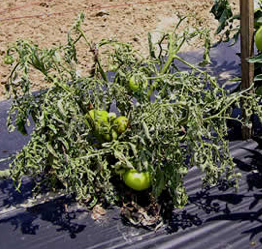
Tomato Spotted Wilt in tomato

Tomato Spotted Wilt

TOMATO SPOTTED WILT

This virus is caused by thrips that transmit the virus from infected tomato plants to other healthy tomato plants.

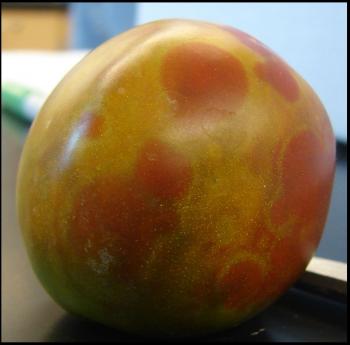
SYMPTOMS: Two symptoms are dominant- young leaves turn bronze and develop small brown spots. Second, the leaves wilt and tips die-back. Infected plants produce poor quality fruit and less yield. Pull plants and dispose of them.
CONTROL: Elimination difficult. Using reflective mulches may help reduce
infection, physical barriers like covering plant with row cover when it is young.

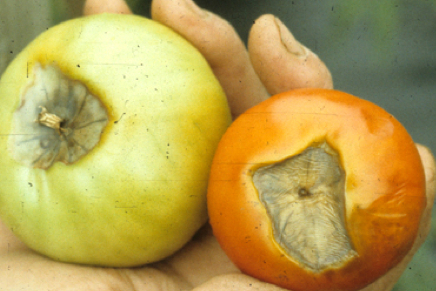
BLOSSOM-END ROT DEFICIENCY
Hard brown or black leathery patches on the blossom ends of ripening tomatoes indicate blossom-end rot. It is more common in large fruited varieties. This is generally caused by a calcium deficiency at fruit set or uneven watering and is prevented by planting tomatoes in compost enriched soil and mulched with straw to keep moisture levels more constant. I put a tablespoon or two of dry milk in the bottom of each hole when first planting tomatoes. In the fall dig in some gypsum which is a good source of calcium without raising the ph of the soil here in Santa Fe.

Still Time to Order Seeds if You Haven’t Already

Still time to order seeds if you haven’t already. I need to order my seeds Monday, now that I’m home from the show so I get them in time to plant in March. Probably most of you have already order your seeds. I only need to order a few as I still have many seeds that I will regrow this year. It feels late but it is what it is. Last year I started the seeds the first week of March. Because it was such a cold spring, I couldn’t get them out till late May and even June last year They got too tall in the house, but what was I to do? Stick them out in 27°F weather? I’m still going to plant seeds from March 1 -15,  inside, under the lights and hope with this La Nina we have that all of us will be able to sneak out some of our warm season crops early—think April 15th! It’s always a crap shoot when trying to decide when to plant seeds but I’m going early! Bring out the gro lights! (I hear, “oh no” in the background!) I do have ‘plant envy’ for those of you have greenhouses or hoophouses!

Final 2011 Seed Lists

FINAL 2011 SEED LISTS (updated)

I’ve researched and updated the seed list I posted earlier about a month ago and thought some of you might like to know where I buy either the seeds or in some cases, the plants ready to transplant here in Santa Fe. So first I created a legend with abbreviations for each seed/nursery and then put them at the end of each seed listed.  Hope this makes it easier for you so you don’t have to figure it out. I also show which tomatoes Amy Goldman’s ‘The Heirloom Tomato’ book recommends which I use as my ‘tomato bible’! I’ve put this in my page section called ‘Seed Lists’  at the top of the blog for later reference.

Here is the legend:
AFN-Agua Fria Nursery (plants)-1409 Agua Fria Street/Santa Fe, NM/505-983-4831
SFGHSanta Fe Greenhouse (plants)-2904 Rufina Street/Santa Fe, NM/505-473-2700
BHBaker Heirloom (seeds)
SSESeed Saver Exchange (seeds)
TSTerritorial Seeds
JSKGJohn Scheepers Kitchen Garden
KSKitazawa Seed (seeds)
WCSWest Coast Seeds (seeds)
CGCooks Garden (seeds)
TFTomato Fest (seeds)
TGTomato Growers (seeds)
TTTotally Tomatoes (seeds)

2011 TOMATOES

HEIRLOOMS

PLUM STYLE
*AG/San Marzano-red plum/80 days/AFN (plants) or BH, SSE, (seeds)

BI-COLOR
Striped German-bicolor-SFGH (plants)
*AG/Gold Medal-bicolor-75-80 days-BH (seeds)
*AG/Ananas Noir-recommended by friend-BH, SSE (seeds)

BLACK OR PURPLE
Paul Robeson-black/75-85 days-AFN (plants)
Cherokee Purple/80 days-AFN (plants)

RED
*AG/Pantano Romanesco-red/70-80 days-BH,TF(seeds)
*AG/Costoluto Genovese-red/78 days-TG(seeds)
*AG/Goldsman Italian American-red-BH (seeds)
*AG/Brandywine/AFN (plants)

CHERRY TOMATOES
*AG/Black Cherry-black/75 days-AFN (plants)
*AG/Green Grape-green/AFN (plants) or SSE (seeds)

HYBRIDS-I grow a few hybrids
Lemon BoyAFN (plants)
Park’s Beefy Boy-red-70 days-AFN (plants)
Sun Sugar-yellow cherry-62 days-TT (seeds)

* AG-recommended by Amy Goldsman’s book, ‘The Heirloom Tomato’

2011 VEGGIE LIST

BEANSRattlesnake bean snap OG (remarkably flavored pole bean)-SSE (seeds)

PEPPERShishito (Japanese non hot pepper)-AFN (plants) or KS(seeds)

SUMMER SQUASH-ZUCCHINICostata Romanesco (best tasting zuke around)-BH (seeds)

WINTER SQUASH- Galeux d’ Eyesines and Red Warty Thing (that’s what it’s called!)-BH (seeds)

EGGPLANT-Fairy Tale (best sweet, no bitter taste and soft skin eggplant I’ve tasted)-AFN (plants) or TS (seeds)

CUCUMBERSParisian Pickling, De Bourbonne, Boothsby Blonde, Poona Kheera, Armenian and Parade– I grow cukes for either taste or which variety is best for different types of pickles-all BH (seeds) except Parade-SSE (seeds)

CORN-not this year (I’ll get it from our Farmers Market)

LETTUCES–Provencal Mix, Mesclun Mix, Buttercrunch, Yugoslavian Red, Santoro Lettuce, and Little Gem-CG (seeds)

SPINACH–Bloomsdale-CG (seeds)

CARROTS-Purple Haze CG (seeds) and Scarlet Nantes-SSE (seeds)

ARUGULA-Apollo-SSE (seeds)

BOK CHOY-Extra Dwarf Pak Choy-BH (seeds)

CHARD-5 Color Silverbeet-SSE (seeds) and Argentata Swiss Chard-JSKG (seeds)

PEAS-Dwarf Sugar Gray-SSE, Oregon Spring II-BH (seeds)

2011 GIANT PUMPKINS & GIANT VEGGIE LIST

2010 GIANT PUMPKINSall came from private growers
895 Grande 08 (1016 Daletas x 1385 Jutras)
421 Cabossel (895 Grande x self )
1046 Grande 10 (901 Hunt x 1385 Jutras)

GIANT GREEN SQUASHall came from private grower
903 Noel 07 (848 McKenzie x self)

GIANT MARROW (like giant Zucchini)-all came from private growers
206.5 Wursten 09 or 75.4 Wursten 09
43 Cabossel 10

GIANT TOMATOES
7.18 N. Harp 09 (5.58 Timm x open)-private grower
5.416 N, Harp 09 (5.58 Harp x open)-private grower
Big Zac/TT (seeds)

GIANT PEAR GOURDprivate grower
89 Scherber 10

LONG GOURDprivate grower
96″ Scherber 10

GIANT SUNFLOWERS
Titan-SSE, BH (seeds)

2011 EDIBLE FLOWER LIST
Following is the list of edible flowers that will be planted or are already on the property:

Borage

Calendula-Orange King-BH (seeds)

Chives-AFN (plants)

Cilantro-AFN (plants)

Dill-AFN (plants)

Lavender (in existing different area)

Marigold-Lemon Gem-TS (seeds) this is the only edible marigold

Nasturtiums-Tip Top -CG (seeds)-prettiest nasturiums

Pansies-get them anywhere

Violas-get them anywhere

Roses (in different existing area)

Black Oil Seed sunflower (for the birds!)-WCS (seeds)

2011 HERBS-Following is a list of herbs that will be planted or exist on the property
Basil-new SHGH (plants)
Lime Basil-new-SFGH (plants)
Thai Basil-new-SFGH (plants)
Oregano-exists
Thyme-exists
Lemon Thyme-exists
Chives-exists
Dill-usually self seeds
Marjoram-new-SFGH (plants)
Mint-exists
Sage-exists
Lavender-exists


2010 Tomatoes winners from my garden

This year I planted 20 varieties of tomatoes and want to give you my favorites. Here are the winners!

HEIRLOOMS

costuluto genevese tomato

Costuloto Genevese-This Italian heirloom is the prettiest tomato I’ve ever seen. It has highly fluted or scalloped edges that are beautiful when sliced horizontally. It ripens to a beautiful deep red and and has that old fashioned tomato flavor. Very prolific. One of my favorites for Caprese salad.

Black Cherry-I grew them last year. Wonderfully complex, earthy sweet flavor so typical for black tomatoes.

Paul Robeson-I grew them last year and I like them even better this year. This one is a favorite of many at our Farmers Market. Complex flavors of sweet and just the right amount of acid.

Green Grape-This is my new favorite cherry tomato. Unbelievably complex sweet flavor. I like to mix them in with my other cherry tomatoes for a medley of color and flavors

black pear tomato

Black Pear-New for me this year, they have a wonderful sweet black tomato flavor. Very abundant.

Striped German-Giant Bi-Color beefstake that is a supersweet. Beautiful yellow and red marbling inside. Takes all summer to ripen but it’s worth the wait!

pantano romanesco tomato

Pantano Romanesco-Another Italian heirloom hailing from Rome. This one is very prolific and nice sized.  Beautiful fluted tomato with that old fashioned tomato flavor

Garden Harvest from July 24

First harvest from July 24

Here’s a picture of the first garden harvest that I actually got on July 24! It was small but tasty! ‘Romanesco Costata’ summer squash, ‘Lungo Bianco di Sicily’ summer squash, ‘Yellow Custard’ scalloped summer squash, ‘Bennings Green Tint’ scallop summer squash, ‘Fairy’ eggplants, bush beans, cucumbers, ‘Shishitos’ and ‘Padron’ peppers are really kicking, and a few tomatoes. Now on August 2, almost everything is going bonkers except the tomatoes-I’m still waiting for the tomatoes to really show up soon in a major way!

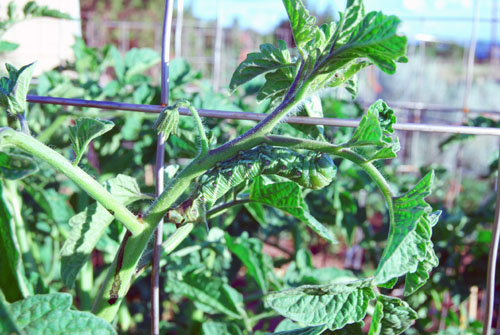
Can you find the tomato hornworm?

tomato hornworm hiding

Found another tomato hornworm this evening and I got 2 really great shots of it before it’s funeral. Can you find it in the picture above?

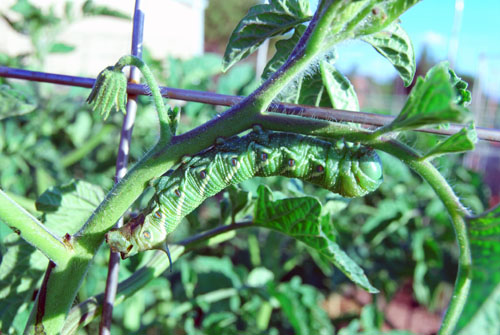
Here is a close up of it. They really are hidden aren’t they? That’s why they are so hard to find!

tomato hornworm revealed

tomato hornworm attack!

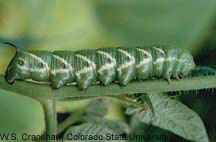
tomato hornworm courtesey of W.S. Crenshaw/Colorado State University

I’ve found some tomato hornworms in the garden this morning. I picked them off and gave them to the chickens. Here is some information about them. This pale green caterpillar has white and black markings, is 3 1/2 to 4 inch long and is the larval stage of the Sphinx moth.

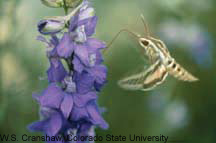
sphinx moth courtesey of W.S. Crenshaw/Colorado State University

It is also called the hawk moth or hummingbird moth.  It is called the hummingbird moth because of it’s long “beak” which is not really a beak at all, but a slender, tubular feeding and sucking organ. It is not a hummingbird but an insect. It is a grayish-colored moth with a wing spread of 4 to 5 inches. I see it visiting my flowers at dusk and at night. It is attracted particularly to purple flowering plants. The moth is not harmful to your plants only as the larva caterpillar-the tomato hornworm. A friend of mine called me to say her plants were being visited by the Monarch Butterfly and wanted to know if they would hurt her tomatoes. The answer is no, the Monarch Butterfly lays it eggs on milkweed and when it is a caterpillar feeds on milkweed and feeds on nectar from other plants when it is an adult.

I noticed a couple of things about the hornworm today. First I got out early and caught it sleeping. At least I think it was sleeping as it didn’t move for a long time and it was still really chilly outside (I thought maybe it needed warmth to get up and going or perhaps it had a hangover from eating so many tomato leaves!). The first thing I do after looking to see if the plants look good (as in no disease showing up) is to see if any of the leaves are eaten. The hornworm usually start feeding from the highest part of the plant first. If I see that, then I also look for their poop (called frass) which are quite large pellets about 1/8 inch in size. You can see it sometimes on the branch or on the ground. The hornworms are hard to see as they blend in so well with the foliage but keep looking around the damaged areas and you will find them. Anyways the 3 times I’ve seen them so far this year, they all hang upside down on the tomato branch-so look for them that way. I don’t like to handle them with my bare hands. I usually have gardening gloves on so I’m not so squeamish about picking them off. They are so large they give me the creeps but they are quite beautiful. I will have to do more inspections to catch them.

I luckily haven’t had huge amounts of them so I prefer handpicking them but if I found I had tons of them, I would spray with Bt for caterpillars. Bt is short for Bacillus thuringiensis. It is a live bacteria that kills caterpillars only. It doesn’t harm bees, or birds or humans-only caterpillars. It is perfectly safe for organic growers. When the caterpillar takes a bite of your leaf, it dies. It interferes with their digestive system. You can buy it at a nursery. Usually the big box stores don’t carry it. The only bad thing about Bt, is that is washes off with the rain and must be reapplied.

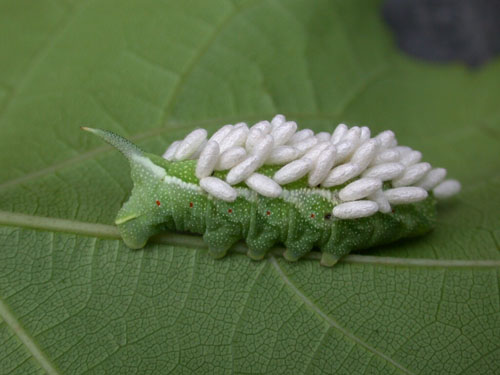
hornworm with wasp cocoons

The other thing that is helpful comes from nature itself.  If you see little white cocoon things on the hornworm, leave them alone as a helpful parasitic wasp has layed their eggs on them and the caterpillar will soon die. An added bonus is all the little wasps will attack other hornworm caterpillars. The wasp is not like the wasp we think of that stings us. It is a little thing, almost fly like, doesn’t sting us and is one of those beneficial bugs you would like to have in your garden.

Giant tomato

Here is a picture of one of my giant tomatoes on it’s way to stardom. (I hope!)

baby giant tomato

Notice this tomato looks deformed and gnarly. It has 4 little tomatoes that have fused together-kinda like Siamese twins only this one is quadruplets! Most giant tomatoes are a result of a megablossom where 2 or more blossoms fuse together. Many megablossoms do not pollinate fully and so they have a higher self abort rate. So far this one is doing well. I have a few other megablossoms right now but not many. Some varieties produce more megablossoms and hence more giant tomatoes. Two varieties that have the potential of producing giant tomatoes are Delicious and Big Zac. There are other varieties that can produce giant tomatoes too. This one in the picture comes from a Nick Harp tomato seed. His plant grew a 7 lb+ tomato last year and he gave me a few seeds. I call his plants the ‘Harpies”! I have 5 growing right now. Hope this one becomes a monster! Since I’m an organic grower I’ve been feeding it fish and seaweed fertilizer from the Neptune brand.

tomato suckers

tomato sucker

Don’t forget to pinch out the suckers on your tomatoes. Some people say pinch them and some say not to. I am in the camp of pinch them. I might try to leave one with suckers on to see how they differ throughout the season next year but they are all pinched or will be pinched soon this year! Where a branch comes off the main vine and in the crotch or ‘v’  where the two branches meet is a little branch that starts-this is a sucker and if left to grow will help contribute to unruly growth. The sucker in the picture is starting to get big and needs to be pinched out. You’ve probably had some tomatoes that were out of control growth wise. If you don’t pinch it out, your plant can become monstrous. I need to take them off weekly. Notice I said need..I’m having my friend, Lava, come over next week who loves to pinch off the suckers-that should be a big help! Pinching is not a one time job but if you start early you can keep up on it. Keep looking at the new growth so you can pinch them when they are small. Otherwise take some scissors to cut them out if they get too big on you. Just remember to disinfect your scissors or hands with a little alcohol in between plants so as not to pass any diseases from one to another.

got some tomatoes!

first black pear tomato

Got my first 4 tomatoes! They are off a black pear tomato plant. They don’t look pear shape I but I don’t care. I’ve lost 3 pepper plants and one tomato plant in the main garden but other then that, everything else is doing great. The tomato plants are really taking off- some of the early varieties have little tomatoes on them but most are just starting to blossom except for those first two maters!.

tomato in cage with well

In the pictures you can see they now all have wells, drip system in the wells, and the wells are covered with straw (not hay-produces too many seeds) to help with evaporation and keep the roots cool.

The tomato plants have been trimmed up so no branches touch the ground or straw. This is so no soil borne diseases can be transmitted. When you trim plants, put some alcohol on your trimmers between each plant so if one is diseased it won’t be transmitted to the next one.

I have a bamboo post (sometimes more than one) where the main vine is tied to help it as it grows so as not to be unruly (mine usually become unruly anyways as the season goes on).

The big tomato cages that I made from concrete reinforcement wire (it has 6 inches by 6 inch holes-easy to get your hand through to pick tomatoes) are now on. The cages offer terrific support for the growing tomatoes. Just keep pulling the branches up to the next higher hole as it grows. I also have small t-posts (3 foot tall) in the ground and the cages tied to it so the wind can’t blow it over as the plants gets bigger.

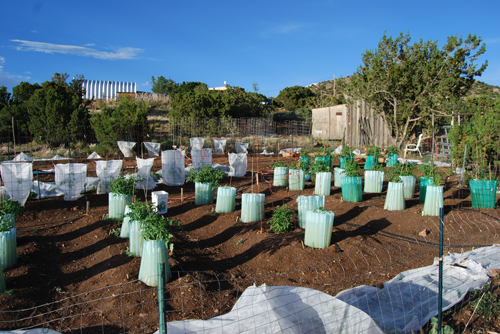
tomatoes ready to come out of wall of waters

tomatoes in wall of waters and row cover

Here are the tomatoes in wall of waters and some under row cover. I am ready to take the wall of waters off as many of them have grown out of the wall of waters. 61 tomatoes total. Most of the ones that I planted in early May are doing great considering they had to weather freezing temps at nights and incredible winds. Now it is blistering hot but they love the heat!

eggplants and peppers in

I planted the shishito and padron peppers and the fairy eggplants. I still have to plant the Thai yellow egg eggplants that are just begging to go into the ground. They have been inside under lights since March-April and I have been trying to wait patiently till the nights warm up but I’m afraid I’m not very good at waiting. I guess I got spoiled last year with such a mild Spring. Everything was planted and up by now. Not this year!   Today was the right time.

When planting the shishito peppers one of mine already has small peppers and it is still May! It is one of the ones I started in March. Peppers love heat. Today is going to be 81 degrees so they should love that!

summer squash and cucumber seeds in

When I think of all the things I still need to do in the garden, I’m overwhelmed.  So I break all the things I need to do into bite size projects and surrender that it will get done when it gets done. Yesterday I was  down in the main garden preparing some holes and adding amendments with composted horse manure, fertilizer, rock phosphate and mycorrhizal in it. Today I planted the summer squash and cucumber seeds in them. Thirteen of my 35 tomatoes look pitiful. Luckily I have some more to replace them which I will do by the end of the weekend. They either froze or thrashed by the wind-tough winter and spring. Tomorrow I need to focus on a glassblowing workshop we are doing so looks like I wouldn’t get back to it till Saturday.

All Star giant tomato lineup ready to plant!

Well here are my all star giant tomatoes that are going out as soon as I harden them off in the next few days now that the nights are finally in the high 40’s. They were out for about 45 minutes today in the sun and breeze today and that was enough for them. I brought them in and watered them with some organic seaweed and superthrive while they are going through the transition to help reduce stress. Maybe I should drink the stuff to reduce my stress (just joking)!

giant tomatoe plants ready to plant!

I have in my lineup for giant tomatoes (6) Big Zacs (seeds from Totally Tomatoes), (1) N. Harp (that came from a 4lb+ tomato), (2) N. Harps (that came from a 5lb+ tomato), and (3) N. Harps (that came from 7lb+ tomato)!  Nick Harp is a phenomenal giant tomato and giant pumpkin grower in the midwest that was kind enough to supply me a few of his seeds. Thanks Nick! I can’t wait to see what these will do this year!