giant pumpkin flower pollinated!

945 N. Harp 5 segment stigma

So the 945 N. Harp pumpkin flower that I said was almost ready to open, did this morning as pictured above. That was really fast to open. So I got some male flowers off the same plant that had pollen and broke them off, stripped away the petals and used them like a little paintbrush to go all around the outside and also inside the stigma. Notice this stigma has 5 segments. Most big pumpkins have 4 or 5 segments and some have 6 but many of the six segment ones abort due to insufficient pollination.

female flower with male flowers around it after hand pollination

The next picture is of the flower after I hand pollinated it with the ‘spent’ stamens in front of it. I almost feel like smoking a cigarette!

The last picture is where I closed up the flower with a twistie tie so the bees won’t accidentally pollinate it with another pumpkin’s pollen. By controlling pollination, I try to control (somewhat) what the future seeds of the pumpkin will be but it won’t affect this year’s pumpkin and what it will look like only it’s seeds.

pollinated giant pumpkin flower closed with twistie

I will cross pollinate some of the other female blossoms with some of my other pumpkin plants to see what the next generation’s seeds will produce next year. But this one I self pollinated it. So on the same pumpkin plant you could have some pumpkins that were self pollinated and others that were pollinated with other pumpkin plants.

Pumpkin female blossoms!

945 N. Harp female blossom almost ready to open-tip turning yellow

Last week I saw a bunch of male flowers, still small and closed but no female flowers. Yesterday I saw some baby female flowers with their baby fruit attached. Yea! Finally!

945 N. Harp female blossom not ready to open-blossom green

Yesterday I noticed the female blossoms are still small and closed but the male flowers are now blossoming and ready for the girls! There are two female blossoms on the main vines and 7 more on secondary vines. The picture on top is almost ready to open as the blossom is just starting to turn a subtle yellow color on the tip. In the other blossom pictures in this post, the blossoms are still very green and will open later. I will pollinate all of them when they are ready and see what I get.

895 Grande female flower

Look how different the shape of the baby pumpkins are on the different pumpkin plants! The 945 N. Harp pumpkin flowers have round little pumpkins attached and the 895 Grande pumpkin flower has an oval shaped pumpkins attached. I think that is so cool that you can start to see the future pumpkin shapes even on the blossoms.

Even though the blossom looks like it has a baby pumpkin attached to it, it still needs to be pollinated which happens after the flower opens. Some will abort if pollination is not complete or if the weather is too hot. I hope the females open this week as the weather is suppose to be perfect for pollination-80’s all week. Not too hot. Anything over 90 is problematic for pollination.

Summer Squash-Scalloped ‘Golden Custard’, Lungo Bianco,’Costata Romanesco’

Female flower closed- 'Golden Custard' summer squash

I am growing 4 varieties of summer squash this year that are all new to me. I have two varieties of scalloped summer squash. Here is the first of them called ‘Golden Custard’ which will turn more yellow with time. The other scallop variety I have is Bennings Green Tint which is a light green scallop squash. It is a little behind and I don’t have picture of one of the fruits as it is all leaves so far.

The first picture is a female flower with the baby ‘Golden Custard’ squash attached.  Golden Custard has bright yellow fruit and rich mellow flavor. This is a rare native American squash that might predate Columbian times. I’ve never tried it before and can’t wait to taste it. The female flower has not yet opened to be pollinated. In all squashes, winter and summer, female flowers have the baby squash attached and if they don’t get pollinated, they will drop off.

female squash flower open

The second picture is with the same female flower open.

The third picture is a male flower with a straight stem and no potential baby fruit at base.

male squash flowerThe third picture is of the male flower which has a straight stem and stamen.

The next picture is a Costata Romanesco summer squash with the flower still attached. This one was definitely pollinated as the baby squash has grown to edible size. This is good eating size (about 5 inches) but left on the vine it will get larger and still can be used. Costata Romanesco is a ribbed zucchini from Rome, Italy and a famous Italian heirloom. The long fruit are fluted with medium, green-striped skin. The cut slices are scalloped. They are popular fried whole with the flower still on when still small. They are very flavorful and a perfect, gourmet variety.

Costata Romanesco

Lungo Bianco is a light-green-cream heirloom zucchini and another popular variety from Italy. They are smooth skinned, mild and sweet.

I did a taste test of the Lungo Bianco and Costata Romanesco tonight and they both are wonderful. Both were picked when they were prime-about 5 inches long and had no bitterness. I sauteed them in butter and put a little  Parmesan cheese on them at the table. Yum!

baby pictures

Here are some pictures from the garden today. There were lots of flowers and baby veggies just starting. Won’t be long now before they really take off! I can kinda cruise for a little bet now. Just got to watch for disease and bugs and make sure things get watered and fertilized. Sounds like a lot but that is nothing compared to spring planting and fall harvest. With all this free time, I think I’ll go for a ride on my scooter tomorrow! ZOOM! ZOOM!

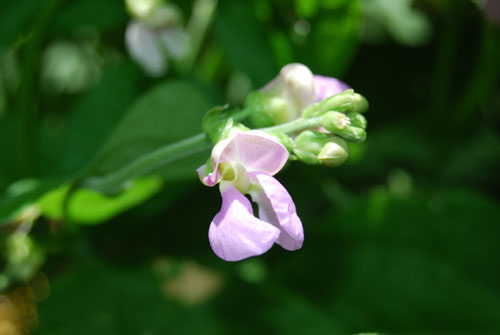
bush bean flower

baby bush bean

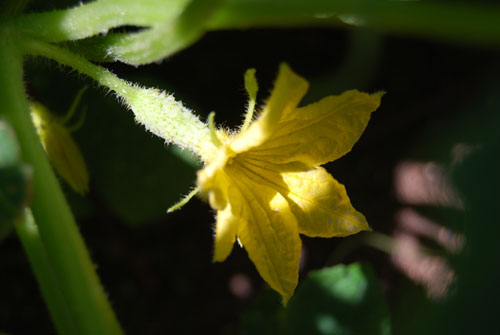
baby cucumber with flower

baby tomato

summer squash flower

Wow! First apricots in 10 years!

Apricots in 2010!

We don’t get many apricots in Santa Fe because of the freezes we experience in Spring usually right as the apricots are blossoming but this year is the first time in ten years that I have gotten a few apricots! I didn’t get many (there are a few more on the tree) but just the fact that I got any was a miracle as we had many freezes this spring but I guess the apricots missed the freezes. I had to pick them a little early cause the birds  pick them apart. Aren’t they beautiful?!

Pumpkin Patch

giant pumpkin leaving low tunnel

The pumpkin patch is finally getting bigger although I am about one month behind all the other giant pumpkin growers so we will see what we get this year. Here is the 1166 Mohr. It will be the first to leap (LOL) out of it’s low tunnel. The others are close behind. I told them they needed to be out of the tunnels by yesterday-but some are not listening! I have been feeding them Neptune’s fish emulsion and Seaweed fertilizer.

This week I am getting some new products to put on them to help them grow from Extreme Pumpkin. They sell both non organic and organic products for giant pumpkin growers. Hope they take off like a rocket!

vegetable garden pics 07-09-10

rattlesnake beans growing up arbor

cukes growing up cage

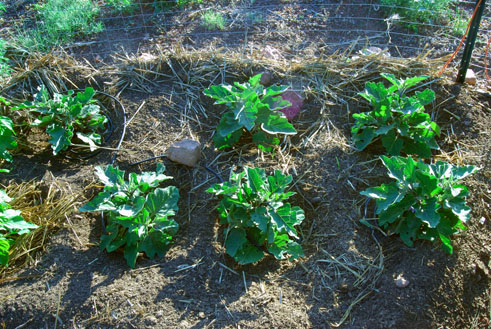
Fairy eggplants

shishito and padron peppers

summer squash adn bush beans

Bacterial wilt on tomato

tomato bacterial wilt

Here is a picture of one of my tomato plants that was fine one day and the next day it was wilted and dead. I think it was baterial wilt which comes from a leafhopper. Leafhoppers carry bacterial wilt virus and when the taste the tomato they infect it. Notice the other tomato plants around it are ok. I hope I don’t get more..

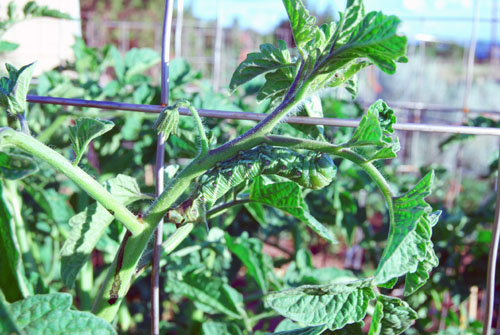
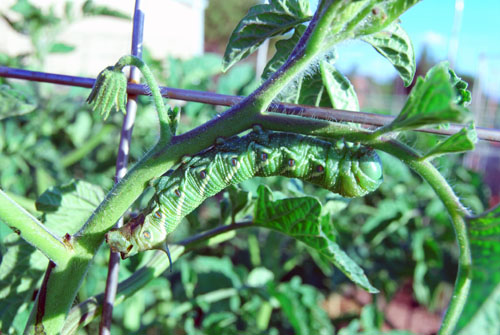
Can you find the tomato hornworm?

tomato hornworm hiding

Found another tomato hornworm this evening and I got 2 really great shots of it before it’s funeral. Can you find it in the picture above?

Here is a close up of it. They really are hidden aren’t they? That’s why they are so hard to find!

tomato hornworm revealed

tomato hornworm attack!

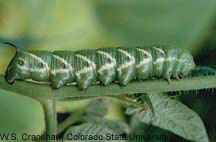
tomato hornworm courtesey of W.S. Crenshaw/Colorado State University

I’ve found some tomato hornworms in the garden this morning. I picked them off and gave them to the chickens. Here is some information about them. This pale green caterpillar has white and black markings, is 3 1/2 to 4 inch long and is the larval stage of the Sphinx moth.

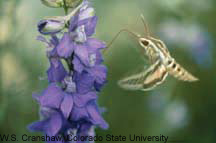
sphinx moth courtesey of W.S. Crenshaw/Colorado State University

It is also called the hawk moth or hummingbird moth.  It is called the hummingbird moth because of it’s long “beak” which is not really a beak at all, but a slender, tubular feeding and sucking organ. It is not a hummingbird but an insect. It is a grayish-colored moth with a wing spread of 4 to 5 inches. I see it visiting my flowers at dusk and at night. It is attracted particularly to purple flowering plants. The moth is not harmful to your plants only as the larva caterpillar-the tomato hornworm. A friend of mine called me to say her plants were being visited by the Monarch Butterfly and wanted to know if they would hurt her tomatoes. The answer is no, the Monarch Butterfly lays it eggs on milkweed and when it is a caterpillar feeds on milkweed and feeds on nectar from other plants when it is an adult.

I noticed a couple of things about the hornworm today. First I got out early and caught it sleeping. At least I think it was sleeping as it didn’t move for a long time and it was still really chilly outside (I thought maybe it needed warmth to get up and going or perhaps it had a hangover from eating so many tomato leaves!). The first thing I do after looking to see if the plants look good (as in no disease showing up) is to see if any of the leaves are eaten. The hornworm usually start feeding from the highest part of the plant first. If I see that, then I also look for their poop (called frass) which are quite large pellets about 1/8 inch in size. You can see it sometimes on the branch or on the ground. The hornworms are hard to see as they blend in so well with the foliage but keep looking around the damaged areas and you will find them. Anyways the 3 times I’ve seen them so far this year, they all hang upside down on the tomato branch-so look for them that way. I don’t like to handle them with my bare hands. I usually have gardening gloves on so I’m not so squeamish about picking them off. They are so large they give me the creeps but they are quite beautiful. I will have to do more inspections to catch them.

I luckily haven’t had huge amounts of them so I prefer handpicking them but if I found I had tons of them, I would spray with Bt for caterpillars. Bt is short for Bacillus thuringiensis. It is a live bacteria that kills caterpillars only. It doesn’t harm bees, or birds or humans-only caterpillars. It is perfectly safe for organic growers. When the caterpillar takes a bite of your leaf, it dies. It interferes with their digestive system. You can buy it at a nursery. Usually the big box stores don’t carry it. The only bad thing about Bt, is that is washes off with the rain and must be reapplied.

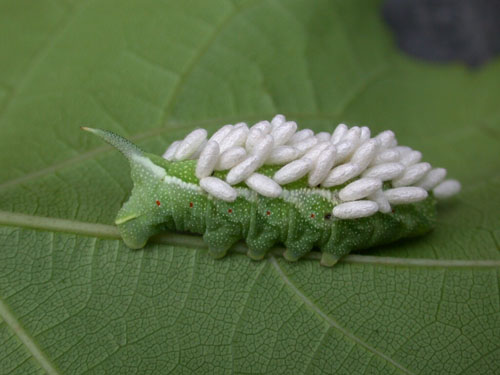
hornworm with wasp cocoons

The other thing that is helpful comes from nature itself.  If you see little white cocoon things on the hornworm, leave them alone as a helpful parasitic wasp has layed their eggs on them and the caterpillar will soon die. An added bonus is all the little wasps will attack other hornworm caterpillars. The wasp is not like the wasp we think of that stings us. It is a little thing, almost fly like, doesn’t sting us and is one of those beneficial bugs you would like to have in your garden.

flowering carrots!

carrot flowers

carrot flower closeup

Carrot Flowers

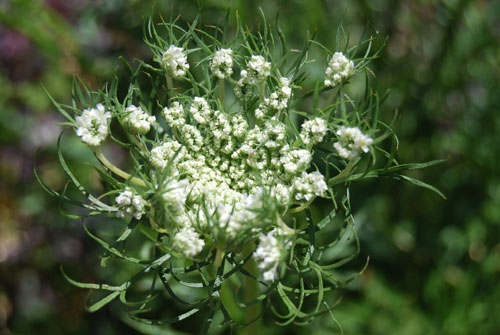
I didn’t know carrots will flower-and what beautiful flowers they are! Here are some pics of a carrot flower. I forgot to pick the carrot from last year and it is going to seed now. I saw the carrot leaves a few weeks ago but ignored picking it as I thought it would be very woody and not very good to eat. See what can happen if you just let things be!

First I get to enjoy the roots, then the flowers (if I don’t eat the carrot!), and then I will try to get the seeds.  Next year I will let a few more carrots go to seed as I like the flowers so much. Pure joy!

carrot flower just coming out

Giant tomato

Here is a picture of one of my giant tomatoes on it’s way to stardom. (I hope!)

baby giant tomato

Notice this tomato looks deformed and gnarly. It has 4 little tomatoes that have fused together-kinda like Siamese twins only this one is quadruplets! Most giant tomatoes are a result of a megablossom where 2 or more blossoms fuse together. Many megablossoms do not pollinate fully and so they have a higher self abort rate. So far this one is doing well. I have a few other megablossoms right now but not many. Some varieties produce more megablossoms and hence more giant tomatoes. Two varieties that have the potential of producing giant tomatoes are Delicious and Big Zac. There are other varieties that can produce giant tomatoes too. This one in the picture comes from a Nick Harp tomato seed. His plant grew a 7 lb+ tomato last year and he gave me a few seeds. I call his plants the ‘Harpies”! I have 5 growing right now. Hope this one becomes a monster! Since I’m an organic grower I’ve been feeding it fish and seaweed fertilizer from the Neptune brand.

tomato suckers

tomato sucker

Don’t forget to pinch out the suckers on your tomatoes. Some people say pinch them and some say not to. I am in the camp of pinch them. I might try to leave one with suckers on to see how they differ throughout the season next year but they are all pinched or will be pinched soon this year! Where a branch comes off the main vine and in the crotch or ‘v’  where the two branches meet is a little branch that starts-this is a sucker and if left to grow will help contribute to unruly growth. The sucker in the picture is starting to get big and needs to be pinched out. You’ve probably had some tomatoes that were out of control growth wise. If you don’t pinch it out, your plant can become monstrous. I need to take them off weekly. Notice I said need..I’m having my friend, Lava, come over next week who loves to pinch off the suckers-that should be a big help! Pinching is not a one time job but if you start early you can keep up on it. Keep looking at the new growth so you can pinch them when they are small. Otherwise take some scissors to cut them out if they get too big on you. Just remember to disinfect your scissors or hands with a little alcohol in between plants so as not to pass any diseases from one to another.

Rain! Rain!

Finally we got some real rain! Thursday night we got 1.42 inches and last night we got over 1.30 inches which is a lot for Santa Fe considering our average precipitation is just over 14 inches for the whole year and we have been really short so far this year. The pumpkins are loving the rain and putting on some good growth with all this moisture which came from Hurricane Alex (although it is no longer a hurricane, just a tropical storm).  Now if they could put on another 8 feet in the next week! LOL! In fact all of the veggie garden is growing like crazy with the rain and great temperatures. This picture is of our arroyo which flooded Thursday night. Haven’t seen it running like this in about 10 years!

got some tomatoes!

first black pear tomato

Got my first 4 tomatoes! They are off a black pear tomato plant. They don’t look pear shape I but I don’t care. I’ve lost 3 pepper plants and one tomato plant in the main garden but other then that, everything else is doing great. The tomato plants are really taking off- some of the early varieties have little tomatoes on them but most are just starting to blossom except for those first two maters!.

tomato in cage with well

In the pictures you can see they now all have wells, drip system in the wells, and the wells are covered with straw (not hay-produces too many seeds) to help with evaporation and keep the roots cool.

The tomato plants have been trimmed up so no branches touch the ground or straw. This is so no soil borne diseases can be transmitted. When you trim plants, put some alcohol on your trimmers between each plant so if one is diseased it won’t be transmitted to the next one.

I have a bamboo post (sometimes more than one) where the main vine is tied to help it as it grows so as not to be unruly (mine usually become unruly anyways as the season goes on).

The big tomato cages that I made from concrete reinforcement wire (it has 6 inches by 6 inch holes-easy to get your hand through to pick tomatoes) are now on. The cages offer terrific support for the growing tomatoes. Just keep pulling the branches up to the next higher hole as it grows. I also have small t-posts (3 foot tall) in the ground and the cages tied to it so the wind can’t blow it over as the plants gets bigger.