N. Harp and Grande pumpkins

949 N. Harp flower

949 Harp pumpkin/20 lbs on 8-14

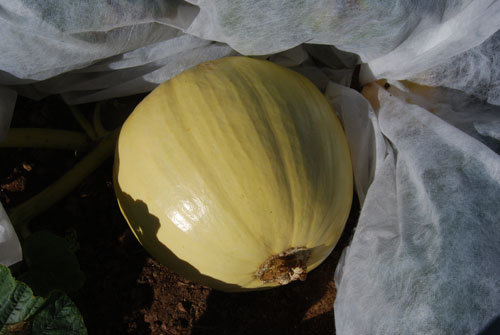
As Christy Harp, the new giant pumpkin world record holder (1725 lbs) once said, “Growing giant pumpkins-it’s not a hobby, it’s an obsession!” I have to agree because once you get some growing, it is so much fun to watch and I mean literally! The first photos are of my biggest on the N.Harp plant. Look how round it is.

895 Grande female flower

The other pictures are of my biggest pumpkin from the Grande 895 plant. Look how oval it is. I’ve shown the beginning pic and current pic-they are pretty much the same shape as when I first pollinated them. When I went out the other evening and measured those pumpkins, the 895 Grande had put on 3.5 inches in girth from the evening before. That’s in 12 hours. I have more pumpkins coming on but those 2 are my biggest and are now 20 and 25 lbs-small for giant pumpkins but they are only babies and will grow extremely fast in August and September. I haven’t named them yet but will this week. (yes I name them. Any veggie you grow for 5-6 months and grows this fast deserves a name) It has begun..

895 Grande/25 lbs on 08-14

zinnas and japonica corn

Here is a picture of some beautiful zinnias right next to Japonica corn. The corn comes from Japan, is organic and I bought it purely for its beautiful leaves. I got it from Seed Saver’s Exchange and here is the description from them-“Extremely beautiful ornamental corn from Japan, listed in the 1890s as Striped-Leafed Japanese Maize. Variegated leaves striped with green, white, yellow and pink. Tassels are dark purple, kernels are burgundy. Beautiful used as a border.”

How to control squash bugs

Squash bug adult-photo courtesy University of Minnesota

Well it’s that time of year-Squash bugs Ughh! You can control squash bugs in your organic garden. Here are some ORGANIC things you can do to deter squash bugs:

-Plant a crop late in the season if possible. Many areas of the country only have one generation of squash bugs and if you plant later you may miss them. If you live in the south where they have 2 generations, read on..

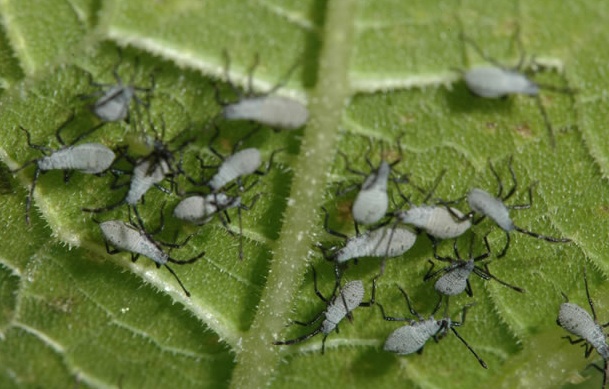
squash bug nymphs-photo courtesy University of Minnesota

Cover your plants with row cover to keep them off. This works beautifully but you may have to piece some row covers together to cover some of the larger plants. I use clothes pins to clip them together.

-Use Neem. It is an organic pesticide (and an added benefit is a fungicide). It must be sprayed very early before the bees come out or at dusk when they aren’t around as it won’t hurt them if it is not a direct hit as they only visit the flowers and it is a contact spray. I think it mostly helps deter the squash bug.

squash bug eggs

-Inspection, hand picking and kill the little buggars. (now you know how strongly I feel about them) By far the most labor intensive but very effective. I hate to handle squash bugs (or any bug-I’m squeamish) so I use gloves, a bucket of soapy water (it drowns them) and inspect each leaf underneath to look for nymphs, eggs, or adults. The adults I throw in the soapy water and if a leaf is really loaded with nymphs, I cut it off and throw it in the soapy water otherwise I just squish them. For the eggs  (they are a cluster of rust colored eggs attached to the underneath side of the leaves) I usually just tear off  or cut out that portion of the leaf (it won’t hurt it) and throw them into the soapy water. The key to keeping it under control, is to catch them before they multiply too much. I looked up the life cycle online of the squash but and it goes from egg to nymph in 7-10 days so if you get out there every 7 days you will catch them before they get out of control and multiply. Most people wait too late. Get out there and look at your plants!

-Companion planting. I think it was in ‘Organic Gardening Magazine that I read under ‘letter to the editors’, that a lady wrote in to say that you could deter squash bugs on pumpkins, winter squash, summer squash and marrows with diluted/strained onion juice. Evidently just grind one or two up, put it in gallon of water and strain the onions out so your sprayer doesn’t clog. Well she went on to write that doing that was too much work and she plants onions bulbs with her squash every year and hasn’t seen a squash bug since. Well I did the same for my summer squashes, but not for my winter squashes. There have been no squash bugs on the summer squash but I found one on the marrow which means there will be more. I told one of friends that owns a garden nursery about the onions and he said it was too late to plant onions but he was going to throw some chopped onions out in his patch. I’m doing the same today for the marrow and winter squash and will let you know what happens! It can’t hurt and maybe it’ll work!

Baby giant pumpkins are putting on weight

I actually measured the baby pumpkin on the N. Harp main vine yesterday and today because it is starting to grow (at least for now). It is about the size of a soccer ball now. Circumference was 27″ yesterday and today it was 28.5″. A gain of 1.5 inches in 24 hours . This evening I measured using the OTT method which is more accurate and Harp’s total measurement was 51.5 and the 895 Grande main was 47 OTT. The measuring chart doesn’t go down that low so I’m not sure how much they weigh yet  but should sometime this week as they start to really grow.

Giant Marrows

giant marrow patch

If you told me this spring when I planted one little giant marrow seed that it would become the gorilla of the garden going anywhere it wants, I wouldn’t have believe you. It has a space about 25 feet wide by 30 feet and is moving into other veggies’ territories! I’m not sure how big the actual marrows are yet but will dance around the vines this weekend and get in there to see them. Marrows are popular in Europe equating to our zucchini but can grow much larger. This one seed came from a giant marrow that weighed over 75 lbs. The grower is from the Netherlands and was kind enough to give me a seed. It is a Curcurbita Pepo. I hope to enter one into the State Fair in Sept. If I find a good size one I will photograph it this weekend. Meanwhile I do have a regular zucchini growing for the State Fair as well. Zucchini was the only vegetable I put into the fair that didn’t place. Just something to do for a giant gardener!

Cucumbers,Tomatoes and squash oh my!

looking from inside the garden out

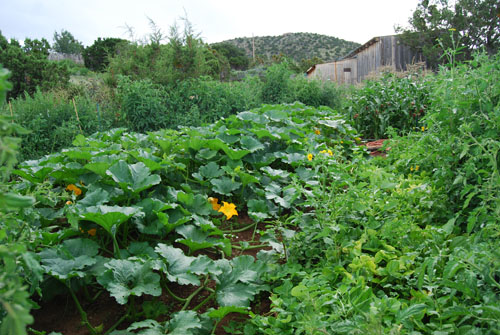
Lava suggested I take some shots of the garden as it is right now-a jungle-not just closeups! I need to get in and trim and prune everything but it is fun to look at especially here in Santa Fe where everything tends to be dry. Lava also suggested I get on the roof of the barn to get a bird’s view and I just might do it! Meanwhile here are the jungle garden pics!

corn and winter squash

summer squash

entry into the tomato jungle

between rows of tomatoes

cucumbers

Garden Arbor Entrance update August 4

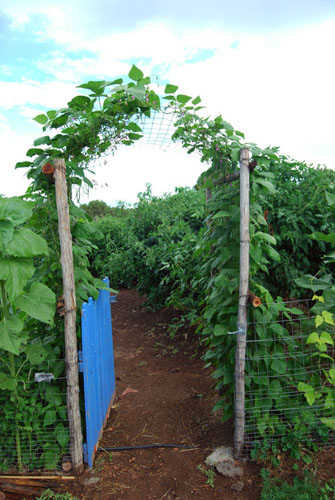
garden arbor entrance

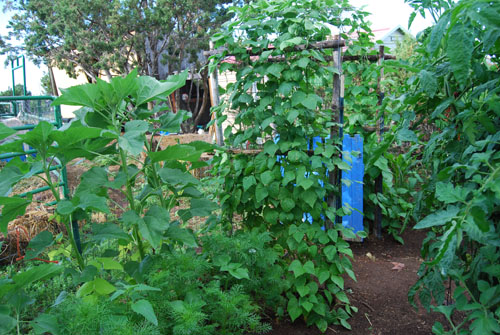
Here is a picture of the garden arbor in my entrance to the veggie garden. The ‘Rattlesnake’ beans, a pole variety that can grow 13 feet a season, are doing really well covering the arbor-just like I envisioned when I built it at the beginning of the season. An added bonus is they taste great. You only have to pick the beans before they get too big and tough. I ate some raw right out of the garden and they have a nutty sweet flavor that I like better than the ‘Contender’ bush beans that are just finishing up. Rattlesnake beans are a winner!

entrance right side

Also pictured to the right of the arbor are chartreuse colored ‘Golden Sunshine’ Scarlet Runner beans  I got from Cook’s Garden growing on the fence. They come from England. I love their bright yellow green leaves against the other greens. I grow them just because they are so beautiful and I love that purple varigated color of the seeds when they are dried. They haven’t flowered yet as they are just climbing the fence but when they do, the bright red blossoms will look great against that yellow-green.

Behind the Scarlet runner beans, still on the right side of the entrance are my giant ‘Titan’ sunflowers that will be fantastic a little later when they get their huge flowers. They will grow up to 10 feet tall and have heads that can get up to 24 inches wide! I call all sunflowers the guardian angels of the garden. Did you know sunflower flower heads follow the sun all day long? Sun worshipers! Hence their name. They are so majestic! Behind them are various flowers that will be blooming soon to add color and attract beneficial insects.

entrance inside left

entrance inside left

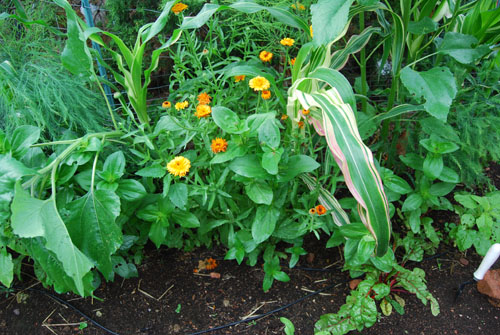
On the left side just inside the entrance, are asparagus fronds, calendula, ”Bright Lights’ chard, ‘Chianti’ sunflowers, multicolor ‘Japonica’ corn from Seedsavers Exchange and other flowers coming along. I got a late start in this section of the garden but it should look great later this month and I will take more pictures then.

organic fungicides to use for Powdery Mildew

We’ve been getting so much rain lately that I am worried about Powdery Mildew (PM) and other fungal and bacterial diseases caused by too much rain. It is a blessed curse. The garden takes off  and really grows from all the rain but the conditions are right for PM so I am trying to take precautions by doing several things to be as preventative as possible.

First I’m cleaning out all dead or yellow leaves that are usually underneath the canopy of the squashes and beans and tomatoes. I use clippers to cut out the dead stems  or yellow leaves (like on the tomatoes) and I sterilize them between each plant so not to spread any diseases that the plant may have that I don’t know about yet. The idea is to clean up under the canopy of  leaves and provide more air space. I have a small container that I fill with 4 cups of water and I put in about 1/4 cup bleach and use this as a disinfectant for my clippers and gloves. I just dip my clippers and hand with my glove into the container and then move onto the next plant. You can use isopropyl alcohol instead but you could go through a lot of alcohol and the bleach works just as well. The next thing I do is spray weekly with Neem and baking soda or instead use copper fungicide which is stronger but still organic. I think the Neem and baking soda are more preventative and if you get some fungal diseases then the copper can kill it. Copper is organic but one still needs to follow the directions but you can spray it right up to the day of harvest. All of these need to be sprayed on both the top and underneath the leaves and have to be resprayed if it rains. The third thing I’m doing this year is using a biofungicide that is used as a drench. This is new to me but it is just certain soil organisms that help the plant ward off many fungal and bacterial diseases. I’m using it on my giant pumpkins and will let you know how they do. Another biofungicide is Mycostop which is also suppose to do the same thing. There may be others out there, just google biofungicides.

Bob’s Garden Pizza on the Grill

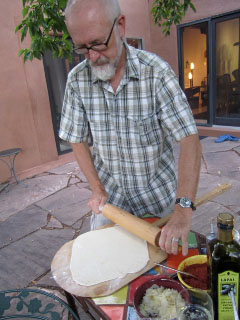
Bob rolling the dough on the pizza peel

My good friend Bob made an incredible pizza fixed on the grill this weekend that he learned from his son Ephraim. He used garden veggies for the toppings. Here is the recipe for the pizza dough and the method that Bob uses to make it. Thanks Bob for sharing this great recipe for my blog. What a great way to eat the veggies we’ve been growing this summer! This was so good, I could eat all my veggies this way! It was yummy!

Ingredients:
1 pkg active dry yeast
1 1/3 cups warm water
3 1/2 cups flour
2 tablespoons olive oil
1 tablespoon salt
1 tablespoon sugar

Method:

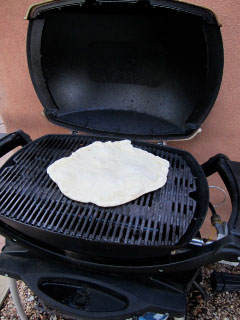
cooking pizza dough on the grill

Pour 1/3 cup

of the warm water into a small bowl. Add the package of dry yeast to the water……stir the mixture until dissolved. Let this sit in a warm place ….it should start to get bubbly…

precooked pizza toppings

Put the flour into a mixing bowl. Add the olive oil, salt and sugar.

If you are using a food processor with dough blade or heavy duty mixer with dough hook,
start the machine and slowly add the bubbling yeast. Then add the rest of the water until a smooth dough forms…you may need to use less or more water depending on the moisture content of the flour.  The dough should be silky smooth.

If you are mixing the flour by hand, add the water, mix until blended, then turn the dough out onto a floured board or counter and knead for 10 to 15 minutes until silky smooth… add more flour if necessary.

Transfer the dough to a bowl lightly coated with olive oil and turn it over once to coat with oil. Cover with plastic wrap and let rise in a warm place for about an hour.

Pull off a chunk of the dough and roll it out into a thin layer. This is where a pizza peel comes in handy. This is the wooden paddle that slips the pizza in and out of the oven or grill.

Slide it onto a medium-hot grill, lower the

pizza with toppings ready for grill

lid and bake the pizza for about 5 minutes.
Remove the pizza crust, flip it over and brush it lightly with olive oil

Add your precooked ingredients.

Return the pizza to the grill , lower the lid, and bake for another 5 minutes. The time it takes will depend on the temperature of your grill…. too hot and the crust will burn before the toppings get hot and cheese melts.

Toppings:
It’s important to precook your toppings.
Sliced onions….saute them in oil/butter until they are tender and golden brown
Sauteed peppers and/or other veggies…. spinach, chard, eggplant,  etc.
Sauteed sliced mushrooms

taking finished pizza off grill

Thin sliced tomatoes
basil pesto

tomato (pizza) sauce
pre-cooked meat/sausage/shrimp/chicken….whatever you like
shredded mozzarella
grated parmesan cheese

Garden Harvest from July 24

First harvest from July 24

Here’s a picture of the first garden harvest that I actually got on July 24! It was small but tasty! ‘Romanesco Costata’ summer squash, ‘Lungo Bianco di Sicily’ summer squash, ‘Yellow Custard’ scalloped summer squash, ‘Bennings Green Tint’ scallop summer squash, ‘Fairy’ eggplants, bush beans, cucumbers, ‘Shishitos’ and ‘Padron’ peppers are really kicking, and a few tomatoes. Now on August 2, almost everything is going bonkers except the tomatoes-I’m still waiting for the tomatoes to really show up soon in a major way!

Baby Baby Pumpkin

Christy and Nick Harp's new baby-Blaine

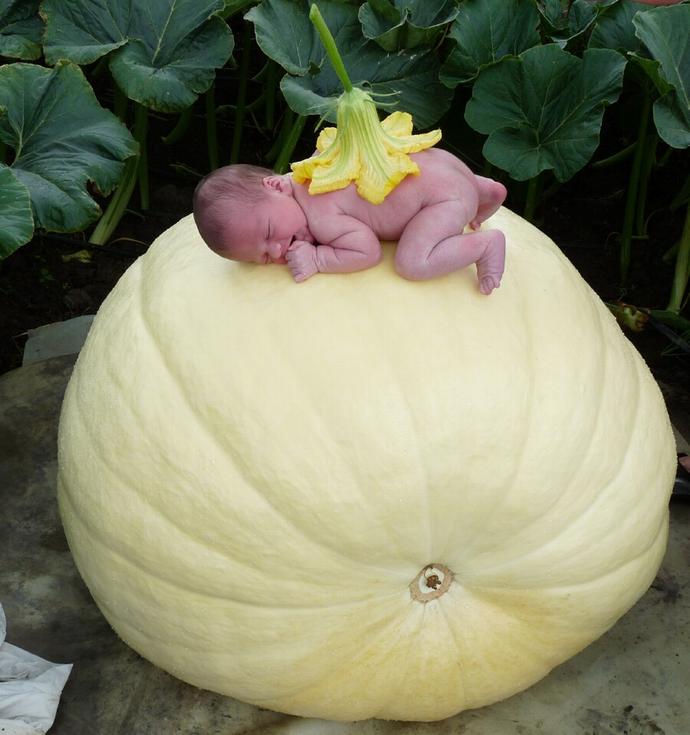
Here is a wonderful picture of Christy Harp’s new baby on top of one of her pumpkins this year that she posted on her BigPumpkins.com diary. Last year Christy grew the World Record Giant Pumpkin of 1725 lbs. I think it is a beautiful picture!

Pumpkin sex again

Sorry for two posts on Pumpkin sex  but I accidently posted the first one 101 without the pictures so I redid it and called it Pumpkin Sex 101a with pictures so you could see how hand pollination is done. Just in case you were wondering!

Giant Pumpkin Sex 101a

Ok, here’s the skivvy on giant pumpkin sex 101. I’ve been talking about giant pumpkin pollination a lot and have been giving bits and pieces of info and so want to be clear about WHY we choose to pollinate them and HOW we hand pollinate giant pumpkins.

First WHY do we pollinate them?

If I was growing regular pumpkins I wouldn’t pollinate them, I’d just let the bees do it but giant pumpkin growers want to know what genetic material is being passed from the male flower to the female flower of a pumpkin. why? Because it doesn’t affect this season’s pumpkin, but the next year’s seeds of that pumpkin. That way we can grow bigger pumpkins,  prettier pumpkins, oranger pumpkins, rounder pumpkins, etc. next year. If we let the bees do it, we wouldn’t know which pumpkin plant the pollen came from as the bees visit many flowers from many plants.

So we grow several different pumpkins from seeds from different giant pumpkin growers. For instance, I have 3 growing right now and one that I hand pollinated  the other day was from the seed of a 895 lb pumpkin seed grown by a grower named Grande in 2009 (hence it is called an 895 Grande 09) and I crossed that female flower with the male flower from a seed of a 945 lb pumpkin seed grown by a grower named N. Harp in 2010 (hence it is called 945 N.Harp 10). Why would I do it? I’m trying to cross 2 top notched pumpkins and see what I can get. I hope to get a round really orange pumpkin with great weight. The 895 Grande was really pretty but the 945 N. Harp came from great genetics. I know which pumpkins they came from because those growers list that with their seed. I can also look up the grandparents as well. If we let the bees do it, we would not have this information to help us decide.

Second question is HOW we do we hand pollinate the female flower?
male flower side view

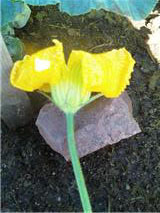
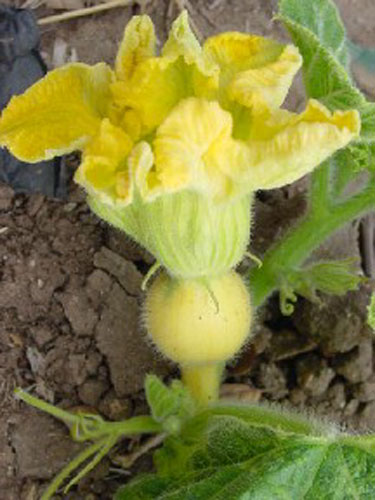
female flower side view

First all pumpkins produce both male and female flowers on each plant. The male flowers show up first and then the female flowers start showing up. I watch the closed green female flowers closely for when they start to get big and slightly yellow orange on the tip of the flower but the flower is still closed. When I see that, I know it will OPEN THE NEXT MORNING. So I cover it the night before  and  some male flowers as well so the bees won’t get to it first with unknown pumpkin pollen. Then I get up EARLY the next morning as we have a 4 HOUR

male flower inside with stamen

female flower inside with stigma

WINDOW TO POLLINATE THE FEMALE

FLOWER, (GENERALLY 6-10AM) and find some newly opened MALE flowers (or uncover the ones from the night before) from the plant I want to cross the female flower with. It could be from the same pumpkin plant or a different one. Now remember we can tell the female flowers because it looks like a little pumpkin is attached at the base of the flower while the male flowers are on skinny stems only. See pictures. Also the inside of male and female flowers are different and when the flowers are open you can see the differences. Male flowers have stamens  (kind of look like a penis-I told you we would talk sex) that have the pollen on it which looks like grains of powder all over it. The female flowers have a stigma (think vulva) and if the timing is right (remember 4 hour time period) will accept the pollen from the male flower.

male flower with petals peeled off revealing the stamen

So as a giant pumpkin grower I take a male flower and peel off the petals leaving the stamen and take that flower and brush the stamen loaded with pollen like a paintbrush on the inside of the stigma and also around the outside of the stigma as well. Then I close up the female flower with a twistie so no other pollen can get in. I keep it closed for one day and take off the twistie afterwards and wait to see if the pollination takes which could take quite a few days. Sometimes they abort when they are a little smaller than the size of a basketball.

male stamen pollinating female stigma like a paintbrush

Inside each female flower are many immature eggs waiting inside immature seeds holding half the genetic material. The pollen holds the other half of the genetic material. If the female receives the pollen, the pollen will germinate and move down inside the stigma to the egg within an immature seed and fuse its genetic material with the genetic material of the egg stored  in that immature seed inside that tiny pumpkin. PRESTO! FERTILIZATION has taken place. Every egg fertilized becomes a a viable future seed. And every seed fertilized holds the genetic material for a future pumpkin If not enough pollen as passed, the baby pumpkin will self abort. (or if it is too hot-90 degrees or hotter, they can abort too) COOL, HUH?!  The so next time you need to talk to your kids about sex, you can talk pumpkin sex as an example!

Ok, have I given you too much info? I figure this way we won’t have to go over this again.!

Calabacitas breakfast

Breakfast Calabacitas With Egg

Here’ a recipe to make a southwest favorite here in Santa Fe. I add an egg on top for a complete breakfast.

(6) 6-8 inch zucchini
1/2 of onion chopped
1-2 ears of corn kernels
1 tsp cumin
Northern New Mexico green chili sauce

Slice zucchini or any summer squash and chop onions. Saute in olive oil till soft and liquid has evaporated. Cut kernels off fresh corn and add to mix. Sprinkle about 1 tsp of cumin (more or less to taste) on top and stir in. Cook a few more minutes till corn is cooked but doesn’t ‘pop’. Cook an egg in another fry pan and put on top of mixture on plate. I add warm green chili on top of each plate to each person’s taste-some like it hotter and some like a little.

Elodie’s basil pesto

basil-cleaned and ready to be made into pesto

Three basil plants needed trimming to keep them bushy. Here is the recipe and some pictures for making basil pesto.

Elodie’s Basil Pesto

About 6-8 cups packed of fresh, clean basil
good quality olive oil
garlic crushed
Parmesan cheese
shelled pinon nuts-1/2 cup

Clean, wash and cut off stems from basil. Crush garlic and add to blender.

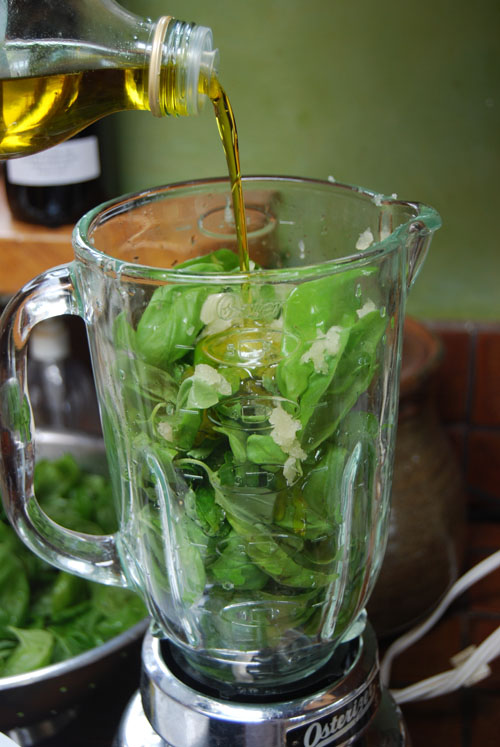
add oil to basil

Put about 1/3 of the basil into a blender and start to pour olive oil into the blender (maybe 1/2 cup or a little more). Start to blend on low and add more basil and/or oil as needed to make the mixture  thick (like thick spaghetti sauce) but still pourable.

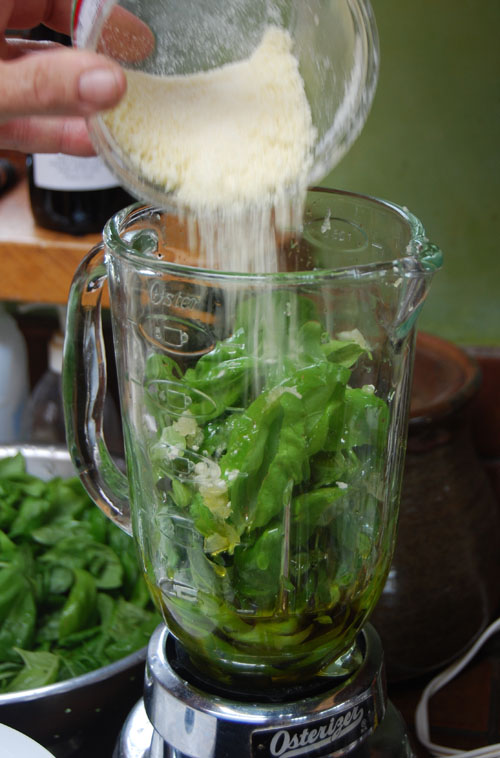
add Parmesan cheese to basil

Add Parmesan cheese to taste and a little salt if needed but taste it before adding salt as the cheese has lots of salt in it. You can add pinion nuts if you have them but we didn’t here. Put in plastic freezable ziploc baggies and flatten the baggie as pictured. The mixture should be no more than 1/2 inch thick when bag is flattened. Put in freezer and break off chunks as needed. Don’t heat the pesto or the basil will turn dark (it’s ok to eat but not as pretty).

final pesto

Just break off a chunk from your baggy of pesto and put it on your drained but still hot pasta and it will ‘melt’ into the pasta as you mix it up. This amount made about 2 cups of pesto.