Spring Equinox-First day of Spring in Santa Fe-69°F Today!

Spring Equinox-equal length of day and night-courtesy of http://www.timeanddate.com

Spring Equinox-The word “equinox” derives from the Latin word meaning “equal night” and refers to the time when the sun crosses the equator and day and night are equal length everywhere in the world-12 hours of each. We are all experiencing the same thing on earth except in the northern hemisphere we are experiencing spring and in the southern hemisphere they are going in to fall-but still 12 hours of day and night for everyone. Yea for us here in the northern hemisphere-we’ve all been through it this year with our winters!

The last few days have been warm and breezy and everything is ready to just bust out garden wise! Wow, I think I’m going to relegate the inside firewood to the wood pile outside. Oh and take that bag of clay kitty litter sitting on the deck that I use to deice icy steps to the shed.  And put the snow shovel away. And put the snow boots and heavy winter jackets back in the hall closet. And put my awl back in the garden shed-no more splitting wood here! Of course as soon as I do this it will snow but who cares?! Time is on our side as gardeners now-literally from tomorrow on the days will be getting longer and longer until we hit the longest day on June 21 (Summer Solstice), then they get shorter again. So let’s enjoy these days and get outside in our gardens and get your hands in your soil. Dig it!

Juniper Pollen Count Highest in a Decade

Juniperus ashei pollencones

According to the Santa Fe New Mexican newspaper on March 16, “Monday, marked the highest pollen count in a decade in Albuquerque, according to pollen data records kept by the city. A pollen-data station on Albuquerque’s west side recorded a juniper pollen count of 3,349, more than a thousand above the last record.” They haven’t released the juniper pollen count for Santa Fe yet but I bet it’s also a record setter this year too.

How does this affect us gardeners? Well some gardeners can’t even get out of their houses (much less even open their windows) this time of year because of intense allergies to the juniper pollen. The culpert? Juniperus ashei. It is one of the predominant trees/bushes here in the surrounding areas outside of Santa Fe and causes allergies for many people living here. It’s the male juniper that causes all the problems releasing the orange waves of pollen from its many pollen cones this time of year. If you look around you can see the difference between the male and female junipers with the male junipers turning rusty orange right now just before they release their pollen in the wind. Good luck to all of you with this allergy this year in particular. And for those of us not bothered by the juniper now is a great time to start your spring garden.

Last Night’s Full Moon

A full moon is visible in this view above Earth's horizon and airglow, photographed by Expedition 10 Commander Leroy Chiao on the International Space Station. CREDIT: NASA

I’m a full moon baby. By that I mean I was born on a full moon many years ago and every full moon affects me in that I don’t sleep very well on those nights and last night was no exception. Perhaps it is because that was when I entered this world eager to get on with life. Last night’s Super Moon was 30% brighter than our other full moons because it was closer to the earth. It is also called the Full Worm Moon because it is when the ground softens and the earthworm casts reappear, inviting the return of the robins. This is exciting news for us gardeners as we are starting to stirr from the confines of our houses and wanting to get busy in our garden much like the robins. I read a very interesting article called, ‘Obscure Full Moon Names for 2011’ that I think you’ll find interesting reading. Evidently  there are many different names for our full moons this year from Full Wolf Moon to Full Beaver Moon but this one is apropo for gardeners because it comes one day before spring officially begins. Today, being the first day of spring, also called Spring Equinox, is when the hours of sunlight and nighttime are almost equal. Yea! Finally after a long cold winter, spring has begone! Now the days will get longer until the Summer Solstice on June 21.

Plant peas, spinach, and arugula on St. Patrick’s Day

Today is ST. PATRICK’S DAY- TIME TO PLANT PEAS, SPINACH AND ARUGULA. I always plant them right around now and use the holiday as a reminder. I stayed home today to recoup after putting Butch down. Getting my hands in the soil is always grounding for me. Lots of things to do right now regarding gardening. Here are some of the things I did today.

COLDFRAME-I inspected the rabbit damage to see if the spinach seedlings are salvageable. All but one of them are starting to grow back from the crown which were undamaged. I planted seeds of the following in the coldframe:

SPINACH-Bloomsdale-45 days in the other half of the coldframe.

CHARD-I didn’t know (or remember) that chard is a biennial (meaning two years) but spends it’s second year mostly growing to produce seed which is why they never seem to produce as big of leaves the second year. I will pull them and plant more chard seeds-white variety.

OUTSIDE RAISED BED-Checked the outside raised beds by the house. Last fall I I dug some old horse manure into one of them and it looks great. I planted the following seeds and covered them with row cover to keep the rabbits from them:

PEAS-Dwarf Grey peas and Oregon Sugar Pod II-60 days

SPINACH-Bloomsdale-45 days and a giant variety of spinach (there I go again!) called Monstrueux de Viroflay-50 days

BUTTERHEAD LETTUCE-Yugoslavian Red-40 days

MESCLUN-Provencal mix-40 days

CILANTRO

CUTTING LETTUCE-a new super red variety of  called Sea of Red-40 days

ROMAINE-Paris Island Cos-68 days

ARUGULA-Apollo-30 days

IN THE SECOND RAISED BED- Took out the last of the carrots from fall that overwintered. They should be extra sweet! The garlic I bought at SF Farmers Market last fall is coming up in it. Lightly dug in some Yum-Yum Mix in the remainder of the bed as I’m going to plant more carrots, beets and shallots which are heavy feeders and need some extra fertilizer especially if you are putting them back in the same area. I will plant:

CARROTS- Purple Haze and Danvers

BEETS-Detroit Dark Red-60 days, Bulls Red Beet-50 days and Early Wonder beet-48 days

DUTCH SHALLOTS-picked up some Dutch Red Shallots while I wait for the French shallots to arrive. Should be a good taste test at harvest time.

MAIN GARDEN-I hooked up the hose and watered the strawberries and the asparagus. Underneath the layer of dried leaves in the strawberry bed I see new leaves starting to grow from the crowns. The asparagus is either dead from our very cold winter or they haven’t started growing yet, we will see..

Butch 2000-2011

The last of my original animals that I first started with in the barn is gone. Butch, my Swiss Alpine female goat had to be put down late yesterday. She was the other half of the goatie duo that I got 11 years ago. Bear, her twin brother had to be put down in January. Her good friend, my horse Bri, I lost a year and a half ago in October. Together they were the awesome threesome. She wasn’t as comical as Bear but more serious and very very sweet and loveable. She loved to have her head scratched. She was also a great goatie thing. Here are some pictures of her:

This slideshow requires JavaScript.

Master Gardener Tomato Disease Sheet

Hey Master Gardener Interns! I want to let you know you all were awesome with some great questions and suggestions. I really enjoyed the classes. I thought I’d put it in my post below so others can read it as well as the pdf here TOMATO DISEASES in case some of you didn’t get one.  (It’s easier to print off the pdf than the post). This is not a complete list of tomato diseases in New Mexico but some of the most common. Also the HERB SHEET is two posts back for you to get.

TOMATO DISEASES/PROBLEMS
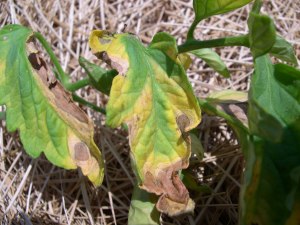
EARLY BLIGHT (Alternaria solon) SOILBORNE FUNGAL DISEASE
Most tomatoes are susceptible to Early Blight which usually develops in early summer, after heavy rains or when it is humid and warm.
SYMPTOMS: Leaves at the base of the plant near the ground develop dry looking, irregularly shaped brown patches surrounded by concentric
rings. The best prevention is prune off the affected leaves as soon as you see them. I prune off all branches and leaves within 18 inches of the ground to try to prevent this as it is a soilborne disease. Early Blight overwinters in the soil. Remove affected plants and clean up fall garden debris as it overwinters in plant residue. Wet weather increase likelihood of getting this disease.
CONTROL: Protectant fungicides-Copper or sulpher can prevent further development of it, Green Cure (potassium bicarbonate), and Serenade (QST 713 strain of Bacillus subtilis), a biofungicide helps more to prevent
disease and is not a cure. Also spacing plants farther apart for good air circulation may help. Good sanitation and disposal of plants at end of season are important.

SEPTORIA LEAF SPOT

SEPTORIA LEAF SPOT (Septoria lycopersici) NOT SOILBOURNE-FUNGAL DISEASE
Septoria leaf spot can occur and any stage of a tomato plant development especially after heavy rains or when it is wet and warm. Spores are spread by windburn rain, insects, splashing rain
SYMPTOMS: It’s usually observed first on the lower leaves. Leaves that are heavily infected have small circular brown spots, turn yellow, dry up and drop off. The fungus is not soil inhabitant but can persist from one season to the next if the debris from the diseased plant is not removed and ends up in the soil.
CONTROL: Copper fungicides, Green Cure (potassium bicarbonate), Serenade (QST 713 strain of Bacillus subtilis), a biofungicide, helps more to prevent disease.

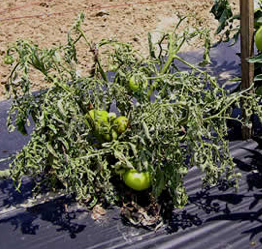
Bacterial Wilt

BACTERIAL WILT-SOILBORNE DISEASE
Soil borne and waterborne pathogens that causes leaves to wilt in day only to recover at night and then complete sudden wilting of plant.
TEST: Cut a four inch long section from low down on the stem and suspend this cutting in a jar of water. If a cloudy, milky ooze comes out, this in an indication of bacterial wilt. Dried leaves may remain green.
CONTROL: Dispose of plants. Plant in different location. 3-4 year rotation
of crops

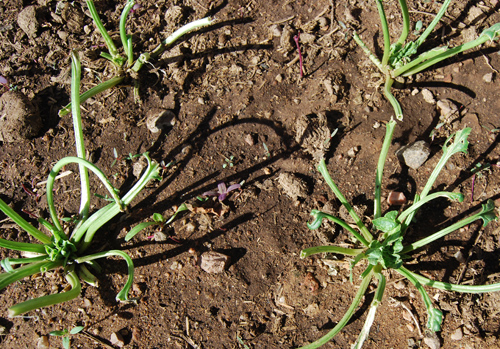
BEET CURLY TOP VIRUS DISEASE
Transmitted by the beet leafhopper which build up high numbers on tumbleweeds and survive the winters on mustard plants.
SYMPTOMS: upward curling leaves that become thick, stiff and twisted. May stay green or become yellow with purple veins, plants become stunted. Plant next to them may be virus free.
CONTROL: Provide partial shade is beneficial as leafhoppers prefer to eat in the sun. Possibly use row cover/shade cloth to cover plants.

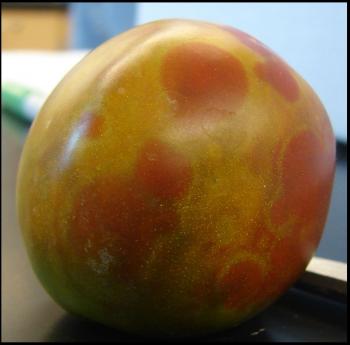
Tomato Spotted Wilt in tomato

Tomato Spotted Wilt

TOMATO SPOTTED WILT

This virus is caused by thrips that transmit the virus from infected tomato plants to other healthy tomato plants.

SYMPTOMS: Two symptoms are dominant- young leaves turn bronze and develop small brown spots. Second, the leaves wilt and tips die-back. Infected plants produce poor quality fruit and less yield. Pull plants and dispose of them.
CONTROL: Elimination difficult. Using reflective mulches may help reduce
infection, physical barriers like covering plant with row cover when it is young.

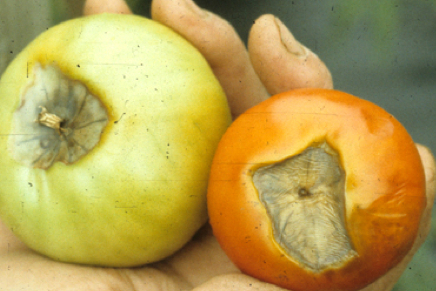
BLOSSOM-END ROT DEFICIENCY
Hard brown or black leathery patches on the blossom ends of ripening tomatoes indicate blossom-end rot. It is more common in large fruited varieties. This is generally caused by a calcium deficiency at fruit set or uneven watering and is prevented by planting tomatoes in compost enriched soil and mulched with straw to keep moisture levels more constant. I put a tablespoon or two of dry milk in the bottom of each hole when first planting tomatoes. In the fall dig in some gypsum which is a good source of calcium without raising the ph of the soil here in Santa Fe.

Arugula

Apollo variety of Arugula

Arugula or Rocket as it sometimes called is another one of my favorite spring greens that has a very short season unless you are growing it in winter! It is a popular Mediterranean green especially amongst the Italians. Luckily it grows fast and you can harvest it between 35- 40 days. It is one of the earliest spring crops we can grow. It is high in Vitamin A and C and low in calories.

Plant 1/4 inch deep like mesclun, broadcast it out in a little patch, nice and thick and thin it out (eating the thinnings) until they are about 3-4 inches apart.  You can sow every 2-3 weeks for a continuous supply until it gets too hot for it. Pick off the outer leaves and let it grow back out from the center until it bolts in late spring. After that either pull it up or let it go to seed. You can also grow it in a pot.

I love its tangy almost peppery flavor and nothing is better than a salad made of arugula with blue cheese crumbles, caramelized walnuts and raisins with a balsamic vinegarette.

Here are some varieties you might want to try – just google their name and you should come up with the seed company.

Rocket-standard type-I tried rocket but it’s too skinny for me and I don’t feel like I get much when I eat it.

Apollo-I like this variety-bigger leaves, less stem

My Way-early variety, nice big leaves

Sylvetta-loves cold weather

Roquette-wild variety

Selvatica-Italian heat loving

Santa Fe Master Gardeners Herb Sheet

I just finished teaching the Vegetable class this evening class for our Master Gardener Interns and realized during the class I didn’t xerox off the Herb Info sheet. I told the class they can get it here by Tuesday but I’m teaching the other class at 9am so here it is now for anyone liking a copy of it. You can get it here HERBS as a pdf and print it out for yourselves. Class was great tonight with some very intelligent questions and I hope they all enjoyed it!

Santa Fe Master Gardener Vegetable Class

Tonight and tomorrow am, I ‘m teaching the Vegetable Garden class to our new interns in the Santa Fe Master Gardener Class. I can’t wait! There is so much useful information that it will be hard to share it in only 2 hours. Coming to my blog is a much better way to get information on a daily basis as we move forward in this new gardening season!  I’m planning to give more how-to info and advanced info on vegetable gardening this year. I hope many of you will also exchange useful information with me this year. You can send your information via commenting on a post so others can see it and learn as well. Now is the time to get busy in our veggie gardens! Plant something that still likes cold nights-like greens!

Rabbits ate my overwintered spinach

Spinach damage inside my coldframe- eaten by a rabbit

Waaa! I went out to the cold frame and found that the spinach that I planted LAST NOVEMBER has been all eaten. Some baby wabbit or squirrel (do squirrels eat greens?) found out how to get inside through a small crack and had a feast! I now have to replace part of the top wooden frame that warped this winter and created the crack. Notice it ate the leaves, leaving the stems. Hopefully the center part of each spinach (the crown) will come back. At least the critter didn’t pull them up…

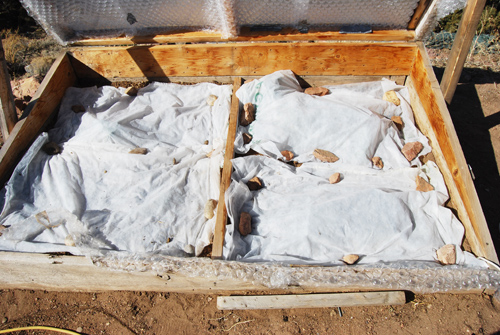
coldframe with spinach covered by row cover to keep critters out

I am now putting row cover over the inside sections and holding it down with rocks to keep them out till I fix it. I’m hoping to fix it tomorrow because I want to now plant spinach seeds in there. Maybe I’ll plant the seeds between the other spinach plants. It also ate some bok choy and chard. Boo Hoo. I hope they enjoyed it.

2011 Vegetable Garden Plans

My 2011 garden plan is too big for this post so I divided it in half in hopes you can read it. Maybe not though. Anyways this is my main garden plan from the left side. The  second image below the first one is of the right side of the garden plan with the strawberries being the over lapping part.  It totals around 3000 sq feet for lots of vegetables. Notice I still don’t have all the areas filled yet.

I also have a plan for the pumpkin patch but won’t publish that as it will only has 3 giant pumpkins and some giant marrow growing in it this year. It  also is 3000 sq feet for all of them. Giant pumpkins take a lot of room to grow. They are the gorillas of the garden going anywhere they want to so it is best to get them out of the main garden and let them sprawl.

You can make your own garden plan groveg.com. It’s a great program and easier to read than my chicken scratch in years past. (Don’t tell my chickens, they can read their chicken scratch just fine. You can save the plans from year to year and then just change out the veggies once you make a plan. It’s also fun to do and looks nice. I print it out and put it in my garden shed to remind me what to plant and where.

main garden left side

main garden right side

Time to Plant Spinach!

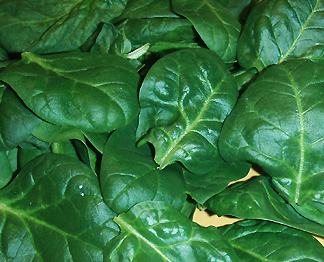
Fresh Picked 'Melody' Spinach

I direct seed spinach here in Santa Fe as soon as our soil is workable. I will get it in this weekend weather permitting. I always seem to wait too long but not this year!

If you have a soil or compost thermometer or if you don’t have one, you should consider getting one (I have a compost thermometer as it is longer in length), check your soil as spinach will germinate when the soil gets between 55-60 degrees. Spinach likes it cold and it has a short season here. For most varieties as soon as it gets warm, it will bolt like a cat and go to seed. We generally won’t be able to get spinach by mid May so I like to replant every few weeks to get a continuous crop instead of a large crop all at once for as long as I can. Luckily for us spinach grows quickly and most varieties reach maturity 4-6 weeks from seed.

Spinach likes to eat as it is a heavy feeder so a good dose of fish emulsion and seaweed fertilizer after it is up will really help it. If you have overwintered some spinach, fertilize it as soon as it starts to grow.

There are 3 kinds of spinach: Savoy (crinkly, thick glossy leaves) Semi-savoy (less crinkly), and Smooth Flat leaves. Here are some varieties for each type:

Savoy:
Bloomsdale
Regiment

Semi-Savoy:
Tyee
Indian Summer
Melody
Teton

Smooth Flat Leaf:
Giant Nobel
Olympia
Bordeaux

If you are direct seeding, plant your seeds about 1/2 inch deep, either in rows or broadcasting them like you would a mesclun mix and just keep thinning them out, eating them along the way. If you haven’t tried fresh grown spinach, you’re in for a treat. Don’t wait too long or you’ll miss this wonderful green.

French Shallots!

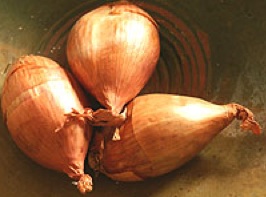
Long French red shallot-courtesy of Au Potager

Bonjour! I just read a post on Au Potager’s page on ‘Shallot Wars’ and what the difference is between French shallots and Dutch shallots. Great post and very informative about the three varieties of French shallots. The French think their varieties (which are grown from bulbs) are much better than the Dutch variety (which can be grown from seed). At the end she writes that she didn’t think you could get the french varieties in the US (she lives in France) and if anyone in the US finds a source for them to let her know.

So I researched it online and found a source! The French varieties can be found at John Scheeper’s Kitchen Garden Seeds here. I love shallots and their flavor-more delicate than onions and no tears!  Great in vinegarettes, or sauteed and put in sauces.

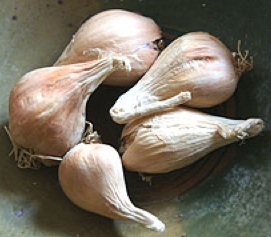
French Grey shallot-courtesy of Au Potager

I’ve grown a red shallot variety before (not sure if it was the french type) but I’m going to try the ‘French Red shallot’ this spring and grow the French Gray Shallot’ (which is suppose to be the best) next fall—that’s when your suppose to plant the grey variety. Shallots originated in Palestine, need full sun and good soil drainage. They do well here in Santa Fe. John Scheeper’s Kitchen Garden seed catalog page above gives some great planting instructions for them so go there to get them. Au revoir!!

Spring in Santa Fe?

Just when you think it’s finally spring here in Santa Fe, it’s starting to snow again. Oh no, not again! But that’s how Santa Fe is in spring—one day it’s spring, next day it’s winter, then it’s summer, no it’s winter again and on and on. Maybe the snow will put a damper on the juniper and cedar starting to bloom raising the pollen counts in Albuquerque to over 1200 today. Soon (like a week or two) we will have that high of pollen counts too with yellow pollen dust on everything and blowing everywhere. You can actually see clouds of pollen blowing across the land which is horrible for all my friends who are allergic to them. LUCKILY, I am not. I’ve been spared.

10 Things to Do in March in the Garden

Now is the beginning of our season for fruit and vegetable gardeners. I got my light boxes out! Woo! Hoo! Here we go! Here are 10 things to do for or in your garden this month.

1. Finish ordering your seeds or getting your seeds if you haven’t already.

2. Get your light tables and heating mats out and ready to go. Use florescent lights that are at least 3000 lumen. I use the daylight ones. They produce less ‘leggy’ veggies.

3. Start tomato, pepper and eggplant seeds indoors to set out later as transplants depending on variety.

4. Finish your garden plans

5. Get your soil tested to see what amendments you might need to add to it.

6. Put  horse manure that has been aged for at least 6 months on your garden beds and dig in. Don’t put on ‘hot’ manure.

7. Hurry up and finish pruning your fruit trees. Not much time left.

8. Spray your fruit trees with dormant oil before their buds turn color to smother any dormant bugs.

9. Water your trees.

10. Plant COOL SEASON vegetable seeds OUTSIDE on ST. PATRICK’S DAY.  Some varieties include carrots, beets, lettuces, spinach, arugula, bok choy, swiss chard, onions, brocolli, cabbage, peas, radishes, mustard, kale and other greens.