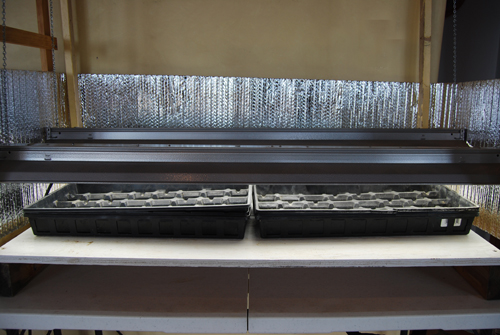
Tips for Growing Tomato Seeds

Tomato seedlings with thermometer

Lately I’ve been getting some questions about tomato seeds not germinating from more than one grower and thought I should address some of the problems and offer some helpful tips. If you haven’t started your tomato seedlings yet, you should start now. You have 6 weeks until May 15th which is the last average freeze date here in Santa Fe. You can still get a good head start if you plant soon.

1. Tomatoes do not like cool soil. Soil temperature in the 60’s is too cold for tomatoes. Tomatoes, peppers, eggplants like it very warm to germinate (in the 70-80°F).  Some people put them on top of a refrigerator where it is warmer. Even if your days get warm where ever you live, if your nights still get chilly (i.e. in the 60’s), they shouldn’t be outside. Period.

Plant Germination Heating Mat

2. Get a plant germination heating mat. The best thing you can do if you plan to germinate some of your own seeds is get an electric plant germination heating mat. Amazon has a lot different sizes on the internet here.  You may be able to find them at one of your local nurseries (but not at a big box store). It will keep the soil evenly warm-in the 70-80’s°F range. My tomato seeds germinated in less than a week with them sitting on it inside the house.

3. Plant tomato seeds 1/4 inch deep and put sand on top of them instead of the ‘soil’ (like play sand from Home depot or Lowes). This makes it easier for the seed to push through to the top.

4. Make a solution of Chamomile tea to ward off dampening disease. Dampening disease is a soil borne disease that sometimes attack seedlings right after they come up. You’ll know if if you get it because the new seedling wilts and dies. This usually happens when the first 2 leaves (called cotyledon leaves) pop up.

Closeup of two baby tomato seedlings each with their first 2 leaves called cotleydon leaves

I put one tea bag in a cup of hot water (like you would drink) and then when it is cool, transfer it to a little sprayer (like what you might use for your hair) and spray those new leaves. There are some properties in Chamomile tea that thwart off this disease-try it-it really works. After 4 of the true leaves, (they are the next leaves that come up that look like tomato leaves) I stop using the Chamomile tea.

5. Water from the bottom. This helps avoid getting ‘dampening off’ disease and also keeps the little seed from washing away when you water from the top. Put them in a sink or tray with some water and when the soil absorbs the water, it will look damp in top.

Tomato seedling with true leaves-transplanted up to a 2 inch pot

6. Transplant after you get 4 true leaves to the next bigger container. I’m assuming you start with small containers. Plant them deep-up to their first true leaves. They will root along the stem and become stronger. Every time you transplant up, bury your stems deeper. Always use disinfected pots-use 10% bleach solution to water to rinse your pots in.

7. Give them light. They need light and lots of it. If you don’t have a light box then put them in a south facing window and rotate them daily as they will lean toward the light.  Be careful you don’t fry them with too much heat from a hot window. For those of you that have them under lights keep the lights about 2 inches above the seedlings and raise the lights as the plants grow. This will help keep them from getting ‘leggy’.

8. Give them dark. Yes that’s right. Plants need a period of darkness for photosynthesis to take place. I give mine 8 hours of darkness at night. Photosynthesis is the process where the plant takes the energy it gets from light in daytime and converts it into sugars as plant food. I have my lights plugged into a strip plug and the strip plug into a timer so I don’t have to think about it.

9. Use rock phosphate if your tomato leaves turn purple. Purple leaves means your plant is too cold. If your little tomato leaves start to turn purple (just look at the underneath side of a leaf), then they are cold and your soil is cold. They can’t access the phosphorus in the soil when the soil is cold. Get them to a warmer place and get some rock phosphate (which is a powder) and sprinkle some on top of the soil and water in. They will green up again within a couple of days.

10. Fertilize lightly. I only use thrive and diluted seaweed when I first transplant up and then only after the plant is doing well will I fertilize lightly with diluted fish emulsion. Don’t overdo it.

11. Grow thicker stems by brushing the plants. Make your tomato plants strong not leggy. You can make your plant produce stronger thicker stems by either brushing your plants with your hand when you walk by once or twice a day or put a fan on them (low speed). This mimics being outside where a breeze gives the plant a ‘work out’.

12. Keep planting up. Don’t let them stay in the same pot where they can get leggy. Once they outgrow their pot, plant up to the next size. I start with a little 6 pack and then plant up to a 2 inch pot then to a 3-4 inch pot and then to a gallon size pot if needed. I don’t use Mycorrhizal until I do the final transplanting into the ground.

I will give more tips when we are ready to transplant outside.
Bees!

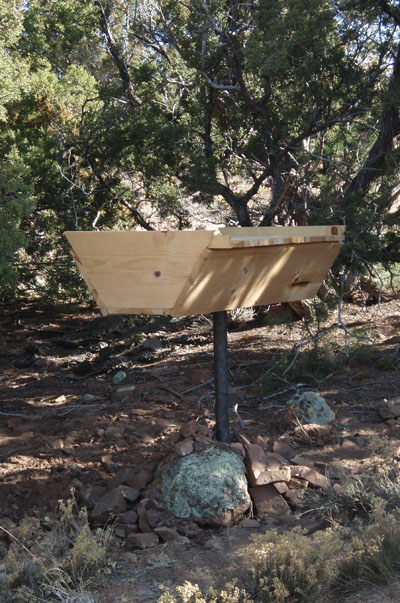
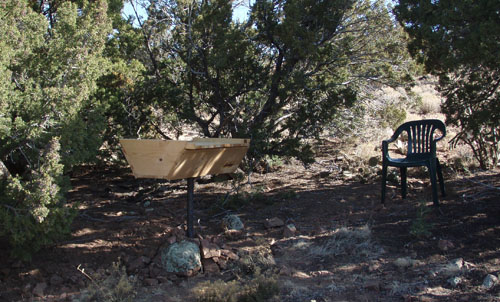
Yea! Here is Caleb's top bar hive this morning

For 2 years I’ve been waiting for one of my beekeeping friends to bring over one of their hives but no one had any extra bees or top bar hive to bring. I’ve wanted bees to help with pollination in my veggie garden and thought what a great relationship that would bee. My friends get space to put their hive and I get pollinators.  I promise not to use chemicals that will harm the bees and will give them water. I didn’t think I would be interested in bees that much. I don’t want to take care of more things. I’m already overloaded. I just want pollinators and they can do the beekeeping thing. But still, I’ve wanted them.

closeup top bar hive this morning

So last week I was ecstatic when Caleb, a friend of mine, told me he would move his hive here to the garden area. Finally. Yea! I’ve been waiting with great excitement all week for him to come not quite knowing what to expect. Caleb is a 3 year beekeeper and I can tell by the way he talks about his bees that he’s good and he cares about them. Yea, like children-all 10,000 of them! (the hive will grow to around 50,000 this summer)

Yesterday afternoon he came over and scoped out the property to see where he wanted to keep his bees. He picked out a lovely site that was nestled in some trees facing southeast (that is the direction they want to fly out in the morning) plus they will get protection from the hot west sun and wind this summer. They would be within 50 feet of the vegetable garden. Excellent! He decided to put the top bar hive up on a stand he built. He dug a hole at the site and buried his stand so the top bar hive won’t blow away during our high wind periods. Then we had dinner and off he went to pick up his bees at sunset after they came home to the hive.

water for bees

While he was gone, I brought down a bowl of water and put some twigs halfway in it so the bees can walk down the twigs to get to the water. Caleb said you have to move bees at night because when they come out in the morning they will have to recalibrate their internal GPS so they can find the hive again by the end of day. He came back an hour after dark and he had the top bar hive with the bees inside covered with a towel in the back of his truck. They were upset about the bumpy ride on our dirt road. How do we know? Because they were LOUD! They were humming loudly and sounded upset-no actually they sounded pissed. Glad the towel was covering the hive. So he let them settled down and once they were quiet he picked up the box and with flashlights we took them to their new place.  After we got there and Caleb attached the top bar to the stand, a few bees came out just inside their entry hole to check it out but they stayed in. Wonder what the neighbors thought last night with us walking all over the property with flashlights carrying a coffinlike box! I’ll have to show them the bees!

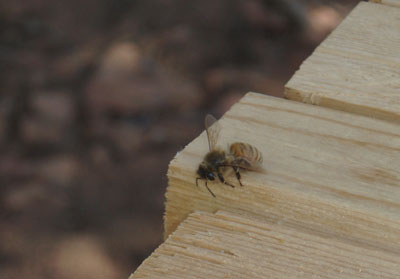
First bee out on top of top bar hive exploring it's new surroundings

This morning was cold (about 38°F) so only a few of the bees came out to explore. While I’m working, they will come out when it is warmer. I hope they like their new property!

Later today, Caleb will come back and put up some plywood to protect the hive from rain (hah! fat chance of that) and he needs to put on their ‘porch’ that they like to land on when entering or leaving the hive. I wonder if bees have an air traffic controller for take offs and landings?! Perhaps they do have an air traffic controller. Perhaps our traffic controllers could learn a thing or two from their traffic controllers. I can see this is gonna be fun! I’m learning a lot from Caleb. Bees are fascinating creatures with an incredibly structured society. Caleb said they can follow the sun even when it is on the other side of the earth with their GPS-how cool is that?! Looks like I’m going to need a bee hood soon to learn more..

‘The Vegetable Gardener’s BIBLE’ by Ed Smith

The Vegetable Gardener's Bible by Edward C. Smith

The name ‘The Vegetable Gardener’s Bible’ is really appropriate as this is truly the bible for vegetable gardeners. My edition is 11 years old being printed in 2000 and the information in it is as current as if it was written yesterday. It is one of those garden books I keep handy to go back to over and over again. In his methods, he advocates wide rows, organic methods, raised beds and deep soil which just about says it all.

Ed Smith has a 1500 ft garden that he tends with his wife, growing nearly 100 varieties of vegetables in Vermont. He states if you can grow in Vermont, you can grow everywhere. I guess he hasn’t tried growing in the high deserts of New Mexico! Having said that, I feel that no matter where you grow there are always challenges and his book addresses many that gardeners experience everywhere. He shares step by step instructions on how-to build raised beds, soil conditioning, crop rotation, greenhouse gardening, cold frame gardening and so much more. Everything is explained clearly for both the novice and experienced gardener. I love this book.

Growing Garlic

Hardneck garlic- photo courtesy of daytondailynews.com

Ahh, garlic. Fresh garlic. If you are a cook, you should definitely try growing some garlic. It tastes better than the store bought because it is much fresher and you can grow the hardneck varieties which you won’t find in the grocery store. Garlic originated in Central Asia and dates back over 6000 years. It is used for both medicinal and culinary purposes. It is a species in the onion family, closely related to onions, shallots, leeks and chives. Avoid growing the ones from the store as often they are sprayed to prevent sprouting. Here are the main types of garlic:

Softneck garlic: It’s the most common type you’ll find in the grocerey store. It is usually white with paperery skins. Softneck garlic has a long shelf life and is easier to grow which is why you see it in the grocery stores. It has a layer of cloves on the outside and smaller cloves inside that I find annoying to peel. It’s leafy stalk is pliable unlike the hardneck type. The two main types of softneck garlic are artichoke and silverskin.

Hardneck garlic: It has a central stiff stalk (also called a stem or scape) coming out of the middle which cloves grow around, It usually has fewer cloves but larger.  It has thinner skin and shorter shelf life. The three main types of hardneck garlic are Purple Stripe, Rocambole and Porcelain. Hardneck garlic is considered to be the most flavorful.

Purple Stripe garlic is distinguished by its purple markings. Two varieties are Chesnok Red and Metechi.

Rocambole garlic produces large tan cloves and have a fuller flavor than softneck varieties offered at the store. Two varieties are Spanish Roja and Killarney Red.

Porcelain garlic has satiny skins and fewer but much bigger cloves often as few as 4 cloves to a head. It is often mistaken for Elephant garlic but it’s flavor is fuller.

Their are many varieties to choose from in all three types-I read somewhere there are over 200 varieties of hardneck garlic alone.

Elephant garlic: It is not like regular garlic because it’s flavor is milder and less intense. Many people buy it because it is larger. It is used when a subtle hint of garlic is needed in dishes but is not a substitute for regular garlic. I’m not impressed with it.

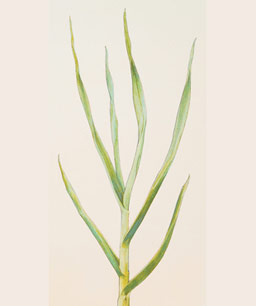
Softneck garlic stalk- courtesy of finegardening.com

Hardneck garlic stalk- courtesy of finegardening.com

Growing garlic in the garden is easy. You can buy it through many of the seed catalogs or get  some at our local farmers market in the fall when it is abundant. I don’t know what variety I got last fall, but it is a purple striped type because of its color. Fall planted garlic that has been overwintered will be ready sometime in July. Spring planted garlic can usually be harvest sometime in late August-Sept. Garlic likes enriched soil so add compost to your bed or aged manure before planting. I also put in a little bonemeal  and yum yum mix into each hole at planting time. Separate your cloves leaving them unpeeled, and pick the biggest individual garlic cloves. Separation should be done immediately before planting. Plant pointed side up and about 2 inches deep. Planting 4-6 inches apart will produce more bulbs but smaller. Planting 8 inches apart will produce bigger bulbs.  I like to put a straw mulch around the garlic to help retain moisture and retard weeds. Garlic while it is in the growing state likes to be keep evenly moist to produce the biggest cloves. Hardneck garlic produces a tall stalk (scape) which is actually the flower stalk that will get curly. There are 4 ways to put more of the energy into the cloves just before harvest time.  One way is to  cut off the scape (hardneck type) after a couple of curls. A second way is leave the scape (Hardneck type) on and when the scape straightens out, you stop watering. The third way  is to just stop watering 2-3 weeks after cutting off all the scapes. Another way is to wait till about half the leaves (either type) have died before you stop watering. When this happens, check the tops of the garlic bulb to see if you can feel the cloves while still in the soil. Dig it out carefully after the bulb is good size being careful not to scrape it. Leave it out (but not in full sunlight) to dry out the skins before using. I like to bring it inside during this time as direct sunlight will ruin it. Brush off the dirt after they are dry. It’s relatively easy to grow and nothing taste better than fresh garlic right out of the garden! There are many sites that talk about garlic, but one I really like because of these pictures of the scapes is on their article, “Garlic Begets Garlic” at finegardening.com. They also give more info on this subject.

Red Orach-More info and pictures

A gardening buddy of mine is growing Red Orach and I thought it would be good to see pictures of it as it is coming up. Mine just reseeded itself so it grows everywhere. It will get quite tall  (3-5 feet) if left unattended and that is how it has reseeded it self everywhere at my place. I let a few go to seed 2 years ago. That’s ok with me. I can always pull it if it grows somewhere I don’t want it to be. But don’t wait till it gets tall to pick the leaves. Pick them while they are quite young and they will be tender.

This slideshow requires JavaScript.

Wind broke my coldframe

Plexiglass broken/bubble wrap insulation shredded

Dang it! I left the lid to the coldframe up the other day and the wind came up while I was gone and broke the lid. I mean it must of really come up cause it broke one of the 1/4″ plexiglass panels in it. Plexi isn’t so easy to break.

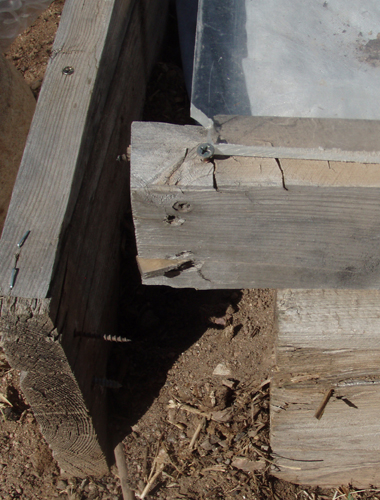
Rabbits don't need to sneak in with an 8 inch gap!

Anyways it also torqued the frame as well because now there is an eight inch gap in the corner where the wood frame was forced apart. Great, now the rabbits can walk in. I have to rebuild the lid and somehow pull the wood together on the frame with the dirt inside and re-screw it back together. Way more work than I have time for. And the arugula is coming up inside. Bummer…

Whole left side of coldframe broke-ARRRGH!

On the good side, look at my view from the house in the bottom photo!

Higest and Lowest Pesticides in Produce You Buy

EWG Shopper’s Guide to Pesticides

As a gardener, I don’t grow every kind of vegetable that I eat and I want to know which vegetables have more pesticides in them when I shop.  Here’s a little guide, ‘EWG SHOPPER’S GUIDE TO PESTICIDES‘ a friend of mine found on the internet. The organization who put this out is Environmental Working Group whose site is about pesticides in your food. This comes from their site, www.foodnews.org – “The Shopper’s Guide to Pesticides is a key resource for consumers aiming for healthier diets. Since many shoppers can’t find or afford organic produce, they can use the Shopper’s Guide to avoid those conventional fruits and vegetables found to be highest in pesticides – the Dirty Dozen – and, instead, choose items from the Clean Fifteen list. You can lower your pesticide consumption by nearly four-fifths by avoiding the 12 most contaminated fruits and vegetables and instead eating the least contaminated produce, according to EWG calculations. When you eat the 12 most contaminated fruits and vegetables, you’ll be exposed to an average of 10 pesticides a day. When you choose fresh produce from the 15 least contaminated fruits and vegetables, you’ll consume fewer than 2 pesticides per day.”

This a great idea in this day and age of food awareness. I’m going to carry one of these around too. You can get your own list and keep it in your wallet to have it handy when you shop. Go to their site, check it out. You might support them if you think their cause is good too.

Red Orach (mountain spinach) and Bright Lights Chard

I just picked some Bright Lights Chard that overwintered in the coldframe and with the chard were a few plants of Red Orach (also called mountain spinach) that have been reseeding itself.  The variety of orach I grew came from Baker Heirloom Rare Seed company and it makes a great red addition to salads or used as steamed greens. I steamed the chard and Red Orach on top of some pasta tonight yummy. It tastes like spinach and you should pick it when it’s young and tender to eat. Red Orach really is an incredible deep magenta red color. Look how beautiful they look together!

Chard and Red Orach for dinner tonight

Donut Seeds

While teaching the SF Master Gardener Vegetable class last week, one of the facilitators for the class, Helena Van Heiningen, came up at break to give me some new ‘seeds’. Donut seeds. They come from Ferry Morse and the package is really fun! Check out the front and back of the package below! Hmm! I’m gonna have to plant some of these! I wonder if they germinate in coffee?!

Donut seed-'Cakus Delectae'

Donut Seed-Back of package

The Bella Rosa and Hunwee Dance

I saw Bella and Wee playing the head butt game. One jumps up and then the other one jumps up and then they butt heads really gently. Not aggressive at all. When I first clicked the camera, they stopped. So I waited patiently and they started again. Here are some pics of the action.

This slideshow requires JavaScript.

Sonny, Bella Rosa and Hunwee-my little barn buddies

"I'm Hunwee!"

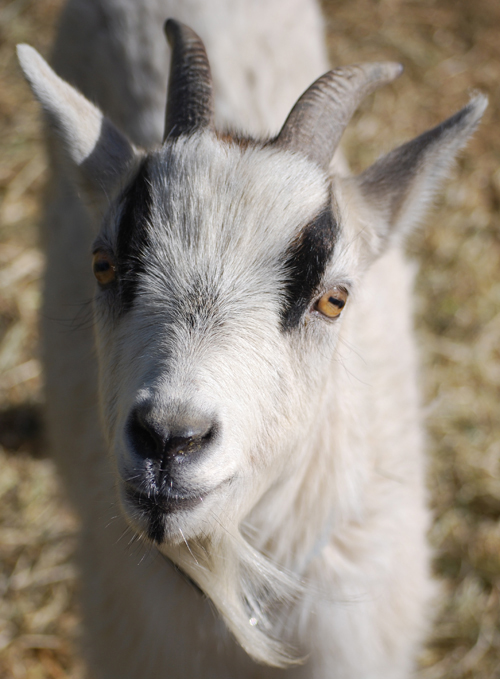
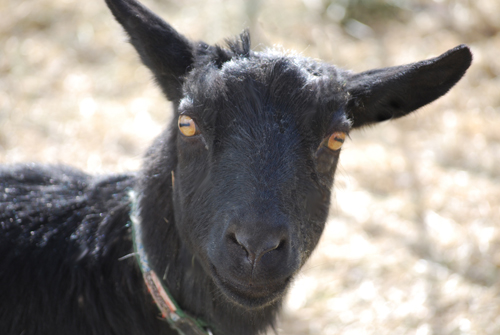
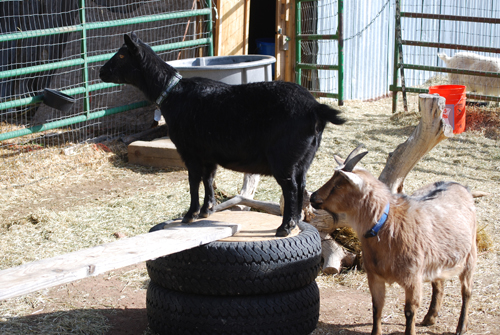
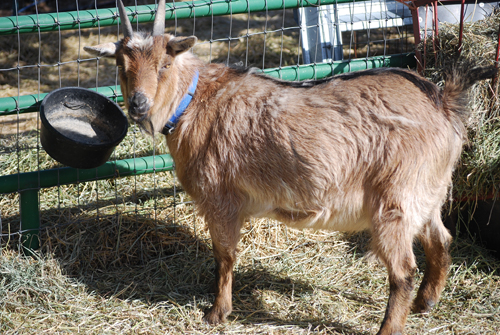
I still have barn animals having rescued (3) one year old Dwarf Nigerian goats, Sonny, Bella Rosa, and Hunwee. A friend, Kate, who lives in the city, came to us telling us that someone had shot one of her goats and was wondering if we knew anyone who might want the rest of them as she feared for her little clan. So they live in the country now away from danger. They are young and healthy and they bring lots of energy to the barn with their antics. Sort of like monkeys running and jumping and butting each other. They play king of the mountain on their jungle gym I made them. Here are some pictures of them.


Bella Rosa sez, "What's up?"

Sonny-"Mr.Chow Hound to you!"

"This is our jungle gym!"

Sonny-"Hey where's my chow?!"

"We want to be on your side"

Fruit Tree Pruning

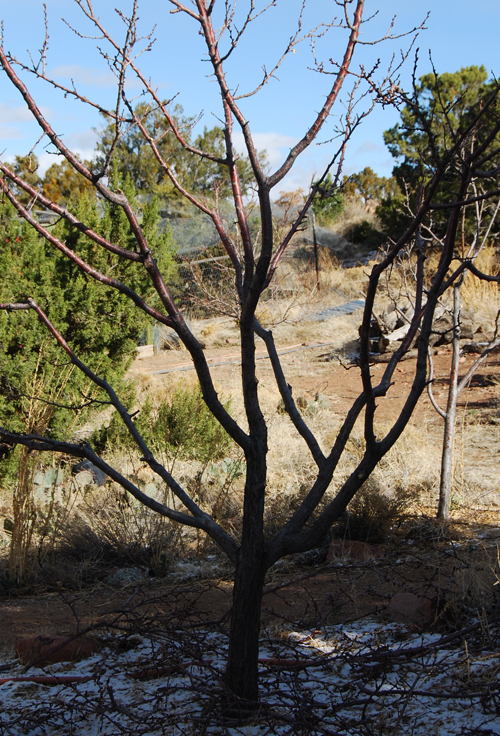
Unpruned apricot tree with lots of little branches everywhere

It’s just a little orchard I keep telling myself!  I know I’m a little late for pruning but need to prune my fruit trees before they leaf out (which luckily they haven’t yet).  Since I didn’t do them last year I feel compelled to do it this year. Trying to use my ‘how to prune a fruit tree’ skills.  I don’t want them to get out of control!

Pruned apricot tree

Here are pictures of an semi-dwarf apricot tree before and after I pruned it. It desperately needed pruning. Apricots are notorious for putting out lots of tiny branches everywhere so it is best to keep up on them.  Notice how many branches I cleaned out but still kept the basic shape. I also cut the suckers growing at the base of the tree. When pruning fruit trees, we need to consider what type of fruit tree we are pruning. Most fruit trees like apricots, peaches, pears and plums do better with an open vase shape where sunlight can enter into the center of the tree except for apple trees that do best with a central leader.

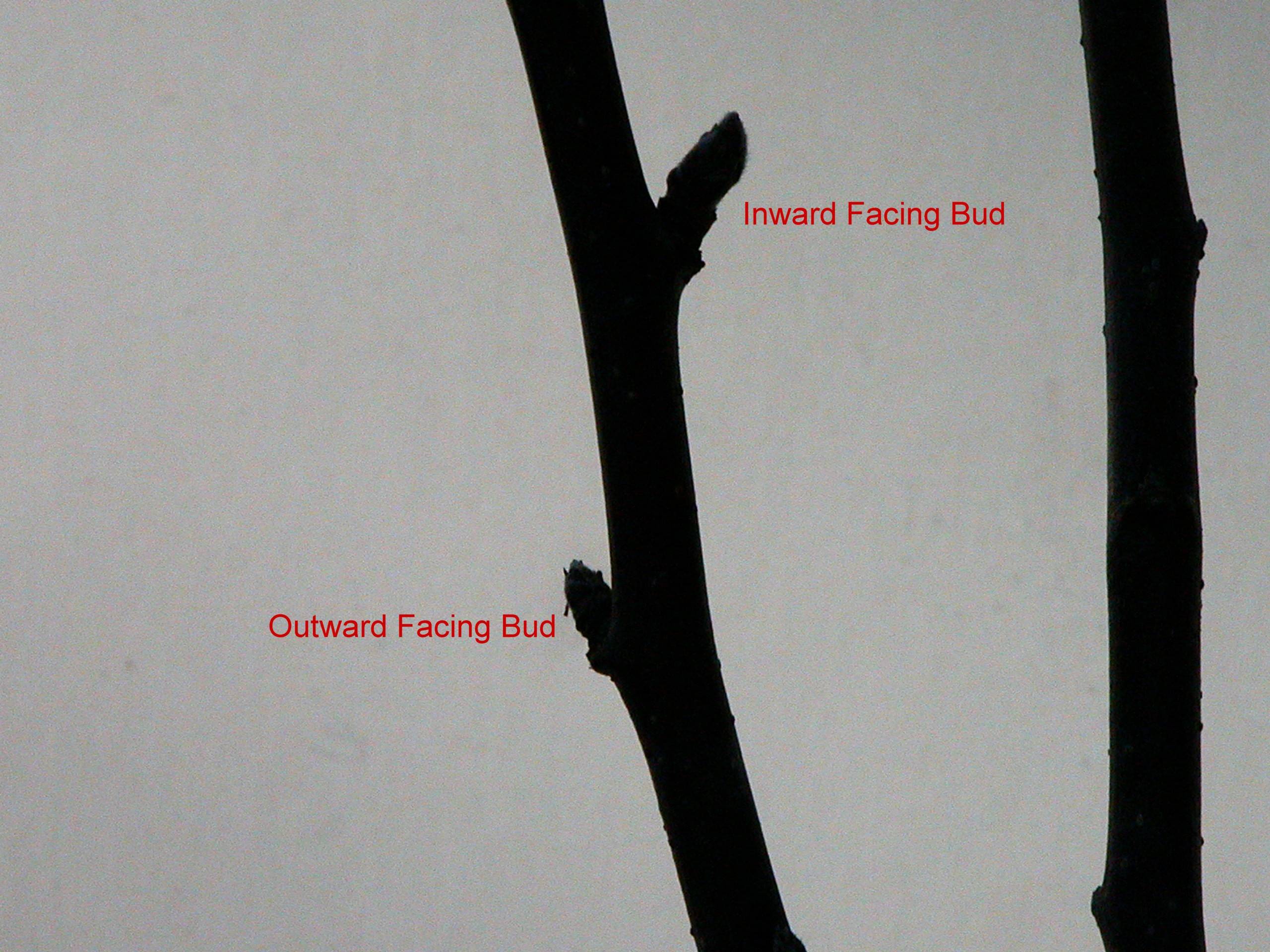
Prune at an outward growing branch

One thing for sure is don’t top off the tree limbs. That will encourage rampant growth on top. Instead look at where you are pruning the limb and clip the branch where a new branch will grow outward away from the center not into the center of the tree. It took me awhile to see where the proper place is to trim and I’ve not always done well in years past. Some mistakes I can’t rectify like one of my apple trees that I pruned years ago into the vase shape. Still it seems to produce well. Perhaps nature is more forgiving than we think..

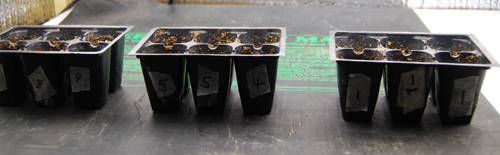
Tomato seeds planted inside-March 21

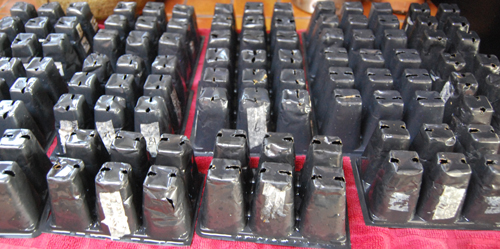
Bleaching pots before use

drying on an OLD towel

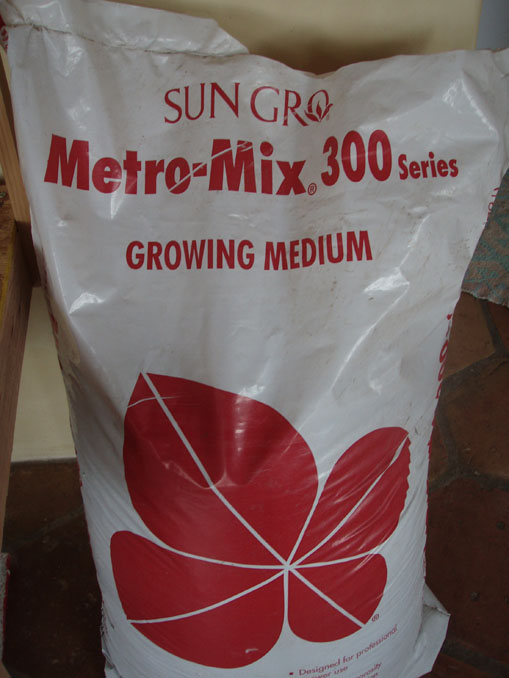
Last evening I planted my tomato seeds-both heirloom and hybrid seeds. I brought out and set up the light boxes and heating mats last week. Before planting my seeds, I always clean the little pots with some bleach water that I use for starting tomato seedlings. It’s important to disinfect the pots because you don’t want your plants to pick up any soil borne diseases. I use about a 10%  bleach to water ratio.  I use the kitchen sink and try to not get dirt everywhere from the used pots. The trick is to convince your partner that it is ok! Just tell them you are disinfecting the sinks out (which is true)! I picked up the seed starting soil-Metro mix 300 from Agua Fria Nursery last week. It comes in a big bag but you will be planting up into larger containers in a few days after the second set of true leaves appear and besides if you have any left over, you can use it for next year. I’ve bought many seed starting soil mixes (usually at the big box stores) and hate the way the water rolls off of the soil when you first go to use it. With this soil mix (Metro Mix 300) I just plant the tomato seeds about 1/4 inch deep and water it all at once. It saves time and anything that saves time I like!

Metro Mix 300

After I water the seeds, I put them under my lights and on top of a heating mat which is great for warming the soil for the seeds to germinate. I’m starting the tomatoes later this year because last year I started the first week of March and they got too big-about 3-4 feet tall because I couldn’t put them out with the cold spring we had.  This year I’m hoping to get them transplanted into the garden around mid April (with protection) weather permitting. Why do I think I might be able to get them in early this year? We are in a La Nina which generally means warmer weather in spring but less rain. By planting them later if I have to, they shouldn’t be as big as last year.

seeds on heat mat

Lights for Growing Your Own Seeds

Use a daylight florscent bub

I use a full spectrum florescent light bulbs (called daylight) instead of a plant ‘gro’ light for the shop lights I use in my light boxes to start my seedlings.  Full spectrum lights were originally designed for people who get SAD (Seasonal affective disorder, also known as winter depression or winter blues and live and work under regular florescent lights. Full spectrum lights are a little more expensive than regular cool white florescent lights, but cheaper than the ‘gro lights’ marketed to the gardener and provide basically the same lighting as a ‘gro light’. You can get them at the hardware stores. One thing, be sure to buy a high lumen output bulb (6500k), not the energy saver bulbs that are more common now. They produce less “leggy” seedlings.

How to build a light box to start your vegetable seedlings inside

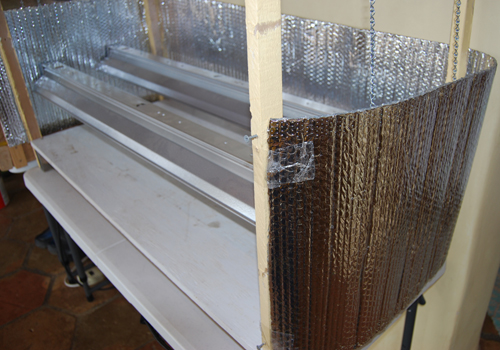
Finished opened light box-front is off

You can buy light boxes to start your seedlings in or you can make it. This is nothing fancy but works like a charm. Here is my simple light box I built myself with some scrap lumber I had around the house.  It will fit between 2-4 big trays under the lights. See pictures for details of construction. I had already built them (I have two) or I would have done a step by step but I think you’ll be able to follow.

Close up of corner of base-plywood screwed into 2" x 4"/Vertical piece attached to outside

1. BASE: I use plywood – 2′ x4′ by 1/2 inch thick piece for the base of the box that I attach with screws to 2″ x 4″x 2′ on the short sides (depth). The base is now done.

Close up of top corner connection

2. TALL VERTICAL SIDES: I  attached 1″ x 2″ x 45″ pieces to each corner with screws. I connect with screws on the short sides (depth) another piece of 1″ x 2″ x 2′ to hold them together.

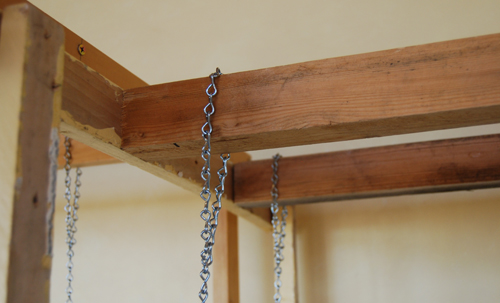
Close up of cross beams

3. CROSSPIECES LENGTHWISE: To connect the top pieces for stability and to also hang the lights, I attach (2) 2″ x 2″ x 4′ across the width.

Close up of the top corner from the outside-inside crosspiece is attached 6" from corners

I screwed them in from the outside. They are set 6″ in from the front and back so the lights can hang and not touch each other.
I buy around 40" of light weight chain to hang lights from

4. CHAIN TO HANG SHOP LIGHTS: I buy around 40″ on light chain and get some hooks to go into the light slots to hang the lights. Each light will have 2 chains. The chains can be raised as the plants get taller.

I attach the insulation with clear packing tape to corners

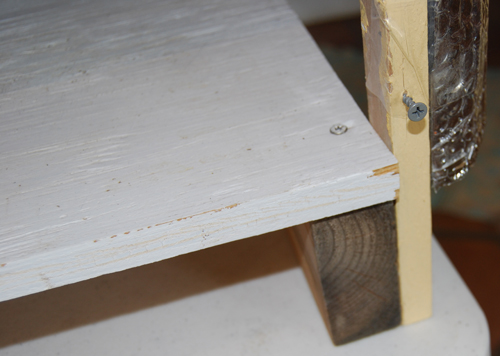
4. FOIL INSULATION: I buy a roll of foil insulation (looks like foil bubble wrap) from Home Depot or Lowes to wrap the outside of the light box on three sides.  I attach it with wrapping tape to the corners. I left the front piece separate so I can take it on and off. Notice the screws in the front of the wood so I can hang the front piece of insulation off them.  I made some holes in the foil (I reinforced the area where the holes will be with more packing tape so the holes won’t stretch too much).

Here it is with the front section of foil insulation on

Here it is with the front piece on. I leave this on all the time as it makes it warmer except if I need to get to the plants for watering. I also like the reflection of light from the insulation when the lights are on providing more light to the plants.

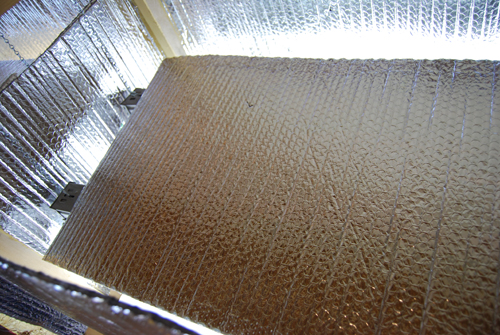
Here the lid is resting on top of the lights at night (the lights should be OFF not on like in this picture)

I also have an extra piece to put on top of the lights at night. I keep my house pretty cool at night (64°F) and find having a top keeps some of the heat in. I don’t put the top piece of insulation on top of the lights until I turn off the lights at night and I take it off in the morning when the lights go back on.

Ready!

Here it is ready to start seeds inside.

Next: What kind of inside lights to use for starting seedlings