Harvesting Fennel (Finnochio) Bulbs

Fennel

Fennel (Photo credit: Satrina0)

I harvested my fennel bulbs (Finnochio) as some of them are starting to bolt. I left a few in as the flowers attract beneficial insects and I will keep the seeds. I plan to blanch most of them, freeze them and cook them later. I’m also drying some of the fronds to use as herbs.

Cioppino is a fish stew that originated in San Francisco. It was developed in the late 1800s by Portuguese and Italian fishermen from Genoa, Italy who settled in San Francisco. It is served with crusty bread. Even if you haven’t grown Italian fennel (which is the bulbing variety), you can buy some at the store and try this recipe-it is delicious.

On New Year’s Day, I merged two recipes of Cioppino to come up with this one. I liked the fennel in it so much that I decided to try to grow some this season. It is really easy to grow but must be started in early spring.

Here is my MOST FAVORITE RECIPE for using fennel.

Cioppino

Cioppino (Photo credit: Wikipedia)

CIOPPINO
3 tablespoons olive oil
1 onion, chopped
3 large shallots, chopped
1 bunch fresh parsley, chopped
2 teaspoons salt
1 (28-ounce) can diced tomatoes in juice
1 1/2 cups dry white wine
5 cups fish stock
1 bay leaf
1 tablespoon dried basil
1/2 teaspoon dried thyme
1 1/2 pounds large shrimp – peeled and deveined
1 1/2 pounds bay scallops
18 small clams
18 mussels, cleaned and debearded
1 1/2 pounds assorted firm-fleshed fish fillets such as cod, halibut or salmon, cut into 2-inch pc
1 1/2 cups crabmeat

El Nino is here! Beautiful rain!!

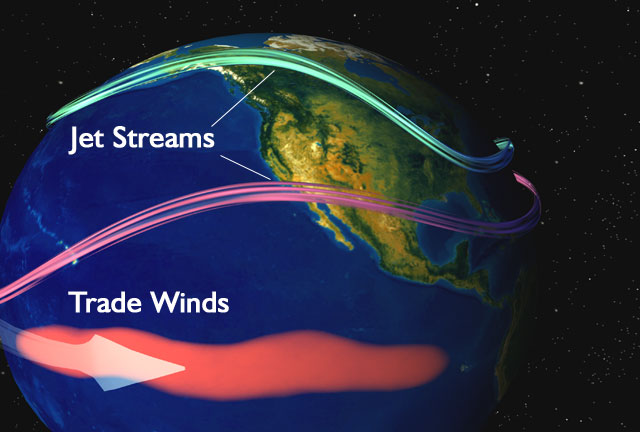
El Nino Pattern

Looks like El Nino is back! After having his evil little sister here (La Nina) for the last 2 years, it looks like she is finally gone. La Nina weather pattern in New Mexico basically mean we have droughts while El Nino weather pattern means we get our normal or above normal precipitation in the form of the monsoon rains in the summer and snow in the winter-much needed moisture after 2 years of an extreme drought. All this because the jet stream which has been missing us and going above New Mexico will be coming back down and bringing storms and moisture to us. Hallelujah!

So I was happy today being stuck inside from 10am -4pm with this FANTASTIC RAIN!! And it looks like it’s not over for today. Incredible! It poured! Incredible! Rained almost continuously! Fantastic! We have been so parched here in Santa Fe greater area that this was truly a blessing from the universe that we desperately need.

Looks like I’ll turn off the drip systems for a few days! YEA! To read more on the El Nino, go to Chance of El Nino Conditions Just Went Up

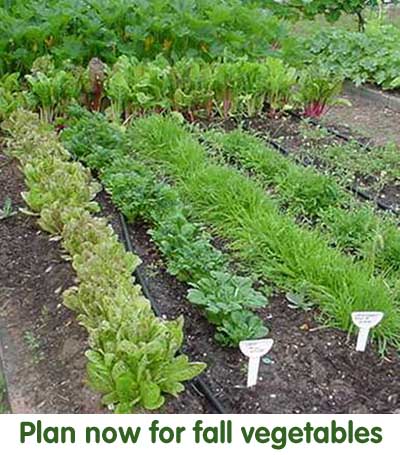
Time to start your fall vegetable garden?! But wait it’s still summer!

Photo courtesy of aggie-horticulture.tamu.edu

OMG! I’ve received newsletters already talking about starting our fall vegetable gardens! What?! Already?! I’ve barely harvested my spring garden and haven’t harvested the summer garden yet!! No! No! No!

Yes folks, it is time for us to consider planting our fall vegetable gardens mid-month. The fall garden is very similar to the spring gardens in the varieties of veggies we can grow. If you want lettuce, chard, kale, spinach and many of the cool season crops later in the fall, you should consider putting them in this month. I would either plant seeds inside under lights to transplant later or buy seedlings at the nursery (that way you can plant a little later). Just make sure you buy heat-resistant varieties of lettuce and spinach and give them some shade for now. If you plant by seed, most lettuces take around 60 days till fully mature which would put us in September-October. Hard to believe isn’t it?

To figure out when to plant each variety, just look on your packet of seeds and count backwards from the time of the FIRST AVERAGE HARD FROST (Oct.3 in Santa Fe ) and add 14 days for shorter daylight hours (I add 15 days to make the math easier for my memory). So if I have some lettuce that will take 60 days till harvest and I add the extra 15 days, that would bring me 75 days (2 1/2 months) ahead to plant before a hard frost. So if I plant on July 15th, I would harvest right around Oct. 1. Unbelievable! Now with spinach and kale you can wait a little longer as they can handle some frost. And if you want some in Sept. you better plant now-like this weekend! Just when you thought you could cruise till summer harvest!

Finally! Fava Beans!

This must be the year to try new things in the veggie garden. My fava beans that I started in spring were ready so I picked all of them yesterday.

I had to go online to find out how to prepare them. Here is a great site that showed me how: ShellingFavas. It was fun shelling them after blanching them and they were so beautiful when shelled. After shelling, I sautéed the them in olive oil with some garlic. They were so delicious! It took a little time to prepare them but the taste is so buttery, it’s worth the effort. The only problem is that I needed to grow more because basically we got 1 harvest from them.

Eating Purslane

Purslane is a weed but on other parts of the world, it is a delicacy. Right now it is growing in several walkways in the vegetable garden. When I weeded yesterday, I left the purslane because I wanted to see how it tasted at dinner last night.

I picked the most mature plants and rinsed the dirt off them and put them in a plastic baggie in the refrigerator. Later at dinnertime, I fixed it two ways. First I cut off the little leafy stems off the main stem and put it in a tossed salad with a balsamic vinaigrette. The other way was I sautéed the rest of it with butter and garlic. I had both Lava and Elodie try it at dinner and all of us agreed we liked it best raw in the salad although cooked it reminded me of cooked Swiss chard. Now the good thing is that it is super high in Omega-3s—higher than salmon and it tastes good.Who woulda thunk?!

My other critters like it too! I gave some pieces of purslane to the goats and they really liked it. Lastly I gave some to my chickens, and they loved it! So if you have chickens who lay eggs, I think you now have a way to get high omega-3 in the yolk if you feed them enough purslane.

I will keep some of it around but will pick all of it before it flowers so it doesn’t re-seed.

Video: Early Pruning of Tomato Plants

Last Saturday I taught a vegetable class on Organic Pest and Disease Control for Home Grown New Mexico. It was held at Milagro Community Garden. Part of the class was how to trim your tomato plants to help thwart soil-born fungal diseases like Early Blight. Most people don’t trim their tomato plants enough in the beginning. Here is a video I found from Vegetable Gardener site that shows exactly how to do it. Don’t be wimpy about it-trim them all the way up to the first blossoms.  As a preventative, I will spray Serenade organic fungicide on all the leaves both on top and underneath  about every 10 days. Doing all this should get your tomatoes off to a healthy start. Here’s a link to the video.

Video: Early Pruning of Tomato Plants – Vegetable Gardener.

‘Plant a Row’ for the Hungry in Your Garden

Every year I give about 700 lbs of organically grown GIANT PUMPKIN in November to the Food Depot here in Santa Fe. It feels good to not waste any food that I’ve grown and I grow so much. Yes, I am the ‘Tomato Lady’ at the Santa Fe Farmer’s Market and make a little money but I like to donate food I’ve grown as well. It feels good to give back to the community.

So this year I’ve created another small vegetable garden patch at our studio, Liquid Light Glass in an empty plot in front of the parking lot where it was just dirt and weeds.  We will be growing tomatoes, cucumbers, zucchini and beans.  The food produced there will be donated to The Food Bank and other organizations that help feed the hungry.

The Food Bank is a service organization that distributes food in Northern New Mexico to communities in need.  They encourage gardeners in the area to ‘plant an extra row’ in their vegetable garden and donate the produce to help feed the hungry.  ‘Plant a Row for the Hungry’ is a Public Service Program that was originally started by The Garden Writers Association in 1995.

Maybe you can ‘plant an extra row’ and donate some of your produce for the hungry. Here is the PlantARow flyer  from The Food Depot explaining how you can help.

Make a great tomato cage

Tomato in cage, drip underneath, trimmed up off the ground, straw mulch in well and staked to t-post

You need to ‘cage’ your tomatoes before they get unruly. I hate those tomato cages they sell in the store. They are too little and flimsy and the tomato plant will quickly outgrow them. I found a great way to make cages in ‘The New Victory Garden‘ by Bob Thompson.

First use concrete reinforcement wire to make your cages. It is heavy-duty wire that has 6 inch openings so you can get your hand through the openings with a fat tomato. Think optimistically – you’re gonna get a 2 lb giant juicy tomato on you plant and need to get out of the cage! You can buy it by the sheet, which is 4 ft high, or by the roll which is 5 ft high. One sheet will make one cage. The only trouble with the 4 ft height is it is too short for many heirloom tomatoes but some people stack two of them together to make an 8 ft high cage!

I buy the roll, which isn’t cheap, but is a one-time cost and the cages you will make can also be used for beans and cucumbers, in fact almost anything you want to grow vertically and will last a lifetime. A roll is 120 ft in length and will make about 18 cages so if that is too many than I suggest you go in with another gardener friend (or 2) and share the cost. Cut the wire with bolt cutters or an angle grinder not hand wire cutters-your hand will be wrecked-I speak from experience. Here’s how I do it:

1. If using a roll unwind it and hold it down with some BIG rocks or bricks so it doesn’t wind back up. Count 13 squares and cut off one side of the wire leaving it long.

2.  Then bend the long wire into a ‘u’ and hook it back on itself as shown in this photo.

The cage will be approximately 24 inches in diameter when finished. Then I cut off the bottom leaving all the ends pokey (not shown) so I can push the ends into the ground so it won’t blow over.

3. If using a sheet, I wouldn’t cut the bottom edge as I do with the roll to keep as much height as possible.

4. Stake either cage with a 3 ft high green t-post pounded next to the cage and tie the cage to the green post to keep the cage from falling down from wind as shown in the top photo.  This is important when the plant gets top heavy. If you are next to a fence, you could tie it to that. The point being that you don’t want your tomato plant to fall over. Some people growing in pots just put the cage over the whole pot and the pot keeps the cage from falling over as the plant gets bigger.

Cherry Pitter

Remember all those cherries we picked last Saturday? I was dreading pitting them with my little hand pitter so Elodie went out and got a cherry pitting machine that is much faster and makes pitting cherries a breeze. It’s a Norpro Cherry Pitter that she got at Las Cosas in DeVargas Mall.

Here is a picture of it above. Very plastic but works great. Simple design. It’s got a tray to hold the cherries, a plunger to push out the pits, a cup where the pits go. I put a small cookie sheet under the area for the pitted cherries. Lava came over and we did most of them in about 2.5 hours.  About 20 lbs of them.

Then I placed them on cookie sheets in a single layer and froze them so they would not stick together. In about 2 hours I was able to put them in freezer plastic baggies. Should make some great cherry recipes. Waa Laa! Finito!

PS: More on the dreaded squash vine borer

I just posted about the squash vine borer and a gardening friend, Gene, mentioned that his squash is smaller than in the video in a comment in the earlier post on squash vine borers. I forgot to mention that while the squash is small before they blossom, I keep them covered with row cover which keeps both the SVB and the squash bugs out but once the plants are bigger and blossoms, we have to take the row cover off for the bees to be able to pollinate them-that’s when we should use the foil.

Did I die and wake up in hell?

IT’S HOTTER THAN HELL RIGHT NOW. Did I die and wake up in hell? What’s happening here? This could be a new reality show, ‘Hell’s Garden’ instead of ‘Hell’s Kitchen’ where gardeners see how long they can work until they drop like flies. I left Phoenix to get away from the heat (now they get killer heat there) but I swear it’s looking more and more like a desert here in Santa Fe-cause that’s how it feels right now with the unbelievably hot temperatures we’re getting. Today I had to quit the gardening early (on my day off to work in the garden)! Water, Gatorade, lemonade, ice tea-no matter, nothing worked today to help with the heat outside. I crawled back to the house. I was like a limp noodle. Needless to say it wasn’t a very productive day in the garden today. Wah! Tomorrow I’m getting up at 6 AM before the heat comes on…

Photo courtesy of: thekruser.com

Protecting Your Squash Plants from Squash Vine Borers

We have 2 nemesis for our summer squash, winter squash and all pumpkins-squash vine borers and squash bugs and they will be here soon if not already here. This post addresses the squash vine borer.

The squash vine borer as seen above has a BLACK AND ORANGE BODY with CLEAR WINGS. If you see a waspy looking bug that is BLACK with ORANGE WINGS, this is NOT the squash vine borer but a tarantula wasp – don’t mess with it as it has a painful bite but usually won’t sting us unless we agitate it and it is harmless to our plants. Take a good look at the picture above so you can identify the squash vine borer.

This video and article, Protecting Your Squash Plants – Vegetable Gardener is from the Vegetable Gardener site (great site) and shows how to protect our squash vines from the squash vine borer.

In addition to using foil and panty hose as shown in the video, I also bury all my stems as they lay down on the soil-main stem and secondaries so the SVB can’t find the stems. Mostly the SVB attacks the BASE of main vine so be sure to protect that part of the squash vine. This use to be an east coast problem but the SVB has finally crossed west of the Rockies. So be on the lookout.

If your plant suddenly wilts even though it has enough water, or if you do see SVB’s around, look for frasse (poop) that looks like sawdust around the base of the stem and that is where the larvae will be-inside the stem eating your plant. You can try to cut vertically (not across) the stem and dig out the larva with a knife, then bury the stem with dirt. Depending on the damage, your plant may or may not survive. Take precautions now to thwart this pest.

What about the Garlic I planted last fall? The softneck variety is ready for harvest!

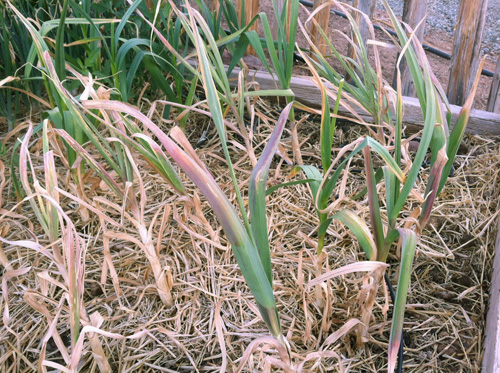
I’m starting to harvest my garlic. How do I know when to dig them out? The soft neck variety is dying back  (despite good watering) and when it has most of the leaves brown with only a few green ones at the top, it is time to harvest. The shallots in the background are nowhere near harvesting yet.

Here is a picture of a garlic ready to be dug out. I carefully scrape the soil away revealing the bulb. Then be careful not to nick the bulb when digging out or it will go bad. Look at the size of this bulb-about 3 inches! Woo! Hoo!

It takes about 3 years for garlic to get use to someone’s growing conditions so it is important to save your biggest cloves to plant again as bigger cloves mean bigger garlic next season. This is my second year and the cloves are definitely getting bigger. Be sure to ‘cure’ them after digging them up. It takes about 3 weeks to let them dry out so don’t scrape the dirt or wash them after you dig them up-just let them dry out in a shady place for about 2 weeks before you brush off the dirt and then let them cure another week when the skins are dry and you can clean them up by taking a few of the dry skin layers off and store them in a dark place. Never wet garlic when curing. To read about last year’s post on types of garlic and more on harvesting garlic go here.

I also planted the hardneck variety of garlic. They already produced flower stalks called scapes (which I cut off and froze to eat later) and they are starting to die back and will probably be ready within 2 weeks as their leaves are still pretty green. They say hardneck is more flavorful but the softneck will last longer so I planted both this past fall.

If you plant garlic in the fall instead of spring, the bulbs will be larger. If you planted in spring, the garlic should be ready sometime in August. Garlic harvesting is very exciting as there is nothing as good as fresh garlic from the garden especially with my upcoming tomatoes.

Cherry Picking!

Cherry Macro

Cherries (Photo credit: Wikipedia)

It’s nice to have gardening friends in my life. Gardeners usually have an abundance of veggies or fruits in our lives and yesterday was no exception. My friend Bob was out of town and called and mentioned that his cherry trees were loaded and ready to pick so Elodie and I headed over and got about 20 lbs worth!

photo courtesy of happydaycatering.com

We invited Jerry over for dinner and promptly made Cherry Jubilee for dessert! Thanks Bob! PS-there are still lots of cherries left to pick when you come home!

Potato update!

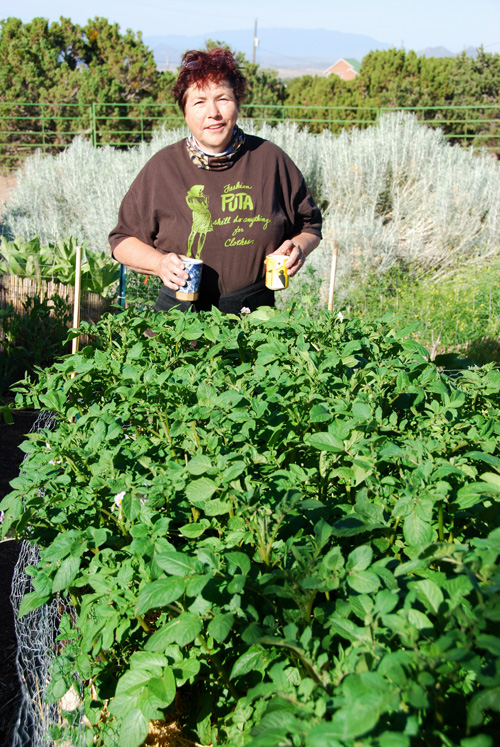
First thing in the morning with a cup of coffee looking over the potatoes-time to WAKE UP!

My potatoes are growing so fast that I can’t keep up on burying them. Besides that, I don’t have enough dirt to bury them either as some of them are already 4 feet tall. I wonder how farmer’s grow potatoes in fields? I mean who has soil three feet deep to bury them?

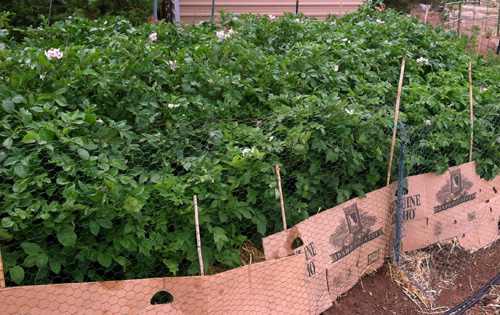
Potatoes are corralled, straw put around potatoes and cardboard put on inside edges to keep light out

I built a temporary corral around the potato patch with small green t-posts and some chicken wire I had laying around.  I then cut some cardboard boxes open and lined the corral with them. Afterwards I got some straw to put inside the corral to cover the potato plants. I put the straw top of the soil which is already 18 inches deep. The corral keeps the straw from blowing away and the potatoes will (hopefully) grow inside the straw where it is dark.

Here are what potato flowers look like. After flowering the plant starts producing potatoes. I can’t wait! My friend Mernie thinks I might get around 150 lbs of potatoes! I might have to go to the Farmer’s Market as the POTATO LADY!