Making applesauce with a food mill

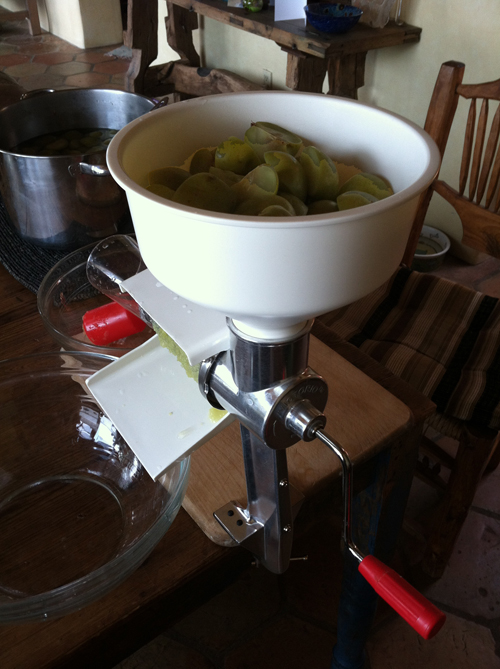
This year we have a bumber crop of apples. I mean the apple trees are so heavy with apples that some branches have broken.  So I decided to make some applesauce. This is what was left in 35 gallon container after I gave most of them away and I have lots more. If you have a food mill it’s easy but you must cook the apples first.

Cut the apples into quarters. No need to peel them or seed them. Put them in a pot of water and bring it to a boil and cook them about 10-15 minutes till tender when poked with a fork. Drain hot water off and cool them with some cold water. Then using a slotted spoon, put some in the food mill.

Here is the food mill. Notice the bowl on the left where the applesauce will come out. The bowl behind it will collect the apple seeds and skins. Just push the soft apples through with the plunger while you turn the handle. The mill separates the apple sauce from the seeds and skins.

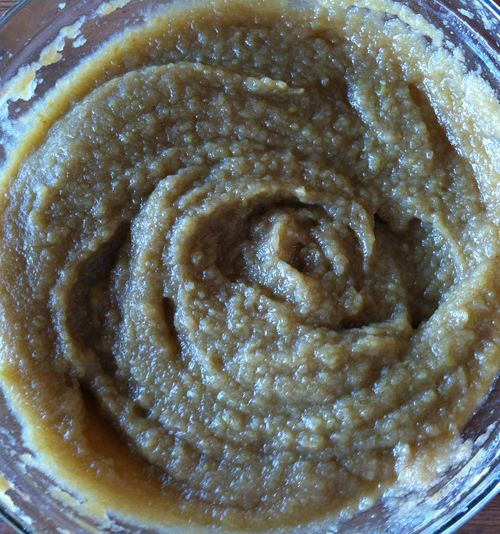
Then I added sugar and cinnamon to taste. Voila! Done!

Here are the skins and apple seeds that came out in the other bowl. These are going to the worm composting area. Nothing wasted and super easy!

Curing shallots

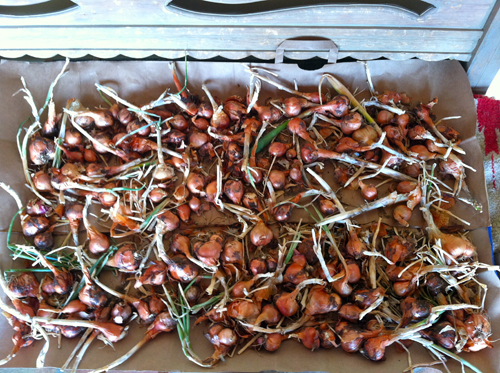
I grow shallots instead of onions. Why? Because shallots are $4.99/pound and onions are cheap. Besides they taste wonderful sautéed in any dish. This season I grew Dutch shallot bulbs that I got from Payne’s nurseries here in Santa Fe. I like them a lot as they are not tiny like some other shallots are. So this weekend I picked all the shallots that I started last October-November. I got a ton! Well not quite, but a lot! Here is a picture of  them ‘curing’. Curing shallots is about properly drying them so they last longer in storage for winter. After you pick them you need to let them dry out completely before cutting off the stems which takes about 3 weeks. Then cut off the stems when they are dry, put them in a mesh bag and put in a cool dark place. Where do I get mesh bags? Trader Joes puts their lemons and onions in mesh bags and I save them to use for my shallots and garlic that I grow.

Rain!!

Woo Hoo! FINALLY we got some decent rain here. Haven’t had ANY rain since early July and the soil is so parched. Now if we only get another 30 days of this we might get rid of our terrible drought. Tomorrow I’m gonna turn off the drip system to the vegetable patch!

First Caprese salad!!

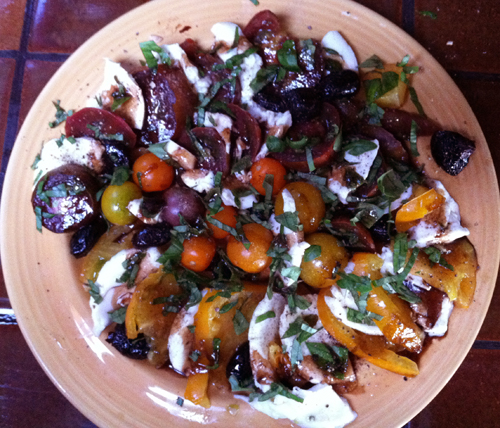
Here is the first caprese salad of 2012! Fantastic! Yellow, orange and black tomatoes with mozzarella, basil and olives drizzled with an 18 yr old balsamic vinaigrette! Been waiting for this since last November! Need I say more?

2012 Kitchen Garden and Coop Tour is Sunday! Don’t Miss It!

Excerpt taken from HomeGrownNewMexico.org:

We look forward to seeing you on our Second Annual Kitchen Garden & Coop Tour on Sunday, July 29th from 9am-2pm. This event is presented by Home Grown New Mexico and Edible Santa Fe.

The tour is self-paced. Guests will go to the homes in any order that they select with a wrist band to identify them. The homeowners will be the main tour guides, but also have help from the Master Gardeners and volunteers from each location to review edible gardens, chickens, bees and any other self-sustaining items such as solar, water catchment and more.   Cold drinks will be available at each location sponsored by Whole Foods. Revolution Bakery and Joe’s Dining have also sponsored the event.

For questions contact homegrownnewmexico@gmail.com or 473-1403.

Click Here to Download Map for TourNote Exit 62 is closed on 599

Click Here to Download Addresses & Bios for Tour

Truck Farm Movie! Monday July 23 at CCA at 6:30 pm

Monday night the movie, ‘Truck Farm’ presented by Whole Foods is about people in New York who wanted a garden in New York City and didn’t have a place to put one  so they planted it in the back of a truck! Afterwards Homegrown New Mexico will have a panel discussion on community gardening. Come see our own ‘truck farm’ which will be on display at the movie.

Curly Top Virus -tomato problem right now

I’ve noticed a few of my tomato plants have got curled leaves, lost their bright green color and their veins turn purple and I’ve got several friends with the same problem who have contacted me about what this might be. I’m pretty sure its Curly Top Virus transmitted from the beet leafhopper which has been really prevalent this season. This is not to be confused with leaf roll where the tomato leaves roll. I think the combo of leaf roll and purple veins is the key. Read on.

Here is some info on Recognizing Tomato Problems from Colorado State University website. http://www.ext.colostate.edu/pubs/garden/02949.html

‘Curly top virus is transmitted by the beet leafhopper. This problem is common in western Colorado but seldom found in eastern Colorado. Infected plants turn yellow and stop growing. Upper leaflets roll and develop a purplish color, especially along the veins. Leaves and stems become stiff; fruit ripens prematurely. It is difficult to control because leafhoppers migrate from southern areas. Hot, dry springs with predominantly southwest winds usually indicate increased problems with this disease. No chemical controls are effective. Use row covers to protect tomato plants from the leafhopper.’ Of course this is for Colorado but applies here as well.

Unfortunately after tomatoes get the virus, you should pull the plants. I’m concerned that a leafhopper might bite an infected plant and then bite a healthy plant and infecting it.  So far 4-5 of my plants have this. I’m pulling them tomorrow..

You Little Tart!!

Lately I’ve been into making fruit tarts with our fruit harvest. The latest are these little strawberry-rhubarb tarts. The strawberries are over so I had to buy them but the rhubarb is kicking it and I’m looking for different ways to use it. A fiend of mine, Kathleen, asked for the tart recipe so here is the basic recipe for making tarts (from Julia Childs and Jacques Pepin) I like the tart pastry from Jacques Pepin better as I thought it was flakier than Julia’s so I put it in for the pastry. Get a tart pan if you don’t have one. I have both a big tart pan and little tart pans for individual servings.

 TART PASTRY (Jacques Pepin)

1 ¾ cups all purpose flour

1 1/3 sticks unsalted butter (5 1/3 oz)

3 tablespoons confectioners’ sugar

1 egg yolk

1-2 tablespoons water

Preheat oven to 375 degrees. Combine flour, butter and sugar and mix till butter is crumbly like the size of peas using a pastry blender or food processor.  Don’t overblend. You don’t want it completely smooth as the butter pieces gives it it’s flakiness. In a small bowl, mix together egg yolk and water and add to flour mixture. Knead lightly until dough is smooth-do not over knead or dough will be tough. Form it into a ball and put in plastic wrap and refrigerate it if not ready to make. Then when ready, put it between 2 pieces of plastic wrap and roll out till about 14 inches round. Peel off one side of the wrap and put in tart pan and then peel off the other side of the plastic wrap. Then I roll my rolling pin over the edges to cut off the dough. Prick bottom and sides with a fork and put in oven. Cook from 15-20+ minutes till lightly brown. Your oven may be different so check it a lot. The recipe originally said 30 minutes but that is way too long at this altitude. If the edges get browner before the center, put some foil over the edges to keep from burning. This can be done up to 12 hours ahead. Leave out-no need to refrigerate.

CRÈME PATISSIERE (Julia Child) This filling makes a lot so you may want to cut it in half or even into fourths because you want a thin amount of filling to put the fruit on. I had a ton left over making the full recipe.

6 egg yolks

heavy saucepan

½ cup granulated sugar

½ cup all-purpose flour

2 cups hot milk

2 tablespoons butter

1 teaspoon vanilla extract or 1 tablespoon brandy

Separate egg yolks and blend with a wire whip in a heavy saucepan (cooks more evenly). Gradually beat in sugar until it is smooth. Add flour and whip in. GRADUALLY add hot milk stirring with the wire whip until smooth. Continue stirring CONSTANTLY with the whip till mixture is thick. As it turns lumpy whip harder till lumps are out.  Lower heat and cook a few more minutes till thickened stirring CONSTANTLY. Have I said that word enough-‘constantly’? Remove from heat and stir in butter and flavoring. Put plastic wrap right on top to keep it from getting thicker at the top and refrigerate. Leftover mixture can also be frozen for later use.

ASSEMBLING THE TARTS

Several hours before serving, put a thin layer of filling on bottom of pastry. The fruit is the main star in this recipe not the filling. Put fresh fruit like apricots, berries, kiwi or strawberries neatly on top of filling. Make a glaze using apricot or currant jam. Heat up the jam and add a few drops of warm water till it is the consistency of a glaze-spoon warm glaze over fruit).

In this picture I cooked the rhubarb with lots of sugar (to taste) in saucepan and then added some cornstarch as a thickening agent. Mix about 1 tablespoon cornstarch first with a little cold water so it won’t lump up and stir in and heat till thick.  You could do this with any fruit (take some of the fruit, add sugar then cook down and add cornstarch) if you want to make a glaze instead of buying jam.

Harvest recipes

Ya, ya I know this is a vegetable blog mainly focused on how to grow and harvest vegetables, giant pumpkins and some fruits. But I like to cook with the stuff I grow. Makes it interesting you know? It’s another creative outlet for me. As a child I really didn’t like vegetables but now when I cook them up in new and interesting recipes, I love them. Why else are we growing this stuff if not to eat some delicious food? I like to share the whole experience from growing, making, preserving and eating foods. I like a beautiful garden and I like beautiful food!

Giant bean teepee

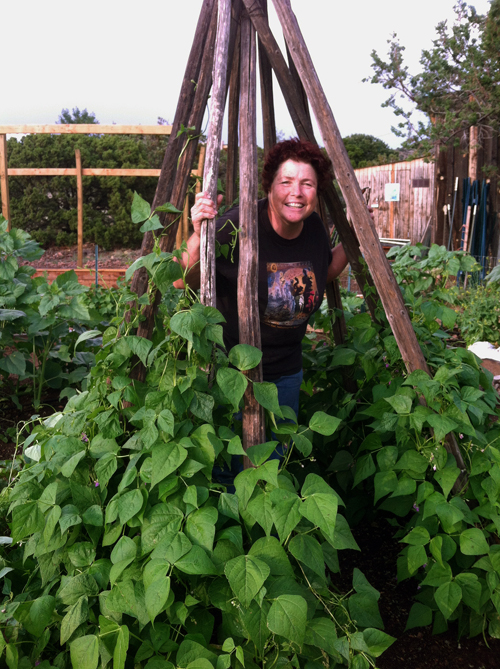
This year I made a giant bean teepee, one I could stand or sit in. The beans are really taking off. I chose Emerite green beans (pole beans from Scheepers Kitchen Garden Seeds) partly because they grow fast and tall and partly because they are so delicious. At first I had to tie up the vines to train them to grow up the poles but now the beans are growing up it nicely on their own. I can’t wait till the whole teepee is covered (except for the opening!). What a beautiful centerpiece for the garden!

What to do with green beans? Nicoise salad!

Nicoise Salad

Now I’m not a lover of green beans, so I keep trying out different recipes with them in it.  (I use to not like beets either but I love them now. All it takes is find a recipe you like with whatever vegetable you may not be fond of). I know if I wait too long to pick beans, they will be tough and blasé so now that they are just starting to come in, I’ve picked them when they are really young and tender and I finally found a recipe with green beans in them that I like – Nicoise salad. I’ve had Nicoise salads before but I really liked the dressing on this one. And much of the ingredients came from the garden-eggs from the chickens, shallots, garlic, fresh thyme and basil for the dressing, thin vericot green beans, tomatoes, tuna from the pond (just kidding) and olives from the olive tree (yea right)! YUM! Here is the recipe (from Epicurious (from my app on the iphone!):

NICOISE SALAD

Dressing

1/4 cup red wine vinegar

2 ½ tablespoons minced shallots

2 teaspoons Dijon mustard

1 large clove of garlic, minced

1/2 tsp anchovy paste

1 ½ teaspoons minced fresh thyme

1 ½ tablespoons finely chopped fresh basil

1 cup olive oil

Wisk all of the above ingredients together then add the olive oil and wisk till emulsified.

For the salad:

Green beans cooked ‘al dente’

Small red potatoes-cooked and halved

Hard boiled eggs- peeled and quartered

Tuna steaks

Lettuce

Tomatoes

Black olives (Nicoise or Kalamata)

Beans and potatoes can be cooked ahead of time and kept at room temperature. Hard boil the eggs.

Grill the tuna steaks with just a little olive oil and sea salt and ground pepper. Sear till rare or med rare.

Cooked potatoes should be halved and tossed in a couple of tablespoons of the dressing and sit for a few minutes. Meanwhile put on the edges of a bed of lettuce, some quartered tomatoes, black olives, quartered hard boiled eggs, the dressed potatoes and just before serving, dress some cooked green beans and add them. Put the tuna steak in the middle of the salad drizzling the salad dressing sparingly or break up into pieces and put on top in the middle. Put a few capers on the tuna. Delicious.

Today’s Harvest-July 16!

Today’s harvest!

Today the ‘Emerite’ beans, some beets and 3 little tomatoes were ready for harvest!  The beans are french vericots and should be picked very thin when they are tender. If you wait till they are bigger they will be tough. The beets were from thinning them out some more so the rest of them can get bigger. The garlic in the picture was harvested a couple of weeks go and is dry and ready to clean up.

Bumper crop of apricots this year in Santa Fe

Every 7-8 years, I get some apricots off my tree. This is year 8 and my second crop since moving here 16 years ago. Not a great success rate but usually here in Santa Fe, we have a freeze in late spring that freezes the apricot blossoms and hence no crop.

But this year, it’s been exciting as I’ve seen apricots everywhere in town and out-of-town. What a bumper crop this year! So I made apricot jam, dried some and the other day I got ambitious and made an apricot tart from one of Juliet Child’s books that my friend John gave me! I gotta say, it was good. Really good.

Fall Vegetable Planting Schedule

Fall harvest. We only wish our gardens were this GREEN! Photo courtesy of http://gardening.ktsa.com

Ok, so now since it is time to plant my fall veggie garden, here is my planting schedule

FIRST-WHAT TO PLANT AND WHEN

Depends a lot on what you like to eat. Below is MY list of what I want to plant for a fall garden. Some of these are already growing in the summer garden and will be ready to harvest soon like the carrots and beets so I must decide if I want more in the fall.  All of these planting dates are estimates depending on the variety you grow and are based on planting outside, not in a greenhouse. Look on your package of seeds or on the plant label for seedlings for accurate harvest times and go backwards from Oct 3 for Santa F+ add 14 days.

JUNE

Fennel (Finnochio-bulb type)-Sow seeds mid June. OPPS! Missed this. The short cool days of fall are even better for fennel than spring. You can still plant this (IN JULY) as it likes cool nights although the bulbs may be smaller since we missed it’s prime planting date.

JULY-AUGUST


Asian Greens/Bok Choi- Sow seeds mid July. Can handle light frosts. Harvest days depends on variety. Look on seed package.

Beets- Sow seeds in mid July-early August. Can handle freezes but must mulch with thick straw or row cover. 45-65 days to harvest.

Broccoli- Sow seeds early July-mid July. Can handle light frosts. 55 days to harvest.

Broccoli raab- Sow seeds in early July-mid July. Can handle light frosts. 45 days to harvest.

Carrots- Sow seeds in early July-mid August. Can handle freezes but must mulch with thick straw or row cover. 70-80 days to harvest.

Chard- Sow seeds late July-. Can handle some light frosts. Cover with row cover when it gets cold to extend season. 50-60 days to harvest

.

Kale- Sow seeds early July. The short cool days of fall are even better for kale than spring. Kale that is established will last well into winter and can survive below freezing temperatures down into the 20s.

Lettuces- Lettuce baby- Sow seeds in early-August. Seedlings will need consistent moisture and shade from the afternoon sun on hot days. Cover when it gets cold to extend season but it will not survive freezing temps. 45 days to harvest depending on type and variety.


Peas- Sow seeds in early-July-mid-July. Likes cool but not freezing weather. 60-75 days

.

Radish- Sow seeds late July. 30 days to harvest.

AUGUST


Spinach- Sow seeds early-August. The short cool days of fall are even better for spinach than spring. Spinach that is established will last well into winter and can survive below freezing temperatures down into the 20s although it will stop growing. Why doesn’t it freeze? It produces an alcohol inside-alcohol won’t freeze! 45 days to maturity.

Endive, Escarole-Sow seeds early August. The short cool days of fall are even better for these than spring.


Lettuces- Lettuce head – Sow seeds in anytime August. Seedlings will need consistent moisture and shade from the afternoon sun on hot days. Cover when it gets cold to extend season but it will not survive freezing temps. 45 to 60 days to harvest depending on type and variety.


Mesclun mixes- Sow seeds in early-August. Seedlings will need consistent moisture and shade from the afternoon sun on hot days. Cover when it gets cold to extend season but it will not survive freezing temps. 45 to 60 days to harvest depending on type and variety.


Arugula- Sow seeds in mid-August-late August. Fast growing. Can handle some light frosts. 
30-40 days to harvest.


Kale- Sow more seeds mid August. The short cool days of fall are even better for kale than spring. Kale that is established will last well into winter and can survive below freezing temperatures down into the 20s

OCTOBER


Garlic-Sow largest cloves anytime in October after the first frost. Harvest in late-June-July

Shallots-Sow largest bulbs anytime in October after the first frost. Harvest in late-June-July.

I’m 

not a big fan of kale, endive, escarole and collards, but went ahead and listed them as I know many of you like them. Cabbage and cauliflower take too long to grow for me. Forgetaboutit!

SECOND-WHERE TO PLANT


Do you have garden space close to your house for easy watering and harvesting as it gets colder? This is important to consider if your main garden is far away from your home. I have two places to plant them now. My cold frame and my raised beds up by the house. If I ever get my greenhouse done, I’ll have another great place for veggies but for now I’ll plant in my two spaces.
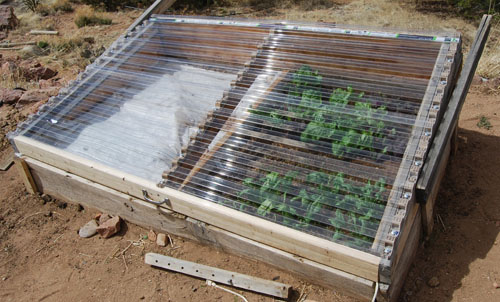
Cold frame in previous year

My first space is my cold frame up by the house. Since it is too hot now, I think I will have to put some shade cloth over it to keep plants cooler inside. Also I want to get one of those automatic vent openers that will open the lid if the temps get too hot and close it when it gets too cold.
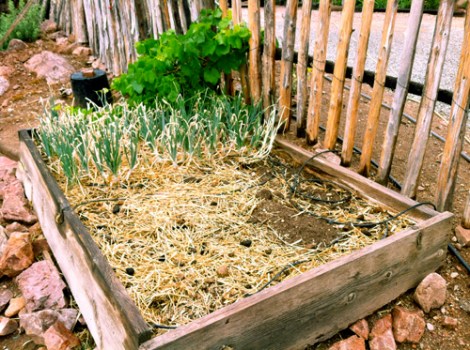
The shallots will soon be done in this raised bed and I will use it for fall planting

My second space is the raised beds also up by the house. Raised beds are great as they keep the soil warmer in the fall when it is getting cooler. Since I already pulled all the garlic in these raised beds, I will plant a few cold hardy vegetables in them and then plant garlic and shallots between them come October. The beauty of having some garden space close to the house is when it does get cold, I won’t have to walk down to the main garden to water and harvest. I can just get a watering can and go right outside the house. Also I can replace the light row cover that I keep my cool season crops under (keeps the critters and bugs away) with a heavy row cover on the beds if a sudden frost comes up. The cool season crops will be picked by the time winter hits and the garlic and shallots will sleep till spring!

Harvesting Bok Choi

Bok Choi. Photo courtesy of http://www.diynetwork.com

I’m growing new exciting vegetables for me this year and one of my favorite that I’m going to replant for a fall crop was Bok Choi (also spelled Bok Choy). I thought they were baby Bok Choi when I planted them but they ended up full size. No difference-they are delicious! I love chopping them up and putting them in rice dishes and stir-frys.

I also like to cut them in half and then saute them in a little olive oil. Once they are brown on the cut side, I turn them over and cook some more till slightly brown. Then I put a little water (like 2 tablespoons) in the pan and a lid on to finish cooking them. The steam from the water makes them tender. Then just before taking it out of the pan, I splash a little tamari on them in the pan and then serve them. Another wonderful vegetable!