Strawberries and rhubarb galore!

Oh yea-my June-bearing strawberries are ripening and the rhubarb is kicking it.  I love both of these perennials in the garden. They are easy and productive without much trouble and they come back year after year. They are also some of the first crops to produce which is great in June while we wait for the rest of the crops to come in.

Here are some strawberries we harvested during one picking session. There are tons on the plants this year as compared to last year when we got zero because of that super cold winter which almost killed them. I cover the strawberries with row cover after they flower but before the berries are red to keep the birds off them. Works like a charm. After the strawberries are finished I will take the row cover off them for the rest of the year. Sorry birds!
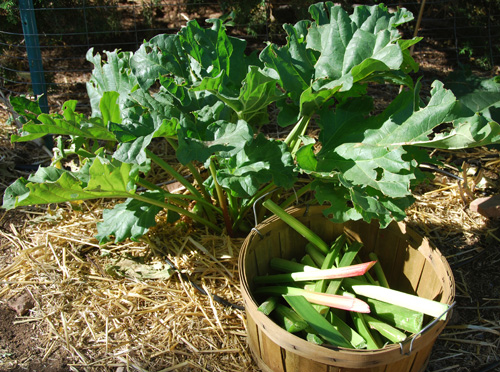
Here is the rhubarb we harvested. My variety is Victoria which is a very prolific green variety with a slight red blush instead of the red varieties that are available. There is no difference in taste with either red or green. Be sure to cut off the leaves which are poisonous. The leaves have high amounts of oxalic acid (the same as in spinach-only spinach has much lower safer amounts of oxalic acid). I cut it off about 1 inch below the leaf and at the ground level. The stalk is the part we eat. It is very tart so we need to add a good amount of sugar to sweeten it up when cooking.

So I made a strawberry-rhubarb pie! You mix up 3 cups strawberries with 3 cups rhubarb mixture with 1.5 cups sugar and 2 tablespoons of cornstarch in a big bowl and put the mixture in an uncooked pie shell. Then I put a crust on top of the mixture.

Before I could get a picture of the whole pie after it came out of the oven, everyone got into it first. Yum! Juicy and sweet.
What have I been doing?

I’ve been busy in the garden! It is ALMOST  finished. I have 8 more tomatoes to plant tomorrow that I forgot to get that are some of my standards at the SF Farmer’s Market. OPPS! But they will be ready in time.

Two weekends ago I had 7 friends/family help with planting the majority of the tomatoes. A great big THANK YOU to all that helped-Elodie, Flynn, Ronnie, Lava, Tom, Sharon and myself! I couldn’t have done it without you! I also have a few more flower seeds to plant by the entry. Otherwise it’s done-FINITO! Yea right-there is always something to do in the garden! Here are some of the things happening in the garden:

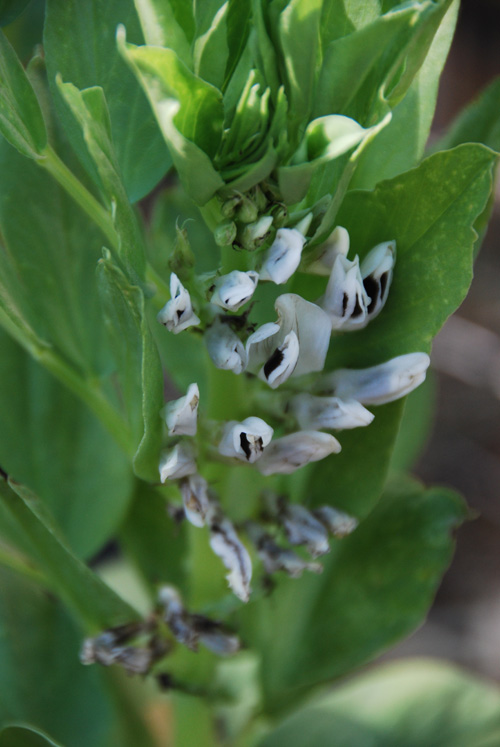
The fava beans are looking good. Here they are flowering. I like the black and white flowers. I don’t think I’ve ever seen black and white flowers on a plant before. They had some aphids so I sprayed them with insecticidal soap and they are looking better. They have baby fava beans on them now.

The beets and carrots are coming along quite nicely. They are outside the pole bean tent area and will fill in nicely

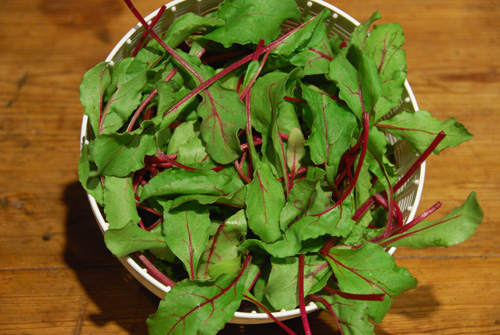
Here are some beet greens I harvested while thinning out the beets to give them room to grow. They are yummy in a salad and are so beautiful.

In the shadiest part of the garden I planted some bok choi and lettuce and have had it covered with row cover since planting to help keep them from the heat and bugs. They both are looking great. I’ve never grown bok choi before so I’ll have to research when to harvest as they are getting to be pretty big and won’t like the heat for too long.

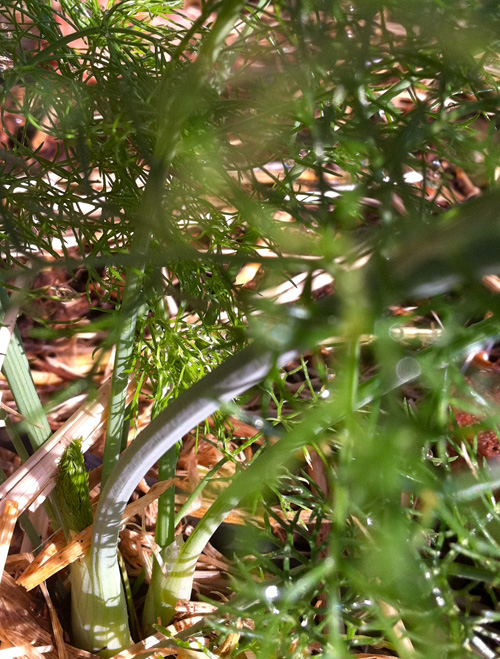
The fennel bulbs are getting bigger and are almost ready to harvest. Maybe another 2 weeks. They also won’t do well in the heat. I wonder if they will get as big as the ones in the grocery store..

About half of the tomatoes I previously planted are growing out of the top of the wall of waters and I need to take them off before it gets too difficult.

It’s been fun growing some early stuff. The bok choi, fava beans, fennel and lettuce are more cool season crops and will have to be harvested soon because of the heat. Probably all of them will be harvested BEFORE July.

I also have potatoes that are growing through the roof, strawberries that are being harvested and rhubarb that is ready to pick but will save that for other posts.

25 lbs of Worm Castings!

25 lbs of worm castings!

Worm castings or vermicompost as it is called is an excellent, nutrient-rich organic fertilizer and soil conditioner you can get at the garden nurseries. Last year while planting tomatoes I added some worm castings that I bought to put in each hole with the plants to make the soil richer. I vowed that I would not buy them again as they are expensive. I thought with all stuff here on the property that I could feed the worms, I should get some red wiggler worms and become a worm farmer. So I did.

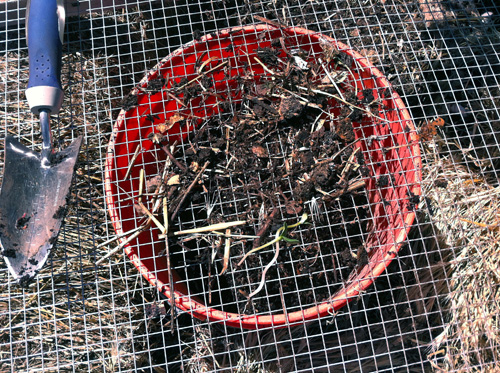
Screening the worm castings

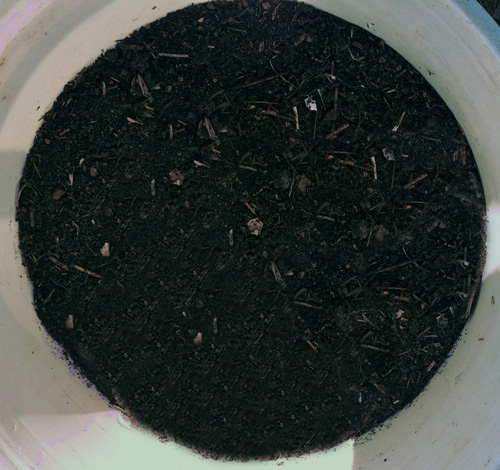
Wednesday I ‘harvested’ my first worm castings. My worm bin is outside and consists of some straw bales formed in a ‘U’ shape that I have across from the chicken coop. I built it last fall and have fed the red wigglers a variety of food including giant pumpkins, coffee grounds, eggshells, straw, newspaper, fruit (no citrus-it will kill them) and vegetable kitchen scraps. Just like a regular compost bin but no work is involved-no turning the pile over and over to get it to decompose. The worms do the work. They eat everything and leave their castings behind. I built a screen to sift out the worms and debris from the castings. I sifted it twice to make sure I got the worms and stuff separated from the castings. I got a full 5 gallon bucket of castings! Unbelievable and wonderful! I took it up to the house to see how much the bucket weighed and it weighed 25 lbs!

Shallot Scapes!

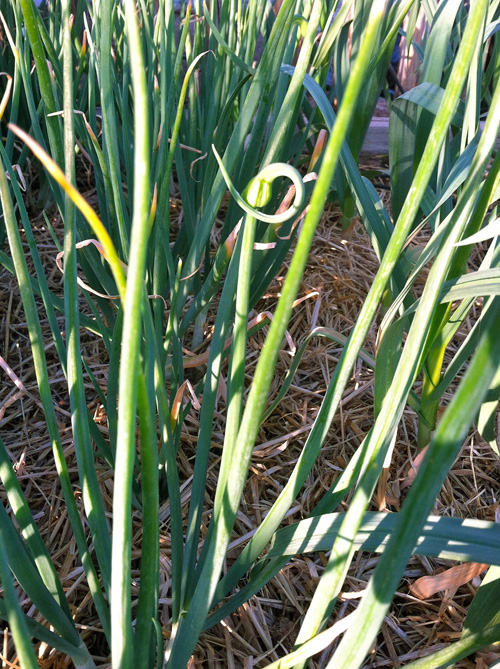
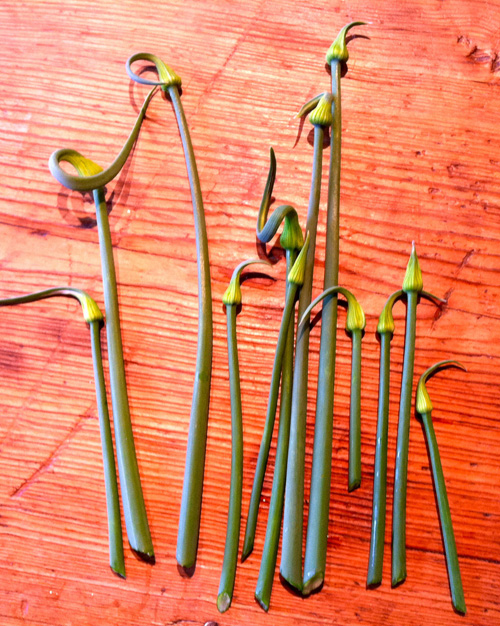
The last few days I’ve harvested shallot scapes. They are just like garlic scapes in that they are the flower bulb. I pick it before it opens so all its energy will go into making the bulbs below the ground larger.

They are really delicious sautéed. We already made an omelet with cheese, spinach and scapes and also in some fried rice. If you see them on your shallots or garlic, cut them off  but don’t throw them away!

Americorp students help plant tomatoes

Today I had some AmeriCorps students help plant some of my tomatoes. I think we planted about 25 of them. What a great bunch of young adults giving service. In case you didn’t know AmeriCorps is like the Peace Corps  (only here in America) where people join and give their time and energy for one year to help communities and farms and learn many skills on their journeys. I explained how I plant tomatoes and  gave them some handouts to take home explaining the process. I hope they take back this information to their communities and share their new tomato growing skills! My only regret is I didn’t get a picture of them before they left! A big thanks to all of you who helped today!

More tasty tomatoes and peppers with Epsom Salts

Get more tomatoes with Epsom Salts

Epsom Salts May help increase blossoms in tomatoes and pepper plants. Increase in blossoms means more tomatoes and peppers!

Epsom salts contain magnesium sulfate, two important elements for plant growth.

Magnesium– can become depleted in soil usually later in the season. Magnesium helps strengthen plant cell walls, helping the plant to absorb nutrients. It also helps to increase blossoms.

Sulfur– improves the growth and overall health of plants, it may also help our high alkaline soil here in the southwest.

There are two ways to use Epsom salts for tomatoes.

1. Mix 1 tbsp of Epsom salts into the soil at the bottom of the planting hole when transplanting tomatoes or peppers or mix 1 tbsp in a gallon of water and water the transplant. It may help plants absorb Calcium and other nutrients from the soil.

2. Use as a foliar spray of 1 tbsp per gallon of water when the plants flower. Epsom salt helps set more blossoms.

I’ve used Epsom Salts on my tomatoes, peppers and even roses for years. It will help roses produce more flowers. Scratch in 1/2 cup of  Epsom salts in soil around rose bush and water in.

Started planting tomatoes May 11

15 TOMATOES PLANTED

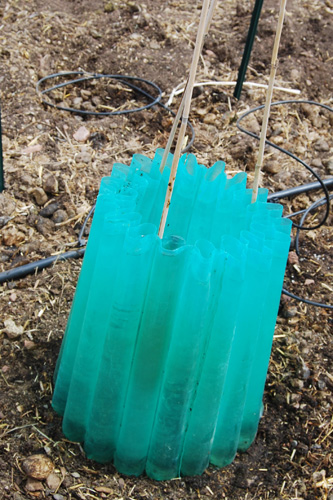
I started transplanting tomatoes into the new garden section. My friend Tom, and I got 15 of them in the soil-all ready to go. We added to each hole: more compost, yum-yum mix, mycorrhizal fungi (for root growth), worm castings, epsom salts (for many blossoms), and dry milk (adds calcium to avoid blossom rend rot later). And this year to (hopefully) conserve on water usage, I’m trying silicon gel granules and some volcanic ash, both of which will keep water longer around the plant root zone.  All this stuff is mixed up with some of the existing soil in the hole.  Then we put the tomato plants in (and if they are rootbound, open the roots up a little), made a well around each one and water each hole several times to get the soil wet. Then I go back a third time and water in some Superthrive and seaweed fertilizer (helps with plant transplant shock). Afterwards I put a drip line around each plant and then put a wall-of-water around each of them to keep them warm at night because just when we think we are out of the woods weatherwise, it gets cold again.

To keep the wall-of-waters from collapsing when the wind gets blowing hard, I put some bamboo stakes inside the walls as shown in the second picture. Overkill? Maybe. But I will get some fantastic tomatoes during the season. I still need to put the main drip hose (1/2 inch size) around the perimeter of the patch and connect each individual drip line to it but I can hand water every other day for now till I get to it. Planting is the hands on intensive part-later it will be a breeze watching them grow..

Tomorrow-May 16, Amy Hetager, from Home Grown New Mexico, is coming with her students from Americorp to plant some more tomatoes. No shortage here-still got 55+ tomatoes to put in the ground!

Reflections on Vegetable Gardening-A Lesson in Patience

Dalai Lama mediating. Photo courtesy of factsanddetails.com

I think one of my biggest challenges in this life is patience. Vegetable gardening is a lesson in patience. In the late winter I want to start all my seeds early (like right away) that I will transplant later, BUT NO, I MUST WAIT till the timing is right. Plant too early and I have these leggy things. Then after I get the seeds planted and they come up, I want them ready to plant BUT NO, I MUST WAIT and transplant them up to the next size pots to get bigger.  Then they are ready to transplant into the garden (I think) BUT NO, I MUST WAIT till the weather temperatures are above freezing at night. Then the days and nights are perfect and I think I can put them out, BUT NO I MUST WAIT till I harden the plants off outside.  Then once they are in the ground I want them to explode in growth immediately BUT NO, I MUST WAIT till they get acclimated. I watch while they sit there awhile. After that I want to immediately get those big juicy tomatoes that I have been WAITING FOR since the end of the previous season (think November), BUT NO, I MUST WAIT and watch the tomatoes stay green while they grow. I WAIT AND WAIT AND WAIT and then the garden kicks ass and really produces those veggies but it is now MID JULY-AUGUST and the picking season is JUST STARTING. Then I want to pick all those huge long-growing tomatoes that are still green BUT NO, I MUST WAIT till October and then a freeze is forecast, I run out to pick them and the season is over! BUT WAIT not quite because then I bring all the huge green tomatoes inside and I MUST WAIT till they finally turn red. WAIT, WAIT, WAIT! Finally when the season is over I will have canned a zillion pickles and  tons of spaghetti sauce and froze a gazillion gallons of plain tomato sauce and dried millions of pounds of apples (yes I think so this year) and made thousands of pounds of pumpkin soup, pumpkin pies, pumpkin bread, pumpkin muffins (you get the picture) and I’m exhausted and CAN’T WAIT TILL IT’S ALL OVER.  Then I recover all winter and can’t WAIT TO START the whole process again. Yes, I think gardening is a lesson in patience.

Bees-Day 7

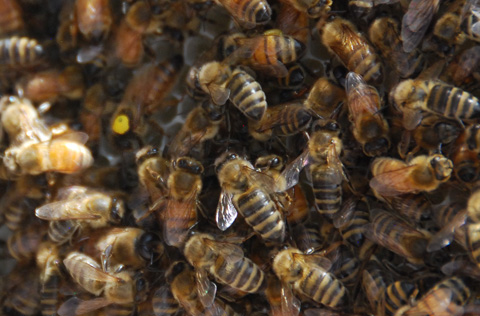
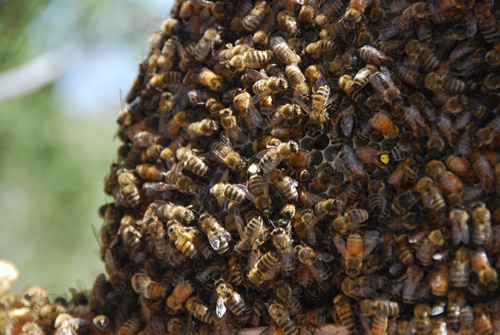
I checked the new bees yesterday on day 7 and they have 3.5 combs built already with lots filled with the sugar water nectar I feed them. We are supposed to feed them for (I think a month) to offer support as they establish their hive which is good as we are not into the nectar flow out this way yet.

At first I couldn’t find the queen, even with a bright yellow dot on her (you can get the queen marked for easier ID). I mean how hard could this be on only 3 combs but I couldn’t see her. It took me 3 times of looking at the combs (both sides) before I finally spotted her. For a moment I thought she was gone, died or left but no finally there she was. They were hiding her!

Growing Fava Beans

Vicia faba

Fava beans. (Vicia faba) (Photo credit: JMDN)

Here’s another new veggie I’m trying this year-Fava Beans.

Fava beans are in the legume family, not the bean family and add nitrogen nodules to the soil. Some people sow it as a cover crop in very early spring and then dig it under before planting or pull the plant and add it to their compost pile. I’m growing them to eat. They are used a lot in mid-eastern cuisine.

I tried growing Favas from seed inside earlier this spring and FAILED miserably. I like to share my failures as well as successes-how else can we all learn! Only 2 seeds germinated and maybe it was because my seed heating mats were FRYING every seed back then before I got a thermostat. Then a friend who was repairing the roof ran over one of them with his truck. I had put both of them on the side of the driveway to take down to the garden (thought they were out of the way) and his truck turned wide. So I took the one saved Fava plant and the rest of the Fava seeds down to the garden and decided to direct seed them. I love the black and white flowers they produce.

Fava beans like cool weather so I wasn’t sure it would even germinate here since we warm up fast but they did and here they are about 2-3 inches tall now.  Still not sure if I will get to harvest the beans later especially if we get hot fast but life’s an experiment and I’m one that tends to go for it.

I’m not sure about recipes for fava beans and I hear they are a pain in the a#* to shell as they have 2 shells on them which you must remove before eating. My friend Lava said they are good shelled fresh but wasn’t sure when they are dried. Anyone got any good recipes for both fresh shelled and after they are dry?

Growing Bulb Fennel (Finocchio)

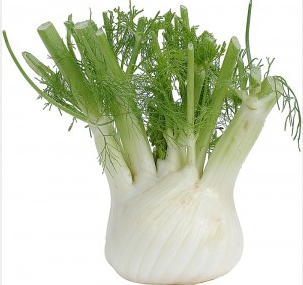
Finocchio fennel. Photo courtesy of growingherbsforbeginners.com

More on another new vegetable I’m trying this year-Finocchio Fennel.

There are several types of fennel, the bulb type (which is Italian called Finocchio or Florence), sweet fennel (fern like) and bronze fennel (fern like). All can be used as an herb but sweet and bronze are used for their foliage in cooking and Finocchio or Florence is used for the bulb in cooking. Sweet or bronze fennel will not bulb up. I used Finocchio in a Cioppino (seafood stew) at New Year’s and it was so wonderful that I decided to grow some. This post is about Finocchio Fennel.

I tried to grow some inside from seed- it didn’t do very well only getting a few to germinate so I ended up I buying a little pack at Agua Fria nursery here in Santa Fe.

Fennel growing well-May 7

Now from from what I’ve read they are not suppose to transplant well in the soil but I had so many of them in each little cell (and they were very young) that I teased the roots apart (carefully) and transplanted them directly into the soil.  I then put a drip on each one, made a little well that I put straw in so the water would not evaporate and then I put a cage I made out of wire material and covered it with some row cover. I was afraid the row cover might be too heavy directly on the baby fennels at first as they were very delicate-hence the cage. I thought the row cover would add more protection from the wind. Fennel can handle the cold (in fact it likes it) but the wind was what I was worried about.

closeup of developing bulbs

Here is a picture of the one of them developing bulbs. All 17 of them are doing really well.

Fingerling Potatoes-May 7

The potatoes I planted Mar. 30 are doing great. Most of them came up with a few exceptions. Not bad for my first try. Of course the proof will be if I get some nice potatoes. Right now they are about 8 inches tall and when they hit 10 inches I will start the hilling process. Basically every ten inches or so I will add soil slowly filling the trench and burying the base of the potato plant I started with. I thought I would use straw for the hilling process but decided to stick with dirt because it is so dry here and I thought the straw would probably blow away anyways. Besides when I dig them out it will be like an Easter egg hunt! Since this is my first year at trying to grow potatoes, I am excited about what might happen.

The Queen is Out and About!

I got my bees last Wednesday and Sunday Caleb, Elodie and I checked them and the queen was released from her box (or as Elodie says-cage-which is more correct). The queen has a yellow dot on her to spot her easily. This will not harm her but helps you see her better. I gave them some more sugar water solution (until they get established) and they have already built about 1.5 combs of wax! Amazing. Busy as bees…

Wind Wind Go Away…

It’s suppose to rain (LOL) this week-maybe. At least this is the best shot for some moisture since late winter. Of course with the possible storms come the WINDS again. Winds are about 20 mph. Not pretty. But we really need some moisture so we all endure-like we have a say. And it’s been such a nice spring, sigh.

And no I didn’t plant tomatoes this past weekend. Ran out of time..Good thing.

Create a teepee of pole beans for the summer

On Sunday, Caleb and Elodie and I created a bean teepee in one the beds where pole beans will grow. I wanted to make it large enough that a person (even an adult) could sit inside it this summer when it is covered with bean plants.  I can’t wait to experience what it will be like.

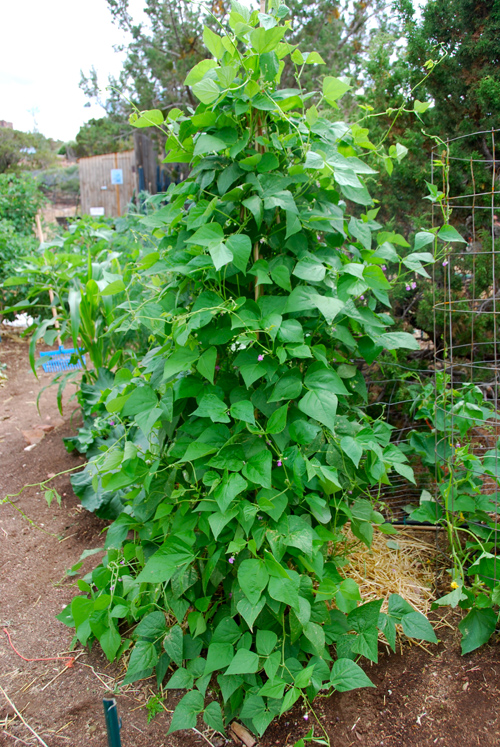
Here is the pole bean teepee I had last year but it was completely closed so this year we left an opening in the tee-pee to get in and out.

I had some really tall poles so we could get the height and width needed to make it large enough. I got the poles from my friend, Tuko, who had them on an arbor at her house and was taking it down. That was many years ago and I’ve saved them all this time for something special and I think I found that special project. I’m hoping that my neighbor’s grandson, Aiden will go in it later this summer.

So today in the wind, I went out and planted some seeds before this supposed rain comes. I planted beets and carrots on both sides and then I covered them with row cover (for now) so the seeds wouldn’t blow away and stay wet longer when I water them. The row cover helps the seeds stay in place! Later after the plants come up I will take off the sheets!