Windy ugly!!

wind

Today was what I call windy ugly! It is just blasting outside which is exactly what our Aprils’ are about out here in Santa Fe. I thought we might not get it this year as we’ve had beautiful weather up till today. Spring is my least favorite season because it almost always is windy-really windy and the wind makes me crabby! I read that is because all the positive ions the wind whips up. Negative ions (like when it rains make us feel good and positive ions make us crabby!)

One year, about 11 years ago, the roof blew off my hay barn-literally the roof just lifted up-all 14′ x 24′ of it and landed on my neighbor’s property. When it hit, it left a 12″ deep dent where it hit the ground and exploded from the impact as pieces flew everywhere. Luckily nothing was damaged-no people or property. Just before the event, Elodie and I were down at the barn tightening up any screws on the roof (she was holding the ladder and I was on top of the roof and I had just gotten off the ladder when the wind came up and up and up. Elodie said “Well, this will be a good test” when a 70 mph micro-burst came into the barn, we heard a huge rip as it tore the roof off and the thing flew up in the air like one giant kite. Made me think of Dorothy in the Wizard of Oz when her house was lifted in the air. Elodie said, “That could have been you! You were just on the roof!” to which I chanted, ‘It wasn’t my time! It wasn’t my time!

PS: When I rebuilt the roof I put hurricane ties on the rafters so hopefully that won’t happen again. Today reminded me of that windy day!

Cool Season Crops Outside class a success

giant veggie gardener's avatarHome Grown New Mexico

illustration MG of middlesex countyWell, it looks like many of you are chomping at the bit like I am to get out and start our gardens! 48 people signed up for the class and 45 showed up! Biggest class ever and what a great day it was to get out in a garden and see how to prep the garden beds, go over what plants do well here in Santa Fe and we actually planted some cool season crops-lettuces, kale and chard in Duskin’s plot at Milagro Community Garden. Thanks to all for supporting the class, it was good to see our friends.

Here are the handouts if you missed the class:
Starting Cool Season Crops Outside
WINTER:EARLY SPRING HARDY VEGETABLES
soil temperatures for veggie seeds
PRESPOUTING SEEDSStarting Cool Season Crops Outside
Mycorrhizal benefits

The next class of ours should be fantastic -Making Chevre and Feta cheese on April 19! Don’t wait too…

View original post 32 more words

Scarab larva grubs or cutworms?

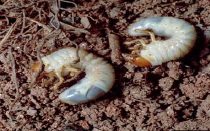
scarab-beetle-larvaeI just got done with a my Growing Cool Season Crops class today and someone asked about those white grubs in the soil when they were turning it over. So I dug out this post I wrote in 2012 about what are those white grubs in the soil. I told the class I would put pictures up of the grubs and cutworms so you can know how to ID each of them. One is harmless and the other can be a real problem. Read on.

This time of year when you are adding amendments and turning your soil, you may notice some white fat grubs with brown heads. I noticed they were in soil that I heavily amended with horse manure and would freak out when I saw them. I took all of them (sometimes a lot) and give them to the chickens. I use to think were cutworms but they are not.

They are Scarab beetle larvae and will NOT harm your vegetable plants or vegetable roots. They are also known as the ‘dung beetle’ larvae. In fact they are beneficial because they help break down the manure by eating it, hence you will find them where you use manure. Just leave them alone as they are kind of like worms, adding nutrients to the soil as they process the manure. I have never seen any damage to vegetables but if they are in your lawn (what lawn?! LOL) they will eat grass-roots (but not vegetable roots).

cutworms

On the other hand, here is a picture of cutworms which are HARMFUL to your plants. They come out of the ground at night and chew the base of your transplant stem off leaving you with a decapitated plant (so to speak). They attack baby plant stems because they are tender. After the plants get older, they don’t bother them. If you see these, get rid of them.  I look for them in the soil around the hole I dig just before I put my transplants in the ground. But there is something else you can do to protect your plants.

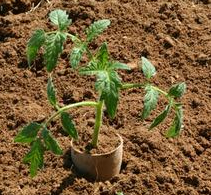
You can protect your plant by putting a ‘cutworm collar’ around your newly planted transplants. I use a paper towel roll or toilet paper row  cut into 2 inch increments. I cut the tube lengthwise to get them around the plant stem and tape the cut seam.

Then I sink the tube about 1 inch into the soil. They won’t crawl up the tube. After your plants get a little older, take the tube off-they only like young stems. In this picture the collar is filled with dirt but I just leave the collar  on without filling it with dirt.

The pullets have been busy!

eggs 2015

I posted the pullets started laying eggs and now they are laying full blast!  Nice to have fresh eggs again and the eggs are getting bigger! Chickens stop laying eggs in the winter and start laying eggs when there is more daylight in the spring and they are right on time!

The pullets are laying!

I got 5 new pullets in November from my friend Mike Warren who raised them from chicks and sold them to me as pullets once they grew up enough. Their names are Sophia, Odetta, Rosa, Nina and Alice

pullet eggs Mar1

This way they would be ready to lay in spring and  are starting to do so now. The pullets were big enough that we didn’t even have to acclimate them to the older hens. The old girls accepted them right away.

pullet egg vs reg eggNotice when pullets start laying, their eggs are smaller than adult eggs

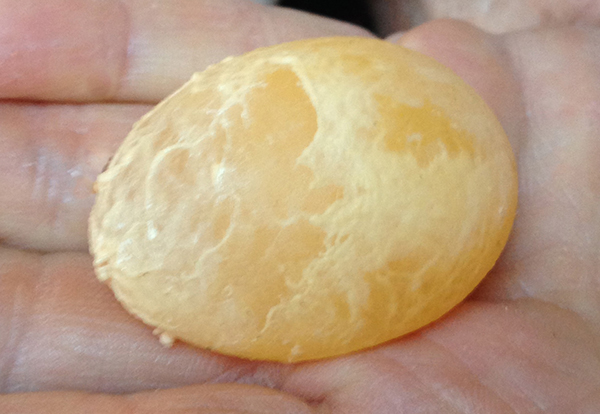
shelless egg

and sometimes in the beginning, they don’t even have hard shells!

The original girls

I still have 5 older hens that are 10 years old this year! They had stopped laying several years ago except now that the new ones are laying, 2 of them are laying again! They have remained pets since their laying days.

 IMG_5348What does BT the cat have to do with chickens? Nothing, he just loves his chicken!

2015 Santa Fe Seed Exchange

hg-seed-exchange

Santa Fe Seed Exchange-TODAY!
Tuesday, March 10, 2015

If you are looking for seeds and ideas for your vegetable garden, come to the Santa Fe Seed Exchange on Tuesday, March 10, 2015 from 4 pm-7 pm in Frenchy’s Barn on Agua Fria and Osage Ave. The City Parks Division and Home Grown New Mexico are hosting this event for all community gardens, school gardens and home gardeners. Agua Fria Nursery donated over $750 of seeds so there are plenty of seeds available. Come even if you do not have any to share. Bring flower, herb, vegetable and other seeds if you do.

The Santa Fe Master Gardeners will be at the event with an “Ask a Master Gardener” table for gardening questions and will have seed starting handouts to give away.

SB_BusinessCard_Back_photoThe SeedBroadcast organization will have their seedbroadcasting station to answer questions about saving seeds and seed story recording equipment.  Tell your story about the seed, where you got it, how you planted it and more.  See their website for stories across America.

Poki from Gaia Gardens and The Tomato Lady will be there with seeds also.

If you have questions, please contact: homegrownnewmexico1@gmail.com  or leave a message at 505-983-9706 and we will return your call.

Garlic in February!

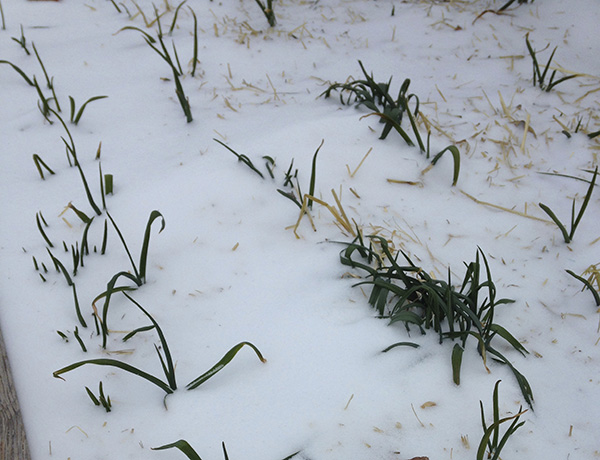
garlic in febThe garlic is starting to come up nicely, even through the snow. I believe it wakes up when the daylight hours get long enough. By planting garlic in the fall, you’ll get larger bulbs and will be able to harvest earlier in the summer. I planted it in late October and put straw over it to protect the bulbs from winter. Looks like it worked! The straw keeps the bulbs from freezing and the snow can melt through it and provide moisture. Didn’t even have to water it this winter. Such an easy crop to grow and fresh garlic is the best!

Lettuces to grow in winter

lettuce-jan 16, 2015

Here is some lettuce I harvested from my unheated greenhouse on January 16th! I’ve been experimenting growing some cold hardy lettuce varieties (Winter Wunder and Marshall Red Romaine) this winter.  I told you I would report back and here is my first harvest. I find it amazing that they survived some very cold nights 6 to 8°F (-14 to -13°C for my European friends) in the greenhouse with only some winter weight row cover over them for added protection. I planted them from transplants instead of seeds in November so they had a good head start. It’s really fun to see something ‘green’ growing this time of year and yummy too.


Starting COLD HARDY VEGETABLES Super Early

lettuce_greenhouse germinating

So now that the Persephone period is almost over and the magic date of January 15th is upon us, what does that mean? It means our day lengths are getting longer and January 15th is when we start getting 10 hours of daylight that will continue to get longer every day. Have you noticed already it now gets dark around 5:30 instead of 5 pm? The darkest time of the year is over. What does that mean to gardeners? To learn how to start cold hardy vegetable seeds super early outside and how also how to start them inside read on.

STARTING COLD HARDY VEGETABLE SEEDS OUTSIDE: cold frme opened
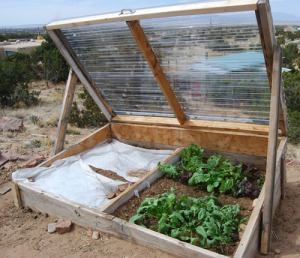
If you want to try growing cold hardy vegetables outdoors at this time of year, you will need a cold frame, low tunnel or hoop house.

If you already planted cold hardy vegetables late last fall in a cold frame, low tunnel or hoop house, you may have noticed that the little seedlings haven’t been growing much at all as winter set in. Now with longer daylight hours, they will start to grow again and barring any devastating freezes, they will continue to grow and you can get cold hardy crops earlier this spring.

In late winter, before you have harvest your winter crops, decide what you want to plant in your bed once space opens up in your cold frame.  As the end of the Persephone period draws near (January 15) , you can re-seed the openings created from your harvesting or you could start planting seeds in your bed if you don’t have anything growing. My soil in my unheated greenhouse is at 40°F right now (as of January 12). Lots of cold hardy vegetables germinate in cold soil.  They will be slow to start at first but they will start as your soil warms up to 40°F and warmer. Now with the day light getting longer, you can think about starting early. The winter sowing you do will be ready for harvest by early spring, often long before the same crop when grown outside without protection. A bonus is many of the cold hardy winter crops don’t like our springs, bolting on the first few warm days so you’ll be able to harvest that spinach before it bolts!

Some cold-hardy plants planted inside a cold frame, low tunnel or hoop house can tolerate a hard freeze at night, provided they are allowed to thaw during the day. The plants must be completely thawed before you harvest them. In addition, put some winter row cover over seedlings at night to give them an additional 4-6°F protection even though they are already in a cold frame, etc. Remove the row cover on days when it is above freezing. Watering is necessary to get crops started, but they will generally need very little water during the winter season-early spring once established.

STARTING VEGETABLE SEEDS INSIDE:
I’ve already written about starting seeds inside on many earlier posts.
To learn all about starting seeds indoors to get a head start go here:
https://giantveggiegardener.com/2012/03/08/starting-seeds-inside/

WINTER HARDY VEGETABLES
The following list of winter vegetables to grow is from ‘The Winter Harvest Handbook’ by Elliot Coleman. These can be planted either as transplants (first started inside under lights) or outside as seeds in cold frames, low tunnels or hoop houses.

Asian greens-Tatsoi, Pak Choi (Mei Quing Choi), Mizuna, Tokyo Bekana,Komatsuna

arugula-Astro, Sylvetta

beets-Red Ace, Merlin, Touchstone Gold

beet leaves-Bull’s Blood, Red Ace

carrot-Napoli, Mokum, Nelson

chard-Fordhook Giant, Ruby Red, Argentata

claytonia

endive-Bianca Riccia

leek-Tadorna

lettuce-Red Saladbowl, Tango, Rex, Rouge d’hiver

 mache-Vit

minutina

mustard green-Toyoko Beau

radishes-Tinto, D’Avignon, Cherriette

scallion-White Spear

sorrel

spinach-Space

turnip-Hakurei

watercress

2014 garden-then and now

long shot of garden

Winter Gardening

greens

Here is a great read from our friends over on Home Grown New Mexico from Mike Warren. It is on ‘The Persephone Period’ What is the Persephone period? It is about winter, the short days in this season and the amount of light plants need to grow. Even though the shortest day of the year is upon us and the days will start getting longer, it is still too soon to start planting outside or even in greenhouses or hoophouses. Be sure to read the article about this interesting time we are in right now.

The beginning of Pharmacies-medicinal plants

New Orleans Pharmacy Museum

New Orleans Pharmacy Museum

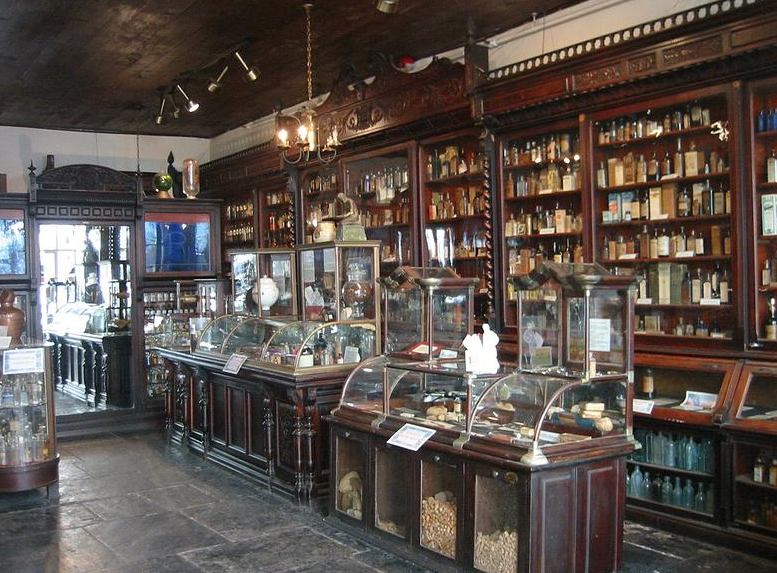
This past fall I took a trip to New Orleans and while there took a tour of the New Orleans Pharmacy Museum where a pharmacist, Louis J. Dufilho, Jr. was the first to pass the national licensing examination in 1804, therefore making his pharmacy the first licensed United States apothecary shop. What does this have to do with plants-everything because as I toured the museum what became clear to me was the pharmacies of old were nothing like our current pharmacies where chemical drugs are sold to help heal aliments. The cures of yesteryear were plant-based and although some of them I’m sure didn’t work, I’m just as sure many did. So I saw the original ‘drugs’ that came from medicinal herbs and plants, not chemicals, and I saw things in a whole new way. Now I’ve known of some herbs that help with various aliments but never really connected the dots until I took a tour of that pharmacy. Gives me a whole new perspective on pharmacies and their beginnings. Sometimes going forward means looking backwards to see where we came from.

And speaking of pharmacies, soda fountains became popular in pharmacies where sweet syrups could be mixed with carbonated water and herbal concoctions to hide the bitter taste. Coca-Cola, one of the most famous fountain drinks, was invented by an Atlanta pharmacist, John Pemberton in the late 19th century. It was intended to be used as a medicine. Coca-Cola’s name came from its two ‘medicinal’ plant ingredients—coca leaves and kola nuts, hence the name. Coca-Cola originally had some cocaine in it from the coca leaves although no one knows how much as it’s recipe was and still is a secret. Coca-Cola was completely cocaine free by 1929 being replaced with caffeine. For more of this interesting story go here: http://www.snopes.com/cokelore/cocaine.asp


How to use my gardening website

apricot blossoms

Many people have contacted me about what’s going on in their vegetable and fruit gardens in the high desert of Santa Fe, New Mexico or in Zone 6a throughout the seasons and have particular questions. Feel free to write me but I want to go over how to use this website to your greatest advantage. Every few days I post something about what’s going on in the garden, or garden stuff I want to share. One way is to just go backwards (scroll down) and read them. But let’s say you have a question about growing tomatoes. You could go backwards which would take you forever as I have over 650 posts on various subjects (so far) but another faster way would be go over to the right hand column of this blog. From there:

Go down to ‘GARDEN TOPICS’ and scroll down to whatever interests you (in this case tomatoes) from starting tomatoes from seed, to garden hints, or all the way down to tomatoes in the vegetable section. That way you can cut out subjects that aren’t interesting for you. (What?)

Another thing I like in the right column is the ‘ARCHIVES’  section where you can read my posts for a particular month and even for a particular year. I use this a lot for myself as I look up when I planted something in previous years, or other info I want to review again for a particular month.

Another section is called, ‘PAGES’ which you can access from the right column or on the top menus on the blog. I think this is a great resource as you can look up the page for catalogs I like to get, my garden plans for each year, my seed lists of what I’m planting that year, classes I may offer,  films I’ve made from my Youtube channel-giantveggiegardener, Santa Fe Extension Master Gardener’s radio show, ‘The Garden Journal’ where I talk about what to do in the vegetable garden each month. and even the about me page with info about me and this website (if you care to know!)

So next time it’s snowing or cold and windy outside this winter, take some time to catch up on what’s going on. I know I do!

Final Clean Up in the Garden

Nick unloading manure

I’ve now cleaned out most of the beds except where the gourds are, the kale bed and the 2 perennials in the garden.

gourds in wheelbarrow

The gourds are drying nicely and I picked some of them this week. These are African Bushel Gourds.

rhubarb in dec

The 2 perennial plants in the garden have gone to sleep-the rhubarb and the strawberries. I will cover the rhubarb crowns shown above with straw (they look dead but they are not).

strawberrys in Dec

I will put row cover over these strawberry plants as I don’t like raking out straw from the strawberries in the spring-too much work. It is much easier to just uncover them. Look how the leaves turned red.

Since the kale is still alive, it is covered with row cover for now. I expect it to die too once we get really cold at night again.

nick closeup

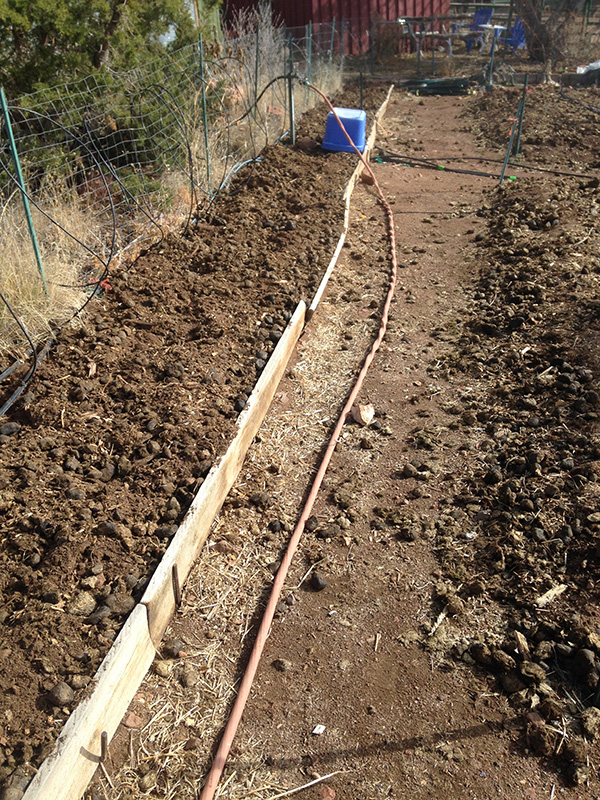
My friend Nick and myself put 2 huge trailer loads of horse manure on all the beds after we cleaned them out of the dead plants  in November.

beds finished

Then we lightly turned the manure over in the soil to add more organic matter to the soil as shown above. This will break down over the winter and be ready to plant by spring. Yea! Because of him I actually got all the fall clean up done! Finally the garden can go to sleep and maybe me!

Cold Damage on Winter Crops

garden dec 9 2014

Well  here it is in early December and not surprisingly, most of the outside crops in the main garden, ‘bit the dust’ as they say—died. A few are still alive. It is warmer now—here are the results of those cold snaps we had.


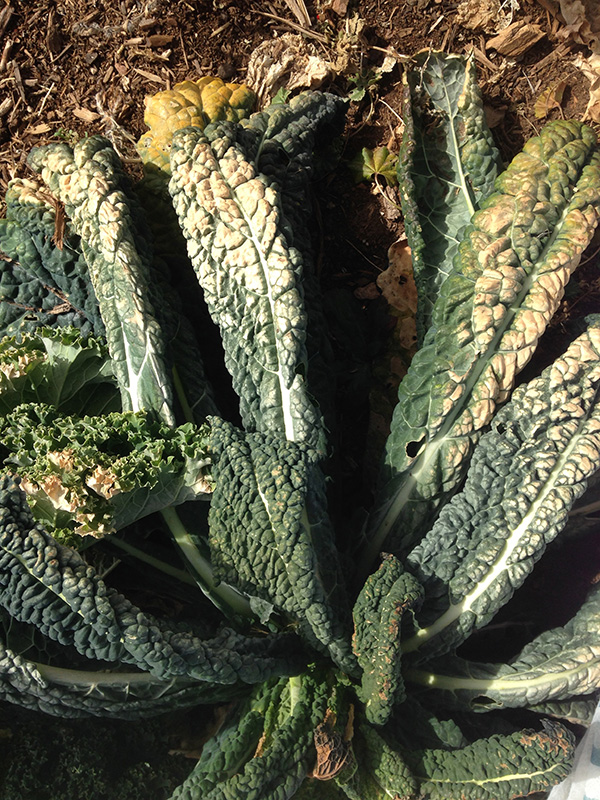
The Toscano Kale with freeze burn. It is more sensitive to cold temperatures  than other kales

Toscano Kale

The Toscana (aka Lacinato or dinosaur) kale got severely damaged. It is cold sensitive and although it’s not completely dead, it is unharvestable. Here it is with the leaves burned from the cold.


Russian Red kale is still alive

Russian Red kale


The Russian Red and Curly Leaf kale are still going and have some damage as well but the new growth is doing well. I haven’t watered them at all-nature has with a little snow and a nice rain the other day- almost an inch. I do have them covered with 2 layers of winter weight row cover.

gourds in field

The gourds are still drying in the field. Some are starting to get lighter in weight so I will put those in the garden shed to finish drying. The rest will stay outside until they dry more.
bubble wrap down on windowsThe green house is button up fairly tight now with just a little venting at the top panels. I’ve put the bubble wrap on all the windows (bubbles faced to the window) for extra insulation. I’ve also put the 4 barrels with water in them on the north wall for them to absorb heat in the daytime (I took them out during the summer), releasing the heat at night (the theory is that the sun which is lower and further to the south will hit them on the north wall and warm up in the daytime). I’m not sure I have enough barrels to do much good but even one degree will be helpful once it gets cold again.
winter lettuces

I’ve planted 2 winter lettuce varieties in the green house as transplants back in early November. The cold hard varieties are a green variety-Winter Wunder and a red variety-Marshall Red Romaine. They both have made it so far through those cold snaps although they have slowed down in growth because of the shorter daylight hours. They will stop growing until sometime in January when the daylight hours start to get longer.  Winter Wunder is my favorite lettuce but only grows well during the cold months. When it starts to get even a little warm, it will bolt. The lettuces have 2 layers of row cover over them at night and have some protection from the unheated greenhouse (at least from the winds). I’ve also noticed that the lettuces don’t need a lot of water now (about once every 2 weeks). It will be interesting to see if they make it Dec-February. Don’t they look wonderful in the winter!

There has been about a 4-7°F difference between the greenhouse temperature and the outside temperature at 7 am in the morning when I check everything. When I add the row cover at night I get about 4-6 degrees more protection. I’m not sure what to expect this winter since this is my first December-January  in the greenhouse. Last year when we finished up the greenhouse I start planting on February 17th so now I will see if these established greens can survive Dec-Jan.