Starting COLD HARDY VEGETABLES Super Early

lettuce_greenhouse germinating

So now that the Persephone period is almost over and the magic date of January 15th is upon us, what does that mean? It means our day lengths are getting longer and January 15th is when we start getting 10 hours of daylight that will continue to get longer every day. Have you noticed already it now gets dark around 5:30 instead of 5 pm? The darkest time of the year is over. What does that mean to gardeners? To learn how to start cold hardy vegetable seeds super early outside and how also how to start them inside read on.

STARTING COLD HARDY VEGETABLE SEEDS OUTSIDE: cold frme opened
If you want to try growing cold hardy vegetables outdoors at this time of year, you will need a cold frame, low tunnel or hoop house.

If you already planted cold hardy vegetables late last fall in a cold frame, low tunnel or hoop house, you may have noticed that the little seedlings haven’t been growing much at all as winter set in. Now with longer daylight hours, they will start to grow again and barring any devastating freezes, they will continue to grow and you can get cold hardy crops earlier this spring.

In late winter, before you have harvest your winter crops, decide what you want to plant in your bed once space opens up in your cold frame.  As the end of the Persephone period draws near (January 15) , you can re-seed the openings created from your harvesting or you could start planting seeds in your bed if you don’t have anything growing. My soil in my unheated greenhouse is at 40°F right now (as of January 12). Lots of cold hardy vegetables germinate in cold soil.  They will be slow to start at first but they will start as your soil warms up to 40°F and warmer. Now with the day light getting longer, you can think about starting early. The winter sowing you do will be ready for harvest by early spring, often long before the same crop when grown outside without protection. A bonus is many of the cold hardy winter crops don’t like our springs, bolting on the first few warm days so you’ll be able to harvest that spinach before it bolts!

Some cold-hardy plants planted inside a cold frame, low tunnel or hoop house can tolerate a hard freeze at night, provided they are allowed to thaw during the day. The plants must be completely thawed before you harvest them. In addition, put some winter row cover over seedlings at night to give them an additional 4-6°F protection even though they are already in a cold frame, etc. Remove the row cover on days when it is above freezing. Watering is necessary to get crops started, but they will generally need very little water during the winter season-early spring once established.

STARTING VEGETABLE SEEDS INSIDE:
I’ve already written about starting seeds inside on many earlier posts.
To learn all about starting seeds indoors to get a head start go here:
https://giantveggiegardener.com/2012/03/08/starting-seeds-inside/

WINTER HARDY VEGETABLES
The following list of winter vegetables to grow is from ‘The Winter Harvest Handbook’ by Elliot Coleman. These can be planted either as transplants (first started inside under lights) or outside as seeds in cold frames, low tunnels or hoop houses.

Asian greens-Tatsoi, Pak Choi (Mei Quing Choi), Mizuna, Tokyo Bekana,Komatsuna

arugula-Astro, Sylvetta

beets-Red Ace, Merlin, Touchstone Gold

beet leaves-Bull’s Blood, Red Ace

carrot-Napoli, Mokum, Nelson

chard-Fordhook Giant, Ruby Red, Argentata

claytonia

endive-Bianca Riccia

leek-Tadorna

lettuce-Red Saladbowl, Tango, Rex, Rouge d’hiver

 mache-Vit

minutina

mustard green-Toyoko Beau

radishes-Tinto, D’Avignon, Cherriette

scallion-White Spear

sorrel

spinach-Space

turnip-Hakurei

watercress

2014 garden-then and now

long shot of garden

Final Clean Up in the Garden

Nick unloading manure

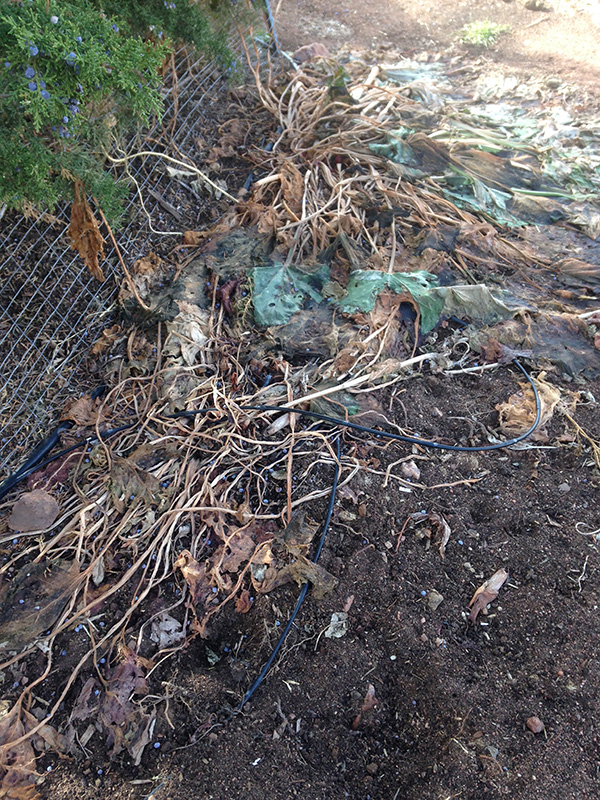
I’ve now cleaned out most of the beds except where the gourds are, the kale bed and the 2 perennials in the garden.

gourds in wheelbarrow

The gourds are drying nicely and I picked some of them this week. These are African Bushel Gourds.

rhubarb in dec

The 2 perennial plants in the garden have gone to sleep-the rhubarb and the strawberries. I will cover the rhubarb crowns shown above with straw (they look dead but they are not).

strawberrys in Dec

I will put row cover over these strawberry plants as I don’t like raking out straw from the strawberries in the spring-too much work. It is much easier to just uncover them. Look how the leaves turned red.

Since the kale is still alive, it is covered with row cover for now. I expect it to die too once we get really cold at night again.

nick closeup

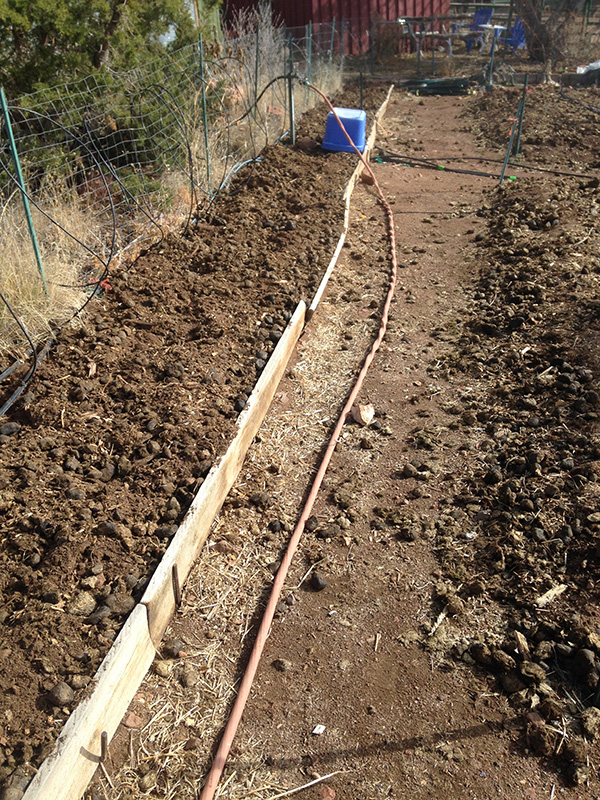
My friend Nick and myself put 2 huge trailer loads of horse manure on all the beds after we cleaned them out of the dead plants  in November.

beds finished

Then we lightly turned the manure over in the soil to add more organic matter to the soil as shown above. This will break down over the winter and be ready to plant by spring. Yea! Because of him I actually got all the fall clean up done! Finally the garden can go to sleep and maybe me!

Cold Damage on Winter Crops

garden dec 9 2014

Well  here it is in early December and not surprisingly, most of the outside crops in the main garden, ‘bit the dust’ as they say—died. A few are still alive. It is warmer now—here are the results of those cold snaps we had.


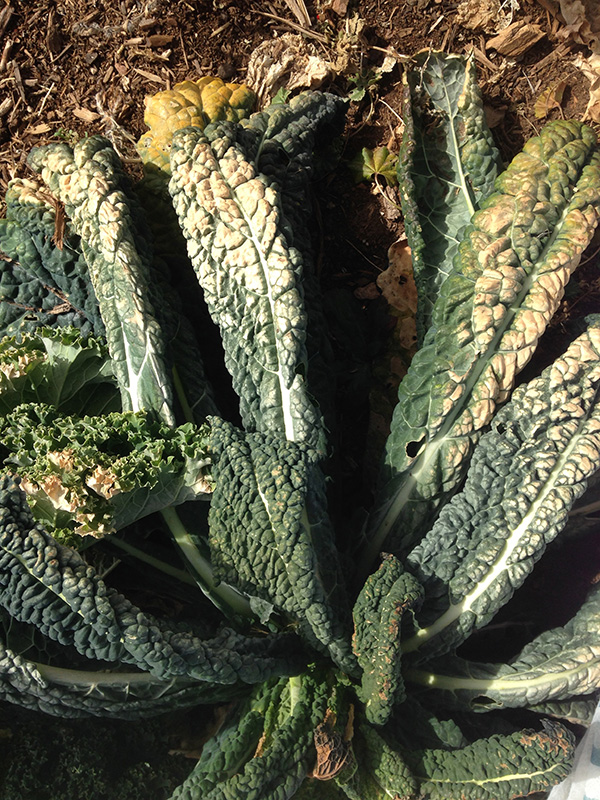
The Toscano Kale with freeze burn. It is more sensitive to cold temperatures  than other kales

Toscano Kale

The Toscana (aka Lacinato or dinosaur) kale got severely damaged. It is cold sensitive and although it’s not completely dead, it is unharvestable. Here it is with the leaves burned from the cold.


Russian Red kale is still alive

Russian Red kale


The Russian Red and Curly Leaf kale are still going and have some damage as well but the new growth is doing well. I haven’t watered them at all-nature has with a little snow and a nice rain the other day- almost an inch. I do have them covered with 2 layers of winter weight row cover.

gourds in field

The gourds are still drying in the field. Some are starting to get lighter in weight so I will put those in the garden shed to finish drying. The rest will stay outside until they dry more.

bubble wrap down on windowsThe green house is button up fairly tight now with just a little venting at the top panels. I’ve put the bubble wrap on all the windows (bubbles faced to the window) for extra insulation. I’ve also put the 4 barrels with water in them on the north wall for them to absorb heat in the daytime (I took them out during the summer), releasing the heat at night (the theory is that the sun which is lower and further to the south will hit them on the north wall and warm up in the daytime). I’m not sure I have enough barrels to do much good but even one degree will be helpful once it gets cold again.

winter lettuces

I’ve planted 2 winter lettuce varieties in the green house as transplants back in early November. The cold hard varieties are a green variety-Winter Wunder and a red variety-Marshall Red Romaine. They both have made it so far through those cold snaps although they have slowed down in growth because of the shorter daylight hours. They will stop growing until sometime in January when the daylight hours start to get longer.  Winter Wunder is my favorite lettuce but only grows well during the cold months. When it starts to get even a little warm, it will bolt. The lettuces have 2 layers of row cover over them at night and have some protection from the unheated greenhouse (at least from the winds). I’ve also noticed that the lettuces don’t need a lot of water now (about once every 2 weeks). It will be interesting to see if they make it Dec-February. Don’t they look wonderful in the winter!

There has been about a 4-7°F difference between the greenhouse temperature and the outside temperature at 7 am in the morning when I check everything. When I add the row cover at night I get about 4-6 degrees more protection. I’m not sure what to expect this winter since this is my first December-January  in the greenhouse. Last year when we finished up the greenhouse I start planting on February 17th so now I will see if these established greens can survive Dec-Jan.

Nov. 4, 2014-First HARD freeze in the garden

cold-clip-art-clipart-coldthermometerUnbelievably I haven’t had a HARD freeze here until last night. In October I had 2 nights where it was barely freezing and those did do some damage (nothing too severe) in the garden but we haven’t had a really HARD freeze till now.

The temperatures will be from the mid 30’s to high 20’s the next few nights here in Santa Fe so I guess old man winter is right around the corner. No matter, I picked my tomatoes just before the the first light frosts in October (not knowing how cold it would get that night).

I can’t ever remember having this warm of a fall. It’s been great for harvesting as I could take my time instead of rushing to get everything out. We usually get a hard freeze by mid-October so it’s been a wonderful fall for all us gardeners! Now it’s time to put the garden beds to rest.

Winter greens for the greenhouse or early planting outside

I can’t wait anymore! I got this newly completed greenhouse and am antsy to try it out. I’ve done a lot of research on which plants might do well in the winter and am ready to rock n’ roll! So I am planting cold hardy seeds this week inside the house. I will transplant them into my new greenhouse when they are bigger. I’m also going to try some direct seeding in the greenhouse in the raised beds like arugula, spinach, kale, baby bok choi and mache in mid-February-all of which can handle some pretty cold weather. How cold? We will see soon although you wouldn’t know it by this week. I will also plant other greens like some winter hardy lettuces, peas, and a winter hardy variety of chard called Argentata at the end of February-beginning of March. Everything planted in the greenhouse will have to have row cover over it even in the greenhouse at this early date because of our cold nights. For those of you who do not have a hoophouse, or cold frame, the seeds in the list below will do well outside only you have to wait a little longer.

Here is my list of cold hardy crops to try in the greenhouse. You can also plant these outside in March once the soil is not frozen and cover them with row cover:

From Johnny’s Seeds:
‘5-star greenhouse’ lettuce mix
‘Space’ Spinach

From Southern Exposure Seed Exchange:
‘Even’ Star’ Winter Arugula
‘Winter Bloomsdale’ spinach

From Kitazawa Seed Co:
‘Mei Qing Choi’ (dwarf pak choi)-recommended in ‘Four Season Harvest’ by Eliot Coleman
‘Tatsoi’ (pak choi)-recommended in ‘Four Season Harvest’ by Eliot Coleman
‘Golden Yellow’ pak choi
‘Astro’ arugula

From The Cooks’ Garden:
‘Red Grenoble’ lettuce
‘Forellenschluss'(speckled trout) lettuce
‘Rouge D’Hiver’ lettuce-recommended in ‘Four Season Harvest’ by Eliot Coleman

From John scheepers Kitchen Garden:
‘Argentata’ Chard-recommended in ‘Four Season Harvest’ by Eliot Coleman

From Agua Fria Nursery: transplants ready to plant
mache (corn salad)-recommended in ‘Four Season Harvest’ by Eliot Coleman
endive-recommended in ‘Four Season Harvest’ by Eliot Coleman
‘Winter Wonder’ lettuce
‘Marshall Red’ romaine lettuce

Heating the Greenhouse using passive solar methods?

wide angle view of GH interior

I like this wide angle view of the inside of the greenhouse

I want to heat the greenhouse in the winter using passive solar methods. There is nothing growing in it so far this winter but I’m doing some experimenting to see how warm I can get it (my goal is around 32°F or warmer) at night. To this end I’m experimenting using compost to help heat it, putting some barrels with water in them to act as a heat sinks and I’m insulating the structure inside a little better so as not to lose so much heat at night. If the sun shines, it gets between 70-80° in the day right now (which is delightful) and I’d like to keep some of that heat in at night and not lose it. Of course I had the opposite problem last summer when it got too hot but that’s another problem I’ll address this summer!

GH inside winter

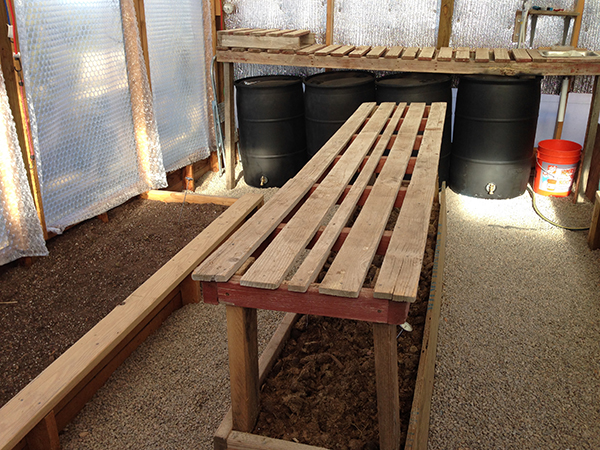
The center bench has compost underneath it in a raised bed

The compost pile is only 1/2 a yard so is probably not enough to keep it significantly warmer  inside the greenhouse but what if it adds a degree or two? I’ll take it. Everything helps. The compost pile got up to 112°F  while the surrounding soil in the two raised beds is 40°F. Not that I’m planting in the compost but it shows it is significantly warmer. Now it has cooled down to 60°. The night temperatures are still below freezing inside.

Since I didn’t have a chance make shutters for the screen windows before winter set in, my friend, Jody, thought of putting plastic on both sides of the open screen ‘windows’ to trap warm air and slow the heat loss. I’ve done that now.

bubble wrap down on windows

The vents are covered with plastic and bubble wrap is on all the windows

I just put bubble wrap on the windows to hopefully act as insulation to slow the loss of heat at night as well. Plus I added bubble wrap on the ceiling between the rafters. Elodie said probably a lot of heat is loss up there through the uninsulated fiberglass roof. Now the green house looks like a  bubble wrap house on the inside! The night temperatures are still below freezing inside.

I painted the rain barrels black and filled them with  water to act as heat sinks

I painted the rain barrels black and filled them with water to act as heat sinks

I also have 4 rain barrels that I painted black and filled with water and installed hose bibs on the bottom so I can empty the water out at the end of winter. I put them under the growing tables and the night temperatures are still below freezing inside. And lastly I plugged up a lot of leaks where the roof meets the rafters.

Did it work? Are my nighttime temperatures above freezing? NOPE. I’ve only been able to keep it about 5 degrees warmer than the outside temperature which make me go to plan B.

What is plan B? Try planting only super cold hardy winter greens and see what happens. Stayed tuned…

Snow photos from December 5

view of front yard from house

view of front yard from house

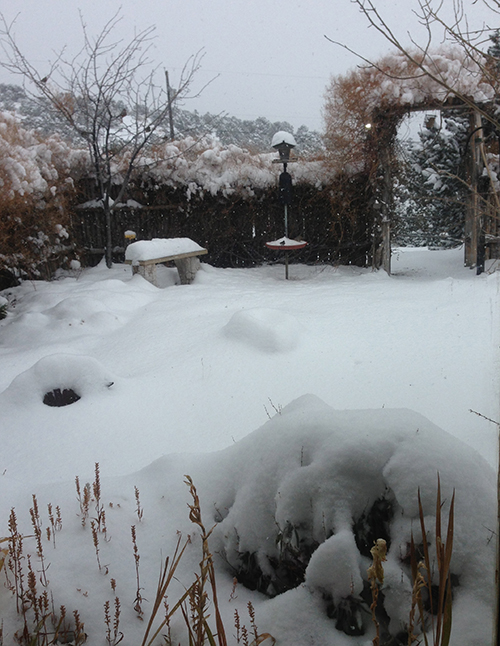
Looks like we are off the hook for watering our trees for December due to a big storm that came in this week and dumped 10-11 inches. Very beautiful. They say another one is on the way for Sunday. And if the ground froze around the trees don’t bother to water them until it thaws as it has been very cold and another storm is due in tomorrow. Here are some snow photos around the property.

This slideshow requires JavaScript.

10 Things to Do in December

xmas clip reindeer

HO! HO! HO! Here are 10 things you can do in December for your garden. I wrote in green where I’m at with this list!

1. Don’t forget to feed your worms in your vermicomposting bin! They get hungry too! Also if it has been dry, give them a some water on a warm day. Don’t give them so much food that it just sits there and freezes. For an outside plastic bin, maybe wrap it with a water heater blanket or surround it with straw bales to help keep the worms from freezing. You try living in a plastic box all winter without insulation! For bigger outside vermicomposting areas, put straw bales around the perimeter to add insulation. Also put straw on top.  (I covered mine with about 8-10 inches of straw on top of everything and will check them in about 2 weeks to see if I need to add more food)

2. Reflect on what worked in the garden and what didn’t. What could you do differently next year? (Where do I begin? I’ll write more on this later)

3. Order your new catalogs. That way you’ll have them by January. (Done!)

4. Speaking of catalogs, go through those old catalogs and throw them out! (Done!)

5. Research on the internet new and different veggies you may want to try next year while you are waiting for your catalogs to come in. I’m always wanting to try something new. Start a list of possible veggies and add to it as you find more. You may not try all of them but at least you won’t forget them! (I started mine and keep adding to it)

6. Water your trees and perennials if you don’t get precipitation. We got a great snow in November so that let us off the hook but if Dec is dry, water later this month on a warm day. Forget about it if your tree has snow around it and the ground is frozen-the water won’t soak in frozen ground. (Since it snowed, I didn’t water-yea!)

7. If you feed birds, be sure you give them a source of water too. If my waterer is frozen, I boil water in a teapot and add it to my waterer to melt the ice. If you have bees, keep providing to them water too. (I check daily to make sure they have both food and water)

8. Take a walk around your frozen tundra (garden) and start to plan your next year’s  garden. Walking around when it is barren can reveal problem areas. It’s hard to ‘see’ when the garden is going on in the middle of the season with all the greenery. Perhaps you want to make a new bed or fix an old one…or maybe you could be a nut like me and add a whole new 1000 sq ft section in the garden Now that was a big project in 2011. Was I insane or what?! (This year I vow to finish the greenhouse by early spring.)

9. Organize your garden shed. Find all those tools you left outside-they’re  easy to see on the ground now that the the garden is done! (Still have a few floating around that I need to collect)

10. Ask Santa for some gardening stuff! Give them suggestions of things you want! (Done!)

10 more things to Do in February For the Garden

We may not be able to get out in our gardens now but it is time to get busy with things to do to get ready for the garden. March will be seed starting time and there will be lots to do before for that. I will be elaborating on some of these items over the next few posts as I see there is more info I can offer.

1. Go over your current seed supply. Organize it. Get rid of any seeds over 3 years old unless you froze them. Fresh seeds are essential for good germination. Older seeds have less success of germinating.

2. Decide which vegetables you want for this year and order any seeds you may need to get from seed catalogs.

3. Talk to your local nursery to see what they might be growing this year. I give a list to mine and they tell me what they are growing so I don’t duplicate. I prefer to let them do the growing, it’s just that I want to grow so many varieties that they might not have so I have  to start some by seed.

4. Stock up on any fertilizers, amendments, compost, nutrients, mycorizzial, and biomicrobes you may need for veggies. i.e- tomatoes, giant pumpkins

5. Check your grow light boxes to make sure they work. Get new bulbs if necessary.

6. Check grow heating mats to make sure they work and get more if necessary. Last year I had one and ordered another as my seed growing expanded.

7. Consider purchasing a seed mat thermostat. Last year I had to get one because the seed heating mats were running too hot and burning up the seeds before they have a chance to germinate. The mats stay 10° F hotter than the ambient temperature of the room so if we are having a really warm spring and the temperature is 80° F inside than the temperature would run 90°F in the seed flats-way too hot. The thermostat will keep the temperatures in the pots at whatever is best germinating temperature.

7. Purchase soil seed starting mix. I use Metro Mix 100 to start seeds. This stuff is great. The water doesn’t roll off the ‘dirt’ like many seed starting soils

8. Clean and sterilize any containers you plan to reuse for seed starting or transplanting seedlings. Use a 10% bleach to water ratio to rinse off the containers.

9. Buy any containers you may need for seed starting/transplanting. Most gardening stores sell up to 3″ in the peat pots. If you want a 4″ peat pot, go to Territorial Seeds. They are the only ones that have that size. I need them for my giant varieties cause they grow so fast. I also like the flats that have a raised lid. good for germination.

10. Read at least one good gardening book your interested in each month during the winter. I’m almost finished with ‘Four Season Gardening’ by Eric Coleman and just ordered ‘The Compost Tea Brewing Manual’ by Elaine R. Ingham.

Gardening in the Winter

squirreleating nut

It’s always good to get a GMO rant going and it’s such an appropriate subject for gardeners and just about anyone who eats-but now back to gardening! My gardening in the winter basically consists of looking over my seed catalogs by the fireplace. I’m an armchair gardener in the cold winter months-storing up gardening info like a squirrel and juicing up energy for the next season! Visualizing the coming year’s garden in my mind’s eye is a favorite activity I like to do along with reflecting on last year’s garden and what I might do differently. I got a garden planning application which is fun to start placing next year’s veggies in the garden.

I actually went down this week (while it was in the 50’s) and swept out the garden shed and put away a few garden tools that I found out and about and I found my compost thermometer! Ah ha! I’ve been looking for it since last fall and there it was hiding above the door frame of the garden shed-why would I ever put it there?!

Oh yea, I finished watering the fruit trees so everything is watered for a month, went on a 3 mile hike with some friends and I can’t forget we’ve been getting ready at work for our big art show in Philly in February. I guess I’m not a complete sluggo!

Water your plants NOW

apple tree-granny prunedJust checked the weather for the next few days and it looks good for us-FINALLY warming up from the frigid days and nights we’ve had. Ahhh, my little goatie things are so happy down at the barn! I always feel bad for them but they are hardy creatures with very warm coats (I daresay warmer than the ones I’ve worn lately)!

But on to the title of this post-Now is the time to water during this ‘warm’ spell. What should we water? Water ALL your plants and trees EXCEPT the ones in the shade with the snow around them. Don’t bother with them as they are frozen and we don’t need to water frozen ground as it won’t sink in anyways (but when the snow melts around them, include them too). We have had some precipitation but not enough for them. They need some water in the winter too.

How much should we be watering in the winter? WATER ONCE A MONTH during a warm spell unless we get a substantial amount of precipitation that month. And don’t forget to mark it on your calendars so you can see back when you watered last. Your trees and plants will thank you for it and you will thank them come spring when they wake up from sleeping in all their glory!
Winter Pictures in Santa Fe

One must only look around to see the beauty that winter provides. Sometimes I think I have to look harder to see how beautiful it is in winter but then all I have to do is LOOK-really look-just open up my eyes and SEE.  At first glance it seems everything is dead but plants are only sleeping, waiting for the spring winds to wake them up. The earth, she is resting, gathering her strength, renewing herself for another season. Winter provides us time to rest and reflect and I like that.

We are having a mild winter this year and have gotten some good moisture so far but not a lot of snow. Today when the weather reached 50°F, I decided to walk my land and took some pictures. I hope you enjoy them as much as I do.

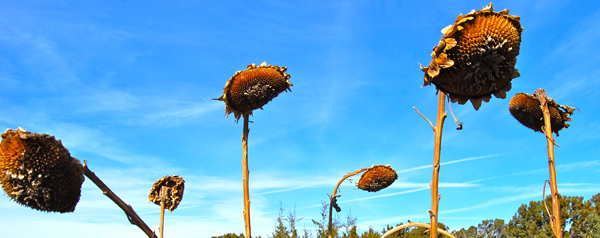
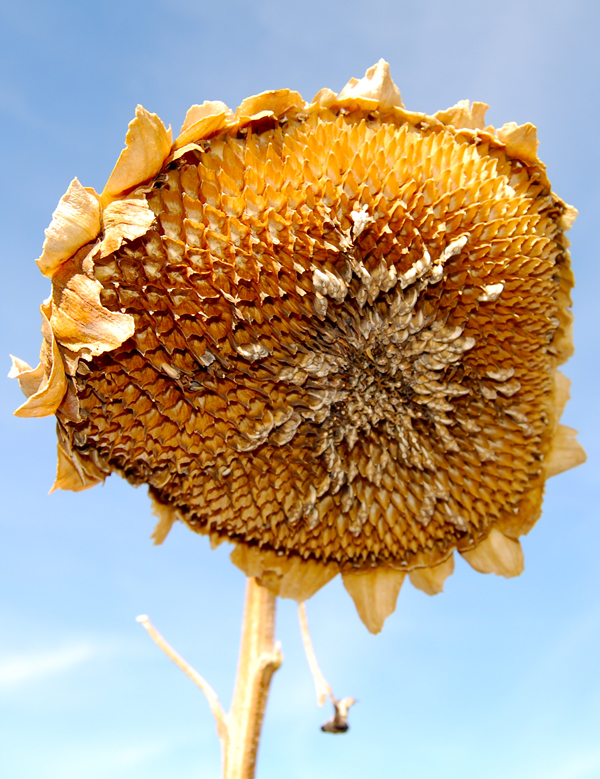
Are they alien spaceships? Nah-their just sunflower heads in wintertime.

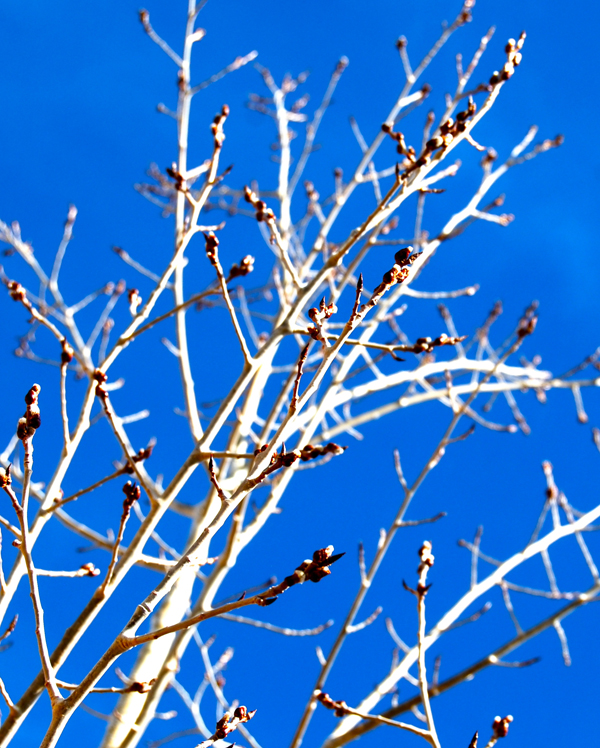
Aspen branches budding out against winter blue sky

Here is a new red birdhouse acquired at the ‘Recycle Art Show’ here in Santa Fe just waiting for the birds to nest in spring!

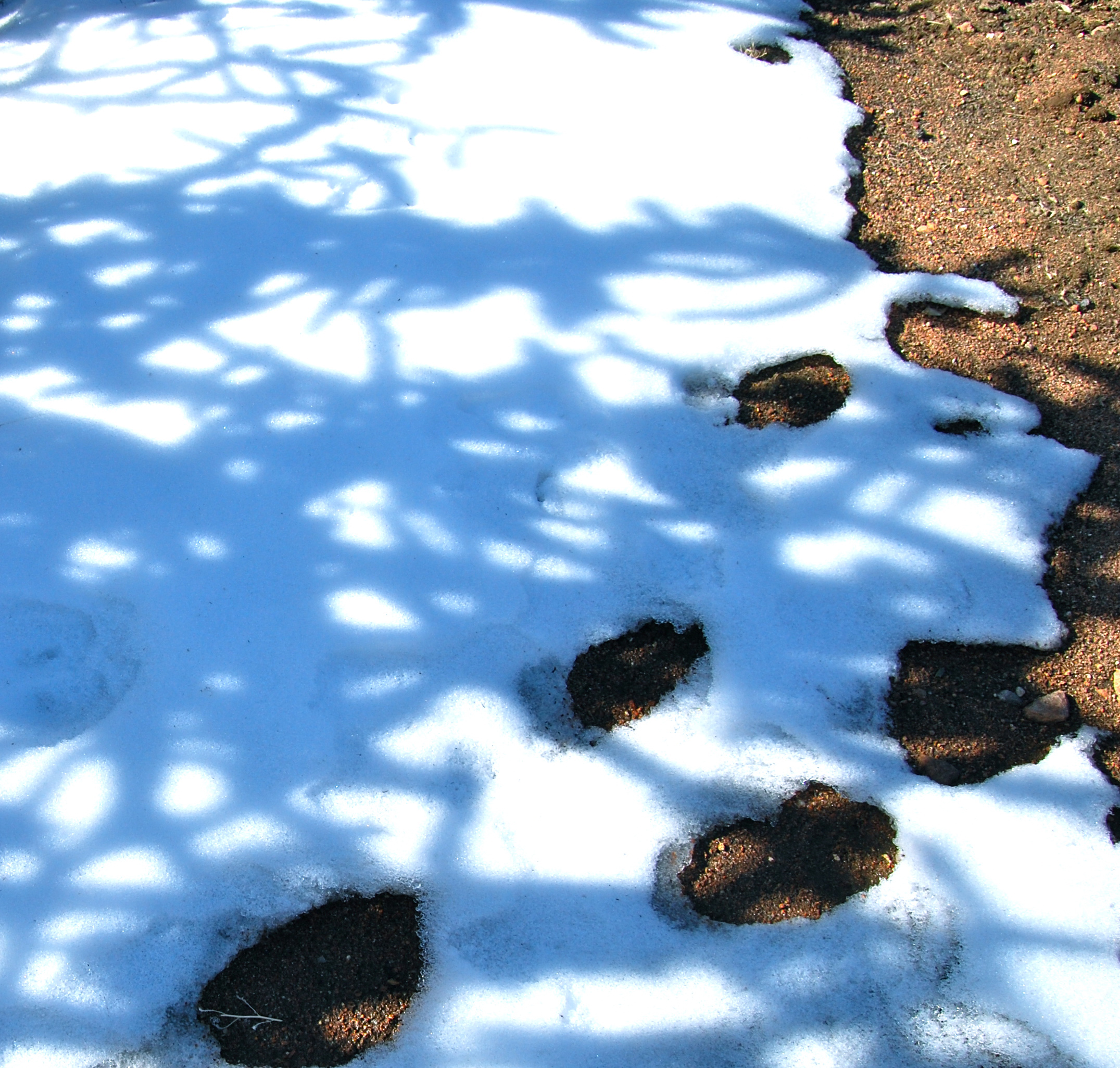
I liked the patterns of the shadows on the snow.

One of our birdie friends, a Flicker resting on a fence post-Isn’t he beautiful!

Aster flowers and snow in winter.

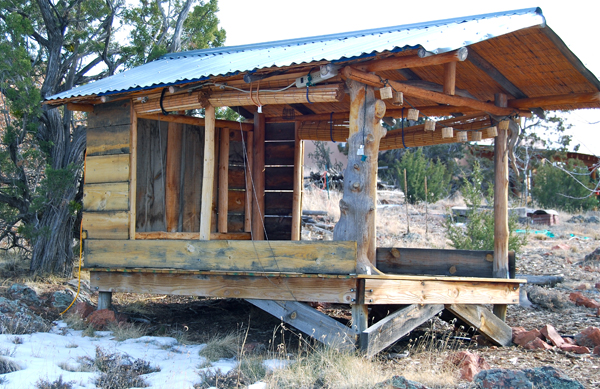
The Tea House is my little getaway where I like to chill out in the summer but it is lonely in the winter

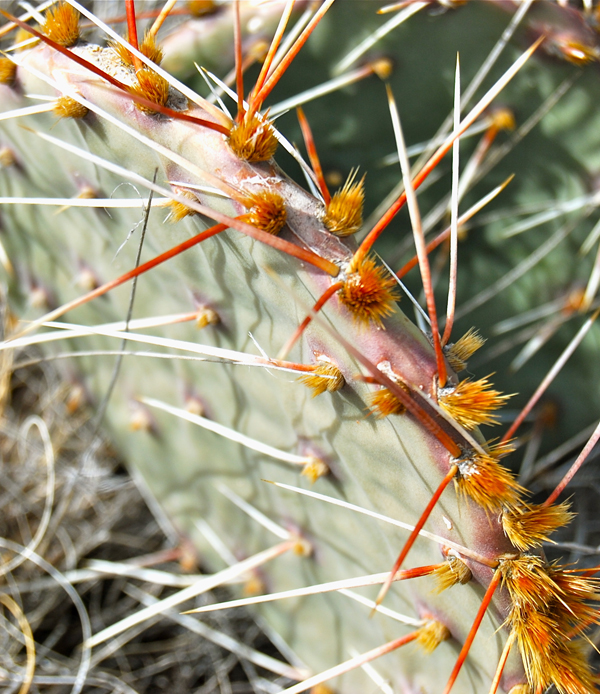
I don’t like cactus but this prickly pear cactus is so beautiful!

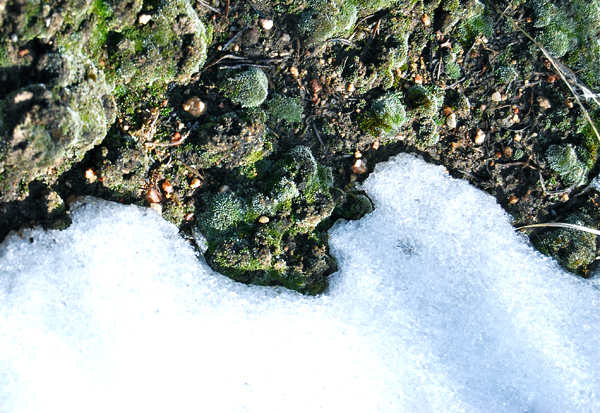
This moss rock lives out by the Tea House

Went by the bees today and they were enjoying the 50° weather too-catching some sun rays! This is called bearding when they ball up outside the opening.

This prickly pear variety had lots of pinks on it. I liked the color against the moss rock and snow

This is a closeup of some lichen on granite. Sometimes it is bright yellow like shown here.

Snow and some kind of really cool moss.

I found these coyote dens on the side of a bluff but decided not to get closer. Check out the footprints around them. No wonder we hear them at night-they are so close! Glad my goaties and chickens are well protected…

Here is one of the sunflower heads I left in the garden last fall. The birds have gotten almost all of the seeds out of it.

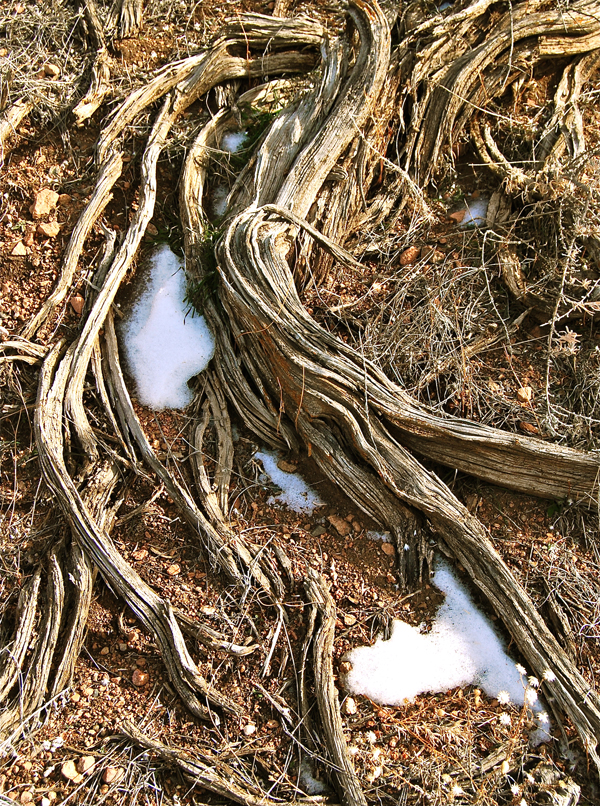
I love this old Chamisa root system.

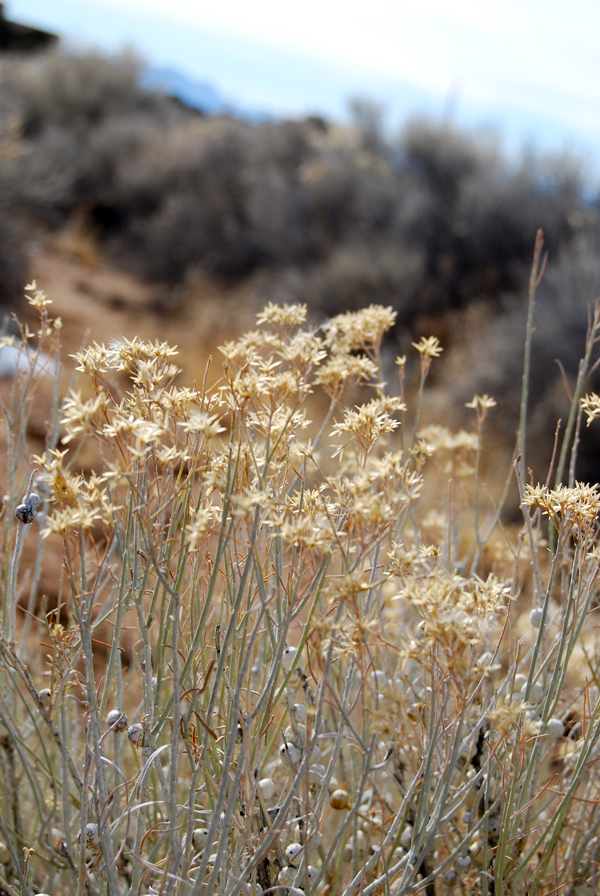
I like the he blue-grey stalks and dried flowers of the Chamisa plant.

The fruits of the Cholla cactus are beautiful. I use to hate Chollas because when you walk by them, they seem to jump on you and have barbed spines that are tough to pull out. But now I’ve come to appreciate them as they provide food for the bees with their beautiful magenta flowers in spring.

This is what the native Buffalo Gourd looks like in the winter. The gourd starts out as a green gourd, then turns yellow and will mellow to a beautiful ochre color as it dries. Their skin is too thin for making anything out of them but I still like to collect them on walks.

.

Pull your drip systems timers

If you haven’t done so, you should pull your drip system timers and put them inside. I pulled my simple timers but unfortunately I left my more complicated system in and  two days ago I went to water my asparagus bed and strawberry bed and when I turned it on (it was a nice warm day), it sprayed water everywhere. Turns out I should of pulled it as 2 of the valves cracked. I’m assuming from the freezing nights. I’ll have to take it in and replace them. I’m guessing they had some water left in them. So right now I’m watering with a hose. Wah!

Arugula

Apollo variety of Arugula

Arugula or Rocket as it sometimes called is another one of my favorite spring greens that has a very short season unless you are growing it in winter! It is a popular Mediterranean green especially amongst the Italians. Luckily it grows fast and you can harvest it between 35- 40 days. It is one of the earliest spring crops we can grow. It is high in Vitamin A and C and low in calories.

Plant 1/4 inch deep like mesclun, broadcast it out in a little patch, nice and thick and thin it out (eating the thinnings) until they are about 3-4 inches apart.  You can sow every 2-3 weeks for a continuous supply until it gets too hot for it. Pick off the outer leaves and let it grow back out from the center until it bolts in late spring. After that either pull it up or let it go to seed. You can also grow it in a pot.

I love its tangy almost peppery flavor and nothing is better than a salad made of arugula with blue cheese crumbles, caramelized walnuts and raisins with a balsamic vinegarette.

Here are some varieties you might want to try – just google their name and you should come up with the seed company.

Rocket-standard type-I tried rocket but it’s too skinny for me and I don’t feel like I get much when I eat it.

Apollo-I like this variety-bigger leaves, less stem

My Way-early variety, nice big leaves

Sylvetta-loves cold weather

Roquette-wild variety

Selvatica-Italian heat loving