Tips for Growing Tomato Seeds

Tomato seedlings with thermometer

Lately I’ve been getting some questions about tomato seeds not germinating from more than one grower and thought I should address some of the problems and offer some helpful tips. If you haven’t started your tomato seedlings yet, you should start now. You have 6 weeks until May 15th which is the last average freeze date here in Santa Fe. You can still get a good head start if you plant soon.

1. Tomatoes do not like cool soil. Soil temperature in the 60’s is too cold for tomatoes. Tomatoes, peppers, eggplants like it very warm to germinate (in the 70-80°F).  Some people put them on top of a refrigerator where it is warmer. Even if your days get warm where ever you live, if your nights still get chilly (i.e. in the 60’s), they shouldn’t be outside. Period.

Plant Germination Heating Mat

2. Get a plant germination heating mat. The best thing you can do if you plan to germinate some of your own seeds is get an electric plant germination heating mat. Amazon has a lot different sizes on the internet here.  You may be able to find them at one of your local nurseries (but not at a big box store). It will keep the soil evenly warm-in the 70-80’s°F range. My tomato seeds germinated in less than a week with them sitting on it inside the house.

3. Plant tomato seeds 1/4 inch deep and put sand on top of them instead of the ‘soil’ (like play sand from Home depot or Lowes). This makes it easier for the seed to push through to the top.

4. Make a solution of Chamomile tea to ward off dampening disease. Dampening disease is a soil borne disease that sometimes attack seedlings right after they come up. You’ll know if if you get it because the new seedling wilts and dies. This usually happens when the first 2 leaves (called cotyledon leaves) pop up.

Closeup of two baby tomato seedlings each with their first 2 leaves called cotleydon leaves

I put one tea bag in a cup of hot water (like you would drink) and then when it is cool, transfer it to a little sprayer (like what you might use for your hair) and spray those new leaves. There are some properties in Chamomile tea that thwart off this disease-try it-it really works. After 4 of the true leaves, (they are the next leaves that come up that look like tomato leaves) I stop using the Chamomile tea.

5. Water from the bottom. This helps avoid getting ‘dampening off’ disease and also keeps the little seed from washing away when you water from the top. Put them in a sink or tray with some water and when the soil absorbs the water, it will look damp in top.

Tomato seedling with true leaves-transplanted up to a 2 inch pot

6. Transplant after you get 4 true leaves to the next bigger container. I’m assuming you start with small containers. Plant them deep-up to their first true leaves. They will root along the stem and become stronger. Every time you transplant up, bury your stems deeper. Always use disinfected pots-use 10% bleach solution to water to rinse your pots in.

7. Give them light. They need light and lots of it. If you don’t have a light box then put them in a south facing window and rotate them daily as they will lean toward the light.  Be careful you don’t fry them with too much heat from a hot window. For those of you that have them under lights keep the lights about 2 inches above the seedlings and raise the lights as the plants grow. This will help keep them from getting ‘leggy’.

8. Give them dark. Yes that’s right. Plants need a period of darkness for photosynthesis to take place. I give mine 8 hours of darkness at night. Photosynthesis is the process where the plant takes the energy it gets from light in daytime and converts it into sugars as plant food. I have my lights plugged into a strip plug and the strip plug into a timer so I don’t have to think about it.

9. Use rock phosphate if your tomato leaves turn purple. Purple leaves means your plant is too cold. If your little tomato leaves start to turn purple (just look at the underneath side of a leaf), then they are cold and your soil is cold. They can’t access the phosphorus in the soil when the soil is cold. Get them to a warmer place and get some rock phosphate (which is a powder) and sprinkle some on top of the soil and water in. They will green up again within a couple of days.

10. Fertilize lightly. I only use thrive and diluted seaweed when I first transplant up and then only after the plant is doing well will I fertilize lightly with diluted fish emulsion. Don’t overdo it.

11. Grow thicker stems by brushing the plants. Make your tomato plants strong not leggy. You can make your plant produce stronger thicker stems by either brushing your plants with your hand when you walk by once or twice a day or put a fan on them (low speed). This mimics being outside where a breeze gives the plant a ‘work out’.

12. Keep planting up. Don’t let them stay in the same pot where they can get leggy. Once they outgrow their pot, plant up to the next size. I start with a little 6 pack and then plant up to a 2 inch pot then to a 3-4 inch pot and then to a gallon size pot if needed. I don’t use Mycorrhizal until I do the final transplanting into the ground.

I will give more tips when we are ready to transplant outside.
Bees!

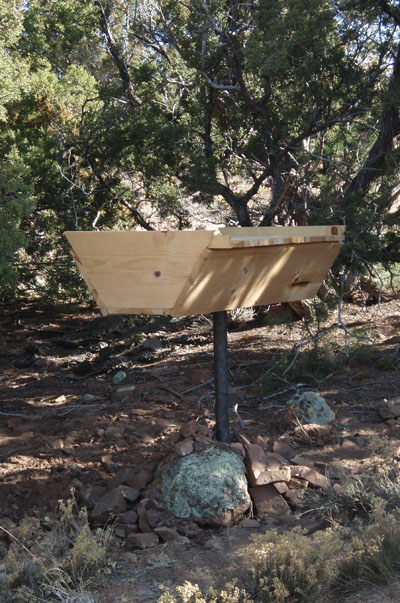
Yea! Here is Caleb's top bar hive this morning

For 2 years I’ve been waiting for one of my beekeeping friends to bring over one of their hives but no one had any extra bees or top bar hive to bring. I’ve wanted bees to help with pollination in my veggie garden and thought what a great relationship that would bee. My friends get space to put their hive and I get pollinators.  I promise not to use chemicals that will harm the bees and will give them water. I didn’t think I would be interested in bees that much. I don’t want to take care of more things. I’m already overloaded. I just want pollinators and they can do the beekeeping thing. But still, I’ve wanted them.

closeup top bar hive this morning

So last week I was ecstatic when Caleb, a friend of mine, told me he would move his hive here to the garden area. Finally. Yea! I’ve been waiting with great excitement all week for him to come not quite knowing what to expect. Caleb is a 3 year beekeeper and I can tell by the way he talks about his bees that he’s good and he cares about them. Yea, like children-all 10,000 of them! (the hive will grow to around 50,000 this summer)

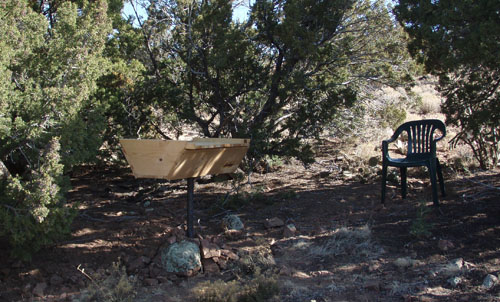
Yesterday afternoon he came over and scoped out the property to see where he wanted to keep his bees. He picked out a lovely site that was nestled in some trees facing southeast (that is the direction they want to fly out in the morning) plus they will get protection from the hot west sun and wind this summer. They would be within 50 feet of the vegetable garden. Excellent! He decided to put the top bar hive up on a stand he built. He dug a hole at the site and buried his stand so the top bar hive won’t blow away during our high wind periods. Then we had dinner and off he went to pick up his bees at sunset after they came home to the hive.

water for bees

While he was gone, I brought down a bowl of water and put some twigs halfway in it so the bees can walk down the twigs to get to the water. Caleb said you have to move bees at night because when they come out in the morning they will have to recalibrate their internal GPS so they can find the hive again by the end of day. He came back an hour after dark and he had the top bar hive with the bees inside covered with a towel in the back of his truck. They were upset about the bumpy ride on our dirt road. How do we know? Because they were LOUD! They were humming loudly and sounded upset-no actually they sounded pissed. Glad the towel was covering the hive. So he let them settled down and once they were quiet he picked up the box and with flashlights we took them to their new place.  After we got there and Caleb attached the top bar to the stand, a few bees came out just inside their entry hole to check it out but they stayed in. Wonder what the neighbors thought last night with us walking all over the property with flashlights carrying a coffinlike box! I’ll have to show them the bees!

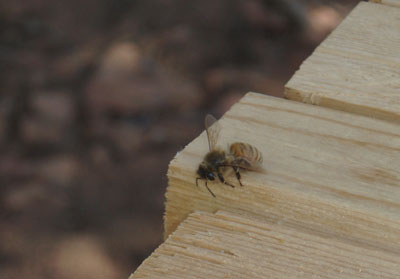
First bee out on top of top bar hive exploring it's new surroundings

This morning was cold (about 38°F) so only a few of the bees came out to explore. While I’m working, they will come out when it is warmer. I hope they like their new property!

Later today, Caleb will come back and put up some plywood to protect the hive from rain (hah! fat chance of that) and he needs to put on their ‘porch’ that they like to land on when entering or leaving the hive. I wonder if bees have an air traffic controller for take offs and landings?! Perhaps they do have an air traffic controller. Perhaps our traffic controllers could learn a thing or two from their traffic controllers. I can see this is gonna be fun! I’m learning a lot from Caleb. Bees are fascinating creatures with an incredibly structured society. Caleb said they can follow the sun even when it is on the other side of the earth with their GPS-how cool is that?! Looks like I’m going to need a bee hood soon to learn more..

‘The Vegetable Gardener’s BIBLE’ by Ed Smith

The Vegetable Gardener's Bible by Edward C. Smith

The name ‘The Vegetable Gardener’s Bible’ is really appropriate as this is truly the bible for vegetable gardeners. My edition is 11 years old being printed in 2000 and the information in it is as current as if it was written yesterday. It is one of those garden books I keep handy to go back to over and over again. In his methods, he advocates wide rows, organic methods, raised beds and deep soil which just about says it all.

Ed Smith has a 1500 ft garden that he tends with his wife, growing nearly 100 varieties of vegetables in Vermont. He states if you can grow in Vermont, you can grow everywhere. I guess he hasn’t tried growing in the high deserts of New Mexico! Having said that, I feel that no matter where you grow there are always challenges and his book addresses many that gardeners experience everywhere. He shares step by step instructions on how-to build raised beds, soil conditioning, crop rotation, greenhouse gardening, cold frame gardening and so much more. Everything is explained clearly for both the novice and experienced gardener. I love this book.

Growing Garlic

Hardneck garlic- photo courtesy of daytondailynews.com

Ahh, garlic. Fresh garlic. If you are a cook, you should definitely try growing some garlic. It tastes better than the store bought because it is much fresher and you can grow the hardneck varieties which you won’t find in the grocery store. Garlic originated in Central Asia and dates back over 6000 years. It is used for both medicinal and culinary purposes. It is a species in the onion family, closely related to onions, shallots, leeks and chives. Avoid growing the ones from the store as often they are sprayed to prevent sprouting. Here are the main types of garlic:

Softneck garlic: It’s the most common type you’ll find in the grocerey store. It is usually white with paperery skins. Softneck garlic has a long shelf life and is easier to grow which is why you see it in the grocery stores. It has a layer of cloves on the outside and smaller cloves inside that I find annoying to peel. It’s leafy stalk is pliable unlike the hardneck type. The two main types of softneck garlic are artichoke and silverskin.

Hardneck garlic: It has a central stiff stalk (also called a stem or scape) coming out of the middle which cloves grow around, It usually has fewer cloves but larger.  It has thinner skin and shorter shelf life. The three main types of hardneck garlic are Purple Stripe, Rocambole and Porcelain. Hardneck garlic is considered to be the most flavorful.

Purple Stripe garlic is distinguished by its purple markings. Two varieties are Chesnok Red and Metechi.

Rocambole garlic produces large tan cloves and have a fuller flavor than softneck varieties offered at the store. Two varieties are Spanish Roja and Killarney Red.

Porcelain garlic has satiny skins and fewer but much bigger cloves often as few as 4 cloves to a head. It is often mistaken for Elephant garlic but it’s flavor is fuller.

Their are many varieties to choose from in all three types-I read somewhere there are over 200 varieties of hardneck garlic alone.

Elephant garlic: It is not like regular garlic because it’s flavor is milder and less intense. Many people buy it because it is larger. It is used when a subtle hint of garlic is needed in dishes but is not a substitute for regular garlic. I’m not impressed with it.

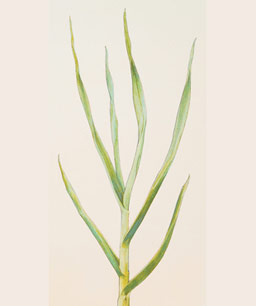
Softneck garlic stalk- courtesy of finegardening.com

Hardneck garlic stalk- courtesy of finegardening.com

Growing garlic in the garden is easy. You can buy it through many of the seed catalogs or get  some at our local farmers market in the fall when it is abundant. I don’t know what variety I got last fall, but it is a purple striped type because of its color. Fall planted garlic that has been overwintered will be ready sometime in July. Spring planted garlic can usually be harvest sometime in late August-Sept. Garlic likes enriched soil so add compost to your bed or aged manure before planting. I also put in a little bonemeal  and yum yum mix into each hole at planting time. Separate your cloves leaving them unpeeled, and pick the biggest individual garlic cloves. Separation should be done immediately before planting. Plant pointed side up and about 2 inches deep. Planting 4-6 inches apart will produce more bulbs but smaller. Planting 8 inches apart will produce bigger bulbs.  I like to put a straw mulch around the garlic to help retain moisture and retard weeds. Garlic while it is in the growing state likes to be keep evenly moist to produce the biggest cloves. Hardneck garlic produces a tall stalk (scape) which is actually the flower stalk that will get curly. There are 4 ways to put more of the energy into the cloves just before harvest time.  One way is to  cut off the scape (hardneck type) after a couple of curls. A second way is leave the scape (Hardneck type) on and when the scape straightens out, you stop watering. The third way  is to just stop watering 2-3 weeks after cutting off all the scapes. Another way is to wait till about half the leaves (either type) have died before you stop watering. When this happens, check the tops of the garlic bulb to see if you can feel the cloves while still in the soil. Dig it out carefully after the bulb is good size being careful not to scrape it. Leave it out (but not in full sunlight) to dry out the skins before using. I like to bring it inside during this time as direct sunlight will ruin it. Brush off the dirt after they are dry. It’s relatively easy to grow and nothing taste better than fresh garlic right out of the garden! There are many sites that talk about garlic, but one I really like because of these pictures of the scapes is on their article, “Garlic Begets Garlic” at finegardening.com. They also give more info on this subject.

Red Orach-More info and pictures

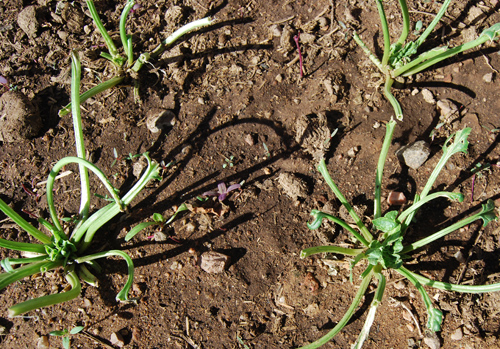
A gardening buddy of mine is growing Red Orach and I thought it would be good to see pictures of it as it is coming up. Mine just reseeded itself so it grows everywhere. It will get quite tall  (3-5 feet) if left unattended and that is how it has reseeded it self everywhere at my place. I let a few go to seed 2 years ago. That’s ok with me. I can always pull it if it grows somewhere I don’t want it to be. But don’t wait till it gets tall to pick the leaves. Pick them while they are quite young and they will be tender.

This slideshow requires JavaScript.

Wind broke my coldframe

Plexiglass broken/bubble wrap insulation shredded

Dang it! I left the lid to the coldframe up the other day and the wind came up while I was gone and broke the lid. I mean it must of really come up cause it broke one of the 1/4″ plexiglass panels in it. Plexi isn’t so easy to break.

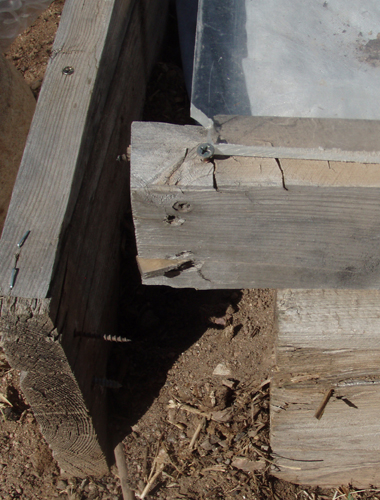
Rabbits don't need to sneak in with an 8 inch gap!

Anyways it also torqued the frame as well because now there is an eight inch gap in the corner where the wood frame was forced apart. Great, now the rabbits can walk in. I have to rebuild the lid and somehow pull the wood together on the frame with the dirt inside and re-screw it back together. Way more work than I have time for. And the arugula is coming up inside. Bummer…

Whole left side of coldframe broke-ARRRGH!

On the good side, look at my view from the house in the bottom photo!

Red Orach (mountain spinach) and Bright Lights Chard

I just picked some Bright Lights Chard that overwintered in the coldframe and with the chard were a few plants of Red Orach (also called mountain spinach) that have been reseeding itself.  The variety of orach I grew came from Baker Heirloom Rare Seed company and it makes a great red addition to salads or used as steamed greens. I steamed the chard and Red Orach on top of some pasta tonight yummy. It tastes like spinach and you should pick it when it’s young and tender to eat. Red Orach really is an incredible deep magenta red color. Look how beautiful they look together!

Chard and Red Orach for dinner tonight

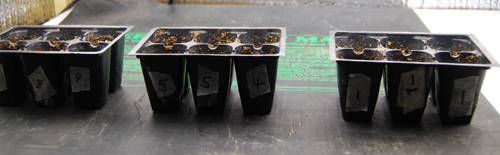
Tomato seeds planted inside-March 21

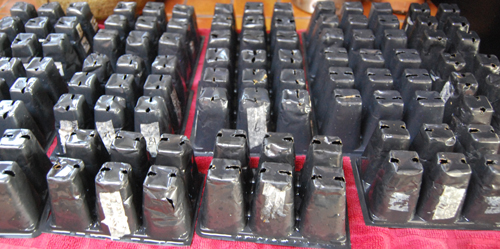
Bleaching pots before use

drying on an OLD towel

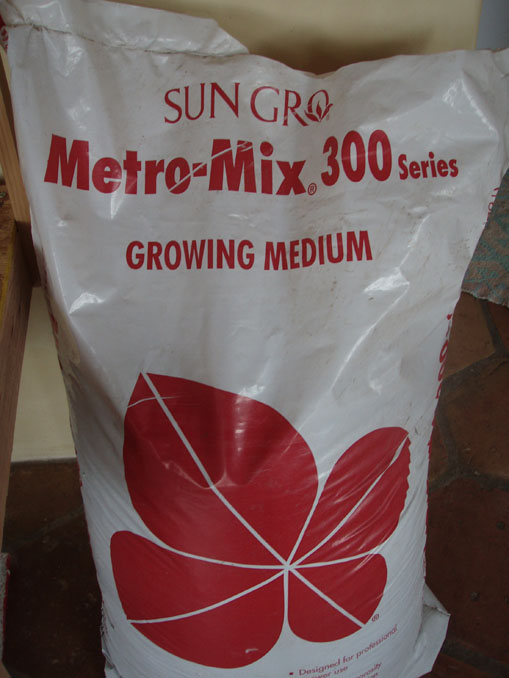
Last evening I planted my tomato seeds-both heirloom and hybrid seeds. I brought out and set up the light boxes and heating mats last week. Before planting my seeds, I always clean the little pots with some bleach water that I use for starting tomato seedlings. It’s important to disinfect the pots because you don’t want your plants to pick up any soil borne diseases. I use about a 10%  bleach to water ratio.  I use the kitchen sink and try to not get dirt everywhere from the used pots. The trick is to convince your partner that it is ok! Just tell them you are disinfecting the sinks out (which is true)! I picked up the seed starting soil-Metro mix 300 from Agua Fria Nursery last week. It comes in a big bag but you will be planting up into larger containers in a few days after the second set of true leaves appear and besides if you have any left over, you can use it for next year. I’ve bought many seed starting soil mixes (usually at the big box stores) and hate the way the water rolls off of the soil when you first go to use it. With this soil mix (Metro Mix 300) I just plant the tomato seeds about 1/4 inch deep and water it all at once. It saves time and anything that saves time I like!

Metro Mix 300

After I water the seeds, I put them under my lights and on top of a heating mat which is great for warming the soil for the seeds to germinate. I’m starting the tomatoes later this year because last year I started the first week of March and they got too big-about 3-4 feet tall because I couldn’t put them out with the cold spring we had.  This year I’m hoping to get them transplanted into the garden around mid April (with protection) weather permitting. Why do I think I might be able to get them in early this year? We are in a La Nina which generally means warmer weather in spring but less rain. By planting them later if I have to, they shouldn’t be as big as last year.

seeds on heat mat

Plant peas, spinach, and arugula on St. Patrick’s Day

Today is ST. PATRICK’S DAY- TIME TO PLANT PEAS, SPINACH AND ARUGULA. I always plant them right around now and use the holiday as a reminder. I stayed home today to recoup after putting Butch down. Getting my hands in the soil is always grounding for me. Lots of things to do right now regarding gardening. Here are some of the things I did today.

COLDFRAME-I inspected the rabbit damage to see if the spinach seedlings are salvageable. All but one of them are starting to grow back from the crown which were undamaged. I planted seeds of the following in the coldframe:

SPINACH-Bloomsdale-45 days in the other half of the coldframe.

CHARD-I didn’t know (or remember) that chard is a biennial (meaning two years) but spends it’s second year mostly growing to produce seed which is why they never seem to produce as big of leaves the second year. I will pull them and plant more chard seeds-white variety.

OUTSIDE RAISED BED-Checked the outside raised beds by the house. Last fall I I dug some old horse manure into one of them and it looks great. I planted the following seeds and covered them with row cover to keep the rabbits from them:

PEAS-Dwarf Grey peas and Oregon Sugar Pod II-60 days

SPINACH-Bloomsdale-45 days and a giant variety of spinach (there I go again!) called Monstrueux de Viroflay-50 days

BUTTERHEAD LETTUCE-Yugoslavian Red-40 days

MESCLUN-Provencal mix-40 days

CILANTRO

CUTTING LETTUCE-a new super red variety of  called Sea of Red-40 days

ROMAINE-Paris Island Cos-68 days

ARUGULA-Apollo-30 days

IN THE SECOND RAISED BED- Took out the last of the carrots from fall that overwintered. They should be extra sweet! The garlic I bought at SF Farmers Market last fall is coming up in it. Lightly dug in some Yum-Yum Mix in the remainder of the bed as I’m going to plant more carrots, beets and shallots which are heavy feeders and need some extra fertilizer especially if you are putting them back in the same area. I will plant:

CARROTS- Purple Haze and Danvers

BEETS-Detroit Dark Red-60 days, Bulls Red Beet-50 days and Early Wonder beet-48 days

DUTCH SHALLOTS-picked up some Dutch Red Shallots while I wait for the French shallots to arrive. Should be a good taste test at harvest time.

MAIN GARDEN-I hooked up the hose and watered the strawberries and the asparagus. Underneath the layer of dried leaves in the strawberry bed I see new leaves starting to grow from the crowns. The asparagus is either dead from our very cold winter or they haven’t started growing yet, we will see..

Master Gardener Tomato Disease Sheet

Hey Master Gardener Interns! I want to let you know you all were awesome with some great questions and suggestions. I really enjoyed the classes. I thought I’d put it in my post below so others can read it as well as the pdf here TOMATO DISEASES in case some of you didn’t get one.  (It’s easier to print off the pdf than the post). This is not a complete list of tomato diseases in New Mexico but some of the most common. Also the HERB SHEET is two posts back for you to get.

TOMATO DISEASES/PROBLEMS

EARLY BLIGHT (Alternaria solon) SOILBORNE FUNGAL DISEASE
Most tomatoes are susceptible to Early Blight which usually develops in early summer, after heavy rains or when it is humid and warm.
SYMPTOMS: Leaves at the base of the plant near the ground develop dry looking, irregularly shaped brown patches surrounded by concentric
rings. The best prevention is prune off the affected leaves as soon as you see them. I prune off all branches and leaves within 18 inches of the ground to try to prevent this as it is a soilborne disease. Early Blight overwinters in the soil. Remove affected plants and clean up fall garden debris as it overwinters in plant residue. Wet weather increase likelihood of getting this disease.
CONTROL: Protectant fungicides-Copper or sulpher can prevent further development of it, Green Cure (potassium bicarbonate), and Serenade (QST 713 strain of Bacillus subtilis), a biofungicide helps more to prevent
disease and is not a cure. Also spacing plants farther apart for good air circulation may help. Good sanitation and disposal of plants at end of season are important.

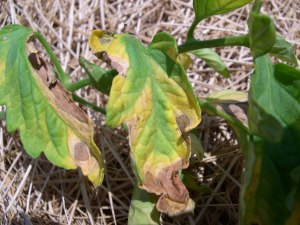
SEPTORIA LEAF SPOT

SEPTORIA LEAF SPOT (Septoria lycopersici) NOT SOILBOURNE-FUNGAL DISEASE
Septoria leaf spot can occur and any stage of a tomato plant development especially after heavy rains or when it is wet and warm. Spores are spread by windburn rain, insects, splashing rain
SYMPTOMS: It’s usually observed first on the lower leaves. Leaves that are heavily infected have small circular brown spots, turn yellow, dry up and drop off. The fungus is not soil inhabitant but can persist from one season to the next if the debris from the diseased plant is not removed and ends up in the soil.
CONTROL: Copper fungicides, Green Cure (potassium bicarbonate), Serenade (QST 713 strain of Bacillus subtilis), a biofungicide, helps more to prevent disease.

Bacterial Wilt

BACTERIAL WILT-SOILBORNE DISEASE
Soil borne and waterborne pathogens that causes leaves to wilt in day only to recover at night and then complete sudden wilting of plant.
TEST: Cut a four inch long section from low down on the stem and suspend this cutting in a jar of water. If a cloudy, milky ooze comes out, this in an indication of bacterial wilt. Dried leaves may remain green.
CONTROL: Dispose of plants. Plant in different location. 3-4 year rotation
of crops

BEET CURLY TOP VIRUS DISEASE
Transmitted by the beet leafhopper which build up high numbers on tumbleweeds and survive the winters on mustard plants.
SYMPTOMS: upward curling leaves that become thick, stiff and twisted. May stay green or become yellow with purple veins, plants become stunted. Plant next to them may be virus free.
CONTROL: Provide partial shade is beneficial as leafhoppers prefer to eat in the sun. Possibly use row cover/shade cloth to cover plants.

Tomato Spotted Wilt in tomato

Tomato Spotted Wilt

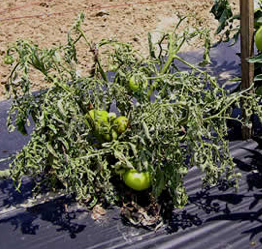
TOMATO SPOTTED WILT

This virus is caused by thrips that transmit the virus from infected tomato plants to other healthy tomato plants.

SYMPTOMS: Two symptoms are dominant- young leaves turn bronze and develop small brown spots. Second, the leaves wilt and tips die-back. Infected plants produce poor quality fruit and less yield. Pull plants and dispose of them.
CONTROL: Elimination difficult. Using reflective mulches may help reduce
infection, physical barriers like covering plant with row cover when it is young.

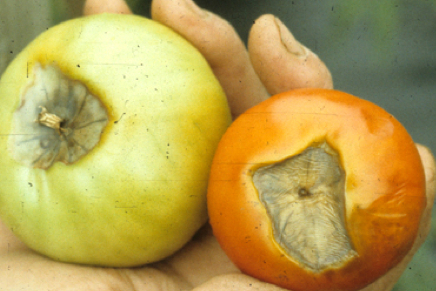
BLOSSOM-END ROT DEFICIENCY
Hard brown or black leathery patches on the blossom ends of ripening tomatoes indicate blossom-end rot. It is more common in large fruited varieties. This is generally caused by a calcium deficiency at fruit set or uneven watering and is prevented by planting tomatoes in compost enriched soil and mulched with straw to keep moisture levels more constant. I put a tablespoon or two of dry milk in the bottom of each hole when first planting tomatoes. In the fall dig in some gypsum which is a good source of calcium without raising the ph of the soil here in Santa Fe.

Santa Fe Master Gardener Vegetable Class

Tonight and tomorrow am, I ‘m teaching the Vegetable Garden class to our new interns in the Santa Fe Master Gardener Class. I can’t wait! There is so much useful information that it will be hard to share it in only 2 hours. Coming to my blog is a much better way to get information on a daily basis as we move forward in this new gardening season!  I’m planning to give more how-to info and advanced info on vegetable gardening this year. I hope many of you will also exchange useful information with me this year. You can send your information via commenting on a post so others can see it and learn as well. Now is the time to get busy in our veggie gardens! Plant something that still likes cold nights-like greens!

Rabbits ate my overwintered spinach

Spinach damage inside my coldframe- eaten by a rabbit

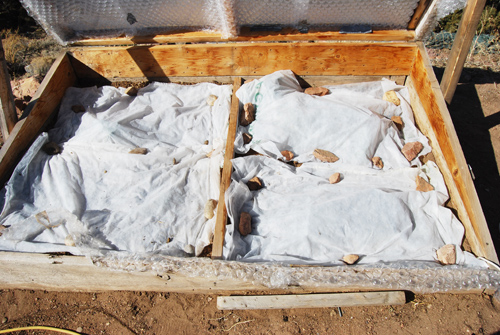
Waaa! I went out to the cold frame and found that the spinach that I planted LAST NOVEMBER has been all eaten. Some baby wabbit or squirrel (do squirrels eat greens?) found out how to get inside through a small crack and had a feast! I now have to replace part of the top wooden frame that warped this winter and created the crack. Notice it ate the leaves, leaving the stems. Hopefully the center part of each spinach (the crown) will come back. At least the critter didn’t pull them up…

coldframe with spinach covered by row cover to keep critters out

I am now putting row cover over the inside sections and holding it down with rocks to keep them out till I fix it. I’m hoping to fix it tomorrow because I want to now plant spinach seeds in there. Maybe I’ll plant the seeds between the other spinach plants. It also ate some bok choy and chard. Boo Hoo. I hope they enjoyed it.

Time to Plant Spinach!

Fresh Picked 'Melody' Spinach

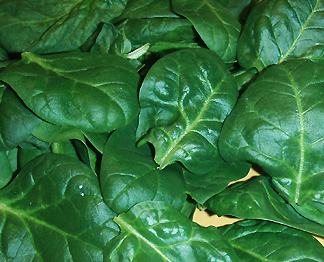
I direct seed spinach here in Santa Fe as soon as our soil is workable. I will get it in this weekend weather permitting. I always seem to wait too long but not this year!

If you have a soil or compost thermometer or if you don’t have one, you should consider getting one (I have a compost thermometer as it is longer in length), check your soil as spinach will germinate when the soil gets between 55-60 degrees. Spinach likes it cold and it has a short season here. For most varieties as soon as it gets warm, it will bolt like a cat and go to seed. We generally won’t be able to get spinach by mid May so I like to replant every few weeks to get a continuous crop instead of a large crop all at once for as long as I can. Luckily for us spinach grows quickly and most varieties reach maturity 4-6 weeks from seed.

Spinach likes to eat as it is a heavy feeder so a good dose of fish emulsion and seaweed fertilizer after it is up will really help it. If you have overwintered some spinach, fertilize it as soon as it starts to grow.

There are 3 kinds of spinach: Savoy (crinkly, thick glossy leaves) Semi-savoy (less crinkly), and Smooth Flat leaves. Here are some varieties for each type:

Savoy:
Bloomsdale
Regiment

Semi-Savoy:
Tyee
Indian Summer
Melody
Teton

Smooth Flat Leaf:
Giant Nobel
Olympia
Bordeaux

If you are direct seeding, plant your seeds about 1/2 inch deep, either in rows or broadcasting them like you would a mesclun mix and just keep thinning them out, eating them along the way. If you haven’t tried fresh grown spinach, you’re in for a treat. Don’t wait too long or you’ll miss this wonderful green.

10 Things to Do in March in the Garden

Now is the beginning of our season for fruit and vegetable gardeners. I got my light boxes out! Woo! Hoo! Here we go! Here are 10 things to do for or in your garden this month.

1. Finish ordering your seeds or getting your seeds if you haven’t already.

2. Get your light tables and heating mats out and ready to go. Use florescent lights that are at least 3000 lumen. I use the daylight ones. They produce less ‘leggy’ veggies.

3. Start tomato, pepper and eggplant seeds indoors to set out later as transplants depending on variety.

4. Finish your garden plans

5. Get your soil tested to see what amendments you might need to add to it.

6. Put  horse manure that has been aged for at least 6 months on your garden beds and dig in. Don’t put on ‘hot’ manure.

7. Hurry up and finish pruning your fruit trees. Not much time left.

8. Spray your fruit trees with dormant oil before their buds turn color to smother any dormant bugs.

9. Water your trees.

10. Plant COOL SEASON vegetable seeds OUTSIDE on ST. PATRICK’S DAY.  Some varieties include carrots, beets, lettuces, spinach, arugula, bok choy, swiss chard, onions, brocolli, cabbage, peas, radishes, mustard, kale and other greens.

Still Time to Order Seeds if You Haven’t Already

Still time to order seeds if you haven’t already. I need to order my seeds Monday, now that I’m home from the show so I get them in time to plant in March. Probably most of you have already order your seeds. I only need to order a few as I still have many seeds that I will regrow this year. It feels late but it is what it is. Last year I started the seeds the first week of March. Because it was such a cold spring, I couldn’t get them out till late May and even June last year They got too tall in the house, but what was I to do? Stick them out in 27°F weather? I’m still going to plant seeds from March 1 -15,  inside, under the lights and hope with this La Nina we have that all of us will be able to sneak out some of our warm season crops early—think April 15th! It’s always a crap shoot when trying to decide when to plant seeds but I’m going early! Bring out the gro lights! (I hear, “oh no” in the background!) I do have ‘plant envy’ for those of you have greenhouses or hoophouses!