Wall of Waters 101

I think Wall of Waters are one of the best early season aids for tomatoes and peppers in cooler areas of the country acting like little greenhouses keeping the plants warm at night, protecting them from our ferocious winds in spring and for getting a great head start for growth but they can be hard to put up around the plants especially if you are trying to do it yourself. I have another post addressing what amendments I use when planting  and how to plant tomatoes  but this primer is about wall of waters. You can still use wall of waters right now as the nights are still very cool for tomatoes and peppers.

1wow begin by watering

Here is the planted tomato with a big well around it. If the well isn’t big enough than the wall of water will sit lopsided. (I still had to put the drip line around the plant BEFORE I put the wall of water on it). Notice the green wall of water on the ground and the 5 gallon bucket. Some tomatoes are too tall for the bucket so I cut off the bottom of this 5 gallon bucket, first using a drill bit to drill a hole big enough so my sawzall tool could get inside and cut off the circular bottom. The bucket can go over the plant without smashing it over tall tomatoes.

2wow placing over bucketPut the bucket over the plant and then slide the wall of water (henceforth known as WOW) over the bucket.
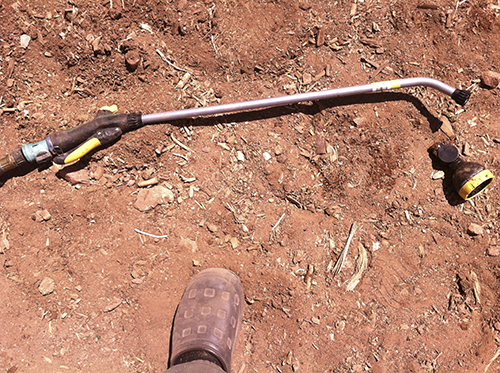
3wow waterer

Another great tool for filling the WOWs is this watering wand. I like this one because it has an on-off switch and a lever for control of how fast the water comes out. Here I took off the end so it will fit easily inside each cell. (this is my favorite gardening shoe-can you tell-well worn?!!)

4wow-begin filling

Now put the wand into each ‘cell’ and fill with water. The 5 gallon bucket will keep the WOW from falling on the plant.
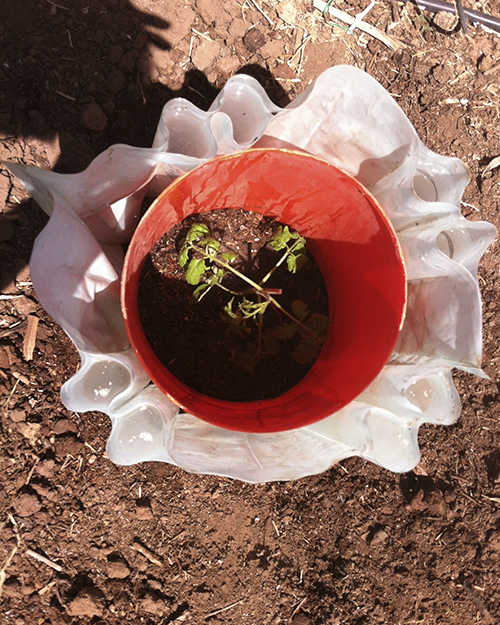
5fill cells each side

Fill a couple of cells, then go to the OPPOSITE side and fill a couple of cells and do this on all 4 sides instead of starting on one cell and going around where it will have a tendency to collapse. This will help the WOW to stand up better as you fill up the cells.

6wow finished

After filling all the cells, reach in a pull the 5 gallon bucket out and the WOW will now support itself. A perfect little greenhouse. But sometimes…
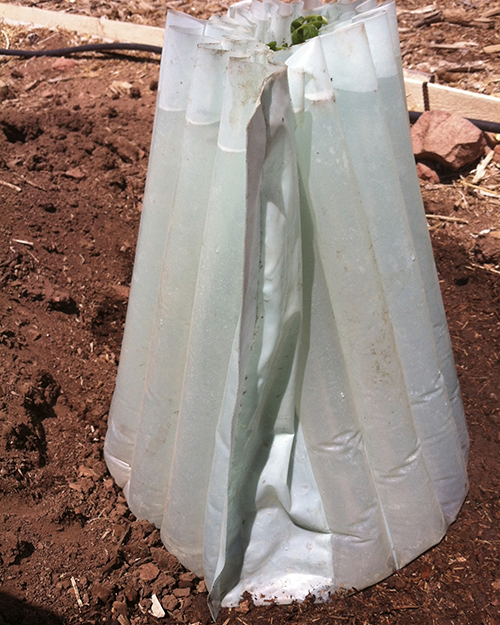
7wow REPAIRED

a cell will get a hole and leak after the WOW is a few years old. This is a problem as the WOW needs every cell  full to support itself, so…

8wow replacement cell

So you can buy replacement cells or make your own. Just take that leaky WOW and cut some good cells out of it for use as replacement cells for other leaky WOWs.

9wow installing rep cell

Take your replacement cell and fold it lengthwise in half as shown and slide it into the cell where the water leaked out.

10wow w replacement cell

Then fill up the replacement cell with water and it will hold up that cell. Now one last thing…

11wow finished with stakes

I put 3 bamboo stakes inside the WOW’s right next to the walls and make a tee-pee out of them and tie them together at the top in case the WOW wants to collapse from the wind, the tee-pee will hold the WOW up so it doesn’t crush the plant. These plants have been inside the WOWs for a while and I will take off the WOWs now. Just grab the WOW on opposite sides and pull them off the plant and dump the water back in the wells.

Anti-Monsanto Rally in Santa Fe

death eater.-skulljpg

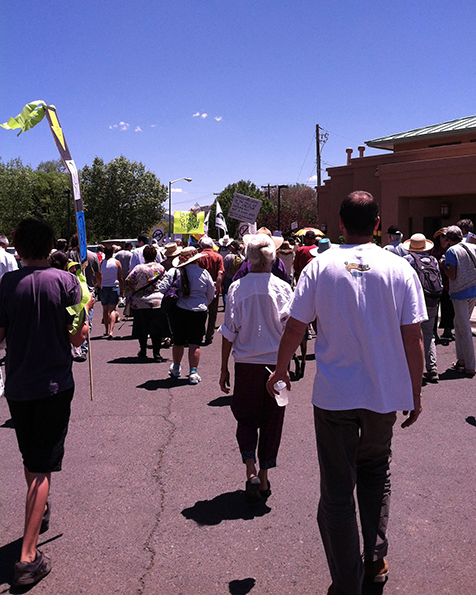
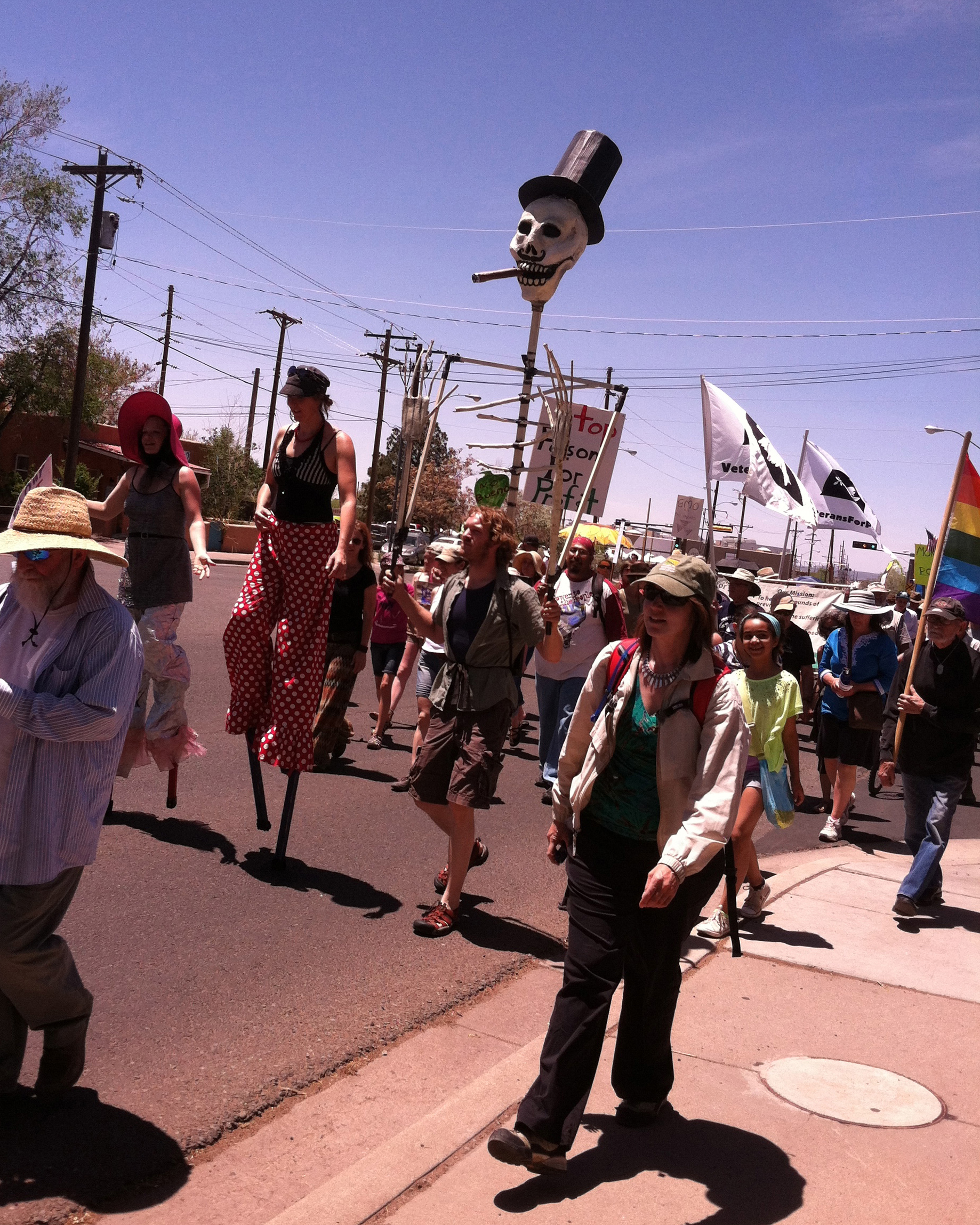
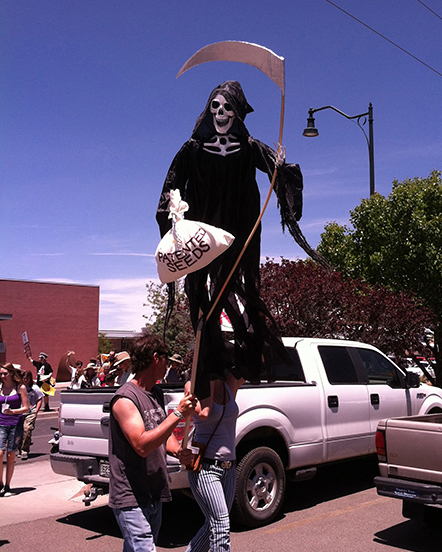
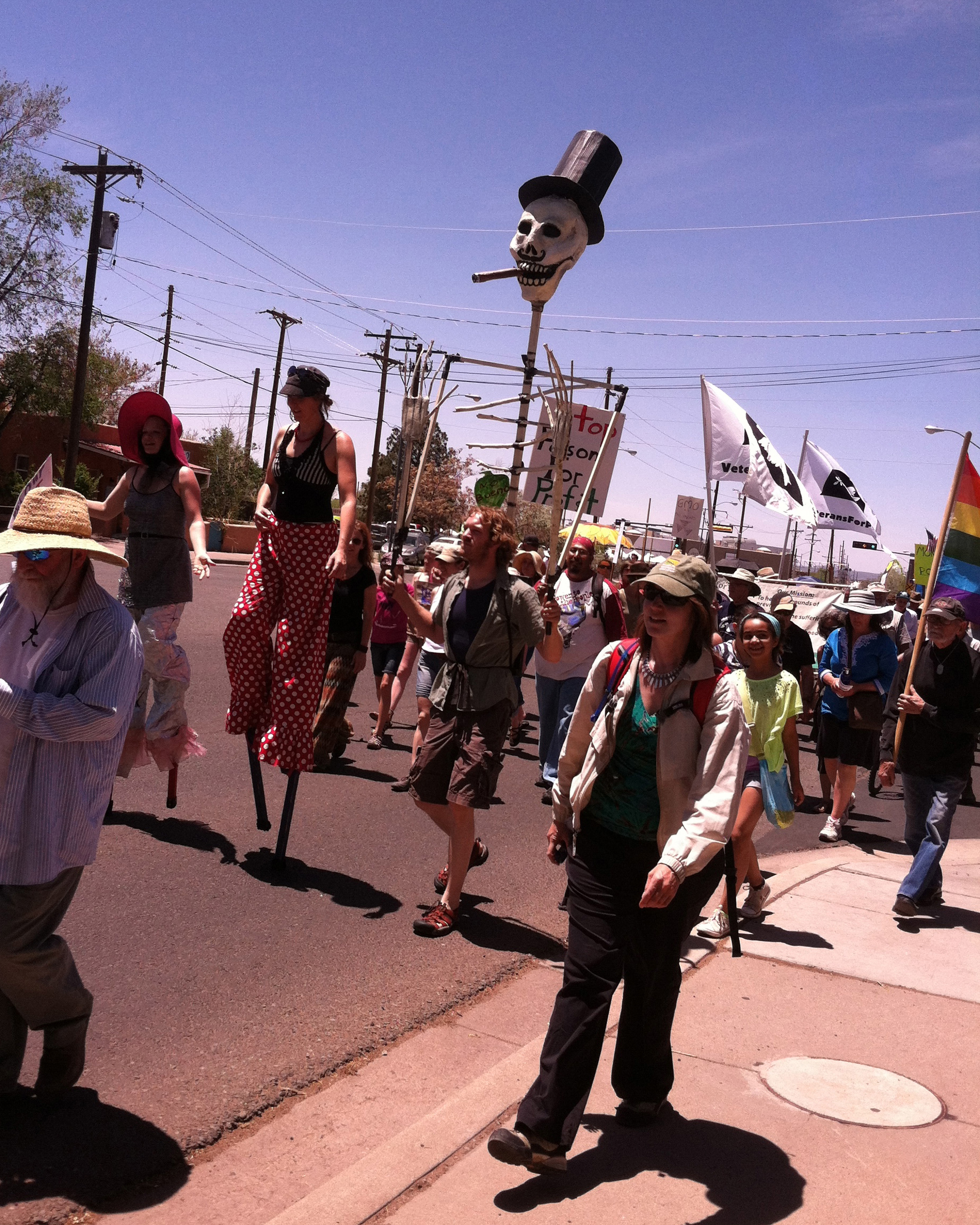
Yesterday there was an anti-Monsanto rally in Santa Fe. The rally started at the Santa Fe Farmer’ Market with speakers and then continued with a protest walk to the State Capitol. The rally was for requiring GMO labeling for our foods (so we can make the choice whether we choose to eat foods with GMO’s in them) and was against the Monsanto Protection Act where no one can sue Monsanto for any damages done by their products. Here are more photos from the rally.

walking skull skull n stilts monstro list let me bee heinrich death eater death eater walking crowd walking crowd walking wi skull crowd at capitol beeman bat let me bee walking skull crowd walking wi skull

How to Grow a Giant Pumpkin

Ron Wallace set a new 2013 Giant Pumpkin World Record with this 2009 lb pumpkin!

Ron Wallace set a new 2013 Giant Pumpkin World Record with this 2009 lb pumpkin!

Yesterday I taught a class on How to Grow a Giant Pumpkin and told them I would put the full color version in a pdf format on-line for them to use. I discussed all the basic information on growing a giant pumpkin from picking a seed to hand pollination to determining the direction the vine will grow to positioning the baby pumpkin as it grows to harvesting it and much more. Here is the handout for those interested:  GROWING GIANT PUMPKINS with PICS

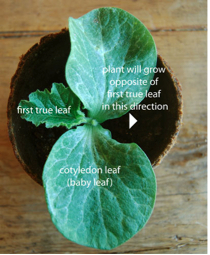
Here is a photo showing how to determine what direction the pumpkin plant will grow so you can be sure it grows in the direction you want (like not into a fence or wall)!

pumpkin vine direction

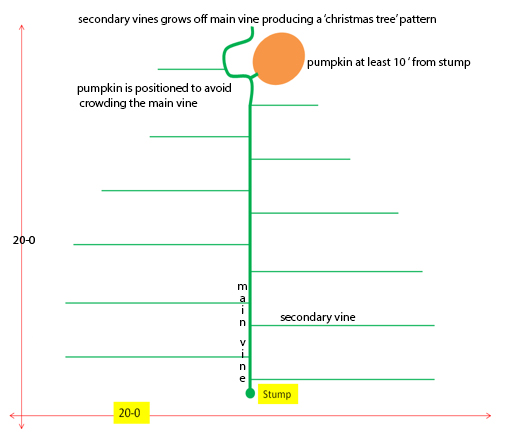
Below is a drawing showing how a giant pumpkin vine will naturally grow into a ‘Christmas Tree’ pattern with the longest secondary vines closest to the beginning of where the plant comes out of the ground (called the stump) and how they grow shorter and shorter as they grow towards the end of the main vine.

Pumpkin Christmas tree pattern


44 tomatoes planted today!

This slideshow requires JavaScript.

Phew! What a day. Three of my friends came over this morning and all together we planted 44 tomato plants from 8:30-12:30! What a bunch of busy beavers! Janet started out the morning before the others came and screened all my vermicompost and filled three-5 gallon containers. Then Lava showed up and Janet and her put in all my amendments in each hole (I had previously dug out most of the holes and Bob Z came by yesterday and finished digging them for me-another great friend)! Then today, I could barely keep ahead of the girls, me setting out plants, making sure each plant had a drip to it, name tags, map of all the tomatoes, providing stakes and wall of waters while Lava planted them and Mernie and Janet followed up behind putting the wall of waters on all of them. Then we all had other things to do and off we all went.  A wonderful day to plant- not too windy and not too hot-it was overcast! A huge thanks to Lava, Mernie and Janet for helping me today and to Bob for helping me yesterday-would of taken me days to get that far. It takes a village to do this much! Mucho gracias!

Giant pumpkin seeds planted inside-It has begun!

JC and MAX

This year I’m planting 4 seeds for me and 2 for my giant pumpkin/squash class later this month. I planted them in 4″ peat pots and they are on a heat mat set at 80°F  under grow lights until they germinate. Here is the 2013 lineup:

895 Grande 08 – 1016 Daletas x 1385 Jutras-this seed became the 2011 NM State Record
1011 Hoffman 10 – 1446.5 Werner 06 x 1180.5 Pukos 07
1111 Sawtelle 08 – 1556 Werner x sibb
1308 Todd 10 – 50 Todd x 901 Hunt- 2010 CO State Record
Three of these seeds are from Colorado and one seed from Wyoming.

So let me explain what each name means for those of you interested in giant pumpkin growing as each seed name gives important information.

Let’s take the 895 Grande 08. This seed came from an 895 LB pumpkin and the grower’s last name is Grande and was grown in 2008. The rest of the information is the genealogy of the 895 Grande that I’ve provided. So 1016 Daletas was the mother plant and was a 1016 LB pumpkin and the grower was Daletas and no year given. The father plant (pollinator) was 1385 Jutras. So this pumpkin weighed 1385 LBS and the grower was Jutras with no year given.The reason you should go back and look at the parents is you can see that the 895 came from some huge pumpkins.

The 895 Grande produced my NM Giant Pumpkin State Record of 448 LBS back in 2011. Last year I grew the 448 Cabossel 11 (nicknamed MAX) but didn’t break my previous record so I’m going back to the parent 895 Grande to try again. My record gotten broken last year. The current record is 530 LBS  so I’ll try to regain the State Record this year! Notice I’m also growing seeds from much bigger pumpkins as well but with our short growing it is very hard as I lose about a month of time other growers get. Wish me luck!

Soil temperature is Important When Planting Tomatoes

TOMATO COSTOLUTO

Now is the time to start planting our tomatoes and other warm season veggies outside in our gardens. So often we concentrate on only the air temperature to decide when to plant these crops but the soil temperature is actually just as important. Tomatoes should be planted when the soil temperature reaches a minimum of 60°F in the daytime. If you plant too early in cold soil, tomato (and pepper) seedlings sulk and will not be happy. Root development is very slow and the roots have difficulty absorbing nutrients. The plants could show phosphorus deficiency which shows up as stunted plants with purple leaves on the underside. If your plants get this, top dress them with some powdered rock phosphate and water in.  Nothing is gained from planting too early in the ground. This may account for why we always seem to get the bulk of our tomatoes in August and not earlier when planted outside no matter when we plant. The tomatoes will just sit there until the soil temperature is optimum.

To measure the soil temperature, use a soil thermometer. I prefer using a compost thermometer because they are much longer, usually around 24″ and can be used to check both the temperature of my compost pile and the soil in my vegetable bed before I plant tomatoes. Remember to push it in deeper into your bed as the tomato plant won’t be in the top 3″ but more likely planted deeper where the soil is cooler. I find the short soil thermometers just aren’t long enough to measure the soil temperatures more than about 5 inches and quite often I plant tomatoes much deeper. I got my compost thermometer online but I recently saw some at Payne’s Nursery here in Santa Fe.

To warm up soil sooner, you can put black plastic over the bed to pre-warm the soil. I use black plastic garbage bags that I tack down with rocks. That way I can reuse the bags later instead of buying a roll of black plastic. Leave it on for 1-2 weeks and take the temperature to see when the soil warms up to the optimum temperature. Many warm season vegetables could benefit from planting in warmer soil.

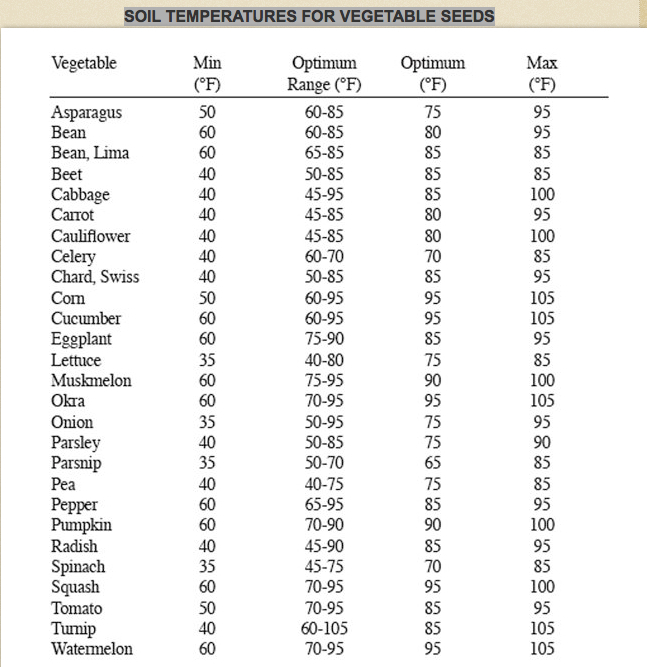
Here is a chart I found from Farmerfredrant giving the optimum soil temperatures for planting vegetables. I’m showing it here but also listed it as a pdf (soil temperatures for veggie seeds ) so you can print it out as well.

soil temperatures for veggie seeds

Sonny: 2009-2013

This slideshow requires JavaScript.

I have 3 pet goats down at the barn-2 girls and a boy. Sonny, my male dwarf Nigerian Goat had to be put down at 9 pm on Sunday evening. He was only 4 years old. We found him on the ground writhing in pain and screaming about 8pm when we went to put them to bed. He was fine in the morning. He was fine at 4 pm. Just fine. It is unbelievable that in 4 hours he would collapse in such intense pain and have to be put down. I don’t know how long he had been down but they say that once a goat goes down with bloat, they only have a couple of hours before they die. I called my farm vet and we brought Sonny to the vet’s house that night. Lucky for me, Dr. Callahan, who owns Pecos Veterinary Clinic, actually lives right off 285 and close to El Dorado so the drive was short. Dr. Callahan is an angel to let me come to his house on a Sunday night. I had to save Sonny the only way I could–to put him out of his misery–to save him from any more pain. How short life can be. It’s a shame it was snatched from Sonny at such a young age.

I really loved Sonny. He was such a character with his ‘sparky’ personality. More like a firecracker. He would leap and twist in the air almost clicking his heels like a Leprechaun when dinner was served. He would like to boss his sister goats, Bella Rosa and Hunwee around and try to hog all the food and attention. Everyone thought he was pregnant he was so fat. He was a great companion to his sister goats who are missing him too-we are all in shock now. But he was like a puppy dog too, following me around, stopping to lean on me hoping for a scratch between his horns- always coming up to greet me. He would act all brave and macho until a dog would come to the outside of the corral fence and then he would freeze and get all shaky, hiding behind Bella Rosa who is black and is a quiet strong goat. We all know who really runs that group and it wasn’t Sonny. Nevertheless he was a pistololi, a loose cannon with a fun-loving attitude. I’m going to miss that little guy-my handsome boy.

10 things to do in May

No this IS NOT what my garden looks like right now-I wish!

NO, this IS NOT what my garden looks like right now-I WISH! This is the garden in early June in 2010.

Here are 10 OUT OF 100 things you could do in your garden in May. GET BUSY-9 DAYS TILL MAY 15th!

-Water, water, water–all existing trees, bushes, fruits and vegetables–we’ve had a very dry winter-everything is parched!

-Clean up any perennial beds from the fall if you haven’t already.

-Add composted (aged, old, cold) horse manure to your vegetable beds/turn over.

-Check/install/hook-up drip systems for vegetable beds. Get replacement parts as needed.

-Buy any last-minute seeds/or any vegetable starts you don’t have but still want.

-Buy those wall of waters for your tomatoes and row cover BEFORE you plant tomatoes.

-Transplant up any veggie you bought that is now too small for its pot.

-Buy any amendments, fertilizers and supplies you will need when planting.

-Harden off your plants before putting them outside in the garden.

-Fertilize with fish emulsion and seaweed any cool season crops you have. Start to harvest when ready.

-After May 15th, it should be safe to plant warm season crops-go for it!

OK- these are 11 things but like I said, there are probably 100 things we could do in the garden right now!!

Tomato Class Review

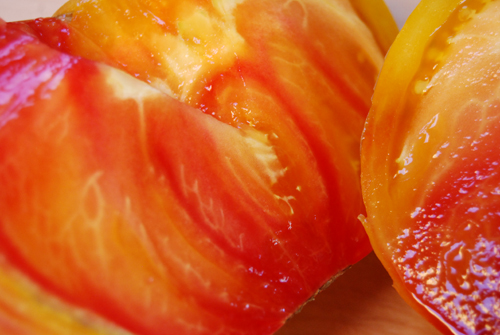
closeup of striped german

Yesterday, Duskin Jasper and myself taught a 2-hour tomato class intensive at Milagro Community Garden to about 35 gardeners where we talked about planting and caring of tomatoes. In it we talked about what general amendments to add to your vegetable beds, how to plant tomato transplants, what amendments to add to each hole to boost tomato production, benefits of adding mycorrhizal, pruning techniques, benefits of adding Epsom Salts and dry milk when planting tomatoes, tomato deficiencies and tomato diseases. We also gave a demo in actual planting of these tomatoes and how to use and install Wall of Waters (to sneak your tomatoes in before the last frost date) and benefits of using row cover. Thanks to all for coming!

Here are my handouts as we ran out of them for those of you looking for them:

PLANTING TOMATOES

Tomato Deficiencies_Diseases_Viruses

TOMATO DISEASES

Mycorrhizae

Strawberry Beds-Spring Cleanup

strawberry bed in spring with row cover ready to cover when it freezes

strawberry bed in spring with row cover ready to cover when it freezes

Yesterday I raked out all the old leaves from my strawberry bed and sprinkled some fertilizer (I use yum-yum mix) and a fine layer of compost over the bed. This is the first year I’ve done anything for it in about 3 years and I noticed last year my strawberries were smaller so hopefully this will help.

The patch looks pretty rough and dry, dry dry so I watered heavily for about 1 hour after adding the amendments to give it a good drink. I did water it 2x during the winter but we didn’t get any appreciable snow this year so I hope it rebounds. I’ll also need to put the row cover back on tonight as it is supposed to get down to 29-28°F the next two nights as a few plants are already flowering—the cold will kill them if I don’t cover them.

Bee check up-April 28th

DSC_0071

I went and checked the bees out today. I haven’t gone through the whole hive since last October although I did check them out in March just to see if they had enough honey-they did. Now that the fair is over I actually had some time to catch up on a few things and the bees were definitely on my mind. I wanted to check out the hive to see how they were doing. I saw a fair amount of drone cells, not many worker bee cells, maybe a start of a few queen cells- maybe not but their thinking about it) and a lot of busy bees. As usual I couldn’t find Houdini (the queen). I named her that last year as she is very good at hiding from me! I worry a little since I didn’t see a lot of brood cells so I will be watching closely and will check it out in a week. Perhaps a bunch just hatched as there were so many out and about. I also saw lots of bees at Caleb’s hive (which died in February) and was wondering if mine were swarming but upon inspection, my bees were after his hive’s crystallized honey although there wasn’t a lot. So I cleaned up his whole hive, took off much of the old comb and swept out all the bees that had died. I left the old combs out on top of the hive for the bees to clean out the honey since they seemed so interested. Now that hive is clean and ready if a swarm comes by!

This week I will also put together a new beehive that Elodie’s brother, Mark built for me. Pictures will be forthcoming!

The Fair was a great success! Phew! Sigh! I’m exhausted!

The Santa Fe Master Gardener’s Spring Garden Fair is over. Phew! Sigh! Putting on the garden fair on is a lot of work for all us Master Gardeners + I was one of the speakers this year so double the work for me. Today the Journal North had a great article about the Garden Fair and my lecture on the front page. Really nice. The writer actually wrote down a lot of the tips I gave! Here is the article if you want to read it:   http://www.abqjournal.com/main/2013/04/28/north/sound-advice-from-the-tomato-lady.html

Now I just need to recover and the best way to do that is be in my garden! So today Tom came over and we worked on the greenhouse and got 9/10 of the roofing on. More progress! I will take some more pictures soon.

Santa Fe Spring Garden Fair this Saturday April 27

SFMGA_SpringFair13_Flyer_02

This year’s theme is Food for Thought, with speakers, exhibits, clinics, and demonstrations all tied to the idea of nourishing ourselves, our land, and the creatures that share the land with us. There are 3 speakers this year.  I will be one of the guest speakers and talk on tips for growing tomatoes and other vegetables. Anne Schmauss will talk about providing habitat and food for birds and Les Crowder will talk about bees, how we can help them and what we can plant to support them. Here is the speaker schedule:

Jannine Cabossel       10:45am
Tips for Terrific Tomatoes, Making the Most of Your Vegetable Garden

Anne Schmauss         12:00 noon
How to Attract Birds to Your Backyard Year-ound

Les Crowder               1:15pm
Honeybees: Landscaping with Bee friendly Gardening Practices

You don’t want to miss this event if you are a gardener here in the greater Santa Fe area!

The Greenhouse is Coming Along!

This slideshow requires JavaScript.

Two winters ago I started planning my future greenhouse. I wasn’t sure if I would build a hoop house or a traditional greenhouse but then a friend, Kate, donated 10 big windows from her sunroom when she replaced them. I got a great screen door from someone else and I got some large wood panels from another friend. SO I decided to build a more traditional style of greenhouse. Then when I rented a Bobcat to regrade my driveway, I leveled an area for the future greenhouse and ALSO leveled and scraped the ground for adding more garden space. My friend, Caleb and I put the posts in last January, jackhammering the frozen holes out and then he got a full-time job teaching and could not help anymore. So instead I concentrated on expanding the garden last spring. Which I did—to the tune of an additional 1000 square feet!

Meanwhile the greenhouse posts just sat there and some were twisting badly.  This spring, another friend of mine, Tom, offered to help me finish it and has carpentry experience. So Tom is helping me finish building my greenhouse (or should I say I’m helping him) every Friday morning from 8am-12pm. I’ve set a deadline for myself to try to finish it by May 15th. Hopefully we will make it by then. It is moving along nicely. So far we have replaced most of the twisted uprights, got the rafters and purlins done for the roof, the west side framing is almost done, the window frames are built on the south side but we won’t put the windows in until the end, the bottom sides of the future garden beds are done on both the south and north sides and are redwood. We will frame the windows on the north side this week. Still have to get the roofing material, the wall material that is not going to be windows and the side with the door done. I am so excited that it is finally moving along! PROGRESS!!

BATTEN DOWN THE HATCHES!

windy atreeJust when I was emailing my friend Lava in Germany telling her how nice it has been here this spring, in come the gale force winds! What a horrible windy day. Almost blew the screen door off when I open the door. UGLY! Good day to stay inside!