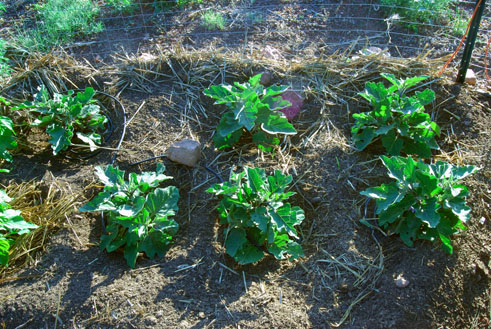
Check out my giant marrow!

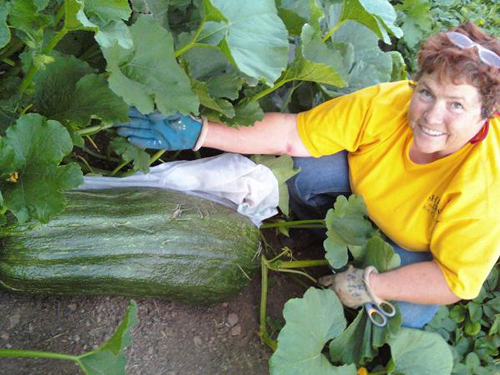
giant marrow on 08-25-10

Ooo wee! Check out this giant marrow (which is actually a giant zucchini)! I don’t know how one measures for weight but I have several really big ones. One will go to the State Fair and the other up to the Rocky Mountain Giant Vegetable Growers weigh off in Colorado if I can get it to last that long. It has been really fun growing it this year and watching the marrows grow. The Plant does fine in the heat and ultraviolet rays (we are 7000 ft high here in Santa Fe). No wilting at all. Grows like crazy. The only thing I will change next year is that it will go in the giant pumpkin patch where it will have more room to grow. It can duke it our with the giant pumpkins! Right now it is growing over everything and I already hacked it back twice!  This one came from a seed from Brad Wuersten in the Netherlands who has the European World Record for it over there and was kind enough to give me a seed from one of his giant marrows.

‘The Tomato Lady’ returns to Santa Fe Farmers Market

‘The tomato Lady’-first day sold out of Tomatoes

Yesterday I returned to our Farmers Market here in Santa Fe, NM as the ‘Tomato Lady’ and sold out of my tomatoes by 10 am.

It’s been a long wait all summer for my tomatoes to ripen and they have started but are not full blown yet. So I had some tomatoes but not a ton. In another couple of weeks, I should be overwhelmed with tomatoes. I also had Costata Romanesco  and Lungo Bianco zucchini, Bennings Green Tint and Yellow Custard scallop summer squash,  Fairytale eggplants, Shishito peppers, Padron peppers, Parade, Armenian cucumbers and Rattlesnake pole beans. For tomatoes I had Early Wonder, Pantano Romanesco, Goliath, Sun Sugar and Black Cherry and a few Costuluto Genovese. Hope I have lots more next week!

How to control squash bugs

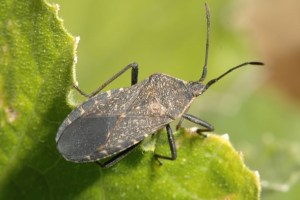
Squash bug adult-photo courtesy University of Minnesota

Well it’s that time of year-Squash bugs Ughh! You can control squash bugs in your organic garden. Here are some ORGANIC things you can do to deter squash bugs:

-Plant a crop late in the season if possible. Many areas of the country only have one generation of squash bugs and if you plant later you may miss them. If you live in the south where they have 2 generations, read on..
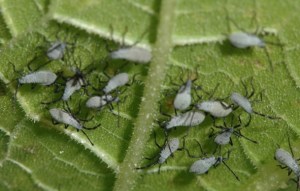
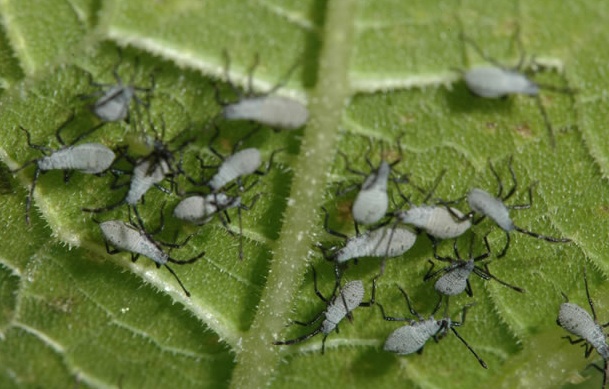
squash bug nymphs-photo courtesy University of Minnesota

Cover your plants with row cover to keep them off. This works beautifully but you may have to piece some row covers together to cover some of the larger plants. I use clothes pins to clip them together.

-Use Neem. It is an organic pesticide (and an added benefit is a fungicide). It must be sprayed very early before the bees come out or at dusk when they aren’t around as it won’t hurt them if it is not a direct hit as they only visit the flowers and it is a contact spray. I think it mostly helps deter the squash bug.

squash bug eggs

-Inspection, hand picking and kill the little buggars. (now you know how strongly I feel about them) By far the most labor intensive but very effective. I hate to handle squash bugs (or any bug-I’m squeamish) so I use gloves, a bucket of soapy water (it drowns them) and inspect each leaf underneath to look for nymphs, eggs, or adults. The adults I throw in the soapy water and if a leaf is really loaded with nymphs, I cut it off and throw it in the soapy water otherwise I just squish them. For the eggs  (they are a cluster of rust colored eggs attached to the underneath side of the leaves) I usually just tear off  or cut out that portion of the leaf (it won’t hurt it) and throw them into the soapy water. The key to keeping it under control, is to catch them before they multiply too much. I looked up the life cycle online of the squash but and it goes from egg to nymph in 7-10 days so if you get out there every 7 days you will catch them before they get out of control and multiply. Most people wait too late. Get out there and look at your plants!

-Companion planting. I think it was in ‘Organic Gardening Magazine that I read under ‘letter to the editors’, that a lady wrote in to say that you could deter squash bugs on pumpkins, winter squash, summer squash and marrows with diluted/strained onion juice. Evidently just grind one or two up, put it in gallon of water and strain the onions out so your sprayer doesn’t clog. Well she went on to write that doing that was too much work and she plants onions bulbs with her squash every year and hasn’t seen a squash bug since. Well I did the same for my summer squashes, but not for my winter squashes. There have been no squash bugs on the summer squash but I found one on the marrow which means there will be more. I told one of friends that owns a garden nursery about the onions and he said it was too late to plant onions but he was going to throw some chopped onions out in his patch. I’m doing the same today for the marrow and winter squash and will let you know what happens! It can’t hurt and maybe it’ll work!
Cucumbers,Tomatoes and squash oh my!

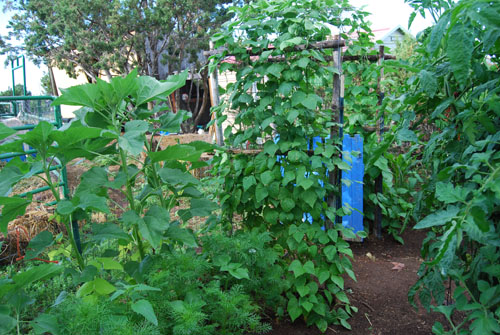
looking from inside the garden out

Lava suggested I take some shots of the garden as it is right now-a jungle-not just closeups! I need to get in and trim and prune everything but it is fun to look at especially here in Santa Fe where everything tends to be dry. Lava also suggested I get on the roof of the barn to get a bird’s view and I just might do it! Meanwhile here are the jungle garden pics!

corn and winter squash

summer squash

entry into the tomato jungle

between rows of tomatoes

cucumbers

organic fungicides to use for Powdery Mildew

We’ve been getting so much rain lately that I am worried about Powdery Mildew (PM) and other fungal and bacterial diseases caused by too much rain. It is a blessed curse. The garden takes off  and really grows from all the rain but the conditions are right for PM so I am trying to take precautions by doing several things to be as preventative as possible.

First I’m cleaning out all dead or yellow leaves that are usually underneath the canopy of the squashes and beans and tomatoes. I use clippers to cut out the dead stems  or yellow leaves (like on the tomatoes) and I sterilize them between each plant so not to spread any diseases that the plant may have that I don’t know about yet. The idea is to clean up under the canopy of  leaves and provide more air space. I have a small container that I fill with 4 cups of water and I put in about 1/4 cup bleach and use this as a disinfectant for my clippers and gloves. I just dip my clippers and hand with my glove into the container and then move onto the next plant. You can use isopropyl alcohol instead but you could go through a lot of alcohol and the bleach works just as well. The next thing I do is spray weekly with Neem and baking soda or instead use copper fungicide which is stronger but still organic. I think the Neem and baking soda are more preventative and if you get some fungal diseases then the copper can kill it. Copper is organic but one still needs to follow the directions but you can spray it right up to the day of harvest. All of these need to be sprayed on both the top and underneath the leaves and have to be resprayed if it rains. The third thing I’m doing this year is using a biofungicide that is used as a drench. This is new to me but it is just certain soil organisms that help the plant ward off many fungal and bacterial diseases. I’m using it on my giant pumpkins and will let you know how they do. Another biofungicide is Mycostop which is also suppose to do the same thing. There may be others out there, just google biofungicides.

Garden Harvest from July 24

First harvest from July 24

Here’s a picture of the first garden harvest that I actually got on July 24! It was small but tasty! ‘Romanesco Costata’ summer squash, ‘Lungo Bianco di Sicily’ summer squash, ‘Yellow Custard’ scalloped summer squash, ‘Bennings Green Tint’ scallop summer squash, ‘Fairy’ eggplants, bush beans, cucumbers, ‘Shishitos’ and ‘Padron’ peppers are really kicking, and a few tomatoes. Now on August 2, almost everything is going bonkers except the tomatoes-I’m still waiting for the tomatoes to really show up soon in a major way!

Calabacitas breakfast

Breakfast Calabacitas With Egg

Here’ a recipe to make a southwest favorite here in Santa Fe. I add an egg on top for a complete breakfast.

(6) 6-8 inch zucchini
1/2 of onion chopped
1-2 ears of corn kernels
1 tsp cumin
Northern New Mexico green chili sauce

Slice zucchini or any summer squash and chop onions. Saute in olive oil till soft and liquid has evaporated. Cut kernels off fresh corn and add to mix. Sprinkle about 1 tsp of cumin (more or less to taste) on top and stir in. Cook a few more minutes till corn is cooked but doesn’t ‘pop’. Cook an egg in another fry pan and put on top of mixture on plate. I add warm green chili on top of each plate to each person’s taste-some like it hotter and some like a little.

Summer Squash-Scalloped ‘Golden Custard’, Lungo Bianco,’Costata Romanesco’

Female flower closed- 'Golden Custard' summer squash

I am growing 4 varieties of summer squash this year that are all new to me. I have two varieties of scalloped summer squash. Here is the first of them called ‘Golden Custard’ which will turn more yellow with time. The other scallop variety I have is Bennings Green Tint which is a light green scallop squash. It is a little behind and I don’t have picture of one of the fruits as it is all leaves so far.

The first picture is a female flower with the baby ‘Golden Custard’ squash attached.  Golden Custard has bright yellow fruit and rich mellow flavor. This is a rare native American squash that might predate Columbian times. I’ve never tried it before and can’t wait to taste it. The female flower has not yet opened to be pollinated. In all squashes, winter and summer, female flowers have the baby squash attached and if they don’t get pollinated, they will drop off.

female squash flower open

The second picture is with the same female flower open.

The third picture is a male flower with a straight stem and no potential baby fruit at base.

male squash flowerThe third picture is of the male flower which has a straight stem and stamen.

The next picture is a Costata Romanesco summer squash with the flower still attached. This one was definitely pollinated as the baby squash has grown to edible size. This is good eating size (about 5 inches) but left on the vine it will get larger and still can be used. Costata Romanesco is a ribbed zucchini from Rome, Italy and a famous Italian heirloom. The long fruit are fluted with medium, green-striped skin. The cut slices are scalloped. They are popular fried whole with the flower still on when still small. They are very flavorful and a perfect, gourmet variety.

Costata Romanesco

Lungo Bianco is a light-green-cream heirloom zucchini and another popular variety from Italy. They are smooth skinned, mild and sweet.

I did a taste test of the Lungo Bianco and Costata Romanesco tonight and they both are wonderful. Both were picked when they were prime-about 5 inches long and had no bitterness. I sauteed them in butter and put a little  Parmesan cheese on them at the table. Yum!

baby pictures

Here are some pictures from the garden today. There were lots of flowers and baby veggies just starting. Won’t be long now before they really take off! I can kinda cruise for a little bet now. Just got to watch for disease and bugs and make sure things get watered and fertilized. Sounds like a lot but that is nothing compared to spring planting and fall harvest. With all this free time, I think I’ll go for a ride on my scooter tomorrow! ZOOM! ZOOM!

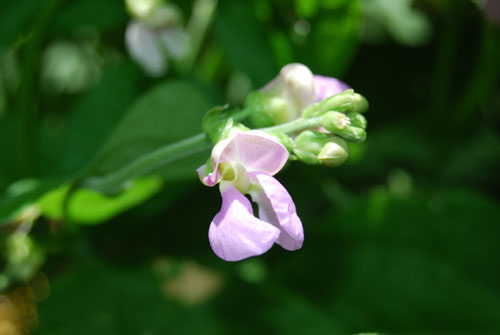
bush bean flower

baby bush bean

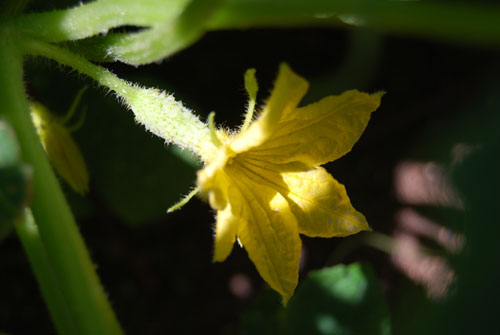
baby cucumber with flower

baby tomato

summer squash flower

vegetable garden pics 07-09-10

rattlesnake beans growing up arbor

cukes growing up cage

Fairy eggplants

shishito and padron peppers

summer squash adn bush beans

summer squash and cucumber seeds in

When I think of all the things I still need to do in the garden, I’m overwhelmed.  So I break all the things I need to do into bite size projects and surrender that it will get done when it gets done. Yesterday I was  down in the main garden preparing some holes and adding amendments with composted horse manure, fertilizer, rock phosphate and mycorrhizal in it. Today I planted the summer squash and cucumber seeds in them. Thirteen of my 35 tomatoes look pitiful. Luckily I have some more to replace them which I will do by the end of the weekend. They either froze or thrashed by the wind-tough winter and spring. Tomorrow I need to focus on a glassblowing workshop we are doing so looks like I wouldn’t get back to it till Saturday.