Tomato plants getting BIG

The tomato plants are now getting BIG. I’ve gotten a few ripe tomatoes-fighting off the birds for them! Most are starting to really produce green tomatoes now. I hope to get to the SF FARMERS MARKET by MID-AUGUST or sooner, tomatoes willing..

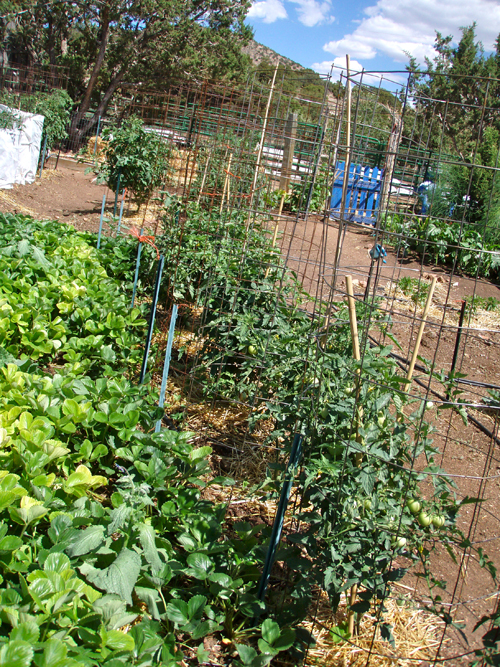
Here are my earliest tomatoes on the right that may allow me to go to the market sooner than later. On the left is my strawberry patch.

I have a variety of black tomatoes coming on-Paul Robeson, Giant Black Pear shaped tomatoes, Cherokee Chocolate, Black Krim and Black Cherry. None of which are shown yet.

I should have a plethora of cherry tomatoes this year-Sungold, Black Cherry and Green Grape and a mystery red that was suppose to be a San Marzano! Here is a closeup of  Sungold. Hope the birds don’t get it! All the cherry tomatoes should start producing soon!

I also love the bi-color tomatoes-my favorites. I’m growing Gold Medal and Striped Germans shown above. Both varieties can get between 1-2 lbs and are SWEET, SWEET, SWEET. They only have flowers right now.

My Big Zacs take longest to ripen 90+ days so you won’t be seeing these until late in the season but what a treat.1-2 lb giants with that old fashion tomato flavor perfect for a BLT..

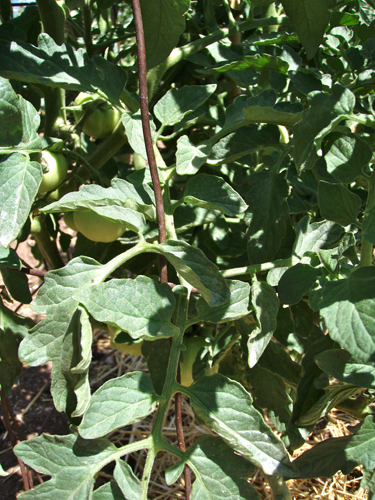
Here is a brandywine. Notice the potato leaves. I haven’t had good luck in NM with Brandywine  tomatoes due to the disease factor but these are looking good so far, I have red, pink and yellow brandywines going.

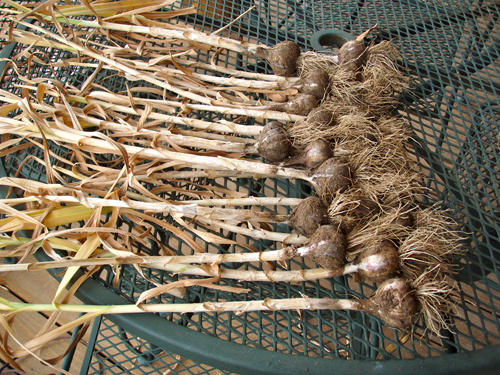
Harvesting Garlic-pulled on July 14!

Freshly picked garlic starting to dry on table outside in shade

I dug out the garlic I got from our local Farmers Market and planted last fall yesterday. They say the best garlic comes from local growers, so I’m sure it will be good. It is the hardneck type but I’m not sure which variety-I just remember  it was purple. I planted in mid November of last year, so it’s been 9 months of waiting to harvest.

Hardneck garlic scape

It produced a scape in June on each plant as shown in the picture to the left, which is a curly flower pod that you cut off so all the energy goes into the bulbs developing below the soil. I read after you cut off the scape, you should give them a good watering, then cut off the water to them and wait around 20 days to harden them off.

Almost all hardneck garlic have between  7-8  leaves and when the bottom 3 die back but the top leaves are still green then it is ready to dig out. My leaves died back totally because it’s been so hot here. Be sure you use a tool that can dig deep enough to loosen the soil around each bulb and get under the bulb and lift it out being careful not to pierce it.

After you dig it out, you need to CURE the garlic which takes about 3 weeks. For the first week, lay out all the garlic bulbs (leaving all its leaves on) outside in a warm DRY spot on top of a table or shelf but OUT OF THE SUN with good aeration for a week. On week 2, cut off the leaves to about 4-5 inches above the bulb, trim off roots closer to the bulb, rub off the dirt gently on the bulb and put back on your shelf or table to cure another week. On week 3, trim off the remainder of the leaves down to the bulb and cut off the roots close to the bulb and take them inside to finish curing.  After that third week ends, store them in a cool, dry place in your house. I like to put them into one of my old onion bags that I bought from the grocery store (the ones made of netting) and put in a cool place in the house-for me my pantry. I can’t wait to try some!

‘Big Zac’ Giant Tomato Megablossoms

Single flower on left and 2 blossoms joined to create the megablossom on the right

I’ve planted 6 Big Zac tomato plants and several of my own from last year that came from the the N. Harp 7+ lber tomato seed. I haven’t seen as many megablossoms this year as I would like to see. A megablossom is a blossom that has 2 or more blossoms that fuse together to create a tomato that has several sections creating two or more fruit joined together which give a rather gnarley appearance but produce some really big fruit usually over 2 lbs.

2 lbs. 11.4 oz

Big Zac is NOT the only tomato that produces megablossoms but it does produce more than the average tomato. Other tomatoes can produce megablossoms as well just not as many as the Big Zac variety. Here is one of the Big Zac tomatoes I grew last year that was close to 3 lbs. Notice the 4 sections.

I’ve been a little preoccupied with the tomato scare but now am on the hunt to see if any of my Zacs have some of these blossoms.

Tomato scare

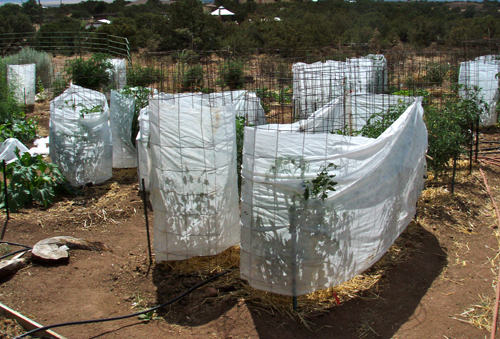
Trying to protect the tomatoes-wrapping them in row cover

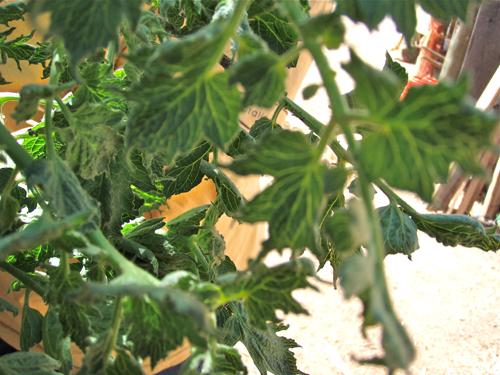
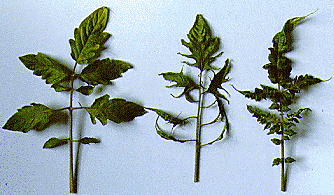
My tomatoes have been looking great, in fact the best ever in 25 years, but about 2-3 weeks ago I noticed a couple of the plants started getting new leaves that looked wierd-sort of fernlike which I thought was odd but they were still green so I ignored it.

Tomato 'fernlike' leaves

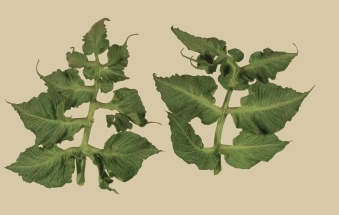
Well, this week I noticed about 48 plants had this weird look and the new tips were very distorted. I researched on the internet and it looked like Tobacco mosaic virus or Cucumber Mosaic virus which can spread rapidly among the plants. If your tomatoes get it, it can ruin your whole crop not to mention your whole garden for 3 years as that is how long it can remain in the soil. You must pull the plants and dispose of them as it is very contagious at least for the Tobacco Mosaic virus. I was panicky so I wrapped up the remainder of the ‘ok’ plants in row cover to try to protect them. I called Pat Torres, our County Extension Agent here in Santa Fe about sending samples down to the state lab as I feared the worst. I brought two complete plants to him on Friday, filled out some paperwork and he sent it overnight to the the lab person who went in (on his day off) on Saturday to do a diagnosis for me. What wonderful people! (Both he and Pat) The lab guy tested for all 4 major tomato viruses that are most common here in New Mexico and luckily all the tests turned out negative-no pathogens found. Yes! I’m saved! The lab guy said it looked like Herbicide Drift called Abiotic disorder (or 2,4 D damage) and felt they will outgrow the weirdness and be OK.

And the funny thing is I did spray (carefully) with Roundup 3 weeks ago my driveway and sides of the studio for weeds in the gravel that are about 100 feet uphill of my main garden. He said if you spray on a hot day (and when hasn’t it been hot here lately) it can vaporize and travel up to 400 feet anywhere the breeze blows it. That’s 100 feet more than the length of a football field. The rest of the veggies were intact because they were still under row cover. He also said some herbicides (I’m going to email him for which ones) can travel in the air for 40 miles! So be careful with Roundup or any herbicide. I always go organic in the vegetable garden but sometimes not in the regular garden. What a scary lesson!

Herbicide damage-also called 2,4 D damage

Tobacco Mosiac virus

Vegetable Garden July 4, 2011

Happy July 4th! Here’s a look at the main garden so far this summer. This year is definitely slower than this time last year due to lack of precipitation but with the monsoons here, it should take off this month and kick butt. To see last year’s garden at this time, go here.

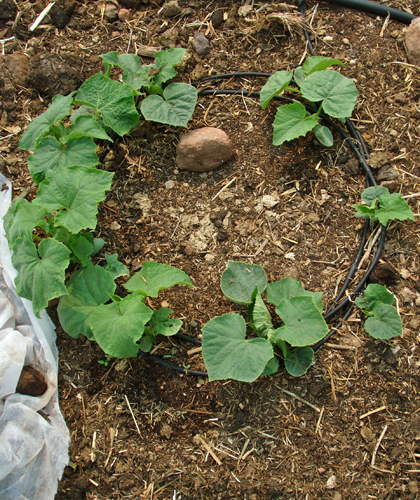
The cukes I’ve had to replant due to something eating the seedlings several times even though I’ve covered it with row cover..
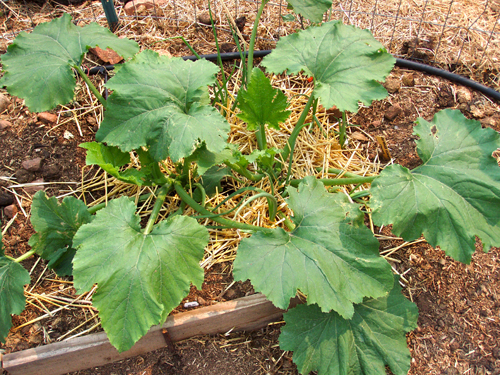
I have 2 Costata Romanesco zucchini plants. The leaves are very delicate compared to other zucchini types. Hope we don’t get hail. I grow it because I  think this is the best tasting zuke ever. I read about this Costata Romanesco in one of Debra Madison’s vegetarian cook books-‘Local Flavors’. She lives in Santa Fe and  has several vegetarian cookbooks out. Great books on what tasty things you can create with your veggies. I’m not a vegetarian but am  always looking for new ways to use my vegggies so I don’t get bored.
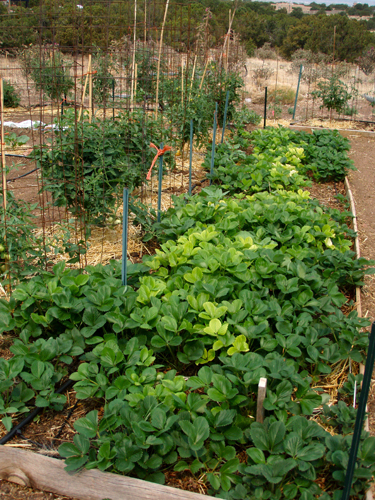
We didn’t get ANY strawberries this year because I almost lost them all when we had that -25°F this winter. I have June bearing strawberries so I know the time has past. I had just a few plants this spring that survived but the strawberry patch is coming back nicely. Next year I will cover them with straw before winter to help insulate them.

This variety of pole bean is called ‘Emerite’ from John Scheepers. It is a new variety for me. I also have my favorite, ‘Rattlesnake’ beans and another new bush variety called, Verandon, which is a french fillet style of bean. I made a teepee out of bamboo. Notice the row cover in the background covering some of the cucumbers.

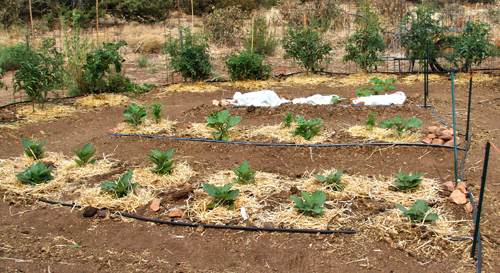
Here is the eggplant patches. They are doing well. The patch in the foreground has ‘Fairy’ eggplants in them, a variety that get 3″ long and are my favorite. Their skin is always tender and they are never bitter. You don’t have to soak them in salt water like some varieties-and they are beautiful-purple fading to white. I like to saute them in olive oil and throw them in a stir fry with noodles.
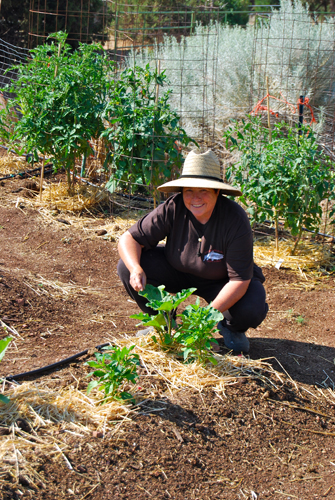
The patch in the back with me are a new variety of eggplant called ‘Rosa Bianca’ and next to it are 4 ‘Peperonchino’ peppers that are growing well.

This year I planted rhubarb among the asparagus plants. I found them this spring at one of the nurseries and they were the sorriest plants I’ve ever seen at that time. They say they grow well with asparagus. Now they are beautiful! Seem to like their location. On the left is row cover I use to help protect new flower seedlings. I take it off in the day and back on at night. Once they get a little bigger, I take it off completely.

The biggest disappointment of the garden so far. The ‘Shishito’ peppers are still slow but finally don’t look sick any more. Still small and something ate some of them so they are really small but they will come back. Some of them are producing buds. No wonder they are so expensive at the SF Farmers market-they are not so easy to grow..
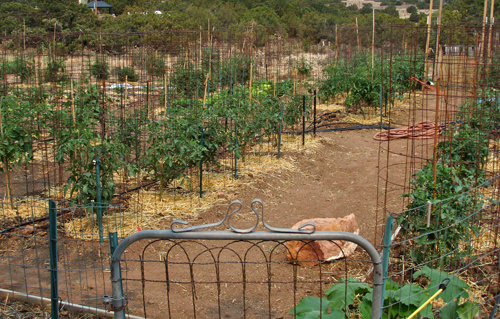
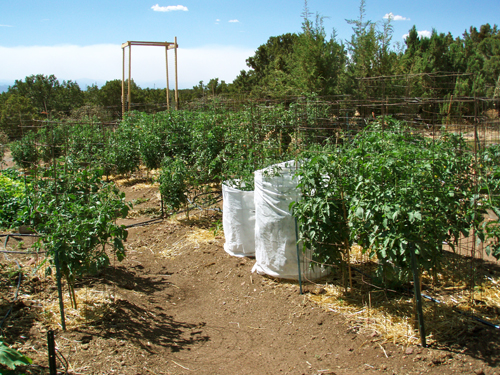
Overall I am very pleased with the tomatoes this year. They are doing well. Everything is done except for my scheduled organic fungicide spraying every 10 days-especially now that the monsoons appear to be here. I’ve only lost 2 tomato plants and another 3 are suspicious. I will cover those with some row cover in case they have something contagious but if I think they are dying I will pull them pronto. Notice this picture taken from the some angle as on May 15th below-when I first planted them-they have come a long way!

It has proved to be a more challenging year what with the lack of rain for so many months but I feel confident  for all of us with some more rain we will have a good garden this year.
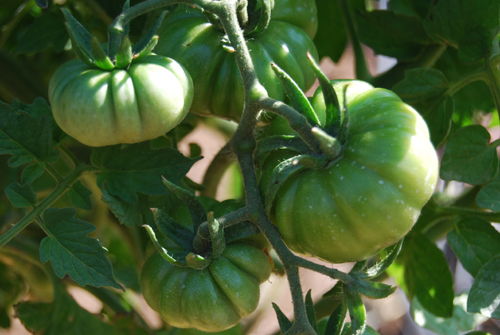
costoluto genevese tomato
Squash bugs/squash vine borer preventatives

I get a lot of questions about how to control squash bugs. They are a veggie gardener’s nemesis. I have read and tried several things and think a few help. Here’s a list of things you might try to control squash bugs and squash vine borers.

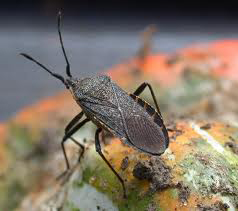
squash bug

Squash bugs
Squash bugs attack both summer and winter squash. They pierce it and suck out the juices. If left unchecked, they can take over and destroy the plant. The key to control is catching them right away. Here are some thing s to try:
-Plant onions around squash to help repeal them. I planted little sets around the squash last year and I got a few but not a lot. Very controllable.
-Make an onion spray to put on leaves. Fill blender with water and add a couple of onions.      Blend onions and let them sit overnight. Strain onions out and put in sprayer to spray squash plants.
-Put row cover over young plants till they flower, then remove so they can get pollinated.
-Hand pick every 7 days and remove eggs, nymphs and adults from leaves. Put in bucket of soapy water. Then cover plants again with row cover. Squash bugs life cycle from egg to nymph is 7-10 days so keep ahead of them.
-Spray Neem Oil on squash when you have to keep them uncovered for pollination. Neem is an effective repellant.
-Plant late like the first couple of weeks of July-you may miss their lifecycle.
-Rotate squash into different beds, They may not find you. First time squash growers generally get the first year free of squash bugs. Afterward the bugs find you and the battle is on.

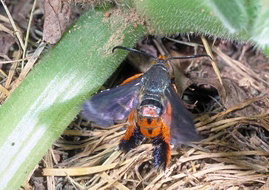
squash vine borer

Squash Vine Borer
This bug is not suppose to be west of the Rocky Mountains and yet it has been seen around here damaging and killing squash plants. It likes to bore into the main stem around the base of the plant to lay its eggs which then turn ito larvae inside the vine and eat it from the inside. Look for sawdust like  particles around base if plant suddenly wilts. You can try to slit the vine parallel  (not across it) and dig out the grub and then tape the wound shut. It may survive. Here are some things to try:
-Once again cover them until pollination needs to happen.
-Wrap aluminum foil around the base of the vine for about 12 inches to keep them from attacking it.
-Also bury the vine with dirt or mud covering the main vine.

Tomato care in June

The Wall of Waters are all off the tomatoes now. I used Companion fungicide as a drench. They got a little wet in the Wall of Waters and I wanted to make sure they wouldn’t come down with early blight while gone on my trip. I also sprayed on the foliage Serenade, which is a foliar fungicide. So one end gets the drench and the other end gets the foliar spray. I figure if you zap them both ways, I should have better protection. When I came back,  all looked good except one which was diseased so I tossed it in the garbage, not the compost. Don’t leave diseased plants in the ground to possibly pass on diseases to healthy plants. Then I staked them all up with bamboo stakes and tied up the branches. I cut off any branches that touched the ground so as to not spread any soilborne diseases. Next I had to redefine my wells and put straw over the well to conserve water, help with evaporation and keep soilbourne diseases from splashing up on the tomato plants. Afterward I decided to sterilize my tomato cages since I had some loss due to diseases last year. Might be overkill but I want to be cautious this year before I put them over this year’s tomatoes-don’t want to spread any diseases. I used a 10% solution in a gallon of water (that’s about 1 .75 cup bleach to one gallon water) and sprayed my cages with a hand sprayer. Now I need to put the cages over the tomato plants and start picking off suckers that are showing up. Arrgh, a gardener’s work is never done…
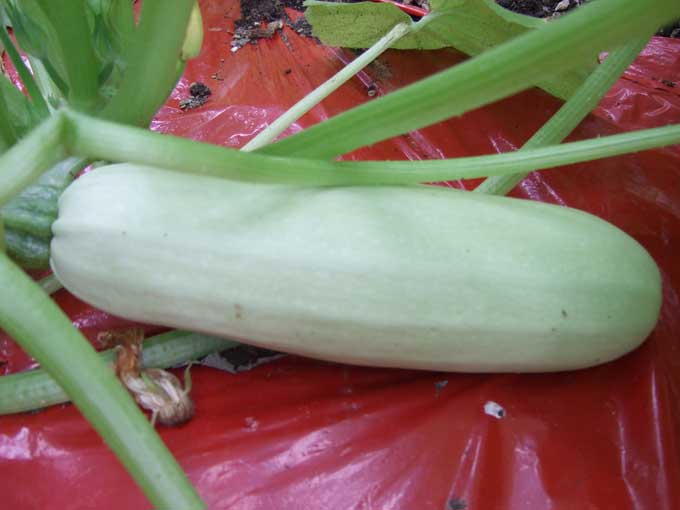
All this work for this..

Virginia Sweet Tomato
Shishito peppers struggling/Eggplants doing well

This shishito not doing very well

My peppers and eggplants get the royal treatment. They all have a well, drip system, row cover over them and Thrive and Seaweed given to them to adjust to the outside. They should be doing well but at least 2/3 of my shishito peppers are struggling. They should not looked like this! They have not adjusted to the heat and wind very well. I hope I get some out of the 16 I planted. They are a picky little plant. If it’s not too cold for them, then it’s too hot or too windy. They’re just not happy. Perhaps that is why they cost so much at the Farmers Market. I’ve already given them extra seaweed and Thrive. I find them harder to grow than other varieties and they stay small forever. Last year I don’t recall them struggling so much. I may pull the wall of waters off the tomatoes that are doing well and growing out of them and put them on these peppers.

On the other hand, my Pepperoncini peppers are doing well. They were a little larger than the Shishitos when I planted them and have adjusted well. I think they had stronger roots which would help in adjusting to the elements.

All the eggplants-Fairys and Rosa Bianco varieties are small but doing well and have new growth. They love the heat.

Tomatoes are doing excellent in Wall of Waters

tomatoes coming out of wall of waters

All of my tomatoes that are in Wall of Waters are kicking ass right now, many of them outgrowing the Wall of Waters  (WOW) and needing me to take the WOW off. The 2 tomatoes that didn’t have Wall of Waters (I ran out) are struggling, even under row cover for protection. It is amazing to me how good the tomatoes do inside those wall of waters and how poorly they do without them. The Wall of Waters act like little greenhouses and are worth every dollar they cost. As a result almost all of my tomatoes have a great head start on the season. I know I’ve talked about them before, but they are worth a mention again. If you want to be really successful with tomatoes, I think you must get these and use them when you first transplant.

Planting, planting, planting…

Well, if you are wondering why I haven’t been posting, it is because I’ve been out PLANTING, trying to get the last of the garden in. So far, I have 70 tomato plants, ‘Rattlesnake’ pole beans around my trellis, 4 ‘Pepperocini’ pepper plants, 16 eggplants, 2 rhubarbs and put additional wall of waters around all of the tomatoes and created some new drip sections for all these.

Tomorrow (Sunday) goes in 12 shishito pepper plants, bush bean seeds, pole bean seeds, 4 different types of cucumbers seeds, ornamental japonica corn, flowers and a new drip system manifold (I take a deep breath now) I hope to get this done (early-way early!) before the BIG WINDS come in AGAIN and make life MISERABLE….

Monday goes in 2 giant pumpkins, 1 giant greenie squash, 2 giant marrows and a giant pear gourd go in. The long gourds will have to wait till I make them a trellis later this week or next.

Phew! It is always such a big push in spring to get things in the garden and fall come harvest time. The rest of the time I feel like I’m just cruising in the garden! All this on 4000 sq feet of garden which is only 1/10 of an acre…

Time to plant your vegetable seeds outside in Santa Fe

Weather next 5 days from May 24

Look at the forecast! Finally summer is upon us! I can’t wait! Yesterday my soil temperature was 70° F in my main vegetable garden so I feel like it is safe to plant our warm season seeds now. I will plant squash, cucumbers, and bean seeds as soon as I can get them in now. Do cover them with some row cover to help keep the birds and 4 legged critters from eating your seedlings as they come up.

I also will transplant the peppers, eggplants and the rest of my tomatoes as well. I have too many  veggies still to plant so I have decided not to grow winter squash as it takes so much space in the garden. Besides I grow giant pumpkins, the biggest squash of all so I can just eat that in the fall! Hope I can find room for everything!

Planting Summer Squash

Costata Romanesco

Summer squash is a warm season crop. A friend asked me yesterday when should she plant her summer squash seeds in the soil. Should she do it now that the magic date of May 15th has past. Well, we might be over freezing nights BUT the soil temperature is still pretty cool for these crops. Summer squash likes to be planted when the soil is a little warmer so I would wait at least a week. Here is some information about growing summer squash.

-The soil temperature should be between 65°F-75°F when planting the seeds. My soil temperature today was 62°F where I’m want to plant them so I’m going to wait till it is warmer because 70°F is actually optimum. If you plant too early, the seeds could rot or not germinate.

-Summer squash are heavy feeders so put lots of compost in your hole when planting and be sure to fertilize them at least 1 time a month during the growing season with fish emulsion and seaweed fertilizer.

I plant in a ‘hill’ which actually isn’t a hill at all but a circle where I put three seeds spaced out in each ‘hill’. That way if one of them gets a disease I can just cut it out and still have a couple left.

Two plants will feed 4-6 people so don’t go too wild unless you are feeding your neighborhood! I consider a ‘hill’ basically as one plant. Otherwise you will be looking for zucchini ‘victims’-people who will take some off your hands!

– Everyone tends to plant squash too close. Give them lots of room between plants. I like to give them about 4 feet between plants which seem like alot but they always seem to fill in the space. Overcrowding encourages powdery mildew later in the season.

-Plant some onions around your squash plant. This may help deter the dreaded squash bug from wanting to visit your plant. I planted some last year and I got a few but I think I got less of them.

-Summer squash starts producing fruit from about 52-65 days.

-Harvest when the zucchini type is about 8 inches long and the skin is easily pierce-able with your fingernail. Pick patty pan types when they are 2-3 inches in  diameter.

My favorite summer squash to grow

I like summer squash but won’t grow varieties that I can find in the stores or my farmers market. Why grow something I can already buy? So I’ve tried a number of different types of summer squash and definitely have my favorites. So here are my three favorite summer squashes.

Costata Romanesco-picture courtesy of uprisingorganics.com

ZUCCHINI TYPES:-#1-COSTATA ROMANESCO: This is my ALL TIME FAVORITE of ANY type of summer squash. Costata Romanesco is a ribbed zucchini from Rome, Italy and a famous Italian heirloom. Often considered to be the best tasting and best textured zucchini.  The flavor is sweet and nutty. The long fruit are fluted with medium, green-striped skin. The cut slices are scalloped. They are popular fried whole with the flower still on when still small. They are very flavorful and a perfect, gourmet variety. Pick this variety when it is 7-10 inches long.

Lungo Bianco

#2-LUNGO BIANCO: This variety is a light-green-cream heirloom zucchini and another popular squash from Italy. They are smooth skinned, mild and sweet. Pick this when it is 6-8 inches long

Bennings Green Tint-picture courtesy of sustainableseed.com

SCALLOP TYPE: BENNINGS GREEN TINT: My FAVORITE SCALLOP variety of summer squash is Bennings Green Tint which is a light green scallop squash. It stays tender longer and is extremely flavorable and not bitter.  Very nutty like flavor. I’ve tried golden Custard, yellow types, white types and striped types but ‘Bennings Green Tint’ tops them all for the scalloped variety. I like the colors of the other varieties but the flavor is missing. Pick this when it is 2-3 inches in diameter.

Epsom salts help tomatoes and peppers fruit production

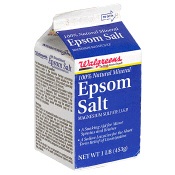
Epsom salts

You may have noticed I add Epsom salts (1 tablespoon) at the bottom of my planting hole when planting tomatoes. Why in the world would I do that? Well, Epsom salts are NOT salt at all (as we think of salt) but rather magnesium sulfate. Epsom salt is a naturally occurring mineral that originally came from Epsom, England.

The main ingredient is magnesium which strengthens the plant cell walls, helping the plant to take in nutrients. It also helps with flower and fruit production of tomatoes and peppers. The other ingredient is sulfur which has to help our very alkaline soil a little (can’t hurt). I have read where some people mix Epsom salts with ashes back east but DON’T do that here. Ashes will make our soil more alkaline which we don’t want to do. I also mix up a tablespoon of Epsom salts to a gal of water and put it on that way for established tomato and pepper plants at flowering time if I missed out at planting time. It also helps your roses. They will  produce greener, lusher foliage and more flowers with Epsom salt.

It is considered a ‘home remedy’ but has been used by savvy vegetable gardeners for many years. All my tomato and pepper plants produce abundantly and I think this is do in part because of the extra boost of magnesium they get. So relax, buy Epsom salts at your local drug store, plant your tomatoes and peppers and take a nice bath with it afterwards!

My tomatoes are in!

55 tomatoes planted May 15th!

Each year I grow a lot of tomatoes, and I need a lot of tomatoes, what with being ‘The Tomato Lady’ at the Santa Fe Farmers Market later this summer. This year is no exception. Some friends of mine, Mernie and Lynne and Elodie and myself planted 55 tomatoes yesterday! And we did it in record time. I know some time was saved with the drip system in and the holes pre-dug but still it seemed to go faster this year. We acted like a smooth, oiled machine! Mernie and I went around and put all the amendments in the holes first, then I brought out the tomatoes and Mernie and I planted them while Elodie and Lynne followed behind putting up the wall of waters and then watered the plants with Seaweed and Thrive. Afterwards, I took them all to lunch as a GREAT BIG THANK YOU! I’m going to owe them a lot of tomatoes! I still have about a dozen more tomatoes to plant (front blank bed) but need to provide more drip line for them. What a relief-I almost feel like I’m back on track in the garden! Almost..