Spring has sprung! (well almost)

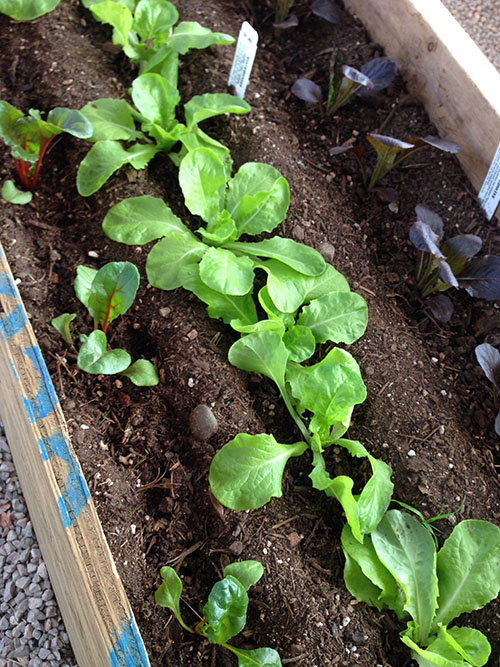
lettuce_greenhouse germinating

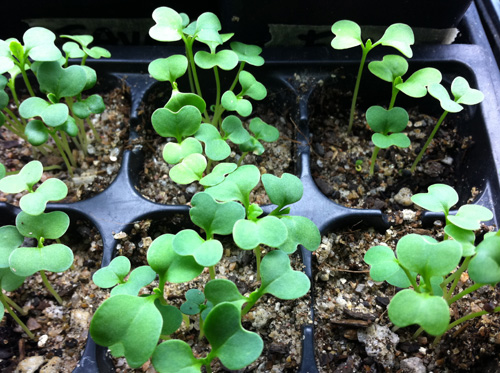
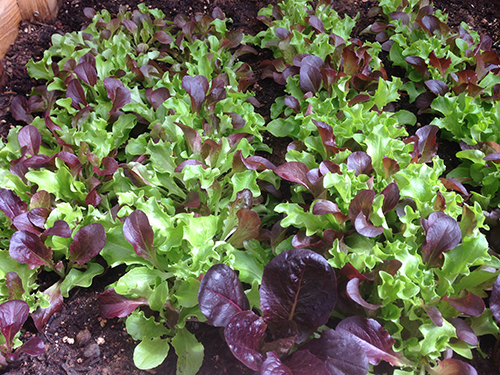
This lettuce is from Johnny’s called All-Star Gourmet Lettuce mix coming in the greenhouse.

In celebration of my FIRST CROPS coming up in the greenhouse, I’ve changed the background color on my blog back to green from winter blue. In my mind, winter is over although not officially – that won’t take place till the first day of spring on Spring Equinox on March 20 and of course we can still (will) get snow. No matter. I’m ready! I’m moving on and planting stuff (in the greenhouse). What kind of stuff? Read on to find out!

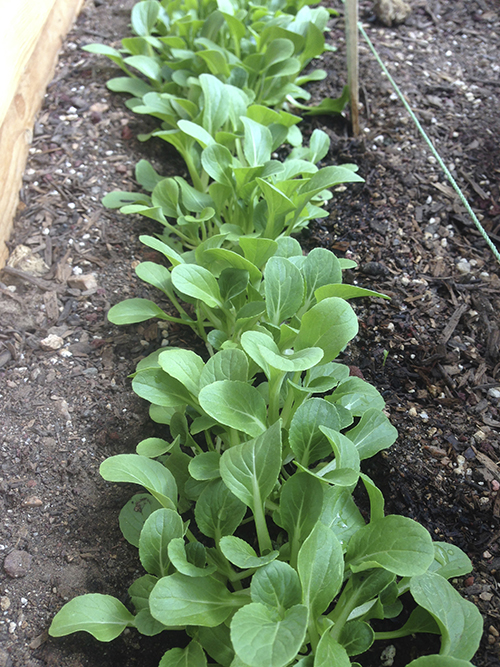
bok choy_yellow green

These are a golden yellow pak choi (shakushina) from Kitazawa. They’re already a great yellow-green color and will make a wonderful contrast to the tatsoi.

These first crops took about 12 days to germinate-they actually came up on March 1 so they were planted on Feb 17th. They are all still tiny but coming up nicely. The top picture is a lettuce mix from Johnny’s called All Star Lettuce Mix that’s suppose to grow out evenly. The second picture is a golden-yellow pak choi (shakushina) from Kitazawa. Also from Kitazawa are Pak Choi rosette (tatsoi) and white stem dwarf pak choi (both not shown). These were all recommended in Elliot Coleman’s book, Four Season Harvest (except the golden-yellow pak choi which I couldn’t resist because of the color). According to Elliot Coleman they all do well in cold greenhouses.   I have winter weight row cover over them now to protect them at night. I also planted Winter Bloomsdale spinach from Southern Exposure Seed Exchange at the same time and it’s coming up way slower but the first 2 seedlings broke ground yesterday, on March 3.

Ah, spring has sprung-and we got rain this week! What could be better?! I’m also going to plant transplants this week to see how they do in comparison to the seedlings. I’ll get pics later on that one.

Winter greens for the greenhouse or early planting outside

I can’t wait anymore! I got this newly completed greenhouse and am antsy to try it out. I’ve done a lot of research on which plants might do well in the winter and am ready to rock n’ roll! So I am planting cold hardy seeds this week inside the house. I will transplant them into my new greenhouse when they are bigger. I’m also going to try some direct seeding in the greenhouse in the raised beds like arugula, spinach, kale, baby bok choi and mache in mid-February-all of which can handle some pretty cold weather. How cold? We will see soon although you wouldn’t know it by this week. I will also plant other greens like some winter hardy lettuces, peas, and a winter hardy variety of chard called Argentata at the end of February-beginning of March. Everything planted in the greenhouse will have to have row cover over it even in the greenhouse at this early date because of our cold nights. For those of you who do not have a hoophouse, or cold frame, the seeds in the list below will do well outside only you have to wait a little longer.

Here is my list of cold hardy crops to try in the greenhouse. You can also plant these outside in March once the soil is not frozen and cover them with row cover:

From Johnny’s Seeds:
‘5-star greenhouse’ lettuce mix
‘Space’ Spinach

From Southern Exposure Seed Exchange:
‘Even’ Star’ Winter Arugula
‘Winter Bloomsdale’ spinach

From Kitazawa Seed Co:
‘Mei Qing Choi’ (dwarf pak choi)-recommended in ‘Four Season Harvest’ by Eliot Coleman
‘Tatsoi’ (pak choi)-recommended in ‘Four Season Harvest’ by Eliot Coleman
‘Golden Yellow’ pak choi
‘Astro’ arugula

From The Cooks’ Garden:
‘Red Grenoble’ lettuce
‘Forellenschluss'(speckled trout) lettuce
‘Rouge D’Hiver’ lettuce-recommended in ‘Four Season Harvest’ by Eliot Coleman

From John scheepers Kitchen Garden:
‘Argentata’ Chard-recommended in ‘Four Season Harvest’ by Eliot Coleman

From Agua Fria Nursery: transplants ready to plant
mache (corn salad)-recommended in ‘Four Season Harvest’ by Eliot Coleman
endive-recommended in ‘Four Season Harvest’ by Eliot Coleman
‘Winter Wonder’ lettuce
‘Marshall Red’ romaine lettuce

Fall Vegetable Planting Schedule

Fall harvest. We only wish our gardens were this GREEN! Photo courtesy of http://gardening.ktsa.com

Ok, so now since it is time to plant my fall veggie garden, here is my planting schedule

FIRST-WHAT TO PLANT AND WHEN

Depends a lot on what you like to eat. Below is MY list of what I want to plant for a fall garden. Some of these are already growing in the summer garden and will be ready to harvest soon like the carrots and beets so I must decide if I want more in the fall.  All of these planting dates are estimates depending on the variety you grow and are based on planting outside, not in a greenhouse. Look on your package of seeds or on the plant label for seedlings for accurate harvest times and go backwards from Oct 3 for Santa F+ add 14 days.

JUNE

Fennel (Finnochio-bulb type)-Sow seeds mid June. OPPS! Missed this. The short cool days of fall are even better for fennel than spring. You can still plant this (IN JULY) as it likes cool nights although the bulbs may be smaller since we missed it’s prime planting date.

JULY-AUGUST


Asian Greens/Bok Choi- Sow seeds mid July. Can handle light frosts. Harvest days depends on variety. Look on seed package.

Beets- Sow seeds in mid July-early August. Can handle freezes but must mulch with thick straw or row cover. 45-65 days to harvest.

Broccoli- Sow seeds early July-mid July. Can handle light frosts. 55 days to harvest.

Broccoli raab- Sow seeds in early July-mid July. Can handle light frosts. 45 days to harvest.

Carrots- Sow seeds in early July-mid August. Can handle freezes but must mulch with thick straw or row cover. 70-80 days to harvest.

Chard- Sow seeds late July-. Can handle some light frosts. Cover with row cover when it gets cold to extend season. 50-60 days to harvest

.

Kale- Sow seeds early July. The short cool days of fall are even better for kale than spring. Kale that is established will last well into winter and can survive below freezing temperatures down into the 20s.

Lettuces- Lettuce baby- Sow seeds in early-August. Seedlings will need consistent moisture and shade from the afternoon sun on hot days. Cover when it gets cold to extend season but it will not survive freezing temps. 45 days to harvest depending on type and variety.


Peas- Sow seeds in early-July-mid-July. Likes cool but not freezing weather. 60-75 days

.

Radish- Sow seeds late July. 30 days to harvest.

AUGUST


Spinach- Sow seeds early-August. The short cool days of fall are even better for spinach than spring. Spinach that is established will last well into winter and can survive below freezing temperatures down into the 20s although it will stop growing. Why doesn’t it freeze? It produces an alcohol inside-alcohol won’t freeze! 45 days to maturity.

Endive, Escarole-Sow seeds early August. The short cool days of fall are even better for these than spring.


Lettuces- Lettuce head – Sow seeds in anytime August. Seedlings will need consistent moisture and shade from the afternoon sun on hot days. Cover when it gets cold to extend season but it will not survive freezing temps. 45 to 60 days to harvest depending on type and variety.


Mesclun mixes- Sow seeds in early-August. Seedlings will need consistent moisture and shade from the afternoon sun on hot days. Cover when it gets cold to extend season but it will not survive freezing temps. 45 to 60 days to harvest depending on type and variety.


Arugula- Sow seeds in mid-August-late August. Fast growing. Can handle some light frosts. 
30-40 days to harvest.


Kale- Sow more seeds mid August. The short cool days of fall are even better for kale than spring. Kale that is established will last well into winter and can survive below freezing temperatures down into the 20s

OCTOBER


Garlic-Sow largest cloves anytime in October after the first frost. Harvest in late-June-July

Shallots-Sow largest bulbs anytime in October after the first frost. Harvest in late-June-July.

I’m 

not a big fan of kale, endive, escarole and collards, but went ahead and listed them as I know many of you like them. Cabbage and cauliflower take too long to grow for me. Forgetaboutit!

SECOND-WHERE TO PLANT


Do you have garden space close to your house for easy watering and harvesting as it gets colder? This is important to consider if your main garden is far away from your home. I have two places to plant them now. My cold frame and my raised beds up by the house. If I ever get my greenhouse done, I’ll have another great place for veggies but for now I’ll plant in my two spaces.
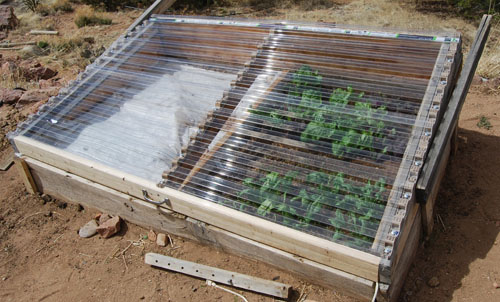
Cold frame in previous year

My first space is my cold frame up by the house. Since it is too hot now, I think I will have to put some shade cloth over it to keep plants cooler inside. Also I want to get one of those automatic vent openers that will open the lid if the temps get too hot and close it when it gets too cold.
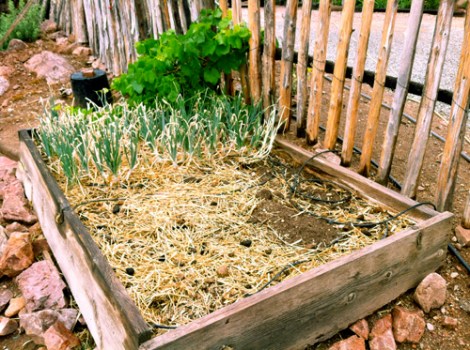
The shallots will soon be done in this raised bed and I will use it for fall planting

My second space is the raised beds also up by the house. Raised beds are great as they keep the soil warmer in the fall when it is getting cooler. Since I already pulled all the garlic in these raised beds, I will plant a few cold hardy vegetables in them and then plant garlic and shallots between them come October. The beauty of having some garden space close to the house is when it does get cold, I won’t have to walk down to the main garden to water and harvest. I can just get a watering can and go right outside the house. Also I can replace the light row cover that I keep my cool season crops under (keeps the critters and bugs away) with a heavy row cover on the beds if a sudden frost comes up. The cool season crops will be picked by the time winter hits and the garlic and shallots will sleep till spring!

What have I been doing?

I’ve been busy in the garden! It is ALMOST  finished. I have 8 more tomatoes to plant tomorrow that I forgot to get that are some of my standards at the SF Farmer’s Market. OPPS! But they will be ready in time.

Two weekends ago I had 7 friends/family help with planting the majority of the tomatoes. A great big THANK YOU to all that helped-Elodie, Flynn, Ronnie, Lava, Tom, Sharon and myself! I couldn’t have done it without you! I also have a few more flower seeds to plant by the entry. Otherwise it’s done-FINITO! Yea right-there is always something to do in the garden! Here are some of the things happening in the garden:

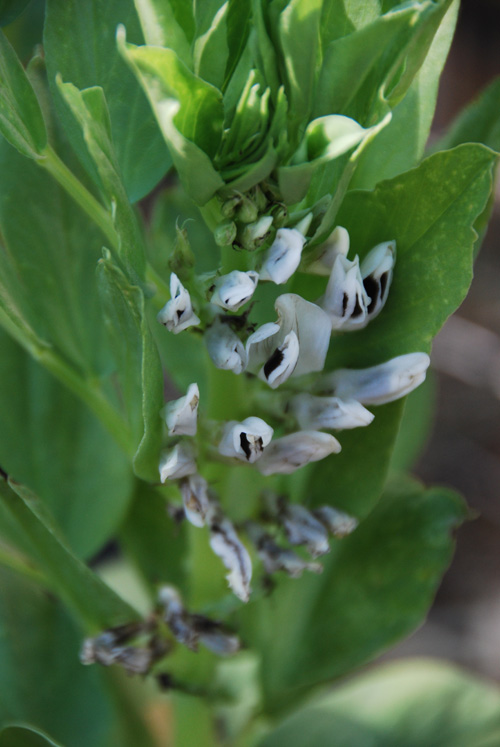
The fava beans are looking good. Here they are flowering. I like the black and white flowers. I don’t think I’ve ever seen black and white flowers on a plant before. They had some aphids so I sprayed them with insecticidal soap and they are looking better. They have baby fava beans on them now.

The beets and carrots are coming along quite nicely. They are outside the pole bean tent area and will fill in nicely

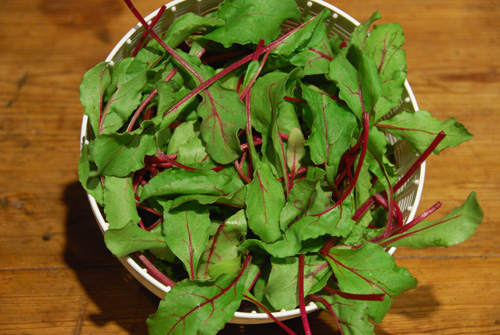
Here are some beet greens I harvested while thinning out the beets to give them room to grow. They are yummy in a salad and are so beautiful.

In the shadiest part of the garden I planted some bok choi and lettuce and have had it covered with row cover since planting to help keep them from the heat and bugs. They both are looking great. I’ve never grown bok choi before so I’ll have to research when to harvest as they are getting to be pretty big and won’t like the heat for too long.

The fennel bulbs are getting bigger and are almost ready to harvest. Maybe another 2 weeks. They also won’t do well in the heat. I wonder if they will get as big as the ones in the grocery store..

About half of the tomatoes I previously planted are growing out of the top of the wall of waters and I need to take them off before it gets too difficult.

It’s been fun growing some early stuff. The bok choi, fava beans, fennel and lettuce are more cool season crops and will have to be harvested soon because of the heat. Probably all of them will be harvested BEFORE July.

I also have potatoes that are growing through the roof, strawberries that are being harvested and rhubarb that is ready to pick but will save that for other posts.

Thinning and preparing mesclun/greens-keeping your homegrown greens fresh!

Here are my steps to thinning and preparing mesclun so it doesn’t WILT in your refrigerator. In fact you can use this method after you clean any greens in ANY STAGE from microgreens to full grown lettuce and greens from the garden or store bought.

The MOST IMPORTANT THING if you are growing any greens is to PICK THEM FIRST THING IN THE MORNING when they are fresh-not the heat of the day, OTHERWISE THEY WILL BE WILTED NO MATTER WHAT YOU DO (are you listening Lava?). During this first stage of mesclun, it is a little more labor intensive. (After the leaves grow more, you will just cut off the tops above the crowns so they can grow back and there will not be much dirt since you are not pulling these out by the roots.)

Here is the mesclun in my salad bowl I made. Notice they are very cramped with not much dirt showing. I need to thin these out so the leaves can get bigger without overcrowding.

Thin out the mesclun. The goal here is to have some dirt showing to give the remaining leaves some room to grow.

Now the mesclun (first thinnings) are like microgreens and are ready to clean. Notice the roots are still on them. You can cut them off or eat them if you rinse well. Here I’m leaving them on. Of course you could just feed them to the chickens or throw them out but I don’t like to waste them plus they are yummy! You would pay big bucks for just a tiny bit of microgreens in the stores.

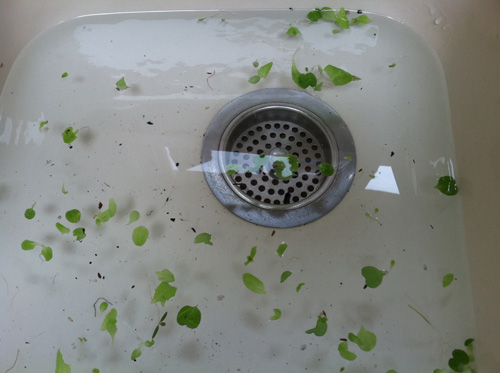
Here is the mesclun at the first rinse. I first clean my sinks out with bleach so I know they are clean. I suppose you could use big bowls to rinse instead. I filled my sink with COLD WATER from the faucet. Notice the leaves float on top while the dirt mostly sinks to the bottom. From here I gently scoop out the leaves trying to leave the dirt on the bottom of the sink or bowl and transfer them to the other side of the sink full of water for the second rinsing. By the way, rinsing this way is way easier than using a colander.  It works really well for spinach too. This way removes the dirt that can stay in a colander.

Second rinse-Notice most of the dirt is gone at the bottom of the sink after I  have removed the leaves.

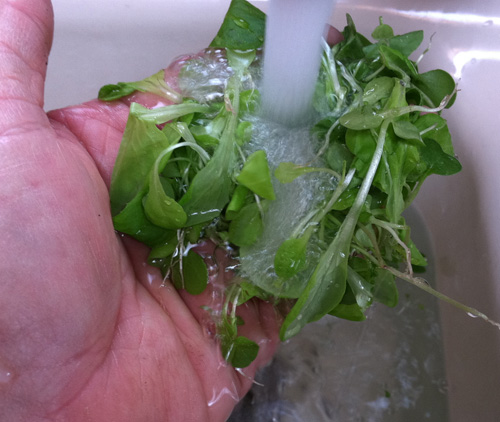
At this stage I do one hand rinse in case their is more dirt trapped on the roots. Then I put them into…

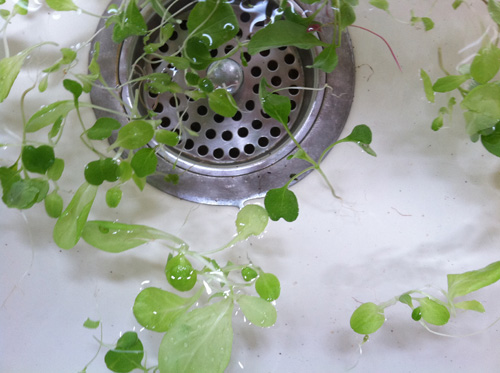
The last rinse- notice the dirt is gone. Rinse more if you still have dirt.

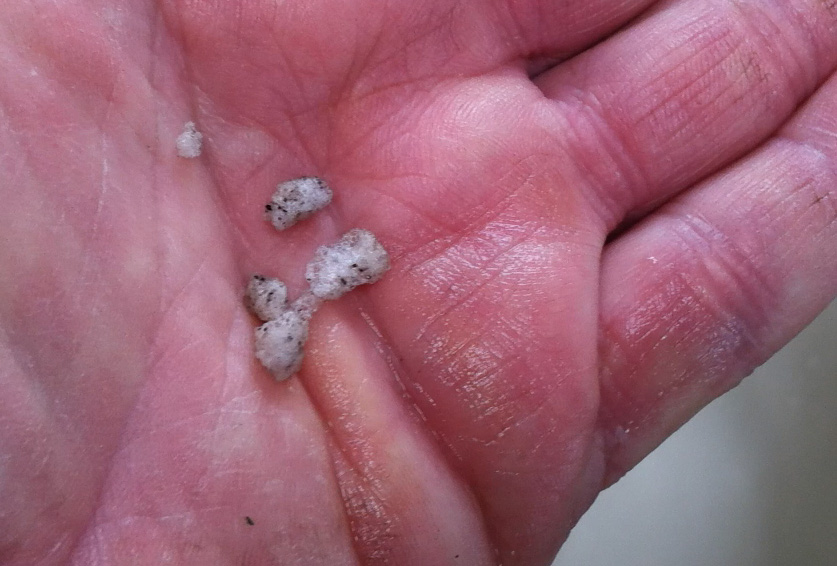
Since I grow the lettuce bowl inside, I use seed starting mix and you need to look out for the perlite that is in it as it can float in the water instead of sinking like the dirt-so be on the lookout for it. Just scoop them off the surface of the water before you do each rinse. It would be a little too crunchy in my salad!

Now the leaves are ready for the spinner. Just don’t pack it too full as the leaves are very delicate. Spin it in small batches and..

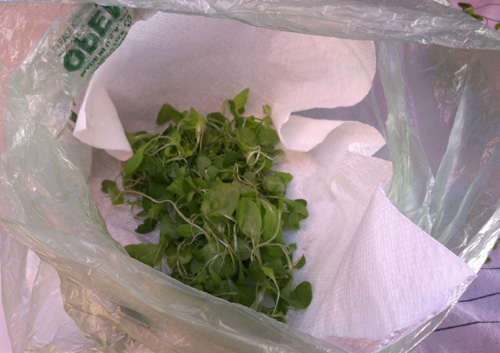
gently place it in a loose plastic bag (not ziploc) lined with a dry paper towel. Then this next trick is very important. I learned it from reading Dorie Greenspan’s book,  Around My French Table where you…

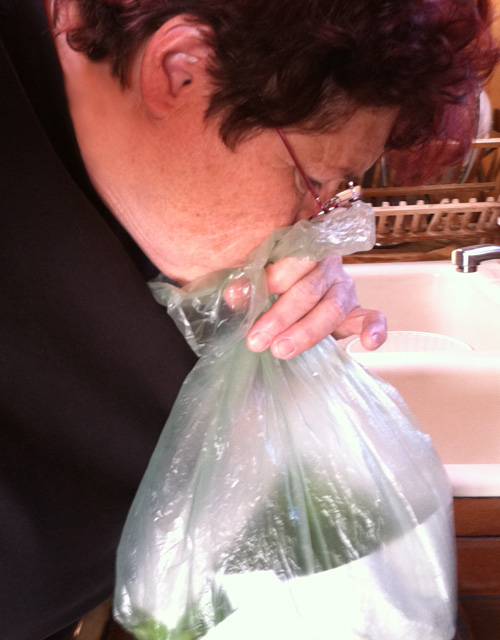
squeeze the bag so there is only a small opening and blow into the bag with your breath. This will fill the bag with carbon dioxide (which we expel) and then blow it up till it is full and..

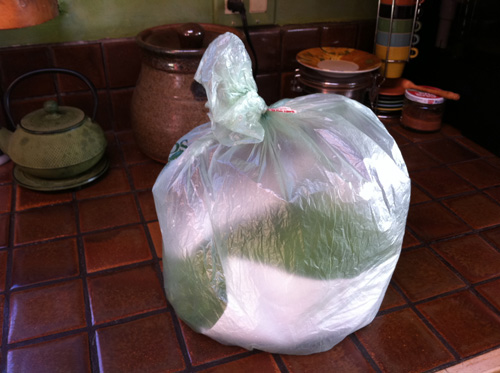
tie off with a twistie tie so the air doesn’t escape and put into your refrigerator. YOUR GREENS WILL STAY FRESH FOR ABOUT A WEEK. Be sure you blow into it each time you get some greens out before putting it back into the refrigerator again. This takes up a little more room in your refrigerator but is worth it. No more homegrown wilted greens! Pretty cool trick, huh?!

Lettuce bowl ready for first thinning

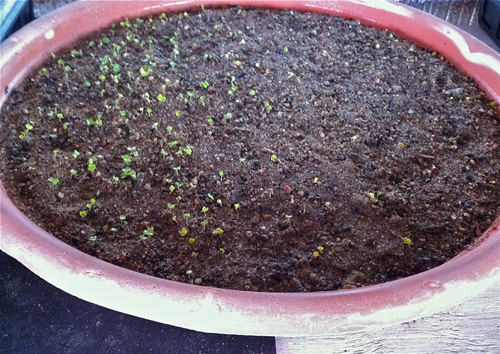
Here is the lettuce bowl I planted on Mar 7, only 13 days ago. Remember how it was barely coming up where it hung off the seed heat mat-well no more!  It is coming up beautifully. It’s so nice to see a ‘sea of green’ in the house. I will thin the baby seedlings (eating them) to give the rest of the seedlings some room to grow bigger. This is a mesclun lettuce I got from the Homegrown New Mexico seed swap event.  It is about 2 weeks ahead of the the lettuce I just planted outside. All part of trying to keep a continuous supply of lettuce for awhile. A couple more weeks and I think I’ll have a salad!

Seed starting INSIDE

I’ve been planting seeds INSIDE for a couple of weeks now. Here is my update on my seed starting endeavors this spring so far.

PEAS-Not everything is successful-My pea seeds I planted inside have NOT done well as I had hoped. They are barely coming up now inside so I planted more outside and if these make it, I will add to the other seeds that I planted outside on Saturday. I think the heating mat was too hot for them so I put them on a table under the lights but with no heat. We will see..

FAVA BEANS-I’m so excited-I’ve never grown fava beans before but are trying them this year. I sprouted fava beans that I got from that Homegrown seed swap and bought some more that I got from Spanish Table Market here in Santa Fe. The companies would like to say that the ones they sell you to eat are different then the ones they sell you to grow.  If they are treated then that would be true but so far I have not found that to be the case. They are both sprouting just fine. Today I saw three of them breaking ground in their little pots on the heat mat under the lights. Once up I will transplant them outside as they like the cold. I’ll talk about them later.

CHARD, BOK CHOY seeds planted-MAR 13-The chard and bok choy germinated in 2 days!

BORAGE seeds planted-MAR 13-Germinated in 3 days!

MORE LETTUCE-seeds planted-MAR 13-just starting to come up

SPINACH seeds planted inside as well as outside -MAR 13-Not up yet

TOMATOES-seeds planted today-Sunday, MAR 18-planted 27 different varieties! Hope to put them out 8 weeks from now-mid May or sooner. Last year I planted tomato seeds inside on Mar 21.

POTATOES-I’ve been chitting them for a week now. Chitting is getting the potato eyes to sprout.

The next major inside seed starting will be in 2 weeks-Basil, oregano, marjoram, zinnias and probably a lot more.

Time to plant spinach and lettuce

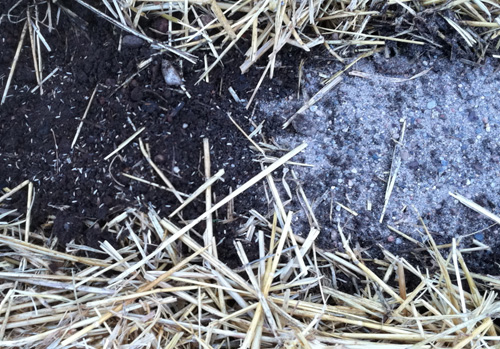
Now is the time to plant spinach and lettuce OUTSIDE as well as peas if you haven’t already done it. This year I am putting them between the rows of garlic I planted last November as APHIDS DO NOT LIKE GARLIC so I’m hoping the garlic will help keep them away from the greens this year. I took the temperature of the soil in the exposed raised bed with my compost thermometer where I want to plant them and it was 60°F. Lettuce seeds germinate best at soil temperatures of 40° to 80°F so I’m in the right range. This will be mesclun so I spread the seeds over the area as shown on the left side of the picture, then put a fine layer of sand over the seeds as shown in the right side of the picture, I planted ‘Provencal Mix’ from Cook’s Gardens and ‘Rocket Arugula’ ‘Tyee’ spinach (which is slow to bolt), and another lettuce mix with Arugula that I got from the Home Grown New Mexico’s seed swapping event we had a couple of weeks ago.

Seed Heating Mats for Starting Seeds Indoors

I did a little experiment. I started my lettuce bowl, putting seeds on the ‘bowl’ and lightly covering with sand. I didn’t have enough room to put the whole bowl on my seed heating mat (I’ve ordered another one) so I put half ON my mat and half OFF the mat as in the picture. The heat comes from the bottom. The temperature of half ON the heat mat was 77°F and the half OFF the mat was much cooler at  70°F. The half on the mat germinated in 3 days while the half off the mat had only a few seeds germinate. Amazing how the temperature affects the germination rate. Lesson here? If you plan to start seeds indoors, get a seed heating mat. Next: Review of my Seed Starting Class last Saturday.

Create your own lettuce/mesclun bowl!

What does the cat have to do with the lettuce mesclun bowl?

"Trini" the cat! Photo by Genevieve Russell

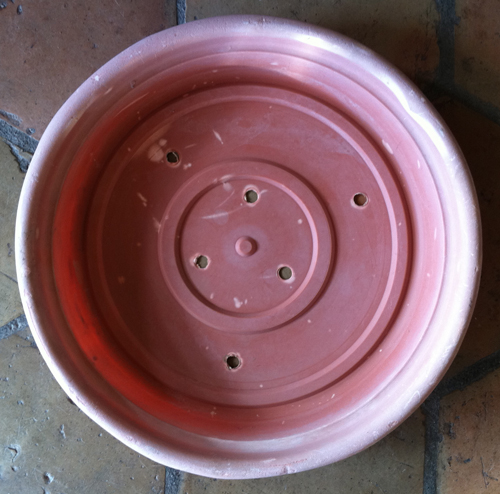
‘Mesclun’ is a term that means a ‘mixture of young salad greens’ in French. Last year I created a lettuce/mesclun bowl inside the house while it was still cold outside. I took the bottom from one of my pots (you know so that your pots don’t leak all over when you water), cleaned it with a bleach solution and drilled some holes in the bottom of it so water can drain out.

Then I filled it with some moist potting soil and sprinkled some lettuce mesclun mix all over it and gently tamped it down so the seeds make good contact with the soil. In this first picture I sprinkled sand over the half of the seeds.

Then I finish sprinkling the sand over the seeds-just enough till they were covered.

Next I sprayed the sand so it became moist with a spray bottle so as not to disturb the seeds. Then I put plastic wrap over it to hold in the moisture until the lettuce germinates. I kept it in a cool place in the house until it germinated and then I moved it by a window.

This is when I got in trouble with the cat…

Trini, "I like salad too" Photo by Genevieve Russell

Here is the lettuce bowl. Coming up nicely. Now if I could just keep the cat from eating it! She loves it! I caught her eating it around the edges by the window. I’ll have to thin it this week without her help! Perhaps I’ll have to make her a salad bowl of her own.  In another couple of weeks it should be pretty big.

Here it is ready to eat for it’s first cutting in 32 days and at $6.99/lb in the stores, it’s a deal! Harvest by the ‘cut and come again’ method and it will grow back for several cuttings. To do this, simply take sharp scissors and cut off a bunch of leaves in the amount you need to fill your salad bowl. Cut the leaves off at 1 to 2 inches above the soil. Don’t cut the crowns of the lettuce or it won’t grow back. Bon Appétit!

Lettuce bowl ready for first cutting-32 days

Baby Bok Choy

evergreenseeds_baby pak choy

So this year I’ve been getting into Baby Bok Choy and am looking for some starts as I’m too late to start from seed. Can you imagine that? Already too late to get some crops started-amazing! Anyways, I’ve tried the full size Bok Choy and like the Baby version better-more tender. I never thought much about it as a vegetable before but I bought some to try. I cut them in half and sauteed them in olive oil and then at the end, added a couple splashes of tamari and it was wonderful. So if any of you know where to buy some locally or seeds for next fall, please let me know!
Chard choices

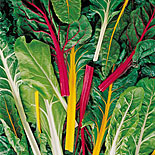
Bright lights/photo courtesy of cooksgarden.com

Now is the time to plant Chard or (Swiss chard or Silverbeet as it is called).  There are many types of chard and I would like to go over a few of them and my experience with them. Chard is a close relative of the beet and should be planted in the ground at the same time as beets which is now. It will sprout early and will not be harmed by spring frosts. Harvest the outer leaves first (usually in 4-6 weeks) and leave the center intact and it will keep growing and supply you with more throughout the summer season. It usually doesn’t flower until it’s second year-it is a biennial. For that reason, I replant it every year as it will put more effort into flowering in it’s second year and you won’t get as many big leaves. One planting will last the entire season and it will not ‘bolt’ in the heat of summer. I pull it up after the season as I rather it put all it’s energy into those big leaves. A great substitute for spinach which will be gone after spring.

Fordhook chard/photo courtesy of seedsavers.org

-The best chard I find to plant for fall/winter is Argentata which is very cold hardy even in our winter temperatures. It can withstand colder temperatures more than many other types of chard. You can get it at John Schweepers or Gourmetseed. It is a white variety with big juicy thick stems. Both the stems and leaves are delicious.

-Another great white variety is ‘Fordhook’ which is similar to Argentata and can be found at seedsaversexchange along with Rhubarb Red. You can plant this in the spring and enjoy it this summer.

I like 5-Color Silverbeet, and Bright Lights, for the multi-color varieties. The stems are not as thick and juicy as the white varieties but the color is to die for and I always plant some among the flowers to add additional color to the garden and they are good to eat as well.

Red Charlotte chard/photo courtesy of cooksgarden.com

I also like other red varieties in addition to Rhubarb Red mentioned above-Magic Red and Red Charlotte can be found at Cook’s Gardens

Try growing all these together and enjoy each one through the summer season!

I like to eat these chopped coarsely and steamed with a balsamic vinaigrette over them as a vegetable or sauteed in olive oil and put on pasta with butter along with some chicken and Parmesan cheese. Delicious!

Winter Spinach Recovered from Rabbit Damage

Spinach eaten by rabbit (funny it didn't eat the stems)-March 13

Remember the severely eaten spinach I showed last month (March 13)? Now that the cold frame is repaired I can keep the rabbits out again.  No more feasting on my spinach! While the cold frame was damaged and open to rabbits, I kept some row cover over the damaged spinach and I held it down with rocks. The rabbits couldn’t get to it and the spinach made a glorious recovery! Had spinach and cheddar omelet yesterday with it! I should be able to get more meals out of the spinach as it is doing great and we have lots of time before the heat comes and it bolts.

Spinach recovers in less than a month


Red Orach-More info and pictures

A gardening buddy of mine is growing Red Orach and I thought it would be good to see pictures of it as it is coming up. Mine just reseeded itself so it grows everywhere. It will get quite tall  (3-5 feet) if left unattended and that is how it has reseeded it self everywhere at my place. I let a few go to seed 2 years ago. That’s ok with me. I can always pull it if it grows somewhere I don’t want it to be. But don’t wait till it gets tall to pick the leaves. Pick them while they are quite young and they will be tender.

This slideshow requires JavaScript.

Red Orach (mountain spinach) and Bright Lights Chard

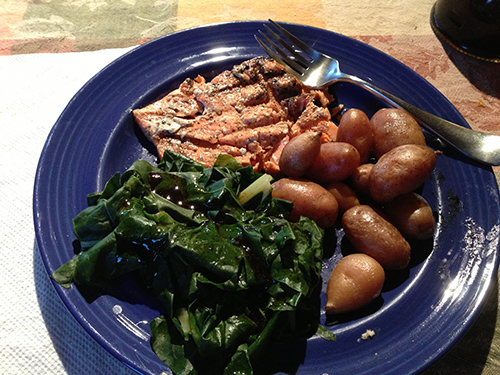
I just picked some Bright Lights Chard that overwintered in the coldframe and with the chard were a few plants of Red Orach (also called mountain spinach) that have been reseeding itself.  The variety of orach I grew came from Baker Heirloom Rare Seed company and it makes a great red addition to salads or used as steamed greens. I steamed the chard and Red Orach on top of some pasta tonight yummy. It tastes like spinach and you should pick it when it’s young and tender to eat. Red Orach really is an incredible deep magenta red color. Look how beautiful they look together!

Chard and Red Orach for dinner tonight