Wait! Not quite yet-Patience!

snow2_april 26

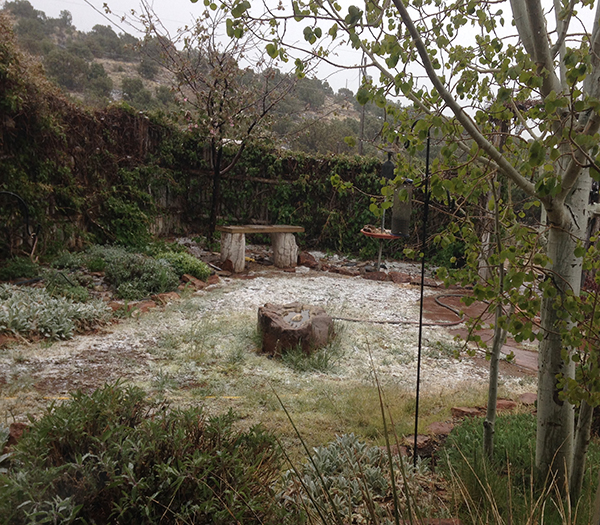
Snow-April 26, 2015!

Just when we are all chomping to get growing, here comes another snow.  Big wet snowflakes. Not surprising as we are still in April, (although late April). Yesterday I went to the Farmer’s Market to sell greens and tomato plants and I told everyone-don’t plant them yet, put them in a warm window sill, we still could have cold weather coming and here it is. Of course most of us know that the first frost-free day is around May 15th  to start planting but still I always fantasize getting everything in early and usually must wait. Wait. Wait. Wait.

Patience! It seems gardening is a lesson in patience and patience is one of  life’s lessons. We must be patient for the winter weather to end so we can put our plants in the garden. Patient for the seeds to germinate. Patient when they don’t and must reseed. Patient for the soil to warm up so the plants will grow in earnest. Patient that the crops will grow and prosper. Patient for the all elusive harvest. So keep the faith, be patient, we will be able to plant soon, not just yet.

BRRR!!! FREEZING NIGHTS TONIGHT thru THIS SUNDAY!!

220px-Old_man_winter.svg copyJust when I think that it is warming up nicely, the weather turns. Don’t be caught off guard if you’ve already planted, even cool season crops are in danger with the cold nights coming. To protect your plants, put row cover over them at night. It will add between 4-6°F protection and may help them endure the cold. You can get some at Agua Fria, Plants of the Southwest and Paynes Nurseries.


Here is the temperature (lows) forecast for the next 5 nights:

Tonight-Wednesday  29°F

Tomorrow night-Thursday 26°F

Friday night-29°F

Saturday night-28°F

Sunday night-31°F


Apple blossoms and bees

Yesterday Elodie took some fantastic pictures of both honeybees and native bees visiting the apple trees blossoms. The blossoms are in full bloom now which are gorgeous and smell heavenly but tomorrow night  (Wednesday) and Thursday night is supposed to get in the high 20’s at night which is a real bummer because the cold will probably knock off the blossoms and that will be the end of our apple season again… Meanwhile let’s enjoy these great pictures while we have them.

I call this the drunken bee-drunk on nectar!

I call this the drunken bee-drunk on nectar!


bee getting pollen on apple blossom_blog

Here’s a closeup of a bee


bee on apple blossom_blog

This honey bee has some pollen on her legs


Native bees visit the blossoms too!

Native bees look very different from honey bees

bee on apple blossom5_blog

Honey bee visits an apple blossom


Are you chitting those potatoes?

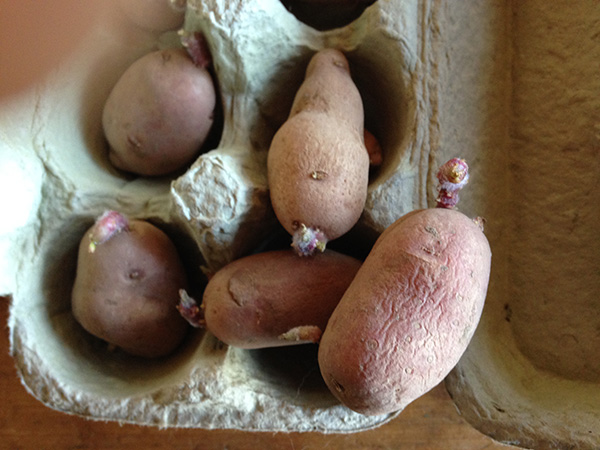
chitting potatoes_closeup

Are you chitting your potato seeds yet? Careful how you say that! You can get potato seeds at the local nurseries now if you plan to grow them this year. Potato seeds are actually smaller potatoes that you plant. Don’t use grocery store potatoes as most of them have a sprout inhibitor on them to reduce sprouting which is what we want.

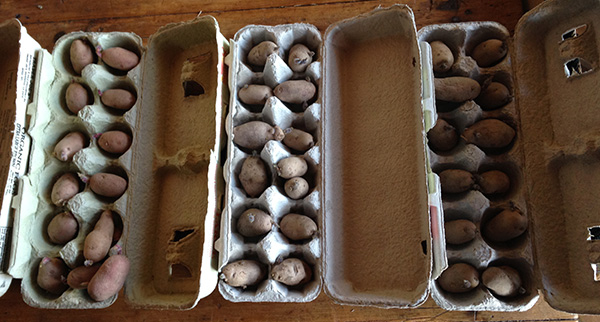
chitting potatoes

Chitting is letting your potatoes grow those little ‘eyes’ out. Put them in indirect sunlight. I use egg cartons to hold them so the eyes don’t break off. After they grow ‘eyes’, you should plant them this month-April. Chitting potatoes now will let you harvest them 2-3 week earlier when harvesting them later in the late summer.

This year, I’m growing them in ‘potato bags’ instead of a garden bed. My friend, Janet had fabulous luck with them last year-in fact she got more than I did in a raised bed so I’m trying her way this year besides it opens up another bed for me to grow other veggies in.

For more info on growing and chitting your potatoes, go to my original post ‘Growing and Chitting Potatoes’

Micro-burst wind throws new bees around

new bee

Yesterday I was planting vegetables in the greenhouse, when this huge micro burst of wind came and almost tore the window shutters off of the greenhouse. Afterwards, I inspected the shutters that were slapping so violently to see if the hinges were damaged. Luckily they were ok. Then I decided to check on the new bees we had just put into a hive on Sunday. The hive got turned almost upside down with all the topbars, bees, honey and sugar-water thrown on the ground behind it. I called Elodie and she came and together we put them back in. I tried to quickly put all of them back in because the queen was already out of her cage and I needed to find out if she was dead or alive. The queen was in that pile on the ground and luckily she was surrounded by thousands of other bees and I found her running around on one of the combs we had supplied. How lucky is that?! She looks fine and I hope she is not damaged or she will not lay any eggs. I’ve named her Dorothy after the Wizard of Oz when she and her house got thrown around in a tornado. I will check in a few days to see that she has started laying eggs, otherwise we will have to get another queen. Keep your fingers crossed that Dorothy is ok…

Windy ugly!!

wind

Today was what I call windy ugly! It is just blasting outside which is exactly what our Aprils’ are about out here in Santa Fe. I thought we might not get it this year as we’ve had beautiful weather up till today. Spring is my least favorite season because it almost always is windy-really windy and the wind makes me crabby! I read that is because all the positive ions the wind whips up. Negative ions (like when it rains make us feel good and positive ions make us crabby!)

One year, about 11 years ago, the roof blew off my hay barn-literally the roof just lifted up-all 14′ x 24′ of it and landed on my neighbor’s property. When it hit, it left a 12″ deep dent where it hit the ground and exploded from the impact as pieces flew everywhere. Luckily nothing was damaged-no people or property. Just before the event, Elodie and I were down at the barn tightening up any screws on the roof (she was holding the ladder and I was on top of the roof and I had just gotten off the ladder when the wind came up and up and up. Elodie said “Well, this will be a good test” when a 70 mph micro-burst came into the barn, we heard a huge rip as it tore the roof off and the thing flew up in the air like one giant kite. Made me think of Dorothy in the Wizard of Oz when her house was lifted in the air. Elodie said, “That could have been you! You were just on the roof!” to which I chanted, ‘It wasn’t my time! It wasn’t my time!

PS: When I rebuilt the roof I put hurricane ties on the rafters so hopefully that won’t happen again. Today reminded me of that windy day!

Cool Season Crops Outside class a success

giant veggie gardener's avatarHome Grown New Mexico

illustration MG of middlesex countyWell, it looks like many of you are chomping at the bit like I am to get out and start our gardens! 48 people signed up for the class and 45 showed up! Biggest class ever and what a great day it was to get out in a garden and see how to prep the garden beds, go over what plants do well here in Santa Fe and we actually planted some cool season crops-lettuces, kale and chard in Duskin’s plot at Milagro Community Garden. Thanks to all for supporting the class, it was good to see our friends.

Here are the handouts if you missed the class:
Starting Cool Season Crops Outside
WINTER:EARLY SPRING HARDY VEGETABLES
soil temperatures for veggie seeds
PRESPOUTING SEEDSStarting Cool Season Crops Outside
Mycorrhizal benefits

The next class of ours should be fantastic -Making Chevre and Feta cheese on April 19! Don’t wait too…

View original post 32 more words

Scarab larva grubs or cutworms?

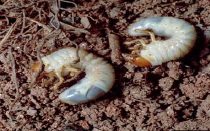
scarab-beetle-larvaeI just got done with a my Growing Cool Season Crops class today and someone asked about those white grubs in the soil when they were turning it over. So I dug out this post I wrote in 2012 about what are those white grubs in the soil. I told the class I would put pictures up of the grubs and cutworms so you can know how to ID each of them. One is harmless and the other can be a real problem. Read on.

This time of year when you are adding amendments and turning your soil, you may notice some white fat grubs with brown heads. I noticed they were in soil that I heavily amended with horse manure and would freak out when I saw them. I took all of them (sometimes a lot) and give them to the chickens. I use to think were cutworms but they are not.

They are Scarab beetle larvae and will NOT harm your vegetable plants or vegetable roots. They are also known as the ‘dung beetle’ larvae. In fact they are beneficial because they help break down the manure by eating it, hence you will find them where you use manure. Just leave them alone as they are kind of like worms, adding nutrients to the soil as they process the manure. I have never seen any damage to vegetables but if they are in your lawn (what lawn?! LOL) they will eat grass-roots (but not vegetable roots).

cutworms

On the other hand, here is a picture of cutworms which are HARMFUL to your plants. They come out of the ground at night and chew the base of your transplant stem off leaving you with a decapitated plant (so to speak). They attack baby plant stems because they are tender. After the plants get older, they don’t bother them. If you see these, get rid of them.  I look for them in the soil around the hole I dig just before I put my transplants in the ground. But there is something else you can do to protect your plants.

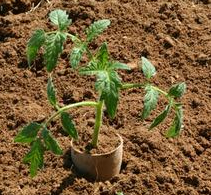
You can protect your plant by putting a ‘cutworm collar’ around your newly planted transplants. I use a paper towel roll or toilet paper row  cut into 2 inch increments. I cut the tube lengthwise to get them around the plant stem and tape the cut seam.

Then I sink the tube about 1 inch into the soil. They won’t crawl up the tube. After your plants get a little older, take the tube off-they only like young stems. In this picture the collar is filled with dirt but I just leave the collar  on without filling it with dirt.

The pullets are laying!

I got 5 new pullets in November from my friend Mike Warren who raised them from chicks and sold them to me as pullets once they grew up enough. Their names are Sophia, Odetta, Rosa, Nina and Alice

pullet eggs Mar1

This way they would be ready to lay in spring and  are starting to do so now. The pullets were big enough that we didn’t even have to acclimate them to the older hens. The old girls accepted them right away.

pullet egg vs reg eggNotice when pullets start laying, their eggs are smaller than adult eggs

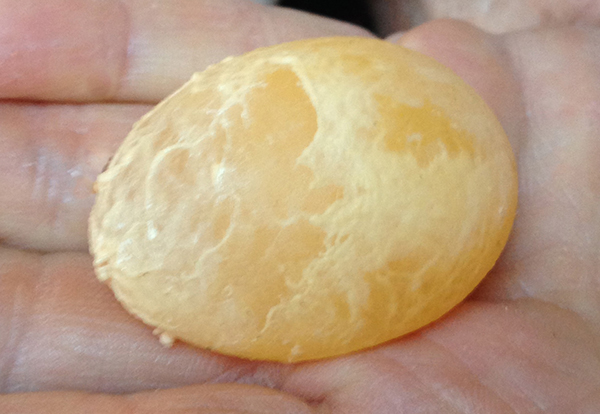
shelless egg

and sometimes in the beginning, they don’t even have hard shells!

The original girls

I still have 5 older hens that are 10 years old this year! They had stopped laying several years ago except now that the new ones are laying, 2 of them are laying again! They have remained pets since their laying days.

 IMG_5348What does BT the cat have to do with chickens? Nothing, he just loves his chicken!

2015 Santa Fe Seed Exchange

hg-seed-exchange

Santa Fe Seed Exchange-TODAY!
Tuesday, March 10, 2015

If you are looking for seeds and ideas for your vegetable garden, come to the Santa Fe Seed Exchange on Tuesday, March 10, 2015 from 4 pm-7 pm in Frenchy’s Barn on Agua Fria and Osage Ave. The City Parks Division and Home Grown New Mexico are hosting this event for all community gardens, school gardens and home gardeners. Agua Fria Nursery donated over $750 of seeds so there are plenty of seeds available. Come even if you do not have any to share. Bring flower, herb, vegetable and other seeds if you do.

The Santa Fe Master Gardeners will be at the event with an “Ask a Master Gardener” table for gardening questions and will have seed starting handouts to give away.

SB_BusinessCard_Back_photoThe SeedBroadcast organization will have their seedbroadcasting station to answer questions about saving seeds and seed story recording equipment.  Tell your story about the seed, where you got it, how you planted it and more.  See their website for stories across America.

Poki from Gaia Gardens and The Tomato Lady will be there with seeds also.

If you have questions, please contact: homegrownnewmexico1@gmail.com  or leave a message at 505-983-9706 and we will return your call.

Garlic in February!

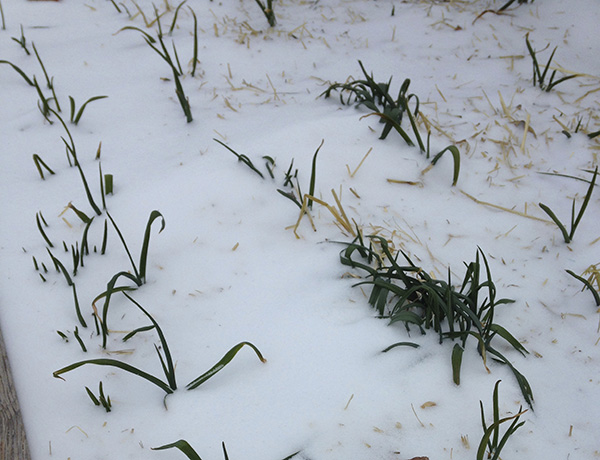
garlic in febThe garlic is starting to come up nicely, even through the snow. I believe it wakes up when the daylight hours get long enough. By planting garlic in the fall, you’ll get larger bulbs and will be able to harvest earlier in the summer. I planted it in late October and put straw over it to protect the bulbs from winter. Looks like it worked! The straw keeps the bulbs from freezing and the snow can melt through it and provide moisture. Didn’t even have to water it this winter. Such an easy crop to grow and fresh garlic is the best!

Lettuces to grow in winter

lettuce-jan 16, 2015

Here is some lettuce I harvested from my unheated greenhouse on January 16th! I’ve been experimenting growing some cold hardy lettuce varieties (Winter Wunder and Marshall Red Romaine) this winter.  I told you I would report back and here is my first harvest. I find it amazing that they survived some very cold nights 6 to 8°F (-14 to -13°C for my European friends) in the greenhouse with only some winter weight row cover over them for added protection. I planted them from transplants instead of seeds in November so they had a good head start. It’s really fun to see something ‘green’ growing this time of year and yummy too.


Starting COLD HARDY VEGETABLES Super Early

lettuce_greenhouse germinating

So now that the Persephone period is almost over and the magic date of January 15th is upon us, what does that mean? It means our day lengths are getting longer and January 15th is when we start getting 10 hours of daylight that will continue to get longer every day. Have you noticed already it now gets dark around 5:30 instead of 5 pm? The darkest time of the year is over. What does that mean to gardeners? To learn how to start cold hardy vegetable seeds super early outside and how also how to start them inside read on.

STARTING COLD HARDY VEGETABLE SEEDS OUTSIDE: cold frme opened
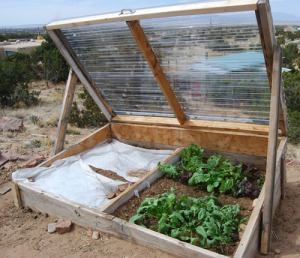
If you want to try growing cold hardy vegetables outdoors at this time of year, you will need a cold frame, low tunnel or hoop house.

If you already planted cold hardy vegetables late last fall in a cold frame, low tunnel or hoop house, you may have noticed that the little seedlings haven’t been growing much at all as winter set in. Now with longer daylight hours, they will start to grow again and barring any devastating freezes, they will continue to grow and you can get cold hardy crops earlier this spring.

In late winter, before you have harvest your winter crops, decide what you want to plant in your bed once space opens up in your cold frame.  As the end of the Persephone period draws near (January 15) , you can re-seed the openings created from your harvesting or you could start planting seeds in your bed if you don’t have anything growing. My soil in my unheated greenhouse is at 40°F right now (as of January 12). Lots of cold hardy vegetables germinate in cold soil.  They will be slow to start at first but they will start as your soil warms up to 40°F and warmer. Now with the day light getting longer, you can think about starting early. The winter sowing you do will be ready for harvest by early spring, often long before the same crop when grown outside without protection. A bonus is many of the cold hardy winter crops don’t like our springs, bolting on the first few warm days so you’ll be able to harvest that spinach before it bolts!

Some cold-hardy plants planted inside a cold frame, low tunnel or hoop house can tolerate a hard freeze at night, provided they are allowed to thaw during the day. The plants must be completely thawed before you harvest them. In addition, put some winter row cover over seedlings at night to give them an additional 4-6°F protection even though they are already in a cold frame, etc. Remove the row cover on days when it is above freezing. Watering is necessary to get crops started, but they will generally need very little water during the winter season-early spring once established.

STARTING VEGETABLE SEEDS INSIDE:
I’ve already written about starting seeds inside on many earlier posts.
To learn all about starting seeds indoors to get a head start go here:
https://giantveggiegardener.com/2012/03/08/starting-seeds-inside/

WINTER HARDY VEGETABLES
The following list of winter vegetables to grow is from ‘The Winter Harvest Handbook’ by Elliot Coleman. These can be planted either as transplants (first started inside under lights) or outside as seeds in cold frames, low tunnels or hoop houses.

Asian greens-Tatsoi, Pak Choi (Mei Quing Choi), Mizuna, Tokyo Bekana,Komatsuna

arugula-Astro, Sylvetta

beets-Red Ace, Merlin, Touchstone Gold

beet leaves-Bull’s Blood, Red Ace

carrot-Napoli, Mokum, Nelson

chard-Fordhook Giant, Ruby Red, Argentata

claytonia

endive-Bianca Riccia

leek-Tadorna

lettuce-Red Saladbowl, Tango, Rex, Rouge d’hiver

 mache-Vit

minutina

mustard green-Toyoko Beau

radishes-Tinto, D’Avignon, Cherriette

scallion-White Spear

sorrel

spinach-Space

turnip-Hakurei

watercress
2014 garden-then and now

long shot of garden

Winter Gardening

greens

Here is a great read from our friends over on Home Grown New Mexico from Mike Warren. It is on ‘The Persephone Period’ What is the Persephone period? It is about winter, the short days in this season and the amount of light plants need to grow. Even though the shortest day of the year is upon us and the days will start getting longer, it is still too soon to start planting outside or even in greenhouses or hoophouses. Be sure to read the article about this interesting time we are in right now.