The beginning of Pharmacies-medicinal plants

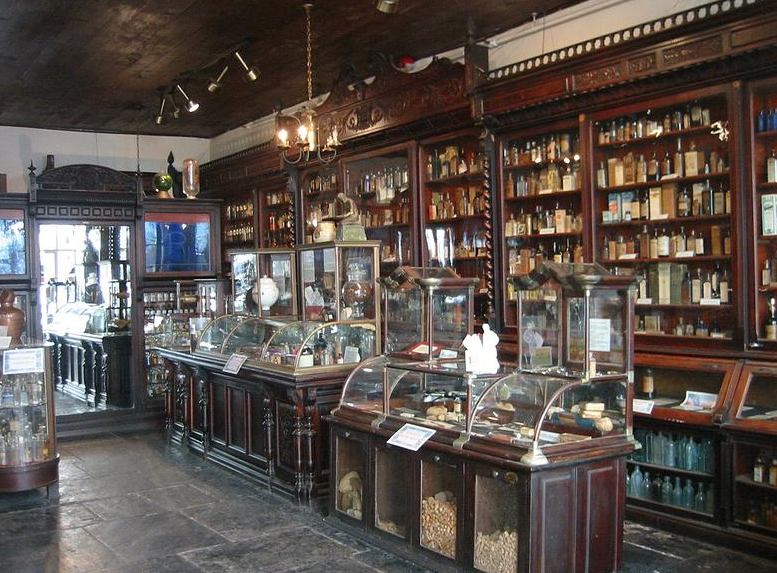
New Orleans Pharmacy Museum

New Orleans Pharmacy Museum

This past fall I took a trip to New Orleans and while there took a tour of the New Orleans Pharmacy Museum where a pharmacist, Louis J. Dufilho, Jr. was the first to pass the national licensing examination in 1804, therefore making his pharmacy the first licensed United States apothecary shop. What does this have to do with plants-everything because as I toured the museum what became clear to me was the pharmacies of old were nothing like our current pharmacies where chemical drugs are sold to help heal aliments. The cures of yesteryear were plant-based and although some of them I’m sure didn’t work, I’m just as sure many did. So I saw the original ‘drugs’ that came from medicinal herbs and plants, not chemicals, and I saw things in a whole new way. Now I’ve known of some herbs that help with various aliments but never really connected the dots until I took a tour of that pharmacy. Gives me a whole new perspective on pharmacies and their beginnings. Sometimes going forward means looking backwards to see where we came from.

And speaking of pharmacies, soda fountains became popular in pharmacies where sweet syrups could be mixed with carbonated water and herbal concoctions to hide the bitter taste. Coca-Cola, one of the most famous fountain drinks, was invented by an Atlanta pharmacist, John Pemberton in the late 19th century. It was intended to be used as a medicine. Coca-Cola’s name came from its two ‘medicinal’ plant ingredients—coca leaves and kola nuts, hence the name. Coca-Cola originally had some cocaine in it from the coca leaves although no one knows how much as it’s recipe was and still is a secret. Coca-Cola was completely cocaine free by 1929 being replaced with caffeine. For more of this interesting story go here: http://www.snopes.com/cokelore/cocaine.asp


How to use my gardening website

apricot blossoms

Many people have contacted me about what’s going on in their vegetable and fruit gardens in the high desert of Santa Fe, New Mexico or in Zone 6a throughout the seasons and have particular questions. Feel free to write me but I want to go over how to use this website to your greatest advantage. Every few days I post something about what’s going on in the garden, or garden stuff I want to share. One way is to just go backwards (scroll down) and read them. But let’s say you have a question about growing tomatoes. You could go backwards which would take you forever as I have over 650 posts on various subjects (so far) but another faster way would be go over to the right hand column of this blog. From there:

Go down to ‘GARDEN TOPICS’ and scroll down to whatever interests you (in this case tomatoes) from starting tomatoes from seed, to garden hints, or all the way down to tomatoes in the vegetable section. That way you can cut out subjects that aren’t interesting for you. (What?)

Another thing I like in the right column is the ‘ARCHIVES’  section where you can read my posts for a particular month and even for a particular year. I use this a lot for myself as I look up when I planted something in previous years, or other info I want to review again for a particular month.

Another section is called, ‘PAGES’ which you can access from the right column or on the top menus on the blog. I think this is a great resource as you can look up the page for catalogs I like to get, my garden plans for each year, my seed lists of what I’m planting that year, classes I may offer,  films I’ve made from my Youtube channel-giantveggiegardener, Santa Fe Extension Master Gardener’s radio show, ‘The Garden Journal’ where I talk about what to do in the vegetable garden each month. and even the about me page with info about me and this website (if you care to know!)

So next time it’s snowing or cold and windy outside this winter, take some time to catch up on what’s going on. I know I do!

Final Clean Up in the Garden

Nick unloading manure

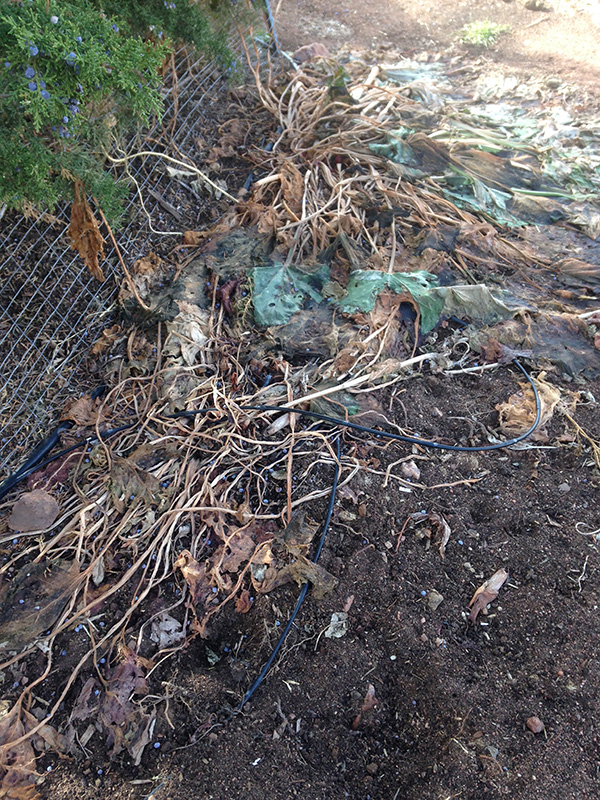
I’ve now cleaned out most of the beds except where the gourds are, the kale bed and the 2 perennials in the garden.

gourds in wheelbarrow

The gourds are drying nicely and I picked some of them this week. These are African Bushel Gourds.

rhubarb in dec

The 2 perennial plants in the garden have gone to sleep-the rhubarb and the strawberries. I will cover the rhubarb crowns shown above with straw (they look dead but they are not).

strawberrys in Dec

I will put row cover over these strawberry plants as I don’t like raking out straw from the strawberries in the spring-too much work. It is much easier to just uncover them. Look how the leaves turned red.

Since the kale is still alive, it is covered with row cover for now. I expect it to die too once we get really cold at night again.

nick closeup

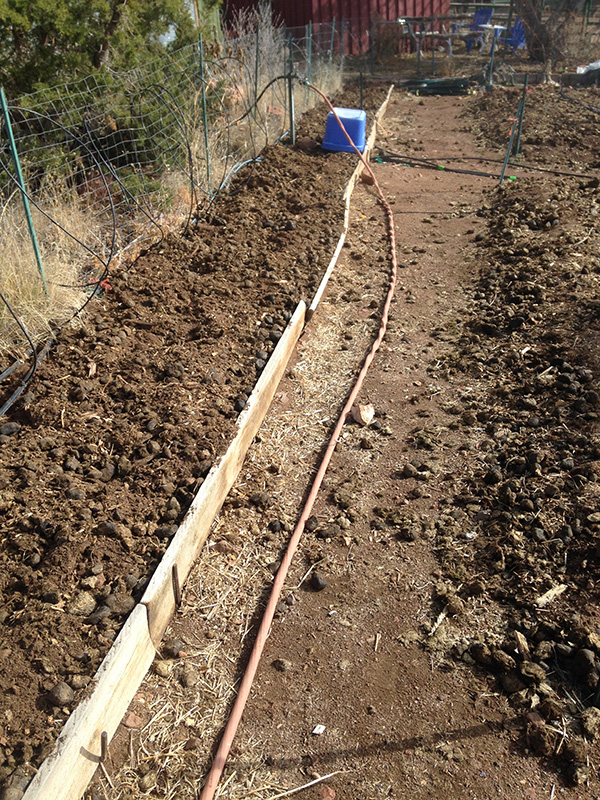
My friend Nick and myself put 2 huge trailer loads of horse manure on all the beds after we cleaned them out of the dead plants  in November.

beds finished

Then we lightly turned the manure over in the soil to add more organic matter to the soil as shown above. This will break down over the winter and be ready to plant by spring. Yea! Because of him I actually got all the fall clean up done! Finally the garden can go to sleep and maybe me!

Cold Damage on Winter Crops

garden dec 9 2014

Well  here it is in early December and not surprisingly, most of the outside crops in the main garden, ‘bit the dust’ as they say—died. A few are still alive. It is warmer now—here are the results of those cold snaps we had.


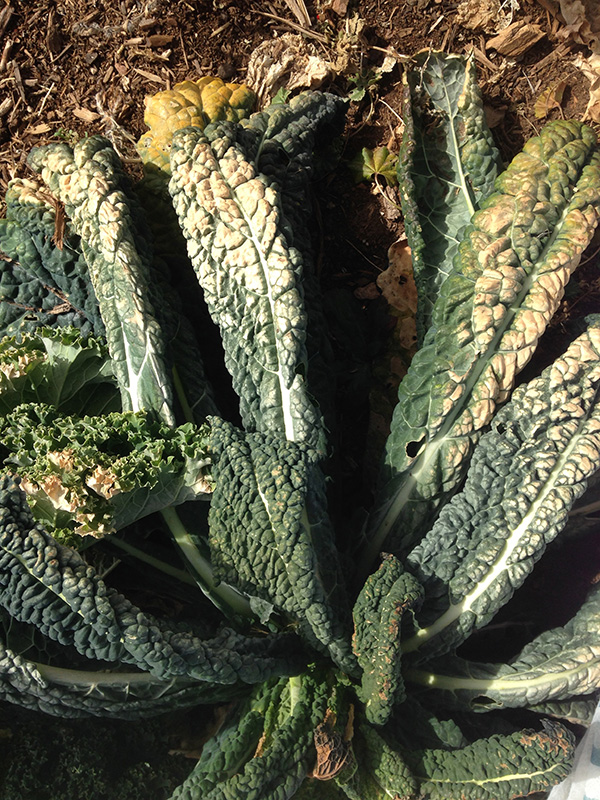
The Toscano Kale with freeze burn. It is more sensitive to cold temperatures  than other kales

Toscano Kale

The Toscana (aka Lacinato or dinosaur) kale got severely damaged. It is cold sensitive and although it’s not completely dead, it is unharvestable. Here it is with the leaves burned from the cold.


Russian Red kale is still alive

Russian Red kale


The Russian Red and Curly Leaf kale are still going and have some damage as well but the new growth is doing well. I haven’t watered them at all-nature has with a little snow and a nice rain the other day- almost an inch. I do have them covered with 2 layers of winter weight row cover.

gourds in field

The gourds are still drying in the field. Some are starting to get lighter in weight so I will put those in the garden shed to finish drying. The rest will stay outside until they dry more.

bubble wrap down on windowsThe green house is button up fairly tight now with just a little venting at the top panels. I’ve put the bubble wrap on all the windows (bubbles faced to the window) for extra insulation. I’ve also put the 4 barrels with water in them on the north wall for them to absorb heat in the daytime (I took them out during the summer), releasing the heat at night (the theory is that the sun which is lower and further to the south will hit them on the north wall and warm up in the daytime). I’m not sure I have enough barrels to do much good but even one degree will be helpful once it gets cold again.

winter lettuces

I’ve planted 2 winter lettuce varieties in the green house as transplants back in early November. The cold hard varieties are a green variety-Winter Wunder and a red variety-Marshall Red Romaine. They both have made it so far through those cold snaps although they have slowed down in growth because of the shorter daylight hours. They will stop growing until sometime in January when the daylight hours start to get longer.  Winter Wunder is my favorite lettuce but only grows well during the cold months. When it starts to get even a little warm, it will bolt. The lettuces have 2 layers of row cover over them at night and have some protection from the unheated greenhouse (at least from the winds). I’ve also noticed that the lettuces don’t need a lot of water now (about once every 2 weeks). It will be interesting to see if they make it Dec-February. Don’t they look wonderful in the winter!

There has been about a 4-7°F difference between the greenhouse temperature and the outside temperature at 7 am in the morning when I check everything. When I add the row cover at night I get about 4-6 degrees more protection. I’m not sure what to expect this winter since this is my first December-January  in the greenhouse. Last year when we finished up the greenhouse I start planting on February 17th so now I will see if these established greens can survive Dec-Jan.

Hey, there’s snow on my blog!

Hey, there’s ‘snow’ floating across my blog which is more than I can say in the garden. Right now just a gentle rain outside which is wonderful. I went and changed the background color on my blog to ‘winter blue’ and wordpress gives us the option of having ‘snow’ on our blogs till Jan 6th. If you move your cursor around the snow changes directions! Cool! I actually think they should have it till February cause it will still be icy cold here through then! Enjoy!

Fall garden clean up-slow and easy

Nov tomatoes

Fall is a wonderful time of the year. The pace slows down for us gardeners. The perennial plants are looking sleepy now as am I, ready for our winter slumber. I want to prune the plants as they are shaggy but don’t dare as pruning now could kill them with these cold nights.

Just about everything is done. The outside beds have been cleaned up and I only have a few more beds to put horse manure in. I cut the smaller sunflower heads (with all their seeds) and laid them on the ground for the birds – they’re  crazy for them. I just planted garlic before the cold snap and watered it and covered with straw for the winter so it will get a head start before next spring. The herbs will get compost and straw over them to help see them through the winter. I’ve built 2 big compost piles that are hot (140-150°F) that should be ready by next month but will be saved till next spring for the beds. I still have some gourds left in the field, hoping they dry ok. Gourds are always iffy about drying properly especially with our winters, at least for me. I’m waiting for them to get lighter (in weight) before I take them out.  And most important, the plants and trees have been watered since I turned off the drip systems. All this sounds like a lot and it is, but I have the luxury of taking my time now.

The only tomato plants left were in the greenhouse and froze this last week with the 13°F nights. I had finished buttoning up the greenhouse before the arctic cold blast hit but it still killed the rest of the tomatoes as the greenhouse is not heated. I’ve already planted cold hardy lettuces in there which I can harvest in December and they made it through the cold blast with some winter weight row cover over them. I put a coffee pot in the greenhouse for me when I tinker in there. Perfect! The greenhouse will be very warm in the daytime and pretty cold in the nights which is always a challenge with unheated greenhouses in winters.

The goats, horse and chicken water heaters have been turned on and fixed after discovering one of the heaters was not working. The old chickens get a heat lamp to keep them warm at night. The bees have been readied for winter. The barn cats which never came in the house last year are now coming in the house at night which is such a relief. We are ready for winter here at the little farm. Can’t wait to read a good book by the fireplace when it’s cold outside.

And lookee! I still have tomatoes in the house and here it is-Nov 15th! I will relish each one now as I won’t be getting any homegrown for a long time!


Glass Gem corn colors

Glass Gem corn 6

Glass Gem corn 6

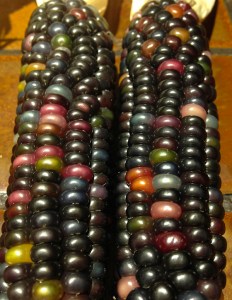
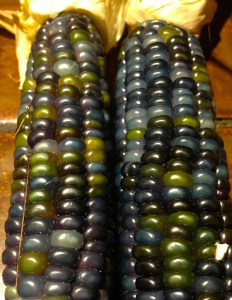
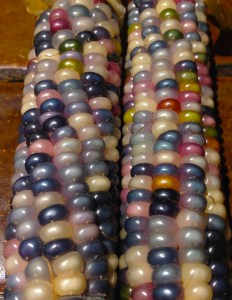
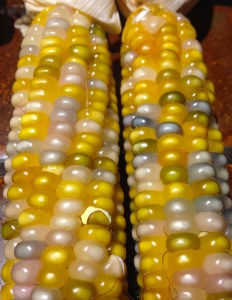
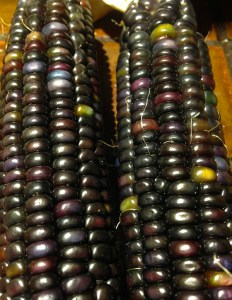
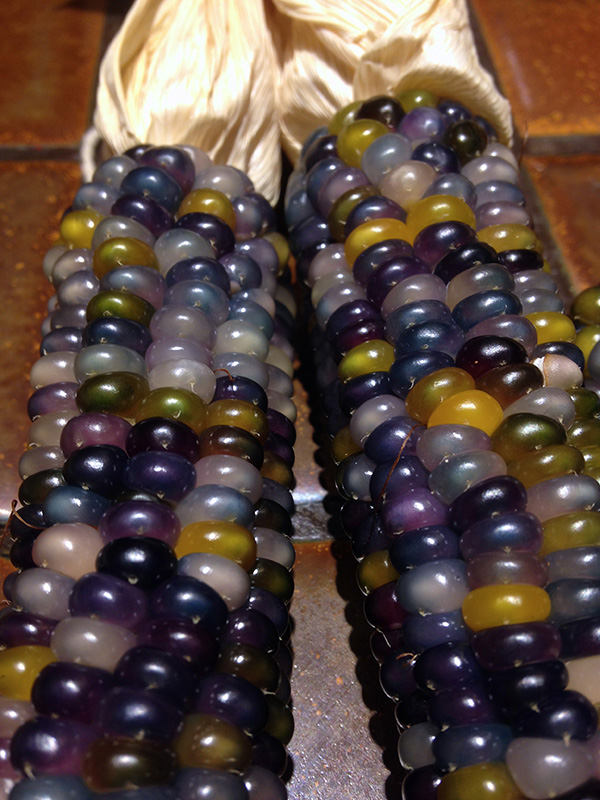
I planted some Glass Gem corn seeds this year from Native Seed Search in AZ and grew them out. For the last 3 years I’ve tried to buy this seed but it was always sold out so I was excited to try them this year. The range of colors is incredible. Opening each ear of corn was like Christmas because you wouldn’t know what colors would be inside.  Many of the colors look like little glass pearls hence the name and some look less pearlized but all are stunningly beautiful. An interesting note is I noticed in the packet that some seeds had color and other seeds less color and it didn’t seem to matter when they grew out but maybe that’s because no one has tried to isolate particular colors yet.

I know the seeds are pure because I didn’t grow any other corn this year and all my neighbors don’t have any veggie gardens for wind cross-pollination. I am saving the seeds and will sell them by the color next spring. Of course there is no guarantee that each kernel of corn will even produce its particular color because of its unique genetics (just because you have blue eyes doesn’t mean you will produce a child with blue eyes-it depends on your genetics and the one you mated with). I’ll let you know next spring how you can buy some of them.

I’m going to take my favorite colors next year and replant the seeds and label them to see if they grow back out to that color. Great project for a Master Gardener, don’t you think? Of course I’ll have to isolate them or cross-pollination will happen for sure. I might call upon a few of my gardener friends to grow one particular color in their garden with no other corn-growing there to see what happens. This will be an interesting endeavor.

There were 15 different color combinations with some producing very limited colors due to just a few ears having those colors and some have a lot of ears with a particular color combo. Some I won’t even sell because there aren’t a lot of seeds with a particular color.  So here are the colors. Check out these beauties!

Different Types of Corn


Glass Gem corn

Pictured above is the Glass Gem corn I grew this year-it came out in many different colors not just these. I’ll write more on the different colors in another post.


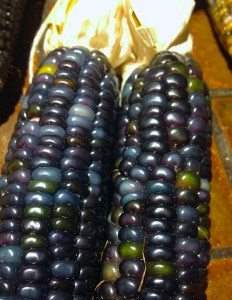
Hopi Blue corn

Here is the Hopi Blue corn that my friend Jody grew. Notice the kernals shrunk.

When they dried they looked very different from each other as shown above. I thought maybe it was the way we dried them. Perhaps we dried them differently. The individual Hopi Blue kernals shrunk while the Glass Gem kernals retained their original shape. All this led me to wonder about the different types of corn I’ve hear about – dent, flint, sweet, flour and popcorn and what makes them different. So here’s what I found out.

Dent (Zea mays indent) – Dent corn is called ‘field’ corn and is used for livestock feed or in processed foods. It is usually white or yellow and contains both hard and soft starch. It becomes indented when mature. Field corn contains 4% sugar.

Flint (Zea mays indurata) – Flint corn is called ‘Indian’ corn and has a hard outer shell and is hard inside as well. The kernals are very hard, sort of like flint stone, hence the name flint. It comes in a wide range of colors. Flint corn is commonly used for decorations.

Popcorn (Zea mays everts) – Popcorn is a type of flint corn. It has a soft starchy center and a very hard exterior shell. When we heat it, the moisture inside the kernal blows up to become popcorn.

Sweet (Zea saccharata or Zea rugosa) – Sweet corn is the fresh ‘corn-the-cob’ type of corn we eat. It is also canned and frozen and contains more sugars than other types of corn. Field corn has 10% sugars in it but will convert to starch quickly if not eaten soon after picking. That’s why my grandmother use to send us kids to pick the corn right before we put it in boiling water before dinner!

Flour (Zea mays amylase) – Flour corn is used for baking. It is easy to grind because of its soft center. It is mostly white, but can come in other colors like blue corn. It is one of the oldest types of corn grown by Native Americans.

So when I looked them up, I discovered the Hopi Blue corn is a flour corn and the Glass Gem corn is a popcorn which is type of Flint corn. That explains why they look so different.  The flour corn kernals are softer so they shrunk more while the flint corn kernals are hard and retained their shapes. Another ‘ah ha’ moment for me!

Nov. 4, 2014-First HARD freeze in the garden

cold-clip-art-clipart-coldthermometerUnbelievably I haven’t had a HARD freeze here until last night. In October I had 2 nights where it was barely freezing and those did do some damage (nothing too severe) in the garden but we haven’t had a really HARD freeze till now.

The temperatures will be from the mid 30’s to high 20’s the next few nights here in Santa Fe so I guess old man winter is right around the corner. No matter, I picked my tomatoes just before the the first light frosts in October (not knowing how cold it would get that night).

I can’t ever remember having this warm of a fall. It’s been great for harvesting as I could take my time instead of rushing to get everything out. We usually get a hard freeze by mid-October so it’s been a wonderful fall for all us gardeners! Now it’s time to put the garden beds to rest.

Roasting sunflower seeds

sunflower seedhead

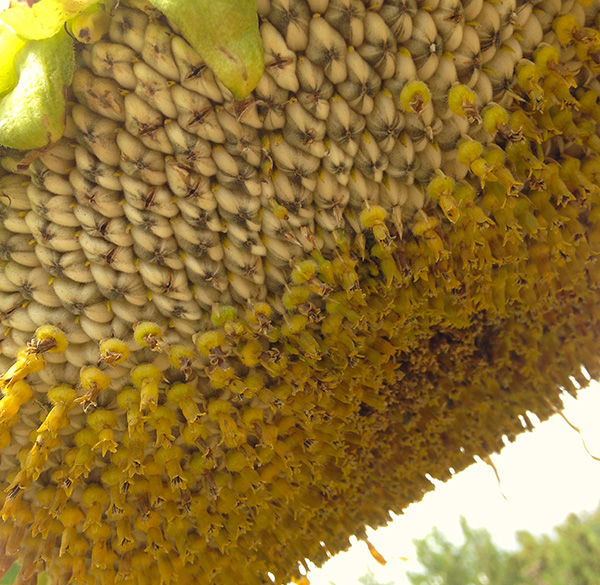
I recently did a post on sunflowers with some great pictures. I grow sunflowers for attracting beneficial insects, feeding birds and because they are beautiful. But there is something else you can do with them—you can roast the seeds from the heads after the flowers fade and EAT THEM!  The biggest sunflowers like Titan, Kong, Giant Gray Stripe and Mammoth which produce big seeds are best. Cut the heads off when the plants are starting to fade and the sunflowers plant yellows. Then let the heads finish drying till they are brown and dry but move them inside as the birds will start to eat the seeds if they find the heads. The smallest flower heads I leave out around the garden for the birds to get the seeds.

sunflower seedhead closeup

After the big flower heads are dried, rub off the front of the flower head to reveal the tightly packed sunflower seeds. Using your thumb, start to rub from the edges and the seeds will release and continue till you get most of them. I do this outside as it is a bit messy with dried parts everywhere. I just sit at my outside patio table to do this. Clean out the dried flower parts from all your seeds before the next step.

Now you’re ready to salt and roast your seeds. The following recipe is provided by the National Sunflower Association—sunflowernsa.com:

Cover unshelled sunflower seeds with salted water, using 1/4 to 1/2 cup of salt per 2 quarts of water. Soak seeds in the salt solution overnight. The next morning, drain off the water and pat the seeds dry to remove excess moisture. (You can also roast the seeds unsalted — simply skip the soaking process.)

Preheat the oven to 300 degrees Fahrenheit. Spread the sunflower seeds evenly on a cookie sheet or in a shallow pan, and bake for 30 to 40 minutes or until golden brown, stirring occasionally. The seeds often develop a small crack down the center as they roast. Taste after each stirring to see if the seeds are completely roasted. After roasting, remove seeds from the oven and allow them to cool completely. Store the seeds in an airtight container for future snacking. YUM!!

No Giant Pumpkin This Year :(

Courtesy of pumpkin pic_history.org

Pumpkin picture courtesy of http://www.history.org

So disappointing. No giant pumpkin this year-not even a little one. I started with 3 plants. Two died of a wilt. I checked to make sure they didn’t have a squash vine borer in them-which they didn’t. I pulled both by the end of July. I just pulled my third and last giant pumpkin plant and sent it to the State Lab last week to see if they could diagnosis what disease it had. The leaves were weird – they were stiff and broke easily, the stems were weird with galls and the blossoms wouldn’t open or stayed small and dropped off—all of them. I didn’t even have one to pollinate. This is the first time since I started growing giant pumpkins that I’ve had this kind of trouble. Some years I’ve grown great pumpkins, some years not so great but I’ve always had at least one giant pumpkin. Not this year – nada and no annual pumpkin bash! What a bummer.

The results just came in from the State Lab. They had to send  it to an independent lab to confirm their diagnosis. They both came to the same conclusion-CURLY TOP VIRUS!! No. no. I know Curly Top Virus is transmitted to tomato plants via the beet leafhopper but didn’t know it could transmit this virus to giant pumpkin plants as well. And I even had it covered with row cover until July but I guess that wasn’t long enough as it only takes one leafhopper to infect plants. 😦

History of Mozzerella cheese

water buffalo

Water Buffalo milk was the original milk for making mozzarella

Mozzarella is most commonly made with cows milk here in the US. It can also made with goats milk as well. But it didn’t start out with either of those. In Italy it is made with milk from a water buffalo which is the richest creamiest flavor of all because it has the highest butterfat in it.  You can NOT buy water buffalo milk here in the states (how the hell do you milk a water buffalo anyways, even if it is domestic?!!) Mozzarella made with water buffalo milk is called buffala mozzarella. Buffala means female water buffalo. I learned how to make mozzarella with cow’s milk and goats milk because I want it for my Caprese salad with my homegrown tomatoes that I’m growing.

The history of mozzarella starts with the water buffalo and how it came to Italy. How and when the animals arrived in Italy is the source of some debate. Some say it was introduced by Arab invasions, others say it was introduced by the Normans from Sicily and still others say that India was the source. What we do know is that they began to be raised in the 12th century, at a time when many peasants, fleeing war and invasions, abandoned their land. That land turned marshy, which is exactly what water buffalo like. “In ancient times, the buffalo was a familiar sight in the countryside, since it was widely used in ploughing compact and watery terrains, both because of its strength and the size of its hooves, which did not sink too deeply into moist soils” (wikipedia). 

References to cheese products made from water buffalo milk appeared for the first time at the beginning of the twelfth century. Buffalo mozzarella became widespread throughout the south of Italy from the second half of the eighteenth century on.

mozzarelaSeveral centuries later, northern Italy became concerned about cleaning up the marshlands, and in 1930, the south began a massive agrarian reform. The herds of water buffalo dwindled. Cow’s milk began to replace bufala milk in the recipe. Then, in 1940 the Nazis destroyed the remaining herds.

After the war, water buffalo imported from India were reintroduced to Italy, but the cheese introduced to North America by Italian immigrants in New York at the turn of the 20th century and in Canada around 1949 was made with cow’s milk probably because they couldn’t get buffala milk.

You can find pre-made buffala mozzarella at Trader’s Joes and I highly recommend you try it for comparison although it is expensive.


Fall harvest season is full blast right now!

Harvest season is full blast right now. Started out with our Home Grown New Mexico ‘Jam On’ class where we made a Strawberry-balsamic jam and a terrific Blueberry jam.

Himrod grapes-yum!

Then the grapes ripened-ate lots and dried some into raisins for later.

bread n butter pickles

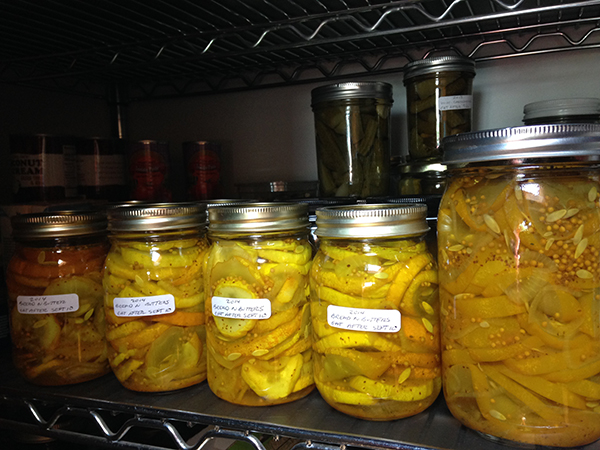
The cucumbers ripened so fast I was making lots of pickles. First I made bread and butter pickles, then cornichon pickles and then dill pickles-crock, refrigerator and canned. Must have about 30 jars+ and now the 5 gallon crock is full where I am fermenting some with salt brine. After I was bored with pickles,  I made some sweet pickle relish which I haven’t tasted yet. Will probably make more of that with the giant cucumbers I miss when looking for little ones. So far I’ve made pickles with Jody, Nick and Elodie.

peach jam and raisins

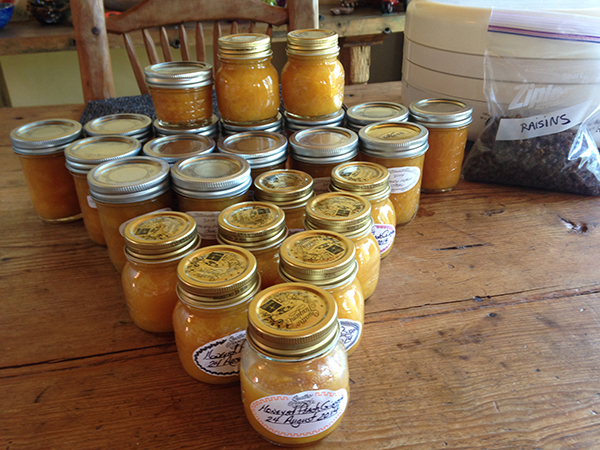
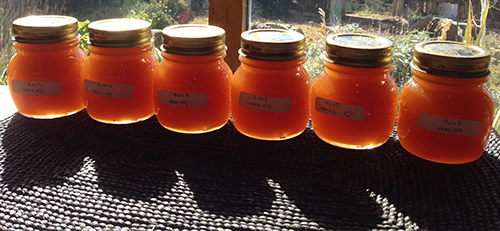
Then I bought 20 lbs of peaches from the Farmer’s Market and Mernie and I made 3 different peach jams.

9tomato sauce-finished in bags

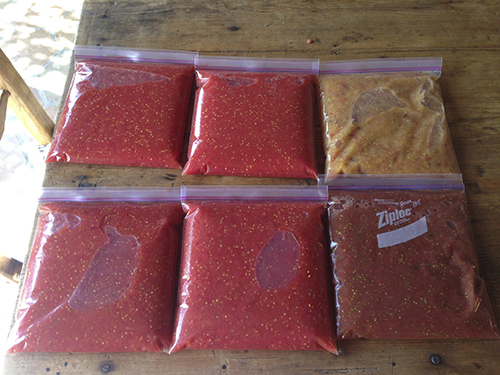
Now the tomatoes are coming in and I’m starting to make the raw tomato sauce that I freeze in gallon plastic freezer bags. Later in November after I recover from harvesting, I will take them out of the freezer and make different pasta sauces like puttenesca, marinara, penne alla vodka and good ole spaghetti sauce.


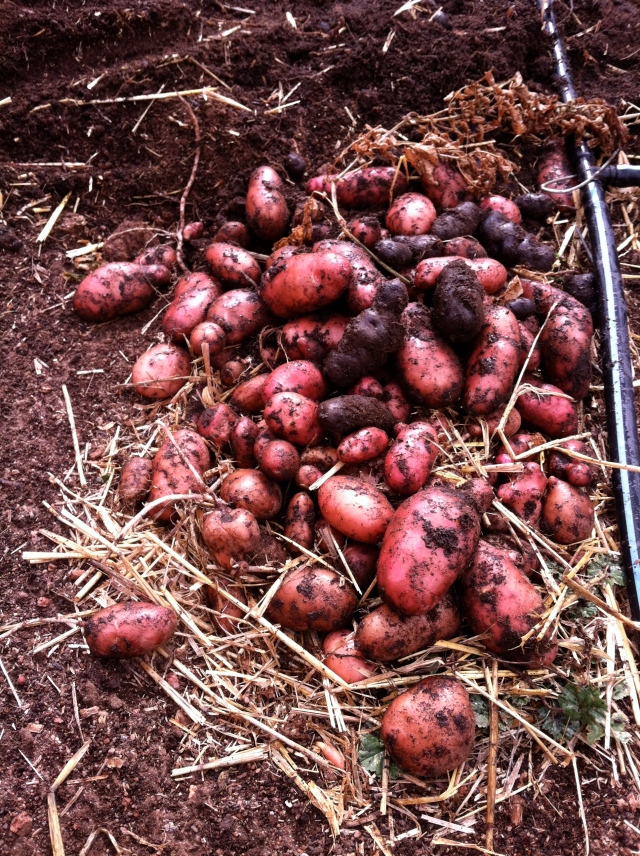
Potatoes dug out just in the nick of time!
Potatoes dug out just in the nick of time!
Soon I will harvest potatoes too.

2013-part of the fall honey harvest

and we will harvest honey from the bee hive.

Of course then there is all I take to the Farmer’s Market that I harvest every week-tomatoes, eggplants, shishito peppers, beans, tomatillos and sometimes rhubarb, kale and chard when I have the room on the tables. Phew! Busy time of year!

The best part of it all is I haven’t bought any vegetables in the store since early July and I’ll have a full pantry for winter when harvest season is done.

My tomatoes love the sun and warmth!

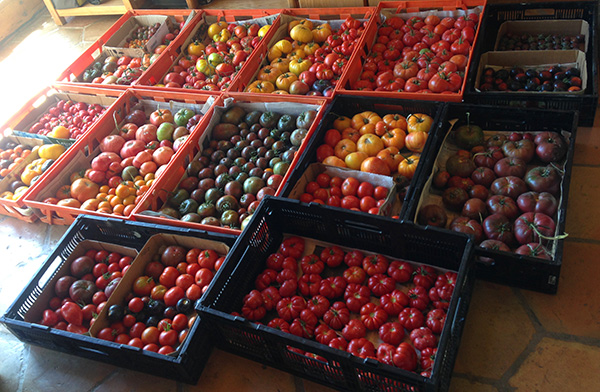
tomatoes ready for market

Tomatoes ready for the Santa Fe Farmer’s market

Last week was warm and sunny-just what tomatoes need to ripen. Temperatures in the mid 80s. It’s a little cooler this week but still nice. Suddenly I have all kinds of tomatoes ripening-yea!

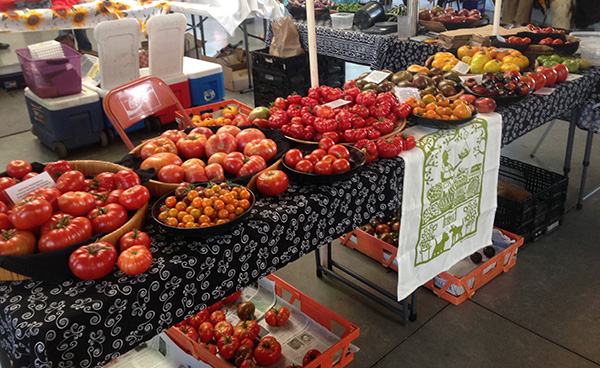
tomato lady at Santa Fe Farmer's Market

Up till last week I’ve barely had enough ripe ones to go to the Farmer’s Market much less make tomato sauce but now I have plenty to sell-just get there early as I sell out pretty early even with all these tomatoes. Here’s my booth at the Farmer’s Market. It is located inside the big building. Just look up for a big sign that says, ‘Tomato Lady’ to find me.

I noticed the number of ripe tomatoes have been growing here at my little farm and now they are exploding! Yea! I’m hoping for an Indian summer-that means the rest of September will be nice and warm which should keep them coming.

Sunflowers in the fall

sunflowers sunset

I love sunflowers. Every year I plant many varieties because they are so beautiful in the garden. An added bonus is that many bees both native and honeybees love them too. Being a beekeeper I want to help my bees by planting bee friendly plants. Bees like both nectar and pollen from sunflowers so they are a great flower to plant for honeybees and native bees. Individual sunflowers rarely self-pollinate but depend on the bee to help them. In fact bees are the major pollinators of sunflowers. The bees get covered in pollen when they visit a sunflower and then visit other sunflowers pollinating them. Here are some pictures from the garden of my sunflowers. They are particularly beautiful in the fall.