Tomato plants getting BIG

The tomato plants are now getting BIG. I’ve gotten a few ripe tomatoes-fighting off the birds for them! Most are starting to really produce green tomatoes now. I hope to get to the SF FARMERS MARKET by MID-AUGUST or sooner, tomatoes willing..

Here are my earliest tomatoes on the right that may allow me to go to the market sooner than later. On the left is my strawberry patch.

I have a variety of black tomatoes coming on-Paul Robeson, Giant Black Pear shaped tomatoes, Cherokee Chocolate, Black Krim and Black Cherry. None of which are shown yet.

I should have a plethora of cherry tomatoes this year-Sungold, Black Cherry and Green Grape and a mystery red that was suppose to be a San Marzano! Here is a closeup of  Sungold. Hope the birds don’t get it! All the cherry tomatoes should start producing soon!

I also love the bi-color tomatoes-my favorites. I’m growing Gold Medal and Striped Germans shown above. Both varieties can get between 1-2 lbs and are SWEET, SWEET, SWEET. They only have flowers right now.

My Big Zacs take longest to ripen 90+ days so you won’t be seeing these until late in the season but what a treat.1-2 lb giants with that old fashion tomato flavor perfect for a BLT..

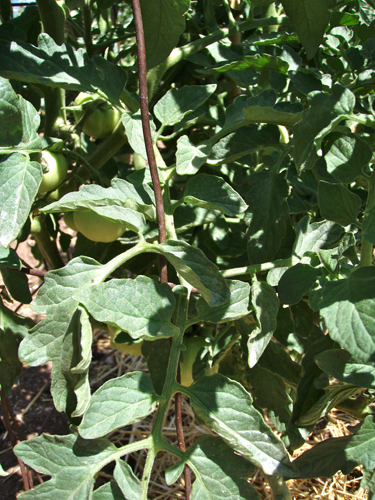
Here is a brandywine. Notice the potato leaves. I haven’t had good luck in NM with Brandywine  tomatoes due to the disease factor but these are looking good so far, I have red, pink and yellow brandywines going.

Tomatoes and Mozzarella-Caprese salad-yum!

Caprese salad-Tomatoes, Mozzarella and Basil

It’s starting! I’ve been getting a few ripe tomatoes every couple of days and  have and been enjoying them. Here is a picture of  a Caprese salad I made last night with tomatoes out of the garden with Mozzarella cheese I made and basil I grew, drizzled with a balsamic vinaigrette. I got into learning how to make some cheeses mainly to go with my tomatoes. I haven’t got it down as good as I’d like but the mozzarella was still good.

Tomato care in June

The Wall of Waters are all off the tomatoes now. I used Companion fungicide as a drench. They got a little wet in the Wall of Waters and I wanted to make sure they wouldn’t come down with early blight while gone on my trip. I also sprayed on the foliage Serenade, which is a foliar fungicide. So one end gets the drench and the other end gets the foliar spray. I figure if you zap them both ways, I should have better protection. When I came back,  all looked good except one which was diseased so I tossed it in the garbage, not the compost. Don’t leave diseased plants in the ground to possibly pass on diseases to healthy plants. Then I staked them all up with bamboo stakes and tied up the branches. I cut off any branches that touched the ground so as to not spread any soilborne diseases. Next I had to redefine my wells and put straw over the well to conserve water, help with evaporation and keep soilbourne diseases from splashing up on the tomato plants. Afterward I decided to sterilize my tomato cages since I had some loss due to diseases last year. Might be overkill but I want to be cautious this year before I put them over this year’s tomatoes-don’t want to spread any diseases. I used a 10% solution in a gallon of water (that’s about 1 .75 cup bleach to one gallon water) and sprayed my cages with a hand sprayer. Now I need to put the cages over the tomato plants and start picking off suckers that are showing up. Arrgh, a gardener’s work is never done…

All this work for this..

Virginia Sweet Tomato

My tomatoes are in!

55 tomatoes planted May 15th!

Each year I grow a lot of tomatoes, and I need a lot of tomatoes, what with being ‘The Tomato Lady’ at the Santa Fe Farmers Market later this summer. This year is no exception. Some friends of mine, Mernie and Lynne and Elodie and myself planted 55 tomatoes yesterday! And we did it in record time. I know some time was saved with the drip system in and the holes pre-dug but still it seemed to go faster this year. We acted like a smooth, oiled machine! Mernie and I went around and put all the amendments in the holes first, then I brought out the tomatoes and Mernie and I planted them while Elodie and Lynne followed behind putting up the wall of waters and then watered the plants with Seaweed and Thrive. Afterwards, I took them all to lunch as a GREAT BIG THANK YOU! I’m going to owe them a lot of tomatoes! I still have about a dozen more tomatoes to plant (front blank bed) but need to provide more drip line for them. What a relief-I almost feel like I’m back on track in the garden! Almost..

Pictures of Planting Tomatoes Outside

Well it’s time to plant tomatoes! Finally! This cold and windy weather is going to take us almost up to the average first frost free date and the tomatoes inside are chomping to get out in the world! I will still use ‘Wall of Waters’ on all of the tomatoes that are not too tall as the nights are still very cool for a tomato. Here are some pictures of how I  transplant tomato plants outside.

First I harden them off outside for about 4 days or longer if I can wait that long! I put them outside for an hour or two each day and increase their outside time each day. Start getting them use to our harsh conditions they will have to endure.

Next after I dig the hole, I add some yum-yum mix (a handful), a tablespoon of powder milk, a tablespoon of epsom salts, a shovelful or two of aged compost (or bagged compost) and a small handful of mushroom compost (not too much-its high in salts). Then I mix it up with some of the soil I dug out.

In addition, new for this year, I am adding a small handful of humate and a tablespoon of bone meal (for lots of flowers) and some worm castings. I will mix this in with the above amendments.

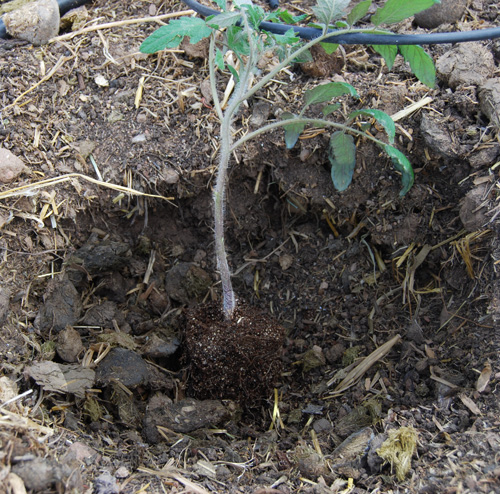
Next I take off any lower leaves, especially if the plant has become leggy and place it deep in the hole with the amendments and backfill with the  amended dirt. If it is really tall, plant it on it’s side. It will develop roots on the stem either way.

Notice how deep it was planted. Here I make a ‘well’ around each plant and place my drip line tightly around the new plant (not shown).

Fill the well several times–one time with Seaweed and ‘Thrive’ in a bucket. DO NOT use a regular fertilizer like Fish Emulsion at this time. Wait till the plant acclimates. Later as the plant grows, after I remove the wall of waters (when the tomato plant peeks out over the top of them), I will loosen the drip line inside the well to water more of the root zone as the plant grows.

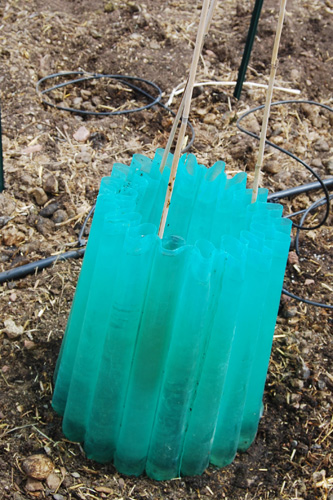
To put my wall of water on the plant, I place a 5 gallon bucket inverted over the plant. Then put the wall of waters over it-do this part in the morning so the water has time to heat up the cells that will give off the heat at night back to the tomato. Fill up the ‘cells’ with water and remove the bucket. Be sure to pull the handle up on the bucket when you first put the wall of waters over it or you’ll have a hell of a time removing the bucket.

I place a few bamboo sticks inside to hold it up should a big gust of wind come up. I also tie another bamboo stick next to the tomato plant and loosely tie up the plant with a twistie tie so it doesn’t fall down. Remove the wall of waters when the plant outgrows it. Here is how the plant looks in the wall of waters. Ok now I get to multiply this times 64 plants…

Related post: Secrets to planting tomatoes

Getting ready to plant tomatoes

Still prepping the soil for the tomatoes today with Caleb. Got the last of the garden beds amended with the composted horse manure and all the holes dug where they will go in next week. Put the drip line back in place but haven’t tested it yet. The exact date of planting tomatoes is still unknown because next week is a mixed bag as far as the weather is concerned. Low temperatures will be from in the HIGH 30’s and the high temperatures will be in the 70’s degree range. Maybe we are over the freezing weather at night-I hope so.

I’m going flyfishing at the San Juan River over the weekend. My housesitter, who is also my garden apprentice, will watch all the tomatoes, peppers and eggplants inside while I’m gone. After I return, I will put the tomatoes in the ground- weather permitting. Looks like I’m almost going to May 15th. Last year I couldn’t wait to start planting and many of my tomatoes really struggled in early May when I first planted them. If they didn’t freeze then they were wind burned and they got set back because of my impatience! This year I’m trying to be patient!

SECRETS TO PLANTING TOMATOES

Tomatoes in wall of waters that are ready to take off-2010

Hopefully we can plant tomatoes in the garden in the month of May. The last average frost date is May 15th.  I like to try to get them in early every spring if possible. I don’t think it will happen this year with these cold late spring nights. Here are some of my secrets to growing great tomatoes.

-If growing from seedlings or nursery starts, harden plants off for a couple of days before transplanting them outside in the ground so they don’t go into shock.

-Before planting, amend the soil in each hole before planting. Add lots of compost, yum-yum mix, a small handful of mushroom compost, 1 tablespoon Epsom salt-the bath type (adds magnesium) and 1 tablespoon dry milk (adds calcium and wards off some fungal diseases). Mix up with soil in bottom of hole.

Pinch off lower leaves on the tomatoes and plant tomatoes as deep as possible. Don’t worry about if it leggy, it will grow roots along buried stem and become stronger.

-Don’t rush to plant if still cold at night outside. Tomatoes don’t like to be cold. If you do plant early, put a ‘wall of water’ around the plant IN THE MORNING so it has time to heat up the water and tomatoes by evening. Wall of waters protect down to 28°F. Place a 5-gallon bucket upside down over top of tomato plant and put the wall of water over the bucket. That way is can hold up the wall of waters while you fill each cell with water. Then take off bucket and the wall of water will hold itself up. I use bamboo stakes inside the edge of the wall of water so the walls lean on them to help keep them open as they can blow over when winds are high.

-If leaves turn purple underneath, it means the ground is too cold and the plant can’t take up the available phosphorus in the soil. Sprinkle rock phosphate around base of plant and water in to help them turn green again.

-Make a large well around each tomato so water stays close to root zone. If you have a drip line, put it in well now around base of plant.

-Add water and THRIVE AND SEAWEED FERTILIZER in a bucket and water well when you FIRST plant outside but NOT fertilizer.

Tomato in cage, branches trimmed off the ground, in concrete reinforcement cage with straw in well and supported by green ‘t-post’ that cage is tied up to

-In June AFTER THE SOIL HAS WARMED, add straw around well to keep moisture level even. This will help keep the water from evaporating and will keep the water from splashing soil on them. Splashing soil on tomatoes can allow soil borne viruses to get into plant.

-Use bamboo stakes and tie up plant. Change out to bigger stakes as plants grow. Cage plants as they grow or tie to tall stake. I use 5’ green t-posts for stakes or make cages out of concrete reinforcement wire.

-After plants have been transplanted for about 2 weeks, FERTILIZE with FISH EMULSION and SEAWEED. This should be in early June. Fertilize again in July (2-3 times during the season). Too much fertilizer makes lots of leaves but will not produce as many tomatoes.

-Train tomato plant to one or two stems. Allowing multiple stems promotes more green growth but takes away from fruit production.

-Pinch off suckers. They grow between the main vine and side branches. They take energy away from the fruit. Do not pinch off blossoms.

-Cut off or tie up any branches that touch ground. Tomatoes can get soil borne diseases from touching ground.

-If using one of my wire cages, I use a small 3’ t-post to tie my cage up to it, as plant gets bigger. This really helps to prevent the plants from blowing over when they get top heavy.

-Water consistently throughout season. The main reason tomatoes get cracks is uneven watering. The most efficient method of watering is by a drip system.

-Use ‘Serenade’ as a foliar spray for some soil borne diseases like Early Blight. It is best used as a preventative. Spray every two weeks or at first sign of disease. It is a made from a soil microbe and is organic. Aqua Fria Nursery carries it.

-Use ‘Companion’ as a drench around base of plant to help keep fungal diseases away. It is made from another soil microbe and is organic. You can Google it, as you must buy it online.

-If you do get some diseased branches, cut off branches with clean scissors. Disinfect scissors between plants with alcohol or a 10 % bleach solution. Take out severely diseased plants and throw in trash, not compost pile.

Note: If you are a smoker, wash hands before handling tomatoes-you can pass a virus called tobacco mosaic.
Don’t Plant Tomatoes Outside Yet-Cold Weather Forecasted AGAIN

Weather forecast April 27-May 1

Here we go-Cold weather AT NIGHT again. Today the weather is cold high 56°F and low 25°F, already snowing a little bit. It’s ok , we desperately need the moisture. Unfortunately we are also going to get high winds-up to 70 mph! Above is the forecast for the next 5 days.

All 60 tomatoes and giant pumpkins, giant squash and marrows are inside and waiting to go out but I’m hanging tight and will wait till the nights are a little warmer and above freezing. I will still plant them in wall of waters for extra protection when they go out but why throw them out when I know what’s coming…I try to sneak them out early every year but I just have to wait and see. Our first frost freeze date is May 15th and it looks like we might go to then..

My Favorite Tomatoes to Grow

Talking about Virginia Sweet tomatoes made me think of some of the best tomatoes I’ve grown for flavor. So I thought I’d compile a list of them for you to consider growing sometime. These are not in any particular order as each one is unique and wonderful in it’s own way and not all are heirlooms.

striped german 75 day

Striped German-heirloom-beautiful bi-color- red and yellow large beefsteak up to 2 lbs. Luscious sweet-non acidic flavor. Super sweet beefstake. The marbled interior looks beautiful sliced. Complex, fruity flavor and smooth texture. 75 days to harvest.

costuluto genevese 78 day

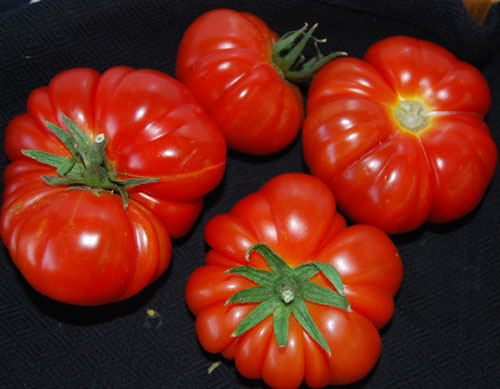
Costuluto Genevese-heirloom-Italian heirloom tomato that has been enjoyed for many generations along the Mediterranean. Large, deep-red fruits have a singularly fluted profile, are deeply ridged, and heavily lobed. Meaty, full-flavored and delicious. Because of its scalloped edges, perfect for use in an arrangement of different colored sliced tomatoes. 78 days to harvest.

black cherry tomatoes 65 days

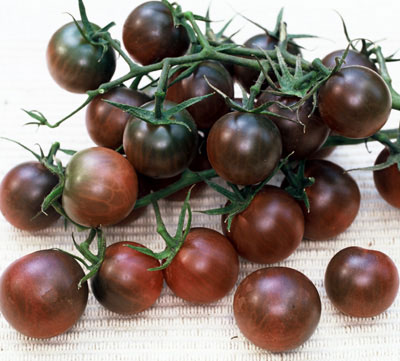
Black Cherry-heirloom-Beautiful large black cherry that is dusky purple brown in color. They have that rich flavor that makes black tomatoes unique. Sweet cherry tomato.

paul robeson 75 days

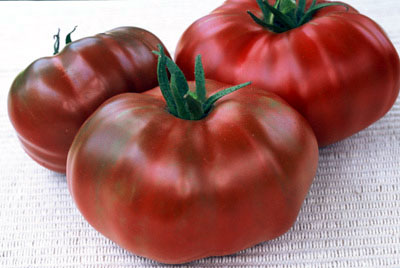
Paul Robeson-heirloom-This famous tomato has almost a cult following among tomato Connoisseurs throughout the world with its earthy, sweet and smoky flavor. Named in honor of the famous black opera singer, star of King Solomon’s Mine,1937. This Russian variety is aBrown/black tomato with green shoulders. Hard to find.

cherokee purple/80 days

Cherokee Purple-heirloom-Old Cherokee Indian heirloom, pre 1890 variety. Unique dusty purple -pink  color. Flavor rivals Brandywine. Real old time tomato flavor-suberbly sweet. Large fruits average 12 oz.

green grape/60 days”

Green Grape-heirloom- bright yellow green cherry tomatoes that are wonderfully fruity sweet and has become one of my favorites.

Virginia sweet/85 days

Virginia Sweet-heirloom- Another one one of the best tasting, bi-colors, gold-red tomatoes I’ve eaten.  The tomatoes are beautiful and large beefsteak, weighing at least 1 pound each. Flavor is sweet and rich.

pantano romanesco/70 days

8. Pantano Romanesco-heirloom-A Roman heirloom. The fruit are large and are deep red, with almost a purple tint. The flesh is very rich, flavorful & juicy. An excellent tomato for home and market gardeners, very rare and delicious.

lemon boy/72 days

9. Lemon Boy-hybrid-The first lemon color hybrid tomato to be developed. They have outstanding sweetness with no acidity.

sungold/57 days

10. Sun Gold Select II-heirloom-Very flavorful and juicy orange-yellow cherry tomatoes.  Excellent in salads or eaten alone as a treat. Very prolific. 57 days to harvest.

San Marzano/78 day

San Marzano-heirloom-Come from a small town in Italy and were first grown in volcanic soil in the shadow of Mount Vesuvius. Compared to the Roma tomatoes, Marzano tomatoes have thicker flesh with fewer seeds. Flavor is more sweet and less acidic. 78 days to harvest.

gold medal/75 days

Gold Medal-heirloom-large beefstake is bi-color of yellow with a blush of red inside. Very little acid. One of the sweetest tomato you’ll ever taste…..a gourmet’s joy when sliced.

Goldmans Italian American/80-100 days

Goldman’s Italian American-heirloom-Discovered by a Amy Goldman in a roadside stand in Italy, this large bright red pear tomato has old fashioned, classic flavor that made the best tasting tomato sauce I’ve ever made. Beats San Marzano in flavor but drawback is it takes 80-100 days to harvest and I had to bring it inside to finish ripening. Still…

brandywine red/80 day

Brandywine-heirloom-It is an old Amish heirloom, dating back to 1885 and named after Brandywine Creek in Chester County, Pennsylvania. One of the best tasting tomatoes ever with a great mix of sweet and acid to make a full flavor tomato.14. Big Zac-hybrid-Humungous red beefstake with old fashioned tomato flavor. Great for sandwiches and salads.
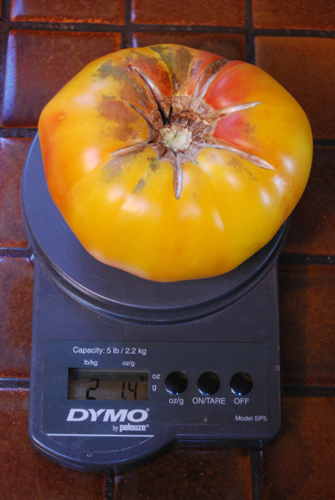
My biggest has been 2 lbs, 11 oz.

Growing Virginia Sweet Tomatoes

Virginia Sweet Tomato

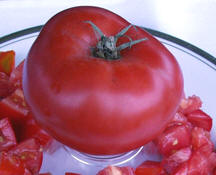
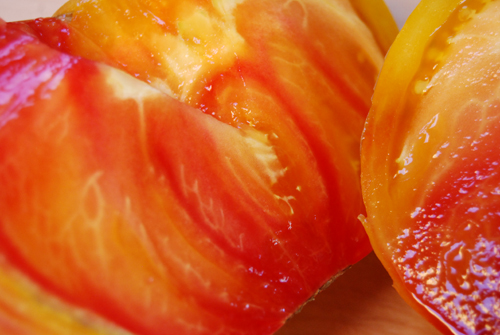
A lot of people are looking for Virginia Sweet tomatoes. Last year, a friend of mine gave me an unbelievable tomato called Virginia Sweet. They have been hard to find around here in the nurseries but you can find seeds to start your own at Tomatogrowers.com. So when I saw that Aqua Fria Nursery is growing them this year as starts, I got excited. I went out and got a couple of them and can’t wait to grow and EAT them as they are one of the sweetest, tastiest heirloom tomatoes around. They are a rather large (around 1 lb) bi-color tomato with red-yellow streaking on both the outside and inside and one of the more beautiful tomatoes you can grow. They take awhile to grow and get to harvest (about 80 days) but are definitely worth the wait. Right now they are inside under the lights waiting to go outside. If you like large, beautiful, delicious, supersweet tomatoes, you might want to try growing one of these this year.

beautiful marbling inside a Virgina Sweet tomato

Giant Pumpkin Cotyledon Leaves Compared to Tomato Cotyldon Leaves

Here’s a comparison of the giant pumpkin cotyledon leaves (the first 2 leaves to pop out) along with it’s first true leaf compared to a tomato cotyledon leaves along with it’s first true leaf. Notice the size difference! Giant pumpkin cotyledon leaves are the biggest baby leaves I’ve ever seen.

cotyledon leaves on giant pumpkin and tomato

Transplanted Tomatoes Again to Bigger Pots

Ok, yesterday I made another mess in the kitchen. I transplanted more tomatoes up to bigger pots from 2 inch pots to 4 inch pots. I washed the empty pots in bleach water and after planting them, I fertilized them with a weak solution of fish emulsion and Thrive. I knew I needed to transplant them as their roots were growing out of the bottom and they were starting to look stressed. Stressed? How can they be stresssed when they are in a nice warm cozy house under gro lights in a controlled environment-just wait till they get out in the ground, then they’ll be stressed! I tell them they got it cushy now. I think they know their going out early!

I’m chomping to get the tomatoes out. Patience, I tell myself. I looked up when I planted the tomatoes last year and the year before. Last year I planted tomatoes on May 4th and the year before I planted on April 29th when we had a warmer spring. So I guess I’ll wait till around the first of May. It’s always a guessing game when to plant if you want to plant earlier than the first frost free date which is May 15th here in Santa Fe. I like to try to sneak in the tomatoes early because I grow so many mid-late varieties which can take all the way up to 100 days+ to harvest. We have such a short growing season here in Santa Fe that I use all kinds of season extenders to get them in early so they have more time to ripen before that first frost next fall. OMG! I can’t be talking already about fall, we just got into spring and the plants aren’t even in the ground!

Tips for Growing Tomato Seeds

Tomato seedlings with thermometer

Lately I’ve been getting some questions about tomato seeds not germinating from more than one grower and thought I should address some of the problems and offer some helpful tips. If you haven’t started your tomato seedlings yet, you should start now. You have 6 weeks until May 15th which is the last average freeze date here in Santa Fe. You can still get a good head start if you plant soon.

1. Tomatoes do not like cool soil. Soil temperature in the 60’s is too cold for tomatoes. Tomatoes, peppers, eggplants like it very warm to germinate (in the 70-80°F).  Some people put them on top of a refrigerator where it is warmer. Even if your days get warm where ever you live, if your nights still get chilly (i.e. in the 60’s), they shouldn’t be outside. Period.

Plant Germination Heating Mat

2. Get a plant germination heating mat. The best thing you can do if you plan to germinate some of your own seeds is get an electric plant germination heating mat. Amazon has a lot different sizes on the internet here.  You may be able to find them at one of your local nurseries (but not at a big box store). It will keep the soil evenly warm-in the 70-80’s°F range. My tomato seeds germinated in less than a week with them sitting on it inside the house.

3. Plant tomato seeds 1/4 inch deep and put sand on top of them instead of the ‘soil’ (like play sand from Home depot or Lowes). This makes it easier for the seed to push through to the top.

4. Make a solution of Chamomile tea to ward off dampening disease. Dampening disease is a soil borne disease that sometimes attack seedlings right after they come up. You’ll know if if you get it because the new seedling wilts and dies. This usually happens when the first 2 leaves (called cotyledon leaves) pop up.

Closeup of two baby tomato seedlings each with their first 2 leaves called cotleydon leaves

I put one tea bag in a cup of hot water (like you would drink) and then when it is cool, transfer it to a little sprayer (like what you might use for your hair) and spray those new leaves. There are some properties in Chamomile tea that thwart off this disease-try it-it really works. After 4 of the true leaves, (they are the next leaves that come up that look like tomato leaves) I stop using the Chamomile tea.

5. Water from the bottom. This helps avoid getting ‘dampening off’ disease and also keeps the little seed from washing away when you water from the top. Put them in a sink or tray with some water and when the soil absorbs the water, it will look damp in top.

Tomato seedling with true leaves-transplanted up to a 2 inch pot

6. Transplant after you get 4 true leaves to the next bigger container. I’m assuming you start with small containers. Plant them deep-up to their first true leaves. They will root along the stem and become stronger. Every time you transplant up, bury your stems deeper. Always use disinfected pots-use 10% bleach solution to water to rinse your pots in.

7. Give them light. They need light and lots of it. If you don’t have a light box then put them in a south facing window and rotate them daily as they will lean toward the light.  Be careful you don’t fry them with too much heat from a hot window. For those of you that have them under lights keep the lights about 2 inches above the seedlings and raise the lights as the plants grow. This will help keep them from getting ‘leggy’.

8. Give them dark. Yes that’s right. Plants need a period of darkness for photosynthesis to take place. I give mine 8 hours of darkness at night. Photosynthesis is the process where the plant takes the energy it gets from light in daytime and converts it into sugars as plant food. I have my lights plugged into a strip plug and the strip plug into a timer so I don’t have to think about it.

9. Use rock phosphate if your tomato leaves turn purple. Purple leaves means your plant is too cold. If your little tomato leaves start to turn purple (just look at the underneath side of a leaf), then they are cold and your soil is cold. They can’t access the phosphorus in the soil when the soil is cold. Get them to a warmer place and get some rock phosphate (which is a powder) and sprinkle some on top of the soil and water in. They will green up again within a couple of days.

10. Fertilize lightly. I only use thrive and diluted seaweed when I first transplant up and then only after the plant is doing well will I fertilize lightly with diluted fish emulsion. Don’t overdo it.

11. Grow thicker stems by brushing the plants. Make your tomato plants strong not leggy. You can make your plant produce stronger thicker stems by either brushing your plants with your hand when you walk by once or twice a day or put a fan on them (low speed). This mimics being outside where a breeze gives the plant a ‘work out’.

12. Keep planting up. Don’t let them stay in the same pot where they can get leggy. Once they outgrow their pot, plant up to the next size. I start with a little 6 pack and then plant up to a 2 inch pot then to a 3-4 inch pot and then to a gallon size pot if needed. I don’t use Mycorrhizal until I do the final transplanting into the ground.

I will give more tips when we are ready to transplant outside.

Master Gardener Tomato Disease Sheet

Hey Master Gardener Interns! I want to let you know you all were awesome with some great questions and suggestions. I really enjoyed the classes. I thought I’d put it in my post below so others can read it as well as the pdf here TOMATO DISEASES in case some of you didn’t get one.  (It’s easier to print off the pdf than the post). This is not a complete list of tomato diseases in New Mexico but some of the most common. Also the HERB SHEET is two posts back for you to get.

TOMATO DISEASES/PROBLEMS

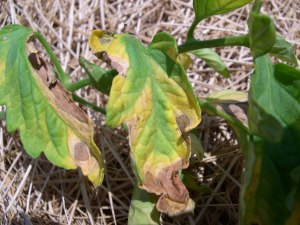
EARLY BLIGHT (Alternaria solon) SOILBORNE FUNGAL DISEASE
Most tomatoes are susceptible to Early Blight which usually develops in early summer, after heavy rains or when it is humid and warm.
SYMPTOMS: Leaves at the base of the plant near the ground develop dry looking, irregularly shaped brown patches surrounded by concentric
rings. The best prevention is prune off the affected leaves as soon as you see them. I prune off all branches and leaves within 18 inches of the ground to try to prevent this as it is a soilborne disease. Early Blight overwinters in the soil. Remove affected plants and clean up fall garden debris as it overwinters in plant residue. Wet weather increase likelihood of getting this disease.
CONTROL: Protectant fungicides-Copper or sulpher can prevent further development of it, Green Cure (potassium bicarbonate), and Serenade (QST 713 strain of Bacillus subtilis), a biofungicide helps more to prevent
disease and is not a cure. Also spacing plants farther apart for good air circulation may help. Good sanitation and disposal of plants at end of season are important.

SEPTORIA LEAF SPOT

SEPTORIA LEAF SPOT (Septoria lycopersici) NOT SOILBOURNE-FUNGAL DISEASE
Septoria leaf spot can occur and any stage of a tomato plant development especially after heavy rains or when it is wet and warm. Spores are spread by windburn rain, insects, splashing rain
SYMPTOMS: It’s usually observed first on the lower leaves. Leaves that are heavily infected have small circular brown spots, turn yellow, dry up and drop off. The fungus is not soil inhabitant but can persist from one season to the next if the debris from the diseased plant is not removed and ends up in the soil.
CONTROL: Copper fungicides, Green Cure (potassium bicarbonate), Serenade (QST 713 strain of Bacillus subtilis), a biofungicide, helps more to prevent disease.

Bacterial Wilt

BACTERIAL WILT-SOILBORNE DISEASE
Soil borne and waterborne pathogens that causes leaves to wilt in day only to recover at night and then complete sudden wilting of plant.
TEST: Cut a four inch long section from low down on the stem and suspend this cutting in a jar of water. If a cloudy, milky ooze comes out, this in an indication of bacterial wilt. Dried leaves may remain green.
CONTROL: Dispose of plants. Plant in different location. 3-4 year rotation
of crops

BEET CURLY TOP VIRUS DISEASE
Transmitted by the beet leafhopper which build up high numbers on tumbleweeds and survive the winters on mustard plants.
SYMPTOMS: upward curling leaves that become thick, stiff and twisted. May stay green or become yellow with purple veins, plants become stunted. Plant next to them may be virus free.
CONTROL: Provide partial shade is beneficial as leafhoppers prefer to eat in the sun. Possibly use row cover/shade cloth to cover plants.

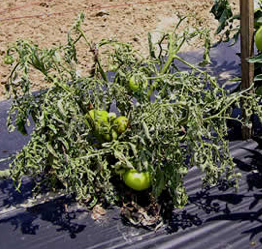
Tomato Spotted Wilt in tomato

Tomato Spotted Wilt

TOMATO SPOTTED WILT

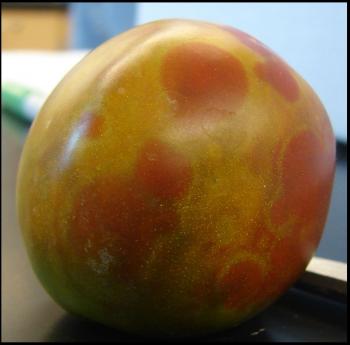
This virus is caused by thrips that transmit the virus from infected tomato plants to other healthy tomato plants.

SYMPTOMS: Two symptoms are dominant- young leaves turn bronze and develop small brown spots. Second, the leaves wilt and tips die-back. Infected plants produce poor quality fruit and less yield. Pull plants and dispose of them.
CONTROL: Elimination difficult. Using reflective mulches may help reduce
infection, physical barriers like covering plant with row cover when it is young.

BLOSSOM-END ROT DEFICIENCY
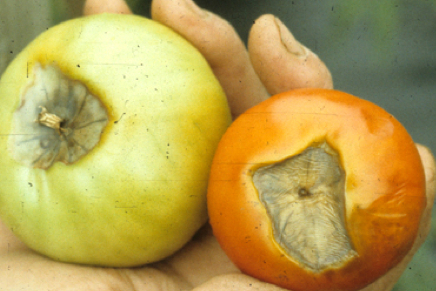
Hard brown or black leathery patches on the blossom ends of ripening tomatoes indicate blossom-end rot. It is more common in large fruited varieties. This is generally caused by a calcium deficiency at fruit set or uneven watering and is prevented by planting tomatoes in compost enriched soil and mulched with straw to keep moisture levels more constant. I put a tablespoon or two of dry milk in the bottom of each hole when first planting tomatoes. In the fall dig in some gypsum which is a good source of calcium without raising the ph of the soil here in Santa Fe.

Still Time to Order Seeds if You Haven’t Already

Still time to order seeds if you haven’t already. I need to order my seeds Monday, now that I’m home from the show so I get them in time to plant in March. Probably most of you have already order your seeds. I only need to order a few as I still have many seeds that I will regrow this year. It feels late but it is what it is. Last year I started the seeds the first week of March. Because it was such a cold spring, I couldn’t get them out till late May and even June last year They got too tall in the house, but what was I to do? Stick them out in 27°F weather? I’m still going to plant seeds from March 1 -15,  inside, under the lights and hope with this La Nina we have that all of us will be able to sneak out some of our warm season crops early—think April 15th! It’s always a crap shoot when trying to decide when to plant seeds but I’m going early! Bring out the gro lights! (I hear, “oh no” in the background!) I do have ‘plant envy’ for those of you have greenhouses or hoophouses!