Chitting and Growing Potatoes

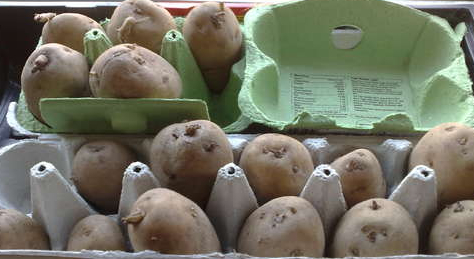
A gardening friend of mine, Gene asked me to explain ‘Chitting Potatoes’. Why do we want to chit potatoes? It will knock off a couple of weeks to harvest time so you’ll get them sooner. Now I am new to this myself being a first year potato grower but basically it is ‘prespouting’ the potatoes to force healthy new sprouts before you plant the potato ‘seeds’. Potato seeds are not seeds at all but the actual potatoes.  We keep potatoes we want to eat in the dark so they won’t turn green and quite often they start to develop smaller flimsy white sprouts while in the dark but what you want is thicker healthier sprouts that are either green or purple. If you missed the opportunity to chit the potatoes, it’s ok to just plant them when the time is right. I’m going to try growing fingerlings-Russian Banana, Purple Peruvian and French fingerlings.

Here’s how to ‘chit ‘ them (sounds southern doesn’t it?!)

1. Get a couple of egg cartons so you can stand the potatoes with the pointed side down. The blunt side generally produces more sprouts so keep that side up. The egg cartons make it easy to support them this way. Sometimes there is no pointy side which you should then just look at your potato and put the side with the most ‘eyes’ or sprouts up.

2. Put them in a cool space that gets good light in your house and they will develop thick sprouts  in 2-4 weeks instead of those flimsy one that grow in the dark.

3. Plant them outdoors when the soil is 50°F or warmer. There are many ways to plant potatoes which you can research on the net but I’m going to dig a deep trench about 10 inches deep in heavily amended fluffy soil.

4. Place the presprouted (or chitted) potatoes with the sprouts up (the sprouts become the leaves) and bury them 4-6 inches deep depending on the size of the potato. BE CAREFUL NOT TO BREAK OFF THE SPROUTS. Spacing them 12 inches apart and rows 12-24 inches apart.

5. After the sprouts come up and they get leaves, I’m going to start filling straw around the plants instead of dirt to make access to the potatoes easier come harvest time. I hope they stay cool enough with the straw.

6. I should see the sprouts come up through the dirt in a couple of weeks. If it is still freezing at night, I will cover the plants with row cover.

7. Potatoes will start producing tubers when they flower.

8. Fingerling potatoes should be ready to harvest when the plants die back in about 90 days. Leave in the ground 2 weeks to harden off before harvesting.

For more information on growing and buying good potato seed go to: http://www.irisheyesgardenseeds.com/growers10.php

Thinning and preparing mesclun/greens-keeping your homegrown greens fresh!

Here are my steps to thinning and preparing mesclun so it doesn’t WILT in your refrigerator. In fact you can use this method after you clean any greens in ANY STAGE from microgreens to full grown lettuce and greens from the garden or store bought.

The MOST IMPORTANT THING if you are growing any greens is to PICK THEM FIRST THING IN THE MORNING when they are fresh-not the heat of the day, OTHERWISE THEY WILL BE WILTED NO MATTER WHAT YOU DO (are you listening Lava?). During this first stage of mesclun, it is a little more labor intensive. (After the leaves grow more, you will just cut off the tops above the crowns so they can grow back and there will not be much dirt since you are not pulling these out by the roots.)

Here is the mesclun in my salad bowl I made. Notice they are very cramped with not much dirt showing. I need to thin these out so the leaves can get bigger without overcrowding.

Thin out the mesclun. The goal here is to have some dirt showing to give the remaining leaves some room to grow.

Now the mesclun (first thinnings) are like microgreens and are ready to clean. Notice the roots are still on them. You can cut them off or eat them if you rinse well. Here I’m leaving them on. Of course you could just feed them to the chickens or throw them out but I don’t like to waste them plus they are yummy! You would pay big bucks for just a tiny bit of microgreens in the stores.

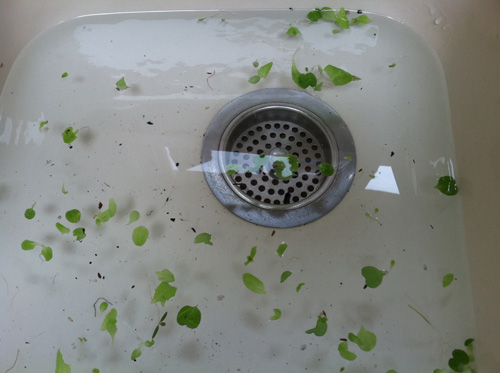
Here is the mesclun at the first rinse. I first clean my sinks out with bleach so I know they are clean. I suppose you could use big bowls to rinse instead. I filled my sink with COLD WATER from the faucet. Notice the leaves float on top while the dirt mostly sinks to the bottom. From here I gently scoop out the leaves trying to leave the dirt on the bottom of the sink or bowl and transfer them to the other side of the sink full of water for the second rinsing. By the way, rinsing this way is way easier than using a colander.  It works really well for spinach too. This way removes the dirt that can stay in a colander.

Second rinse-Notice most of the dirt is gone at the bottom of the sink after I  have removed the leaves.

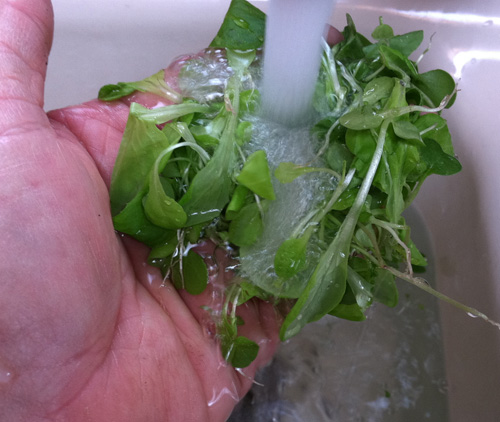
At this stage I do one hand rinse in case their is more dirt trapped on the roots. Then I put them into…

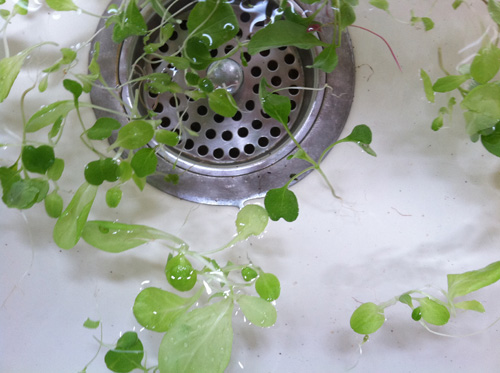
The last rinse- notice the dirt is gone. Rinse more if you still have dirt.

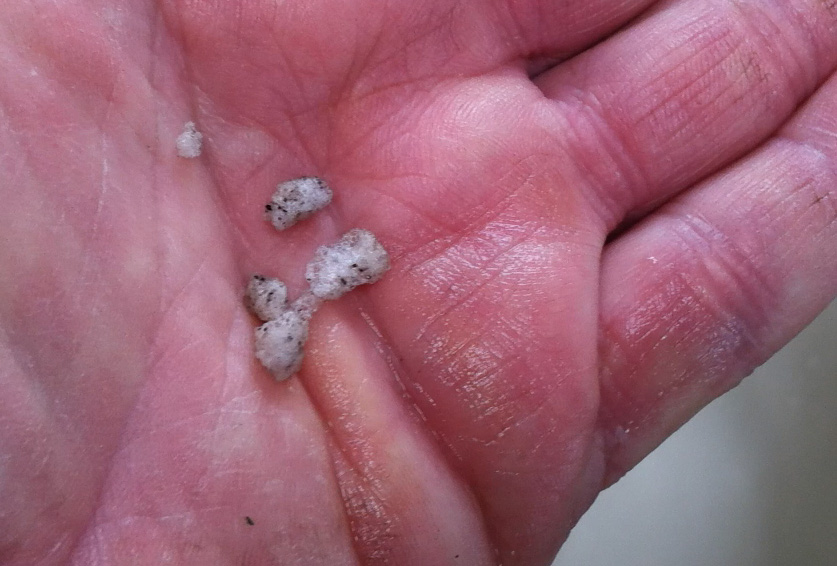
Since I grow the lettuce bowl inside, I use seed starting mix and you need to look out for the perlite that is in it as it can float in the water instead of sinking like the dirt-so be on the lookout for it. Just scoop them off the surface of the water before you do each rinse. It would be a little too crunchy in my salad!

Now the leaves are ready for the spinner. Just don’t pack it too full as the leaves are very delicate. Spin it in small batches and..

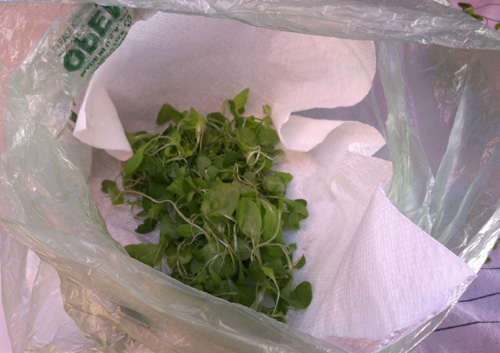
gently place it in a loose plastic bag (not ziploc) lined with a dry paper towel. Then this next trick is very important. I learned it from reading Dorie Greenspan’s book,  Around My French Table where you…

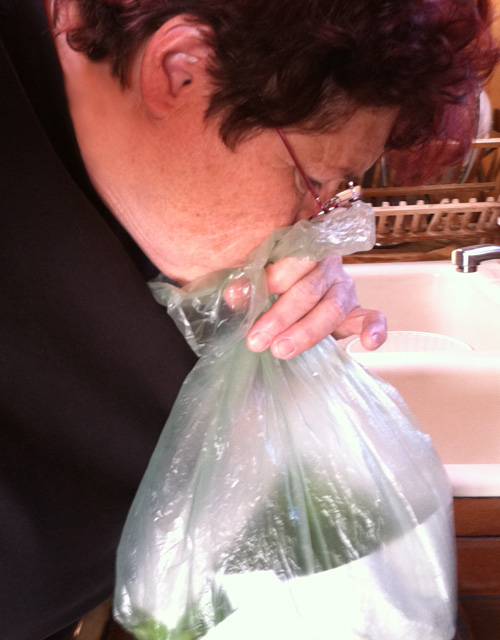
squeeze the bag so there is only a small opening and blow into the bag with your breath. This will fill the bag with carbon dioxide (which we expel) and then blow it up till it is full and..

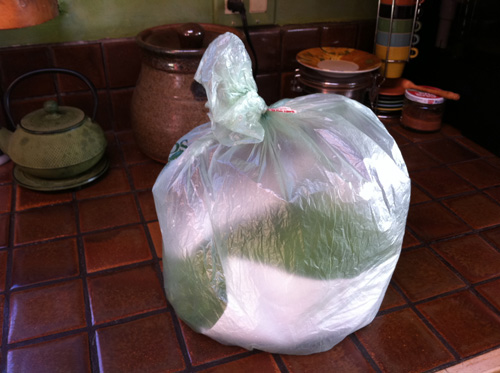
tie off with a twistie tie so the air doesn’t escape and put into your refrigerator. YOUR GREENS WILL STAY FRESH FOR ABOUT A WEEK. Be sure you blow into it each time you get some greens out before putting it back into the refrigerator again. This takes up a little more room in your refrigerator but is worth it. No more homegrown wilted greens! Pretty cool trick, huh?!

First Day of Spring!

Here in the Northern Hemisphere, it is the first day of spring and Spring Equinox. Today is the day where the hours of daylight and hours of nightlight are of equal duration. The Spring Equinox or Vernal Equinox as it is sometimes called is of particular importance to pagans where activities such as egg hunting, egg races and egg eating are done. Hey, isn’t that Easter? Oh yea, the Christians borrowed a few pagan rituals along the way-how else could they get converts in Constantinople’s day? No one wants to give up the Easter Egg hunt. Blasphemy! Nevertheless this means tomorrow, the days will start getting longer as we head towards summer and gardening. YEA!

Of course with spring, comes spring winds in Santa Fe (which I hate). Elodie once said the reason the wind blows in the spring is to wake up the trees which have been sleeping all winter. I like that and it makes it more bearable, if just a little. Today is cold and windy. Double jeopardy.

If I could go away for one season here in Santa Fe, it would be in spring because of those winds. Of course I’d miss starting my vegetable and giant pumpkin seeds early and marveling at all the beautiful blossoms that will start shortly. I probably would have to start a late garden. Ooooo!

So what would I do? Maybe go fly fishing in New Zealand, Chile or Argentina where all those BIG brown trout are starting to spawn as it is fall in the Southern Hemisphere or I could go to Hawaii. There I could go snorkling, swimming in warm water, drinking a Mai Tai, and doing the hula dance (after the Mai Tai) Ah, but I’d have to be rich to do those things.

Think I’ll stay inside instead today, besides the juniper pollen is out in full force. Triple jeopardy. At least I’m rich in my mind with these fantasies!

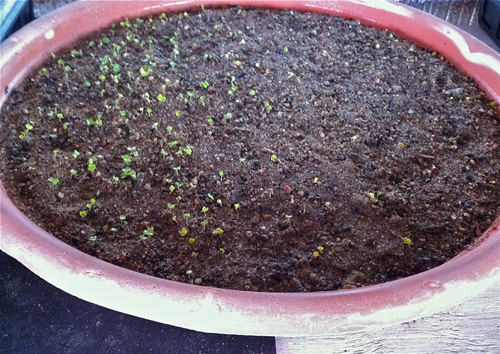
Lettuce bowl ready for first thinning

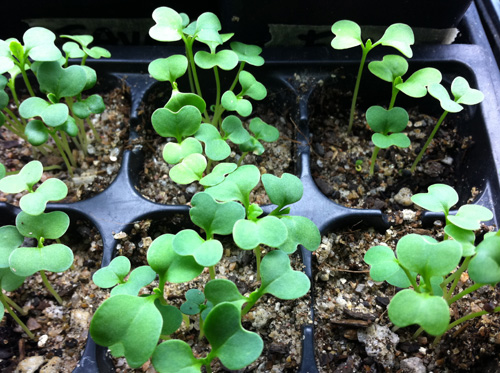
Here is the lettuce bowl I planted on Mar 7, only 13 days ago. Remember how it was barely coming up where it hung off the seed heat mat-well no more!  It is coming up beautifully. It’s so nice to see a ‘sea of green’ in the house. I will thin the baby seedlings (eating them) to give the rest of the seedlings some room to grow bigger. This is a mesclun lettuce I got from the Homegrown New Mexico seed swap event.  It is about 2 weeks ahead of the the lettuce I just planted outside. All part of trying to keep a continuous supply of lettuce for awhile. A couple more weeks and I think I’ll have a salad!

New vegetable garden section update

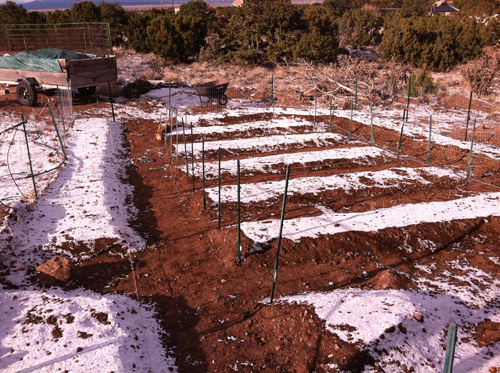
Here is a picture of the new vegetable garden section this morning after a dusting of snow. It is now fenced completely except for the 2 gates, one of which was created today but still needs to be hung. All the raised beds are done.

My friend Adam, has been helping me and boy what a help he is! Quite the worker bee! He came out the other day and finished creating the beds except for one area that has a giant rock in it.  I swear  this rock keeps the whole neighborhood from sinking! So we let it remain (like we could dig it out-ha!) and will make an area with a bird bath and flowers to show it off.

The new garden has gone through an amazing transformation since I cleared the land last fall. I still have to put the horse manure in the new beds. It’s been a lot of work but is coming along nicely and should be ready by tomato planting time.

Garlic coming up nicely


The garlic I planted last fall in November is already 8 inches tall and growing like weeds! I just love planting it in the fall, putting straw over it and watering it maybe once a month in winter. It is the first thing to come up in early spring and will be ready for harvest sometime in late June-early July. Such an easy crop to grow and a must grow for cooks. Nothing like cooking with fresh garlic. Plus a bonus is bugs don’t like it and rabbits don’t like it-nice! This year I grew both hardneck garlic which tastes great and softneck garlic which lasts a long time. Just be sure to save some of the biggest cloves to plant for next fall. Bigger cloves=bigger bulbs the following year!

So many things to do for the vegetable garden in March!

Time to Get Busy!!

March is an incredibly busy month for gardeners. So many things to do (or should do) that it makes my head swim. New garden sections to make, ordering my final seeds, starting seeds inside, starting seeds outside, transplanting seedlings, amending the beds-the list goes on and on and I love it! Soon my hands will be brown again from digging in the dirt. No wonder I liked to play in the dirt when I was a little kid!

Next I will complete the new beds, finish the area around the new garden, make two gates for the new garden section to keep the rabbits out. Then I will put horse manure as a soil amendment on all the beds both new and old. My trailer was so full, my Forerunner could barely pull it. I bet I have about 2000 lbs of poop in it!  The stuff I got is still a little hot (oh really? the manure was a little steamy when it was loaded!) but will cool down over the next 2 months before I plant tomatoes. I’ll use my really aged (6 months or more) horse manure, aged chicken manure and compost for the potatoes and fava beans that will go in the old section later this month. The vegetables I plant in May will get this newer ‘aged’ manure as it will have time to decompose and cool down.

I’ve decided to put the greenhouse on the back burner until the garden is in and then have it ready for fall which makes more sense anyways as it will be hot in June.

Seed starting INSIDE

I’ve been planting seeds INSIDE for a couple of weeks now. Here is my update on my seed starting endeavors this spring so far.

PEAS-Not everything is successful-My pea seeds I planted inside have NOT done well as I had hoped. They are barely coming up now inside so I planted more outside and if these make it, I will add to the other seeds that I planted outside on Saturday. I think the heating mat was too hot for them so I put them on a table under the lights but with no heat. We will see..

FAVA BEANS-I’m so excited-I’ve never grown fava beans before but are trying them this year. I sprouted fava beans that I got from that Homegrown seed swap and bought some more that I got from Spanish Table Market here in Santa Fe. The companies would like to say that the ones they sell you to eat are different then the ones they sell you to grow.  If they are treated then that would be true but so far I have not found that to be the case. They are both sprouting just fine. Today I saw three of them breaking ground in their little pots on the heat mat under the lights. Once up I will transplant them outside as they like the cold. I’ll talk about them later.

CHARD, BOK CHOY seeds planted-MAR 13-The chard and bok choy germinated in 2 days!

BORAGE seeds planted-MAR 13-Germinated in 3 days!

MORE LETTUCE-seeds planted-MAR 13-just starting to come up

SPINACH seeds planted inside as well as outside -MAR 13-Not up yet

TOMATOES-seeds planted today-Sunday, MAR 18-planted 27 different varieties! Hope to put them out 8 weeks from now-mid May or sooner. Last year I planted tomato seeds inside on Mar 21.

POTATOES-I’ve been chitting them for a week now. Chitting is getting the potato eyes to sprout.

The next major inside seed starting will be in 2 weeks-Basil, oregano, marjoram, zinnias and probably a lot more.

Time to plant spinach and lettuce

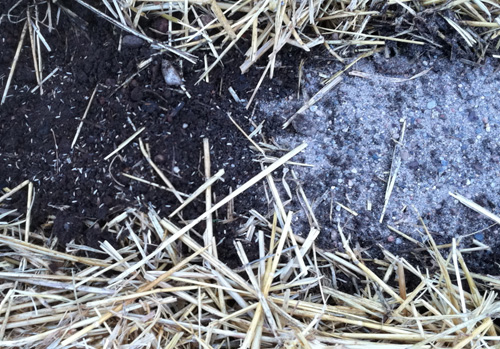
Now is the time to plant spinach and lettuce OUTSIDE as well as peas if you haven’t already done it. This year I am putting them between the rows of garlic I planted last November as APHIDS DO NOT LIKE GARLIC so I’m hoping the garlic will help keep them away from the greens this year. I took the temperature of the soil in the exposed raised bed with my compost thermometer where I want to plant them and it was 60°F. Lettuce seeds germinate best at soil temperatures of 40° to 80°F so I’m in the right range. This will be mesclun so I spread the seeds over the area as shown on the left side of the picture, then put a fine layer of sand over the seeds as shown in the right side of the picture, I planted ‘Provencal Mix’ from Cook’s Gardens and ‘Rocket Arugula’ ‘Tyee’ spinach (which is slow to bolt), and another lettuce mix with Arugula that I got from the Home Grown New Mexico’s seed swapping event we had a couple of weeks ago.

Planting peas on St. Patrick’s Day

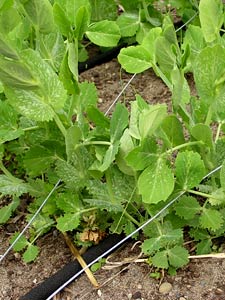
I always use St. Patrick’s Day as the day to remind me to plant peas. I don’t always get them in exactly on that day but it is my reminder to get them in soon. The weather was great this past week so I planted peas yesterday on St. Patrick’s Day before the horrible winds hit today. The winds were horrific up here at the house today-I bet 60+ mph. UGLY!! The bed I usually plant peas in has garlic in it this year so I have to put them somewhere else as PEAS DO NOT LIKE TO GROW BY GARLIC. Wherever you plant them, amend the soil with some aged horse manure (or compost) digging it in the soil.

Then put some legume inoculate on the peas (if you have the powder form) or under them (granulated form) in the row before burying them. Legume inoculate is an organic bacteria that fixes nitrogen from the air and attaches it to the roots of peas or beans making nitrogen available to them. I can just see the little bacteria grabbing the nitrogen from the air and taking it down by the roots! The next season, leave the pea ROOTS in the soil and plant a crop that is a heavy feeder by them. Once you’ve used the legume inoculate, you don’t have to add it again to the soil as the bacteria will continue to live there. Ahhh! The growing season has begun!

2012 Vegetable Seed Lists

2012 SEED LISTS

I’ve researched and updated the seed list for this year.  I created a legend with abbreviations for each seed/nursery and then put them at the end of each seed listed.  I also show which tomatoes Amy Goldman’s ‘The Heirloom Tomato’ book recommends which I use as my ‘tomato bible’! I’ve put this in my page section called ‘Seed Lists’  at the top of the blog for later reference.

Here is the legend:
AFN-Agua Fria Nursery (plants)-1409 Agua Fria Street/Santa Fe, NM/505-983-4831
SFGHSanta Fe Greenhouse (plants)-2904 Rufina Street/Santa Fe, NM/505-473-2700
BHBaker Heirloom (seeds)
SSESeed Saver Exchange (seeds)
TSTerritorial Seeds
JSKGJohn Scheepers Kitchen Garden
KSKitazawa Seed (seeds)
WCSWest Coast Seeds (seeds)
CGCooks Garden (seeds)
TFTomato Fest (seeds)
TGTomato Growers (seeds)
TTTotally Tomatoes (seeds)

2012 TOMATOES
RED

*AG/Pantano Romanesco-red/70-80 days-BH,TF(seeds)
*AG/Costoluto Genovese-red/78 days-TG(seeds)
*AG/Goldsman Italian American-red-BH (seeds)
Fireworks-red-50 days-TG (seeds)
Honey hybrid-red-76 days-TG (seeds)
Beefy Boy-red-70 days-AFN (plants)
Original Goliath/pio-red-65 days-TT-seeds

ORANGE/YELLOW

Jaune Flamme–70-80 days-SSE (seeds)
Aunt Gertie’s Gold-TG-75-80 days (seeds)
Lemon Boy-AFN (plants)-hybrid

BI-COLOR

Striped German-bicolor-super sweet-super sweet-SFGH (plants)
*AG/Gold Medal-bicolor-75-80 days-BH (seeds)
*AG/Ananas Noir-fantastic flavor, I’m growing 2 this year-BH, SSE (seeds) plants)
Virginia Sweet-super sweet, AFN (plants)

BLACK OR PURPLE


Paul Robeson-black/75-85 days-AFN (plants)
Cherokee Purple/80 days-AFN (plants)
Black Pear-70 days-AFN (plants)
Brown Sugar-BH- ?days
Southern Nights-BH-? days

CHERRY TOMATOES

*AG/Black Cherry-black/75 days-AFN (plants)
*AG/Green Grape-green/AFN (plants) or SSE (seeds)
Sun Sugar-yellow cherry-62 days-TT (seeds)-hybrid
Golden Pearl-GS-hybrid

* AG-recommended by Amy Goldsman’s book, ‘The Heirloom Tomato’

2012 VEGGIE LIST
BEANS-Rattlesnake bean snap OG (remarkably flavored pole bean)-SSE (seeds)
Emerite bean, pole bean-JSKG (seeds) ALSO
Tarbais bean pole-for dry bean
Fava Bean-for dry bean

CARROTS-Atomic Red-BH, Cosmic Purple-SSE, Paris Market-SSE

PEPPER-Shishito (Japanese non hot pepper)-AFN (plants) or KS(seeds)

SUMMER SQUASH-ZUCCHINI-Costata Romanesco (best tasting zuke around)-BH (seeds)
CALABICITAS SQUASH-seed from local grower

EGGPLANT-Fairy Tale (best sweet, no bitter taste and soft skin eggplant I’ve tasted)-AFN (plants) or TS (seeds)

FENNEL/FINOCCHIO-Di Firenze-BH (seeds)

CUCUMBERS-Parisian Pickling, De Bourbonne, Boothsby Blonde, Poona Kheera, Armenian and Russian- I grow cukes for either taste or which variety is best for different types of pickles-all BH (seeds)

CORN-again not this year (I’ll get it from our Farmers Market)

LETTUCES–Provencal Mix, Mesclun Mix, Buttercrunch, Yugoslavian Red, Santoro Lettuce, and Little Gem-CG (seeds)

SPINACH-Bloomsdale-CG (seeds) and Tyee

CARROTS-Cosmic Red BH (seeds) and

ARUGULA-Apollo-SSE (seeds)

BOK CHOY-Extra Dwarf Pak Choy-BH (seeds)

CHARD-5 Color Silverbeet-SSE (seeds) and Argentata Swiss Chard-JSKG (seeds)

PEAS-Dwarf Sugar Gray-SSE, Oregon Spring II-BH (seeds)

TOMATILLO-Green-70-80 days-SSE (seeds) or -AFN (plants)

JERUSALEM ARTICHOKE

POTATOES-fingerling types
2012 GIANT PUMPKINS
All came from private growers
895 Grande 08 (1016 Daletas x 1385 Jutras)
421 Cabossel (895 Grande x self )
1046 Grande 10 (901 Hunt x 1385 Jutras)

OTHER GIANT VEGETABLES
GIANT GREEN SQUASH-all came from private grower
340 Cabossel 11 which came from 903 Noel 07 (848 McKenzie x self)

GIANT MARROW-(like giant Zucchini)-all came from private growers
75.4 Wursten 09
62 Cabossel 11

GIANT TOMATOES
-7.18 N. Harp 09 (5.58 Timm x open)-private grower
5.416 N, Harp 09 (5.58 Harp x open)-private grower
Big Zac/TT (seeds)

GIANT PEAR GOURD-private grower
103 Cabossel 11 which came from 89 Scherber 10

LONG GOURD-private grower
135 Jacobus 10

GIANT SUNFLOWERS
-Titan-SSE, BH (seeds)

2012 EDIBLE FLOWER LIST-
Following is the list of edible flowers that will be planted or are already on the property:
Borage-great honeybee plant
Calendula-Orange King-BH (seeds)
Chives-AFN (plants)
Cilantro-AFN (plants)
Dill-AFN (plants)
Lavender (in existing different area)
Marigold-Lemon Gem-TS (seeds) this is the only edible marigold
Nasturtiums-Tip Top -CG (seeds)-prettiest nasturiums
Pansies-get them anywhere
Violas-get them anywhere
Roses (in different existing area)
Black Oil Seed sunflower (for the birds!)-WCS (seeds)

2012 HERBS-Following is a list of herbs that will be planted or exist on the property

Basil (Genevese)-new SHGH (plants), 
Lime Basil-new-SFGH (plants), 
Thai Basil-new-SFGH (plants)

Oregano-must replant rabbits ate it this winter

Thyme-exists
, Lemon Thyme-exists
,

Chives-exists
.

Dill-usually self seeds
,

Marjoram-new-SFGH (plants)

Mint-exists

Sage-exists
Lavender-exists

Winter Savory-exists

Lemon Verbena-exists

Fire very near the house!

The fire at our neighbor's house last Thursday. Those little vertical squares in this photo are the windows in the house. Fire reached 20 feet high a few times.

A fire broke out on Thursday late afternoon in our neighborhood. It was less than 1/2 mile away which is basically 3 houses down the road and the way the wind was blowing with 45 mile hour winds, it could of taken out some of my neighbor’s houses or shifted and gotten ours. Luckily it went right in between 2 houses and missed everyone. I figure about 1/2 mile burned. Many of us neighbors were on the back line putting out hot spots and hosing down the land closest to the homes. The fire got within 30 feet of one home. I shoveled the hot spots and saved 3 trees from going up in flames. After the firefighters got there (3 fire engines) they made us get out of the hot zone after about an hour. Actually this was good because my throat was killing me the rest of the night from the smoke inhalation-it went away by morning. We had most of our valuables at the front door in case we were evacuated and several friends lined up to get our animals out but it wasn’t needed thank god…The next morning I was still shakey from the adrenaline rush/crash afterwards. We were all very, very lucky..

Master Gardener Intern Class-Vegetables

I’ve been totally busy teaching classes lately and the last class I taught was the Santa Fe Master Gardener Intern Class on Vegetables. All I can say to the interns is hang in there. Yes there are some difficult classes to get through but there are some great instructional classes as well that are like a breath of fresh air. It wasn’t till I became a Master Gardener that I really blossomed as a gardener. And now I am a rabid gardener! The knowledge you will continue to gain afterwards, the contacts, camaraderie and friendships you will develop will help you grow as well as the plants you will be growing! Hopefully you enjoyed and learned a lot from the Vegetable class. (Yes it was my favorite class when I was an intern!) So for those of you who couldn’t come to class or aren’t in the program but are interested, here are the information sheets. I want to make them available to all.

VEGETABLE GARDENING IN SANTA FE  gives an overview of vegetable gardening in Santa Fe.

INFORMATION SHEET covers what the differences are  between an Heirloom, Hybrid and GMO plant and explains what mycorrhizae fungi is and how it helps plants grow.

HERBS is a list of perennial and annual herbs we can grow here in Santa Fe.

PLANTING TOMATOES and PLANTING SQUASH both address how to transplant them into the garden and some of the things I add to help grow these beautiful vegetables and also how to help thwart the dreaded squash vine borer and squash bugs.

SEED STARTING DATE CALCULATOR from Johnny’s Seeds is the same one from the previous post but if you didn’t read it, then here it is. A great tool for when to start seeds or transplant them into the garden.

And now if you will excuse me, I will continue starting my seeds inside! Perfect day-cold, windy and snowy!

Starting Seeds Inside

Pea seeds starting to sprout after being treated with ascorbic acid.

Last Saturday I taught a seed starting class at the Railyard classroom. I want to share the information sheets I provided in class with anyone who might be interested.

STARTING SEEDS INSIDE will help anyone who wants to get a head start on how to start seeds inside.

One of the tricks with peas (especially if they are older) is to soak them in a water/ascorbic acid mix. To read how, go to PRESPOUTING SEEDS. I soaked them for 2 days and then put them in damp paper towels and in a plastic baggie. The little seed germinates the root right away. Then plant each pea root down in a little pot being careful not to break the root and wait for them to come up. My goal is to plant the pea PLANTS by March 17th (St. Patrick’s Day) instead of planting the SEEDS that day.

DIRECT SEEDING: TRANSPLANTING covers planting seeds for warm season crops directly in the soil AFTER the danger of frost has passed.

COOL-WARM SEASON CROPS is a list of plants you can grow by season. We are right now in the beginning of our growing seasons which is COLD SPRING/FALL meaning we can plant those plants in early spring and again in fall. The next group we can plant on the list (generally in April) is called COOL WEATHER crops and then of course we go into the WARM SEASON crops which is after the last frost freeze date (our area May 15th) and for those cold hardy people there is a list of WINTER crops.

Four Season Harvest by Eric Coleman

I suggest you read Eliot Coleman’s Four-Season Harvest book which is a great resource for all seasons.

SEED STARTING DATE CALCULATOR from Johnny’s Seeds does all the work for us as to when to start seeds inside and when to plant them in the ground (that also means when to put in transplants if you choose to buy them instead). I just plugged in the last frost free date and it does the rest. Now all we have to do is get a calendar out and write down when we should start the seeds for the plants we want to grow this year. A terrific resource. Johnny’s has some other great tools on their main page in the left hand column under GROWING GUIDES called Interactive Tools. Be sure to check them out.

NEXT: MASTER GARDENER INTERN VEGETABLE CLASS

Seed Heating Mats for Starting Seeds Indoors

I did a little experiment. I started my lettuce bowl, putting seeds on the ‘bowl’ and lightly covering with sand. I didn’t have enough room to put the whole bowl on my seed heating mat (I’ve ordered another one) so I put half ON my mat and half OFF the mat as in the picture. The heat comes from the bottom. The temperature of half ON the heat mat was 77°F and the half OFF the mat was much cooler at  70°F. The half on the mat germinated in 3 days while the half off the mat had only a few seeds germinate. Amazing how the temperature affects the germination rate. Lesson here? If you plan to start seeds indoors, get a seed heating mat. Next: Review of my Seed Starting Class last Saturday.