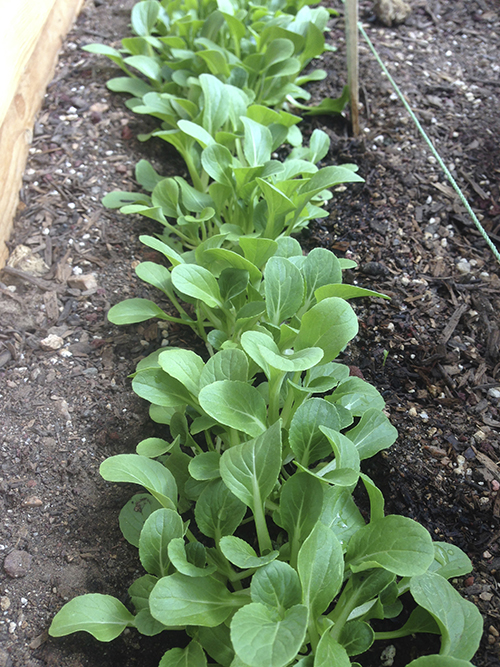
Cool season crops have begun

transplants-2-weeks-old

When I was looking through what I plant each year, I realized I actually grow many varieties of cools season crops (like greens/lettuce). I started some seeds of cool season crops inside under lights but no heat on Jan 17!  I never put the heat mats on for cool season crop seeds, only for warm season crops and it is way too early for them just yet.

I started:
Asian greens: bok choy, pak choy, Wasabi arugula

Lettuces: 4 Season Lettuce butterhead, Yugoslavian Red butterhead, and Santoro butterhead lettuce. Can you tell I like butterheads?!

Leeks: Solaise, King Richard and American Flag

Onions: Candy (it is an intermediate or neutral variety) which is they type of onion we have to grow here.

Spinach: Carmel-Just planted the seeds today. Still have some spinach plants that have overwinter nicely outside in a raised bed with only winter weight row cover on it. By planting a crop of spinach last fall, I’m hoping I get a bumper crop of spinach in March! The variety of spinach I like the most is called Carmel which overwinter last year and looks to do the same this year. You can get seeds from Johnny’s or plants from Agua Fria Nursery.

4-season-lettuce

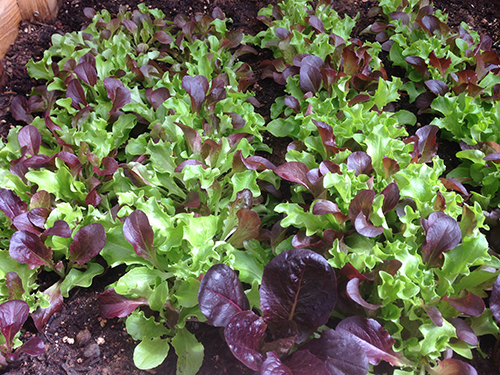
four season lettuce is looking good

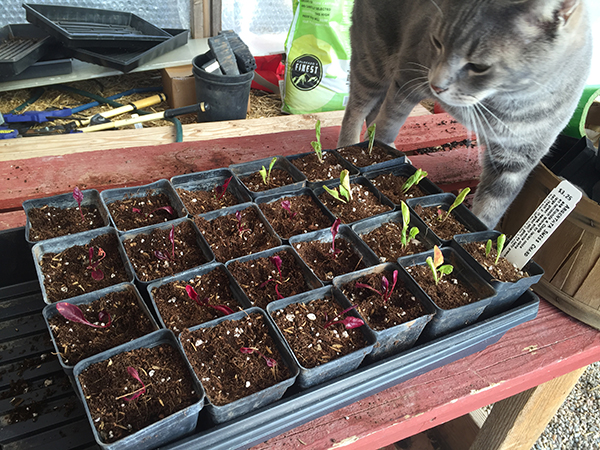
Today I transplanted up lettuces and Asian greens to pony pots from seed trays. The plants are looking good but need to grow more before I put them out in my green house or cold frame. You can plant outside in sunny raised beds in March but all-greenhouse, cold frames or just plain old beds will need winter weight row cover on the little starts to protect them from our cold nights.  I’m hoping to put them out by beginning of March. The varieties I grow at this time of year are very cold hardy. I’m trying to get a head start as our cool season crop season is pretty short here before it gets too hot and everything bolts. And there is nothing better than spring spinach or lettuce!

More daylight hours/plants start to grow again

Growing Spinach and Lettuce in a Cold Frame

The Persephone period is over. Elliot Coleman in his Winter Harvest Handbook, coined this name. When daylight hours are less than 10 hours per day, the plants that are in the ground slow down or stop growing altogether during this time. This means that the spinach or mache you planted last fall had slowed down and by Thanksgiving stopped growing. The Persephone period can be longer or shorter depending on what latitude you live in. For us in Santa Fe, it is from Thanksgiving to Jan 14th.  In states that are further north, they are still in the Persephone period. As the daylight hours continue to get longer and longer, you should notice the plants starting to grow again. I grew ‘Carmel’ spinach last fall in one of my beds up by my house and it is still alive, covered with winter weight row cover. I did this the year before and it survived and gave me beautiful spinach by March that I was able to harvest 4 times before it became too warm. If you didn’t grow anything to overwinter, you can now start spinach, Asian greens like ‘Tatsoi‘ and ‘Baby Bok Choy’, mache and some very cold hardy lettuces like ‘Winter Wunder’ and ‘Marshall Red Romaine’ once the soil warms to 40•F+. If you keep them covered with winter weight row cover to protect them from our cold nights, you will be able harvest them in early spring barring any devastating deep freezes. If you can’t wait and want to speed up the process, start the seeds under lights inside now and transplant them next month in February. To find other extra cold hardy crops to grow, go here.

Growing Season for 2016/Fall Harvest

fall-harvest-crop_nov-2

Fall harvest in 2016-tomatoes, beets, carrots and kale are just a few of the vegetables still being harvested here on my micro-farm

This has been a most remarkable growing season this year. In fact, I can’t remember in all my 21 years here of weather like this. After two months of unseasonably hot summer weather at the beginning (when the tomato blossoms dropped because it was too hot) and then two months of very cool summer weather (when the tomatoes didn’t want to ripen because they need heat to ripen once they are set) we now have been in an unbelievably wonderful fall. Nice and warm in the 70’s in the day and cool but not freezing nights.

But all this is going to change very quickly now that we are in November. Weather prediction is for it to change to colder weather. Like duh, it’s NOVEMBER dude! Of course it will get colder! My fruit is done-apples (we made hard cider!), apricots, grapes, strawberries and raspberries are done here. Most of my warm season crops are gone (cucumbers, squash, peppers, eggplants, pumpkins, corn, etc. except the tomatoes, my favorite crop!)

Meanwhile the fall harvest continues with tomatoes still ripening (at least this week) and all the cool season crops are kicking it and should be for quite some time if I cover them with winter weight row cover. The kale is going gangbusters, cabbage is ready, onions and potatoes are ready to harvest, carrots and beets are ready to be dug out too and chard is busting out all over.  My broccoli and escarole I planted in August at my fall garden class are almost ready too. Then pantry is bursting and the refrigerators and freezers are overflowing too! Enjoy what we still have left of this season!

Extending the Season-Making a Low Tunnel

low-tunnel-2016

These broccoli transplants were put in on Aug 24, 2106

I taught a class in late August on Planting for a Fall Harvest where I showed the students you don’t have to have a Greenhouse to extend the season. You can also have a cold frame or even simpler is what I call a low tunnel. Now with the cold nights, you definitely need something over your new fall transplants.

low-tunnel-before-row-cover

Here is the frame of the low tunnel before row cover-just fencing material curled into a u-shape ready for plants underneath it

I like to make my low tunnels out of 2″ x 4″ fencing or even concrete reinforcement wire.  I just open up the fence roll, cut off enough so it will be curved above my plants and turn it upside down on the soil.

img_3998_1024

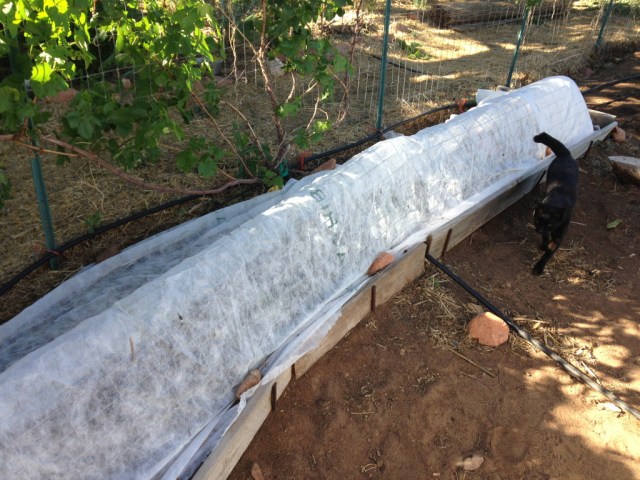
row cover over the low tunnel protects crops at night

Cover it with winter weight row cover (1.0 ml).  I put rocks on mine to keep it from blowing away. Now you have a secure low tunnel that will protect your plants during the shoulder season that is closing in on us quickly. What is a shoulder season? It is the time of year when the temperatures can drop quickly at night near freezing and then heat up in the day. The temperature shifts can swing wildly during the shoulder season. We have a shoulder season in spring and fall. By making a low tunnel, you can extend the season and grow vegetables like spinach, arugula, kale, lettuce, bok choy, mustard, mesclun, radicchio and other cool season crops much later. Fall is a great time to plant cool season crops and it’s not too late if you get transplants now. It might be too late if you start from seed unless it’s lettuce. Try to pick varieties that are cold tolerant.

Gardening this spring

trini

But first one last memorial-I couldn’t resist because I found this photo. I haven’t written much lately because I’ve been sadden by the death of my favorite kittie-kat, Trini. Above is a photo taken by Genevieve Russel several years ago when Trini was younger that I just found and wanted to share. Wasn’t she beautiful? She had a heart of gold too. She would let you do anything to her-toss her around, make her dance or dress her up in doll clothes and put her in a high chair (Flynnie did that years ago). I even made her play the drums with me once! And whenever you answered the phone, there would be Trini, meowing loudly in the background so as not to be ignored. Absolutely had no boundaries (which is unusual for a cat). We have two other kitties (with boundaries) who would never let us do any of those things (probably claw our eyes out), who are wonderful too, but Trini was a very special being.

But I haven’t been sitting around either. I’ve been sooo busy finishing planting cool season veggies outside in the greenhouse and coldframe, and doing succession planting of more lettuces as I use them up. Here’s what’s been up around the farm:
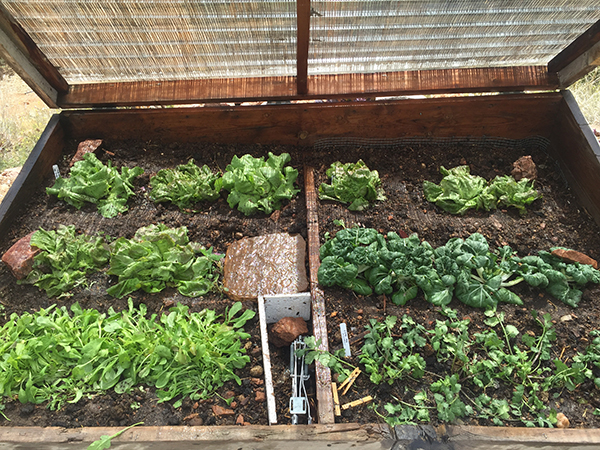
coldframe+04-2016

Wrapping up all cool season crops-lettuces, bok choys, kale and chard are going outside either in the greenhouse, cold frame or in the main garden. Many have already been growing (and eaten). Pictured above, my coldframe shows lettuces, cilantro and bok choy ready to harvest. As we eat them, new ones go in any empty place. This cool spring has been great for the cool season crops this year. Absolutely no bolting yet-wonderful! Notice the bamboo shade screening on the outside of the top of the coldframe. It was cut to size and screwed on and provides wonderful shade to help keep the plants cooler and keep them from bolting. I won’t be planting any more lettuce greens for a while, but when I do, it will be with HEAT TOLERANT lettuces for summer outside in the shade. Besides I have enough to eat for at least a month…

GH_04-2016

Here are some other lettuces inside the greenhouse we’ve been munching on since winter. This variety is ‘winter wonder’. I’ve already harvested a bunch and will soon finish it as this variety likes cooler weather. In case you’re wondering, that hardware cloth in the pic above the lettuce, is a lid covering all those beautiful lettuces. I propped it up to show the lettuces. I built it to keep the mice from eating them first. Last year was terrible for me and great for the mice-they ate anything young or tender. The lid is working-no lettuce has been eaten in the greenhouse by mice, only me! Haaa!
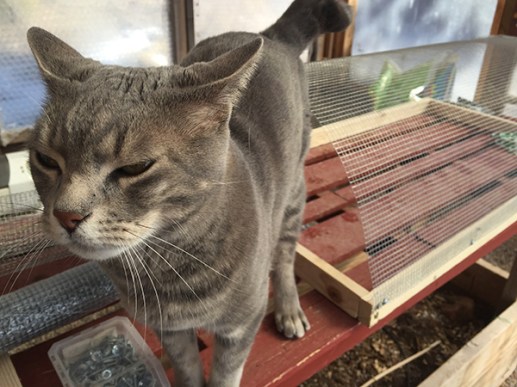
BT in GH

But maybe the presence of one of our cats, BT (broken tail-hey we didn’t do it, we got him that way!) the great mouse hunter, also has been an influence on no mice in the greenhouse! Here he is checking out my building skills.

Bt in lid

And here he is trapped in one of the lids!


spinach spring


spinach bed with shade clothWonderful spinach-this variety, Carmel, shown above has some radishes growing with them. You can still buy starts from Aqua Fria Nursery but soon the spinach season will be over so don’t plant by seed now. To extend the season at this time of year, I put a shade cloth over the bed (right) so they will last a little longer and not bolt. Meanwhile the spinach has been wonderful with this extended cool weather we’ve had. Better enjoy it now as it’s gonna get warm soon.


kale floweringLast year’s kale is toast. Finito. The pic on left shows them bolting (flowering) and putting all their energy into making seeds and fighting off the aphids. Kale is a biennial plant, meaning they will live two years, putting most of their energy into making leaves the first year and making seeds the second year. Since I don’t want to keep the seeds this year (I have plenty), I will pull them and give the plants to my chickens after they finish flowering (the bees like the flowers). The chickens will enjoy the kale and get extra protein with the aphids-perfect. Otherwise if I had no chickens, I would be composting them. There would be no problems with the aphids as they need living plants to feast on. In the compost pile, as it heats up, they will become toast anyways (I like that word)! But don’t worry, I have another crop of kale going in this week!
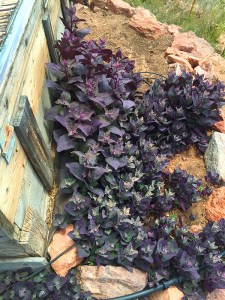
red orach reseeded

In the left pic is Red Orach. Plant it once and you’ll have for a lifetime. It readily reseeds itself. It is very tasty—kinda like spinach (in the same family) so you can cook it or put it into salads. Here it is growing willy-nilly everywhere.


garlic and shallotsIn the right pic is garlic growing nicely. Planted it last fall and mulched it with straw to help keep moisture in the soil. It’s not a cool season crop but does come up with the other cool season crops. I bet you wonder why I have a ladder across the bed-well it is to keep the neighbor’s dogs off of it and it works! They use to come over and lay or wrestle on top of the garlic and straw and now they don’t bother it at all.
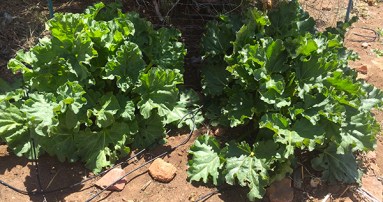
rhubarb spring

And let’s not forget rhubarb this year! Mine is up and I’ve already cut off the flowers so all of their energy will go to the leaves and stalks. Only eat the stalks as the leaves are toxic. They have concentrated levels of oxalic acid in them.  How toxic? I don’t know how toxic for humans but I once saw a dead mouse who ate part of a leaf and died under it! Soon there will be rhubarb-strawberry pie-yum!


potato bags in herb garden

Finally I planted some of the potatoes in ‘potato gro bags’ in the herb garden. Can’t wait to see how they do! These are “purple’ potatoes whose variety name I can’t remember, but they are a fingerling type. The herbs are doing well too. This is the second year for these perennial herbs. There is marjoram, oregano, kitchen sage, winter savory, thyme, chives, tarragon, lemon thyme and garlic chives. We beefed up some of the drip system so they should get plenty of water this year. Lavender is in another part of the garden and lots of basil will go down in the main garden later when it warms up!

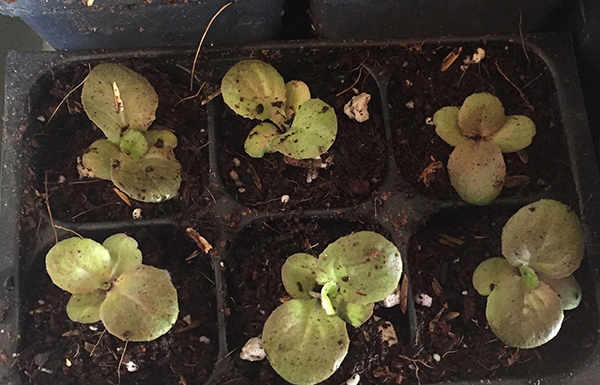
 

Transplanting seedlings

Every year I get lots of questions on how to start seeds and transplant seedlings. To see how I start the seeds go here, but here’s how I transplant my baby seedlings up into larger pots.

transplanting seedlings_before transplanting

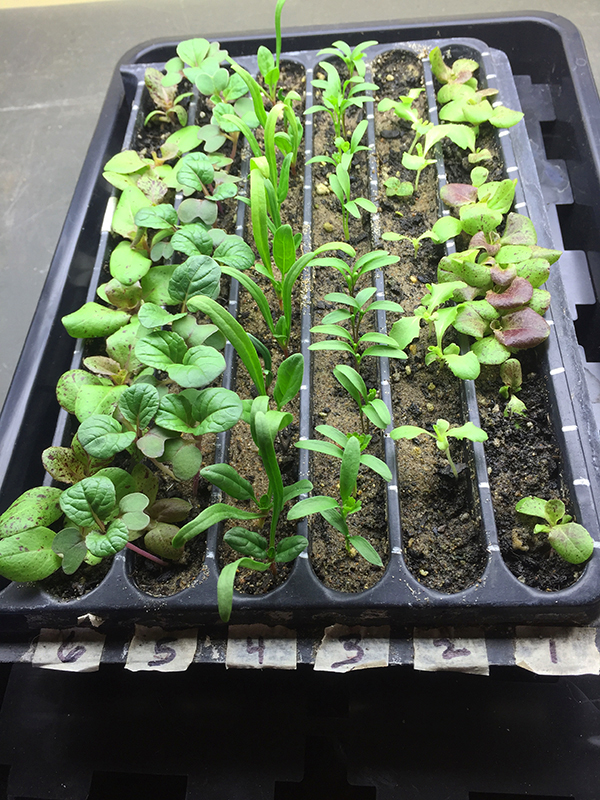
Here are the seedlings today from when I planted on February 8.  Notice the first true leaves are showing. They are now ready to transplant. Can’t let them get too big in these shallow seedling trays. With my marks, I can see what didn’t germinate.


seed starting tray with journal entry.jpg

Here’s the line up of what each number represents again if you want to see how each seed variety grew.


transplanting seedlings_rinse packs

I use 4 and 6 pack pots for transplanting up. I disinfect them in a kitchen sink full of water with about 2 tablespoons of bleach. Just dunk the pots and any trays you may use and then rinse them off and they are ready to plant. You don’t have to scrub them, just dip them in quickly, like they use to do with the glasses in those old college bars (oops, giving away my past!) If they are brand new, never been used before, then skip the bleaching.


BATCH 64_MOONSHINE

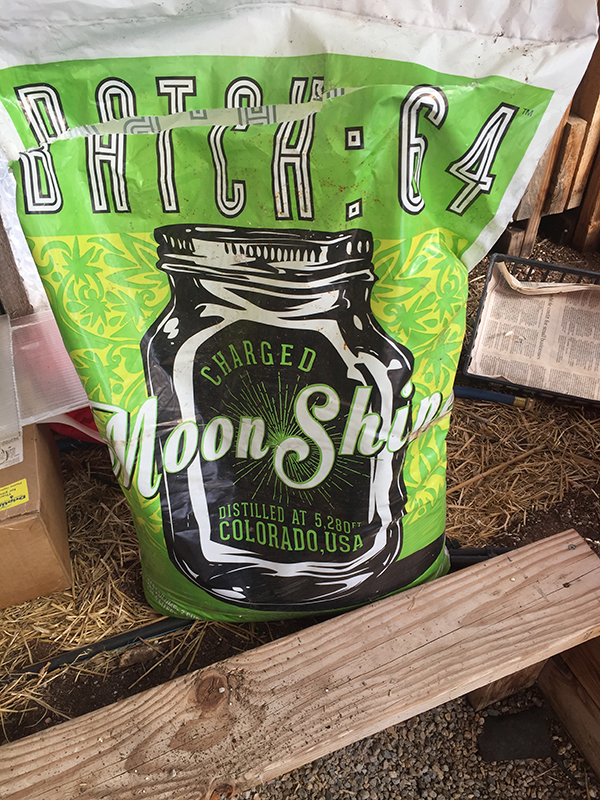
I’m using ‘Moonshine’ planting soil. I talked about it here. Great stuff.


transplanting seedlings_moisten soil

Be sure to pre-moisten the planting soil. Here I’m using a shallow ‘Tub Trug’. I love those tubs—so handy-from this to harvesting crops later and they come in fun colors.


transplanting seedlings_make holes

Make some holes with your finger big enough to accommodate the root ball. You’ll be surprised how big the little rootballs are.


transplanting seedlings_using knife

I take a small knife (this one plastic) and gently pry up the seedling out of the tray and carefully put it into a hole I made in the soil.


transplanting seedlings_transfering to 4 pack

Pick up seedlings by the leaves NOT the stem. The stems can get easily damaged so always handle them from the leaves. Notice the roots! I usually like to put the stems a little deeper in the hole so they stand upright.


transplanting seedlings_tamp soil

Gently pack the soil around them so they are sitting up nicely and not leaning.


transplanting seedlings_use seaweed

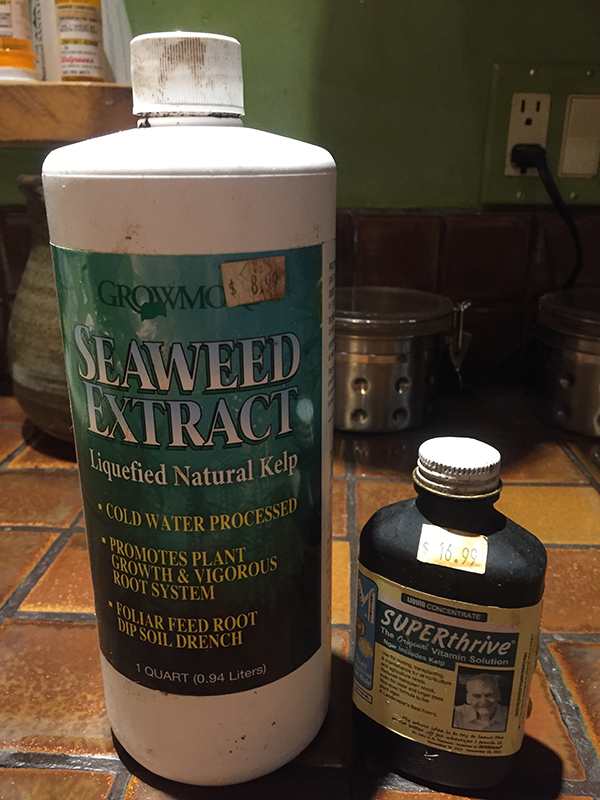
Water them with a diluted solution of  seaweed fertilizer and Superthrive to help with any transplant shock. Do NOT give them any fish fertilizer as that may give them too much nitrogen when first transplanting and send them into shock. Wait a couple of weeks before giving them any fertilizer with nitrogen. The seaweed and thrive help reduce any transplant shock.

transplanting seedlings_flat of transplants

Here is one of the first flats transplanted. Ain’t they pretty?! Now they are ready to take off and really grow! The next replanting will be into the greenhouse raised beds when they are bigger!

Seeds already germinating!

seed startingseegermination 02-16

I planted some lettuce and greens seeds on Feb 8 and by Feb 11 some are already germinating! That’s only 3 days. Wow. Unbelievable! Here’s the lineup again and how they’re doing so far:

#1 Yugoslavia Red lettuce just peaking up

#2 Santoro barely peaking up

#3 Slow-Bolt Cilantro not up

#4 Carmel spinach just starting to come up

#5 Baby Pak Choi way up

#6 Forellenschuss lettuce way up

Not surprising, the two larger seeds #3, the Slow-Bolt Cilantro and the #4 Carmel Spinach are slower to germinate. I imagine the bigger the seed, the longer it takes to germinate. But to my surprise, the spinach is starting to come up already and the little seeds like lettuce just exploded through the soil. Amazing. I’m totally surprised how fast some of them have germinated.

Now I just got to make sure to mist them heavily 2x-3x a day to keep the soil moist while they all germinate. I will spray diluted Chamomile tea on the baby seedlings tomorrow to keep Damping Off disease from coming. It works great.

Transplanting winter lettuce and chard


chard crowded

I went down to Agua Fria Nursery and got some lettuce and chard starts back in mid-November intending to plant them right away. I waited too long to transplant them and they got stunted and crowded in each cell as shown above.

chard just transplanted

Chard transplanted on Dec 1

When I did transplant them I teased them apart and planted them in small pots. Here they are right after I transplanted them on December 1. ‘BT’, the man of the house, inspects them.

chard_2 weeks old

Chard transplants on Dec 14

Here are the Chard transplants on Dec 14-only 14 days later! Look at the difference between the two pictures. I’ve grown all the lettuce and chard transplants under my lights in the house as it is too frigid to put them in the greenhouse now. I figured I could wait till after the Persephone period was over and by then they would be just big enough to transplant in the GH. The Persephone period will be over on January 15th here in Santa Fe when the daylight hours get longer again. The plants will be ready to transplant way before that time period. The chards are coming along nicely. I’m growing ‘Argentata’ chard and ‘Ruby Red’ chard.

BATCH 64_MOONSHINE

I planted them in a new potting soil called Batch 64-‘Moonshine’ which is available at Agua Fria Nursery in town. It’s fantastic with everything growing very fast. When I went back to Agua Fria Nursery and talked to Bob, he said he had the same experience last year, especially with the tomatoes.

Here are the ingredients in it: coconut coir, perlite, pumice, rice hulls, expanded shale, humus, worm castings, biochar, feather meal, fishbone meal, blood meal, alfalfa meal, oyster shell, metamorphosed evaporite, flaxseed meal, cotton seed meal, dried molasses, kelp meal, azomite, potassium sulfate, limestone, yucca extract, and mycorrhizae. Phew-quite a list!

The lettuces planted on Dec 1 are ready to transplant now! They have absolutely gone crazy growing super fast in this potting soil. The varieties I’m growing are North Pole, Winter Wunder and Marshall Red Romaine.

Kale

winterbor_russian red kale

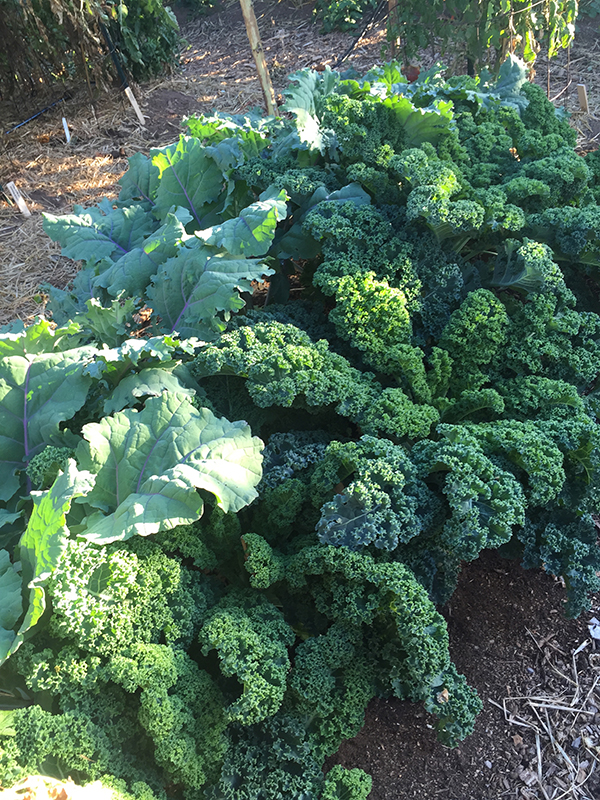
Russian Red Kale on left and Winterbor Curly Kale on right doing well with the cold nights

This year I grew 3 different varieties of kale-above is the Russian Red and Winterbor Curly kale growing together

lacinto kale

Lacinto kale (also known as Dino kale) It is the dark green in front of grape vine

Here is the Lacinto being shaded by the grape vine with carrots growing in front

Of the 3 varieties, Winterbor Curly Kale is my favorite and it is the most cold hardy. I started growing them the last week of July just before the Home Grown New Mexico Tour I was on. I had some holes in the garden so I ended putting some kale there. The Lacinto was partly shaded by a grape vine so it did not receive full sun. The Lacinto got heavily attacked by aphids. I sprayed all of them with water to help keep the aphid numbers down. But the Russian Red and Winterbor were planted elsewhere in the garden. I put them next to some tall tomato plants on one side and some tall sunflowers on the other side so they never got full sun either. They do well in our hot summers with some partial shade. They were not attacked by aphids. All three are still doing well. I’m not a great fan of kale so I’ve been looking for recipes that make me want to eat it. Here’s one wonderful way to eat it.

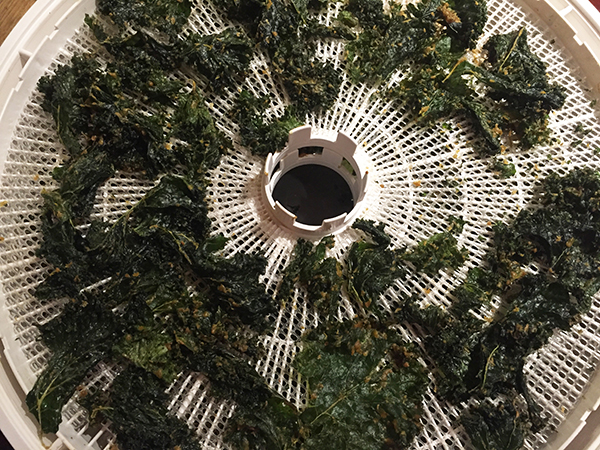
Kale Chips– you can use any variety of Kale to make this. This is now my favorite way to eat kale-dried! Kind of like potato chips but way more nutritional. Here’s a great simple recipe.

Kale Chips recipe courtesy of http://www.somastudio.net/2013/02/crispy-kale-chips/

Crispy Kale Chips
This kale chip recipe is easy to make and is so tasty you’ll want to make a double batch!

Ingredients:
2 big bunches of kale
1/2 cup raw tahini
1/4 cup olive oil
1/4 cup wheat free tamari
1/4 cup raw apple cider vinegar
1/4 cup nutritional yeast
2 cloves garlic
1 teaspoon onion powder
1 tpsp maple syrup
optional 1 tsp of chilli flakes

Instructions:
Rinse, de-rib, and rough tear the kale into a giant bowl.
Put all the other ingredients into a food processor or blender and mix until smooth or use a hand blender
Pour the mixture over the kale, and use your hands to toss it all together. Squish Squish! Get it good and covered.

Oven method:
Spread the kale out evenly on lined or oiled cookie sheets. You want them to be as ‘dehydrated’ as possible, instead of baked.  250º for 4 hours (ish). Every oven is different so you’ll need keep an eye on it and be your own judge. Just remember that too much heat will change the flavor.  Don’t overcook them!

Here is the recipe in PDF format for printing:
Kale Chips recipe

___________________________________________

MORE METHODS

Dehydrator method by http://www.giantveggiegardener.com :
Spread the kale out evenly on the dehydrator trays. Set temperature 115°F° or lower for about 4 hrs or more. Chips should be dry and crunchy when done. Every dehydrator is different so drying time may vary. This is still considered raw food done this way.

Raw food is food that is dehydrated at 115° F or lower to be the most nutritious and not lose vitamins. Above that and you start losing the nutritional value.

Here is some visuals of the process:

kale_squishing

Put cleaned, dry kale in bowl with the recipe ingredients below and squish with your hands so kale is well coated.

kale_putting on trays

Put on dehydrator trays

kale_drying

Dried Kale chips

kale_dried in jars

Store in jars or zip-loc baggies-I like storing in jars as the pieces don’t break up so much.


.


The last of the summer harvest-Nov 4

late fall harvest

The garden finally froze last night in earnest and I got to say I’m relieved that I don’t have to go out and harvest today. Not bad being that we went up to November 4th before it succumbed. I still have chard, carrots, beets and kale but the rest of the garden is toast. All that cool season stuff will be around awhile until we consistently get super cold at night but the warm season vegetables are gone. It was a big year for me as I grew 125 tomato plants with 31 heirloom tomato varieties. Phew! Just thinking about it makes me tired!

So yesterday, knowing the weather was coming, I picked the very, very, very last of the tomatoes, lots of chard, the last of the beans, some Glass Gem corn, more potatoes and I found 2 more squash. The eggplants and all the peppers were done 2 weeks ago and the cucumbers were done a month ago. This has been the biggest and best garden I’ve ever had especially with all the rain we got this summer and all the wonderful, warm days-not too hot. I didn’t even have to use any organic pesticides or fungicides this year-fabulous!

Santoro lettuce-a great butterhead variety

IMG_5764

This year, one of the lettuces I grew is called Santoro, a type of butterhead lettuce that is heat-resistant, cold resistant, has a wonderful taste and grows really big if given the chance. I got the seeds from Cooks Garden seed catalog. I started them inside the house on Jan 29, transplanted them into 2″ pots on Feb 14 and transplanted them again into the greenhouse in mid April.  I read somewhere Santoro lettuce can produce 12″ heads if you give them the room. So I spaced them really far apart to see if they could get that big. They say if you crowd big varieties they will never reach their maximum size. In the picture above I’ve picked the outer leaves to eat and wanted to see if they would grow back. The heads on the right haven’t been touched yet. As you can see I picked pretty hard. They grew back almost to the same size as the ones that weren’t picked.

IMG_5763

A couple of weeks later-Check out the size of these heads-a full 12 inches across. They are still growing in the greenhouse but now I’m picking the whole head  (instead of just the outer leaves) as I had to make way for the tomatoes that will grow in there. In fact I already have all 18 tomato plants (in wall of waters) inside the greenhouse as of May 13. I know it will get too hot for lettuces inside the greenhouse this summer so I’m starting to pull them to eat.

santoro lettuce_17 inches

May 31-I just picked this last head of Santoro lettuce yesterday (shown above between the tomatoes in the wall of waters) and it hadn’t bolted yet even though the temperatures in the greenhouse have gotten over 80 degrees. It’s handled 19 degrees to over 80 degrees! It reached 17 inches across! Hasn’t gotten bitter and is still soft and wonderful to eat. I’ve never had such great lettuce as this year, not only with this lettuce but with all of them in the greenhouse. Seems I’ve figured out how to be successful with them. I’ve done a lot of research on them from Nov-Dec to find some great varieties that were cold tolerant and now I’ve researched out what varieties of lettuce are heat tolerant, hoping to grow them in the shade this summer here in Santa Fe without bolting. Most of us don’t even try to grow lettuce in the summer as it is pretty warm here. I will list the heat tolerant varieties of lettuce in the next post and do an experiment with some of them outside in the garden.

Lettuces to grow in winter

lettuce-jan 16, 2015

Here is some lettuce I harvested from my unheated greenhouse on January 16th! I’ve been experimenting growing some cold hardy lettuce varieties (Winter Wunder and Marshall Red Romaine) this winter.  I told you I would report back and here is my first harvest. I find it amazing that they survived some very cold nights 6 to 8°F (-14 to -13°C for my European friends) in the greenhouse with only some winter weight row cover over them for added protection. I planted them from transplants instead of seeds in November so they had a good head start. It’s really fun to see something ‘green’ growing this time of year and yummy too.


Starting COLD HARDY VEGETABLES Super Early

lettuce_greenhouse germinating

So now that the Persephone period is almost over and the magic date of January 15th is upon us, what does that mean? It means our day lengths are getting longer and January 15th is when we start getting 10 hours of daylight that will continue to get longer every day. Have you noticed already it now gets dark around 5:30 instead of 5 pm? The darkest time of the year is over. What does that mean to gardeners? To learn how to start cold hardy vegetable seeds super early outside and how also how to start them inside read on.

STARTING COLD HARDY VEGETABLE SEEDS OUTSIDE: cold frme opened
If you want to try growing cold hardy vegetables outdoors at this time of year, you will need a cold frame, low tunnel or hoop house.

If you already planted cold hardy vegetables late last fall in a cold frame, low tunnel or hoop house, you may have noticed that the little seedlings haven’t been growing much at all as winter set in. Now with longer daylight hours, they will start to grow again and barring any devastating freezes, they will continue to grow and you can get cold hardy crops earlier this spring.

In late winter, before you have harvest your winter crops, decide what you want to plant in your bed once space opens up in your cold frame.  As the end of the Persephone period draws near (January 15) , you can re-seed the openings created from your harvesting or you could start planting seeds in your bed if you don’t have anything growing. My soil in my unheated greenhouse is at 40°F right now (as of January 12). Lots of cold hardy vegetables germinate in cold soil.  They will be slow to start at first but they will start as your soil warms up to 40°F and warmer. Now with the day light getting longer, you can think about starting early. The winter sowing you do will be ready for harvest by early spring, often long before the same crop when grown outside without protection. A bonus is many of the cold hardy winter crops don’t like our springs, bolting on the first few warm days so you’ll be able to harvest that spinach before it bolts!

Some cold-hardy plants planted inside a cold frame, low tunnel or hoop house can tolerate a hard freeze at night, provided they are allowed to thaw during the day. The plants must be completely thawed before you harvest them. In addition, put some winter row cover over seedlings at night to give them an additional 4-6°F protection even though they are already in a cold frame, etc. Remove the row cover on days when it is above freezing. Watering is necessary to get crops started, but they will generally need very little water during the winter season-early spring once established.

STARTING VEGETABLE SEEDS INSIDE:
I’ve already written about starting seeds inside on many earlier posts.
To learn all about starting seeds indoors to get a head start go here:
https://giantveggiegardener.com/2012/03/08/starting-seeds-inside/

WINTER HARDY VEGETABLES
The following list of winter vegetables to grow is from ‘The Winter Harvest Handbook’ by Elliot Coleman. These can be planted either as transplants (first started inside under lights) or outside as seeds in cold frames, low tunnels or hoop houses.

Asian greens-Tatsoi, Pak Choi (Mei Quing Choi), Mizuna, Tokyo Bekana,Komatsuna

arugula-Astro, Sylvetta

beets-Red Ace, Merlin, Touchstone Gold

beet leaves-Bull’s Blood, Red Ace

carrot-Napoli, Mokum, Nelson

chard-Fordhook Giant, Ruby Red, Argentata

claytonia

endive-Bianca Riccia

leek-Tadorna

lettuce-Red Saladbowl, Tango, Rex, Rouge d’hiver

 mache-Vit

minutina

mustard green-Toyoko Beau

radishes-Tinto, D’Avignon, Cherriette

scallion-White Spear

sorrel

spinach-Space

turnip-Hakurei

watercress

Green House Lettuce, Bok Choy & Chard on 3-31-14

GH lettuce 03-31-14

Holy Schmole! My lettuce, in the picture above was planted as transplants back on February 17th and look at it at the end of March. Fantastic! So excited to not have to buy lettuce and greens for a while. I’ve been experimenting in the greenhouse planting some seeds and some as transplants. I got these transplants as little tiny plants in pony packs from Agua Fria Nursery in town in February. On the left is Marshall Red Romaine. In the middle is ‘Winter Wunderland’ leaf lettuce and on the right is Bright Lights Chard.  They are growing in the middle raised bed where I had horse manure composting in January to try to add heat to the greenhouse but in mid February I took out as it cooled down and took all but the top 6 inches and added soil and compost and waa lah! You can see how big they got since March 21 here.

mesclun

Here is a pic of the lettuce I planted by seeds. It is a mesclun mix from Johnny’s called, 5-star lettuce mix. It’s not quite tall enough to ‘cut and come again’ but will be soon-probably in the next week.


dwarf bok choi

Here is a variety of dwarf bok choy (choi) I planted from seed. I will transplant some of these to sell a little later and the rest will have room to really get bigger. They are doing really well.

yellow green bok choi

I love the color of this yellow-green bok choi – chartreuse! Such a great contrast to the other ‘greens’.

tatsoi

Here is a variety called tatsoi-the hardiest of the bok choi family. It grows in little clusters.

I planted all of them on the edge of the raised bed as I’m going to put in some tomatoes soon  in the middle of the bed as another experiment to see how they do. My thinking is by the time the tomatoes need more room, the cold hardy greens will be done (eaten)  🙂

Seed Starting For Early Spring Crops-Class handouts

The Seed Starting For Early Spring Crops class that I taught today was sponsored by one of the organizations I’m a member of called Home Grown New Mexico. Home Grown New Mexico puts on many classes about growing, raising, making and preserving your food throughout the year. They are about sustainability, urban farming and growing organically which is right up my alley and the classes are open to the public. If you’d like to see what other classes/workshop Home Grown New Mexico is putting on, check out their website homegrownnewmexico.org.

Now, here are the handouts if you weren’t able to make the class or if you didn’t get them as we ran out of them during the class today-it was definitely a full house with about 35 people attending. It was a good mix of Master Gardeners, Interns and the public that attended. I really like to teach when you all show up! Hope you learned something and enjoyed it!

Starting Cold Hardy Plants in Early Spring Inside-2014

seed germination chart

PRESPOUTING SEEDS

Cold hardy crops for early spring in March-April

COOL-WARM SEASON CROPS