Water your perennial plants in January

January, January 4, 2026

We’ve haven’t gotten precipitation since last November (2025) when we got 2 storms that produced 1 inch total at the property for the whole month. In December, we got no inches precipitation-well, maybe a trace, but really nothing. Looks like it’s going to be a dry winter.

Today is a good time to water your perennial plants if you haven’t already as it is going to be in the low 50’s today. Then the highs will be in the 40’s for tomorrow, Mon Jan 5 – Thursday, Jan 9th. On Friday, Jan 10, the high will be in the 30s making watering more challenging (frozen hoses-be sure to empty them) which is why I always water when it is above freezing and I always empty out my hose after each watering in winter.

So you’ll know what I’m doing today…

Row cover-what is it and how to use it

One of two of my favorite aids to use in the garden

If you look at my vegetable garden throughout the season, you will see lots of white row cover over everything newly planted in my garden especially in spring when first planting crops out.

What is it? How can you use it? Where can you get it?

What is row cover?

Row cover, also called Remay as it is also called is a polypropylene material that you put over your crops or plants for protection from cold, to keep animals out and to help plants acclimate to our environment. Rain or water can go through it and sun comes thru although reduced if you get mid or heavy weight. It is not like a sheet, which doesn’t protect our plants. You’ll need to protect them in some kind of mouse proof container in the winter or the mice will eat holes in them. I store mine in a garbage can in the winter.

It comes in several ‘weights’

winter weight– is for when you need the most protection down 4-6 degrees below freezing. It lets in about 70% of light. I don’t use winter or heavy weight  anymore and  I would never use this weight in summer, the plants don’t need that heavy of material. I want more light to come through in the summer. My go-to now is medium weight.

medium weight– The medium weight of this row cover is 0.50-0.55 oz.
Medium weight covers allow 85% light transmission and provide frost protection down to 28 degrees. Medium or heavy covers is what should be used during our winters (that’s if you have crops then).

I use medium weight the most, especially in late spring and early summer when I’m first planting seeds and transplanting plants outside. If the night is going to be really cold, sometimes I double up the medium weight at night and fold it all back in the day. So if you only want to buy one weight, get this one. No matter what, always fold back the row cover so light can reach it in the day time and cover it back up at night if you have freezing temperatures. This exception is if it is below freezing in the daytime. Then keep it covered for that day. It lasts 2-3 years depending on the wind ripping it up.

light weight-I never use this as it tears up too easily in our spring winds. Waste of money.

How to use row cover

-I use it to protect new transplants from our high altitude sun. Also offers protection from wind.

-I use it to cover seeds I direct plant in the ground to help keep the ground from drying out.

-I use it to keep some plants (especially newly planted) from getting sunburned.

-I use it as a physical barrier to keep bugs that will damage plants off of them.

-I not only use it to protect newly planted plants but also when I put direct-seed like corn or beans in the soil, I put it over the crop-it protects from birds eating the seeds, giving them a chance to germinate. I uncover them when the sprouts are 3-4 inches tall. Birds just love corn and bean sprouts!

-I just lay a sheet of row cover directly over my plants, tacking it down with rocks or 2 x 4 wood so it doesn’t blow away. If you have a cold frame or want to use it on a raised bed, it helps to put some PVC hoops over the bed and then cover the hoops completely with heavy plastic for more protection with the plants inside with the row cover on top of them. You will need to uncover the plants in the daytime and cover at nite AND you need to vent the ends of your mini hoop house to let heat out in the day. You can google how to make a mini hoop house this way. Not hard to do and it let’s you get some crops in sooner.

Black Nebula Carrot/Soup

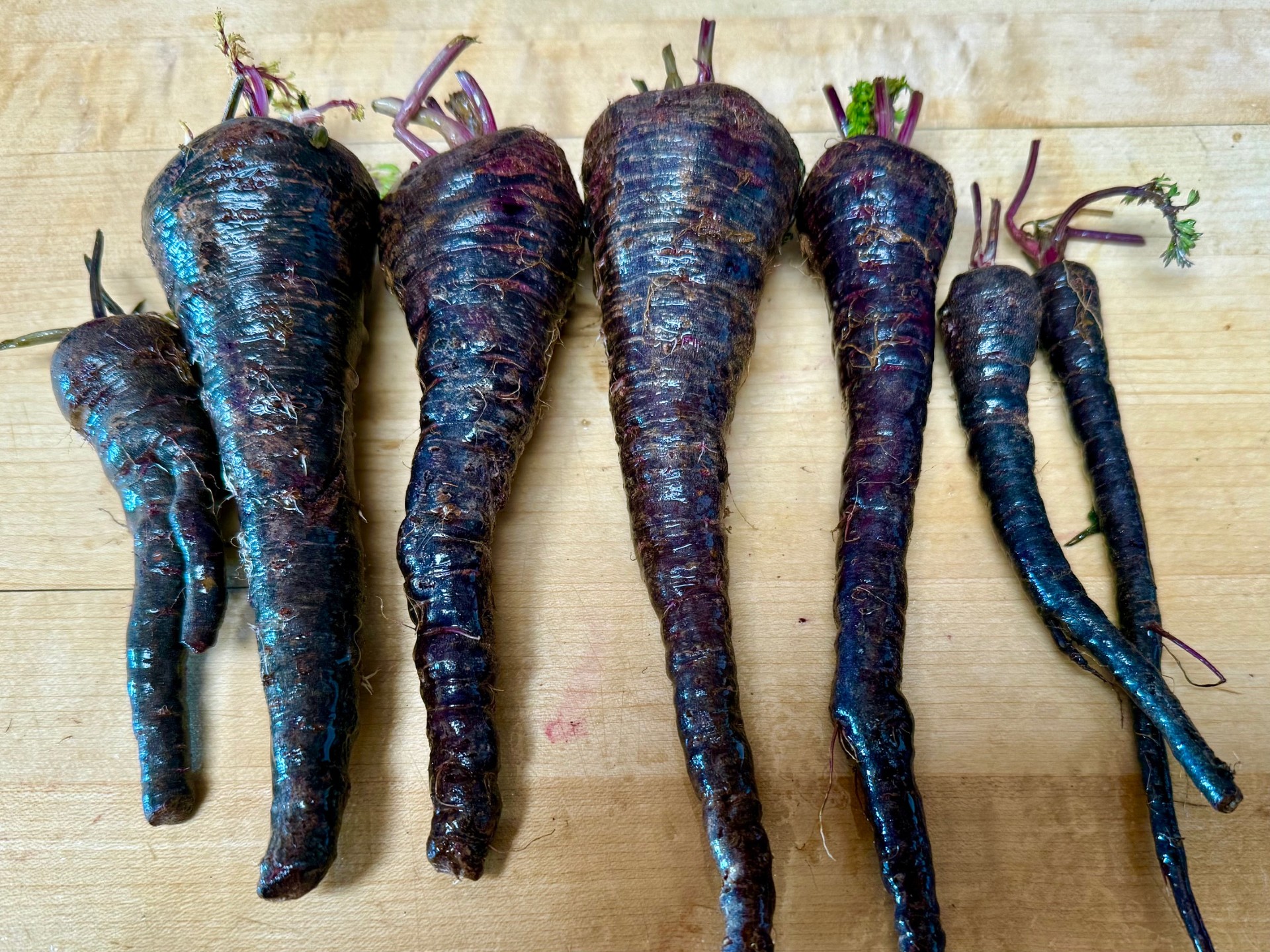
Carrots come in all colors these days and this past season, in addition to Cosmic Purple and Atomic Red carrots I grew, (which are orange inside), I found online a carrot variety called Black Nebula. I always want to explore the garden universe! I like to try new varieties and this sounded interesting! It’s deep purple-black outside and inside. I’ve always seen carrots mostly orange inside, so I thought I’d try it. It is an open-pollinated (OP) rare variety and the seeds can be saved. It does well in our heat and grew all summer till harvest time in the fall-75 days to harvest. I got it from trueleafmarket.com. I thought they would be good roasted in the oven with other colors of carrots and they were very tasty.


Then I thought of making them into carrot soup. The carrot soup  I make always turns out orange. I knew I wouldn’t put the orange carrots and black carrots together to make soup as I thought the soup would be grayish. I gave Mernie, a friend, some of the black nebula carrots and she made them into soup. It turned out the most beautiful purple color and had a nutty/sweet taste. Ah ha-another way to use them! And they don’t taste like beets but true carrot flavor.

Here is a carrot soup recipe I gave her. You can use it for any carrot soup. As you can see, I’ve used it a lot and made some adjustments. So I went ahead and retyped the recipe as this one is too beat up from use.

Here is the recipe for you to print out. Enjoy!

HARVEST CREAM OF CARROT SOUP


April is here. Where have I been? Starting Plants Inside

April is here. Where have I been? I had 2 rotator cuff tendons and bicep tendon surgery on Dec 12 with the idea I will be gardening by June (and flyfishing too). The bicep tendon is attached to a bolt that was screwed into my humerus bone. It’s been a long hard recovery-I am in physical therapy since then but progress is slow, slow, slow. For awhile it felt non-existent, but I have turned a corner and am slowly getting better. For 2 months, I was in a sling but now have 2 hands to work with but still not allowed to raise my arm up over my head yet.

Progress.

And now gardening season is upon us. But I have been able to do a few things regarding gardening!

To catch up-I started in March, cool season crops inside under grow lights (with no heat) like lettuces, spinach, cauliflower, bok choi, cabbage, Chinese broccoli, herbs and beets. Many have already been transplanted to 2 1/4″ pots where they will get bigger until I transplant them outside.

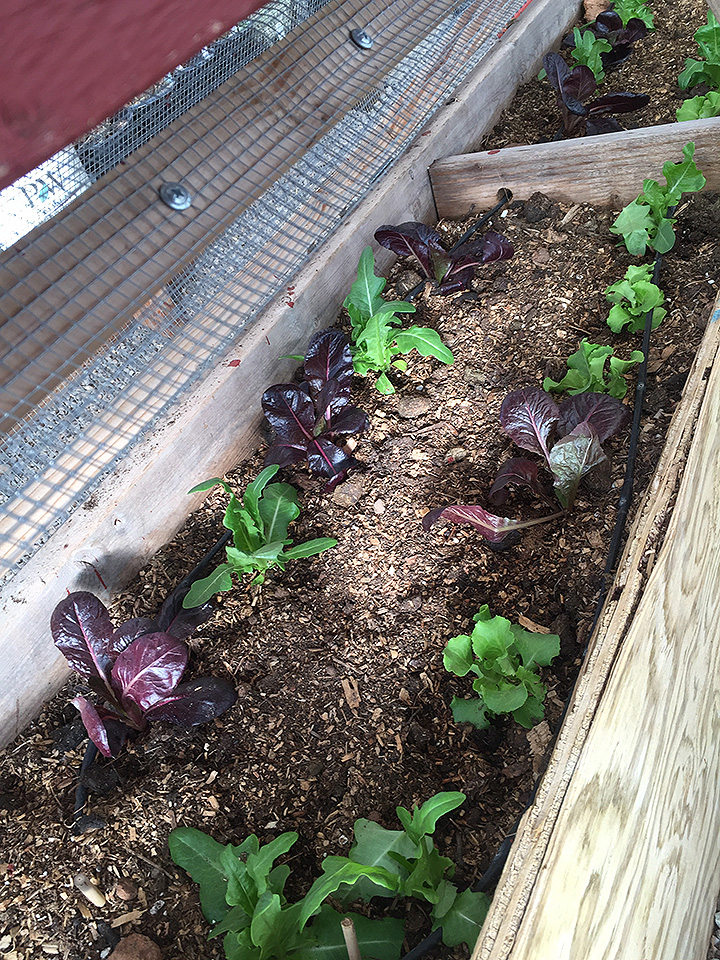
The lettuce and spinach are already transplanted into my greenhouse. I opened up the greenhouse (as I had button it down in winter) but now on some days, it can get pretty warm inside so i took off the panels to let more air through the screened windows. I have 2 fans in there (on timers that turn on/off automatically) to blow the hot air out and turn off in the evening. Plus I put row cover on at nite over the lettuces/spinach to keep them from freezing. I pull it back in the day unless it is freezing inside (rarely). My cold frame got messed up in the wind so I probably won’t use it this yea or until I can fix it.

Tomato/peppers were also started inside as well in March, in germination trays on heat mats inside, under lights. I transplanted the tomato plants to 2 1/4″ inch pots where they will stay till I plant them outside sometime in May. I decided not to grow out tomato plants for other people this year.

It’s good to have 2 hands/arms available now (limited) but should be good by June.

Create a Garden Hotbed using an Old French Technique

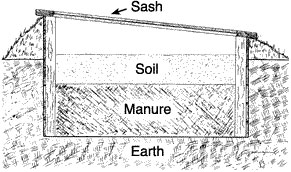
Hotbeds have been used for hundreds of years. Hotbeds are basically the same as a cold frame, but use manure with compost as a heat source in early spring. In France, when transportation was done by horses, not cars, people would take the stall litter which was a mix of manure and straw for heat and make what is called a hotbed. They surmised the bed would get warmer as the manure decomposed and they could start some crops earlier while getting nitrogen in the soil. You can use this method in greenhouses, cold frames or poly-tunnels on top of your raised beds.

The only thing is if you use horse manure, you need to ask whoever you get it from if the hay they fed the horse wasn’t sprayed with an herbicide (like Roundup). Herbicides are weed killers. You don’t want to use any manure with an herbicide in it as it lasts for 4-6 years in the soil and will kill anything you want to grow. Basically it will ruin your bed. Having said that, our hay comes from a safe source. As a thought, you could use bagged cow manure but know that it is hotter than horse manure so it should probably age a little longer-use a soil thermometer to make sure your soil is not too hot.

Looking back in my notes, here’s what I tried in January 2020-I took out all of the soil in my center raised bed in my unheated greenhouse and put the soil on a tarp to put back in one of my other beds. I then put about 14-18″ of hot horse manure and 6 inches of straw in a wheelbarrow and mixed them up. Then put the mixture in the bottom of the bed and packed it down lightly and watered it till it was moist but not soggy. I then added 6″ of homemade compost/soil on top of that leaving a couple of inches of free space at the very top of the bed for plants. Then I watered again. A few days later, I put a compost thermometer in the bed and saw that the temperature had come up substantially deep inside in the manure/straw mix. It will get from 125°-150°F in the beginning but will come down pretty quick by the time you put your transplants in later. I didn’t take the temperature at the top compost layer but the fresh horse manure/straw mix got the compost in the top layer warm, and the 6″ of the aged compost kept it from getting too hot.

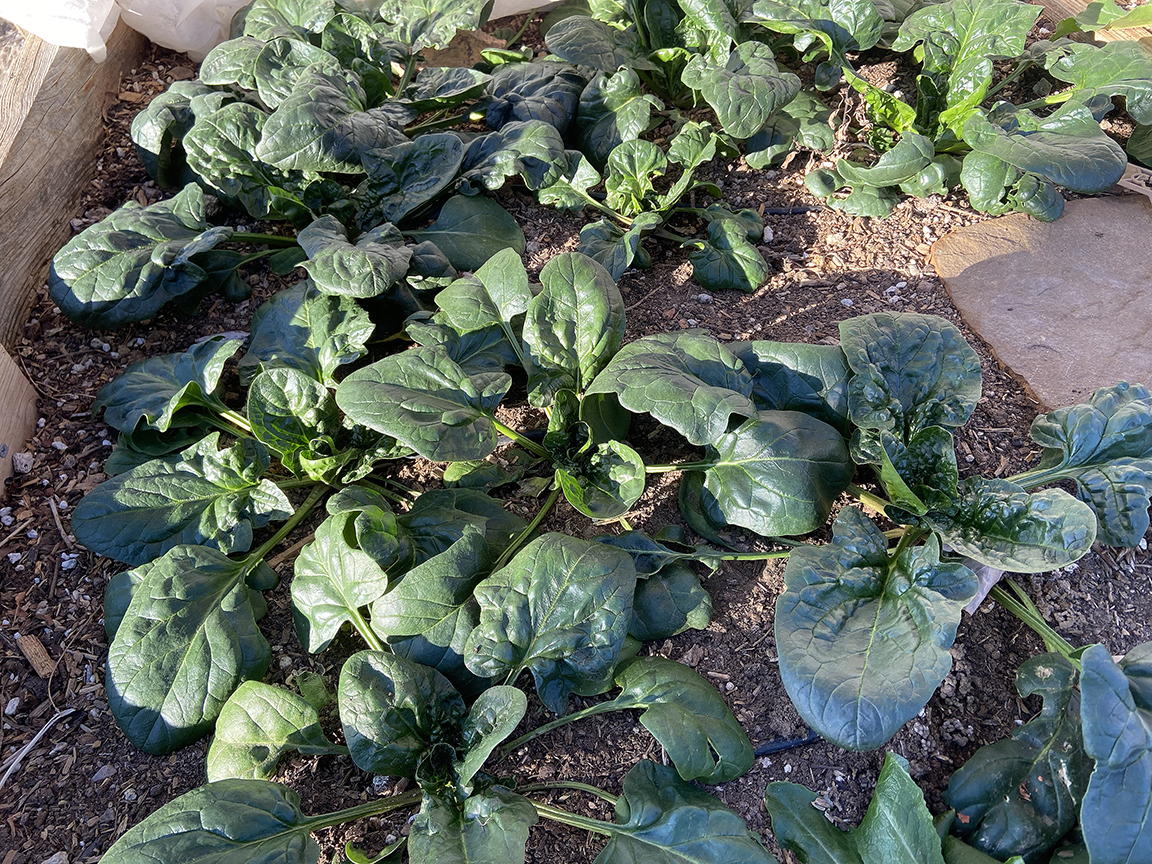
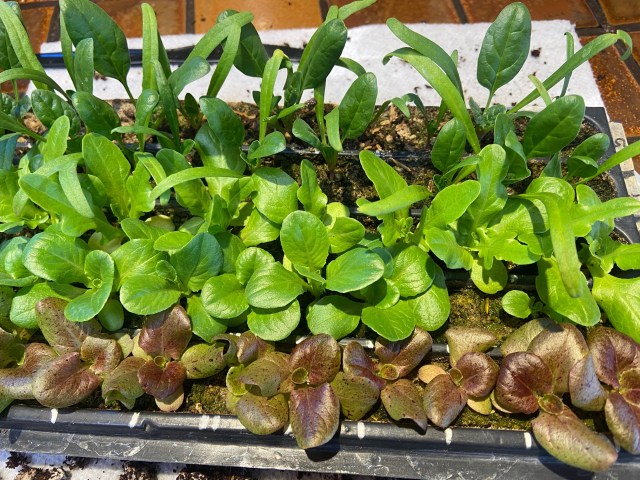
If you have a cold frame with a lid or plastic tunnel over a raised bed, you could do the same as in the top photo with spinach in it. I have one cold frame that I use in this way in the spring as well. It isn’t dug into the ground (like in the diagram above-not in my ground-too hard!)) but sits on top of the soil so I put some straw bales around the sides to add some insulation to it.

While the manure was cooking, I started lettuce/spinach seeds inside under lights (with no heat) in late January which took 3-4 weeks to get big enough to transplant in that top layer during which the soil temperature came down more as the manure mixture decomposed. Do not plant in the manure section but only the top compost/soil layer.


Once I planted them, I still had to cover the greens with medium weight row cover at night (and I double it up with layers of row cover on it if the weather was going to be very cold in the day/night (like it is now). It worked!

It was a fun project to learn how to make a hotbed and how ingenious people were in the old days!

MARCH MADNESS!

Where as March is known as March Madness for basketball followers here in the US, I think of March as a time to get busy in the garden-definitely March madness!

Here is a list of things to do in the garden for March:

-Finish your garden plans! What are you growing this season?

-Finish ordering your seeds or getting your seeds if you haven’t already. Better hurry-many seed companies are getting behind in orders again.

-If you like to grow your own seedlings (and you should) get your light table and heating mat out (if you haven’t already). Use T-5 (better-more energy efficient)or T-3 florescent lights. I use the ‘daylight’ ones-gives your seedlings the whole spectrum of light waves. They produce less ‘leggy’ veggies.

-Start tomato seeds 4-6 weeks indoors before May 15. I will start mine on March 23 this year with the idea to set them out in early May (weather permitting) in wall of waters. If you don’t have wall of waters, you’ll have to wait till after May 15 to plant them whether you buy them or grow your own. Pepper and eggplant seeds should be planted 8-10 weeks indoors before May 15. Same goes for peppers and eggplants. I don’t put out those transplants till JUNE 1 in wall of waters as they hate cold nights and can stall out if you try to sneak them in earlier. Trust me-I’ve learned the hard way.

-Get your soil tested to see what amendments you might need to add to it. I do mine every 2-3 years.

-Put compost/amendments on your garden beds and lightly dig or rake in.

-Hurry up and finish pruning your fruit trees. Not much time left. EEK! I better do this now!

-Prune back your raspberries (within 3-4 inches of ground), prune your blackberries (better google this one depends on the variety you are growing), thin out your ‘mother’ strawberries. Strawberries slow way down when you leave in the mother plants and you want to make room for the newer plants (which produce more fruit), trim back your grape plants (this again is how you started as to how to prune now-google your variety). EEK! I better do this now!

-Spray your fruit trees with dormant oil before their buds turn color to smother any dormant bugs. EEK! I better do this now!

-WATER your trees and plants.

-Plant COOL SEASON vegetable seeds like peas, OUTSIDE on ST. PATRICK’S DAY or later.  Some varieties include lettuces, spinach, arugula, bok choy, broccoli/cauliflower, cabbage, peas, radishes, mustard, kale, fava beans and other greens. Cover them with row cover at night for those freezing nights. And don’t forget to keep watering them for good germination. Tomorrow (St. Patrick’s Day)- green seed planting day and green beer!

Growing cool season lettuce

IMG_1923

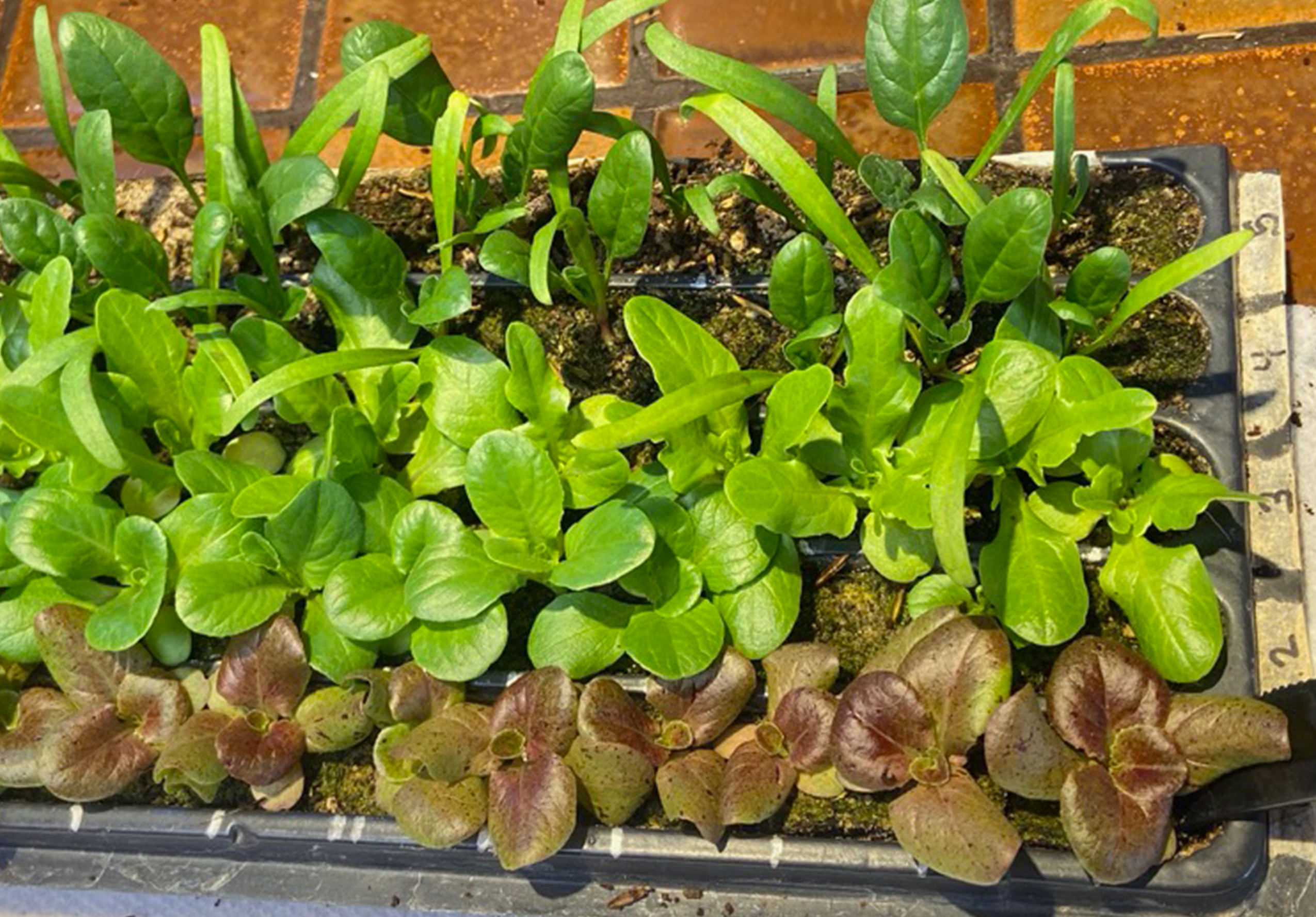
Cool season lettuces and spinach in germination tray, ready to transplant into bigger pots

A friend of mine said the other night that she stopped trying to grow lettuce because it always gets too bitter. But growing lettuces in the spring can be easy-you just have to start earlier than you think you do. If you start seeds in late April, you’re too late as the weather can go from cold days to hot days very quickly and that is when they can bolt and become bitter so you’ll want to harvest earlier.

Since most lettuces are cool season crops and take around 45-55 days to mature, we need to back up our start date to sometime in February/March or even earlier inside under lights (like I did) and harvest in April or early May before it gets hot.

Be sure to grow lettuces that are cold tolerant-it should say on the seed packets. This year I started the first lettuces back on January 15 inside my house under grow lights with no heat-this is very early so I’m pushing it.

IMG_1893

Lettuce transplanted un into bigger pots or pony paks.

Then I transplanted them up from the germination tray into a pony pak on January 20. Then I  transplanted the plants into my greenhouse on February 17. That’s about 4 weeks old when I put them out in the ground.  My greenhouse is unheated so I have to cover them everynight and on cold days with 2 layers of row cover but so far they are doing well. Tonite is 13°F so let’s see if they survive…

Meanwhile I started more from seeds on Feb 03 and they were transplanted into the pony paks February 25 so if tonite kills the others in the greenhouse, these should go out into the greenhouse in another 1-2 weeks. Basically the whole process from starting lettuce seeds to putting out into a greenhouse or coldframe or as the season goes on takes about 4-5 weeks.

You can even put them in a raised bed or mini hoophouse with heavy row cover directly over them by the time April rolls around. So if you plant them in first week of March, you will be able to pick leaves 45 days later or around April 15. By the time everyone else is just starting their lettuce seeds, you will be enjoying the lettuces while they are sweet before it gets too hot.

Tomato Tar

I always wonder what is that substance on my hands after working with my tomato plants with my bare hands. My hands turn kinda green and eventually brownish. I wash my hands over and over again and the soapy foam on my hands turn yellow and worse, the towel I use to dry my hands gets green stains.

What is this? It is called ‘tomato tar’ and comes from trichomes on the surface of the tomato plant. Trichomes contain chemicals in the form of essential oils that give tomato plants their smell and repels some insects and has another substance called acylsugars. Alcylsugars are part of the defensive system of the tomato by producing a sort of oil that stops insects from wanting to walk on them. This is exactly what gets on our hands and turns them green or even brown if you leave it on your hands long enough. Getting it off is not easy as I mentioned above but I just read a solution to brown tomato hands that I have to try.

I learned the acylsugars are not water soluble.  Most soaps are alkaline which turns the soap foam yellow and still keep your hands brown. If we wash our hands in a weak solution of white vinegar and water, really wash our hands with it-no soap and then rinse it off and then wash in soap, our hands should turn human color again! Also use paper towels or a designated towel to dry your hands as the soap residue from our laundry can turn the towels green. I prefer a black or dark brown towel so if there are some stains (they don’t come out) at least I can’t see them.

Lastly I’ve had some luck taking a piece of fresh lemon and rub it over my hands squeezing the juice to make sure my hands are wet. I have to wait about 5 minutes and then rinse in water and then use soap and water and that seems to work too. I know lemons become alkaline when we mix them with water and drink it but pure lemon juice is acidic and works on my hands. It’s been a year since I’ve had tomato hands and I know when I get them, it’s just a short time till I’ll be eating those wonderful tomatoes!

I’m finished with tomatoes for the year 2015!

JC at Farmer's MarketFinally this week there are no more tomatoes sitting around in the house! FINITO! NONE! DONE! Nice to see the kitchen table again! This week I made the last batch of tomato tapenade and the last batch of raw tomato sauce (24 frozen gallon bags of raw tomato sauce). Phew! As a friend Deborah says, ‘That’s the part no one tells you about’-preserving your produce. It goes on and on and on for months. Soon before Christmas, I will have to can some spaghetti sauce from some of the bags of frozen sauce. But not now-I’m gonna take a week off!

JC with fishIn fact right now I’m on a flyfishing trip on the San Juan River below Navajo Dam in our cozy SCAMP trailer. It’s cold outside tonight-going to get down to a lovely 20F° but the trailer is nice and warm inside (thanks Nevan for getting that great heater!) and do you believe it, we have internet access which is great as you want to be inside by dark because of the cold and going to bed at 6pm is a little early for me. Tomorrow we start fishing for some big ol’ trout HOGS. The fishing shops said today the dry fly fishing has been great. So I hope to catch some montrous fish and get some R&R while here for a few days. Better get some sleep (what me?!), although I don’t plant (freudian slip meant to say plan) to be out too early tomorrow…

Great Weather! Time to Plant?

RAIN5

Wow! Great weather this weekend with no wind, warm temperatures and wonderful rain today. I hear tomorrow brings more rain. Today we had some great rain and boy is it welcomed. The native plants and trees and all of our plants are sucking it up. I can’t remember getting this much rain at this time of year in May. A great big plus is the night temperatures are starting to warm up too with the next 10 nights suppose to be from 35°F- mid 40’s. Pretty cold but above freezing.

So can we plant tomatoes? Is it time? Well that depends on whether the nighttime temperatures remain above freezing. Of course the first frost-free date is officially May 15th historically speaking, but back in 2011, we had a very warm May and many of us planted early as it never got below freezing that May. Is this one of those Mays? Who knows, unless you have a magic ball. By the way, I waited to plant my giant pumpkins till later in 2011 (as they are so frost tender) and my 2010 State Record got broken that year by someone who went for it early. I guess I should have put them in but I just didn’t want to chance it. You have to be a bit of a gambler to put your plants in now.

tomatoes in wall of waters 1

But if you are a gambler and want to plant your tomatoes early, be sure you plant using wall of waters (WOW) as shown above.  If you use them, and the temperatures dip below freezing, they will protect your new tender plants. I always use them even when the nighttime temps are in the 40’s as I feel they provide more heat at night and keep them from setbacks. The cells of water warm up all day and give back the warmth at night to the plants like little greenhouses or cloches. Once they outgrow the WOW’s  (like in the photo above), take them off  the tomatoes, which will probably be late May. Do not leave them on all summer.

Starting COLD HARDY VEGETABLES Super Early

lettuce_greenhouse germinating

So now that the Persephone period is almost over and the magic date of January 15th is upon us, what does that mean? It means our day lengths are getting longer and January 15th is when we start getting 10 hours of daylight that will continue to get longer every day. Have you noticed already it now gets dark around 5:30 instead of 5 pm? The darkest time of the year is over. What does that mean to gardeners? To learn how to start cold hardy vegetable seeds super early outside and how also how to start them inside read on.

STARTING COLD HARDY VEGETABLE SEEDS OUTSIDE: cold frme opened
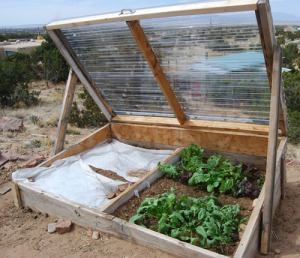
If you want to try growing cold hardy vegetables outdoors at this time of year, you will need a cold frame, low tunnel or hoop house.

If you already planted cold hardy vegetables late last fall in a cold frame, low tunnel or hoop house, you may have noticed that the little seedlings haven’t been growing much at all as winter set in. Now with longer daylight hours, they will start to grow again and barring any devastating freezes, they will continue to grow and you can get cold hardy crops earlier this spring.

In late winter, before you have harvest your winter crops, decide what you want to plant in your bed once space opens up in your cold frame.  As the end of the Persephone period draws near (January 15) , you can re-seed the openings created from your harvesting or you could start planting seeds in your bed if you don’t have anything growing. My soil in my unheated greenhouse is at 40°F right now (as of January 12). Lots of cold hardy vegetables germinate in cold soil.  They will be slow to start at first but they will start as your soil warms up to 40°F and warmer. Now with the day light getting longer, you can think about starting early. The winter sowing you do will be ready for harvest by early spring, often long before the same crop when grown outside without protection. A bonus is many of the cold hardy winter crops don’t like our springs, bolting on the first few warm days so you’ll be able to harvest that spinach before it bolts!

Some cold-hardy plants planted inside a cold frame, low tunnel or hoop house can tolerate a hard freeze at night, provided they are allowed to thaw during the day. The plants must be completely thawed before you harvest them. In addition, put some winter row cover over seedlings at night to give them an additional 4-6°F protection even though they are already in a cold frame, etc. Remove the row cover on days when it is above freezing. Watering is necessary to get crops started, but they will generally need very little water during the winter season-early spring once established.

STARTING VEGETABLE SEEDS INSIDE:
I’ve already written about starting seeds inside on many earlier posts.
To learn all about starting seeds indoors to get a head start go here:
https://giantveggiegardener.com/2012/03/08/starting-seeds-inside/

WINTER HARDY VEGETABLES
The following list of winter vegetables to grow is from ‘The Winter Harvest Handbook’ by Elliot Coleman. These can be planted either as transplants (first started inside under lights) or outside as seeds in cold frames, low tunnels or hoop houses.

Asian greens-Tatsoi, Pak Choi (Mei Quing Choi), Mizuna, Tokyo Bekana,Komatsuna

arugula-Astro, Sylvetta

beets-Red Ace, Merlin, Touchstone Gold

beet leaves-Bull’s Blood, Red Ace

carrot-Napoli, Mokum, Nelson

chard-Fordhook Giant, Ruby Red, Argentata

claytonia

endive-Bianca Riccia

leek-Tadorna

lettuce-Red Saladbowl, Tango, Rex, Rouge d’hiver

 mache-Vit

minutina

mustard green-Toyoko Beau

radishes-Tinto, D’Avignon, Cherriette

scallion-White Spear

sorrel

spinach-Space

turnip-Hakurei

watercress
Early Spring Planting-Three Important Factors

Three important factors should be considered before planting seeds in early spring:

Amount of daylight hours-In the winter the sun is weaker in the northern hemisphere and we have less daylight hours. If you plant seeds too early either outside or in a greenhouse, the seedlings will be spindling when they germinate. Once we have 10 hours of daylight (we currently have over 10 hrs), we can start planting our cold hardy seeds. So in Santa Fe, we now have enough daylight hours. But wait, there are several more factors we need to consider before we plant seeds.

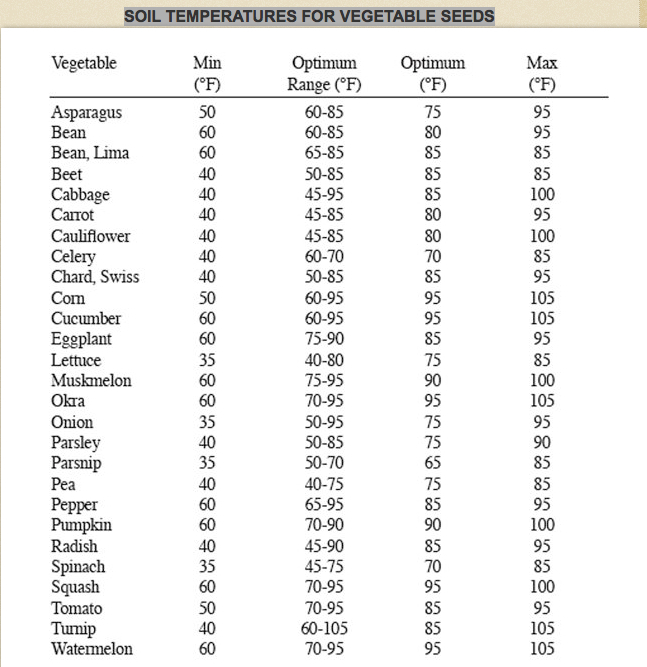
Soil temperature for germination for different vegetable seeds

Soil temperature for germination for different vegetable seeds

Soil temperature-If you are thinking of planting OUTSIDE, forget about it, your soil is probably frozen so of course you can’t plant anything! Even if it’s not frozen, it’s probably still too cold to plant outside. However it will warm up soon. How can you tell what temperature your soil is? You’ll need a soil thermometer. I prefer a compost thermometer that is about 18″ long so you can check both the soil and a compost pile. A soil thermometer is invaluable, as different veggies like to germinate at different soil temperatures. Insert it about the depth of the root zone of the plants, about 4”-6″ in the soil to see how warm it is. Notice the chart above gives an optimum range for each veggie.  If you have a cold frame, hoophouse or greenhouse your soil is probably much warmer already. So are you ready to plant? Not quite. There is one more factor to consider.

Air Temperature-The air temperature is also important and is the main thing people think of in considering when to plant seeds. It’s too cold at night to plant most veggie seeds outside or even in a greenhouse without extra protection BUT there are some wintergreens that are very cold hardy, some even hardy below 32°F at night. Even in an unheated cold frame or greenhouse, the temperature dips below freezing at nights so if you have a one, I suggest you put some row cover (winter weight-.9-1.0 mm.) over your beds. If you don’t have a greenhouse and will be planting outside in early spring, definitely put row cover over it at night but don’t forget to check your soil temperatures too.

I’ve compiled a list of these very cold hardy crops that can be started in a greenhouse now if the soil temperature and daylight hours are good. Many of these cold hardy crops can be planted outside as soon as the soil warms ups in March. For the list go to my blog at: http://giantveggiegardener.com.

Lookee What I Found!

Yesterday I found all kinds of things!  Now I’m not the greatest at putting my tools away after I’m done with them. In fact it’s like leaving a trail of breadcrumbs for anyone to see where I’ve been. So I decided to walk around the gardens here at the house before the Arctic Blast comes in this weekend to see what tools I could still find outside. I wanted to do #9 in my earlier post of 10 Things to Do for December’.

found _lopers

First I found one of my lopers (my best one) hanging on a chair on the deck—and it was in plain sight. I’ve must have walked by it a hundred times and never saw it before!

found _leaf rakeI was wondering where that leaf rake went! Here it is leaning on the arbor in the shadows!

found_rake and apple pickerAnd on the other side of the arbor is a fence and I found an extension cord,  mini leaf rake and apple picker leaning on it (what’s that apple picker doing there? There are no apple trees up by the house!)

found_coffee cupAnd lookee what else I found! My favorite coffee cup still filled with coffee!  Yes that is a cup (the handle is on the other side). I was wondering where I left it cause it’s been MIA for a while. That will be fun to scrub out!

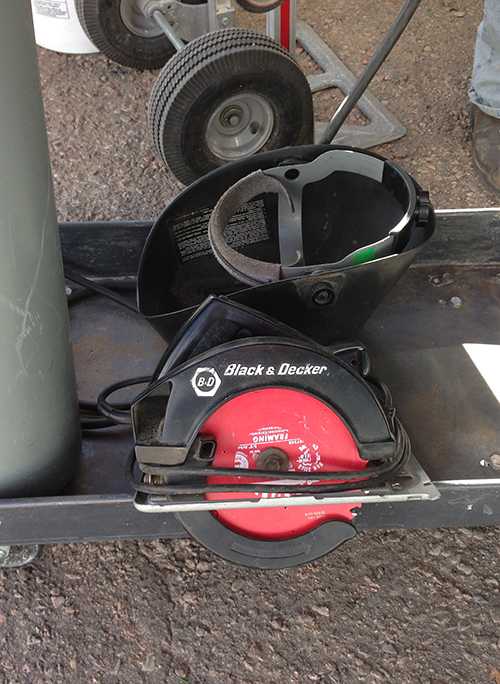
found_sawAnd then when I went to the shop I found the circular saw that I had at the house that mysteriously disappeared.  I took it back to the house so I can finish the greenhouse!

10 Things to Do in December

xmas clip reindeer

HO! HO! HO! Here are 10 things you can do in December for your garden. I wrote in green where I’m at with this list!

1. Don’t forget to feed your worms in your vermicomposting bin! They get hungry too! Also if it has been dry, give them a some water on a warm day. Don’t give them so much food that it just sits there and freezes. For an outside plastic bin, maybe wrap it with a water heater blanket or surround it with straw bales to help keep the worms from freezing. You try living in a plastic box all winter without insulation! For bigger outside vermicomposting areas, put straw bales around the perimeter to add insulation. Also put straw on top.  (I covered mine with about 8-10 inches of straw on top of everything and will check them in about 2 weeks to see if I need to add more food)

2. Reflect on what worked in the garden and what didn’t. What could you do differently next year? (Where do I begin? I’ll write more on this later)

3. Order your new catalogs. That way you’ll have them by January. (Done!)

4. Speaking of catalogs, go through those old catalogs and throw them out! (Done!)

5. Research on the internet new and different veggies you may want to try next year while you are waiting for your catalogs to come in. I’m always wanting to try something new. Start a list of possible veggies and add to it as you find more. You may not try all of them but at least you won’t forget them! (I started mine and keep adding to it)

6. Water your trees and perennials if you don’t get precipitation. We got a great snow in November so that let us off the hook but if Dec is dry, water later this month on a warm day. Forget about it if your tree has snow around it and the ground is frozen-the water won’t soak in frozen ground. (Since it snowed, I didn’t water-yea!)

7. If you feed birds, be sure you give them a source of water too. If my waterer is frozen, I boil water in a teapot and add it to my waterer to melt the ice. If you have bees, keep providing to them water too. (I check daily to make sure they have both food and water)

8. Take a walk around your frozen tundra (garden) and start to plan your next year’s  garden. Walking around when it is barren can reveal problem areas. It’s hard to ‘see’ when the garden is going on in the middle of the season with all the greenery. Perhaps you want to make a new bed or fix an old one…or maybe you could be a nut like me and add a whole new 1000 sq ft section in the garden Now that was a big project in 2011. Was I insane or what?! (This year I vow to finish the greenhouse by early spring.)

9. Organize your garden shed. Find all those tools you left outside-they’re  easy to see on the ground now that the the garden is done! (Still have a few floating around that I need to collect)

10. Ask Santa for some gardening stuff! Give them suggestions of things you want! (Done!)

Is it a weed? White Horehound

?????????

There is a plant that grows everywhere around here and I’ve always wondered what it was. Grows like a weed so to speak. I knew it was in the mint family as the stems were square but was definitely not a mint. I just ID it from a book, Weeds of the West.

The plant growing in my gardens is white horehound which is a herb. There are two types of horehound—black horehound and white horehound. Black horehound can be toxic while white horehound can be beneficial. They are easy to tell apart because black horehound has little purple flowers while white horehound has little white flowers.

Since ancient Egypt, white horehound has been used as an expectorant. Native American and Australian Aboriginal medicines have traditionally used white horehound to treat respiratory conditions. Some people make homemade cough drops out of them and some use the dried leaves to make a tea. They actually sell the seeds in Baker Creek Heirloom Seeds but around my place it definitely grows like a weed on its own without my help. I use to pull it out because it is not a particularly attractive plant and frankly grew where I didn’t want it to grow.

But since I became a beekeeper, I noticed the bees are wild about it with its small white flowers, so now I leave it for them. The US Food and Drug Administration banned its use in US made cough drop saying it has no proven benefit. However it is widely used in Europe and you can buy it in European cough drops, just not US made ones.

I recently had pneumonia and a dry hacking cough that would give me fits. The only cough drop that would help stop the coughing that I tried is called ‘Ricola’ Cough Drops’, which is a Swiss made cough drop. Guess what is in those cough drops? Horehound! Only I didn’t know about white horehound, or Ricola cough drops or what that weed was growing in my gardens.  I found all this out while I was recovering and on the computer a lot-how serendipitous!