Chitting Potatoes

Chitting Potatoes

Chitting Potatoes

Chitting Potatoes in Egg Cartons

Picked up some French Fingerling potatoes last week and am chitting them for the next 1-2 weeks. Chitting potatoes is basically growing out the eyes a little in indirect light, giving them a head start before planting them. I’m using egg cartons to keep them from rolling and breaking the eyes. Also I got the vegetable bed ready, picking a rich, loamy and deep bed (but not the same one as last year) added more manure, dug it in, and dug the trenches 8 inches deep. As soon as they are ready, I will plant them in the bottom of the trench covering them with 3 inches of soil and after the plants are 6″ tall I will start to mound up the dirt around the plants. Last year was my first year growing potatoes and they were fabulous–so much better than store-bought ones.

Why start vegetable seeds inside?

transplanted tomatoes

Why would any of us bother to start seeds when we can go to nurseries to buy the plants. Well, I do both. I can only speak for myself but I have grown all kinds of unusual vegetables that I couldn’t find at the nursery and I like to try something new and different every year. Besides being ‘The Tomato Lady’ here at the Santa Farmers Market, I really like to try some new heirloom tomatoes every year along with my tried and true varieties. Every year some new variety gets on my ‘all-star’ list at the end of the season while others don’t make the cut. In fact in some years, many don’t make the cut-I’m picky as hell about my tomatoes. If I don’t like them I don’t grow them again. Luckily, I like many tomatoes but they’ve got to taste good!

Some of the unusual varieties I have tried and loved eating are Atomic Red carrots, Cosmic Purple carrots, Craupadine Beets, Tarabais beans, Rattlesnake beans, Emerite beans, Fava beans, Parisian cucumbers, Poona Kheera cucumbers, and about 25 different varieties of heirloom tomatoes (too many to mention). None of these are sold as plant starts in the nurseries but you can buy some of the seeds at the nurseries and some seeds you have to order online.

Have you ordered your vegetable seeds?

seed catalogs 2011Looking through all the seed catalogs and planning what you’re growing next year is fun to do in winter. Now is the time to order your vegetable seeds if you haven’t already done so. Seed starting will soon be upon us! Many cool season crops can be started inside soon (some now) and put out in March and warm season crops can be started from seeds inside 6-8 weeks before the first frost-free date. Hard to think about starting any seeds when the weather is cold, windy and ugly but it is almost here. I have ordered some seeds but still have to get some and already feel a little behind.

If you are not one to start seeds inside, that’s ok-just wait till the nurseries get their transplants out later this spring and let them do the work for you. And don’t be afraid to buy transplants. I once was told you’re not a real gardener unless you grow everything from seed. Bull@#$%! Out here we need all the help we can get so I’m not against buying plants from nurseries at all. Besides I like supporting our local economy as well. So I grow some vegetables from seeds and buy some from the nurseries. What matters is that you get out in your garden and enjoy yourself and the fruits (or vegetables) of your labor.

Rocks, Rocks, Rocks..

 I live on a rock. No, not in a rock but on a rock!

Creating the new garden area out here is tough. There are tons (literally) of rocks on the property. I’ve known this for some time from all my other outdoor projects. I guess I forgot.  And I’m not getting any younger either (I keep saying that a lot lately). I swear these 2 projects will be my last ground breaking ones. (Remind me of that next year).

Project number one is the greenhouse which is on hold for a few days now that I bonked my nose and we are in February.

Project number two is what I want to talk about today. The new vegetable garden addition. Why am I putting in MORE garden you say? Isn’t 2000 sq ft enough? Apparently not. The truth is I need to put my tomato plants on a 3 year rotation to help prevent diseases and I’ve used up the whole garden the last two years. So I’m adding 890 sq ft more. That will handle the third year (this year) in the rotation.

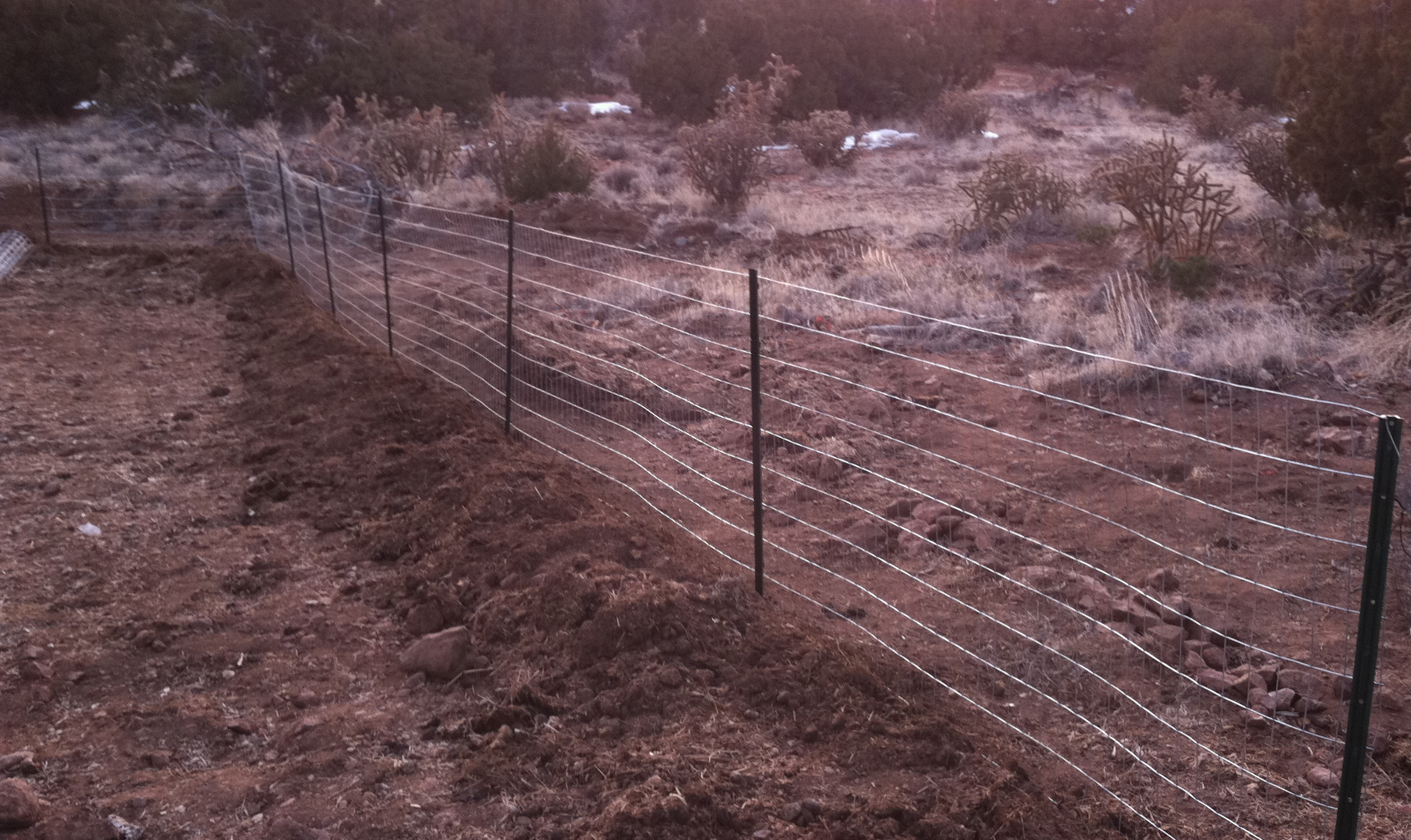
First I cleared the land last October with that Bobcat I rented. Thank god I had a Bobcat. Here is a picture of it then AFTER I scraped the ground of cactus and rocks.  Look at all the lovely raw ground! LOL!  The green t-post in the right side of the picture is…

the same t-post in the right side of this picture. Now it is starting to come along a little. I rototilled it in November to loosen up the soil  (if possible) and kick out many rocks. I think I’ll make an Andy Goldsworthy style of rock sculpture from all the rocks I will have taken out when I’m done. Today I put part of some fencing up after I raked up a ton of dirt and dragged it into what will be the garden area. I had to quit because it got sooo cold. I thought it was suppose to be 53°F today. Liars! It was 27°F at 4:45 pm. Notice all the rocks on the outside of the fence! Now I know how the pioneers must have felt breaking ground… I’ll have to update you with more pictures later when I can get out and do more work on it.

More on squash bugs..

Squash bugs are around my squash and pumpkins right now. I go out AT LEAST ONE TIME A WEEK and go hunting for adults, nymphs and eggs. I know the ADULTS LIKE TO HIDE DOWN AT THE BASE OF THE PLANT or underneath the leaves. I take the hose and spray the whole plant and at particularly at the base which is covered in straw. The adults come running up the stems of the leaves to escape the water. Then I pick them off with my hand. I hate handling bugs barehanded so I use gardening gloves. I either squish them on the ground or put them in a bucket of soapy water where the adults drown.  No mercy.

I then look at EACH LEAF of the plant to see if there are any EGGS ON THE UNDERNEATH SIDE OF THE LEAVES, usually in the “v” where the veins form. If I find them, I either tear off the whole leaf (if I have a lot of leaves) or I tear out just the section that has the eggs and put them is a bucket of soapy water where they will smother. THE EGGS WILL BE DARK LIKE ROOTBEER WHEN THEY ARE READY TO HATCH, so get them EARLY.

I also look for the GRAY NYMPHS WHICH ARE USUALLY UNDERNEATH THE LEAVES OR ON THE STEMS. If I find a few I squish them. If I find a lot, I take the whole leaf off because they are fast and I can get them all. Then I put them in the soapy water.

Squash bugs go from EGGS TO NYMPHS IN 7-10 DAYS, so we should look for eggs about every 7 days to catch them from turning into nymphs. I do this on the weekend when I have more time. The squash bug PRODUCES ONE NEW GENERATION EACH YEAR but of course if each squash bug lays 15 eggs on each leaf they chose to deposit their eggs on, then all those newly hatched nymphs will lay more-but not this year. The nymphs will grow into adults this year but will not lay eggs. They will overwinter and lay their eggs next year.

So my thinking is if you get the adults now and the eggs now, then next year you should have way less squash bugs (I’m assuming we might miss a few) and of course if we get them all, in theory we should have none next year.

I keep my plants covered early in the season with row cover until they flower but now that they are flowering, I must uncover them so the bees can pollinate them. The key is to be REALLY DILIGENT ABOUT FINDING THEM BEFORE THE EGGS HATCH. After they hatch you can easily be overcome by the nymphs. Most people don’t keep up on the inspections and then the problem magnifies tenfold-so keep up on them. The hunt is on!

Some people spray Sevin on the plants. I prefer to go organically, so if I get a major problem, I would use Neem which is somewhat helpful but picking them off is the best way to control them.

All pictures courtesy of University of Minnesota. For more info on squash bugs, go to their site:  http://www.extension.umn.edu/distribution/horticulture/M1208.html

Pictures of Planting Tomatoes Outside

Well it’s time to plant tomatoes! Finally! This cold and windy weather is going to take us almost up to the average first frost free date and the tomatoes inside are chomping to get out in the world! I will still use ‘Wall of Waters’ on all of the tomatoes that are not too tall as the nights are still very cool for a tomato. Here are some pictures of how I  transplant tomato plants outside.

First I harden them off outside for about 4 days or longer if I can wait that long! I put them outside for an hour or two each day and increase their outside time each day. Start getting them use to our harsh conditions they will have to endure.

Next after I dig the hole, I add some yum-yum mix (a handful), a tablespoon of powder milk, a tablespoon of epsom salts, a shovelful or two of aged compost (or bagged compost) and a small handful of mushroom compost (not too much-its high in salts). Then I mix it up with some of the soil I dug out.

In addition, new for this year, I am adding a small handful of humate and a tablespoon of bone meal (for lots of flowers) and some worm castings. I will mix this in with the above amendments.

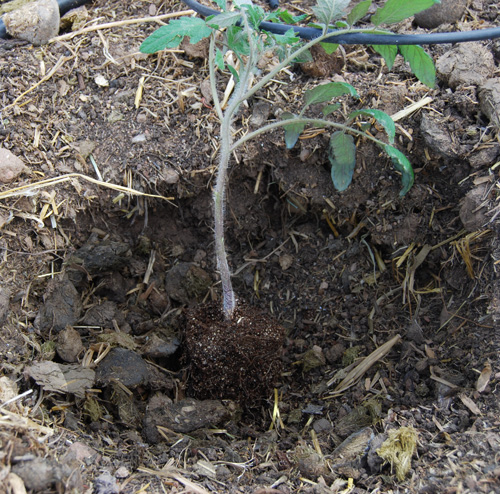
Next I take off any lower leaves, especially if the plant has become leggy and place it deep in the hole with the amendments and backfill with the  amended dirt. If it is really tall, plant it on it’s side. It will develop roots on the stem either way.

Notice how deep it was planted. Here I make a ‘well’ around each plant and place my drip line tightly around the new plant (not shown).

Fill the well several times–one time with Seaweed and ‘Thrive’ in a bucket. DO NOT use a regular fertilizer like Fish Emulsion at this time. Wait till the plant acclimates. Later as the plant grows, after I remove the wall of waters (when the tomato plant peeks out over the top of them), I will loosen the drip line inside the well to water more of the root zone as the plant grows.

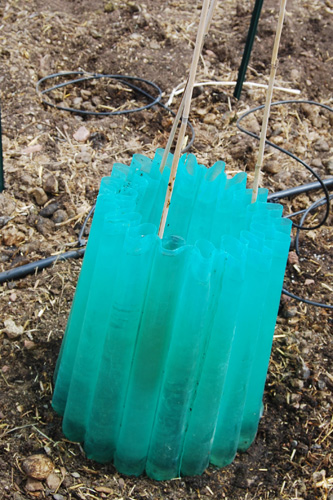
To put my wall of water on the plant, I place a 5 gallon bucket inverted over the plant. Then put the wall of waters over it-do this part in the morning so the water has time to heat up the cells that will give off the heat at night back to the tomato. Fill up the ‘cells’ with water and remove the bucket. Be sure to pull the handle up on the bucket when you first put the wall of waters over it or you’ll have a hell of a time removing the bucket.

I place a few bamboo sticks inside to hold it up should a big gust of wind come up. I also tie another bamboo stick next to the tomato plant and loosely tie up the plant with a twistie tie so it doesn’t fall down. Remove the wall of waters when the plant outgrows it. Here is how the plant looks in the wall of waters. Ok now I get to multiply this times 64 plants…

Related post: Secrets to planting tomatoes

GIANT PUMPKIN/WINTER SQUASH-How to Tell Which Direction a Vining Squash Will Grow

Have you ever planted winter squash and it grew in a direction you didn’t want? Here is a good tip for how to tell which direction a vining winter squash (versus a bush variety) will grow. I will use my giant pumpkin as an example but any winter squash that is a vining squash will act the same.

Let’s say you plant some vining winter squash next to a wall or on the edge of a garden bed and you need it grow away from the wall not into it or into your squash bed not out of it (good luck on that one!) When the plant puts out the first two leaves as I have described in previous posts, these are called the cotyledon leaves (baby leaves) and don’t look like any of the other leaves it will grow afterward. All leaves after the cotyledon leaves are called true leaves.

put mark on side of pot opposite of first true leaf

Sooo pay attention to that FIRST TRUE LEAF.  The plant will GROW IN THE OPPOSITE DIRECTION FROM THE FIRST TRUE LEAF. If I’m growing them inside for a head start, it is easy to mark the container as you will not remember which one was the first leaf (trust me!) when the second one appears. I just take a marker and mark the opposite side of the pot so I know when I transplant it into the ground which direction I orientate it. If I grow directly into the soil, after the first true leaf appears, I gently dig up a big amount around it and gently lift it and the dirt so as not to disturb the new roots and rotate it in the direction I want it to grow. For those who are growing their winter or summer squash seed in the ground, it is too early. Wait till May 15th (our first frost free date) to plant directly into the ground when the soil and weather are hopefully warmer.

Problems Growing Carrots

Last years carrots-Danvers and Cosmic Purple (shown with beets)

Carrots I find can be easy or challenging and I’m not always sure why. Maybe because they know they are not one of my favorite crops to eat. I planted seeds last month outside and hardly any have germinated. I planted Danvers and Cosmic Purple varieties. So I am going to reseed some of them tomorrow. Some years I  get great germination and other years hardly any.

So here’s what I may have done wrong and my excuses (all excuses done in whiny voice):

1. I think I planted too early. The soil was probably too cold and they are either just sitting there waiting for the soil to warm or they’ve rotted and I need to replant. I just read that carrots need the temperatue to be at LEAST 55°F to germinate and I didn’t take the temperature. I bet it was colder. (But I couldn’t find my compost thermometer…)

2. I think some of my seeds are too old. I have several new packets this year but some of my packets are older. I need to check the date stamped on the packet and throw out any that are over 2 years old. We should do this for any of our seeds. (But I need new reading glasses to see the tiny stamped date…)

3. Carrots are heavy feeders and need fresh amendments each year which I didn’t do when I planted the seeds. I’m not sure that matters since they didn’t germinate anyways. (But I’m not really into them. I’m self sabotaging…)

4. I may not have watered enough. I watered every other day but the soil did seem pretty dry whenever I rewatered it. Watering should be consistent to keep soil EVENLY moist. (But it was cold and windy outside…)

5. Maybe the rabbits ate some of the teeny sprouts. I didn’t have it covered with row cover and the rabbits seem particularly hungry this year, especially since my dog Sage is no longer with me to keep them away. (But I couldn’t be bothered to dig out the row cover from the garden shed and I need a new ranch dog or cat to patrol…)

As you can see, I didn’t do anything correct. Anyone can have trouble if we don’t pay attention to details. Sigh! I think I’ll plant some shallots (which I love) where some of the carrots didn’t come up and I will replant some of the carrots as well, just not as many. Which brings up a good point-don’t plant vegetables you don’t really like to eat that much or plant less. Lesson learned..What was I thinking?!

10 things to Do in April in the Garden

Here are 10 things we can do in our gardens this month.  As the season commences, we will get busier and busier which means I’ll be posting at night when it is dark and I can’t be out in the garden! (oh yea-I work too).

1. It isn’t too late to get a soil test to see what amendments you will need for this year. I just sent mine out last week.

2. Time to add AGED horse manure (at least 4 months old) to your beds and dig it in. Don’t use hot manure-it is too late for that. Use hot in the fall so it has time to cool off and break down. Every year I add more and the soil gets richer and richer. Our soil is so crappy that we need to enrich it for veggies. If you can’t find any old, aged horse manure, then buy some compost in bags from your local nursery and dig it in.

3. Finish cleaning out your garden and trimming perennials if you haven’t already.

4. Make some LARGE TOMATO CAGES. I use concrete reinforcement wire because it has 6 inch square holes to get you hand through to pick tomatoes and it is 5 feet tall. Go in with someone to buy a roll if you don’t need too many cages.

5. Transplant your little tomatoes that some of you are growing into the next larger size and give them light.

6. Check your drip systems and timers to make sure they are in good working order BUT do not keep them attached yet because we still can get freezing nights. If you don’t have a drip system, look into doing one. I use the store, Firebird here in Santa Fe to get parts and their expertise on the subjects. It’s not hard to do and really saves on the water and your time.

7. Start adding to your compost pile again. Heat it up. Turn it over. Use HOT MANURE to heat it up or powdered blood meal which is high in nitrogen. I don’t compost in winter because it is too hard for me to keep hot but it is a good time to start one now..

8. Put CORN GLUTEN down in your veggie garden paths. It is a PRE-EMERGENT for controlling weed seeds and is ORGANIC. You can order it from The Feed Bin here in Santa Fe. BUT if your weeds are up already, it acts as a fertilizer. (It is very high in nitrogen and that is why it burns the seedlings but will also feed weeds that get established). Don’t put in veggie beds where you will be planting any seeds as it will burn any seeds

9. Now you can plant carrots, shallots, beets, lettuces, spinach, all greens, onions, and garlic OUTSIDE. I will still use some row cover to protect them at night.

10. Speaking of ROW COVER, now is the time to get some from our local nurseries. MOST of them carry it (but not Home Depot or Lowes-no big box stores). The nurseries usually sell out. I would get some heavy weight for now and a lighter weight for summer or get the lighter weight and double it up for now. You can also order it online. Just google: row cover.

That’s it-Get busy!

Growing Giant Pumpkins From Seed (Or What Did I Get Myself Into)

Article first published by me as Growing Giant Pumpkins From Seed (Or What Did I Get Myself Into) on Blogcritics.

growing giant pumpkins

Giant Pumpkin growing season is once again upon us. Why grow giant pumpkins? Why not? Hey if every veggie gardener grew a giant pumpkin, the world would not be hungry! World famine banished!

For all those nuts who grow giant pumpkins, now is the time to start your engines (I mean seedlings) indoors, that is unless you live in Hawaii in which case you probably already have a new one started several months ago!

To start seedlings you must first get your hands on some giant pumpkin seeds- the usual variety being Atlantic Giant Pumpkin. You can buy some from Amazon or you might get some from someone who grows these monsters. Many of us are willing to give away our seeds. Did I say us? Yes it’s true I am one of these nuts. When I first saw the film, “Lord of the Gourds”, there were giant pumpkin growers in the film who babied their giant pumpkins by playing them music, naming them, feeding them high octane food, hugging them, and even putting blankets on them when the weather turned cold. I saw this and I said, “What a bunch of nuts” and the next year I became one of them. Well almost. I don’t play them music.

So after you score some seeds, you need to dedicate the next 6 months to growing these monsters. They become your mistress. So if you have a family, better put them in therapy now for their abandonment issues they will develop and resentment issues over vacations they won’t be able to go on. Who wants to go on vacation anyways? Gas is too high this year. Still interested? Ok, then the next step is to plant them inside your house, pointy side down in seed starting soil in a four-inch peat pot. Then place them on a plant-heating mat (the one you need to buy) under that grow light box you just built and wait for them to germinate. What grow light box you say? The one you’re going to build for these monsters. Are you with me so far? Good. Welcome to giant pumpkin mania…

Red Orach (mountain spinach) and Bright Lights Chard

I just picked some Bright Lights Chard that overwintered in the coldframe and with the chard were a few plants of Red Orach (also called mountain spinach) that have been reseeding itself.  The variety of orach I grew came from Baker Heirloom Rare Seed company and it makes a great red addition to salads or used as steamed greens. I steamed the chard and Red Orach on top of some pasta tonight yummy. It tastes like spinach and you should pick it when it’s young and tender to eat. Red Orach really is an incredible deep magenta red color. Look how beautiful they look together!

Chard and Red Orach for dinner tonight

Tomato seeds planted inside-March 21

Bleaching pots before use

drying on an OLD towel

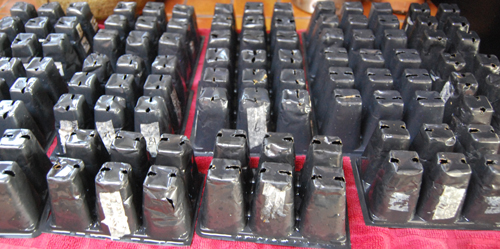
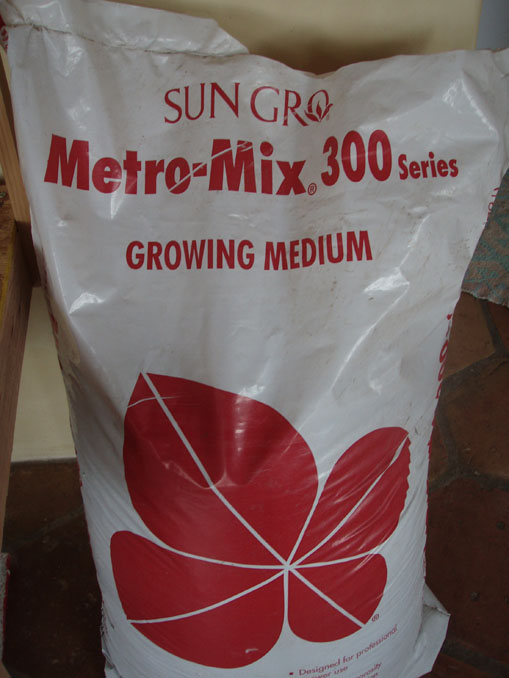
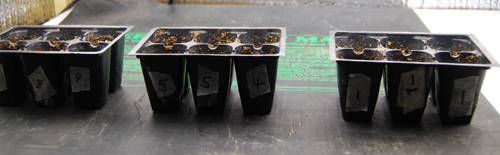
Last evening I planted my tomato seeds-both heirloom and hybrid seeds. I brought out and set up the light boxes and heating mats last week. Before planting my seeds, I always clean the little pots with some bleach water that I use for starting tomato seedlings. It’s important to disinfect the pots because you don’t want your plants to pick up any soil borne diseases. I use about a 10%  bleach to water ratio.  I use the kitchen sink and try to not get dirt everywhere from the used pots. The trick is to convince your partner that it is ok! Just tell them you are disinfecting the sinks out (which is true)! I picked up the seed starting soil-Metro mix 300 from Agua Fria Nursery last week. It comes in a big bag but you will be planting up into larger containers in a few days after the second set of true leaves appear and besides if you have any left over, you can use it for next year. I’ve bought many seed starting soil mixes (usually at the big box stores) and hate the way the water rolls off of the soil when you first go to use it. With this soil mix (Metro Mix 300) I just plant the tomato seeds about 1/4 inch deep and water it all at once. It saves time and anything that saves time I like!

Metro Mix 300

After I water the seeds, I put them under my lights and on top of a heating mat which is great for warming the soil for the seeds to germinate. I’m starting the tomatoes later this year because last year I started the first week of March and they got too big-about 3-4 feet tall because I couldn’t put them out with the cold spring we had.  This year I’m hoping to get them transplanted into the garden around mid April (with protection) weather permitting. Why do I think I might be able to get them in early this year? We are in a La Nina which generally means warmer weather in spring but less rain. By planting them later if I have to, they shouldn’t be as big as last year.

seeds on heat mat

Santa Fe Master Gardeners Herb Sheet

I just finished teaching the Vegetable class this evening class for our Master Gardener Interns and realized during the class I didn’t xerox off the Herb Info sheet. I told the class they can get it here by Tuesday but I’m teaching the other class at 9am so here it is now for anyone liking a copy of it. You can get it here HERBS as a pdf and print it out for yourselves. Class was great tonight with some very intelligent questions and I hope they all enjoyed it!

Santa Fe Master Gardener Vegetable Class

Tonight and tomorrow am, I ‘m teaching the Vegetable Garden class to our new interns in the Santa Fe Master Gardener Class. I can’t wait! There is so much useful information that it will be hard to share it in only 2 hours. Coming to my blog is a much better way to get information on a daily basis as we move forward in this new gardening season!  I’m planning to give more how-to info and advanced info on vegetable gardening this year. I hope many of you will also exchange useful information with me this year. You can send your information via commenting on a post so others can see it and learn as well. Now is the time to get busy in our veggie gardens! Plant something that still likes cold nights-like greens!

Bob’s Garden Pizza on the Grill

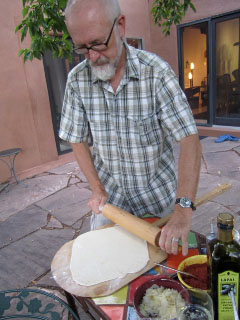
Bob rolling the dough on the pizza peel

My good friend Bob made an incredible pizza fixed on the grill this weekend that he learned from his son Ephraim. He used garden veggies for the toppings. Here is the recipe for the pizza dough and the method that Bob uses to make it. Thanks Bob for sharing this great recipe for my blog. What a great way to eat the veggies we’ve been growing this summer! This was so good, I could eat all my veggies this way! It was yummy!

Ingredients:
1 pkg active dry yeast
1 1/3 cups warm water
3 1/2 cups flour
2 tablespoons olive oil
1 tablespoon salt
1 tablespoon sugar

Method:

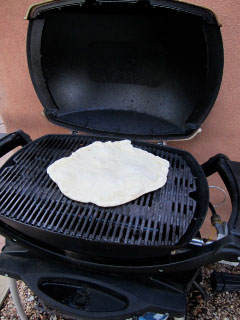
cooking pizza dough on the grill

Pour 1/3 cup

of the warm water into a small bowl. Add the package of dry yeast to the water……stir the mixture until dissolved. Let this sit in a warm place ….it should start to get bubbly…

precooked pizza toppings

Put the flour into a mixing bowl. Add the olive oil, salt and sugar.

If you are using a food processor with dough blade or heavy duty mixer with dough hook,
start the machine and slowly add the bubbling yeast. Then add the rest of the water until a smooth dough forms…you may need to use less or more water depending on the moisture content of the flour.  The dough should be silky smooth.

If you are mixing the flour by hand, add the water, mix until blended, then turn the dough out onto a floured board or counter and knead for 10 to 15 minutes until silky smooth… add more flour if necessary.

Transfer the dough to a bowl lightly coated with olive oil and turn it over once to coat with oil. Cover with plastic wrap and let rise in a warm place for about an hour.

Pull off a chunk of the dough and roll it out into a thin layer. This is where a pizza peel comes in handy. This is the wooden paddle that slips the pizza in and out of the oven or grill.

Slide it onto a medium-hot grill, lower the

pizza with toppings ready for grill

lid and bake the pizza for about 5 minutes.
Remove the pizza crust, flip it over and brush it lightly with olive oil

Add your precooked ingredients.

Return the pizza to the grill , lower the lid, and bake for another 5 minutes. The time it takes will depend on the temperature of your grill…. too hot and the crust will burn before the toppings get hot and cheese melts.

Toppings:
It’s important to precook your toppings.
Sliced onions….saute them in oil/butter until they are tender and golden brown
Sauteed peppers and/or other veggies…. spinach, chard, eggplant,  etc.
Sauteed sliced mushrooms

taking finished pizza off grill

Thin sliced tomatoes
basil pesto

tomato (pizza) sauce
pre-cooked meat/sausage/shrimp/chicken….whatever you like
shredded mozzarella
grated parmesan cheese