The last of the summer harvest-Nov 4

late fall harvest

The garden finally froze last night in earnest and I got to say I’m relieved that I don’t have to go out and harvest today. Not bad being that we went up to November 4th before it succumbed. I still have chard, carrots, beets and kale but the rest of the garden is toast. All that cool season stuff will be around awhile until we consistently get super cold at night but the warm season vegetables are gone. It was a big year for me as I grew 125 tomato plants with 31 heirloom tomato varieties. Phew! Just thinking about it makes me tired!

So yesterday, knowing the weather was coming, I picked the very, very, very last of the tomatoes, lots of chard, the last of the beans, some Glass Gem corn, more potatoes and I found 2 more squash. The eggplants and all the peppers were done 2 weeks ago and the cucumbers were done a month ago. This has been the biggest and best garden I’ve ever had especially with all the rain we got this summer and all the wonderful, warm days-not too hot. I didn’t even have to use any organic pesticides or fungicides this year-fabulous!

Turk’s Turban Squash

turk's turban squash

This year, one of the squash I grew is called Turk’s Turban (Curcubita Maxima). I picked all of them last week right after the first frost which killed the vines. Winter squash gets sweeter if you leave it outside for one frost. It’s a beautiful heirloom winter squash with a cap like a turban hence the name and is orange, green and white with some warts. It is also known as French Turban and Turk’s Cap and is an old variety from France (predates the 1820’s). They can get up to 12″ in diameter but my biggest was about 9 inches. It was easy to grow and didn’t get squash bugs which was great. Many people use them as a gourd because of their beauty but I’m going to eat it to see how it compares to other winter squashes. They say it is sweet, rich and nutty—I’ll let you know!

Mexican Sour Gherkins

MEX SOUR GHERKIN PLANT

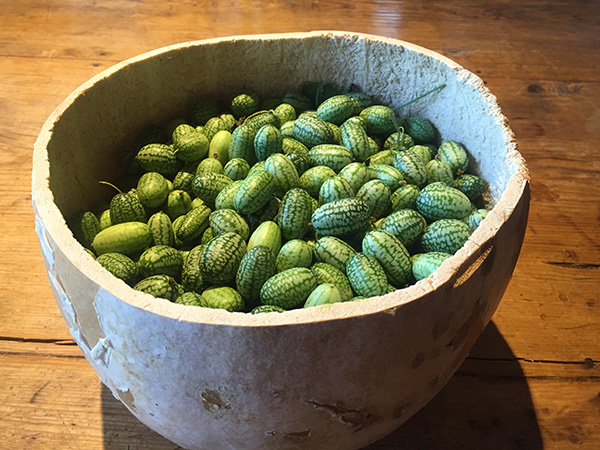
This year I tried growing a few new things in the garden. One of them was Mexican Sour Gherkins. What is so cute about them is they look like miniature watermelons. They are about the size of a large olive and taste like a tart cucumber. They are native to Central and South America and are in the Curcubit family like a cucumber but are not cucumbers but are a cousin being in a different genus-Melothria scabra. They call them Sandita (little watermelon) in Spanish. They are also known as Mouse Melons and other names. They’ve been domesticated for eons. They were very hardy being drought tolerant and both disease and pest resistant.

MEX SOUR GHERKINS_BOWL

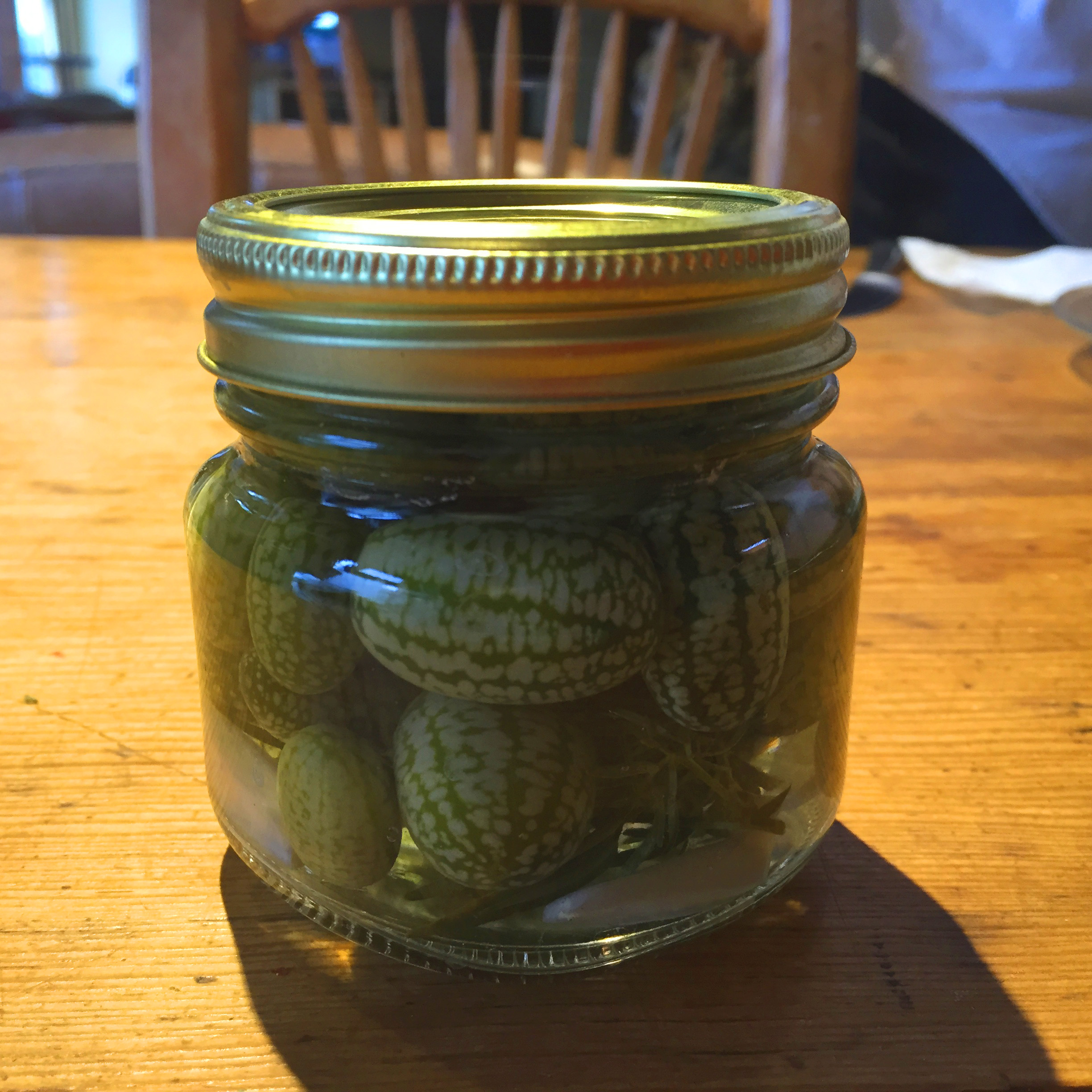
I grew them as novelty items to try out in martinis in place of olives. They are a vining plant and took forever to grow but once they took off, they were very prolific as pictured above.  I harvested them about a month ago and a friend, Mernie, came over and we pickled them using two different recipes. One as a simple salt/vinegar brine with some garlic and red pepper and the other way had all kinds of other ingredients for the martinis.

MEX SOUR GHERKINS_CANNED

Well yesterday we opened up one of each jar after letting them soak up all the ingredients for a month. I liked the simple brined ones the best and imagined them in martinis (we just ate them, no martinis yet) or served with a cheese plate. I thought they were both a bit too crunchy so I am taking some of my jars and use the water bath method to hopefully soften them up a bit (we used the refrigerator method on all of them) and see how that is. I do think they will be quite the conversation piece when we serve them with martinis (are you listening Jerry and Laura?)! The rest of you can eat them with cheese!

Curing Potatoes

potatoes just dug up

Dig up potatoes when the soil is drier so not much dirt sticks to them.

A friend of mine asked me why a few of her potatoes that she just harvested are soft. I honestly don’t know except that I know we need to ‘cure’ potatoes for about a week before we store them to heal any abrasions, minor cuts and thicken the skins a bit. So here’s how to cure potatoes.

Dig up potatoes in the fall, when the plants are dying, then the tubers will be as big as they will get. When you first dig up your potatoes, don’t wash them right away. Dig up potatoes when the soil is a little drier so not much dirt sticks to them. Discard any bruised, green ones or soft ones. Use up any damaged ones right away. Put them somewhere where it is a little cooler and they get good air circulation out of direct sunlight. I put mine in a basket lined with newspaper (so the dirt doesn’t get everywhere) with the dirt still on them inside my pantry as it is darker in there. If I had a garage, I’d put them in there but I don’t. They just need to be out of direct sunlight. Then after about a week, I take them out and brush off the dirt well with my hand but I still don’t wash them. I wash them as I use them. You want the skins to be dry. I also again look for any soft ones and discard them as they can ruin the rest and I put them back where the sun don’t shine as I don’t want them to turn green. Don’t eat any green ones as the skin has some photo toxins in them from being exposed to too much sunlight. I’ve never gotten sick from eating one as it is mildly toxic but why eat anything that is toxic. That’s the point of organic gardening right? I use to think store bought potatoes tasted the same as home grown potatoes but not so. Nothing better then fresh potatoes. They’re fantastic and not so starchy tasting.

TOM-TOM 2010-2015

Tom-Tom

This slideshow requires JavaScript.

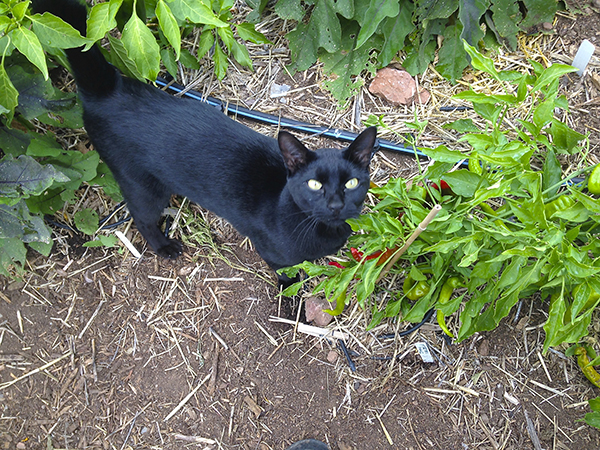
A beloved member of our family died today—Tom Tom our black cat. I found him in his cathouse on Sunday morning after calling and calling him outside Saturday night to no avail. At least I found him instead of not finding him at all. Turns out he probably herniated his diaphragm on Saturday night and the doc thought he would be able to repair it today but his organs went up and put pressure on his heart and he had a cardiac arrest. The doc hadn’t even operated yet but was trying to prep him for surgery when it happened. We are all in shock and his buddy and partner in crime, BT (our gray cat) doesn’t realize what happened yet. We got BT and Tom Tom about 2 years ago. He use to be an outside cat only but we got him and BT to come in at nights after about a year. He was very friendly and loving but also skitterish with others. The other cats keep looking for him-so hard to lose a family member we all love.

Tomato tapenade


tomato tapenade all tomatoes

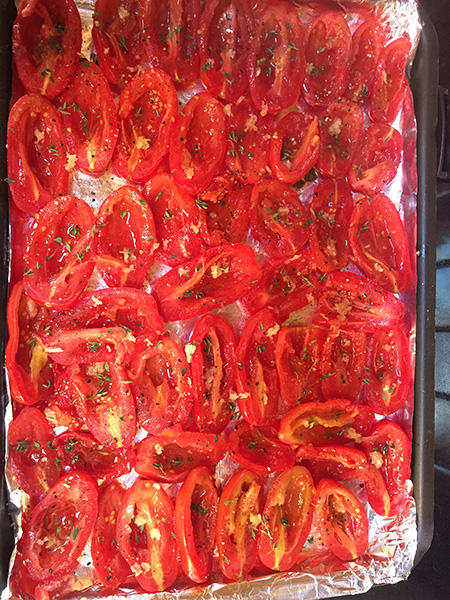
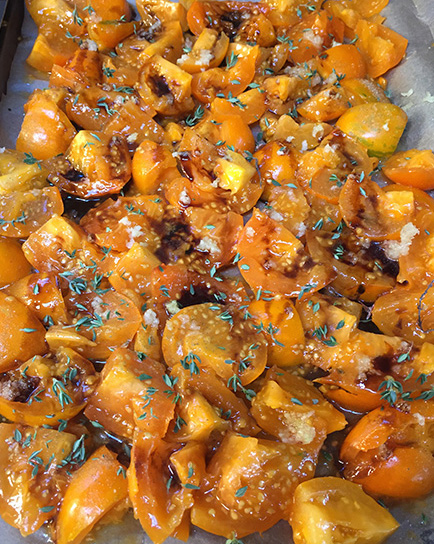
Being the Tomato Lady I have lots of tomatoes. One of the things I’ve done with my tomatoes, especially my older ones is making tomato tapenade. It’s easy to do and is so yummy you’ll want to make more with any tomatoes you can get your hands on at this time of year. The picture above I have mixed up all kinds of tomatoes.

1. Preheat the oven to 300°F

tapenade beginning

2. Take a cookie sheet and cover it with a big sheet of foil to protect your cookie sheet. Don’t try to piece two pieces together, it won’t work. The tomato juices will leak between the two pieces and what a mess it makes. I first tried it with parchment paper underneath and it was worse so don’t try that either. I learned the hard way and ruined a cookie sheet. Then I spread some olive oil on the sheet so the tomatoes don’t stick and cut my tomatoes in half and put them on the cookie sheet.

3. Put salt and pepper on the tomatoes and crush up some garlic (lots) and put that on top of the tomatoes.

red tomato tapenade

4. Put fresh thyme on top of the tomatoes.

sauteed onions

5. Then (this is optional but so good) Slice an onion or two and saute it in olive oil until soft and carmelized as above. Then spread the onions on top of all of it. Now I have made this both with and without the onions and it is definitely better with the onions but is really good without it too if you want to save more time.

yellow tapenade with garlic and thyme

6. Drizzle some good quality balsamic vinegar and then a little olive oil over it as well.

7. Cook and check often till soft and slightly caramelized. I start with half an hour and then keep checking every 15 minutes till done. Should take between 1-2 hrs if your tomatoes are bigger or juicy. There will be some black on the edges and that’s OK but watch closely as it gets closer to done as it can overcook quickly and the whole thing could burn black. A little black good, a lot of black bad. I scrap off the tomatoes (skin and all) off the foil and viola its done! I don’t puree it as I like it chunky and the skins are soft enough that you don’t even notice them.

8. I make some crostini out of some french bread toasting the slices till slightly crisp on the outside.

9. Then I spread some chevre goat cheese on the crostini and put a spoonful of the tomato tapenade on top. Sometimes I put a Kalamata olive on top, sometimes not. Divine!

Two cookie sheets makes about 2 cups of the tapenade. Refrigerate for immediate use or freeze or preserve it using a canning method for longer storage.


Garden Harvest Early October

oct 8 harvest

I love this time of year. It’s like the garden’s gone wild, everything ready for harvest all at once and a sense of urgency is felt by me and the vegetables to get it done. Get it picked, get it harvested and get it preserved. It is a crazy intense time as fall is here for real and soon we will have the first 32°F night (historically the middle of October). Right now nights are in the mid 40’s but that will change soon. The mornings require a sweatshirt in the garden now.

The sunflowers have come and gone, my cucumbers are done. I spent hours picking and pickling them as I love pickles. The zucchini are gone too. The green and purple beans are mostly finished. The shishitos and poblano peppers and eggplants are done as of this week. The 25 lbs of pears and 30 lbs of apples Michelle gave me are already dried into chips. The corn tassels are drying and soon I will see if my experiment of planting all pink kernels of Glass Gem corn will turn out pink ears or still be multi-colored. Either way is fine. The tomatoes are definitely fading, preferring much warmer nights and their size and harvest is getting smaller. I’m making tomato soup, tomato tapenade and tomato sauce like crazy-so far 18 gallon freezer bags of raw sauce in each that I will later make pasta sauces with (once the garden is done). Today was my last day at the Farmer’s Market as the Tomato Lady for this year as I will not get enough tomatoes again.

But the potatoes still need digging, the herbs need trimming and drying, Jimmy Nardello peppers are still kicking and need picking, the beets and carrots I planted in early spring are ready for harvest and the chard and different kales I planted in late July are loving the cooler weather now and will endure until we have really cold weather. Crazy busy around here.

My favorite sauce tomato

Goldman's American Italian

Here is my favorite sauce tomato!

First I want to share a fantastic tomato I grow every year and never sell it at the Farmer’s Market. Why? Because I think it is THE BEST sauce tomato I’ve every grown and I’ve grown many varieties.

GIA_SAN MARZANO

The San Marzano tomato top while my favorite sauce tomato is on the bottom

San Marzanos use to be my favorite sauce tomato but now they are numero 2. I’m selfish and save it for me to make tomato sauce out of. In fact I make a lot of tomato sauce as you can imagine and tend to mix up many varieties which tastes good. But when I get a bunch of these tomatoes, I only make sauce from them and don’t dilute them with any other tomatoes. The sauce is sweet, flavorful, rich and thick. A great base for any tomato sauce recipe.

GIA TOMATOES IN PROCESSOR

So what variety is this tomato? It’s called Goldman’s Italian American or as I label it on my freezer bags, GIA– so I know it’s different from my other raw tomato sauce. It comes from Amy Goldman who wrote a book on tomatoes. The only hitch on this tomato is it takes all summer and fall to ripen. It takes 90 days to ripen so some years I’m picking them when they are still green before a freeze and finishing ripening them inside but not this year. This year they are huge from all the rain and ripening nicely on the vine and I have a lot of these behemoths and lots of sauce.


MIA (missing in action)

JC at Farmer's MarketI can’t believe I haven’t written in a month on this blog. Not that I haven’ thought about it often. In fact I write ideas and shoot pics all the time, all summer and throughout the year. But summer is particularly hard to write more because there is always so much to do in the garden and then there’s harvest time. This year was particularly busy for me what with the garden tour, farmers market and now harvest time. I am busy as a bee as they say. It would be good if I did write more as I always am learning something in my garden and from my garden and from all my gardening friends-you! So now that the garden is slowing down, I can slow down and share those thoughts and ideas. Not that I’m not busy anymore–I’m always busy, that’s the nature of this busy bee! So stay tuned as I’m about to flood your brains with more information then you’ll ever want to know…


I’m Baaack-Tomato Lady returned to Farmer’s Market last Saturday

tomato lady2

So last Saturday I returned to the Farmer’s Market here in Santa Fe and plan to be there on Saturdays until the end of the season when it freezes. I saw many friends and old faces there-people who have been waiting for my return and it was good to see them come back. Thank you!

It’s such a short market for an heirloom tomato grower. Our end of season is always dependent on when the first freeze happens. Sometime it happens in late October, once it happened in September (God forbid), and only once in November! Pray for a nice long fall or as we say around here, an Indian summer, so I can get all those wonderful tomatoes that are just coming in on my mini farm to the market.

I have 31 varieties this year and 125 plants. Someone asked me if they are all there at the market at the same time and alas the answer is no as I have early varieties, mid-varieties and late season varieties growing in the garden. What I can tell you is that I grow many unusual varieties of heirloom and open pollinated tomatoes whose seeds come from all over the world. Many of them you will not find here at our market or even be able to get the plants in the garden nurseries. I start them in April inside the house and transfer them to the garden after the last freeze in spring and this year, our last snow was May 16. So as you can see, it takes a long time to get these babies to the market. And after spending so much time with them I do indeed call them my ‘babies’.

Every year I have some new varieties I try. This year some of them are Black and Brown Boar, Cascade Lava, Artisan Blush Tiger and Purple Bumblebees. I also have my favorites that I grow every year for the market like Costuluto Genevese, Pantano Romanesco, Marmande Garnier Rouge, Juane Flamme, Paul Robeson, Indigo Rose and Pink Berkeley Tie Dye plus many more varieties. Then at the end of the season I evaluate them based on your taste buds and input and some of the new ones make it on my ‘all star’ list and some don’t. So come down to the market and check out what other tomatoes I have going on. I also sell other heirloom veggies like Fairytale eggplant, Shishito peppers, many varieties of beans and other veggies but as you all know tomatoes are my speciality!

Produce for sale from the Tomato Lady-Friday August 21

Jannine's bean tee pee

Hi folks.  I know many of you locals follow my blog. I have 125 tomato plants and 3o heirloom varieties this year.  For some unknown reason my tomatoes are taking their time turning red (or orange or striped or black or purple). This is weird as I would have thought that they would all be kicking ass by now and I would be at the Farmers Market. The weather has been nice and warm, the rain wonderful and the tomatoes look great-just still green. Ah mother nature! Whata ya going do? I’ve learned years ago to just surrender to her. So…

Since I don’t have enough tomatoes ready (I need boxes and boxes of them) for the Farmer’s Market this Saturday, I do have some heirloom tomatoes to sell plus I have LOTS of other heirloom veggies—Shishito peppers, wonderful varieties of french and Italian green beans—Rattlesnake beans, Italian Romano beans, Trionfo Violetto beans, Royal Burgundy beans and some french filets, tasty sweet cucumbers and fantastic huge ruby red chard that melts in your mouth when steamed and drizzled with a fine balsamic vinaigrette.

I will be selling them from 2 -4 pm this Friday August 21 at our studio:

Liquid Light Glass
926 Baca Street #3
Santa Fe, NM
Call me if you have questions. 660-4986

I will be starting at the Santa Fe Farmer’s market Saturday August 29th from 7 am-1 pm. But don’t be late as I will sell out probably by 11 am. You can find me inside the building-just look for my ‘TOMATO LADY’ SIGN above my booth.

So come catch up with me and get some fantastic veggies for yourself this Friday without the parking hassles! Hope to see you here at the studio!

Is it a weed?

I just read an article from a fellow gardener in France about the love-hate relationship we gardeners have with self-sowing weeds. The ones that come up every year or so it seems. I had to chuckle-in Provence they have many ‘weeds’ that pop up everywhere.  So it got me started to thinking about my ‘weeds’ that come up in the garden every season.

What’s the definition of a weed? Answer: Any plant growing in the wrong location for us. And what’s this love-hate thing?

For example here are some edible weeds:

common_purslane_portulaca_oleracea_001

Purslane-Last year I let wild purslane grow wherever it wanted and even ate a bit of it in my salads as it has higher Omega-3 acids than salmon does! And a gardener friend of mine named Poki from Gaia gardens here in Santa Fe even has a great purslane pesto he brought to the Farmer’s Market and it was yummy. (I’m going to have to get the recipe.) So there was the love thing but then it started growing everywhere (everywhere I didn’t want it) and soon was flowering. I thought oh-oh I better pull it before it sets seeds and so I did. Way to much for me to eat but luckily my goats and chickens love it as a treat.

?????????

White Horehound-I finally ID a plant that is growing all over-both at my place and in Santa Fe. It is White Horehound which is actually a herb that suppose to have beneficial aspects for lung and bronchial problems by loosening phlegm. Some people make cough drops out of them and some use the dried leaves to make a tea.  They actually sell the seeds in Baker Heirloom Seeds but around my place it grows like a weed. I use to pull it out because it is not a particularly attractive plant but since I became a beekeeper, I noticed the all bees are wild about it with its small white flowers so now I leave it bee for them.

closeup of white horehoundI do control it somewhat by pulling the plant right after the bees are done with it but before it sets the big seed heads. Interesting the US Drug Administration won’t allow the American cough drop manufacturers to use horehound in their cough drops but Europe has used it in their cough drops forever and successfully. Seems it isn’t a ‘proven’ herb for the US but you can still buy European cough drops with it in them at the store-they’re called Riccola and they’re from Switzerland and ya know what? When I had pneumonia a few years ago and was coughing my brains out, it was the ONLY cough drop that stopped the horrible coughing and I didn’t even know about horehound then. Wake up America!

14borage_closeup

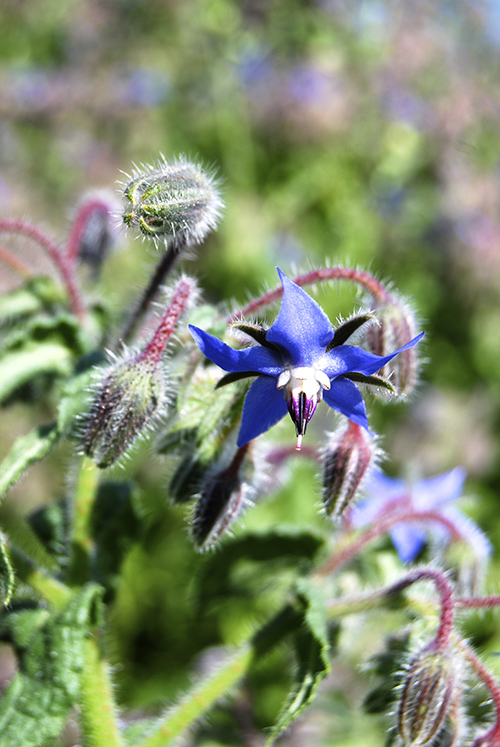
Borage-Next ‘weed’ was my borage. It’s not really a weed but a edible flower. I started 2 plants and put them in my strawberry patch as I read it is a great companion plant for strawberries-and so it is-there’s the love thing. The strawberries are thriving but the borage has reseeded so much I have to pull some of them out or they would take over the patch. You can also eat the borage flowers. They go well on salads and have a cucumber taste and the flower is really, really beautiful and the honeybees love them too. I think I’m going to move them to an outside garden area where I don’t care if it reseeds.

220px-Taraxacum_officinale_-_Köhler–s_Medizinal-Pflanzen-135 Dandelions are always considered a weed and yet I read many people put the leaves in salads and that they are super healthy for us. I just keep cutting the leaves off (my goats love these too) and make sure I don’t let it reseed.

cow pen daisy

Cow Pen Daisy-Now this next one isn’t edible for us but for the bees. Ever see that sunflower/daisy type of plant with grey-green leaves? It grows here in the summer. It’s actually called Cowpen Daisy or Golden Crownbeard and has great yellow flowers that look like small sunflowers. It’s name comes from it growing in a lot of cow pens or corrals where the soil has been disturbed. I like the flowers but the only problem for me is its stinky when you disturb it. I let grow if it wants to as I discovered it is a wonderful bee plant. I went to pull them out of our corral a few years ago (before Koko the horse came) and discovered the bees all over them so I left them (great, one less weed to pull!). Then later I found out that the flowers provide bees food in the late summer/fall so now I happily co-exist with them.

And then there’s Kochia-Kochia scoparia. So rampant this year and out of control for many of us living in the country. Again I wouldn’t eat it but I hear we can-its suppose to taste like a salty green. Imported from Eurasia eons ago-opps! Imagine if I could sell it at the Farmer’s Market! I’d be a millionaire! But I’ll tell you who does love it-my horse Koko and my goats! I read it was used for food for livestock as it is high in protein for them so I let the horse and goats out and mow (eat) it down periodically. I also have to literally mow or pull it as well before it reseeds. I have smothered it on my paths under about 3 inches of horse manure when it has just germinated or better yet before it germinates in early summer. This ‘smothering’ keeps the light out and it needs light to germinate and grow. But right now it has grown too big, so let those goats out, if you got any!

I like to let plants grow and reseed if possible as not much else can grow here without extraordinary effort although this year with all this fabulous rain we’ve got, everything is growing-especially ‘weeds’.

Eldorado vegetable pest lecture

tomato hornworm revealed

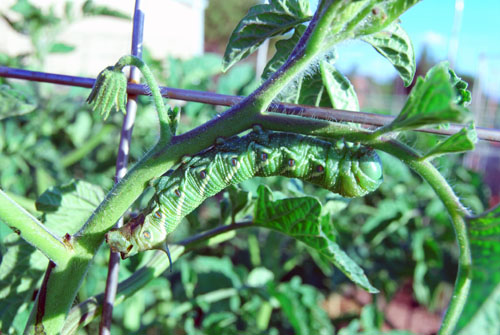
Tomato Hornworm revealed-such a good camouflage artist!

Gave several garden lectures this week. The first lecture was on pests in the garden at this time of year out in the Eldorado Community Garden on Monday August 3. What a lovely garden! I hadn’t been out there for several years and it has expanded and is very beautiful right now (especially with all these rains).

There were lots of questions on gophers, squirrels, aphids, tomato hornworms, cabbage loopers, grasshoppers and other insect pests that are around now and organic control of them. We talked about all these pests and it’s amazing that any plants survive!

Attached are the handouts I gave out at the lecture:

CLass pests pics

ORGANIC INSECTICIDE CONTROLS

ORGANIC DISEASE CONTROLS

Here is some more info:

HOW TO CONTROL:

gopherstrap ’em. Sorry but it’s too hard to grow crops here anyways and to see an 18 yr old apple tree decimated from gophers is a travesty. Gophers are very territorial so you might not have as many as you think. Usually there are only between 2-4 gophers on a property.

squirrels-sprinkle fox urine granules around your garden (not coyote urine granules or human urine as one person asked)

aphidsAZAMAX-a new organic product available only at Newmans.  AzaMax is made from special Azadirachtin Technical extracted using patented extraction technology from the Neem tree but is not Neem oil.  The first week of Azamax applications will pretty much stop the reproduction of spider mites, aphids, or other pests.  You need to reapply Azamax to your plants every 7-14 days for a few times. Helps disrupt eating and mating.  You will then see dead aphids on your plants but they will not be eating them so you need to rinse off before eating your crops. Do not spray in middle of day when it’s hot as it can burn your plants. In fact, it’s good to spray this and Neem in the evening before dark. That way the plants won’t get burned and the bees have gone back to their hive (you don’t want a direct hit on bees) and by morning when it’s dry, it’s fine for bees to be around, just not when it’s wet. I can’t wait to try this on some kale that has them now. A landscaper friend who uses it in her gardens, showed me the dead aphids on her plum tree and it worked. Wish I had it back when the aphids were bad on the fruit trees earlier this year!

Tomato hornworms-handpick or if you have a heavy infestation, use Bt (Bacillus thuringiensis). Just call it Bt when you ask for it at the nurseries.  It wrecks havoc with their digestive system. Is harmless to all other animals but deadly for caterpillars.

Cabbage loopers-a caterpillar that eats greens, lettuce, cole crops, kale, etc. Use Bt for all caterpillar problems.

Grasshoppers-use NOLO Bait or Semaspore. Same thing, different manufacturers. The problem is most people wait till they are inundated with grasshoppers and then say NOLO bait doesn’t work. Not true. You just need to start much earlier in the season because it takes about 3 weeks+ for it to work and it is not as effective once the baby hopper grow up. Plus you need to refrigerate NOLO. If you have lots of adult grasshoppers now, put row cover over your crops to act as a physical barrier between the hopper and your plants. I noticed last year when I had hoppers that they were gone in 3 weeks and I heard they won’t be as bad the next year as they did not lay eggs and this must be true as I’ve only seen one or two this year. Not harmful to other animals, bees, mammals or birds.

Home Grown New Mexico Kitchen Garden & Coop Tour this Sunday July 26

In case you were wondering why I haven’t written on my site for a while it’s because I’ve been crazy busy
in my garden getting ready for the 2015 Home Grown New Mexico’s Kitchen Garden & Coop tour. I’m on the tour with 4 other great places this Sunday July 26 from 9 am -3 pm!  Come check us out! Read on for details of how to attend this great event! All this info is also listed on Homegrownnewmexico.org


2015 HGNM KItchen Garden Tour_ad _green

Sunday, July 26—OUR MAJOR FUNDRAISING EVENT!
Kitchen Garden & Coop Tour
Time: 9 am-3 pm
Cost: $25. children under 12 free. You can pre-pay below or pay at the tour at any of the homes. Cash, Check or credit cards accepted.
Locations: see below

The 5th Annual
Kitchen Garden and Coop Tour
Sunday, July 26, 2015 from 9 am to 3 pm

See five kitchen gardens in Santa Fe. Pick up ideas that you can use at your place or just enjoy these beautiful, edible and functional landscapes.

The properties on the tour this year will feature many gardening ideas—beautiful vegetable gardens, herb gardens, fruit and nut trees, backyard chicken coops, goats, beehives, composting,  green houses, a neighborhood community garden, edible landscapes and rainwater harvesting systems.  Master Gardeners will be at each location to answer gardening questions and support the event. Pre-purchase tickets here on the eventbrite button or buy them at the tour at whatever house you first go to.

Eventbrite - 5th Annual Kitchen Garden and Coop Tour

5 Properties on tour-get the Home Grown tour_map (revised Jul 18)
#1 • Lisa Sarenduc, Suitable Digs
712 Chicoma Vista
Santa Fe, NM

#2 • Amelia Moody
1951 Osage Dr
Santa Fe, NM

#3 • Deb Farson
2215 Paseo de los Chamisos
Santa Fe, NM

#4 • Bert & Mari Tallant
2389 Camino Pintores
Santa Fe, NM

#5 • Jannine Cabossel, ‘The Tomato Lady’
56 Coyote Crossing
Santa Fe, NM

Garden Tour Bios
Lisa Sarenduc-owner of
Suitable Digs. This property has unique green vacation lodgings on her sustainable property where she lives. Her property features a greenhouse, fruit and nut trees, raised vegetable and berry garden, greywater system, a dome greenhouse with fig trees, another greenhouse with olive trees, a large rainwater catchment system, 1.5 acres of native grasses and flowers lining her driveway using key line design, a swimming pond and is completely powered by solar energy.

Amelia Moody has been gardening at her home in Santa Fe for 10 years. Her lovely garden is continually evolving, as she acquires “gift plants” from her friends. She has mature fruit trees and bed with mixed plantings of vegetables, flowers, medicinal plants and cacti, keeping a constant supply of flowers pollinated by her own honeybees. A giant Saguaro Cactus skeleton dominates her back yard. She also catches water from her roof, storing it underground in a 1000gal tank. Chickens will supply her with eggs through the year. A well tended compost pile rounds out her very balanced landscape.

Deb Farson lives in a townhome with her cat Charley in town. She has been a master gardener for 5 years (in fact, she is the president of the Santa Fe Master Gardeners Association). She has been a Master Composter since 2002. Her property has a small footprint, but she has been able to pack in a lot of sustainability. Her perennials are xeric and include many native plants and shrubs in beds, pots and planters. She connects with the National Weather Service daily – measuring precipitation in Santa Fe. She catches rain from her roof to water her landscape – including raised vegetable beds. She fosters community – cooperating with neighbors in a truly neighborhood community garden. She crafts some of the best compost in town with the help of her neighbors, who contribute their food scraps all year round and get tomatoes in the summer in return.

Bert Tallant and his wife Mari have been gardening in Santa Fe for over 25 years. Their garden showcases many of the sustainable features that can be accomplished in an urban setting. They converted almost half of their property into a vegetable garden. In the compact garden, they grow a substantial portion of their food for the year, including tomatoes, chile, corn, squash and raspberries – lots of raspberries. Bert has experimented w/ espaliered apple trees along the walls that enclose the garden. They use water captured from their roof and piped to the garden underground. A newly captured swarm of honeybees buzz about pollinating and making honey. Eggs are gathered daily from their chickens. They make their own high quality compost gathering materials from neighbors and the city.

Jannine Cabossel-The Tomato Lady
Jannine can be found selling her heirloom tomatoes at the Santa Fe’s Farmer’s Market in the summer and features her artisan farm on the tour this year. She strives toward sustainability. Her 6.5 acre property includes 3000 sq ft of raised vegetable gardens that supply her with food year round, garden art and flowers that feed her soul, over 30 varieties of heirloom tomatoes, fruit trees, strawberries, grapes and raspberries, 2 busy beehives, many drought tolerant, bee friendly gardens, chickens that give her eggs daily, Koko the horse and her buddies-the goats, a terraced herb garden, an unheated greenhouse full of tomatoes now and greens in the winter, a cold frame for fall/spring gardening, composting systems and even a resting hut fondly called the Tea House. Be prepared to wander and get lost on this lovely property that will surely inspire gardeners.

Holy Cow! Hail the size of quarters and bigger!

hail

Wednesday we got two huge storms where hail was between the size of quarters and ping-pong balls in some places. I’ve never seen hail that big here in Santa Fe. Sorry for the blurry picture but our hands were shaking! Lots of damage was done in many people’s gardens, destroying or severely damaging many vegetables and fruits. Whole leaves were torn off or plants shredded. Most of mine were spared as I had the vegetable plants covered with row cover, and it took the hit instead of the plants.

Believe it or not some plants will come back and be ok for those of you hit hard. We will be a couple of weeks behind but the season is not necessarily over. Check your plants and if the center of it where new growth comes from is intact, it will probably grow back so don’t be so quick to pull it. I will wait for about a week to see if they show signs of new growth. If they do, I will trim back the damaged foliage but not before. Remember their root systems were not hurt so they have a good chance to recover.

Meanwhile I would spray a fungicide on them as they are weakened and more susceptible to disease, especially fungal diseases like early blight and powdery mildew with all this wet weather. You could use Neem, OR Copper spray OR Serenade to help ward off fungal diseases. All are organic.