FREEZE ALERT!!

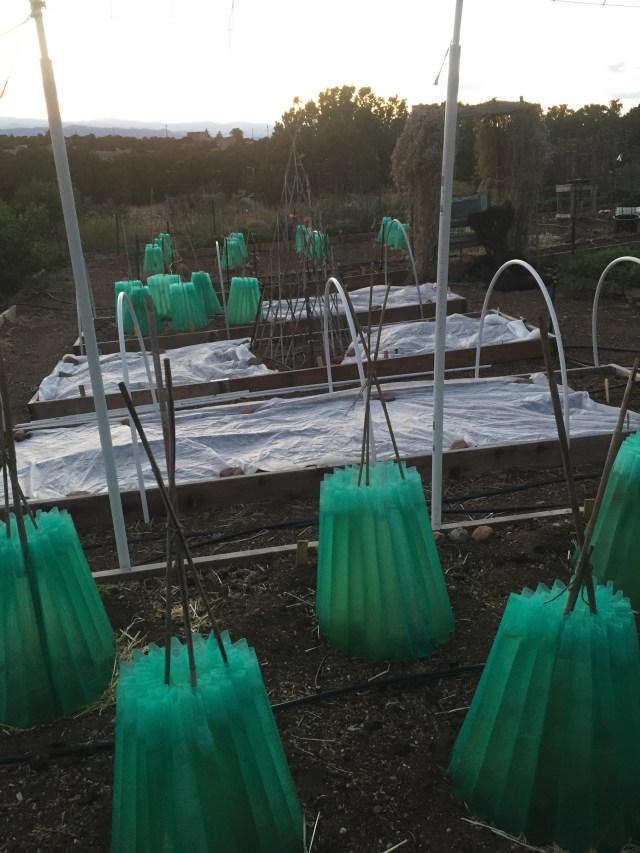
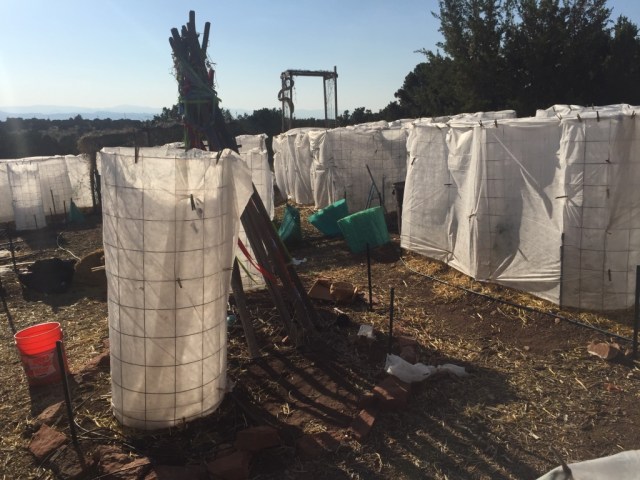
Starting tonight, the next 4 nights will be below freezing with the temperatures dipping down to 30°F tonight and 27-28°F for the following three nights so if you have anything outside or in an unheated greenhouse or hoop house or cold frame, you’ll need to put row cover over your plants to keep them from freezing at night.

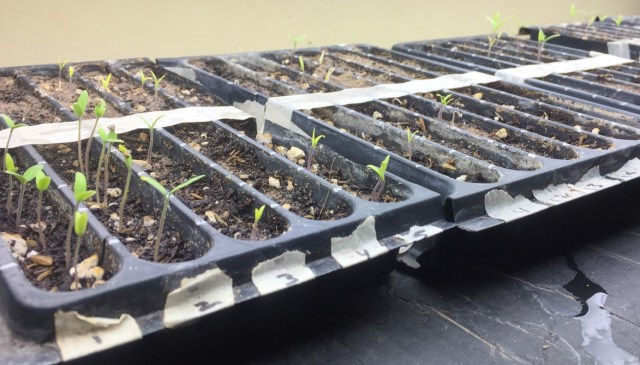
Tomato seeds starting to come up April 9th

The tomato seeds are starting to germinate in their trays. It has taken only 5 days!  Still more to germinate but many are already up. A few haven’t germinated so I will replant if they don’t come up in a few days. They are under fluorescent ‘daylight’  T-8 lamps that are in a standard 48″ fluorescent light fixture that I got from Home Depot. They are also on heat mats and I have a heat mat thermostat set to 80 degrees. The heat mats and thermostat I got at Amazon. I never use to use a thermostat but one year without it, the temperature went to 100 degrees and the seeds fried. With a thermostat, it controls the temperature perfectly to whatever is the optimum temperature for each crop. In this case, the optimum range for tomato seeds for germination is between 70-85 degrees.

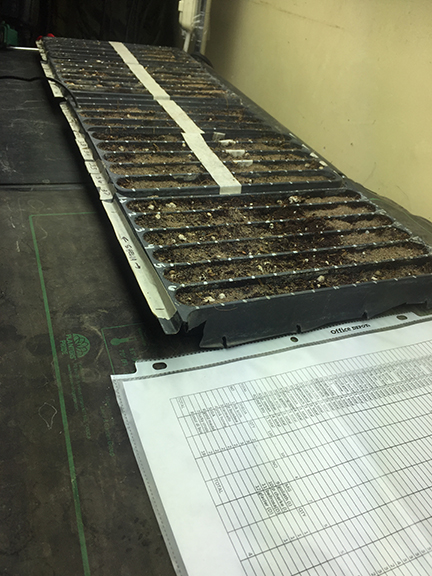
Tomato seeds planted April 5th

150 tomato seeds planted this year in these germination trays. 42 varieties

Every year it seems, I adjust my tomato seed planting schedule. This year is the latest I’ve ever started my tomato seeds-April 5th. Still trying to tweak it out about when the best time is to start them. If I plant seeds too early, the plants will get too tall before I transplant them outside in wall of waters. Last year I started seeds March 29th. So we will see how they do.

A couple of things have allowed me be able to start them later and get them in the garden earlier.

First, since I changed to Batch 64-Moonshine soil mix (from Agua Fria Nursery), the plants take off growing like a rocket as soon as they germinate. The list of ingredients in it is unbelievable. Once the seeds germinate, there is enough nutrients in this soil mix to basically fertilize your seedling for 6 weeks without adding anything else (except maybe liquid seaweed and Vitamin B at transplanting time to reduce transplant shock). Now I can plant them outside in 5 weeks instead of the 7-8 weeks in years past.

Secondly, I now start my seeds in these germination trays (see pic) where the cells are close together. The trays being shallower, seem to speed the germination process too—less soil to heat. These are a 20 row seedling flat.

Thirdly, it seems to be getting warmer sooner in the spring here in Santa Fe or at least that is my experience. Using wall of waters to protect the young tomato plants from cold nights, I was able to transplant my tomato plants outside on May 3rd, shaving 13 days off the ‘frost free’ date of May 15 that we have here in Zone 6b. They did just fine in their wall of waters.  But last year we were in a warm drought and this year may be different with all the precipitation we got this winter. We’ll see.

And lastly, maybe, just maybe, I’ve become a better gardener through the years…
Plant Greens in the spring!

April is a great time to plant greens like spinach, lettuce, cabbage and mustard greens. Plant now so you will get some greens to eat before it gets too hot. When it is hot they will bolt and become bitter. They can be grown in part shade to last longer when the heat comes. The spinach was actually started last spring and made it through the winter and the chartreuse and purple bok choi were put out 3 weeks ago. All are covered at night with row cover.

Other good crops to plant in April are bok choi and chard. They are real workhorses in the garden being able to withstand our cold and hot seasons. They can be grown in part shade to full sun.

Also good crops to plant in April are beets and carrots. Be sure to plant these in areas of your garden that are getting full sun and water 2 times a day until they are up.

Of course all this is dependent on your soil being warm enough now. How warm should your soil be? Between 40-60 degrees. How do you know how to tell? Get a soil thermometer and stick it in your soil about 2 inches deep. Here is a soil temperature chart to help you know when to plant veggies.

And these plants should still be covered with row cover at night because of our cold temperatures.


NEW! Santa Fe starts a ‘Seed Library’

Santa Fe Seed Library Kickoff-Saturday, March 23
If you are a gardener in Santa Fe, you should be excited about this. Santa Fe is starting a Seed Library in the Santa Fe Southside Library branch off Jaguar. All free this Saturday.

The Santa Fe Seed Library will provide open-pollinated seed to the Santa Fe Community and will encourage the development of a community of seed savers and seed stewards. The Santa Fe Seed Library is a collaboration between the Santa Fe Public Library and the Santa Fe Extension Master Gardeners. In addition to providing access to open-pollinated seeds, the Seed Library will offer a number of free public programs to help facilitate the growth of a community of climate-savvy gardeners.

This Saturday is the kickoff of it with guest speakers, info tables, a Seed Swap and the movie ‘Seed: The Untold Story‘ and of course seeds! I will be there representing Home Grown New Mexico with an info table on our classes this year and will be putting on a mini-seed swap.  It will be open from 1 to 4pm at Santa Fe Southside Library, 6599 Jaguar Dr, Santa Fe, NM, Hope to see you there!

Perennial fruit care in spring

Strawberries grew unbelievably with the addition of Azomite last year

As far as perennial fruit goes, I already cut back the new raspberry plants a few days ago. They are a fall variety called Polana from Norse nursery online. They were fantastic last year with us harvesting lots of raspberries in their first year. So this is their first trimming. I trimmed them back within an inch or two of the ground and they are all still alive. I wasn’t sure as I forgot to water them last fall for a few months but with all the precipitation we got this winter, they are fine.

I also cut back the new blackberry plants called Triple Crown, and saw lots of new start-ups that rooted that I will move. Now I won’t have to buy some to finish up the blackberry row. Hopefully I will get blackberries in their second year.

Today I pulled away all the dead leaves around the rhubarb (Victoria) and they are starting to come up too. A very hardy perennial plant.

I checked the strawberries and pulled all the dead borage plants that grow up in the strawberry patch each year from dropped seeds. Borage is a good companion plant for strawberries and the bees love them. The strawberries need a haircut too-but not too short. The strawberries did fantastic last year.

The verdict is out on the artichoke. It came back last year in its second year but I don’t see any signs of life yet this year. They actually are not supposed to be grown here as a perennial because we are in a colder zone than they like, so we will see if it makes it or not.

Next up is to prune back the grapes and the apple trees and other fruit trees. I’m late on the apple trees but they need to be desperately thinned and pruned now before they come back to life. Last year I put Azomite, a mineral supplement, in my veggie garden which really helped the crops and I have some leftover which I will sprinkle around the fruit trees this year.

Plant peas this week!

Time to Plant Peas!

For me, I use St. Patrick’s Day to remind me to plant pea seeds OUTSIDE in my garden. Just an easy day to remember—we need to plant peas early so we can get some peas before we get too much heat.

I use a legume inoculate powder on the seeds. They pull nitrogen from the air and deposit it on little nodules on their roots.

Here’s some pea planting basics:
-Sun: They produces more in full sun in cool climate gardens. For warmer climates they prefer afternoon shade.

-Soil temp for pea planting: 40-75 °F– warmer soil will lead to faster germination

-Seed planting depth: 1″

-Space between pea seeds: I plant a double row of peas about spaced 2 inches apart in each row and each row is about 6 inches apart. I put them next to a trellis to grow up.

-Seed treatment: use a legume Inoculate for pea seeds.

-Days to germination: Approximately 12-14 days from planting seeds outside depending on soil temperature. They colder the soil, the longer they take to germinate.

So get out and plant peas soon!

Speaking of Seeds…

HOME GROWN NEW MEXICO IS HAVING THEIR ANNUAL SEED EXCHANGE THIS WEDNESDAY-This is a FREE event, so everyone is welcome! Please note new location this year. I’ll be there so hope to see you on Wednesday.

Wednesday, March 13th
4 pm to 6 pm

Home Grown New Mexico
Seed Exchange-FREE

If you are looking for free seeds for your vegetable or flower garden or have some to share, start this new gardening season with us at the Santa Fe Seed Exchange. *New this year– book sale of gently used gardening books and magazines-cheap!

Location: Santa Fe Area Home Builders Association building
2520-B Camino Entrada (next to Habitat ReStore on south side of building) • Santa Fe
Fee: FREE for everyone! No need to sign up-just show up!


NEW! Seed Starting Class-March 17

NEW! Seed Starting Class-March 17

DATE: March 17, 2019
TIME: 12 noon TO 2 pm
INSTRUCTOR: Jannine Cabossel/Tomato Lady
LOCATION: Tomato Lady mini-farm • 56 Coyote Crossing • Santa Fe, NM


______________________________________________________________________________

Why start seeds when you can buy plants at the nursery? There are many reasons to start seeds inside early. Start plants from seeds if:

• You want to grow unusual varieties that are not sold in the nurseries—this is the #1 reason I grow many of my crops from seeds. So if you want to try that unusual tomato or watermelon, you’ll probably have to start them from seeds yourselves.

• You want to get a head start on spring—start many crops from seed and get them in sooner

• You hate buying more plants than you need—many plants are sold in pony packs-maybe you don’t want 4 or 6 plants of the same variety

• Many times the plants are already root bound—the number one problem I see from nurseries

• You can save money by learning to grow your own veggies from seed

• It’s FUN!!

Participants will learn:

• Which seeds should be started inside and which seeds can be planted directly outside later when it warms

• Learn what dates to start the seeds & what dates to put out in the garden

• Learn about different soil mixes and containers-which ones are best

• How to transplant the seedlings up into bigger pots

• How to care for your seedlings

• How to avoid spindly transplants by using proper lighting

Certain veggies are hard to start from seed like beets and peas. They don’t like to be transplanted and are direct seeded into the cold spring soil and many times the seeds rot in the ground before they can germinate. Let me show you how to grow them from seed inside so they can be easily transplanted without stressing them. Stress free plants are happy plants, happy plants produce more. There are many things you can do to get started successfully, and I will share my knowledge with you. Handouts provided to take home to guide you.


HOW TO REGISTER: PAY BELOW and I will send you a confirmation to your email that you give to PayPal. I will send directions before the class starts.

Step 2: TO PAY: Purchase this class for $20 here (you don’t need a pay pal account, just a credit card):


Buy Now Button

Need to Contact me? Email me: jcabossel@hotmail.com

Groundhog day-Will we get an early spring or more winter?

Here’s a fun link to see Punxsutawney Phil from Gobbler’s Knob, the most famous groundhog in America, predict whether we will get more winter or and early spring.

https://weather.com/forecast/regional/news/2019-01-30-groundhog-day-forecast-2019-punxsutawney-phil

Greens started inside Jan 15

The weather outside has been very snowy since Christmas. More snow than I’ve seen in years. Should be a great spring for flowers. But inside I could not wait any longer so I planted some spinach, arugula and lettuce seeds under lights on January 15th. The greens popped up in 2 days and the spinach was right behind them. I guess they are as anxious as I am to get going even though the garden outside has 6 inches of snow on it and no end to winter in sight. But they are not destined for the garden. They will be going in the unheated greenhouse and the cold frame in about 5 weeks just in time for March madness (and I’m not talking basketball guys). And so the theory goes that I will have luscious greens come mid-March. I know it’s early but I looked up the last few times how early I’ve planted lettuce and spinach seeds and it’s always sometime in January. I guess I’ve recovered from the last season and looking forward to next gardening season.

Here we go again!

Winter spinach!

Nothing is better than spinach in the winter-sweet and tender. These pics were taken on November 23. I harvested all the outer leaves as they were slowing down their growth when the days got shorter and won’t start growing again till Jan 15. I harvested (two) 2-gallon bags of spinach!


Even the big leaves are tender. And it lasts a long time in the refrigerator!
Still good in late December. The variety is Carmel.


I still have the plants in my coldframe and hope they make it through winter. If they do, I’ll get 2-3 more harvests in spring. As of this storm last week, they were still alive. With this El Nino weather pattern, we had some much-needed moisture in the form of snow. Having been in an extended drought last year, this moisture is welcomed indeed. And now another storm is hitting us tonight on New Year’s Eve. We shall see how much snow it will dump by tomorrow. Today’s high was 25°F and tonight’s low is 15°F although it has gotten down to 5°F at night this last week.


Snow day!

KOKO likes the snow!


The gardens on a snowy day-Dec 26, 2018

Sleepy time for plants

When winter days are less than 10 hours a day in length, plants in the ground slow down or stop growing altogether. I’d like to think that the plants are sleeping. Eliot Coleman, who wrote The Winter Harvest Handbook, calls this time the Persephone Period. Our Persephone period here in Santa Fe is from Thanksgiving thru January 14th. What does this mean for us gardeners?

If you are thinking about transplanting plants that you started or bought into a hoop house, low tunnel or greenhouse, forget about it right now. Wait.

If you had planted greens in August for a fall harvest, you probably notice that they aren’t growing much anymore. But they should be big enough to harvest assuming you protected your cold hardy plants from our winter nights with winter weight row cover. I have 2 big cabbages still in the garden and a couple of kale that I plan to harvest this week since they won’t be getting bigger.

But plants that are small, will stay small now until Jan 14th when our daylight hours start to get longer again. Other parts of the country further north will have longer time periods of less light days. This has nothing to do with the Winter Solstice, which is the shortest day of the year but rather a time period of less light. After January 14th, daylight hours will start to get longer than 10 hours again. That’s when the plants wake up and start growing again.

So my recommendation is to hunker down with some good gardening books, get your gardening catalogs and plan next year’s garden (and get some rest too.)

Winter is here early

Fall harvest-tomatoes, Tahiti Butternut squash, Bradford watermelons and Craupadine beets

I just heard last night’s snow was the earliest on record for Oct 14th in Santa Fe. The weather apps have said it was going to be 27°F last night. Woke up this morning to a light snow, ice and the temperature was 24°F here. Harvesting has been intense the last few weeks. Why is there always so much to pick in the end? The only annual crops left are a few kale, beets and cabbages outside in the main garden and greens in the greenhouse and cold frame. I’m not sure how they fared as I wasn’t able to go out and check today, and in truth, with 34°F for a high, I was in no hurry to see if they made it. They were covered with winter weight row cover with the hopes they make it and I will check tomorrow. I was more concerned the barn animals were ok with this first cold snap and made sure all the heaters in the water tanks were working and the chickens had their heat lamps on. I guess winter is here.