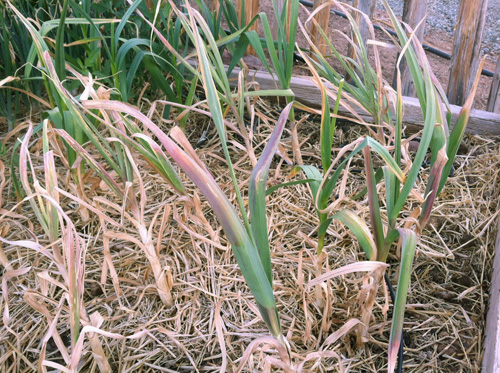
What’s wrong with this zucchini? The one on the left is yellowing and shriveling up. It wasn’t either fully pollinated (some bee didn’t do her job) OR once again it was too hot when pollination happened and it didn’t take hence it is self aborting. Just like tomatoes, all squash likes the heat but not when it is trying to pollinate. The zucchini on the right side of the photo is fine.
Category Archives: VEGETABLES
If your gonna grow garlic this fall..
English: A basket of garlic (allium sativum) offered for sale at the farmers’ market in Rochester, Minnesota (Photo credit: Wikipedia)
If you’re gonna grow garlic this fall, and I suggest you do, this month is the time to get your beds ready for it. Add lots of aged horse manure and some greensand to your bed. Then turn it over and wait till October to put the garlic in (you should be ordering now). Don’t worry if we have a freezing night or two in October, it won’t hurt the garlic as the ground won’t actually freeze until later (like December) and the garlic will start to send its roots down, getting a good headstart for spring. I ordered my garlic about 2 weeks ago and am getting some softneck and hardneck varieties which will arrive in October. It’s such an easy crop to grow and the flavor is far superior to store-bought garlic that it’s one crop I always grow in the fall. Just remember to put lots of straw on it as a mulch AFTER the nights start to freeze and pick a bed that you won’t need right away next summer as the garlic won’t be ready till late June-July.
The reason I grow hardneck is for the outstanding flavor although it has a shorter shelf life and must be used up in a few months. The reason I grow softneck garlic is because it has a longer shelf life up to 10 months and there are many tasty varieties of it as well. Besides I’m looking forward to braiding softneck garlic which will be a challenge as I never learned how to braid hair!
Why we don’t have ripe tomatoes right now
So if you still have tomato plants after the curly top virus hit many of our plants, congratulations! I had 84 tomato plants and am down to 48. Thankfully I planted more this year or I wouldn’t be at the Farmer’s Market. I’ve gotten many questions on why we don’t have many ripe tomatoes now. Lots of green ones, but few ripe ones and normally we would have LOTS of ripe tomatoes now. The reason is we had an unusually hot July with day temperatures over 90°F almost every day and the blossoms dropped back then, failing to set fruit. The number one reason for blossom drop is high temperatures over 90°F during the time blossoms would normally set in July (the number two reason is cold temperatures under 55°F). Once the temperatures dropped below 90°F in August they resumed setting tomatoes again hence the green tomatoes we are seeing now. So basically we are a month behind but should start seeing most of the tomatoes ripening. Ahh, the challenges of growing vegetables in the high deserts!
‘The Tomato Lady’-sold out
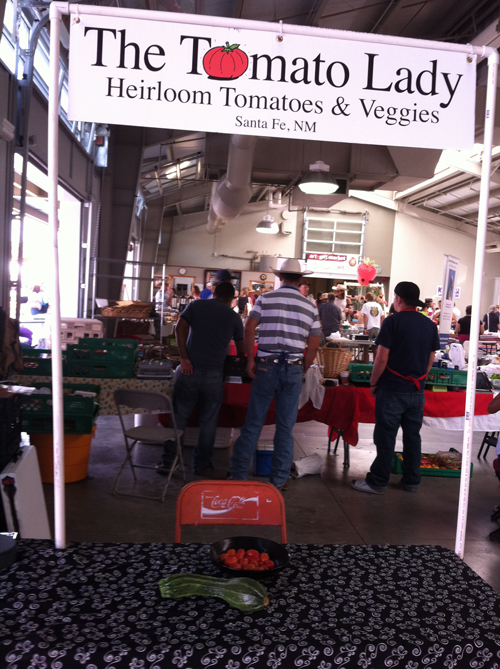
Today was a good day! First day back as The Tomato Lady’ at the Santa Fe Farmers market sold out. A great big thank you to all my patrons who waited for my tomatoes to ripen! Many thanks! Only a handful of tomatoes and 1 zucchini left. Behind my table are some other vendors at their tables. See you next week!
Tomato Lady of Santa Fe returns to the Farmers Market this Saturday August 25, 2012
Tomorrow, Saturday, August 25, I am returning to the Santa Fe Farmers Market as ‘The Tomato Lady’. At this time I have over 15 varieties of organically grown heirloom tomatoes from luscious black tomatoes like Purple Cherokee, supersweet yellow Virginia Sweets to Italian Red Costoluto Genevese and many, many more . I have over 50 plants and 25 varieties that will ripen as we go through the season. They are beautiful. They are gorgeous! And they taste wonderful! Magnifico!
I also have Shishito peppers, Costata Romanesco zucchini and Fairy eggplants that I will sell as well. Next week I will add some sunflowers out of my sunflower forest and Emerite French filet beans. I’ll be inside the building-look for ‘The Tomato Lady’ sign above my booth. Hours are 7am-noon. Hope to see you there!
Curing shallots
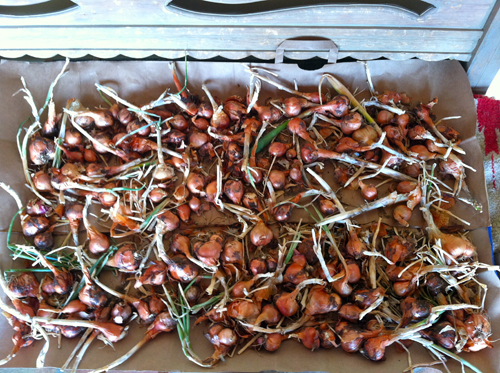
I grow shallots instead of onions. Why? Because shallots are $4.99/pound and onions are cheap. Besides they taste wonderful sautéed in any dish. This season I grew Dutch shallot bulbs that I got from Payne’s nurseries here in Santa Fe. I like them a lot as they are not tiny like some other shallots are. So this weekend I picked all the shallots that I started last October-November. I got a ton! Well not quite, but a lot! Here is a picture of them ‘curing’. Curing shallots is about properly drying them so they last longer in storage for winter. After you pick them you need to let them dry out completely before cutting off the stems which takes about 3 weeks. Then cut off the stems when they are dry, put them in a mesh bag and put in a cool dark place. Where do I get mesh bags? Trader Joes puts their lemons and onions in mesh bags and I save them to use for my shallots and garlic that I grow.
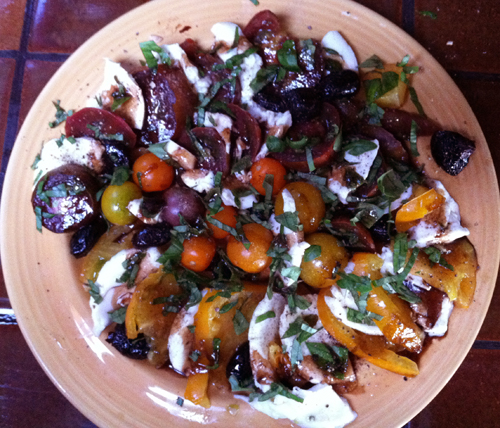
First Caprese salad!!
Giant bean teepee
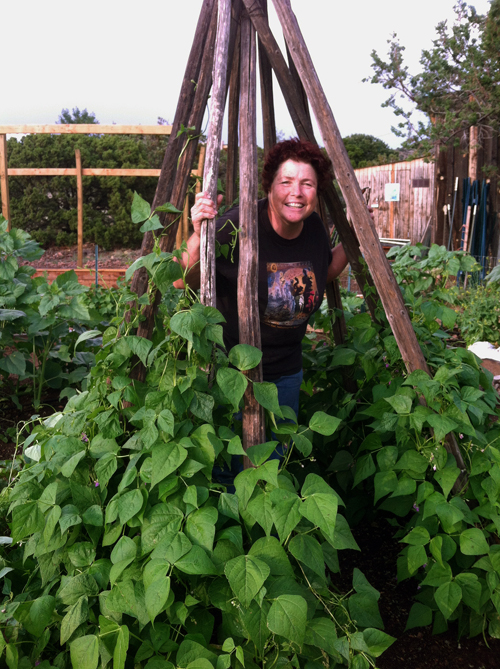
This year I made a giant bean teepee, one I could stand or sit in. The beans are really taking off. I chose Emerite green beans (pole beans from Scheepers Kitchen Garden Seeds) partly because they grow fast and tall and partly because they are so delicious. At first I had to tie up the vines to train them to grow up the poles but now the beans are growing up it nicely on their own. I can’t wait till the whole teepee is covered (except for the opening!). What a beautiful centerpiece for the garden!
Related articles
- Create a teepee of pole beans for the summer (giantveggiegardener.com)
Today’s Harvest-July 16!
Today’s harvest!
Today the ‘Emerite’ beans, some beets and 3 little tomatoes were ready for harvest! The beans are french vericots and should be picked very thin when they are tender. If you wait till they are bigger they will be tough. The beets were from thinning them out some more so the rest of them can get bigger. The garlic in the picture was harvested a couple of weeks go and is dry and ready to clean up.
Fall Vegetable Planting Schedule

Fall harvest. We only wish our gardens were this GREEN! Photo courtesy of http://gardening.ktsa.com
Ok, so now since it is time to plant my fall veggie garden, here is my planting schedule
FIRST-WHAT TO PLANT AND WHEN
Depends a lot on what you like to eat. Below is MY list of what I want to plant for a fall garden. Some of these are already growing in the summer garden and will be ready to harvest soon like the carrots and beets so I must decide if I want more in the fall. All of these planting dates are estimates depending on the variety you grow and are based on planting outside, not in a greenhouse. Look on your package of seeds or on the plant label for seedlings for accurate harvest times and go backwards from Oct 3 for Santa F+ add 14 days.
JUNE
Fennel (Finnochio-bulb type)-Sow seeds mid June. OPPS! Missed this. The short cool days of fall are even better for fennel than spring. You can still plant this (IN JULY) as it likes cool nights although the bulbs may be smaller since we missed it’s prime planting date.
JULY-AUGUST
Asian Greens/Bok Choi- Sow seeds mid July. Can handle light frosts. Harvest days depends on variety. Look on seed package.
Beets- Sow seeds in mid July-early August. Can handle freezes but must mulch with thick straw or row cover. 45-65 days to harvest.
Broccoli- Sow seeds early July-mid July. Can handle light frosts. 55 days to harvest.
Broccoli raab- Sow seeds in early July-mid July. Can handle light frosts. 45 days to harvest.
Carrots- Sow seeds in early July-mid August. Can handle freezes but must mulch with thick straw or row cover. 70-80 days to harvest.
Chard- Sow seeds late July-. Can handle some light frosts. Cover with row cover when it gets cold to extend season. 50-60 days to harvest .
Kale- Sow seeds early July. The short cool days of fall are even better for kale than spring. Kale that is established will last well into winter and can survive below freezing temperatures down into the 20s.
Lettuces- Lettuce baby- Sow seeds in early-August. Seedlings will need consistent moisture and shade from the afternoon sun on hot days. Cover when it gets cold to extend season but it will not survive freezing temps. 45 days to harvest depending on type and variety.
Peas- Sow seeds in early-July-mid-July. Likes cool but not freezing weather. 60-75 days .
Radish- Sow seeds late July. 30 days to harvest.
AUGUST
Spinach- Sow seeds early-August. The short cool days of fall are even better for spinach than spring. Spinach that is established will last well into winter and can survive below freezing temperatures down into the 20s although it will stop growing. Why doesn’t it freeze? It produces an alcohol inside-alcohol won’t freeze! 45 days to maturity.
Endive, Escarole-Sow seeds early August. The short cool days of fall are even better for these than spring.
Lettuces- Lettuce head – Sow seeds in anytime August. Seedlings will need consistent moisture and shade from the afternoon sun on hot days. Cover when it gets cold to extend season but it will not survive freezing temps. 45 to 60 days to harvest depending on type and variety.
Mesclun mixes- Sow seeds in early-August. Seedlings will need consistent moisture and shade from the afternoon sun on hot days. Cover when it gets cold to extend season but it will not survive freezing temps. 45 to 60 days to harvest depending on type and variety.
Arugula- Sow seeds in mid-August-late August. Fast growing. Can handle some light frosts. 30-40 days to harvest.
Kale- Sow more seeds mid August. The short cool days of fall are even better for kale than spring. Kale that is established will last well into winter and can survive below freezing temperatures down into the 20s
OCTOBER
Garlic-Sow largest cloves anytime in October after the first frost. Harvest in late-June-July
Shallots-Sow largest bulbs anytime in October after the first frost. Harvest in late-June-July.
I’m not a big fan of kale, endive, escarole and collards, but went ahead and listed them as I know many of you like them. Cabbage and cauliflower take too long to grow for me. Forgetaboutit!
SECOND-WHERE TO PLANT
Do you have garden space close to your house for easy watering and harvesting as it gets colder? This is important to consider if your main garden is far away from your home. I have two places to plant them now. My cold frame and my raised beds up by the house. If I ever get my greenhouse done, I’ll have another great place for veggies but for now I’ll plant in my two spaces.
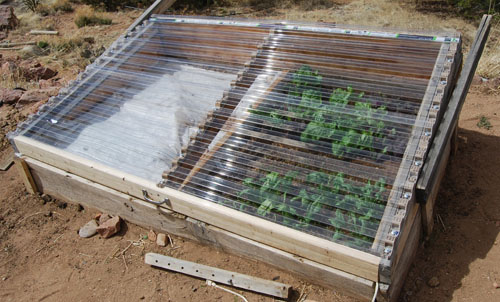
My first space is my cold frame up by the house. Since it is too hot now, I think I will have to put some shade cloth over it to keep plants cooler inside. Also I want to get one of those automatic vent openers that will open the lid if the temps get too hot and close it when it gets too cold.
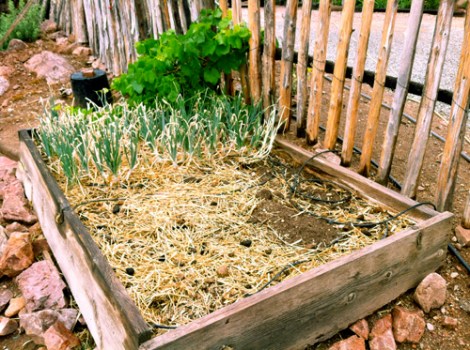
My second space is the raised beds also up by the house. Raised beds are great as they keep the soil warmer in the fall when it is getting cooler. Since I already pulled all the garlic in these raised beds, I will plant a few cold hardy vegetables in them and then plant garlic and shallots between them come October. The beauty of having some garden space close to the house is when it does get cold, I won’t have to walk down to the main garden to water and harvest. I can just get a watering can and go right outside the house. Also I can replace the light row cover that I keep my cool season crops under (keeps the critters and bugs away) with a heavy row cover on the beds if a sudden frost comes up. The cool season crops will be picked by the time winter hits and the garlic and shallots will sleep till spring!
Finally! Fava Beans!
This must be the year to try new things in the veggie garden. My fava beans that I started in spring were ready so I picked all of them yesterday.
I had to go online to find out how to prepare them. Here is a great site that showed me how: ShellingFavas. It was fun shelling them after blanching them and they were so beautiful when shelled. After shelling, I sautéed the them in olive oil with some garlic. They were so delicious! It took a little time to prepare them but the taste is so buttery, it’s worth the effort. The only problem is that I needed to grow more because basically we got 1 harvest from them.
Video: Early Pruning of Tomato Plants
Last Saturday I taught a vegetable class on Organic Pest and Disease Control for Home Grown New Mexico. It was held at Milagro Community Garden. Part of the class was how to trim your tomato plants to help thwart soil-born fungal diseases like Early Blight. Most people don’t trim their tomato plants enough in the beginning. Here is a video I found from Vegetable Gardener site that shows exactly how to do it. Don’t be wimpy about it-trim them all the way up to the first blossoms. As a preventative, I will spray Serenade organic fungicide on all the leaves both on top and underneath about every 10 days. Doing all this should get your tomatoes off to a healthy start. Here’s a link to the video.
Make a great tomato cage

Tomato in cage, drip underneath, trimmed up off the ground, straw mulch in well and staked to t-post
You need to ‘cage’ your tomatoes before they get unruly. I hate those tomato cages they sell in the store. They are too little and flimsy and the tomato plant will quickly outgrow them. I found a great way to make cages in ‘The New Victory Garden‘ by Bob Thompson.
First use concrete reinforcement wire to make your cages. It is heavy-duty wire that has 6 inch openings so you can get your hand through the openings with a fat tomato. Think optimistically – you’re gonna get a 2 lb giant juicy tomato on you plant and need to get out of the cage! You can buy it by the sheet, which is 4 ft high, or by the roll which is 5 ft high. One sheet will make one cage. The only trouble with the 4 ft height is it is too short for many heirloom tomatoes but some people stack two of them together to make an 8 ft high cage!
I buy the roll, which isn’t cheap, but is a one-time cost and the cages you will make can also be used for beans and cucumbers, in fact almost anything you want to grow vertically and will last a lifetime. A roll is 120 ft in length and will make about 18 cages so if that is too many than I suggest you go in with another gardener friend (or 2) and share the cost. Cut the wire with bolt cutters or an angle grinder not hand wire cutters-your hand will be wrecked-I speak from experience. Here’s how I do it:
1. If using a roll unwind it and hold it down with some BIG rocks or bricks so it doesn’t wind back up. Count 13 squares and cut off one side of the wire leaving it long.
2. Then bend the long wire into a ‘u’ and hook it back on itself as shown in this photo.
The cage will be approximately 24 inches in diameter when finished. Then I cut off the bottom leaving all the ends pokey (not shown) so I can push the ends into the ground so it won’t blow over.
3. If using a sheet, I wouldn’t cut the bottom edge as I do with the roll to keep as much height as possible.
4. Stake either cage with a 3 ft high green t-post pounded next to the cage and tie the cage to the green post to keep the cage from falling down from wind as shown in the top photo. This is important when the plant gets top heavy. If you are next to a fence, you could tie it to that. The point being that you don’t want your tomato plant to fall over. Some people growing in pots just put the cage over the whole pot and the pot keeps the cage from falling over as the plant gets bigger.
PS: More on the dreaded squash vine borer
I just posted about the squash vine borer and a gardening friend, Gene, mentioned that his squash is smaller than in the video in a comment in the earlier post on squash vine borers. I forgot to mention that while the squash is small before they blossom, I keep them covered with row cover which keeps both the SVB and the squash bugs out but once the plants are bigger and blossoms, we have to take the row cover off for the bees to be able to pollinate them-that’s when we should use the foil.
What about the Garlic I planted last fall? The softneck variety is ready for harvest!
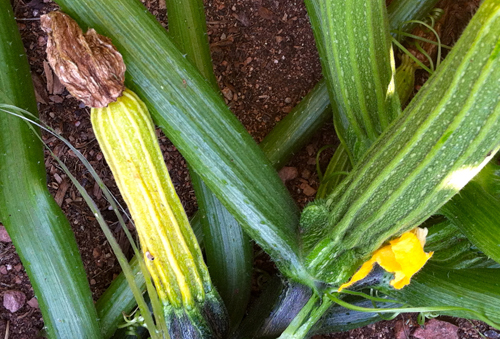
I’m starting to harvest my garlic. How do I know when to dig them out? The soft neck variety is dying back (despite good watering) and when it has most of the leaves brown with only a few green ones at the top, it is time to harvest. The shallots in the background are nowhere near harvesting yet.
Here is a picture of a garlic ready to be dug out. I carefully scrape the soil away revealing the bulb. Then be careful not to nick the bulb when digging out or it will go bad. Look at the size of this bulb-about 3 inches! Woo! Hoo!
It takes about 3 years for garlic to get use to someone’s growing conditions so it is important to save your biggest cloves to plant again as bigger cloves mean bigger garlic next season. This is my second year and the cloves are definitely getting bigger. Be sure to ‘cure’ them after digging them up. It takes about 3 weeks to let them dry out so don’t scrape the dirt or wash them after you dig them up-just let them dry out in a shady place for about 2 weeks before you brush off the dirt and then let them cure another week when the skins are dry and you can clean them up by taking a few of the dry skin layers off and store them in a dark place. Never wet garlic when curing. To read about last year’s post on types of garlic and more on harvesting garlic go here.
I also planted the hardneck variety of garlic. They already produced flower stalks called scapes (which I cut off and froze to eat later) and they are starting to die back and will probably be ready within 2 weeks as their leaves are still pretty green. They say hardneck is more flavorful but the softneck will last longer so I planted both this past fall.
If you plant garlic in the fall instead of spring, the bulbs will be larger. If you planted in spring, the garlic should be ready sometime in August. Garlic harvesting is very exciting as there is nothing as good as fresh garlic from the garden especially with my upcoming tomatoes.