Thinning and preparing mesclun/greens-keeping your homegrown greens fresh!

Here are my steps to thinning and preparing mesclun so it doesn’t WILT in your refrigerator. In fact you can use this method after you clean any greens in ANY STAGE from microgreens to full grown lettuce and greens from the garden or store bought.

The MOST IMPORTANT THING if you are growing any greens is to PICK THEM FIRST THING IN THE MORNING when they are fresh-not the heat of the day, OTHERWISE THEY WILL BE WILTED NO MATTER WHAT YOU DO (are you listening Lava?). During this first stage of mesclun, it is a little more labor intensive. (After the leaves grow more, you will just cut off the tops above the crowns so they can grow back and there will not be much dirt since you are not pulling these out by the roots.)

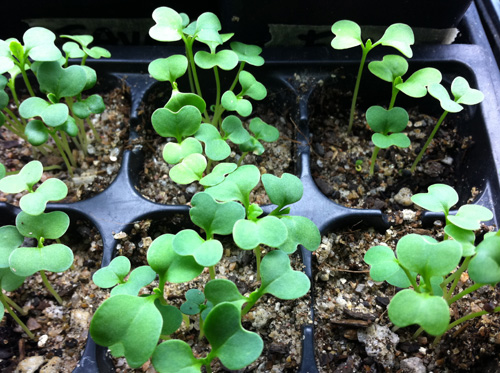
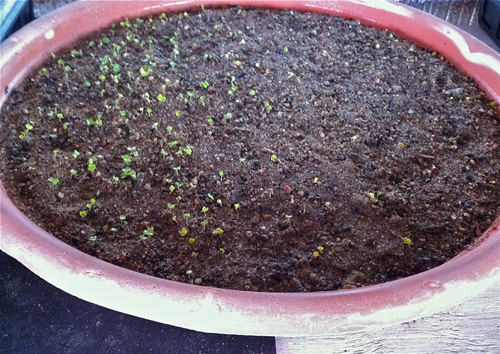
Here is the mesclun in my salad bowl I made. Notice they are very cramped with not much dirt showing. I need to thin these out so the leaves can get bigger without overcrowding.
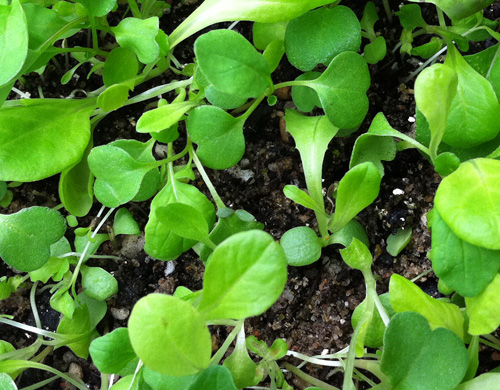
Thin out the mesclun. The goal here is to have some dirt showing to give the remaining leaves some room to grow.
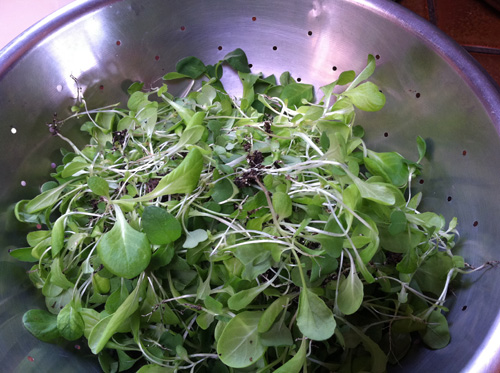
Now the mesclun (first thinnings) are like microgreens and are ready to clean. Notice the roots are still on them. You can cut them off or eat them if you rinse well. Here I’m leaving them on. Of course you could just feed them to the chickens or throw them out but I don’t like to waste them plus they are yummy! You would pay big bucks for just a tiny bit of microgreens in the stores.

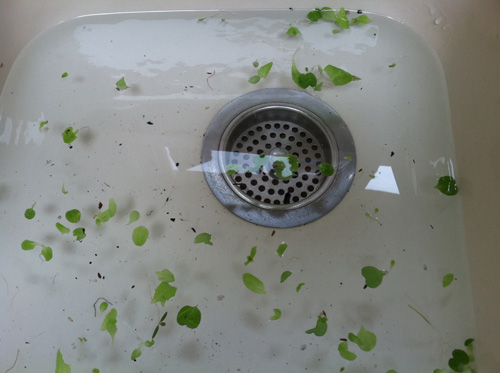
Here is the mesclun at the first rinse. I first clean my sinks out with bleach so I know they are clean. I suppose you could use big bowls to rinse instead. I filled my sink with COLD WATER from the faucet. Notice the leaves float on top while the dirt mostly sinks to the bottom. From here I gently scoop out the leaves trying to leave the dirt on the bottom of the sink or bowl and transfer them to the other side of the sink full of water for the second rinsing. By the way, rinsing this way is way easier than using a colander.  It works really well for spinach too. This way removes the dirt that can stay in a colander.

Second rinse-Notice most of the dirt is gone at the bottom of the sink after I  have removed the leaves.

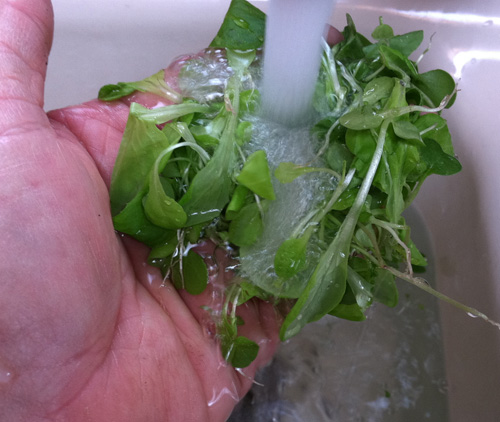
At this stage I do one hand rinse in case their is more dirt trapped on the roots. Then I put them into…

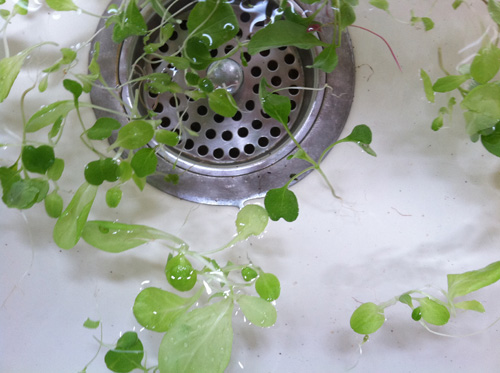
The last rinse- notice the dirt is gone. Rinse more if you still have dirt.
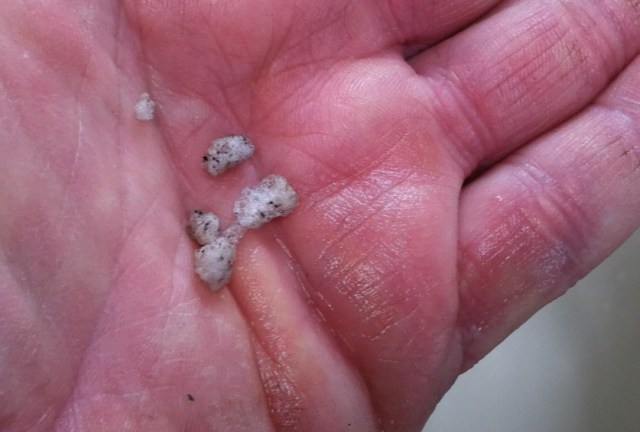
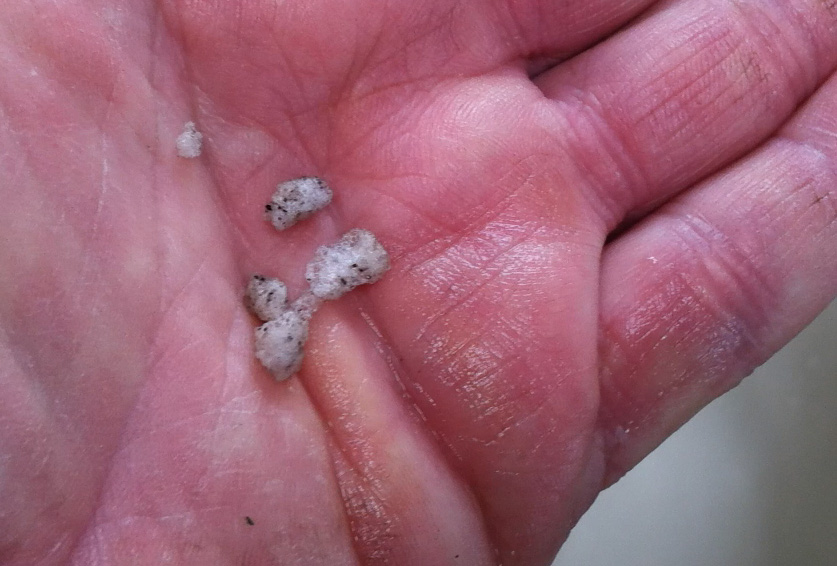
Since I grow the lettuce bowl inside, I use seed starting mix and you need to look out for the perlite that is in it as it can float in the water instead of sinking like the dirt-so be on the lookout for it. Just scoop them off the surface of the water before you do each rinse. It would be a little too crunchy in my salad!

Now the leaves are ready for the spinner. Just don’t pack it too full as the leaves are very delicate. Spin it in small batches and..
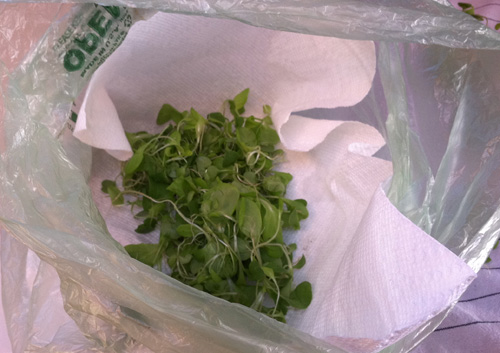
gently place it in a loose plastic bag (not ziploc) lined with a dry paper towel. Then this next trick is very important. I learned it from reading Dorie Greenspan’s book,  Around My French Table where you…

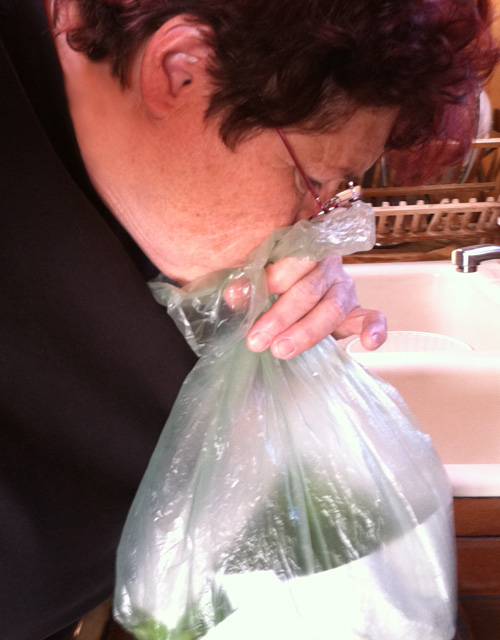
squeeze the bag so there is only a small opening and blow into the bag with your breath. This will fill the bag with carbon dioxide (which we expel) and then blow it up till it is full and..

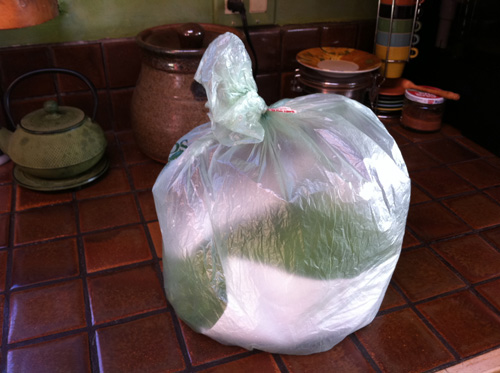
tie off with a twistie tie so the air doesn’t escape and put into your refrigerator. YOUR GREENS WILL STAY FRESH FOR ABOUT A WEEK. Be sure you blow into it each time you get some greens out before putting it back into the refrigerator again. This takes up a little more room in your refrigerator but is worth it. No more homegrown wilted greens! Pretty cool trick, huh?!

Lettuce bowl ready for first thinning

Here is the lettuce bowl I planted on Mar 7, only 13 days ago. Remember how it was barely coming up where it hung off the seed heat mat-well no more!  It is coming up beautifully. It’s so nice to see a ‘sea of green’ in the house. I will thin the baby seedlings (eating them) to give the rest of the seedlings some room to grow bigger. This is a mesclun lettuce I got from the Homegrown New Mexico seed swap event.  It is about 2 weeks ahead of the the lettuce I just planted outside. All part of trying to keep a continuous supply of lettuce for awhile. A couple more weeks and I think I’ll have a salad!
New vegetable garden section update

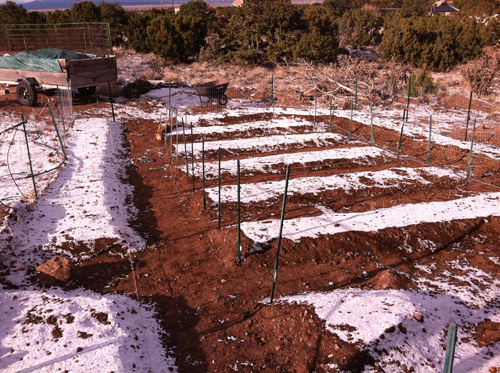
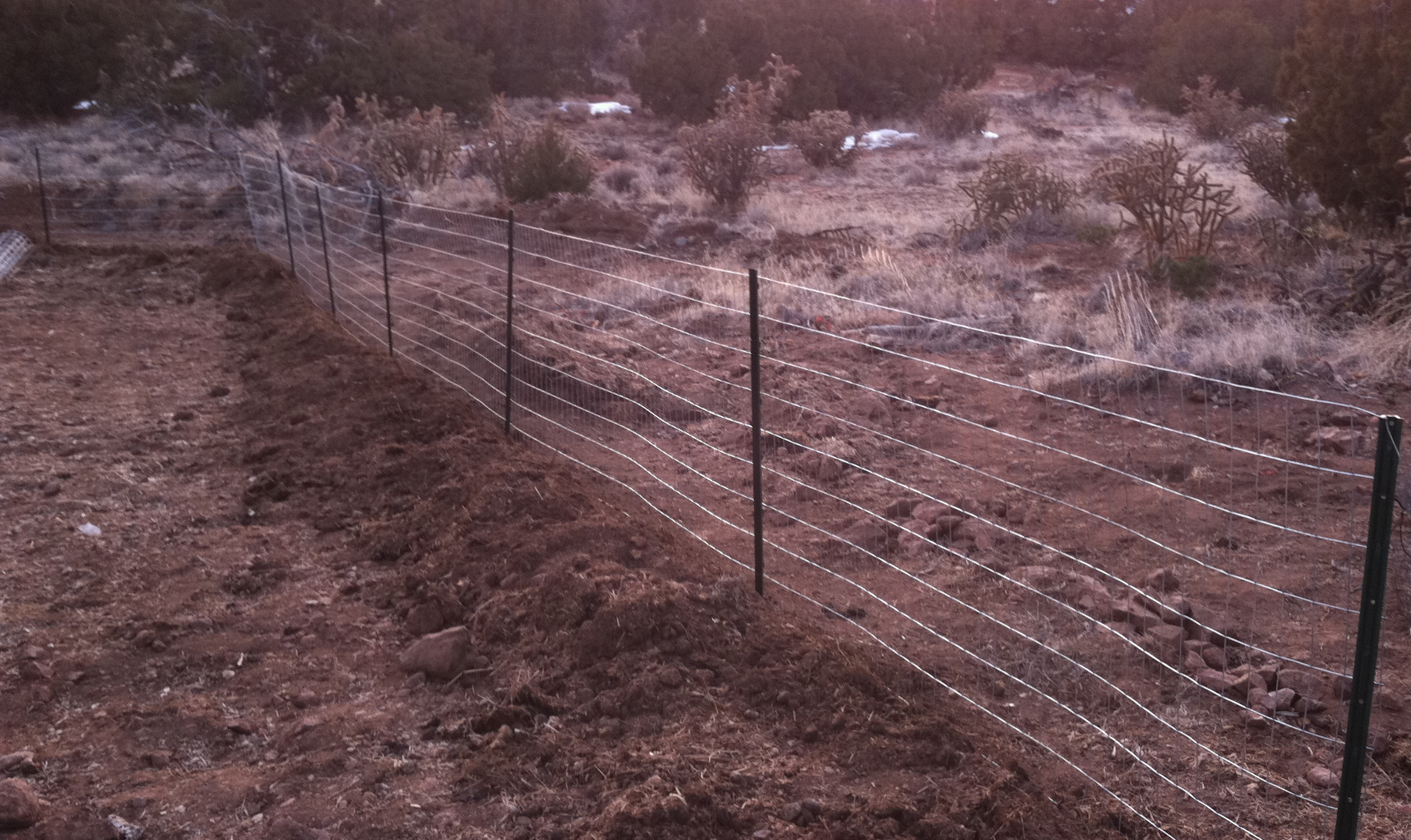
Here is a picture of the new vegetable garden section this morning after a dusting of snow. It is now fenced completely except for the 2 gates, one of which was created today but still needs to be hung. All the raised beds are done.

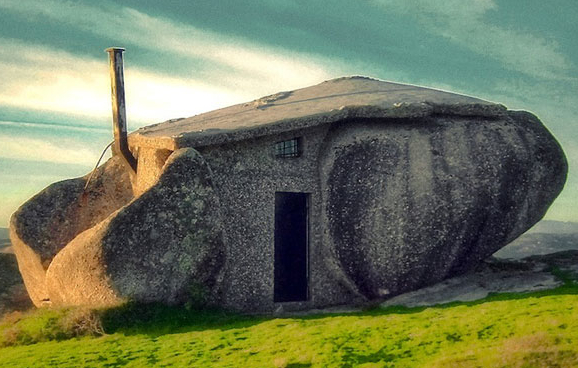
My friend Adam, has been helping me and boy what a help he is! Quite the worker bee! He came out the other day and finished creating the beds except for one area that has a giant rock in it.  I swear  this rock keeps the whole neighborhood from sinking! So we let it remain (like we could dig it out-ha!) and will make an area with a bird bath and flowers to show it off.

The new garden has gone through an amazing transformation since I cleared the land last fall. I still have to put the horse manure in the new beds. It’s been a lot of work but is coming along nicely and should be ready by tomato planting time.

So many things to do for the vegetable garden in March!

Time to Get Busy!!

March is an incredibly busy month for gardeners. So many things to do (or should do) that it makes my head swim. New garden sections to make, ordering my final seeds, starting seeds inside, starting seeds outside, transplanting seedlings, amending the beds-the list goes on and on and I love it! Soon my hands will be brown again from digging in the dirt. No wonder I liked to play in the dirt when I was a little kid!

Next I will complete the new beds, finish the area around the new garden, make two gates for the new garden section to keep the rabbits out. Then I will put horse manure as a soil amendment on all the beds both new and old. My trailer was so full, my Forerunner could barely pull it. I bet I have about 2000 lbs of poop in it!  The stuff I got is still a little hot (oh really? the manure was a little steamy when it was loaded!) but will cool down over the next 2 months before I plant tomatoes. I’ll use my really aged (6 months or more) horse manure, aged chicken manure and compost for the potatoes and fava beans that will go in the old section later this month. The vegetables I plant in May will get this newer ‘aged’ manure as it will have time to decompose and cool down.

I’ve decided to put the greenhouse on the back burner until the garden is in and then have it ready for fall which makes more sense anyways as it will be hot in June.

Seed starting INSIDE

I’ve been planting seeds INSIDE for a couple of weeks now. Here is my update on my seed starting endeavors this spring so far.

PEAS-Not everything is successful-My pea seeds I planted inside have NOT done well as I had hoped. They are barely coming up now inside so I planted more outside and if these make it, I will add to the other seeds that I planted outside on Saturday. I think the heating mat was too hot for them so I put them on a table under the lights but with no heat. We will see..

FAVA BEANS-I’m so excited-I’ve never grown fava beans before but are trying them this year. I sprouted fava beans that I got from that Homegrown seed swap and bought some more that I got from Spanish Table Market here in Santa Fe. The companies would like to say that the ones they sell you to eat are different then the ones they sell you to grow.  If they are treated then that would be true but so far I have not found that to be the case. They are both sprouting just fine. Today I saw three of them breaking ground in their little pots on the heat mat under the lights. Once up I will transplant them outside as they like the cold. I’ll talk about them later.

CHARD, BOK CHOY seeds planted-MAR 13-The chard and bok choy germinated in 2 days!

BORAGE seeds planted-MAR 13-Germinated in 3 days!

MORE LETTUCE-seeds planted-MAR 13-just starting to come up

SPINACH seeds planted inside as well as outside -MAR 13-Not up yet

TOMATOES-seeds planted today-Sunday, MAR 18-planted 27 different varieties! Hope to put them out 8 weeks from now-mid May or sooner. Last year I planted tomato seeds inside on Mar 21.

POTATOES-I’ve been chitting them for a week now. Chitting is getting the potato eyes to sprout.

The next major inside seed starting will be in 2 weeks-Basil, oregano, marjoram, zinnias and probably a lot more.

Time to plant spinach and lettuce

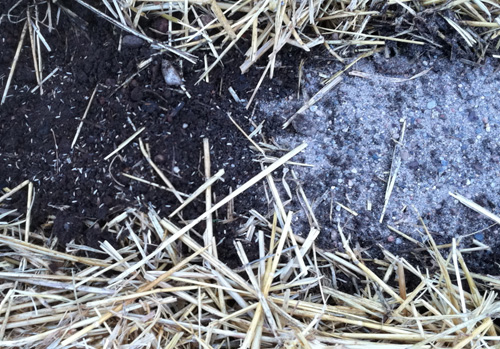
Now is the time to plant spinach and lettuce OUTSIDE as well as peas if you haven’t already done it. This year I am putting them between the rows of garlic I planted last November as APHIDS DO NOT LIKE GARLIC so I’m hoping the garlic will help keep them away from the greens this year. I took the temperature of the soil in the exposed raised bed with my compost thermometer where I want to plant them and it was 60°F. Lettuce seeds germinate best at soil temperatures of 40° to 80°F so I’m in the right range. This will be mesclun so I spread the seeds over the area as shown on the left side of the picture, then put a fine layer of sand over the seeds as shown in the right side of the picture, I planted ‘Provencal Mix’ from Cook’s Gardens and ‘Rocket Arugula’ ‘Tyee’ spinach (which is slow to bolt), and another lettuce mix with Arugula that I got from the Home Grown New Mexico’s seed swapping event we had a couple of weeks ago.

Planting peas on St. Patrick’s Day

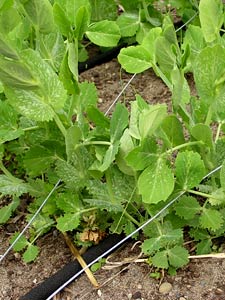
I always use St. Patrick’s Day as the day to remind me to plant peas. I don’t always get them in exactly on that day but it is my reminder to get them in soon. The weather was great this past week so I planted peas yesterday on St. Patrick’s Day before the horrible winds hit today. The winds were horrific up here at the house today-I bet 60+ mph. UGLY!! The bed I usually plant peas in has garlic in it this year so I have to put them somewhere else as PEAS DO NOT LIKE TO GROW BY GARLIC. Wherever you plant them, amend the soil with some aged horse manure (or compost) digging it in the soil.

Then put some legume inoculate on the peas (if you have the powder form) or under them (granulated form) in the row before burying them. Legume inoculate is an organic bacteria that fixes nitrogen from the air and attaches it to the roots of peas or beans making nitrogen available to them. I can just see the little bacteria grabbing the nitrogen from the air and taking it down by the roots! The next season, leave the pea ROOTS in the soil and plant a crop that is a heavy feeder by them. Once you’ve used the legume inoculate, you don’t have to add it again to the soil as the bacteria will continue to live there. Ahhh! The growing season has begun!

Master Gardener Intern Class-Vegetables

I’ve been totally busy teaching classes lately and the last class I taught was the Santa Fe Master Gardener Intern Class on Vegetables. All I can say to the interns is hang in there. Yes there are some difficult classes to get through but there are some great instructional classes as well that are like a breath of fresh air. It wasn’t till I became a Master Gardener that I really blossomed as a gardener. And now I am a rabid gardener! The knowledge you will continue to gain afterwards, the contacts, camaraderie and friendships you will develop will help you grow as well as the plants you will be growing! Hopefully you enjoyed and learned a lot from the Vegetable class. (Yes it was my favorite class when I was an intern!) So for those of you who couldn’t come to class or aren’t in the program but are interested, here are the information sheets. I want to make them available to all.

VEGETABLE GARDENING IN SANTA FE  gives an overview of vegetable gardening in Santa Fe.

INFORMATION SHEET covers what the differences are  between an Heirloom, Hybrid and GMO plant and explains what mycorrhizae fungi is and how it helps plants grow.

HERBS is a list of perennial and annual herbs we can grow here in Santa Fe.

PLANTING TOMATOES and PLANTING SQUASH both address how to transplant them into the garden and some of the things I add to help grow these beautiful vegetables and also how to help thwart the dreaded squash vine borer and squash bugs.

SEED STARTING DATE CALCULATOR from Johnny’s Seeds is the same one from the previous post but if you didn’t read it, then here it is. A great tool for when to start seeds or transplant them into the garden.

And now if you will excuse me, I will continue starting my seeds inside! Perfect day-cold, windy and snowy!

Starting Seeds Inside

Pea seeds starting to sprout after being treated with ascorbic acid.

Last Saturday I taught a seed starting class at the Railyard classroom. I want to share the information sheets I provided in class with anyone who might be interested.

STARTING SEEDS INSIDE will help anyone who wants to get a head start on how to start seeds inside.

One of the tricks with peas (especially if they are older) is to soak them in a water/ascorbic acid mix. To read how, go to PRESPOUTING SEEDS. I soaked them for 2 days and then put them in damp paper towels and in a plastic baggie. The little seed germinates the root right away. Then plant each pea root down in a little pot being careful not to break the root and wait for them to come up. My goal is to plant the pea PLANTS by March 17th (St. Patrick’s Day) instead of planting the SEEDS that day.

DIRECT SEEDING: TRANSPLANTING covers planting seeds for warm season crops directly in the soil AFTER the danger of frost has passed.

COOL-WARM SEASON CROPS is a list of plants you can grow by season. We are right now in the beginning of our growing seasons which is COLD SPRING/FALL meaning we can plant those plants in early spring and again in fall. The next group we can plant on the list (generally in April) is called COOL WEATHER crops and then of course we go into the WARM SEASON crops which is after the last frost freeze date (our area May 15th) and for those cold hardy people there is a list of WINTER crops.

Four Season Harvest by Eric Coleman

I suggest you read Eliot Coleman’s Four-Season Harvest book which is a great resource for all seasons.

SEED STARTING DATE CALCULATOR from Johnny’s Seeds does all the work for us as to when to start seeds inside and when to plant them in the ground (that also means when to put in transplants if you choose to buy them instead). I just plugged in the last frost free date and it does the rest. Now all we have to do is get a calendar out and write down when we should start the seeds for the plants we want to grow this year. A terrific resource. Johnny’s has some other great tools on their main page in the left hand column under GROWING GUIDES called Interactive Tools. Be sure to check them out.

NEXT: MASTER GARDENER INTERN VEGETABLE CLASS

Seed Heating Mats for Starting Seeds Indoors

I did a little experiment. I started my lettuce bowl, putting seeds on the ‘bowl’ and lightly covering with sand. I didn’t have enough room to put the whole bowl on my seed heating mat (I’ve ordered another one) so I put half ON my mat and half OFF the mat as in the picture. The heat comes from the bottom. The temperature of half ON the heat mat was 77°F and the half OFF the mat was much cooler at  70°F. The half on the mat germinated in 3 days while the half off the mat had only a few seeds germinate. Amazing how the temperature affects the germination rate. Lesson here? If you plan to start seeds indoors, get a seed heating mat. Next: Review of my Seed Starting Class last Saturday.

How to Make a Rain Barrel

I went to a Master Gardener workshop where we learned how to make a rain barrel and how to figure out how much rain we could collect off our roofs. The formula for figuring out how much rain comes off our roofs is easy-take your sq footage of roof x .623 gallon x how many inches of rain. For example: 2000 sq ft roof x .623 gal=1246 x  ½” (.5) of rain=623 gallons of collectible rain. It’s amazing how much rain we could gather assuming of course we get some rain!

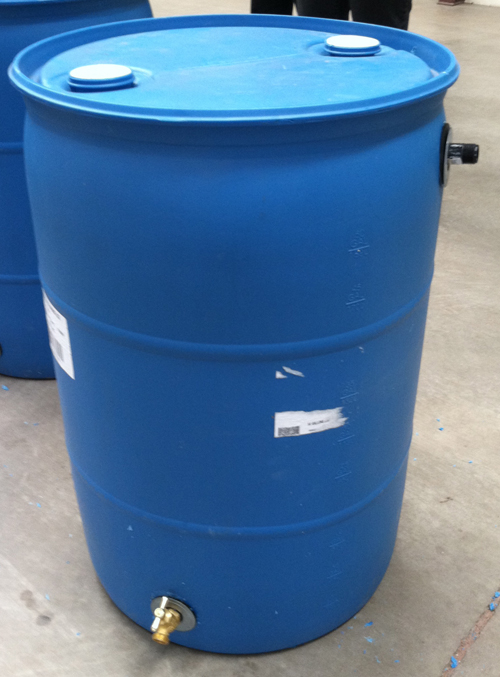
 Here’s how we build a rain barrel. First we started with some food grade 55 gallon rain barrels.

Here is the list of what you will need:
MATERIALS
Rain barrel
¾ “ bronze or brass water faucet
(1) ¾ inch plastic hose to pipe fitting
(2)- ¾ inch flat rubber washers
(2)- ¾ inch galvanized metal washers
short hose for the overflow

TOOLS
3” hole saw (optional)
Drill
7/8” drill bit/router
pliers
waterproof sealant

1. Put barrel on its side and measure about 3 inches up from the bottom.

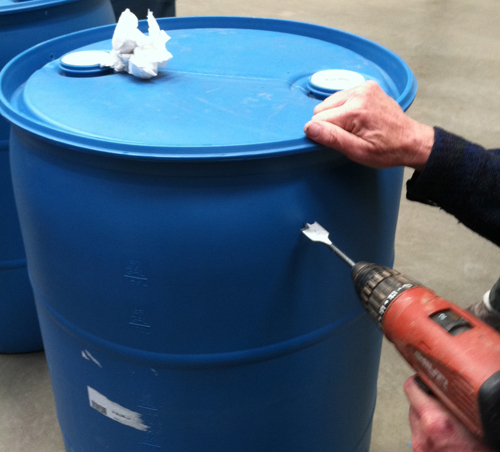
2. Drill a hole with your 7/8” bit. Making sure you are drilling straight up and down (no angle). When the faucet is attached to the bottom of the barrel, you should have enough room to attach a hose and still have the barrel sit flat.

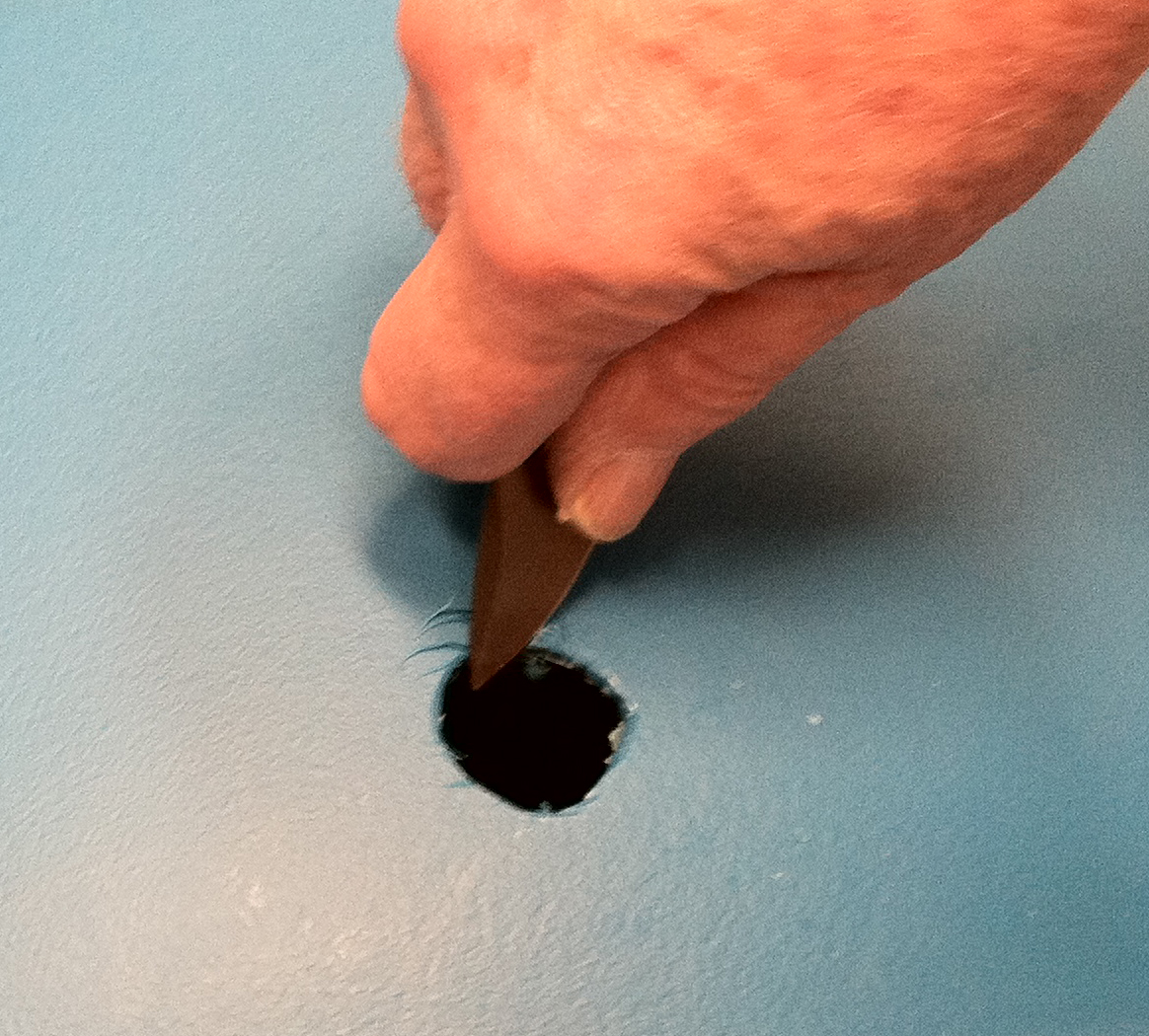
3. You may want to take a knife and ream out the hole beveling it a little wider on the top so you can start to screw the faucet into the hole more easily as it is a tight fit.

4. Now screw the faucet into the hole to start the threads then back it out. This makes it easier to screw back in after you put the washers on the barrel.

5. Put marine glue around the hole.

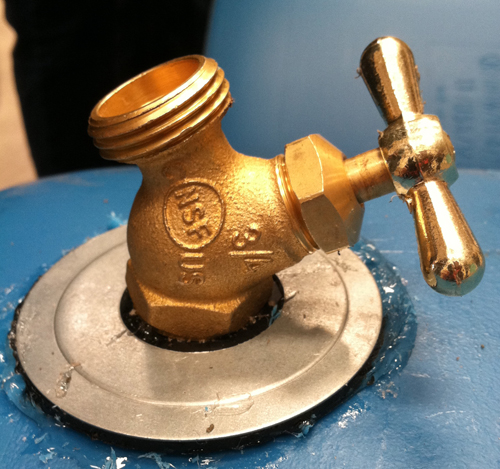
6. Then put the ¾ inch black rubber washer and the metal washer on top of the hole. Make sure the black rubber washer is the washer that goes against the barrel first. Take the faucet and screw it back into the hole. The faucet will cinch down on the metal gasket and tighten the rubber gasket against the barrel. The hole should be very snug or it will leak. You may have to use pliers to get it screwed in all the way.

7. Afterwards drill a 7/8” hole 2 inches from the top and as shown for the overflow hose to attach. Repeat steps above but insert the black plastic pipe-to-hose fitting through this hole.

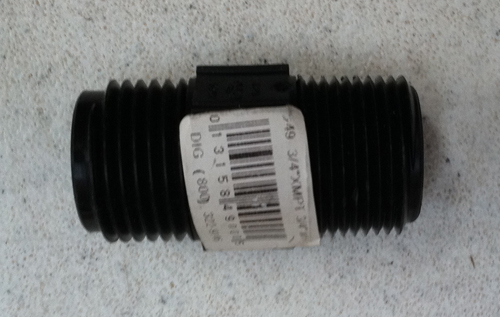
8. It has small threads on one side and large threads on the other side for the hose to attach. In this picture the large threads are on the left and the small threads are on the right. Screw the small threads into the hole. The large threads fit a hose for the overflow.

9. There are several ways to drain water into the barrel.
a. Position it under a downspout or canale where the water flow can be directed into the barrel.
b. Use a rain chain to direct water into the barrel
c. Use downspout adapters like the black one above. The top of the barrel will most likely have a small covered hole that can accommodate the downspout adapter but if not you can drill a 3” hole on the top.
d. You can also cut holes to fit a basket that fits in the barrel like the one above.

10. Here is the rain barrel ready to be put under a downspout.

Put the rain barrel onto a base or cinder blocks where it will be level. It should be high enough to accommodate a pail or you can attach a hose to the end.

Lastly be sure you empty the barrel at the end of season and leave the faucet open so water will not freeze in it.

Rocks, Rocks, Rocks..

 I live on a rock. No, not in a rock but on a rock!

Creating the new garden area out here is tough. There are tons (literally) of rocks on the property. I’ve known this for some time from all my other outdoor projects. I guess I forgot.  And I’m not getting any younger either (I keep saying that a lot lately). I swear these 2 projects will be my last ground breaking ones. (Remind me of that next year).

Project number one is the greenhouse which is on hold for a few days now that I bonked my nose and we are in February.

Project number two is what I want to talk about today. The new vegetable garden addition. Why am I putting in MORE garden you say? Isn’t 2000 sq ft enough? Apparently not. The truth is I need to put my tomato plants on a 3 year rotation to help prevent diseases and I’ve used up the whole garden the last two years. So I’m adding 890 sq ft more. That will handle the third year (this year) in the rotation.

First I cleared the land last October with that Bobcat I rented. Thank god I had a Bobcat. Here is a picture of it then AFTER I scraped the ground of cactus and rocks.  Look at all the lovely raw ground! LOL!  The green t-post in the right side of the picture is…

the same t-post in the right side of this picture. Now it is starting to come along a little. I rototilled it in November to loosen up the soil  (if possible) and kick out many rocks. I think I’ll make an Andy Goldsworthy style of rock sculpture from all the rocks I will have taken out when I’m done. Today I put part of some fencing up after I raked up a ton of dirt and dragged it into what will be the garden area. I had to quit because it got sooo cold. I thought it was suppose to be 53°F today. Liars! It was 27°F at 4:45 pm. Notice all the rocks on the outside of the fence! Now I know how the pioneers must have felt breaking ground… I’ll have to update you with more pictures later when I can get out and do more work on it.

The Mystery of the Calabacita Squash

Article first published as The Mystery of the Calabacita Squash on Blogcritics. Story by giantveggiegardener.

As a gardener and a cook, I’ve been searching for a particular squash seed-the Mexican Calabacita. It was the original squash used to make the famous ‘Calabacitas’ dish of squash, corn, onions and green chili here in New Mexico. Most of us now use zucchini to make this savory dish because of it’s availability, but here at the Santa Fe Farmers Market, you can buy the Calabacita squashes in early summer and then by mid summer, they are gone. They are little green squashes with soft skin and teeny weenie seeds-too small to harvest. I researched it and found that the squash originally came from Mexico but not a lot of information is out there on it. No seed catalogs have it. None of my gardening friends have any seeds. I couldn’t find it anywhere.

Then two years ago while on vegetable gardening forum here in Santa Fe, I met another gardener and during the course of our conversation after the forum, the mysterious Calabacitas squash came up. I told her of my difficulty finding the seeds. She told me she had gotten some Calabacita seeds from another farmer whose family had been here for generations.  She offered me a few of the seeds. Finally I would get some seeds! So we emailed each other and I sent her an envelope to send me some but they never came. I went by the Farmers Market where she sells produce but we kept missing each other. Another season passed and still no seeds.

This year, on the last day of my season as ‘The Tomato Lady’ at the Farmers Market where I sell heirloom tomatoes, I went by her booth and mentioned maybe I could get some of those seeds for this upcoming season. She said,” Why not buy one of the squashes now?” When she pointed them out, I said, “That’s one of them? It doesn’t look anything like the ones earlier in the season” and she remarked, “Yes that’s one of them. They are actually a type of WINTER SQUASH. We just pick them when they are really young and immature and have no seeds”. That explains it! Why I could never get any seeds from them. That is why we don’t see them later on in summer-if you let it keep growing; it will become a mature winter squash. There were several there at her booth with different colors. Some were green with orange stripes and some were salmon color with green-grey stripes. She said there really wasn’t any difference in the taste.  I ended up with the salmon-green striped one. It weighed about 15 lbs and has a squat oval shape outside and lovely orange color inside. It smelled like a cross between a cucumber and a melon.

I got the seeds and roasted the squash. To roast it, I quartered it and rubbed some oil on it and put it on a cookie sheet. Then I added a little water in the bottom of the pan so it wouldn’t dry out. I put it in the oven at 350° and placed some aluminum foil loosely over it so it would not burn. It took about an hour to cook. Afterwards, I put the flesh in a freezer Ziploc and will later cook squash lasagna with béchamel sauce.

So Calabacita squash can be used to make Calabacitas in early summer or later in the fall used in winter squash dishes.

Here is a recipe for Calabacitas from New Mexico:

1 lb or more Calabacita squash or any summer squash, cubed

3-4 ears fresh corn cut off the cob or 1 can corn

1 chopped onion

cumin to taste

New Mexico green chili to taste

Sauté the onion, add the squash and corn and sauté till tender.

Add cumin to taste. Add New Mexico green chili to taste.

Worm Farming-Vermicomposting

Finished vermicomposting area

Last spring when I planted my tomatoes I put worm castings in each hole before I put the plant in. Worm castings are a form of composting that are from (do I dare say it?) WORM POOP! I paid $25.00 for a 5 lb bag for this POOP at one of our local nurseries and I thought, next year I’m going to do this myself and save the money. Plus you don’t have to turn it like regular composting (now there is an idea I like-less work)! Worm castings protect the plants from soil borne diseases, conditions the soil and is a mild natural fertilizer with 1% Nitrogen. People also use it in their compost teas for their plants. I created a vermicomposting area a few weeks ago in my abundant free time (lol)! Here’s how I did mine.

I found out we need a certain type of earthworm called a Red Wiggler (decided not to show the worms-not a pretty sight!). It is a different from our regular earthworm (although they are great in the soil as well). This red wiggler worm has a huge appetite and will eat manures, peanut hulls, oak leaves, humate and other ingredients such as kitchen scraps-non meat-they are vegetarians!! lol

I put together an outdoor vermicomposting area right next to the chickens so they can go to work! Some people put them in special bins inside their people house (not chicken house) so they don’t freeze. Forget that noise-although if you don’t mind…

I decided to use straw bales to ‘frame’ my outside area. I heard they will go into the straw in winter and lay their eggs and they come back (I think they freeze and their babies come back) when it’s warmer but I had this soil cable that will keep the soil about 70°F and decided to try it to keep them from freezing this winter and keep them working. (Crack that whip!)  We’ll see if it works this winter. Here I put the cable down (above pic) .

Then I put some hardwire cloth over it and wired it on with some twistie ties from my garbage bags. Make sure the wire is underneath the hardwire cloth. I did this so when I shoveled the compost out later, I won’t accidentally cut the wire.

Next I covered the wire with straw and newspaper to make a bedding for my new wiggly friends. I wet down the area so the materials were damp but not soaking wet. Worms like their environment moist but haven’t learned to swim yet!

After that I put some food down for them. What else but pumpkin! I have lots of that! Looks like they won’t starve this winter! (I heard they love pumpkin-good thing!)  I wonder if someone talked to them and the worm said, “We love pumpkin”. I mean how do we know for sure ?!! I also put in some old chicken manure, squash and coffee grounds for variety! Then I had a friend give me some of these wigglers and I put them on top of this so they would burrow in and feast! I forgot to take a picture of this and when I went back less than 1 minute later to take a picture they were already ‘down under’ this stuff.

Last I put more straw over the whole pile and wet it again so everything was moist. Now I check every week and pull up the top layer of straw and add more ‘food’ as needed. Also be sure to keep pile moist so sprinkle with water periodically. This winter when the hoses are frozen I will take a sprinkling can out to wet it. If you don’t get a soil cable, don’t worry, just follow the rest of this post.

One last thing to make it easy to separate the worms from their castings next spring, I divided my vermicomposting area in half and put a board between the two sections-you can see this in the very first picture at the top of this post. They are in the left section now and later when I see the castings I will stop feeding them on the left side and put the food on the right hand side. The worms will migrate over to the new food source leaving the castings for me to take (at least that’s the theory). I hope they are reading this too!

So now I’m a worm farmer! I can’t wait till next spring to get my very own free worm poop! YEE HA!!

Fall Garden Projects-First up-putting the pumpkin patch to rest

Horse manure on top of pumpkin patch

I’ve been really busy this fall around the garden since the Pumpkin Bash. It seems like I never have time to do any projects when the garden is going so I try and get some of the projects done in the fall before the dead of winter. Last week cleaned out the pumpkin patch and then I rented that Bobcat where I spread out about 4 yards of horse manure on top of it. I really needed to dig it in or it would blow away before spring.

giant rototiller-16 hp

So yesterday I rented a giant rototiller (16 hp) and plowed in the 4 yards of manure, 50 lbs dried molasses (it smells so sweet), 50 lbs mushroom compost (are we cooking here?), and 50 lbs of gypsum (for calcium-makes strong bones, I mean strong plants!) in the pumpkin patch.

final pumpkin patch done

Now it looks so beautiful and is ALMOST ready for next spring! I still have to dig in some leaves (in the holes where I will be planting the pumpkin plants next spring) and a little (I mean very little) composted chicken manure to start the decomposition process so they can decompose over the winter and become leaf mold or should I say leaf gold by spring. This will be the third year for this pumpkin patch and boy what a difference three years makes when you add amendments each year. It’s starting to look good and the rototiller just cut through it fluffing it up together. I don’t like to rototill very much because of how hard it is on the soil microbes but felt that I needed to do it for now since this dirt was so void of any organic material and hard as a rock. I think after this year I’ll won’t have to do it again. I will add more mychorrizial next spring to help replenish the soil microbes.