Rhubarb

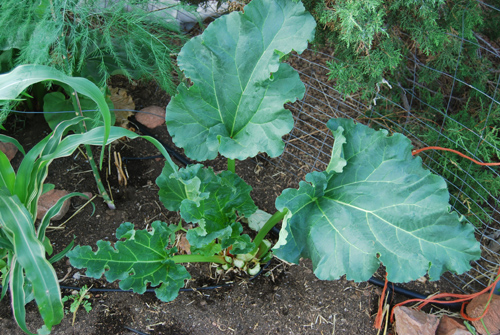
Rhubarb plant in the middle

This spring I bought 2 rhubarb plants from one of our nurseries that were the most pitiful plants I’ve seen but I really wanted to try to grow some and they were the only two plants they had so I bought them. They now are very beautiful and I can imagine them in other parts of my non-veggie gardens. I read they like sun or sun/part shade, rich soil and need water but not an exorbitant amount. They would give it a very lush look with their HUGE leaves. They have both grown so big that I decided to cut some and cook it up. Here is one of the plants in the middle of some asparagus ferns and ornamental japonica corn.

Here is the other one with the stalks ‘trimmed’. After I cut off the bigger stalks and discarded the leaves which are mildly poison.

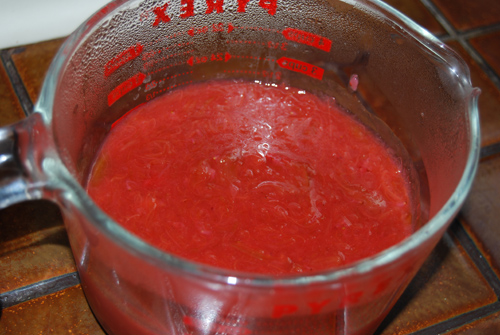
Here is the rhubarb/strawberry compote I made. I cut the stalks into 2 inch pieces and cooked them up with the strawberries and lots of sugar and cornstarch. My variety of rhubarb is called ‘Victoria’ which isn’t one of the red varieties but is green instead so I cooked some of the strawberries with it for the classic red coloring.  My mom use to make rhubarb compote that she served in bowls with whipped cream that we gobbled up for desert or breakfast if we could get away with that!

I then poured the compote glaze over the fresh strawberries in a precooked pie shell.

Here is mom at 23 years old-a fabulous cook!

Thanks mom for the recipe.

Curing Garlic-second week

Chaka Khan helping. "It doesn't look like cat food!"

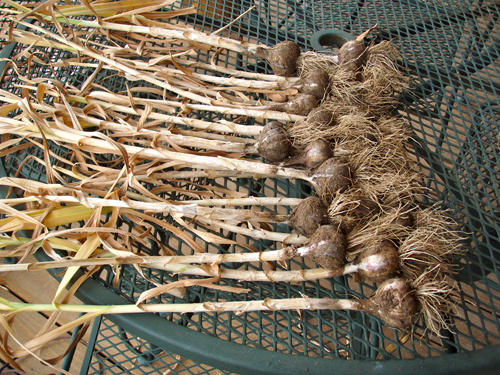
I am now in the second week of curing my garlic. I cut off the stems to 4 inches above the bulb, rubbed off the dirt and trimmed the roots off at the bottom. They are now inside out of direct sunlight. Notice the purple hue. It is a hardneck variety.

More on squash bugs..

Squash bugs are around my squash and pumpkins right now. I go out AT LEAST ONE TIME A WEEK and go hunting for adults, nymphs and eggs. I know the ADULTS LIKE TO HIDE DOWN AT THE BASE OF THE PLANT or underneath the leaves. I take the hose and spray the whole plant and at particularly at the base which is covered in straw. The adults come running up the stems of the leaves to escape the water. Then I pick them off with my hand. I hate handling bugs barehanded so I use gardening gloves. I either squish them on the ground or put them in a bucket of soapy water where the adults drown.  No mercy.

I then look at EACH LEAF of the plant to see if there are any EGGS ON THE UNDERNEATH SIDE OF THE LEAVES, usually in the “v” where the veins form. If I find them, I either tear off the whole leaf (if I have a lot of leaves) or I tear out just the section that has the eggs and put them is a bucket of soapy water where they will smother. THE EGGS WILL BE DARK LIKE ROOTBEER WHEN THEY ARE READY TO HATCH, so get them EARLY.

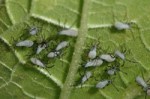
I also look for the GRAY NYMPHS WHICH ARE USUALLY UNDERNEATH THE LEAVES OR ON THE STEMS. If I find a few I squish them. If I find a lot, I take the whole leaf off because they are fast and I can get them all. Then I put them in the soapy water.

Squash bugs go from EGGS TO NYMPHS IN 7-10 DAYS, so we should look for eggs about every 7 days to catch them from turning into nymphs. I do this on the weekend when I have more time. The squash bug PRODUCES ONE NEW GENERATION EACH YEAR but of course if each squash bug lays 15 eggs on each leaf they chose to deposit their eggs on, then all those newly hatched nymphs will lay more-but not this year. The nymphs will grow into adults this year but will not lay eggs. They will overwinter and lay their eggs next year.

So my thinking is if you get the adults now and the eggs now, then next year you should have way less squash bugs (I’m assuming we might miss a few) and of course if we get them all, in theory we should have none next year.

I keep my plants covered early in the season with row cover until they flower but now that they are flowering, I must uncover them so the bees can pollinate them. The key is to be REALLY DILIGENT ABOUT FINDING THEM BEFORE THE EGGS HATCH. After they hatch you can easily be overcome by the nymphs. Most people don’t keep up on the inspections and then the problem magnifies tenfold-so keep up on them. The hunt is on!

Some people spray Sevin on the plants. I prefer to go organically, so if I get a major problem, I would use Neem which is somewhat helpful but picking them off is the best way to control them.

All pictures courtesy of University of Minnesota. For more info on squash bugs, go to their site:  http://www.extension.umn.edu/distribution/horticulture/M1208.html

Tomato plants getting BIG

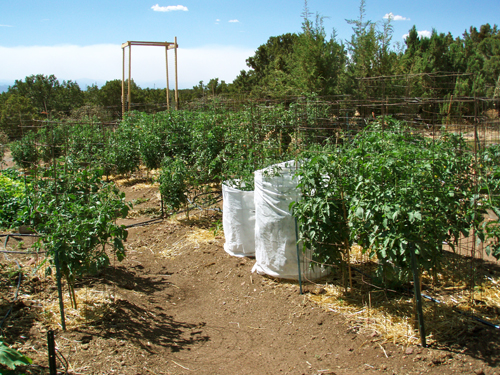
The tomato plants are now getting BIG. I’ve gotten a few ripe tomatoes-fighting off the birds for them! Most are starting to really produce green tomatoes now. I hope to get to the SF FARMERS MARKET by MID-AUGUST or sooner, tomatoes willing..

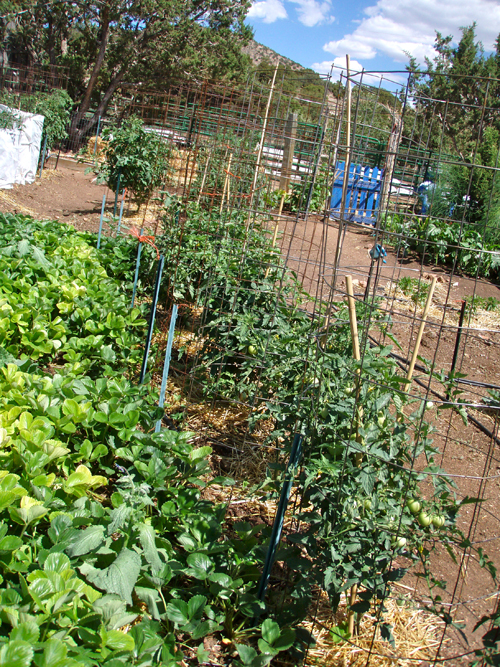
Here are my earliest tomatoes on the right that may allow me to go to the market sooner than later. On the left is my strawberry patch.

I have a variety of black tomatoes coming on-Paul Robeson, Giant Black Pear shaped tomatoes, Cherokee Chocolate, Black Krim and Black Cherry. None of which are shown yet.

I should have a plethora of cherry tomatoes this year-Sungold, Black Cherry and Green Grape and a mystery red that was suppose to be a San Marzano! Here is a closeup of  Sungold. Hope the birds don’t get it! All the cherry tomatoes should start producing soon!

I also love the bi-color tomatoes-my favorites. I’m growing Gold Medal and Striped Germans shown above. Both varieties can get between 1-2 lbs and are SWEET, SWEET, SWEET. They only have flowers right now.

My Big Zacs take longest to ripen 90+ days so you won’t be seeing these until late in the season but what a treat.1-2 lb giants with that old fashion tomato flavor perfect for a BLT..

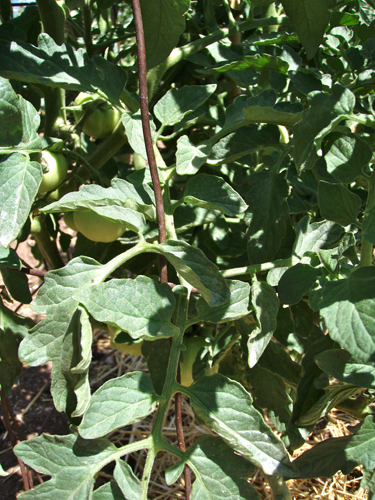
Here is a brandywine. Notice the potato leaves. I haven’t had good luck in NM with Brandywine  tomatoes due to the disease factor but these are looking good so far, I have red, pink and yellow brandywines going.

Harvesting Garlic-pulled on July 14!

Freshly picked garlic starting to dry on table outside in shade

I dug out the garlic I got from our local Farmers Market and planted last fall yesterday. They say the best garlic comes from local growers, so I’m sure it will be good. It is the hardneck type but I’m not sure which variety-I just remember  it was purple. I planted in mid November of last year, so it’s been 9 months of waiting to harvest.

Hardneck garlic scape

It produced a scape in June on each plant as shown in the picture to the left, which is a curly flower pod that you cut off so all the energy goes into the bulbs developing below the soil. I read after you cut off the scape, you should give them a good watering, then cut off the water to them and wait around 20 days to harden them off.

Almost all hardneck garlic have between  7-8  leaves and when the bottom 3 die back but the top leaves are still green then it is ready to dig out. My leaves died back totally because it’s been so hot here. Be sure you use a tool that can dig deep enough to loosen the soil around each bulb and get under the bulb and lift it out being careful not to pierce it.

After you dig it out, you need to CURE the garlic which takes about 3 weeks. For the first week, lay out all the garlic bulbs (leaving all its leaves on) outside in a warm DRY spot on top of a table or shelf but OUT OF THE SUN with good aeration for a week. On week 2, cut off the leaves to about 4-5 inches above the bulb, trim off roots closer to the bulb, rub off the dirt gently on the bulb and put back on your shelf or table to cure another week. On week 3, trim off the remainder of the leaves down to the bulb and cut off the roots close to the bulb and take them inside to finish curing.  After that third week ends, store them in a cool, dry place in your house. I like to put them into one of my old onion bags that I bought from the grocery store (the ones made of netting) and put in a cool place in the house-for me my pantry. I can’t wait to try some!

Tomatoes and Mozzarella-Caprese salad-yum!

Caprese salad-Tomatoes, Mozzarella and Basil

It’s starting! I’ve been getting a few ripe tomatoes every couple of days and  have and been enjoying them. Here is a picture of  a Caprese salad I made last night with tomatoes out of the garden with Mozzarella cheese I made and basil I grew, drizzled with a balsamic vinaigrette. I got into learning how to make some cheeses mainly to go with my tomatoes. I haven’t got it down as good as I’d like but the mozzarella was still good.

Pumpkin Sex

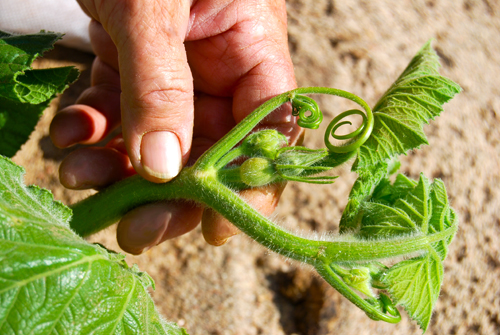
Yesterday I pollinated the 895 Grande female pumpkin flower (scroll back to see what it looked like on July 4th and how much it has grown) with an older male flower from the same plant and I took a fresh male flower from the ‘greenie’ which won’t affect the looks of this pumpkin but may produce green pumpkins from it’s seeds. I just don’t have any opened male flowers from the pumpkins so I had to use the ‘greenie’flower. Notice how much bigger the female flower is now.

So this is how it works. To see more lude photos go to last year post here but basically here’s the dirt on GIANT PUMPKIN MATING HABITS!

All pumpkins produce both male and female flowers and normally the bees do the pollinating landing on the male flowers, picking up the pollen from the male flower and visits the female flower and drops off the pollen on the female flower being attracted by the wonderfully sweet smell of the female flower. BUT with pumpkin growers, we need to know which two pumpkins ‘hook up’ so we don’t get an accidental pollination with a winter squash or another pumpkin we don’t want it to mix it up with. We want to get the biggest pumpkin we can so we keep track of those sort of things. So we hand pollinate. Yesterday I took a male flower and took off the petals and ‘paint’ the pollen all over the female flower stigma with the male stamen. Some of the pollen must go down the female stigma flower for pollination to be complete. If I didn’t get enough pollen on it, it will either not take or abort later. After I pollinated the flower, I used a twistie tie to close it for 24 hours so no bees can accidentally pollinate it. I hope it ‘takes’ but it may not as it was very hot yesterday and quite often it won’t take if the temperature gets too high (over 90°F). There are many baby flowers now so it is going to get interesting very soon!

Giant Pumpkin patch growing

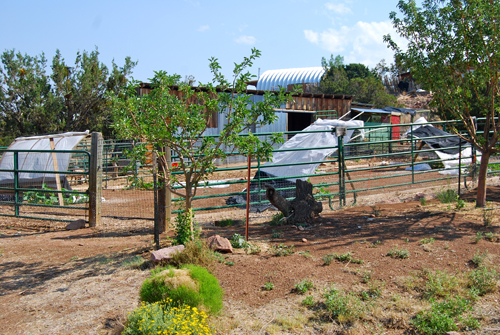
Here are some pictures of the giant pumpkin patch taken on July 4th. There are also 1 greenie squash and 2 giant marrows in the patch so I think it’s gonna get crowded in there. I hope I have a sea of green by August!

Here is the overall view of the pumpkin patch from the road.

I have the low tunnels propped up so I can work on the giant squashes. Kind of like opening a car hood! I took off the row covers for pictures.

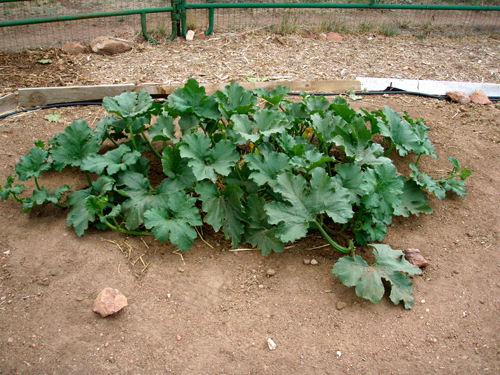
The giant pumpkin plants are doing well-they are just coming out of their low tunnels. Here is the 895 Grande plant with the low tunnel off.

Some of those big leaves are 18″ across. I just love this pumpkin plant. It’s sister seed took the NM State record last year. The leaves are much bigger than the 1048 Grande.

Here is the 1048 Grande. It’s leaves are smaller but they say leaf size has nothing to do with pumpkin size. Is that like the shoe size argument?!

I saw my first female flowers on the 895 Grande pumpkin plant on the end of the main vine. Isn’t it beautiful! The only issue is it is only 7 feet out from the stump. I should wait to pollinate until it reaches at least 10 feet out but may not. We do that to allow the plant to develop more leaves behind the future pumpkin-more leaves-more food. Lot’s of times we pollinate many pumpkins and then cull the smaller ones so I think I will do that.  Notice the oval shape of the possible baby pumpkin.

The only problem is the male flowers that are there are also very small and they usually bloom before the girls even show up. The boys are always the first to arrive at the pumpkin blossom party and usually the girls show up later. It’s ok because my first pollinated pumpkin flower last year was July 27 so perhaps I will be ahead of that date which is important because it will give me more days to put on more pumpkin weight.

Here is the greenie-The greenie looks just like any giant pumpkin plant but the fruit will be green. It is doing well. I saw a really small female flower with the potential baby green fruit. The seed came from 2007 so I was surprised it even germinated The plant looks fantastic. Just goes to show that you can’t always listen to the folks that say get rid of your seeds after 2 years old.

Here is the 78 marrow-kinda bushy. Very different than the other marrow in the patch.

This is the other giant marrow that came from my last year’s plant. I’m very suspicious of this one as it doesn’t look quite like the other marrow above which I know is pure in strain. Mine was pollinated by the bees and so it could of crossed with one of the winter squashes last year. It will be interesting to see what the fruits look like on this one later on!

I also saw one squash bug (which ended up under my shoe) and some eggs on the underside of 3 leaves. I just took off all those leaves that had the eggs on them and put it in a bucket of soapy water-goodbye eggs. I will plant some onion sets in their wells to help deter them and I will probably have to keep the pumpkin plants covered with row cover. I will be on the lookout from here on out.

Tomato care in June

The Wall of Waters are all off the tomatoes now. I used Companion fungicide as a drench. They got a little wet in the Wall of Waters and I wanted to make sure they wouldn’t come down with early blight while gone on my trip. I also sprayed on the foliage Serenade, which is a foliar fungicide. So one end gets the drench and the other end gets the foliar spray. I figure if you zap them both ways, I should have better protection. When I came back,  all looked good except one which was diseased so I tossed it in the garbage, not the compost. Don’t leave diseased plants in the ground to possibly pass on diseases to healthy plants. Then I staked them all up with bamboo stakes and tied up the branches. I cut off any branches that touched the ground so as to not spread any soilborne diseases. Next I had to redefine my wells and put straw over the well to conserve water, help with evaporation and keep soilbourne diseases from splashing up on the tomato plants. Afterward I decided to sterilize my tomato cages since I had some loss due to diseases last year. Might be overkill but I want to be cautious this year before I put them over this year’s tomatoes-don’t want to spread any diseases. I used a 10% solution in a gallon of water (that’s about 1 .75 cup bleach to one gallon water) and sprayed my cages with a hand sprayer. Now I need to put the cages over the tomato plants and start picking off suckers that are showing up. Arrgh, a gardener’s work is never done…

All this work for this..

Virginia Sweet Tomato

Teaching ‘ORGANIC PEST AND DISEASE CONTROLS’ class-Tomorrow-June 25

Photo Courtesy of Homegrown New Mexico

Tomorrow (Saturday) I teach an ORGANIC PEST AND DISEASE CONTROLS CLASS-JUNE 25 for vegetable gardeners at the  Milagro Community Gardens from 9 am-10:30am put on by HOMEGROWN NEW MEXICO organization. I will cover organic insecticides for various insect control and other organic methods to control many insects. I will also cover identification of many diseases and organic disease control. LOCATION: Milagro Community Garden on Legacy and Rodeo Road.  Turn on Legacy and the parking lot is on the right, behind the Lutheran Church.

Home Grown New Mexico, a non-profit organization, creates venues where individuals, businesses and organizations that support home grown food production can exchange products, ideas and expertise. The vision is to enable New Mexicans to take personal responsibility for growing, raising, making and storing healthy food. For more information on them go to: http://www.homegrownnewmexico.org/

Here are pdfs of all my handouts for the class for those interested:

ORGANIC CONTROLS IN THE VEGETABLE GARDEN

ORGANIC INSECTICIDE CONTROLS

ORGANIC DISEASE CONTROLS

TOMATO DISEASES

PLANT RECIPES

As a bonus here are 2 more pdfs that were not available in the class but are available here.

SQUASH BUG PREFERENCE CHART

ATTRACTING BENEFICIAL INSECTS

Long gourds trellis

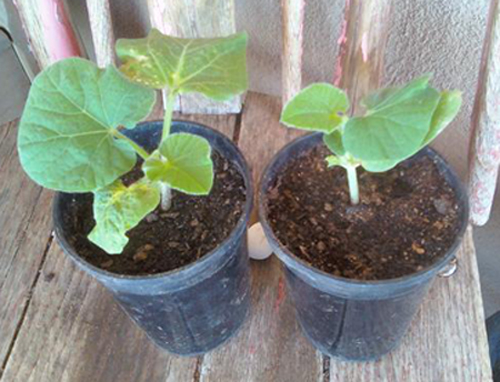
Baby long gourd plants-4 inches tall

Here are the baby long gourd plants that hopefully will grow into giant long gourds! I can’t imagine it. They’re so small!

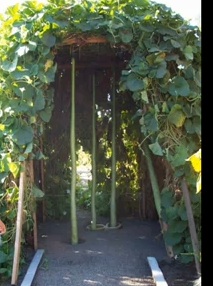
Long gourd trellis in garden

Here is the giant long gourd trellis that Caleb and I built that will offer support to the long gourd plants that will grow up it. Yea right! It is 10 feet tall and about 3 feet wide. I can’t imagine growing a long gourd that tall much less even think about those teeny weeny little plants going all the way to the top of this gigantic trellis but it will be fun to try! I guess I better move the ladder down to the garden…

long gourds growing on trellis (not mine!)

Here are some pictures of the 2007 world record long gourd that reached just over 127 inches that another person grew. The plant is really beautiful. In the picture above the long gourd was so tall they had to dig a hole in the ground so it would keep growing straight! If it hits the ground it will start to curl.

looking up inside a trellis (not mine!)

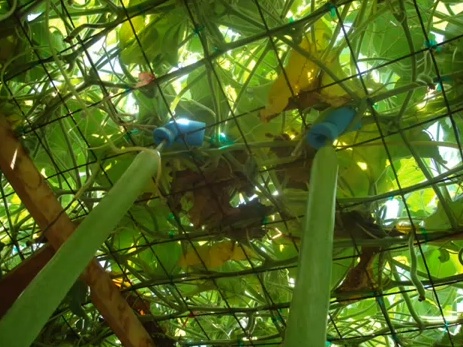
Looking up at the gourds from inside a trellis-Beautiful!

Here is a picture looking up through the trellis at the long gourds. This looks so lush! I wonder what I will be able to do in this desert!?

The current world record for long gourd is a whopping 135 inches tall-that’s just over 11 foo tall. Now that’s a lot of gourd! Wish me luck-I’m going to need it!

Shishito peppers struggling/Eggplants doing well

This shishito not doing very well

My peppers and eggplants get the royal treatment. They all have a well, drip system, row cover over them and Thrive and Seaweed given to them to adjust to the outside. They should be doing well but at least 2/3 of my shishito peppers are struggling. They should not looked like this! They have not adjusted to the heat and wind very well. I hope I get some out of the 16 I planted. They are a picky little plant. If it’s not too cold for them, then it’s too hot or too windy. They’re just not happy. Perhaps that is why they cost so much at the Farmers Market. I’ve already given them extra seaweed and Thrive. I find them harder to grow than other varieties and they stay small forever. Last year I don’t recall them struggling so much. I may pull the wall of waters off the tomatoes that are doing well and growing out of them and put them on these peppers.

On the other hand, my Pepperoncini peppers are doing well. They were a little larger than the Shishitos when I planted them and have adjusted well. I think they had stronger roots which would help in adjusting to the elements.

All the eggplants-Fairys and Rosa Bianco varieties are small but doing well and have new growth. They love the heat.

Giant pumpkin care today

chop sticks help push the giant pumpkin vine down

If you were crazy enough try to grow giant pumpkins this year, here is some advice from this obsessive giant pumpkin grower!

To grow a giant pumpkin, you must BABY them. They need a lot of CARE. It’s like RAISING A VERY LARGE CHILD or more like JABBA THE HUT. You don’t go out and just throw some seeds in the ground and expect to grow a record pumpkin. You wouldn’t be able to go out and become a world boxing champ without training, lots of proper food and working up for it and so it is with giant pumpkins. A person asked me last year at the GPC (Great Pumpkin Commonwealth) weigh-off in Colorado Springs, Co how do I grow them? I asked him if he planted some and he said, “Yes, but they didn’t do anything”. So I asked him if he amended the soil, had them on a fertilizer program, used organic fungicides for diseases, did any preventative insect control or hand pollinated them just for starters. He said, “No, I didn’t do any of that. I just put the seeds in the ground”. I told him that’s probably why he wasn’t successful. Then he asked me, “What do you feed these big pumpkins?” For which I responded looking at his kid, “Small children”! Then he grabbed his child and ran off! The point being you must be some kind of nut to want to grow these behemoths!

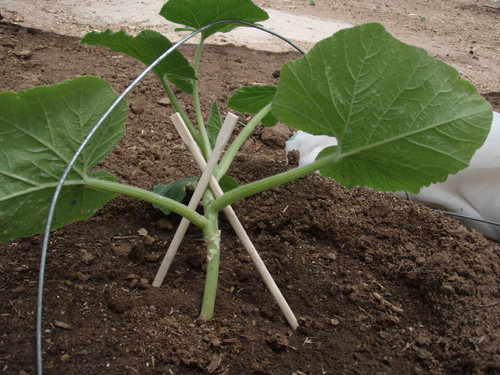
Today I fertilized the pumpkin plants, greenie and marrows with Seaweed and Fish emulsion and added Super Thrive since I took off the shade cloth and they have to adjust again.  Mind you they still have a low tunnel over them and another layer of row cover directly on them but I am now weaning them off so much protection since they have gone through their first adjustment well and I see new growth. I also started them on ‘Companion’, an organic fungicide, which helps ward off  fungal diseases. All these things go in a bucket of water so it’s easy to apply. They are still taking 1/2 gallon of water a day. I also put chop sticks over the stem (see photo), making an ‘x’ with them, gently pushing the vine down towards the ground. Push the sticks with the plant  a little farther towards the ground every few days until the plant is lying on the ground. If you let them stay tall, they could snap off in the wind so I must train them to lay low! This pumpkin plant in the picture comes from the same one that last year grew the 2010 NM State Record. I also have it’s cousin plant (who comes from a bigger pumpkin), but this plant is already much bigger than it’s cousin. I love this seed!

Tomatoes are doing excellent in Wall of Waters

tomatoes coming out of wall of waters

All of my tomatoes that are in Wall of Waters are kicking ass right now, many of them outgrowing the Wall of Waters  (WOW) and needing me to take the WOW off. The 2 tomatoes that didn’t have Wall of Waters (I ran out) are struggling, even under row cover for protection. It is amazing to me how good the tomatoes do inside those wall of waters and how poorly they do without them. The Wall of Waters act like little greenhouses and are worth every dollar they cost. As a result almost all of my tomatoes have a great head start on the season. I know I’ve talked about them before, but they are worth a mention again. If you want to be really successful with tomatoes, I think you must get these and use them when you first transplant.

Planting Giant Pumpkins-In ground- June 1!

Giant pumpkin inside low tunnel

On Wednesday  I transplanted the giant pumpkins in Bri’s Pumpkin Patch here at the property.

Bri, my horsey, is no longer with me. Last year I used her 2000 sq foot corral as the giant pumpkin patch and I got a New Mexico State Record-421 lbs for Giant Pumpkin last year. I think she is watching over them! I miss her terribly.

Here’s how I plant the pumpkin transplants that I started in the house.

1. First I dig out an area about 4 feet around and 1-2 feet deep where their root system will grow. This year I added generous amounts of compost, 1/2 cup of mycorrhizal, 1 cup humate, and 1 cup of worm castings and mixed it into the area. (I did not add any fertilizers as my soil test I had done in Spring said I was high in nitrogen, potassium, and potash, which is your basic fertilizer ingredients. (This is weird because the pumpkins usually use up all available nutrients by the end of the season. The only thing I did last fall was put some chicken manure on top of the ‘holes’. I didn’t even dig it in but I think the nutrients leached into the soil from the winter snows and increased the levels.)
2. Then I dig a small hole where I place the pumpkins and I add another handful of worm castings and 1/2 cup more of mycorrhizal (it’s dry granule stuff) and mix them together. This way the castings and mycorrhizal will be right in the immediate root zone in the beginning and the bigger amended area will be accessible as the root system grows.

3. I carefully peeled off the peat pot including the bottom so not to disturb the roots but if the pumpkin is root bound, I must carefully squeeze the roots to loosen them up so they can grow outwards. This year I didn’t have to do that. I placed the pumpkins in the bottom of the hole opposite the first true leaf so it grows in the direction I want and put the amended soil back around the root ball. I make a well around the plant so I can add water right to the root zone.

4. In a 5 gallon bucket, I added 1 tsp/1 gallon of water of liquid seaweed and about 3 drops of Super Thrive/1 gallon of water which helps immensely with transplant shock. Super Thrive is super expensive and super good. It has lots of the B vitamin complex in it which helps with stress-just like for us! I first watered the well 2x to make sure all the soil was soaked around the plant, then I added the liquid seaweed/thrive in water to the well.

5. I put the Seaweed and Thrive with the water in each day for about 5 days, then afterwards I normally give them water with fish emulsion once a week but for now since my nitrogen is high I will wait awhile. I do water every day with about a 1/2 gal of water right now.

6. I don’t put fertilizers in the water every time I water, normally just once a week. I will also add other things to the water once a week but will discuss that as I go along in the season. I still have to do a drip system for the pumpkins and will hand water them until I get it up and running.

7. I cover the transplant with a small piece of row cover to help it in it’s transition with the intense sun and wind and keep rabbits away. I tack it down with rocks.

8. On Thursday I put the low tunnels I previously made over the already covered pumpkins to protect them from the heat and wind even more.  Low tunnels are like high tunnels but only go over the plants. You can’t walk inside them-they are low!  They will stay on till the plants grow out of them at the end.  So far they are looking good. The soil is nice and warm at 70°F.
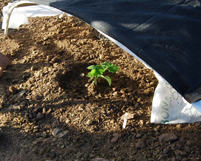
9. Saturday (today) I put the shade covering over the low tunnels as the sun is sooo intense right now. I can take it off once they adjust to the outside elements.