Lettuce bolting

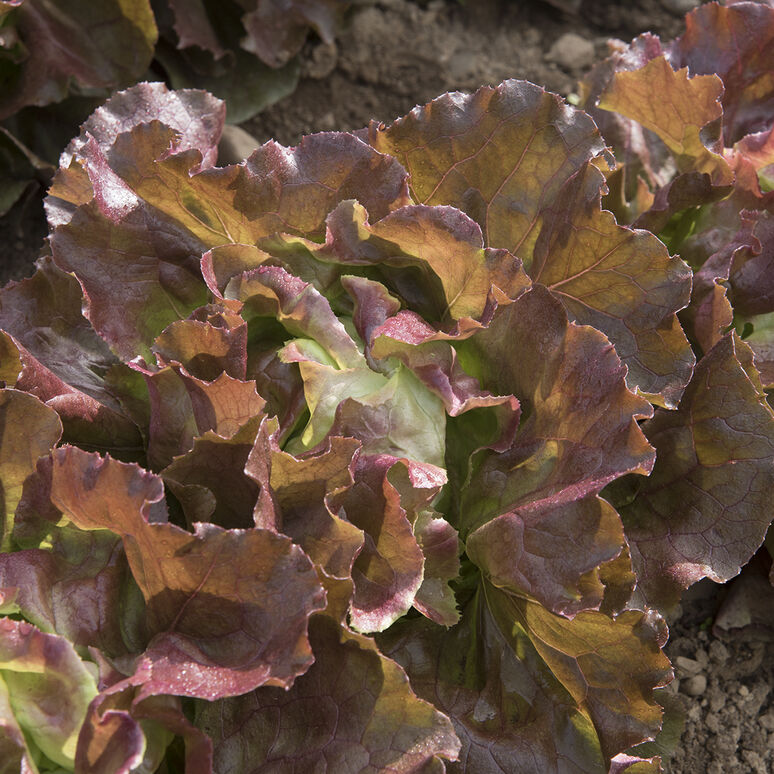
When daytime temperatures get warmer, it will only be a matter of time before cool season lettuce that we planted in early spring bolts. Bolting is when lettuce starts to get a center stalk and eventually it will make flowers and become bitter. What makes lettuce bolt? Both summer heat and more sunlight in our longer sunnier days contribute to bolting. If you find your too late and it is already bitter, either compost it or give it to chickens. They don’t seem to mind the bitterness.

I read a tip where you can make bitter lettuce sweet again so I decided to try it as my winter lettuce is pretty much finished and bitter. The tip said to mix up 4 TLB salt with 1 liter of water till dissolved in a bowl and then soak your lettuce in it for ten minutes. Then rinse and it should be sweet. I did try it and the lettuce got totally wilted. Not edible. After I rinsed it, I soaked it in fresh water hoping to revive it and the lettuce was still salty and wilted. Still not edible. I didn’t even want to give the wilted lettuce to my chickens or compost it for fear of too much salt still in it. Oh well, so much for that tip!

If you still have lettuces that haven’t been picked, get out there soon before they bolt! To get the best from your lettuce, water your plants the evening before you plan to pick it. Then pick lettuces first thing the next morning before it gets too hot. After I wash it and spin out the water, I put lettuce in a ziplock baggie with a wet piece of paper towel folded (squeeze out excess moisture). Lettuce should last a good amount of time when doing this in the refrigerator.

There are other lettuces we can grow here in the shade in the summer. I will write a post soon about growing these warm season lettuces for the summer that are heat resistant and don’t bolt. They are called Batavian or Crisp lettuces. More on that later.


Wait to plant peppers till June 1

These Jimmy Nardello peppers were gifted to me by my good friend, Bob Z. They were out of them at the nursery and it was too late to start them by seeds in April. Giant pumpkins in the background are waiting too.

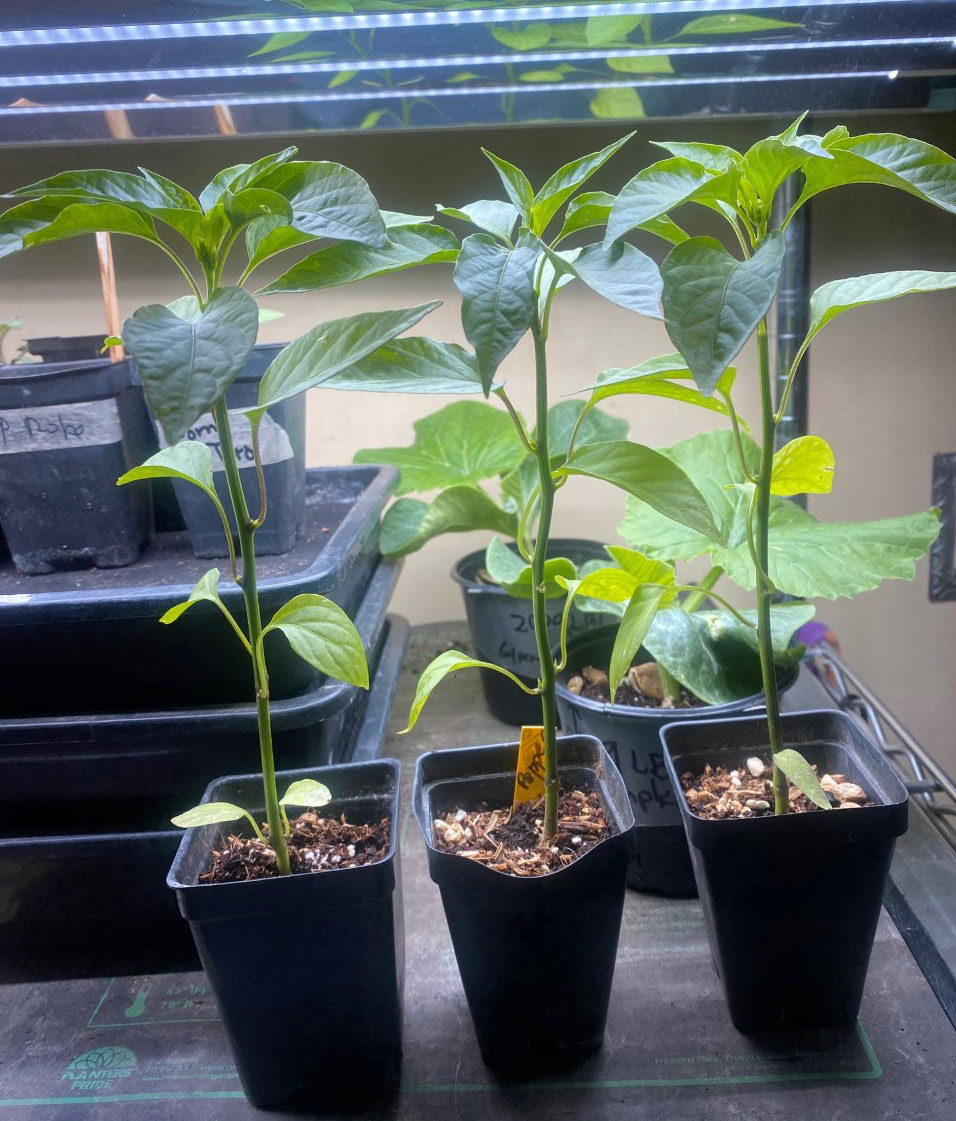
Peppers like heat-more heat then even tomatoes. When transplanting anything outside, we must consider both air temperature and soil temperature. Our soil temperature right now is not warm enough yet to plant our pepper transplants out in the garden even though the air temperature is warmer now. Tomatoes went outside in the garden for me last week inside wall of waters but my peppers are still inside the house under lights waiting. Waiting, waiting, waiting. The soil temperature is in the 60’s which is still too cool to transplant peppers.

If you plant peppers while the soil is still too cool, they tend to stall out meaning they stop growing altogether and don’t restart growing even when the soil gets warmer. You’ll have to re-buy them. Trust me, I know from experience. I’ve even tried growing them in wall of waters (WOWs) and the air temp stays warmer inside the WOW but the soil temp can still be cool. Peppers would love the soil temp to be 70°F when transplanting outside. So it is best to wait. How long? I plant all peppers the first week of June when I know the soil temp is much warmer.

Tomatoes are in-May 3rd-woo hoo!

Today we put 31 tomatoes in the garden. Enjoy the time lapse!

This is the earliest I have ever been able to put them outside. We always put them in Wall-of-Waters (green cylinders) to protect them from the chilly nites or if we have a late freeze.  Now I’m dirt tired-time for a cocktail!

Plants suffer in 21°F weather/changes for the better by Friday April 17

Well, almost all my tulips bite the dust with the cold weather but these pictured above lifted up their heads and survived. At least I got about two weeks of glorious color to brighten my days before this latest cold snap and they will come back every year.

Looks like the weather will get above freezing from Friday nite April 17th when it is suppose to be 38°F to Saturday April 25th. But this is not carved in stone. As the saying goes here, if you don’t like the weather, wait 10 minutes.

Everybody needs to become a weather bug to see what is happening as the weather can change day by day and sometimes even hour by hour. I call this the ‘shoulder season’ where one day it is warm and sunny and the next day/nite cold and freezing and always windy here in spring. These are our springs-ever changing but of course then June will come and we will get too hot! It is way to soon to plant any warm season crops yet. To be safe, wait till May 15 and later.  Last year we got snow on May 27 and the year before I was able to put out my tomato plants on May 7 in Wall of Waters. If the late spring weather really warms up or if you are a gambler, you may be able to plant warm season crops earlier but not without some protection. Otherwise you may be replanting…

If you are looking to start cool weather crops by seeds or starts in your garden, be sure to cover your plants with row cover. Winter weight row cover is best but 2 layers of mid-weight will work as well if you don’t have the heavier weight. I even keep the areas where I plant seeds covered and you can water through row cover till they are acclimated. That way as they germinate, they will get some protection. The row cover is also really good to protect baby starts from our ferocious spring winds which can wipe them out as well as our cold nights. I do flip row cover off the plants on nice days, then back on at nite. You can get this online. I have had friends put sheets over their plants and even one who wrapped a tree in a sleeping bag! Both froze-after all you need a body to keep things warm in a sleeping bag! I never said it would easy growing here in our area BUT you can do so with a few protections.

Beets planted by starts survived

I planted a week ago by seeds-carrots and arugula-they are not up yet. At the same time, I planted beet starts. They are suffering from those 21°F nites out in the garden but are alive. Shallots bulbs, kale and fava beans are all very cold hardy and doing well. Peas got eaten by some thing 4 legged. All were put out one week before this cold snap and all are alive because of row cover on them. All lettuces and spinach were in either my greenhouse or a coldframe and did fine, but they too were covered with 2 layers of row cover.

It seems like from Friday, April 17th the nites will get above freezing for at least a week. This would be a good time to start cool season crops outside whether by seed or starts. So watch the weather and don’t forget to hand water them!

Coronavirus and gardening

Well it seems that the Coronavirus is making gardeners out of a lot of people who have never tried vegetable gardening before. Many people are interested in trying to grow food now. That makes me happy. I know it feeds my soul as well as my belly. There is a good article, ‘An onslaught of orders engulfs seed companies amid coronavirus fears’ about how the seed companies are super busy filling orders for seeds right now.  Glad some companies are doing well in all this chaos.

Being out in the fresh air (by yourself) and in a garden grounds me (no pun intended) and god knows we all need that right now-at least I do. I can’t stay inside all day and be on TV or the internet and watch or listen to all the doom and gloom news. I need to hear good news too. Growing vegetables brings me joy and makes me feel productive-in a way I’m creating my own good news and food.

Here in our area and in lots of area throughout the country, a lot of veggies can be started from seed in April, like carrots, beets, onions, greens like kale and chard. Some lettuces and spinach can be started from starts and transplanted into your garden. Warm weather crops like tomatoes, corn, winter squash, and summer squash all need to be started AFTER danger of frost which is after May 15 here in Santa Fe.

I want to encourage any of you interested in growing your own food to start now. You will feel more productive and less depressed about the worldwide Coronairus scenario.

This site has a lot of free information and tips about how to grow, what to grow,  and when to grow veggies throughout the year. Please feel free to explore the site and on the right side column, there is wealth of topics to explore.

That’s it for now. Take care of yourselves and be safe!

Kalibos cabbage-unbelievably beautiful!

For the last 2 years I’ve grown Kalibos cabbage. A friend of mine, Alessandra turned me on to it. This beautiful Eastern European variety is cone shape with huge outer leaves that surround the cone. The cabbage has a high sugar content and intense reddish-purple leaves. The flavor is sweet. Finally a cabbage I like! I never liked cabbage before. It is so beautiful in the garden and makes quite a statement.

I especially like planting it with flowers like in the picture above. It will be equally beautiful nestled in with other plants or in the veggie garden. Needs full sun and takes 2-3 square feet in the garden. Start seeds indoors and transplant them outside under some lightweight row cover. Harvest in late summer or fall. I got my seeds from rareseeds.com (Baker Heirloom Seeds). 90 days to harvest.

Growing onions

I use to think growing onions was a waste of time but I’ve changed my mind. A home grown onion is better than a store bought one that is really old. There are a couple of ways to grow onions. Go to your nursery and get ‘sets’ which are little onion bulbs and just plant them according to instructions. But what if they don’t have a particular variety you want to grow this season? Then you need to start them from seeds.

What type of onions should we grow here in Santa Fe? There are three types of onions, each one does better in certain parts of the country. Both short day and day neutral onions (sometimes called intermediate onions) will work here in Santa Fe (and of those two, day neutral do best but you can grow short day as well). Long day will NOT have enough daylight hours to work here and the onions will be puny. So when shopping for onions, be sure to ask if these are short day or day neutral types and if you are shopping online, read the description-it should say what type it is. Short day need 10-12 hours of daylight and day neutral need 12-14 hours of daylight. All can be planted in fall or early spring but not in the middle of summer.

GROWING FROM SEEDS: Next if starting from seed, you should start now or even earlier (next year-but you can start now too). In the top pictures are some Cippolini Italian onions that I could not find in sets so I started them last month from seeds. Now I am not quite ready to plant them out, and their tops were getting tall so I read it’s perfectly fine to trim off the little skinny tops. They will continue to grow. I used the cuttings on my scrambled eggs in the morning. Later this month I will separate each one and plant them out in the garden. Those spindly little green tops will grow out to be beautiful onions. I had a bumper crop of onions this last season.

If you think growing onions from seeds instead of sets might turn out smallish, then look again. These red onions from Italy turned out fantastic and I harvested them last fall and they are still good.

GROWING FROM SETS: Now if you prefer to buy sets instead, plant each bulb 1 inch deep with the round part of the bulb facing down in a well composted bed, 4 inches apart in full sun. Water moderately. For spring planting, plant bulb sets now.

HARVESTING ONIONS: When the necks become soft and the tops fall down, stop watering and when 50% of the green tops die back, the full size onions will be ready to harvest. If the bulb is poking out of the soil, that’s ok. Harvest before it freezes. Do not clean off the dirt or cut off the tops until you cure the onions. Curing is the process of letting the outer skins harden off and is necessary for them to store unless you are using them right away. Let dry in a protected area like under a porch or in a shady area for about a week and then clean off the dirt and trim off the tops. Store inside in a dark area like where you store potatoes.

Growing cool season lettuce

IMG_1923

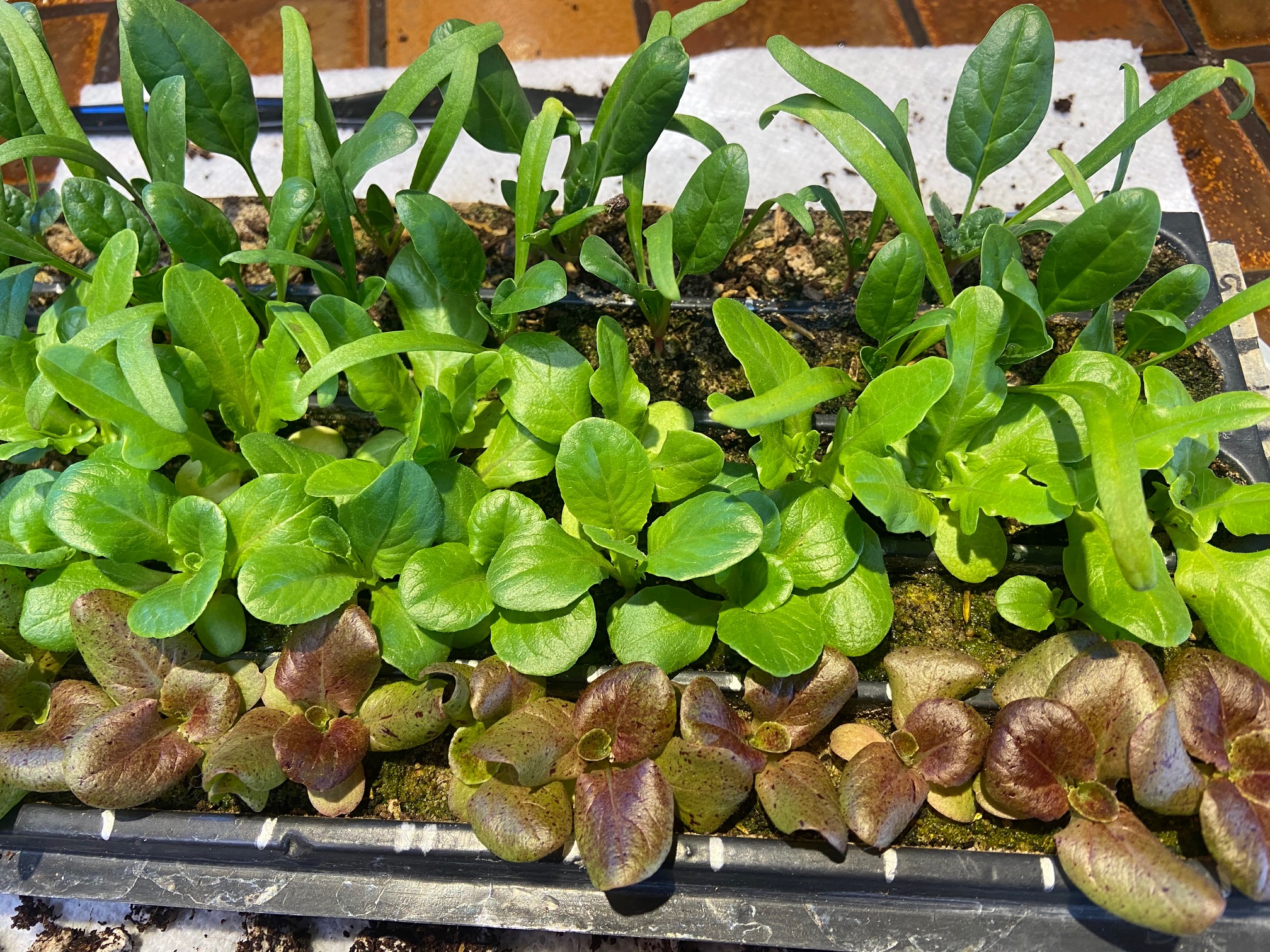
Cool season lettuces and spinach in germination tray, ready to transplant into bigger pots

A friend of mine said the other night that she stopped trying to grow lettuce because it always gets too bitter. But growing lettuces in the spring can be easy-you just have to start earlier than you think you do. If you start seeds in late April, you’re too late as the weather can go from cold days to hot days very quickly and that is when they can bolt and become bitter so you’ll want to harvest earlier.

Since most lettuces are cool season crops and take around 45-55 days to mature, we need to back up our start date to sometime in February/March or even earlier inside under lights (like I did) and harvest in April or early May before it gets hot.

Be sure to grow lettuces that are cold tolerant-it should say on the seed packets. This year I started the first lettuces back on January 15 inside my house under grow lights with no heat-this is very early so I’m pushing it.

IMG_1893

Lettuce transplanted un into bigger pots or pony paks.

Then I transplanted them up from the germination tray into a pony pak on January 20. Then I  transplanted the plants into my greenhouse on February 17. That’s about 4 weeks old when I put them out in the ground.  My greenhouse is unheated so I have to cover them everynight and on cold days with 2 layers of row cover but so far they are doing well. Tonite is 13°F so let’s see if they survive…

Meanwhile I started more from seeds on Feb 03 and they were transplanted into the pony paks February 25 so if tonite kills the others in the greenhouse, these should go out into the greenhouse in another 1-2 weeks. Basically the whole process from starting lettuce seeds to putting out into a greenhouse or coldframe or as the season goes on takes about 4-5 weeks.

You can even put them in a raised bed or mini hoophouse with heavy row cover directly over them by the time April rolls around. So if you plant them in first week of March, you will be able to pick leaves 45 days later or around April 15. By the time everyone else is just starting their lettuce seeds, you will be enjoying the lettuces while they are sweet before it gets too hot.

Vegetable Varieties Review for 2019 garden

Here’s my report for the 2019 garden season in case of any of you want to grow them!

SUCCESSFUL VARIETIES

LETTUCES-Normally I plant cold season lettuces in early spring so they don’t bolt but in summer. This past season I also planted Summer Crisp (Batavian) varieties. They did well in OUR summer. They didn’t bolt or get bitter and had lettuce all summer and fall too. I love all lettuces but now have found varieties that grow in heat. Check out Johnny’s Seeds.

WINTER SQUASH-Butternut winter squash (any variety) doesn’t attract squash vine borers SVB (their stems are solid) OR squash bugs. So for that reason alone, I will plant more butternut squash as my winter squash. I’ve grown Italian Violini butternut, Tahiti butternut, and Waltham butternut through the years and all did well with no bugs (at least in my garden). How great is that?!

SUMMER SQUASHFriuilana zucchini also doesn’t attract squash bugs although I’m not sure about squash vine borers so I keep it covered with row cover before the flowers come and then uncover them and by then the SVB is gone.

GREEN BEANS-This past season I grew Emerite pole french filet green beans. They are one of my favorites. The Emerite beans did well and taste great.

DRY BEANS-I grew a few varieties of dry beans that I got from Italy but you can find many of them from Rancho Gordo Heirloom Beans online.
Rossa di Lucca-(a dark pink bush bean with stripes) that did fantastic (I got them from our local Santa Fe Farmers Market at Zulu’s Petals Farm)

PEPPERSJimmy Narello peppers are our favorite sweet Italian pepper and Shishito peppers and both did well.

CUCUMBERS-My all time favorite EATING cucumber is Poona Kheera, hands down, and I grow PICKLING cucumbers-Parisian for cornichons, Boothby Blonde for Bread n Butter. All did well.

CARROTS-I grew Atomic Red and Cosmic Purple this year- nice, sweet, colorful carrots

BEETS-Chioga and Cylindra beets did fantastic this year.

CABBAGE-I’ve grown Kalibos cabbage the last two years and it is fantastic, producing huge conical shaped heads of red cabbage that are sweeter than most cabbages.

TOMATOES-Eight tomato varieties did really well and 17 did not fare so well. So they ones that did well this year were: Black Cherry, Cherokee Carbon, Cherokee Purple, Large Barred Boar, Original Goliath, Paul Robeson, and Grosse Verte Rose, Sungold.


UNSUCCESSFUL VARIETIES this year

DRY BEANS-I grew a few varieties of dry beans that I got from Italy but you can find many from Rancho Gordo Heirloom Beans online.
Borlotti bean didn’t do well but has in the past. Will grow again.

Zolphino beans-started out great but a gopher got them all. Zolphino beans are hard to find in the states (I got mine in Italy) but can be found at Uprising Seeds this year. Will grow again.

Tomatoes-17 tomato plants did not do well-poor production. This very well might have been my fault with not enough water as some varieties that didn’t do well this past season have done great in years past. So I’m not counting most of these out this year.

Cour di Bue-puny vines, poor production although the Italians swear by them. Will not grow again

Dark Queen-new to me but did not do well. Will try again.

Captain Lucky-died of unknown cause. Will try this year again

Brandywines-No tomatoes-not enough growing time-too short a season here. I give up.

BKX-died of CTV (curly top virus) Bit by Beet Leafhopper. Will try again.

Santorini-Greek tomato-too small and not sweet enough-will not grow again.


MIXED BAG (some success and some not)

SWEET POTATOES
Georgia Jet sweet potatoes- Have a short season (90 days to harvest) and the harvest was fantastic BUT I let them go through one hard freeze and many of them rotted I believe because of that. Will grow this year but will harvest before the first frost, not even waiting for a hard freeze)

TOMATOES-
Ananas Noir-normally does well but not this past season. Will grow again.

Virginia Sweet-normally does well but not this past season. Will grow again.

Big Zac-normally does well but not this past season. Will grow again.

Lucky Cross– This is my all-time favorite tomato that normally does well but not this past season. Will grow again.

Garlic planted yesterday Oct 26!

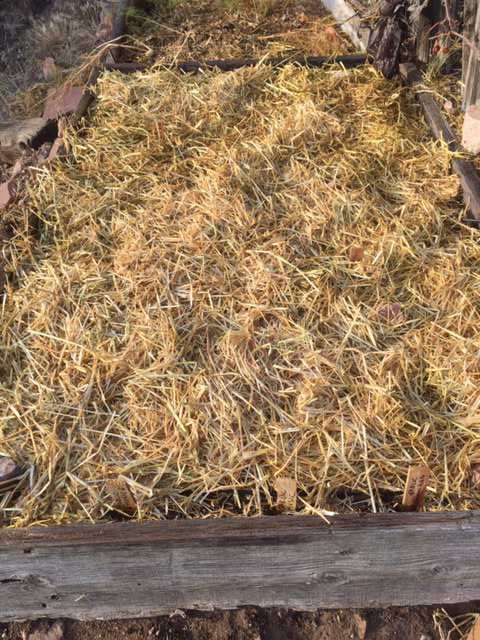
Garlic cloves planted and covered with straw for winter protection

Nice day yesterday here in Santa Fe. I planted the garlic I ordered from Filaree Garlic Farm online for the second year and their garlic is great. I ordered 3 hardneck varieties (hardneck varieties do well here in cold climates). They are Penasco Blue, German White and Music. All produce big heads of garlic.  If you plant garlic in late fall (October), you will get bigger heads of garlic in early summer than if you wait till summer to plant it and it’s sooo easy at this time of year. I added about 2 inches of compost on top of my raised bed, lightly dug it in and planted the cloves pointy side up about 3 inches deep. Then water well and add about 6 inches of straw on top for winter protection. Remember to water them in the winter if we don’t get any precipitation and wait for the green leaves to appear in early spring. Nothing  bothers them too and fresh garlic is great! That’s it-easy peezy.

Growing Sweet Potatoes in Santa Fe? Yes!

Sweet potato vines with chard at end of bed


I tried sweet potatoes this season. I wasn’t sure if we would have enough time for them to get big. Plus they like really hot, damp climate like in the South where they are grown a lot. Sweet potatoes take between 90-170 days to mature. Yikes! Many varieties would not mature here in our short season. I ended up getting a variety called Georgia Jett because it has one of the shortest growing times—90 days to harvest. It has orange flesh.

I got a dozen sweet potato slips in spring. They arrived in the mail too early to plant. And they were not in good shape when they came. I had to keep them alive in the house till the weather and soil warmed up in late spring. At first, I put a damp paper towel in a plastic bag with the slips to keep moist. I lost 7 of them. Then I eventually had to put them in a glass of water where they started producing roots. As it got close to planting time, I put them outside in a bucket with water. I planted them in June in Wall of Waters as the nights were still cool, We had a late snow on May 20. Five survived.

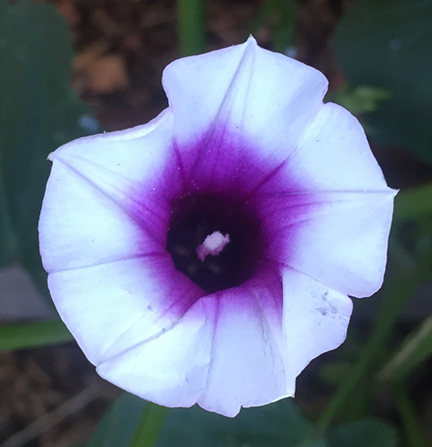
Sweet potato flower

Well it turns out those five slips filled and overflowed the 10′ x 4′ raised bed. They are easy to grow and not much bothers them, plus no bugs. They just need water and heat, which we got plenty of heat this summer. They are beautiful plants. I’m not sure where I coulda put the other 7 as they are rampant growers and need space. Plus I didn’t know they are related to morning glories and have a beautiful flower which is smaller than a morning glory flower. Another bonus!

Left side-sweet potatoes still curing Right side-sweet potatoes with dirt brushed off and ready for pantry

They have now been harvested and many of them are very large. They are curing inside the house because they must be kept warm during the curing process. Curing is a hardening off process for veggies like squash and garlic to harden the skins and in this case to sweeten them as well. When you dig them out, don’t wash off the dirt while they are curing. They have to cure for 10 days in a warm space. After that, you can lightly brush off the dirt but still don’t wash them till just before use. Store them in a dark space like regular potatoes. I don’t know about the flavor yet as they are still curing inside the house but they look good. I’ll let you know when I eat some of them about the flavor.

2019–A lousy year for tomatoes

This year was a lousy year for tomatoes for me. Other gardeners have said as much too. Except for one raised bed with 8 tomato plants that are my salvation, the other 17 tomato plants in a different section have not produced well.

Why I asked? A couple of things come to mind for me.

First, we got a late snow on May 20th. The first frost free date is suppose to be May 15th here, but not this year. Plus our spring was cold. That caused me to to put the transplant in the ground on May 25th in wall of waters. I could have transplanted them earlier in the wall of waters but I didn’t have the heart to put them out earlier. It’s hard to do when you’ve started them from seeds 6 weeks earlier and it’s cold or freezing outside. I didn’t want them to stress or even die in the cold nights.

The previous year was we had a very warm spring and I was able to get out the tomato transplants in the ground on May 6th-quite a difference 3 weeks can make in a short growing season.

The second thing that comes to mind was we had a hot June where the temperatures were above 92°F for much of the month. Any temperatures over 92°F will cause tomato blossom drop during the pollination process. The plants did flower and then dropped their blossoms. Pollination temperatures are critical for setting tomato fruit-we want the temps to be below 92°F. After they set their fruit, temperature is not a big factor and the fruit will grow.

The third thing is the monsoons were late. They normally come at the end of the first week in July but didn’t materialize until the end of July and then only for a short period of time. The monsoons stopped and it got too hot again for tomato pollination-hence more blossom drop in July.

Lastly, the soil in the beds were not as good where the 17 tomato plants are in. They are in a newer section where the soil is not as rich. This pointed out to me (again) the need to improve the soil with more compost.

Now the temps are beautiful but basically our season has slowed down and will end for tomatoes whenever we get that first freeze which is between now and October 15th. So before that night comes, when I hear a freeze is eminent, I will pick those few green tomatoes and bring them inside to ripen. For tips on ripening tomatoes inside, go to my post here.

It was a disappointing season for tomatoes here in my garden. How about the rest of you? How did your tomato plants do this year?

Mother nature is sometimes not so generous to gardeners!


2019 Garden pics!

Here are some pics of my garden this year. Now that we are in September, I wanted to capture it in all it’s glory before it’s gone. I’ve worked hard tweaking out the infrastructure with new framed beds and weed barriers and wood chips in the paths this year. Having retired from the Santa Fe Farmers Market two seasons ago has allowed me to do more in the garden. I also added some perennial fruit like raspberries and blackberries since I don’t need space for 125 tomato plants anymore! By mid-October or sooner, it will be toast with the first frost so might as well enjoy it while I have it. I have an abundance of flowers this year that I grew for my edible flower class and besides being beautiful and edible, they attract many beneficial insects and pollinators. Hope you enjoy it as much as I do!

Shallots harvested

I have always planted both garlic and shallots in October and I got the garlic planted in the ground last year in late October of 2018 but not the shallots. I ran out of time and then all the shallot bulbs were sold out. I know we can get bigger garlic bulbs if we plant in the previous fall (which I already harvested) and thought the shallots would be bigger too if planted in the fall. But I decided to plant some dutch shallots this spring to see how they would do as I really love shallots. I just found out I should plant french shallots in the fall and can plant the dutch shallots in either the fall or spring! They have a more delicate flavor than onions. I harvested them about a week ago and they are magnificent!

They are huge and I got many of them from about 10 bulbs. I picked them when the stalks fell down and started dying. They are now curing on the bench in a protected shady area on my portal. Curing means letting the stalks dry out completely before I take them off. The skins should be dry and be sure not to wash the dirt off. You can just rub off the dirt after curing. What a pleasant surprise for me!

Tomatoes just starting to come in!

I live for my tomatoes out of my garden each year!

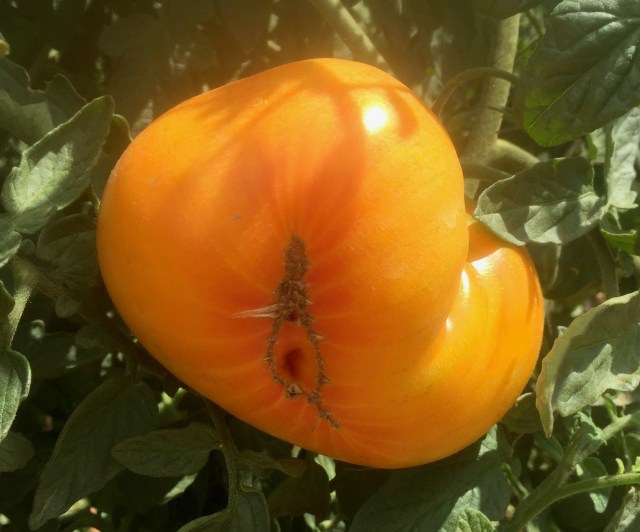
Most of my tomatoes are just starting to ripen. There are many more on the vine in various stages of green! So every few days I get a few ripe tomatoes. Just enough for a Caprese salad every few nites. I’m in heaven!

I have many standard tomatoes but a couple of new ones that are suppose to take 70-80 days are already ripening at 60 days. I love them all so far. They may make my all-star tomato list at the end of the season which is really hard to do as I am really, really picky-they must be VERY flavorful. Here are some new varieties that have ripened so far..

New to me is Large Barred Boar (from Wild Boar Farms) which is much larger than their regular Barred Boar with the same great flavor. It is burgundy color with green stripes. It has a really rich complex flavor.


Another new tomato is Grosse Verte Rose (from Secret Seed Cartel seed company) which is a dusky pink color and sweet, sweet, sweet and about 12-14 oz big. A winner for sure.


Tonite I got the first two Cherokee Carbon tomatoes and they look beautiful. No cracks, smooth skin and a cross between a Purple Cherokee and the Carbon tomato. I normally grow heirlooms or open-pollinated varieties but I’m not against hybrids if they taste great. This one is a hybrid and I’ll let you know later how the taste is. They are about 14-16 oz and look beautiful.

Also new to me is a tomato named Santorini from the Greek Island of Santorini. (duh). They were one of the first to ripen and are a smaller bright red tomato with the flavor of an old-fashion tomato. I like them and the fact that they were so early is good too. Sorry I don’t have a pic-I ate them all.

So that’s the report so far on the NEW varieties of tomatoes that have started to ripen. There are many different varieties that are still green and for those of you waiting, don’t despair. With this heat I’m sure they will be ripening soon.

If you don’t recognize these varieties it’s because I try tomatoes from many different places and like to turn people on to new varieties that are awesome! If your local nurseries doesn’t carry them next year, you’ll have to start them from seed.

I’ll post later as I have more to report on. Let’s hope for a long warm fall where all of them will ripen!