Still time to order seeds if you haven’t already. I need to order my seeds Monday, now that I’m home from the show so I get them in time to plant in March. Probably most of you have already order your seeds. I only need to order a few as I still have many seeds that I will regrow this year. It feels late but it is what it is. Last year I started the seeds the first week of March. Because it was such a cold spring, I couldn’t get them out till late May and even June last year They got too tall in the house, but what was I to do? Stick them out in 27°F weather? I’m still going to plant seeds from March 1 -15, inside, under the lights and hope with this La Nina we have that all of us will be able to sneak out some of our warm season crops early—think April 15th! It’s always a crap shoot when trying to decide when to plant seeds but I’m going early! Bring out the gro lights! (I hear, “oh no” in the background!) I do have ‘plant envy’ for those of you have greenhouses or hoophouses!
Category Archives: starting seeds tips
How to Make a Coldframe

My coldframe
A dear friend of mine, Kim, asked me if I would explain how to build a coldframe while there is still time before planting time in early Spring. There are many designs available online to make a coldframe or hot bed. Here is the coldframe plan (as a pdf) that I basically used when building my coldframe with a few small exceptions. Now mine isn’t super refined as you can see in the photo but seems to be working! (Be sure you look at the pdf because there is a lot more information in it). As you look at the plan, it’s pretty self explanatory but here is what I did for the sides and the bottom inside.
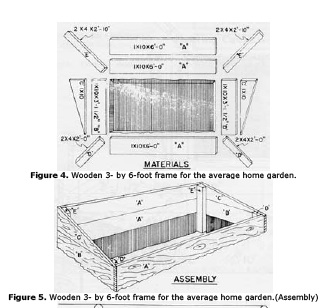
one page of the coldframe plan
I used 2 inch x 10 inch lumber for the bottom section all around and another 2″x10″ section for the top side slanted pieces. Cutting the diagonal piece is easy, I drew a line from one corner across diagonally to the other corner and cut on the line then I used one piece for each side on top of the bottom piece. The only thing I did differently is I put one more 1 x 2 inch piece vertically in the middle on each side (screwed in-see photo not diagram) and in the back to join the top and bottom piece together. I added a 2 x 4 (long) piece on the lid that I screwed in (not tightly) so I can raise and lower the lid and prop it up vertically (see the piece holding up the lid on the right side). In the photo you notice I taped BIG bubble wrap (not small bubbles) with duct tape on on the inside of the plexiglass lid to add extra insulation in the dead of winter. I also divided mine into two sections.This isn’t in the plan but in the left section I started with hardwire cloth on the bottom to keep out gophers. Then I added dirt and compost on top of the hardwire so I could plant in it but the soil isn’t heated. The right side has a garden heating cable. I attached the cable with twist ties to the hardwire cloth that is cut out to fit the bottom. Then I turned over the hardwire cloth so now it is on top and place it on the bottom. I did this so I can’t put a spade through the cables while digging around in the dirt when planting. Then I put dirt on top like the other side. So the right side is a contemporary hot house when I plug in the heating cable (which I haven’t done yet). I will use it to heat the soil to a temperature so the seeds will sprout. A traditional hot house has a dug out area where ‘hot’ green manure is placed into. Then on top of that is the dirt that you would put your plants or seeds in. The manure gives off heat as it composts, heating the soil just like the heating cable. Now I love the idea of the manure and doing it naturally but I don’t want to have to replace it every year so I chose the heating cable. I will use an extension cord to bring power from the house. I’m experimenting with the non-heated and heated side to see if it really makes a difference in early Spring. If it does, I’ll heat the left side too next year.
Last time I reported, the right side which I planted with transplants in November, is still doing well while the left side where I planted transplants in January all died in the -20°F we had one night (except the parsley which survived) which is interesting cause I don’t even like parsley! I think the left side all died while the right side didn’t because they did not have any time to grow roots while the right side planted in November did. Remember I haven’t heated the right side yet so I know that wasn’t a factor. Anyways I’m sure the plans will help you more than my description!
Chart for Seed Starting and Transplanting
Our first frost free day this year is Sunday May 15, 2011.
For those of us who start seeds indoors, here is a seed starting calculator from Johnny’s Select Seeds that I found online. It is on the upper right corner of the site. Once you open it, plug in the first frost free date for your area and it generate all kinds of useful information in a chart form from when to plant seeds for all kinds of common vegetables to when to set out the transplants into the garden. Then you can print it out and refer back to it as needed. So it is good for those of us who grow from seed and ALSO good for those of us who prefer to put out transplants we buy from the nurseries.
Here is Santa Fe’s (ZONE 5) Seed Starting Chart that I generated using May 15 as a date. To see the whole chart click this pdf- Johnny’s Selected Seeds – Superior Seeds & Gardening Tools . PDFs don’t show up on this blog only connections to them so you’ll have to click to see it.
HELPFUL HINT: If you have something that is longer than a page that you want to save from the internet on your computer. Go to FILE and then PRINT as if you were going to print it . Somewhere on your menu screen it says PDF. Go to that and then go to SAVE AS PDF. Click yes and now you have your document saved in it’s entirety on your computer desktop. You can also print it as well. This has been a very useful tip for me ins aving long documents.
I actually make several different seed starting charts-one based on the actual frost free date and one where I ‘push’ the date a little earlier to see if I can plant my tomato transplants early. For most other veggies I go by the frost free date but the tomatoes I try to sneak in the ground as early as possible because I grow some varieties that ripen very late in the season and I want them to ripen before the first frost. Two years ago I got my tomatoes in the ground on April 15th because we had such a mild Spring but last year some plants didn’t even make it in till June-so it depends on the year and what the weather is like in Spring… So play with this chart to see when to plant your seeds or transplant you plants and then watch the weather!
Keeping a Vegetable Gardening Journal for Each Year

Pumpkin Journal (left), and Vegetable Journal (right)
You might consider keeping a fruit and vegetable journal for 2011. I actually have 2-one for giant veggies and one for the regular veggies. In this you could put the date you start your seeds outdoors, in your greenhouse, and inside with information like temperature of soil, air, temperature inside what day you started, how long it took to germinate, what the weather was like during this time period, what varieties you started, how much water you supplied, if you presoaked any seeds, etc and then continue this journal throughout the season as to how the varieties do, when they blossom or when you get your first fruit, what pests or diseases appeared and when, what you did to rectify the issues, what varieties were your favorites and why, etc. I bought a nice notebook (something you will want to keep-not just loose sheets of paper that get lost) that I have kept for the last 3 years and add to it for each new year. Every few days I put down what is happening in the garden in the evening when I have some time. I have found it invaluable in future years to look back (in winter) to help me determine what I would do the same and what I would change for the new season. You’ll be amazed at what you will read the next year.

Closeup of Vegetable Journal
I’ve been trying to tweak out my timetable for starting my seeds inside and have referred back to the journals. For instance, 2 years ago I started seeds inside in February and found for me that was too soon-just too cold and I had to replant a lot of seeds in March. Especially tomatoes-they don’t like cold nights (or days) and get stunted and the leaves turn purple. This is because of a phosphorus deficiency where it is not available to plants when the soil and air temp is too cold. Read my post, ‘Learn from my mistakes when starting tomatoes!’ on how to remedy this. Also for you greenhouse people read this forum from Organic Gardening. Luckily that year, I was able to sneak a lot of the ones I had restarted out in mid April with protection because of the mild winter we had even though the plants were smaller- but they were not leggy.
In contrast, last year I planted seeds inside under lights in early March (thinking I had waited long enough to start). But we had such a harsh cold spring that the plants (which looked great) had to stay inside too long and got too tall because I couldn’t put them out till much later (many plants in June) because of really cold nights (27° F till June 6th). How would I have remembered this and what I did differently without a journal. Every year is brings new challenges to us growers in Santa Fe, NM so having a journal that I can refer back to is helpful. Besides it’s fun..
Veggie Tip-What to look at in seed catalogs

2011 Baker Heirloom Seeds Catalog
Why order from seed catalogs vs getting seeds or plants from the local nurseries? Variety. We have more choices to pick from. Now don’t get me wrong – I buy many of my vegetable plants from our local nurseries as well. I don’t start all mine from seeds but I like to grow some new varieties every year and many of those aren’t sold locally. Besides I really like going over the catalogs. What should we look at when ordering from our seed catalogs? Here is some information that catalogs give to help us make our decisions in choosing which variety to buy.
1. Quite often catalogs will list the particular needs of the variety-i.e. needs cool moist soil, tolerates heat, etc. This is important information to consider because of our cold springs, hot summers and what location we plant them at our houses.
2. They list whether it is a hybrid or heirloom variety. I like to grow mostly heirloom varieties so I look for this.
3. We get specific information on each variety-size, weight, color, flavor, etc and often the history of where a particular seed came from. I especially find the history interesting. I like knowing where they originate from.

How many days to harvest-this tomato was 72 days
4. Probably the most important thing to consider with each variety is how many ‘days’. This means how many days to harvest. Here in Santa Fe, we have a short growing season. Our last frost is the average date we no longer experience freezing temperatures which is May 15th and the first average frost date is around Oct. 10. Last year was a really cold, windy spring with night time temperatures still at 27° on June 6th. We basically went from Winter to Summer. Every year offers new challenges for us weather wise and the weather has everything to do with how many days to harvest depending on when we can put the transplants or seeds in the soil.
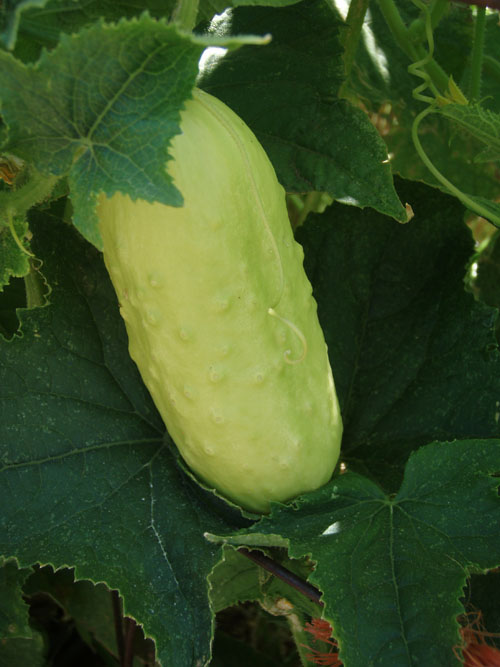
So how many days to harvest? Some vegetables such as summer squash, cucumbers, lettuce, etc don’t take many days to harvest but some vegetables need a longer growing season such as winter squash, watermelon, and tomatoes so buy varieties that won’t go into October to ripen. Let’s take tomatoes for an example. If we choose a tomato seed that says 72 days, we’ll probably get tomatoes but if we choose one that says 95 days to harvest, the odds are we won’t get any ripe ones before we get that first frost in fall. In Santa Fe, we should be looking to grow varieties that ripen in 60-80 days. Tomatoes come in early, mid and late season varieties so keep that in mind. Early season goes from 52-60 days, midseason goes from 60-75 days and late season goes from around 80-100 days. You certainly can try some late season varieties (I do) but pick more in the early-mid season range especially if you are only planting a few. Also with tomatoes that ’80 days to harvest or 80 days’ means from transplanting plants outdoors not planting seeds outside. I’ve had people come up to me and complain they only have green tomatoes in October and when I ask what variety, it usually is one of the longer growing ones so pay attention to that day information in the catalogs because you can usually find some varieties with shorter days till harvest in every variety out there.
Learn from my mistakes when starting tomatoes!
UGH! I made 2 mistakes with my newly transplanted tomatoes last week. So I want to share the mistakes and how I luckily remedied them.
MISTAKE #1- After I watered the tomatoes from the bottom tray where they sit in, (which is a good thing), I forgot to drain the water from the pan all day and all night (too much standing water can suffocate the plants)
MISTAKE #2- Secondly I forgot to cover them with the reflective insulation at night to keep them warm while the house cools down. So not only did they sit in the water all day and all night but they got cold as well. In the morning they were slightly wilted and turned a little purple (turning purple means they can’t access the phosphorus from the cold soil.) Last year I had this problem with the tomatoes turning purple, being stunted and being too cold and have really paid attention this year except this one time. I didn’t get a picture of them purple..

rock phosphate powder
So I drained the water away and read if tomatoes turn purple that we should water some rock phosphate in (which is a good organic source of phosphorus) and put them under the lights to get warm. This happened a week ago and they have snapped out of it and look good, I lucked out! So now I have given all the baby tomatoes some rock phosphate and they are doing really well. I think I’m going to need to transplant them again before I put them in the ground.

tomato plants after the rock phosphate
Here they are now after the rock phosphate- they have really grown since planting them on March 1. I’m hoping weather permitting, I will sneak them in the ground by April 15th, which is a month before the last frost date like last year. This really gives them a head start on the season, especially for those 80+ days tomato plants.
Another tip to not have those skinny, thin stems on your baby plants is to lightly brush them with your hand everyday and it will stimulate them to make stockier stems.
cool season vegetables planted
This week I finally planted one of my raised beds up by the house. But first I prepped the soil by digging in 3 inches of composted horse manure-then I planted spinach, snow peas, cauliflower, lettuce, arugula, lettuce and mesclun seeds. Then I put the existing drip system in place that I will use after it stops freezing at night. Afterwards I covered the bed with medium weight row cover. For now, I hand water right through the row cover which is nice as it doesn’t disturb the seeds and gives protection from the cold at night and the rabbits when the seeds sprout. I’ll take pictures as soon as they come up.
Just transplanted tomatoes
Last year was my first try at growing tomatoes from seeds and I really struggled with them. They were small, stunted and turned purple. So I have done some things different this year. First I didn’t start them so early. I waited until the first week of March to plant them instead of Feburary. Second, I put the lights within 2″ of the plants at all times. Third I put up some reflective insulation which looks like silver bubble wrap all around the lightbox to keep the heat in during the day and for reflection. Fourth, I put some sheets of the insulation on top of the light box at night to keep more heat in. Fifth, I put aluminum foil on the base of the light box where the tomatoes sit on. Both the reflective insulation and the foil really make the light bounce around and give the plants more light. Sixth, the tomatoes are on a timer so the lights go off at 10:30 pm and back on at 6:30 am so they get 16 hours of light and 8 hrs of darkness. I learned in my MG class that plants need darkness to help with photosynthesis. So last year’s tomatoes turned purple as they got cold and couldn’t absorb phosphorus. But not this year. I transplanted about a week ago my first batch of tomato seedlings out of their small cell into 3″ pots. These are some pics of the first batch.

 So far they are doing well. Today I transplanted the second batch that was ready. I read somewhere that you should transplant tomatoes when their first true set of leaves come out (the very first baby leaves when it germinates are called cotyledon leaves but these are not the first true leaves-the next set is) but I waited until the second set of true leaves came out and I think they’ll do better.

I buried the stems up to the cotyledon leaves and gave them some Thrive to help with the transplanting. Look how much they have grown already!
When should we start seeds?
HELPFUL TIME FRAMES FOR STARTING VEGGIE SEEDS
I found this nifty time frame chart about when to start some of our seeds indoors. Not all are listed but as I find more I’ll add it to this chart. Our last frost date here in Santa Fe (zone 5) is May 15 but you can adjust this to your time zone as it is listed as to how many weeks to start seeds ahead of your last frost date.
Please note-Anything you actually put out in the garden early before your last frost date, must have some kind of protection.
TOMATOES-6-8 weeks before last frost (sometimes even up to 10 weeks with proper lighting)
PEPPERS-8-12 weeks before last frost. Big deal around these parts of the southwest! I find they take forever to start!
EGGPLANTS-6-8 weeks before last frost. I find these take a long time to start also.
LETTUCE-5-6 weeks before last frost if you want to start indoors. (I also like to plant lettuce, spinach and different greens, carrot and beet seeds directly in the soil right after St. Patrick’s Day around here as they can handle a little frost but I still cover them with row cover at night)
SPINACH-5-6 weeks before last frost or plant directly outdoors (around St. Patrick’s Day)
GREENS (broccoli, chard, kale, cabbage,etc)-6-8 weeks before last frost (or plant after St. Patrick’s Day)
GIANT PUMPKINS (or any pumpkin)-2-4 weeks before last frost (but you must protect them if you put them out early) or just wait as they grow fast
MELONS-2-4 weeks before last frost or just wait as they grow fast
CUCUMBERS-2 -3 weeks before last frost or just wait as they grow fast
BEANS-2 -3weeks before last frost or just wait as they grow fast
SUMMER SQUASH-Just plant after last frost date directly in garden
WINTER SQUASH-Just plant after last frost date directly in garden
Best reason for starting your own seeds
As you can see below most of my first sowing of tomatoes, peppers, and eggplants are up and growing. Still, they are only 2-3″ tall so far. Some of them have their first true leaves coming out.
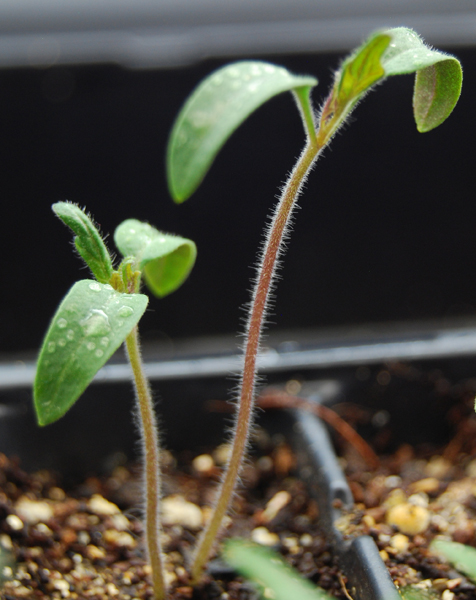
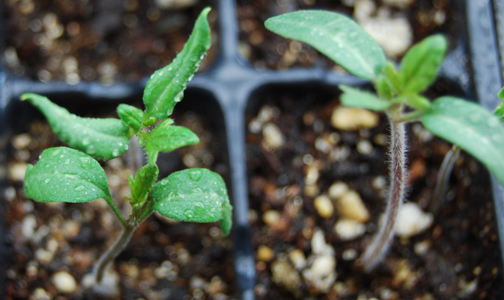
The best reason for starting my own seeds is that I get to pick out which varieties I want to try and the nurseries don’t usually have all of the ones I want. I try to grow mostly gourmet heirloom varieties that I will sell in our local farmer’s market if I get accepted. Last year I got into our Farmer’s Market very late in the season as I had a plethora of tomatoes. I call myself ‘The Tomato Lady’-Heirloom Tomatoes & Exotic Veggies For the Discriminating Cook which was a big success. I just applied to the Farmer’s Market for the summer again but this time from the beginning of the season. Growers are picked by a jury as it has gotten soo popular. I hope I get in. Besides my tomatoes, I am growing other wonderful veggies. And of course, giant pumpkin season is just around the corner too. I won’t start those seeds inside until sometime mid April.
Baby tomatoes are just up!
Here are the tomatoes seedlings just up!

I had trouble with the tomatoes being too cold last year at night so I put some insulation around the lightbox this year and last night with the natural flourescent lights the temperature stayed at 72 degrees. Here is a pic of the light box with insulation. The pic shows the seedlings with the plastic cover off but I will leave it on until most of them germinate..

Picture of seedlings and insulation around the light box.
Growers lightbox tips for starting seedlings
Hey- I did I mention that the site where I did my plans for my garden this year is also a good source of other info on growing veggies. I just found a great article which you may want to check out which addresses pretty much how I use my “lightbox” to get my seedlings started that I just planted on Mar.1. I use a lightbox instead of a greenhouse or hoophouse. Here is the link for the article at www.growveg.com. I made my own lightbox as seen in my previous entry but of course you can buy one at considerably higher cost. Your choice.
TIPS FOR STARTING SEEDS UNDER A LIGHTBOX
I’m waiting for my seeds to germinate. They are on a heat mat to help with germination and I cover them with a clear top which keeps the moisture in. After the seedlings germinate, I will move the lights down within 2″ of the baby seedlings and take them off the heat mat and take off the cover so they don’t stay too moist as that is a condition for a fungal disease called damping-off which kills seedlings. To help prevent this besides taking off the clear cover, I spray the little seedlings every few days with Chamoille tea which I just make up a pot of it (cool it) and put it in a little hand held sprayer and spray the seedlings AND soil every few days-it really works-no dead seedlings!
 giantveggiegardener