Tips for Ripening Green Tomatoes

Get Ready for cold weather. We’ve been waiting all season for our tomatoes to ripen. What do we do when you know that a hard frost is going to hit and you still have lots of green ones on the vine? After ripening green tomatoes inside, I’ve had tomatoes into November and then I’m done. I won’t eat another tomato till the following season-July or August. A long wait but consider me a tomato snob as the store-bought tomatoes are never very good.

Tips on ripening tomatoes inside:
-Become a weather bug-we should check the weather for when the first freeze will arrive which historically comes mid-October here in Santa Fe.

This week Sunday through Monday is forecasted to get pretty cold at night–down to 34°F. This is not freezing (32°) but I will check the weather again on Saturday to see if it changes and if they predict a freeze or not. If it stays above 32°F, I will leave them as quite often we can squeeze out a few more weeks of decent weather for them.

-Pick em before the freeze-Pick all decent size green tomatoes and ripen inside. Leave the little ones. Ripening green tomatoes will never taste as good as sun-ripened tomatoes but they are still much better than store bought tomatoes. If you pick after the freeze, they will be ruined.

-Sort the tomatoes-Sort from rock hard green to almost ripe and put them in grocery paper bags and fold over the top. That way you don’t have to go through each bag every day and pull out the ones that are ripening sooner.
 Put them 2 layers deep.

-Use a slice of apple-In the bags with the green ones, I will put a slice of apple in the bag to help encourage ripening. An apple releases ethylene gas (the tomatoes produce this as well) which helps the ripening process. That is why you fold over the bag to help trap the gas that both the tomatoes and apple are releasing.

-Check bags every few days-When they start to change color, I pull those out and put them in other bags where they are all similar in the ripening stage.


-Leave them stem side up-they won’t rot as quickly.

-Almost ripe tomatoes-When your tomatoes are almost ripe, to increase flavor, pull them from the bags and place in a warm spot in your house a couple of days before you want to use them.


-Storage-Be sure to store them in a room that is at least 55 degrees. I made the mistake once and they didn’t have much flavor and many didn’t ripen at all. If they won’t ripen or aren’t flavorful they were probably stored in too cool a place or perhaps they were too small to begin with.

-Green tomatoes-Lastly you can always pickle green tomatoes or cook with them!

Better gobble up all the ripe tomatoes that you can! Soon the season will be over and we will be longing for flavorful ripe tomatoes again!


Fall Vegetable Gardening starts in August


It’s hard to believe it’s already August. We’ve had plenty of hot days and hail storms to contend with this summer here in Santa Fe.  With August, temperatures should start to drop and daylight hours are getting shorter. This means August is a great time to plant a fall garden with some cool season crops, just like the ones we planted in Spring.

We are just starting to harvest our warm season crops like tomatoes and now we should think about starting our fall gardens. No rest for the wicked! Now some people are too burnt out to start more plants but some of the best crops do well in fall with cooler temperatures.

The day length is about 2 minutes shorter every day in the garden and fall crops may take a little longer to mature so get them in soon. This month you can still plant by SEED, many cool season crops like carrots and beets (plant these by seed right now as they take a little longer) Other cool season crops like lettuce, mesclun, chard, spinach, scallions, radishes, peas, arugula, bok choys, mustards, and other Asian greens can be planted throughout August by SEED. When planting by seeds, look for those varieties that have shorter ‘days to harvest’ on the packet. Pick something that is around 60 days or less to harvest so you’ll get a chance to eat some of the crops you’ll try before a freeze sets in, usually in October.

Other crops that do well, like broccoli and cauliflower and some cabbage should be started with transplants that you can get at a nursery. And if you procrastinate, you can still plant by buying all of the crops listed above as transplants up into early-September and enjoy some great crops. I’ve already planted peas (again-right on top of spring’s crop), and spinach and lettuces by seed. I already have enough bok choy, chards and beets growing from spring to take me into fall for those crops.

Here is a FALL PLANTING SCHEDULE for you to print for Santa Feans in Zone 6a:

FALL VEGETABLE PLANTING SCHEDULE

Hang in there!

My tomato plants are covered with row cover now but soon they will come off.

Hang in there! According to the weather apps, we are almost into the monsoon season here in Santa Fe. Historically it starts around the second week of July-let’s hope so. I for one am looking forward to it-we need the rain plus I would like to see my plants.

So be patient if you have your tomato plants covered with row cover. Some of you may be tempted to take them off early but we’ve waited this long and we are almost there.

The row cover is providing protection for your plants by acting as a physical barrier between your plants and the beet leafhopper that carries a deadly virus called Curly Top Virus (CTV) if it bites your tomato plants. Some of you haven’t done this and you may be lucky or not. You will know in about 3 weeks. But the good news is the bug either leaves or gets suppressed when the monsoons come in earnest and only then do I take off the row cover. I wait till it’s gone. Growing tomatoes should not be this hard, but it is here in the southwest. The northeast coast has their Late Blight (which is worse) and we have CTV.

I’ll post when I take the row cover off the plants and we can actually enjoy watching them grow and produce tomatoes!

Root Trainers-unique propagating trays

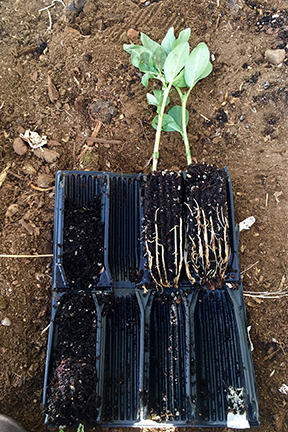
Fava beans in Root Trainer

I started using ‘Deep Root trainers’ last year for my fava beans and other bean crops that need deep cells or for plants that don’t want the roots disturbed when planting. The cool thing about them is that the cells are 5 inches deep and shaped like a clamshell, with two sides that open up like a book.  There are 8 sections total that fit snugly in a tray to hold them upright that comes with the kit. They are great as they have grooves that keep the roots growing straight instead of circling in the cell and strangling the plant. They also air prune when they hit the bottom of the cell.  No need to transplant into another pot, just plant them out in the garden. You just put seed starting soil in each cell, pat it down and put the seeds in. The only drawback is the plastic clamshells are very fragile and must be handled super carefully to keep from cracking but knowing that, I am careful and have them for three years so far. You can get them through Amazon. Get the 5″ deep ones, NOT the 3″ ones.

Pictured above are fava beans in their cells, 6 are already planted in the ground. Just carefully open the clamshell and slide them out into your hole in the ground with no root disturbance for those sensitive plants that hate to be transplanted.

Craupadine beets started in Root Trainer

I also used root trainers with a hard to germinate french variety of beet called ‘Craupadine’. It is probably the oldest beet in existence. I have not had much luck with germination when planting these seeds directly in the ground so I decided to try them in the rootrrainers this year and have much better germination although still spotty. I thought being a root vegetable, they probably would not like to have that main root disturbed. I think they will do well. I won’t wait till the plants are too big.  I am planting them outside after the first true leaves (cotyledon leaves) come out. So far 27 have germinated which is more than I have ever grown at one time.  They are ready for transplant above. I am so excited as these are the sweetest beets I’ve ever eaten. The french farmer markets cook them over a smokey fire in foil and serve them still warm.

Dwarf Tomatoes started!

Dwarf tomatoes in foreground and on right side in background. The two taller ones in background are Lucky Cross tomatoes which are regular size indeterminate tomatoes


Since I’m involved in growing dwarf tomatoes for Craig Lehouiller in his project, I decided to grow some of his varieties of open pollinated dwarf tomatoes that have been released to the public. I got the seeds from Victory Seeds. I’ve never grown dwarf tomatoes before. All the dwarf tomatoes will get between 3-4 feet tall and are stockier than regular tomato plants. They are indeterminate variety so the they will grow like all other indeterminate tomatoes only slower throughout the season and will be shorter. Indeterminate tomatoes keep producing fruit till it freezes. The actual tomatoes on dwarf tomatoes aren’t necessarily smaller just because the plants are. The days to harvest can go from 65-80 days depending on the dwarf variety. I am trying 10 released dwarfs plus 6 more unreleased in trials for Craig. So I am heavily invested in the dwarfs this year but I am growing some of my all-time favorites as well.

I noticed right away that the dwarf tomatoes pictured above are shorter and stockier even just after germination. I start all my tomatoes in shallow seed propagation trays on heat mats with a thermostat and under lights inside the house. Because of their shallowness, the soil heats up faster so germination is faster but you must water them 2x a day.  The two taller tomato plants in the background on the left side are regular indeterminate tomatoes called Lucky Cross, which is one of my favorites but notice the height difference with the dwarfs being much shorter and stockier. For earlier post on dwarf tomatoes, go here.

Cold nights are here-protect you plants!

Atomic Red and Cosmic Purple carrots harvested last week


Here it is Friday, November 17 2017 and I was just remarking that except for the one cold night that killed off all the tomatoes in September, how warm it has been. If it wasn’t for that one freezing night, we’d still be harvesting tomatoes!

Well it changes tonight getting well below freezing and will continue to be cold with temperatures in the mid-20’s at night and low 50’s in the days for about the next 5-6 days.

All the warm season veggies have been done for a month but I still have a few cool season crops out in the garden like Lacinato kale, Voiletta bok choy, Florence bulb fennel, Atomic Red and Cosmic Purple carrots, Detroit Red beets and Argentata chard. Since I want to keep them going as long as possible, I will put winter weight row cover (.9-1.0+ mil weight) over the plants to protect them until the temperatures get above freezing at nights. Also I have lettuces and spinaches growing in the unheated greenhouse and will cover them as well. Of course an option is finish harvesting everything and call it a season!

Save

Save

Save

Save

Why are my tomato plants dropping their blossoms?

When the temperature outside is 92°F or hotter, the tomatoes will drop their flowers (blossoms) and will not set any fruit. This is called Tomato Blossom Drop and is normal for a tomato to do. Basically they self-abort their blossoms. Why? Because they want to survive. They will continue to produce new blossoms and once the temperatures is BELOW 92°F, they will start to set fruit from the blossoms.

What can we do to prevent blossom drop? Nothing. We really are at the hands of mother nature. The funny thing is once they do pollinate (tomatoes are self-pollinating and wind-pollinated and don’t need pollinators) and they produce baby fruit, they do fine when it’s hot-it’s just while they are trying to set fruit that the temperature is critical. There is also a low temperature where they will drop the blossoms, but we don’t have to worry about that here.

Last year we had 3 months of intense heat with everyday being 92°F or warmer and the blossom just couldn’t set fruit. Finally when the monsoons came mid-August (which is one month later than normal), and it cooled down, they were able to set their fruit. Luckily for us we had a long fall and were able to harvest before we got a freeze. So don’t despair, they will set fruit from their blossoms when the time is right. Hopefully the monsoons will come in July. So for now, just surrender and chill out (if you can).

Row cover protects tomato plants and more

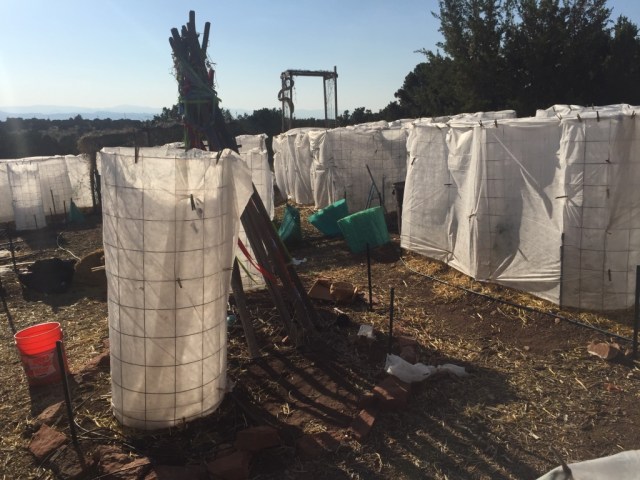
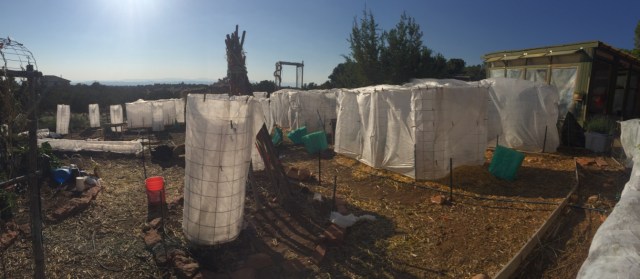
Here is what my garden looks like right now. Just about everything is covered with a material called row cover (also called Remay). My tomato cages are covered from top to bottom with it. This acts as a physical barrier to keep a bug called the beet leafhopper from biting them and transferring a disease called Curly Top Virus (CTV). I’ll take it off my tomatoes when the monsoons arrive.  The bug leaves when the monsoons come.

I also put row cover over my other veggie transplants while they adjust to the heat and wind when I transplant them into the garden. And I put it over other veggies that I plant by seeds like beans, cucumber and corn. I just plant the seeds in the ground and put a sheet of row cover over them tacking it down with rocks so the wind doesn’t blow it away-but don’t make it too tight.  Give the plants some room to grow under it. When the seeds germinate, row cover keeps the birds from eating the sprouts and I don’t have to replant seeds as often. Plus you can water right through it. Row cover comes in 3 weights. A heavy weight (1.0) for fall-winter, a mid-weight for summer (.5) and a light weight (.3) which does not work well here because of the winds-it rips easily. I use a mid-weight in the summer in my garden.

So basically I use row cover in the beginning of the growing season on almost everything. You can get it at most nurseries.  And you won’t have to keep it on all summer. Once your corn and beans grow up about 4 inches, and your transplants adjust to outdoor growing and the bugs leave, you can take it off and enjoy watching your garden grow. Another plus is it gives some protection against hail. Great stuff. I highly recommend it to be a more successful gardener.

Tomatoes started!

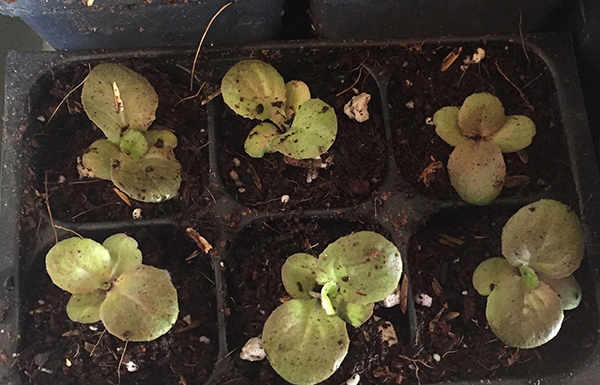
Tomato seeds planted March 24. Germinated 4 days later. Picture taken April 2 at 9 days old.

It has begun!

I’m going back to the Santa Fe Farmers Market this summer with my tomatoes! I have a lot of new unusual tomatoes started as well as my stable of wonderful favorites for the public.

Pictured above, the baby tomato seeds are inside the house under lights and keep warm on a germination heat mat set at 85°F. They will be transplanted this week into 2 inch pots and later this month they will be transplanted again into 4 inch pots and then finally transplanted outside in the garden in May. Plus I will take some of the plants to the Farmers Market at end of April/May to sell.

Cool season crops have begun

transplants-2-weeks-old

When I was looking through what I plant each year, I realized I actually grow many varieties of cools season crops (like greens/lettuce). I started some seeds of cool season crops inside under lights but no heat on Jan 17!  I never put the heat mats on for cool season crop seeds, only for warm season crops and it is way too early for them just yet.

I started:
Asian greens: bok choy, pak choy, Wasabi arugula

Lettuces: 4 Season Lettuce butterhead, Yugoslavian Red butterhead, and Santoro butterhead lettuce. Can you tell I like butterheads?!

Leeks: Solaise, King Richard and American Flag

Onions: Candy (it is an intermediate or neutral variety) which is they type of onion we have to grow here.

Spinach: Carmel-Just planted the seeds today. Still have some spinach plants that have overwinter nicely outside in a raised bed with only winter weight row cover on it. By planting a crop of spinach last fall, I’m hoping I get a bumper crop of spinach in March! The variety of spinach I like the most is called Carmel which overwinter last year and looks to do the same this year. You can get seeds from Johnny’s or plants from Agua Fria Nursery.

4-season-lettuce

four season lettuce is looking good

Today I transplanted up lettuces and Asian greens to pony pots from seed trays. The plants are looking good but need to grow more before I put them out in my green house or cold frame. You can plant outside in sunny raised beds in March but all-greenhouse, cold frames or just plain old beds will need winter weight row cover on the little starts to protect them from our cold nights.  I’m hoping to put them out by beginning of March. The varieties I grow at this time of year are very cold hardy. I’m trying to get a head start as our cool season crop season is pretty short here before it gets too hot and everything bolts. And there is nothing better than spring spinach or lettuce!

More daylight hours/plants start to grow again

Growing Spinach and Lettuce in a Cold Frame

The Persephone period is over. Elliot Coleman in his Winter Harvest Handbook, coined this name. When daylight hours are less than 10 hours per day, the plants that are in the ground slow down or stop growing altogether during this time. This means that the spinach or mache you planted last fall had slowed down and by Thanksgiving stopped growing. The Persephone period can be longer or shorter depending on what latitude you live in. For us in Santa Fe, it is from Thanksgiving to Jan 14th.  In states that are further north, they are still in the Persephone period. As the daylight hours continue to get longer and longer, you should notice the plants starting to grow again. I grew ‘Carmel’ spinach last fall in one of my beds up by my house and it is still alive, covered with winter weight row cover. I did this the year before and it survived and gave me beautiful spinach by March that I was able to harvest 4 times before it became too warm. If you didn’t grow anything to overwinter, you can now start spinach, Asian greens like ‘Tatsoi‘ and ‘Baby Bok Choy’, mache and some very cold hardy lettuces like ‘Winter Wunder’ and ‘Marshall Red Romaine’ once the soil warms to 40•F+. If you keep them covered with winter weight row cover to protect them from our cold nights, you will be able harvest them in early spring barring any devastating deep freezes. If you can’t wait and want to speed up the process, start the seeds under lights inside now and transplant them next month in February. To find other extra cold hardy crops to grow, go here.

Garden Journal

journalIt might be good at the end of the year to review what happened in your garden and/or hopefully you took some notes last season. You can refer back to it instead of relying on your memory on what worked and didn’t work for future years. If you don’t like writing it down than use your computer. I still keep a notebook on when I start seeds, put them in ground, etc but I’m using the computer and my phone more and more these days for my garden notes. I like to go around throughout the season and especially at the end of the season before everything is torn out and make notes on my phone while things are still fresh, then I go back and enter them in on my computer where the pieces of the puzzle fall in place and are sometimes are very revealing as to what happened that year.

So this coming season if you haven’t been keeping a journal, write down important things like did you amend your soil, when you first planted seeds, when the first frost-free day actually occurred and did a late freeze sneak in, when you transplanted seedlings outside, did you protect them,  how hot was the weather and for how long, how cold were the nights, how much rain did we get and did it do any damage (hail), which pests and disease were particularly bad, which plants did well, were they prolific, how long you could harvest certain crops, how long was the season and when the first frost got us.

Sounds like a lot of work? Not really. It’s just recording your OBSERVATIONS through the season and by doing it, you will become a better gardener. It helped me realize a few years back that one variety of tomato got Early Blight for 3 years in a row while the other tomato plants did not (it seemed susceptible to EB- I don’t grow that variety anymore) and that this past season, I could have started my seeds indoors much earlier than I did.

Make a seed box

seed-box2

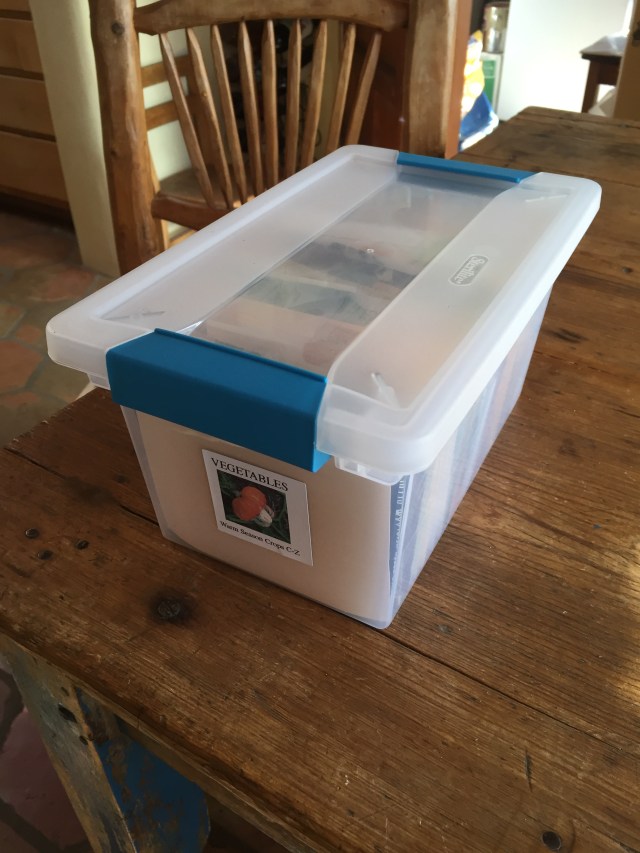
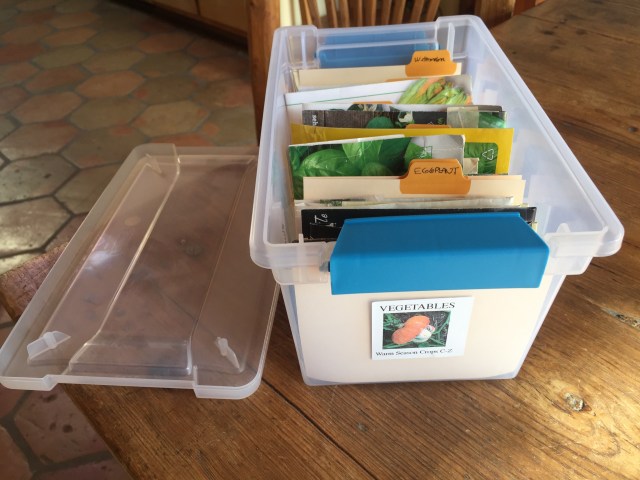
I have my saved seeds everywhere. I had them in cardboard boxes which have seen better days. Some got wet, some got chewed by mice where I keep them in a shed. I needed to get better organized and wanted better protection from the elements and mice so I found some boxes with lids with clasps.

seed-box1

After that, I got some cardboard dividers for the different varieties of vegetable seeds. I had to trim them down to fit in the box and I had to fold over some of the seed packages so they would fit inside. I also made some labels for each box like Cold Season varieties, Warm Season varieties and many other categories. So far I have 6 boxes done. Nice project for winter.

Chickens enjoy some lettuce

lettuce-bowl-w-chickens

In August a made a lettuce/mesclun bowl. I should have thinned it out so I could have cut and come again the greens but didn’t. If I had thinned it out, I would have gotten some great greens. So I gave the lettuce bowl to the chickens this morning. They gobbled it up! Glad to share.

Extending the Season-Making a Low Tunnel

low-tunnel-2016

These broccoli transplants were put in on Aug 24, 2106

I taught a class in late August on Planting for a Fall Harvest where I showed the students you don’t have to have a Greenhouse to extend the season. You can also have a cold frame or even simpler is what I call a low tunnel. Now with the cold nights, you definitely need something over your new fall transplants.

low-tunnel-before-row-cover

Here is the frame of the low tunnel before row cover-just fencing material curled into a u-shape ready for plants underneath it

I like to make my low tunnels out of 2″ x 4″ fencing or even concrete reinforcement wire.  I just open up the fence roll, cut off enough so it will be curved above my plants and turn it upside down on the soil.

img_3998_1024

row cover over the low tunnel protects crops at night

Cover it with winter weight row cover (1.0 ml).  I put rocks on mine to keep it from blowing away. Now you have a secure low tunnel that will protect your plants during the shoulder season that is closing in on us quickly. What is a shoulder season? It is the time of year when the temperatures can drop quickly at night near freezing and then heat up in the day. The temperature shifts can swing wildly during the shoulder season. We have a shoulder season in spring and fall. By making a low tunnel, you can extend the season and grow vegetables like spinach, arugula, kale, lettuce, bok choy, mustard, mesclun, radicchio and other cool season crops much later. Fall is a great time to plant cool season crops and it’s not too late if you get transplants now. It might be too late if you start from seed unless it’s lettuce. Try to pick varieties that are cold tolerant.