Time Lapse Growing Giant Pumpkin and High Speed Camera Explosion

This was so much fun I just had to share it.  I found it on you tube. It came from www.billsbigpumpkins.com . It is also on my video page and currently on my sidebar as my featured video so others can find it after this post is buried.

giant tomatoes in garden

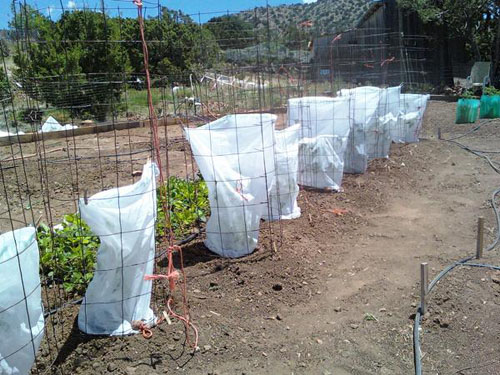
giant tomatoes in tomato sacks

I finally planted my giant tomatoes that I’ve been growing in the house since March. Looking good-all are over 2 foot tall.  I have five ‘Big Zacs’ and 6 ‘Nick Harps’. I put on some row cover tomato sacks (like potato sacks) that I sewed up last year to protect them from the leafhopper early in the season. The leafhopper carries bacterial wilt disease but if you protect your tomatoes when they are young, they can quite often resist the disease. The young tomato plants succumb easily to bacterial wilt. The sacks also help them from getting sunburned when you first put them out.

giant pumpkins ready to go

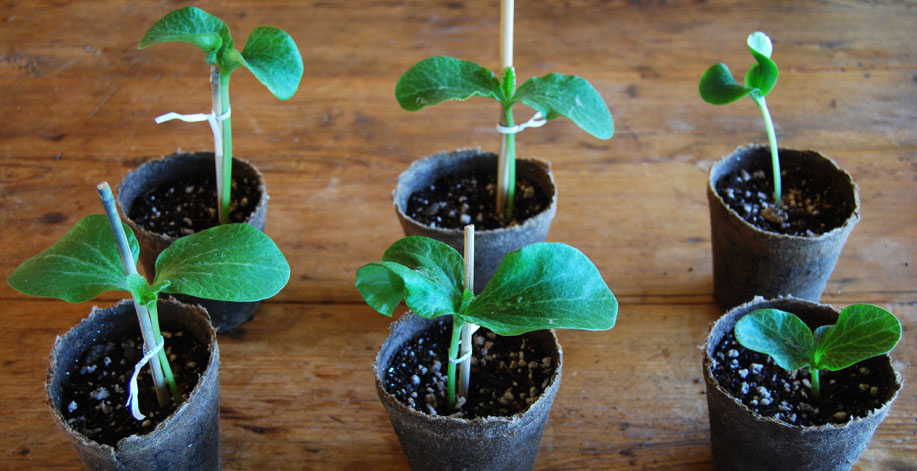
baby giant pumpkin leaves

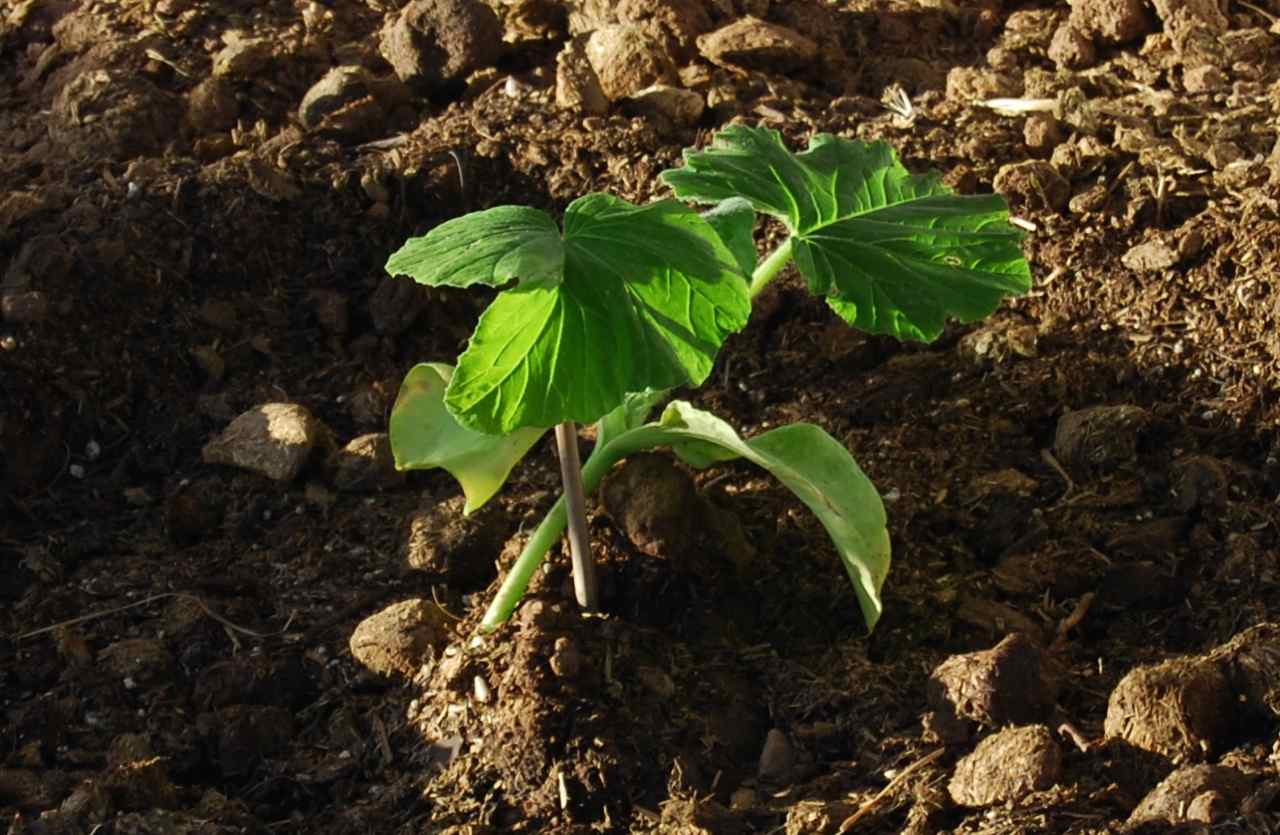
Here is a picture of one of my baby giant pumpkins. The first leaves to come out on any plant are called cotyledons. These are the roundish ones in the picture growing on the left and right side of the plant. Notice how big they are! Most cotyledons are about the size of your fingernail. These are 3 inches across. The first true leaf is also out and is the biggest one in the picture as well as the beginning of the second one at the top of the picture. The vine will grow in the direction of the second leaf. This is good info to know as it will help you place the pumpkin in the direction you want it to grow (instead of into a fence). Notice the shape of them-they are the shape of all the rest of the leaves to come only smaller. When the leaves grow up they will be huge- 12-18 inches across! When the giant pumpkin have their first 2 true leaves, they are ready to go into the ground. Mine are ready but I’m not.

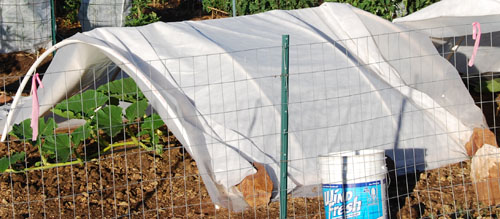
low tunnel 09

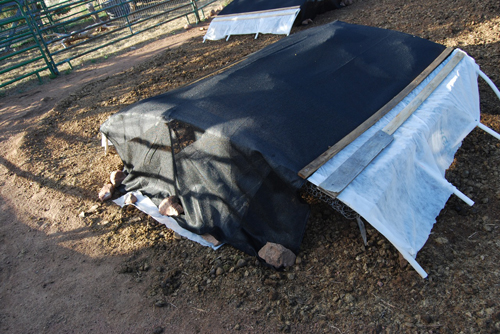
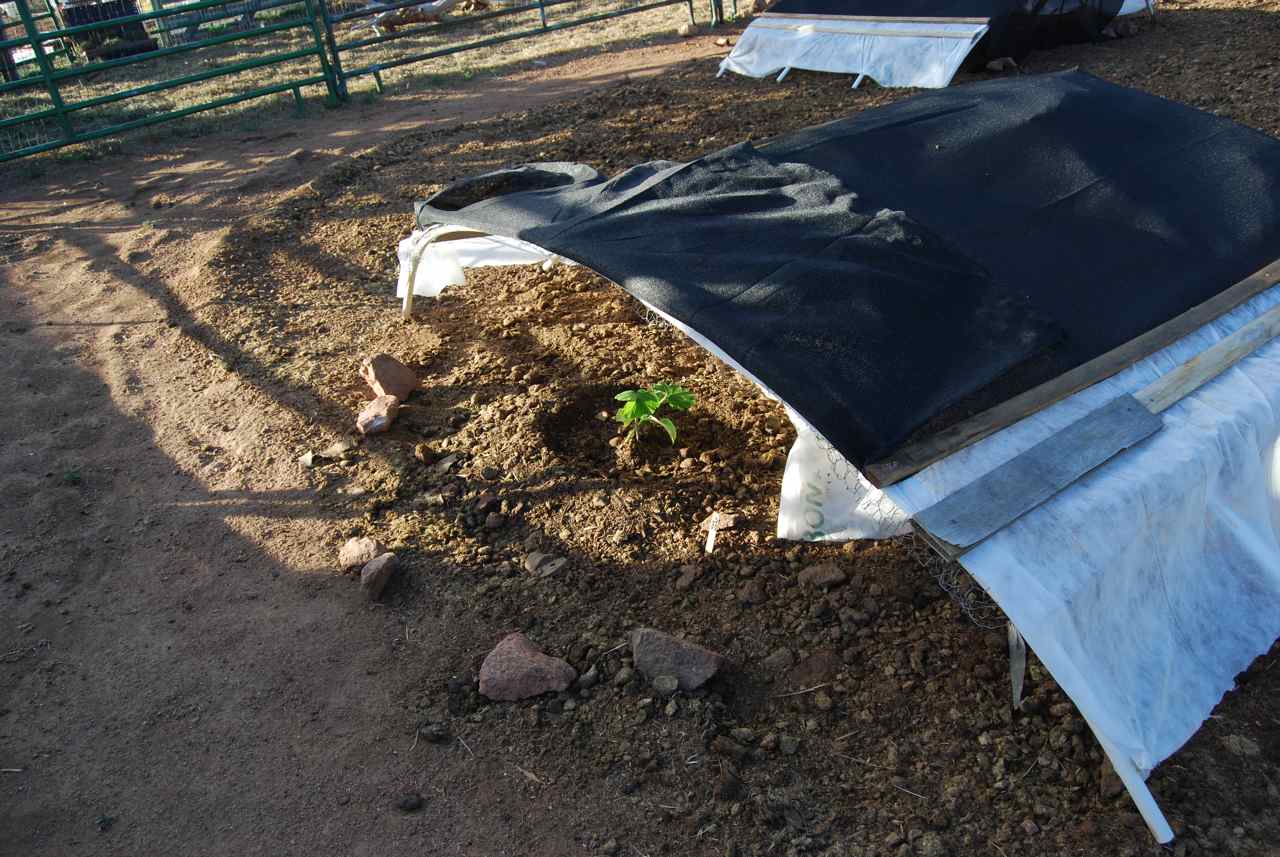
I have to partially rebuild my low tunnels that I will put the baby pumpkins in. A low tunnel is like a small hoop house only much shorter. They are meant as a temporary measure to protect the plants.  I will cut them in half as I don’t think I need them to be so big this year. As soon as that happens, those puppies are going in the ground.

Giant Pumpkins ready for garden!

Here are the pumpkins and one giant marrow (kinda like a giant zucchini-they grow them in Europe). I’m planting them by tues or wed. I’m hardening them off with a little sun gradually the next few days) now that the nights have warmed up into the mid-40’s.  I gave them a drink of Superthrive and seaweed fertilizer to help them with stress through the transition after I brought them in today. Now they are back in the house. Getting a late start this year-want to see if it makes any difference as it was so cold in May (many 27 degree nights, 50’s in day) and I thought they would just sit in the cold soil there anyways. Hope they catch up!

5 giant pumpkins and one giant marrow

From left- front row: 352 Cabossel 09, 949.5 N.Harp 09, 817.9 Schieder 09,  form left-Back row: 1166 Mohr 09, 895 Grande 08, 73.6 Wursten 09 (giant marrow)

warm season veggies-here we come!

May 15th is fast approaching and is the average last frost date for Santa Fe and the time for putting your warm season vegetables in the ground. I sneaked some of mine in earlier but that is still a gamble in case we get one of those late frosts (we did) that plus the spring winds have been horrible this year. Never the less, I do grow some late season tomatoes that take 80-90 days to get fruit so I take the gamble on them and stick those transplants in early with the help of wall of waters and row cover. And of course my giant pumpkins take 5-6 months to grow so they need all the time they can get in the ground before that first fall frost hits even though I start them inside!  So that takes care of the ones I sneak in early but what about the main vegetables crops?

For all summer squash, winter squash, cucumbers, beans, corn, I plant seeds directly in the ground (following directions on the package) as they will germinate quickly in the warm soil and will grow very quickly barring the birds from eating the seedlings. To prevent that, I put some LIGHTWEIGHT row cover (you can get it at the nurseries) over them until they are over the seedling stage and the birds aren’t interested anymore. It comes in big sheets but you can cut it up for smaller areas or it can cover the whole raised bed. Tack it down with some rocks so the wind doesn’t carry it away! Lightweight row cover is from -.01 to .03 in thickness. The handy thing is you can water right through it and it keeps bugs out.

For the majority of my tomatoes and all peppers and eggplants, I will transplant my plants that I started earlier inside or buy plants from the nurseries. When I plant them put them in a hole where I add some compost and maybe Yum-yum mix to get them going and create a well around them so the water is collected instead of running off.

So let’s talk tomatoes for a minute. Why? Well what is a vegetable garden without those homegrown, sweet tomatoes? Let’s face it, it is the main reason most of us have a vegetable garden. You want to put in tomatoes that are decent size plants. The reason being that they take a long time to grow to produce fruit and our season  here is Santa Fe is so short that we need all the help we can get. Plus they take a long time to get them to a decent size which is very important to get that head start. So I started some in March and I also buy some. So as a rule of thumb, if I’m growing say an Oregon Spring tomato that takes 65 days to produce fruit, I might buy them in 4 inch pots but if I’m growing a Brandywine tomato that takes 80 days I will definitely spend the money and buy the gallon size. When deciding which tomatoes you want to grow, look at the amount of days it will take to get some fruit. When the tag or description says 80 days, that means it will take 80 days to become a mature plant that produces blossoms, and then it takes another 70 -80 days to produce mature fruit depending on pollination date. So let’s say a Brandywine plant is planted on May 15th outside, blossoms sometime in June-July, you should get some tomatoes 70-80 days later which puts us sometime in September!  Why try to grow a tomato that takes that long? Flavor. The longer it takes, the better the flavor! They have more time to develop those sugars needed for great flavor. If I had a normal size garden (which I don’t but most of you do), I might try one or two of those longer varieties and I would try a few 65 day varieties and would have the bulk of my tomato varieties in the 70-80 day range. That way I hopefully will get some tomatoes early, mid and late season. That’s the thinking anyways!

So now you have everything up and growing what else can you do to help yourself get the best veggies? For one, I became a believer of drip systems a few years back after being a hand waterer for years. I put a simple drip system in and saw my yield at least double and it saves on water because it puts the water in the root zone. Another good reason for doing drip is that if you water from overhead, you could be encouraging some diseases from splashing the soil on them (there are soil borne diseases) or powdery mildew later in the season.

Next I would put  a couple of inches thick of mulch in my wells (not in May when the soil is colder and your plants are trying to get warm) but by late June when it really heats up around here. Just put it over your drip system. This will help keep your water from evaporating. I like straw (not hay-it produces too many seeds) as it is lightweight and if you turn your soil over in the fall after harvest, it will break down for the next season. When you first put straw down, I do water it  from the top so it won’t blow away and then let the drip work underneath it (so make sure it works before you cover it with straw).

So let’s talk fertilizer. I stay away from chemical fertilizers as they can hurt or kill your beneficial microbes that keep your soil healthy and help your plants grow and stay healthy. So stay away from Miracle Gro and the likes of that. I use more natural fertilizers-both organic fish emulsion and organic seaweed fertilizer together. The reason I use both is the fish emulsion is a general all purpose fertilizer but the seaweed has very little fertilizer but trace elements our veggies need to grow big and healthy. I put them together in a 5 gallon container and use it as a drench in my wells around the plants. Sometimes I also just spray the seaweed on the leaves for a foliar feeding. I fertilize once or twice a season except for giant pumpkins which get fed once a week. Believe it or not, as a giant pumpkin grower, they are the only fertilizers I use.

So what are you waiting for? Get busy and happy gardening!
Wall of Waters for tomatoes

tomatoes in wall of waters-2010

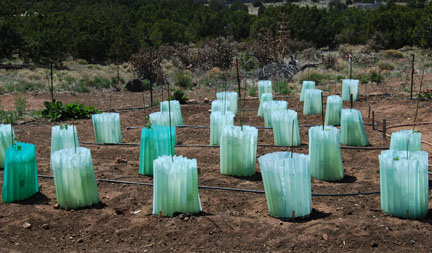
Here are the 35 tomatoes in wall of waters. You can buy them at your local nursery or order them through the internet. They are an invaluable tool for Spring as they act like little greenhouses or cloches to help protect your tender plants from cold nights and the wind.Be sure you fill them up in the morning so they have all day to heat up. Then they will give off the heat at night and keep the plant warm.

To set them up, put a 5 gallon bucket over the tomato (the tomato must fit inside the bucket) then slide the wall of water over the bucket and take a hose and fill up each cell in the wall of waters. When done slide the bucket out and the wall of waters support themselves. If your plant is taller than the wall of water, you can still use it but will need a friend to hold the wall of water as you fill up each cell. Sometimes the wall of water (WOW) can partially collapse under heavy wind. In that case put some bamboo posts inside the edges of WOW to help support it. In a few years, you might get some leaky cells. I take one of my leaky WOW and cut off a good cell and insert it into the leaky cell and fill it up and it works. I only use wall of waters in early spring when it is still cold at night. Be sure to take them off when the plant starts to get crowded inside of the wall of waters, usually in late May or early June.

giant tomato megablossoms

Single blossom on left and double megablossom on right

GIANT TOMATOES-I got my first 2 megablossoms off my Big Zac tomato plants and they are not even in the ground yet. All giant tomato growers are looking for megablossoms. Some varieties tend to produce more than others. Since megablossoms usually come earlier on a plant I will leave these on as I don’t know if I will get more off each plant. A megablossom is at least 2 or more blossoms that fuse together to make one big tomato.  That is why giant tomatoes are so knarley and bumpy. It is kind of like twins, triplets or quadruplets that are all conjoined together. Recognizing these megablossoms is the key to growing giant tomatoes. It doesn’t happen all the time so it is exciting when we get some megablossoms and the potential for a BIG TOMATO.  Since they are made up of many blossoms, oftentimes they abort if they don’t pollinate well.  Most tomatoes are self-pollinating so you don’t have to worry about pollinating them unless you get a megablossom. That is when we should hand pollinate them although I didn’t on these. Using a small soft paintbrush, you can take some pollen off of the stamen part of one blossom and paint it onto the megablossom pistils. Kind of sounds like Luther Burbank doesn’t it?

The top picture has two blossoms-the one on the left is a normal single tomato blossom and the one on the right is a megablossom made up of two flowers. Notice how big it is.

megablossom with three blossoms fused

This second picture  has even more blossoms fusing together. Looks like maybe three blossoms. Starting to look knarley! I’ll see if it aborts or starts to grow into a giant tomato on it’s own as I didn’t hand pollinate them. I will pick off all the normal blossom off of each plant. I might grow 2-4 tomatoes from megablossoms off of one plant. You don’t let all of the normal tomatoes grow so all the energy goes into these potential giant tomatoes. Obviously I am growing these for size and I have other varieties where I let every blossom become a tomato to grow for food.

planted 35 tomatoes today

Yep-went ahead and planted tomatoes with the help of Beto, Mernie, Lava and her friend Mo. Together we planted 35 tomatoes, added amendments, put up wall of waters for every tomato we planted, placed the drip system around each tomato and gave them a drink of seaweed/thrive mix. Hope they make it as it was sooo blasted windy (no pun intended) here today and it is suppose to get cold but not freezing tonight. Many were wind thrashed but we did the best we could. I guess the hardy will survive. Many thanks to all of you good friends! Then I went into the house and planted up to the gallon size all my giant tomatoes that will go in the ground in a couple of weeks. I also planted up the rest of my 4 inch pots into gallon sizes that I will give to friends. Phew, what a power out day…I’m fried.

starting giant pumpkins!!

Today I am planting giant pumpkin seeds. I will put them in 4″peat pots so that I can peel the pots away later without disturbing the roots when I transplant them. They grow really fast once they come up, so I will have to put them in the soil perhaps in 2 weeks from starting the seeds. I will transplant them once the first true leaf comes out. You can tell which way the vine will grow as it will grow in the opposite direction of the firs true leaf. This way I can place it in the soil in the direction I want it to grow. I am growing 4 giant pumpkins this year. They are: 817.9 Schieder 09, 1166 Mohr 09, 949.5 Harp 09, and the 895 Grande 08. They will go in my new pumpkin patch and I am growing another one: 352 Cabossel 09 (that’s me!) for the community pumpkin patch here in Santa Fe that I will plant when I teach a workshop May 15th. To understand what this means is the first number is the weight of the pumpkin the seed is coming from, the name is the grower’s name, and the last number is the year of the seed. So mine was a 352 lb pumpkin, my last name is Cabossel, and it was grown in 2009. That is how we giant pumpkin growers know what seed we are planting. We also look at the parents of the seeds we choose to see who they were as most of the time they come from very good “stock”. You can also just grow generic varieties that you can get from places like Amazon.com which is what I did when I started this hobby before I got serious. I grew a 225 lber from the generic variety which is fine for most people! I will try to break the state record here in NM this year. Have to beat 404 lbs…

transplanted tomatoes again

On  April 4 I transplanted some tomatoes in my 4″ pots up to gallon size. They went  “shocky” as I didn’t have room to keep them under the lights even though I gave them Thrive. So I had to build another lightbox on Tuesday to house them and now they are good again. I guess they got a little cold.  Here is a picture of them in the gallon size now. Notice I put some bamboo supports for the stems that I tied with garbage bag twist ties. That way I can relax the twist ties as the stems get bigger.

April 4-tomatoes transplanted to gallon size-doing well

I still have 36 more tomatoes to transplant by this weekend up to gallon size!  This will be the last transplant before putting them in the soil. With about 75 plants, I will give some away to my friends who grow tomatoes! I also changed my planting soil now for the gallon size. Now it is Sungro 702. See picture here.

Sun Gro Metro Mix 702 growing medium

Here is a pic of the ones I will transplant this weekend. I still have some tomatoes left in 4″ pots that won’t need transplanting before going into the ground as I started them later. Notice in the picture below that I raised up the smaller plants on the right side of the pic by putting them on another upside down container. I do this so the smaller plants are at the  same level of the higher ones so they are the same distance away from the lights. Otherwise they would be further away from the lights and could get spindly. Keep your plants within 2 ” of the lights to keep this from happening.

tomatoes in 4″ pots need transplanting

Learn from my mistakes when starting tomatoes!

UGH!  I made 2 mistakes with my newly transplanted tomatoes last week. So I want to share the mistakes and how I luckily remedied them.
MISTAKE #1- After I watered the tomatoes from the bottom tray where they sit in, (which is a good thing), I forgot to drain the water from the pan all day and all night (too much standing water can suffocate the plants)

MISTAKE #2- Secondly I forgot to cover them with the reflective insulation at night to keep them warm while the house cools down. So not only did they sit in the water all day and all night but they got cold as well. In the morning they were slightly wilted and turned a little purple (turning purple means they can’t access the phosphorus from the cold soil.) Last year I had this problem with the tomatoes turning purple, being stunted and being too cold and have really paid attention this year except this one time. I didn’t get a picture of them purple..

rock phosphate powder

So I drained the water away and read if tomatoes turn purple that we should water some rock phosphate in (which is a good organic source of phosphorus) and put them under the lights to get warm.  This happened a week ago and they have snapped out of it and look good, I lucked out! So now I have given all the baby tomatoes some rock phosphate and they are doing really well. I think I’m going to need to transplant them again before I put them in the ground.

tomato plants after the rock phosphate

Here they are now after the rock phosphate- they have really grown since planting them on March 1. I’m hoping weather permitting, I will sneak them in the ground by April 15th, which is a month before the last frost date like last year. This really gives them a head start on the season, especially for those 80+ days tomato plants.

Another tip to not have those skinny, thin stems on your baby plants is to lightly brush them with your hand everyday and it will stimulate them to make stockier stems.

cool season vegetables planted

This week I finally planted one of my raised beds up by the house. But first I prepped the soil by digging in 3 inches of composted horse manure-then I planted spinach, snow peas, cauliflower, lettuce, arugula, lettuce and mesclun seeds. Then I put the existing drip system  in place that I will use after it stops freezing at night. Afterwards I covered the bed with medium weight row cover. For now, I hand water right through the row cover which is nice as it doesn’t disturb the seeds and gives protection from the cold at night and the rabbits when the seeds sprout. I’ll take pictures as soon as they come up.

Just transplanted tomatoes

Last year was my first try at growing tomatoes from seeds and I really struggled with them. They were small, stunted and turned purple. So I have done some things different this year. First I didn’t start them so early. I waited until the first week of March to plant them instead of Feburary. Second, I put the lights within 2″ of the plants at all times. Third I put up some reflective insulation which looks like silver bubble wrap all around the lightbox to keep the heat in during the day and for reflection. Fourth, I put some sheets of the insulation on top of the light box at night to keep more heat in. Fifth, I put aluminum foil on the base of the light box where the tomatoes sit on. Both the reflective insulation and the foil really make the light bounce around and give the plants more light. Sixth, the tomatoes are on a timer so the lights go off at 10:30 pm and back on at 6:30 am so they get 16 hours of light and 8 hrs of darkness. I learned in my MG class that plants need darkness to help with photosynthesis. So last year’s tomatoes turned purple as they got cold and couldn’t absorb phosphorus.  But not this year. I transplanted  about a week ago my first batch of tomato seedlings out of their small cell into 3″ pots. These are some pics of the first batch.

So far they are doing well. Today I transplanted the second batch that was ready. I read somewhere that you should transplant tomatoes when their first true set of leaves come out (the very first baby leaves when it germinates are called cotyledon leaves but these are not the first true leaves-the next set is) but I waited until the second set of true leaves came out and I think they’ll do better.

I buried the stems up to the cotyledon leaves and gave them some Thrive to help with the transplanting. Look how much they have grown already!

When should we start seeds?

HELPFUL TIME FRAMES FOR STARTING VEGGIE SEEDS

I found this nifty time frame chart about when to start some of our seeds indoors. Not all are listed but as I find more I’ll add it to this chart. Our last frost date here in Santa Fe (zone 5) is May 15 but you can adjust this to your time zone as it is listed as to how many weeks to start seeds ahead of your last frost date.

Please note-Anything you actually put out in the garden early before your last frost date, must have some kind of protection.

TOMATOES-6-8 weeks before last frost (sometimes even up to 10 weeks with proper lighting)

PEPPERS-8-12 weeks before last frost. Big  deal around these parts of the southwest! I find they take forever to start!

EGGPLANTS-6-8 weeks before last frost. I find these take a long time to start also.

LETTUCE-5-6 weeks before last frost if you want to start indoors. (I also like to plant lettuce, spinach and different greens, carrot and beet seeds directly in the soil right after St. Patrick’s Day around here as they can handle a little frost but I still cover them with row cover at night)

SPINACH-5-6 weeks before last frost or plant directly outdoors (around St. Patrick’s Day)

GREENS (broccoli, chard, kale, cabbage,etc)-6-8 weeks before last frost (or plant after St. Patrick’s Day)

GIANT PUMPKINS (or any pumpkin)-2-4 weeks before last frost (but you must protect them if you put them out early) or just wait as they grow fast

MELONS-2-4 weeks before last frost or just wait as they grow fast

CUCUMBERS-2 -3 weeks before last frost or just wait as they grow fast

BEANS-2 -3weeks before last frost or just wait as they grow fast

SUMMER SQUASH-Just plant after last frost date directly in garden

WINTER SQUASH-Just plant after last frost date directly in garden

Best reason for starting your own seeds

As you can see below most of my first sowing of tomatoes, peppers, and eggplants are up and growing. Still, they are only 2-3″ tall so far. Some of them have their first true leaves coming out.

The best reason for starting my own seeds is that I get to pick out which varieties I want to try and the nurseries don’t usually have all of the ones I want. I try to grow mostly gourmet heirloom varieties that I will sell in our local farmer’s market if I get accepted. Last year I got into our Farmer’s Market very late in the season as I had a plethora of  tomatoes. I call myself  ‘The Tomato Lady’-Heirloom Tomatoes & Exotic Veggies For the Discriminating Cook which was a big success. I just applied to the Farmer’s Market for the summer again but this time from the beginning of the season. Growers are picked by a jury as it has gotten soo popular. I hope I get in. Besides my tomatoes, I am growing other wonderful veggies. And of course, giant pumpkin season is just around the corner too. I won’t start those seeds inside until sometime mid April.