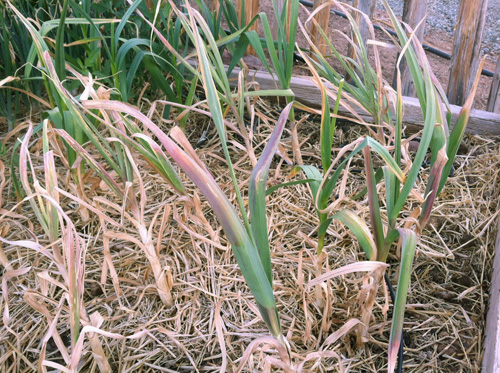
What about the Garlic I planted last fall? The softneck variety is ready for harvest!

I’m starting to harvest my garlic. How do I know when to dig them out? The soft neck variety is dying back  (despite good watering) and when it has most of the leaves brown with only a few green ones at the top, it is time to harvest. The shallots in the background are nowhere near harvesting yet.

Here is a picture of a garlic ready to be dug out. I carefully scrape the soil away revealing the bulb. Then be careful not to nick the bulb when digging out or it will go bad. Look at the size of this bulb-about 3 inches! Woo! Hoo!

It takes about 3 years for garlic to get use to someone’s growing conditions so it is important to save your biggest cloves to plant again as bigger cloves mean bigger garlic next season. This is my second year and the cloves are definitely getting bigger. Be sure to ‘cure’ them after digging them up. It takes about 3 weeks to let them dry out so don’t scrape the dirt or wash them after you dig them up-just let them dry out in a shady place for about 2 weeks before you brush off the dirt and then let them cure another week when the skins are dry and you can clean them up by taking a few of the dry skin layers off and store them in a dark place. Never wet garlic when curing. To read about last year’s post on types of garlic and more on harvesting garlic go here.

I also planted the hardneck variety of garlic. They already produced flower stalks called scapes (which I cut off and froze to eat later) and they are starting to die back and will probably be ready within 2 weeks as their leaves are still pretty green. They say hardneck is more flavorful but the softneck will last longer so I planted both this past fall.

If you plant garlic in the fall instead of spring, the bulbs will be larger. If you planted in spring, the garlic should be ready sometime in August. Garlic harvesting is very exciting as there is nothing as good as fresh garlic from the garden especially with my upcoming tomatoes.


Cherry Picking!

Cherry Macro

Cherries (Photo credit: Wikipedia)

It’s nice to have gardening friends in my life. Gardeners usually have an abundance of veggies or fruits in our lives and yesterday was no exception. My friend Bob was out of town and called and mentioned that his cherry trees were loaded and ready to pick so Elodie and I headed over and got about 20 lbs worth!

photo courtesy of happydaycatering.com

We invited Jerry over for dinner and promptly made Cherry Jubilee for dessert! Thanks Bob! PS-there are still lots of cherries left to pick when you come home!

Started planting tomatoes May 11

15 TOMATOES PLANTED

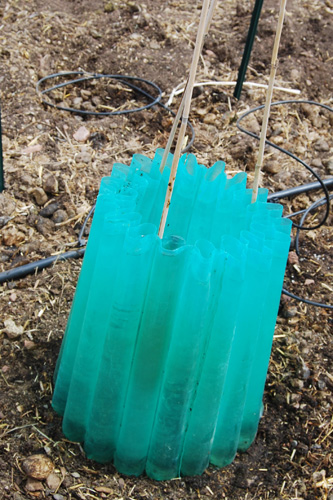
I started transplanting tomatoes into the new garden section. My friend Tom, and I got 15 of them in the soil-all ready to go. We added to each hole: more compost, yum-yum mix, mycorrhizal fungi (for root growth), worm castings, epsom salts (for many blossoms), and dry milk (adds calcium to avoid blossom rend rot later). And this year to (hopefully) conserve on water usage, I’m trying silicon gel granules and some volcanic ash, both of which will keep water longer around the plant root zone.  All this stuff is mixed up with some of the existing soil in the hole.  Then we put the tomato plants in (and if they are rootbound, open the roots up a little), made a well around each one and water each hole several times to get the soil wet. Then I go back a third time and water in some Superthrive and seaweed fertilizer (helps with plant transplant shock). Afterwards I put a drip line around each plant and then put a wall-of-water around each of them to keep them warm at night because just when we think we are out of the woods weatherwise, it gets cold again.

To keep the wall-of-waters from collapsing when the wind gets blowing hard, I put some bamboo stakes inside the walls as shown in the second picture. Overkill? Maybe. But I will get some fantastic tomatoes during the season. I still need to put the main drip hose (1/2 inch size) around the perimeter of the patch and connect each individual drip line to it but I can hand water every other day for now till I get to it. Planting is the hands on intensive part-later it will be a breeze watching them grow..

Tomorrow-May 16, Amy Hetager, from Home Grown New Mexico, is coming with her students from Americorp to plant some more tomatoes. No shortage here-still got 55+ tomatoes to put in the ground!

Reflections on Vegetable Gardening-A Lesson in Patience

Dalai Lama mediating. Photo courtesy of factsanddetails.com

I think one of my biggest challenges in this life is patience. Vegetable gardening is a lesson in patience. In the late winter I want to start all my seeds early (like right away) that I will transplant later, BUT NO, I MUST WAIT till the timing is right. Plant too early and I have these leggy things. Then after I get the seeds planted and they come up, I want them ready to plant BUT NO, I MUST WAIT and transplant them up to the next size pots to get bigger.  Then they are ready to transplant into the garden (I think) BUT NO, I MUST WAIT till the weather temperatures are above freezing at night. Then the days and nights are perfect and I think I can put them out, BUT NO I MUST WAIT till I harden the plants off outside.  Then once they are in the ground I want them to explode in growth immediately BUT NO, I MUST WAIT till they get acclimated. I watch while they sit there awhile. After that I want to immediately get those big juicy tomatoes that I have been WAITING FOR since the end of the previous season (think November), BUT NO, I MUST WAIT and watch the tomatoes stay green while they grow. I WAIT AND WAIT AND WAIT and then the garden kicks ass and really produces those veggies but it is now MID JULY-AUGUST and the picking season is JUST STARTING. Then I want to pick all those huge long-growing tomatoes that are still green BUT NO, I MUST WAIT till October and then a freeze is forecast, I run out to pick them and the season is over! BUT WAIT not quite because then I bring all the huge green tomatoes inside and I MUST WAIT till they finally turn red. WAIT, WAIT, WAIT! Finally when the season is over I will have canned a zillion pickles and  tons of spaghetti sauce and froze a gazillion gallons of plain tomato sauce and dried millions of pounds of apples (yes I think so this year) and made thousands of pounds of pumpkin soup, pumpkin pies, pumpkin bread, pumpkin muffins (you get the picture) and I’m exhausted and CAN’T WAIT TILL IT’S ALL OVER.  Then I recover all winter and can’t WAIT TO START the whole process again. Yes, I think gardening is a lesson in patience.

Growing Fava Beans

Vicia faba

Fava beans. (Vicia faba) (Photo credit: JMDN)

Here’s another new veggie I’m trying this year-Fava Beans.

Fava beans are in the legume family, not the bean family and add nitrogen nodules to the soil. Some people sow it as a cover crop in very early spring and then dig it under before planting or pull the plant and add it to their compost pile. I’m growing them to eat. They are used a lot in mid-eastern cuisine.

I tried growing Favas from seed inside earlier this spring and FAILED miserably. I like to share my failures as well as successes-how else can we all learn! Only 2 seeds germinated and maybe it was because my seed heating mats were FRYING every seed back then before I got a thermostat. Then a friend who was repairing the roof ran over one of them with his truck. I had put both of them on the side of the driveway to take down to the garden (thought they were out of the way) and his truck turned wide. So I took the one saved Fava plant and the rest of the Fava seeds down to the garden and decided to direct seed them. I love the black and white flowers they produce.

Fava beans like cool weather so I wasn’t sure it would even germinate here since we warm up fast but they did and here they are about 2-3 inches tall now.  Still not sure if I will get to harvest the beans later especially if we get hot fast but life’s an experiment and I’m one that tends to go for it.

I’m not sure about recipes for fava beans and I hear they are a pain in the a#* to shell as they have 2 shells on them which you must remove before eating. My friend Lava said they are good shelled fresh but wasn’t sure when they are dried. Anyone got any good recipes for both fresh shelled and after they are dry?

Growing Bulb Fennel (Finocchio)

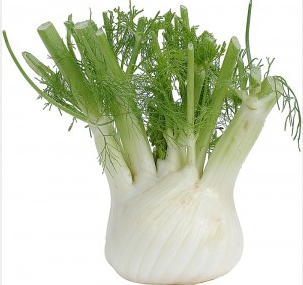
Finocchio fennel. Photo courtesy of growingherbsforbeginners.com

More on another new vegetable I’m trying this year-Finocchio Fennel.

There are several types of fennel, the bulb type (which is Italian called Finocchio or Florence), sweet fennel (fern like) and bronze fennel (fern like). All can be used as an herb but sweet and bronze are used for their foliage in cooking and Finocchio or Florence is used for the bulb in cooking. Sweet or bronze fennel will not bulb up. I used Finocchio in a Cioppino (seafood stew) at New Year’s and it was so wonderful that I decided to grow some. This post is about Finocchio Fennel.

I tried to grow some inside from seed- it didn’t do very well only getting a few to germinate so I ended up I buying a little pack at Agua Fria nursery here in Santa Fe.

Fennel growing well-May 7

Now from from what I’ve read they are not suppose to transplant well in the soil but I had so many of them in each little cell (and they were very young) that I teased the roots apart (carefully) and transplanted them directly into the soil.  I then put a drip on each one, made a little well that I put straw in so the water would not evaporate and then I put a cage I made out of wire material and covered it with some row cover. I was afraid the row cover might be too heavy directly on the baby fennels at first as they were very delicate-hence the cage. I thought the row cover would add more protection from the wind. Fennel can handle the cold (in fact it likes it) but the wind was what I was worried about.

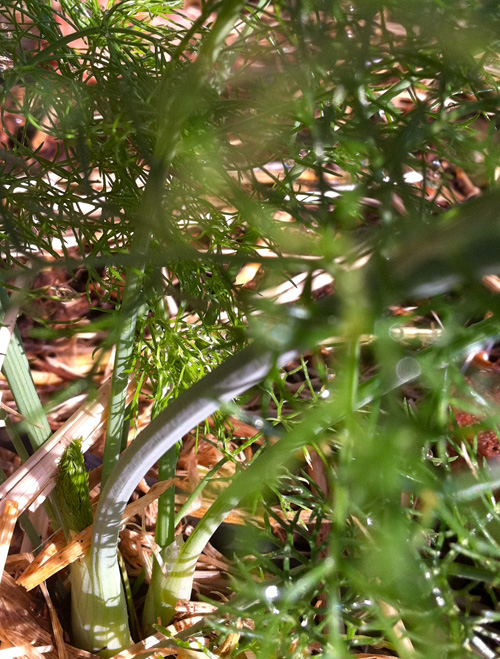
closeup of developing bulbs

Here is a picture of the one of them developing bulbs. All 17 of them are doing really well.

Fingerling Potatoes-May 7

The potatoes I planted Mar. 30 are doing great. Most of them came up with a few exceptions. Not bad for my first try. Of course the proof will be if I get some nice potatoes. Right now they are about 8 inches tall and when they hit 10 inches I will start the hilling process. Basically every ten inches or so I will add soil slowly filling the trench and burying the base of the potato plant I started with. I thought I would use straw for the hilling process but decided to stick with dirt because it is so dry here and I thought the straw would probably blow away anyways. Besides when I dig them out it will be like an Easter egg hunt! Since this is my first year at trying to grow potatoes, I am excited about what might happen.

Create a teepee of pole beans for the summer

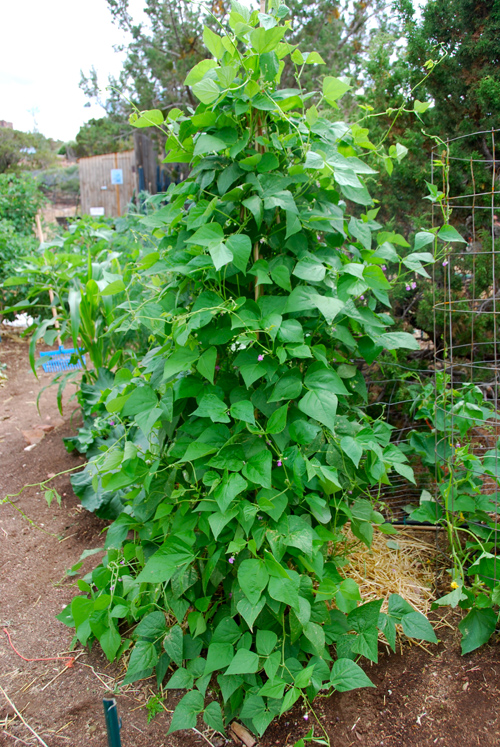
On Sunday, Caleb and Elodie and I created a bean teepee in one the beds where pole beans will grow. I wanted to make it large enough that a person (even an adult) could sit inside it this summer when it is covered with bean plants.  I can’t wait to experience what it will be like.

Here is the pole bean teepee I had last year but it was completely closed so this year we left an opening in the tee-pee to get in and out.

I had some really tall poles so we could get the height and width needed to make it large enough. I got the poles from my friend, Tuko, who had them on an arbor at her house and was taking it down. That was many years ago and I’ve saved them all this time for something special and I think I found that special project. I’m hoping that my neighbor’s grandson, Aiden will go in it later this summer.

So today in the wind, I went out and planted some seeds before this supposed rain comes. I planted beets and carrots on both sides and then I covered them with row cover (for now) so the seeds wouldn’t blow away and stay wet longer when I water them. The row cover helps the seeds stay in place! Later after the plants come up I will take off the sheets!

When Will I Plant Tomatoes?

I think I’m going to start planting tomatoes by the weekend.  I won’t get all of them in but this will be the EARLIEST I have ever planted here in Santa Fe. I checked the weather for the next 10 days and no freezing weather is projected. Of course it’s always a crap shoot here in NM but I think the odds might be in our favor this year. I will still put them in wall of waters (WOWs) because they grow so much faster in them than without them and if we get a freeze, they offer lots of protection.  But I will hold off on the eggplants and peppers for a little while longer cause they want HEAT. I checked the weather for the next 10 days and no freezing weather is projected. I’m not recommending anyone plant before our last freeze date of May 15th, just letting you know what I’m thinking. Unbelievably beautiful weather-so different then last year’s-no wind, no freezing weather-just fabulous! Time to spend lots of time in the vegetable garden!

What are these grubs in your soil?

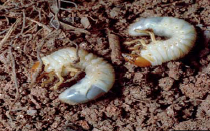
scarab beetle larvae

This time of year when you are adding amendments and turning your soil, you may notice some white fat grubs with brown heads. I noticed they were in soil that I heavily amended with horse manure and would freak out when I saw them. I took all of them (sometimes a lot) and give them to the chickens. I use to think were cutworms but they are not.

They are Scarab beetle larvae and will NOT harm your vegetable plants or vegetable roots. They are also known as the ‘dung beetle’ larvae. In fact they are beneficial because they help break down the manure by eating it, hence you will find them where you use manure. Just leave them alone as they are kind of like worms, adding nutrients to the soil as they process the manure. I have never seen any damage to vegetables but if they are in your lawn (what lawn?! LOL) they will eat grass-roots (but not vegetable roots).

cutworms

On the other hand, here is a picture of cutworms which are HARMFUL to your plants. They come out of the ground at night and chew the base of your transplant stem off leaving you with a decapitated plant (so to speak). They attack baby plant stems because they are tender. After the plants get older, they don’t bother them. If you see these, get rid of them.  I look for them in the soil around the hole I dig just before I put my transplants in the ground. But there is something else you can do to protect your plants.

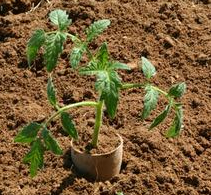
You can protect your plant by putting a ‘cutworm collar’ around your newly planted transplants. I use a paper towel roll or toilet paper row  cut into 2 inch increments. I cut the tube lengthwise to get them around the plant stem and tape the cut seam.

Then I sink the tube about 1 inch into the soil. They won’t crawl up the tube. After your plants get a little older, take the tube off-they only like young stems. In this picture the collar is filled with dirt but I just leave the collar  on without filling it with dirt.

Make a Soil/Rock Sifter for New Garden Beds

My friend Adam made a sifter to sift out rocks from soil when creating new garden beds. It is a simple contraption made with stuff I had lying around. He found a pallet and cut it in half. Then he screwed 2 layers of chicken wire onto the pallet. He used two 2×4 as portable legs to lean it up on an angle. Then you just put a shovelful of your rocky soil on it and the dirt falls through while the rocks roll off. The soil is light and fluffy and ready to add compost or horse manure to it. When I later looked up how much one is you can buy online, they were $250! Here is Caleb using it on a new garden bed.

Potatoes Were Planted on March 30th

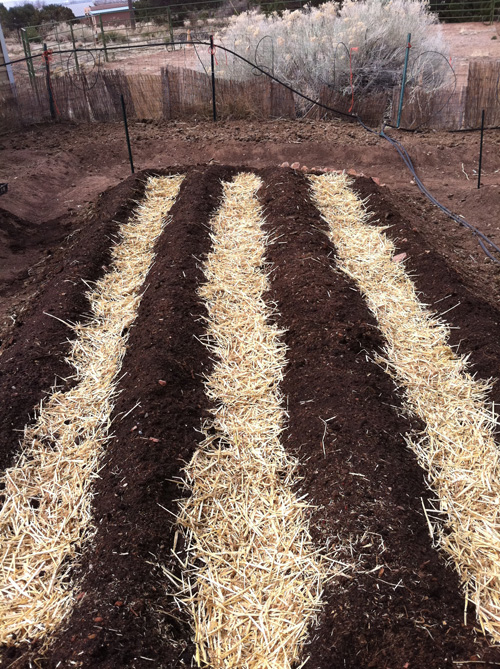
Potatoes planted in deep rows-covered in straw

I’m trying a lot of new varieties of vegetables this year besides the varieties I always plant. I’ve never planted potatoes before but thought I’d give them a try this year. I actually planted the potatoes on March 30 and am just now getting around writing about them. I just couldn’t wait any longer. I put them in my best bed that is 12 inches deep with very rich fluffy soil. I figure even if it snowed (which of course it did), the ground wouldn’t freeze up 3-4 inches below the soil where the potatoes are. Plus I got the drip in place (even though it isn’t turned on yet) on the potatoes and covered them with straw to protect them from the snow. I planted all fingerlings-French, Russian Banana and a purple variety. They are not up yet but can’t wait till they are. A brand new crop for me.

Seed Germination Trouble-seed heating mat too hot!

Some new tomato seedlings coming up among the others

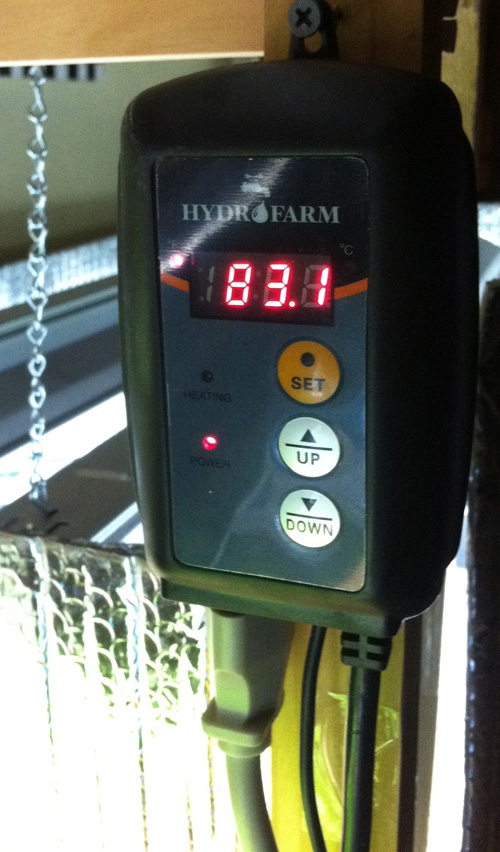
This year I have been struggling with my seed starting this year. Many seeds have not germinated. The seed germination mats seemed way too hot. I’ve never had this problem before (usually it is too cold) but when I did some research, I found out the mats are suppose to be 20 °F over the ambient temperature. This spring so far has been very warm (especially inside the house even without the heat on) and when I took the temperature of the soil in the little pots it was between 95 and 1oo°F! Way too hot for germination. No wonder very little was coming up—I’ve been frying the seeds!

So I got a soil germination thermostat that will control the temperature which I keep at 80°F and within 3 days I had 11 tomatoes come up. Wow what a difference. I will have to replant some tomatoes seeds but hopefully I will be fine. Guess I won’t have to worry about the plants growing too big this year before I transplant them in the garden.

Chitting and Growing Potatoes

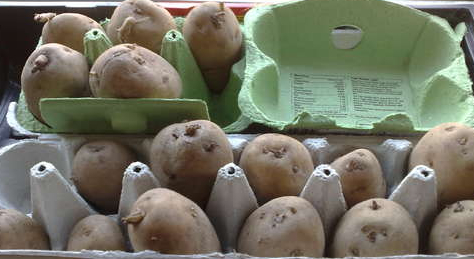
A gardening friend of mine, Gene asked me to explain ‘Chitting Potatoes’. Why do we want to chit potatoes? It will knock off a couple of weeks to harvest time so you’ll get them sooner. Now I am new to this myself being a first year potato grower but basically it is ‘prespouting’ the potatoes to force healthy new sprouts before you plant the potato ‘seeds’. Potato seeds are not seeds at all but the actual potatoes.  We keep potatoes we want to eat in the dark so they won’t turn green and quite often they start to develop smaller flimsy white sprouts while in the dark but what you want is thicker healthier sprouts that are either green or purple. If you missed the opportunity to chit the potatoes, it’s ok to just plant them when the time is right. I’m going to try growing fingerlings-Russian Banana, Purple Peruvian and French fingerlings.

Here’s how to ‘chit ‘ them (sounds southern doesn’t it?!)

1. Get a couple of egg cartons so you can stand the potatoes with the pointed side down. The blunt side generally produces more sprouts so keep that side up. The egg cartons make it easy to support them this way. Sometimes there is no pointy side which you should then just look at your potato and put the side with the most ‘eyes’ or sprouts up.

2. Put them in a cool space that gets good light in your house and they will develop thick sprouts  in 2-4 weeks instead of those flimsy one that grow in the dark.

3. Plant them outdoors when the soil is 50°F or warmer. There are many ways to plant potatoes which you can research on the net but I’m going to dig a deep trench about 10 inches deep in heavily amended fluffy soil.

4. Place the presprouted (or chitted) potatoes with the sprouts up (the sprouts become the leaves) and bury them 4-6 inches deep depending on the size of the potato. BE CAREFUL NOT TO BREAK OFF THE SPROUTS. Spacing them 12 inches apart and rows 12-24 inches apart.

5. After the sprouts come up and they get leaves, I’m going to start filling straw around the plants instead of dirt to make access to the potatoes easier come harvest time. I hope they stay cool enough with the straw.

6. I should see the sprouts come up through the dirt in a couple of weeks. If it is still freezing at night, I will cover the plants with row cover.

7. Potatoes will start producing tubers when they flower.

8. Fingerling potatoes should be ready to harvest when the plants die back in about 90 days. Leave in the ground 2 weeks to harden off before harvesting.

For more information on growing and buying good potato seed go to: http://www.irisheyesgardenseeds.com/growers10.php

Lettuce bowl ready for first thinning

Here is the lettuce bowl I planted on Mar 7, only 13 days ago. Remember how it was barely coming up where it hung off the seed heat mat-well no more!  It is coming up beautifully. It’s so nice to see a ‘sea of green’ in the house. I will thin the baby seedlings (eating them) to give the rest of the seedlings some room to grow bigger. This is a mesclun lettuce I got from the Homegrown New Mexico seed swap event.  It is about 2 weeks ahead of the the lettuce I just planted outside. All part of trying to keep a continuous supply of lettuce for awhile. A couple more weeks and I think I’ll have a salad!