Create a Garden Hotbed using an Old French Technique

Hotbeds have been used for hundreds of years. Hotbeds are basically the same as a cold frame, but use manure with compost as a heat source in early spring. In France, when transportation was done by horses, not cars, people would take the stall litter which was a mix of manure and straw for heat and make what is called a hotbed. They surmised the bed would get warmer as the manure decomposed and they could start some crops earlier while getting nitrogen in the soil. You can use this method in greenhouses, cold frames or poly-tunnels on top of your raised beds.

The only thing is if you use horse manure, you need to ask whoever you get it from if the hay they fed the horse wasn’t sprayed with an herbicide (like Roundup). Herbicides are weed killers. You don’t want to use any manure with an herbicide in it as it lasts for 4-6 years in the soil and will kill anything you want to grow. Basically it will ruin your bed. Having said that, our hay comes from a safe source. As a thought, you could use bagged cow manure but know that it is hotter than horse manure so it should probably age a little longer-use a soil thermometer to make sure your soil is not too hot.

Looking back in my notes, here’s what I tried in January 2020-I took out all of the soil in my center raised bed in my unheated greenhouse and put the soil on a tarp to put back in one of my other beds. I then put about 14-18″ of hot horse manure and 6 inches of straw in a wheelbarrow and mixed them up. Then put the mixture in the bottom of the bed and packed it down lightly and watered it till it was moist but not soggy. I then added 6″ of homemade compost/soil on top of that leaving a couple of inches of free space at the very top of the bed for plants. Then I watered again. A few days later, I put a compost thermometer in the bed and saw that the temperature had come up substantially deep inside in the manure/straw mix. It will get from 125°-150°F in the beginning but will come down pretty quick by the time you put your transplants in later. I didn’t take the temperature at the top compost layer but the fresh horse manure/straw mix got the compost in the top layer warm, and the 6″ of the aged compost kept it from getting too hot.
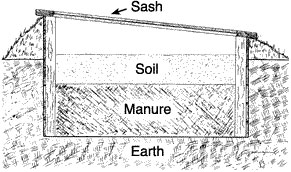
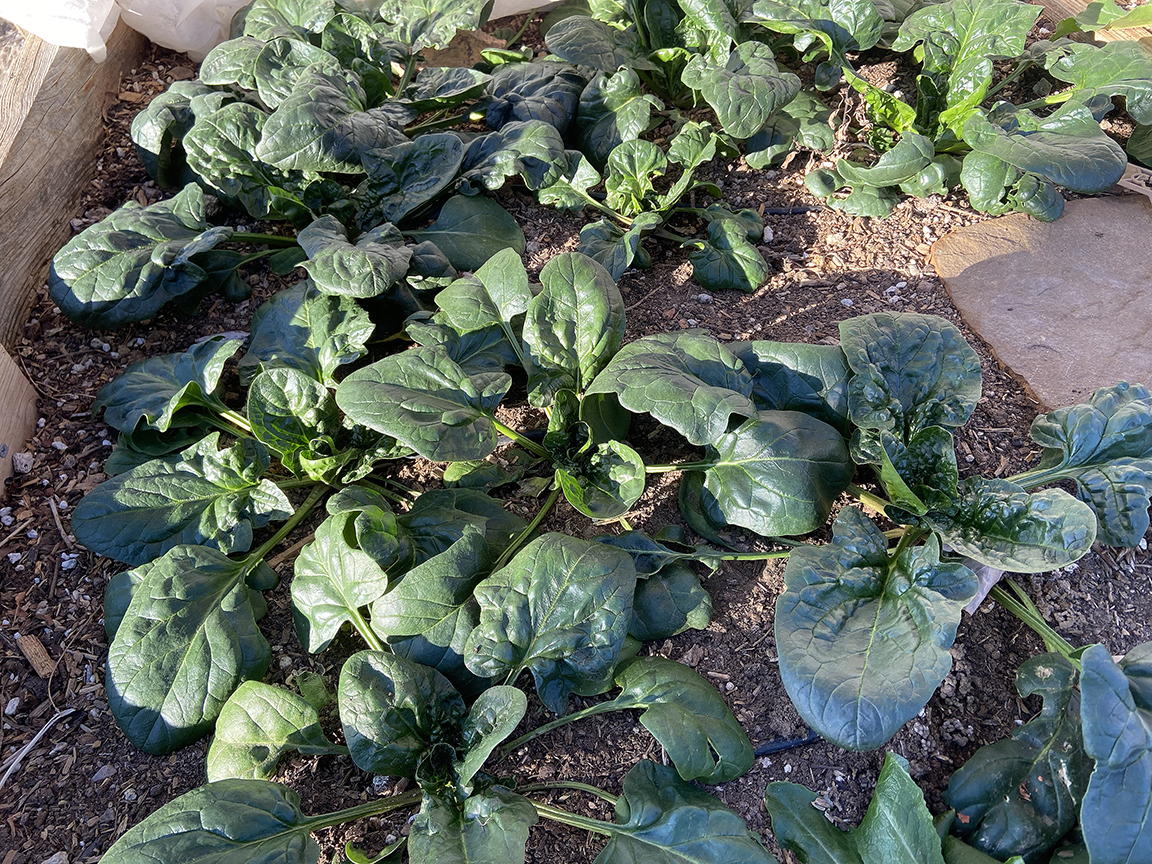
If you have a cold frame with a lid or plastic tunnel over a raised bed, you could do the same as in the top photo with spinach in it. I have one cold frame that I use in this way in the spring as well. It isn’t dug into the ground (like in the diagram above-not in my ground-too hard!)) but sits on top of the soil so I put some straw bales around the sides to add some insulation to it.
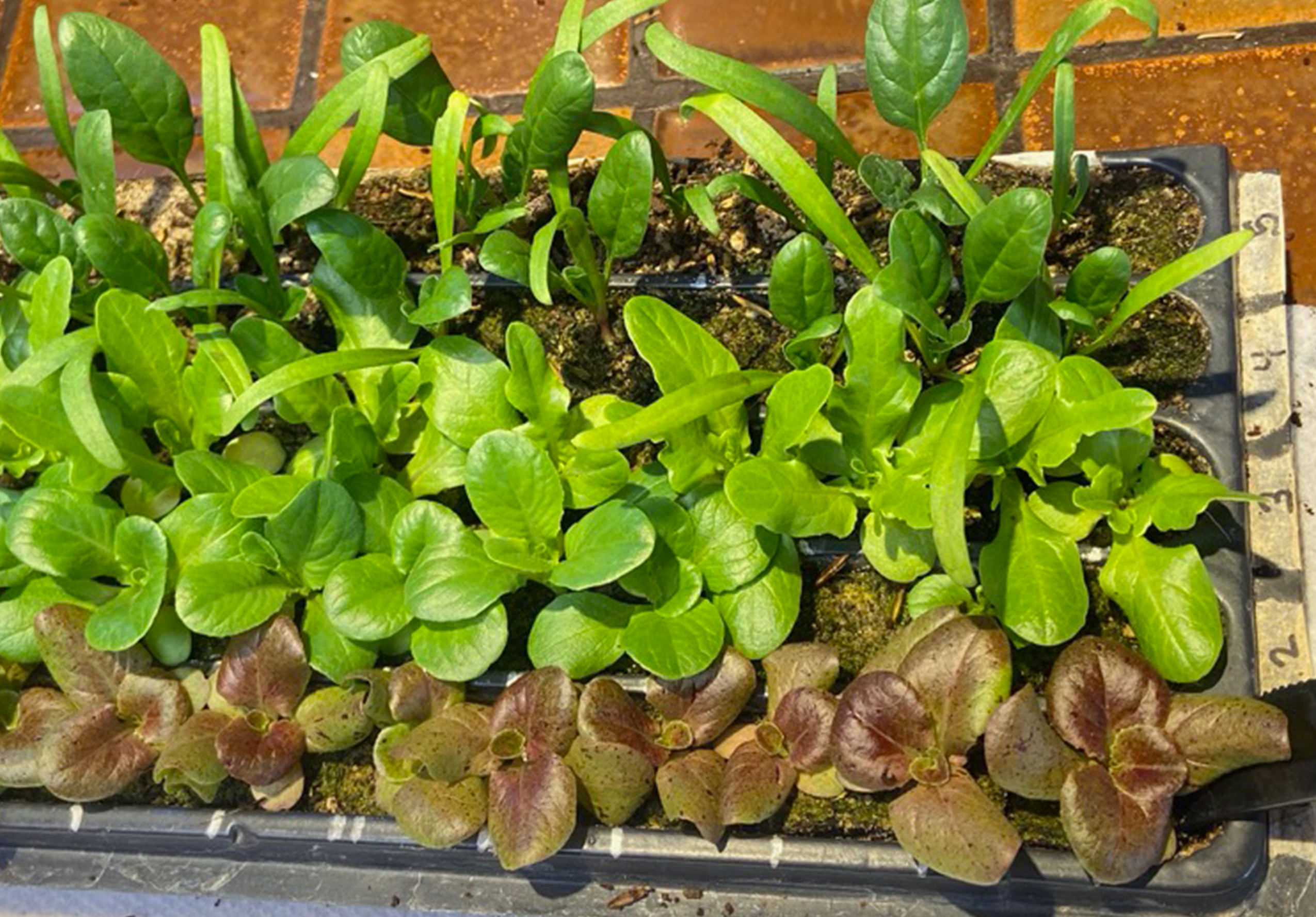
While the manure was cooking, I started lettuce/spinach seeds inside under lights (with no heat) in late January which took 3-4 weeks to get big enough to transplant in that top layer during which the soil temperature came down more as the manure mixture decomposed. Do not plant in the manure section but only the top compost/soil layer.
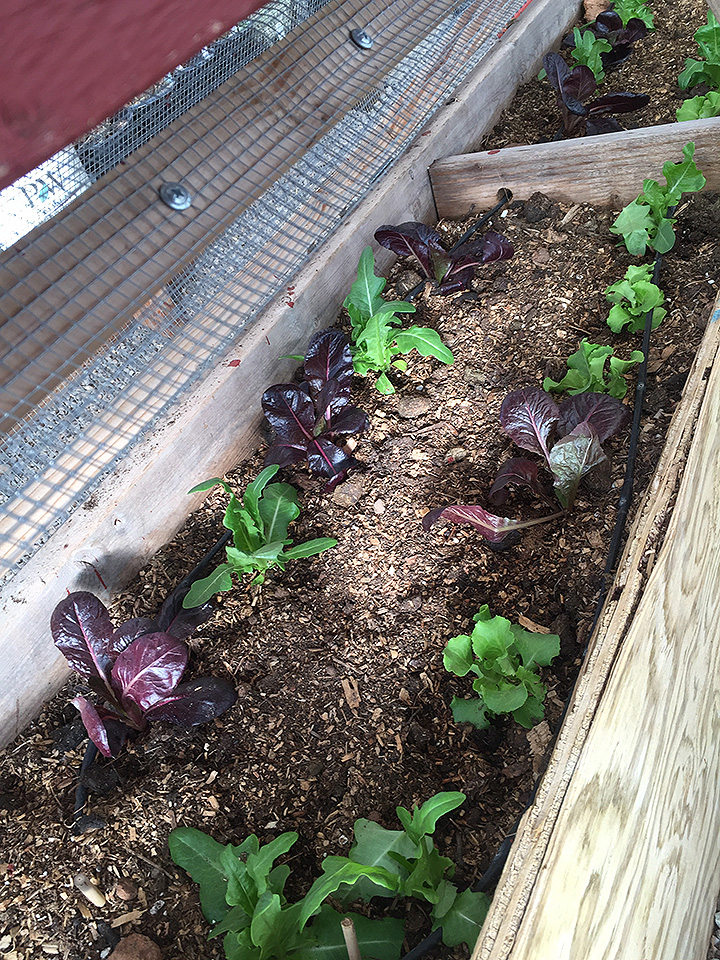
 

Once I planted them, I still had to cover the greens with medium weight row cover at night (and I double it up with layers of row cover on it if the weather was going to be very cold in the day/night (like it is now). It worked!

It was a fun project to learn how to make a hotbed and how ingenious people were in the old days!

‘Show and tell’ garden photos-August 2023

To see descriptions, hold cursor over each image

Took row covers off tomato plants today-August 3, 2023

I promised my followers that I would tell you when I took my row covers off the tomato plants. I did this today.

Here is a video I took on July 18, 2020 but basically looks the same as today.

I have heard from several sources that we might not get a monsoon pattern setting up here in August and that alarmed me. We have never NOT (I know, a double negative) had a monsoon season in the 27 years I’ve been here and now this. I decided to chance it and take off the row covers. I didn’t see any any leaf hoppers today but that doesn’t mean anything as they are so hard to see.

So I am hopeful that they are gone. Who knows, maybe they have a limited lifespan in summers.

I’m not telling you to take them off-that is your decision, but I will deal with whatever mother nature gives us…and it is soo good to see my beautiful tomato plants! Good luck!

Class followup

GARDEN CLASS FOLLOWUP

Here is the handout with the class notes from Tuesday:

2023 FALL VEGETABLE PLANTING

I also had someone ask me about the 2 Perennial Chard-Spinach and Perennial Arugula which is called Sylvetta that I talked about. You can google them to see which seed companies might still have some for this year. You just have to give them a space where they can come back each year. I am just now trying them so I don’t know how they will do but hope they will do well in my garden and yours.

Fall Garden Class August 1

Hard to believe but it is time to start your fall veggie garden! Fall is one of the easiest season to grow veggies. Please join me, “The Tomato Lady”, to learn how to plant a successful fall garden. Presented by the Santa Fe Extension Master Gardeners

Planting Your Fall Vegetable Garden

DATE: Tuesday, August 1st, 5:30- 7:30 p.m.

LOCATION: Southside Library 6599 Jaguar Dr. Santa Fe, NM

COST: FREE!

Free seeds will be available from the Seed Library located in the Southside Library

HOPE TO SEE YOU THERE!

2023-A beany kind of year!

Rouge de Paris dry bush bean from William Woys Weaver

The past 2 years, I’ve been growing out some rare veggie seed varieties from William Woys Weaver  (I call him W3), who has collected many rare seeds over the years. Last year for him I grew rare cowpeas but this year I chose beans. This is in addition to my regular tomatoes, zukes, winter squash, cauliflower, chard, beets radishes, cukes and peppers and different varieties of berries/grapes .Good thing I have a BIG garden!

W3 wants his growers to grow out seeds that are getting older to keep the varieties viable. He sent some seeds, you can’t even find online. So this year I’m growing Landreth’s bush bean, Six Nations bush bean, Early Mohawk bush bean, Rouge de Paris bush bean, Wild Pigeon semi-pole bean. All of theses are dry beans. I am also growing one cowpea, Big Red Zipper, a pole cowpea (think black eye peas as we call them in the US) which has long pods with 8-10 large red cow peas that are so beautiful.

The only seeds that did not germinate well was the Landreth’s bean, where only 6 plants germinated out of 30. The seed I received for Landreth’s bean was 6 years old, so it is getting up there in age so I won’t get a lot but he will get whatever I get in the end. This is a good lesson to start saving your seeds! I am also allowed to keep some of each variety as well if I want.

In addition, I am growing out my friend, Lava Ewersmeyer’s, Garrofon Pintat pole butter bean which hails from Spain and Buschbonne Cannolino Rosso bush bean from Germany-both are beautiful white with red splashes. Lava lives in Berlin and here in Santa Fe, enjoying duel citizenship. Lava also gave me seeds for the Lava Red pepper ( a Corno de Horno variety) and Ruthje cherry tomato, both are outstanding which I grow each year as well. Thanks Lava!

Growing new varieties of seeds I’ve never tried before keeps me interested in gardening and I am saving seed that might otherwise go extinct which is important. Hopefully some will be fantastic! I really like bean seeds as so many of them are really beautiful.

Oh and I am growing one green bean for fresh-eating-Emerite pole bean which is a gourmet french filet bean that you can get in the US. I just have to keep up on picking them as if you let them get bigger than a pencil width, the skins get woody. So I pick often when they are ready (which they are not yet).

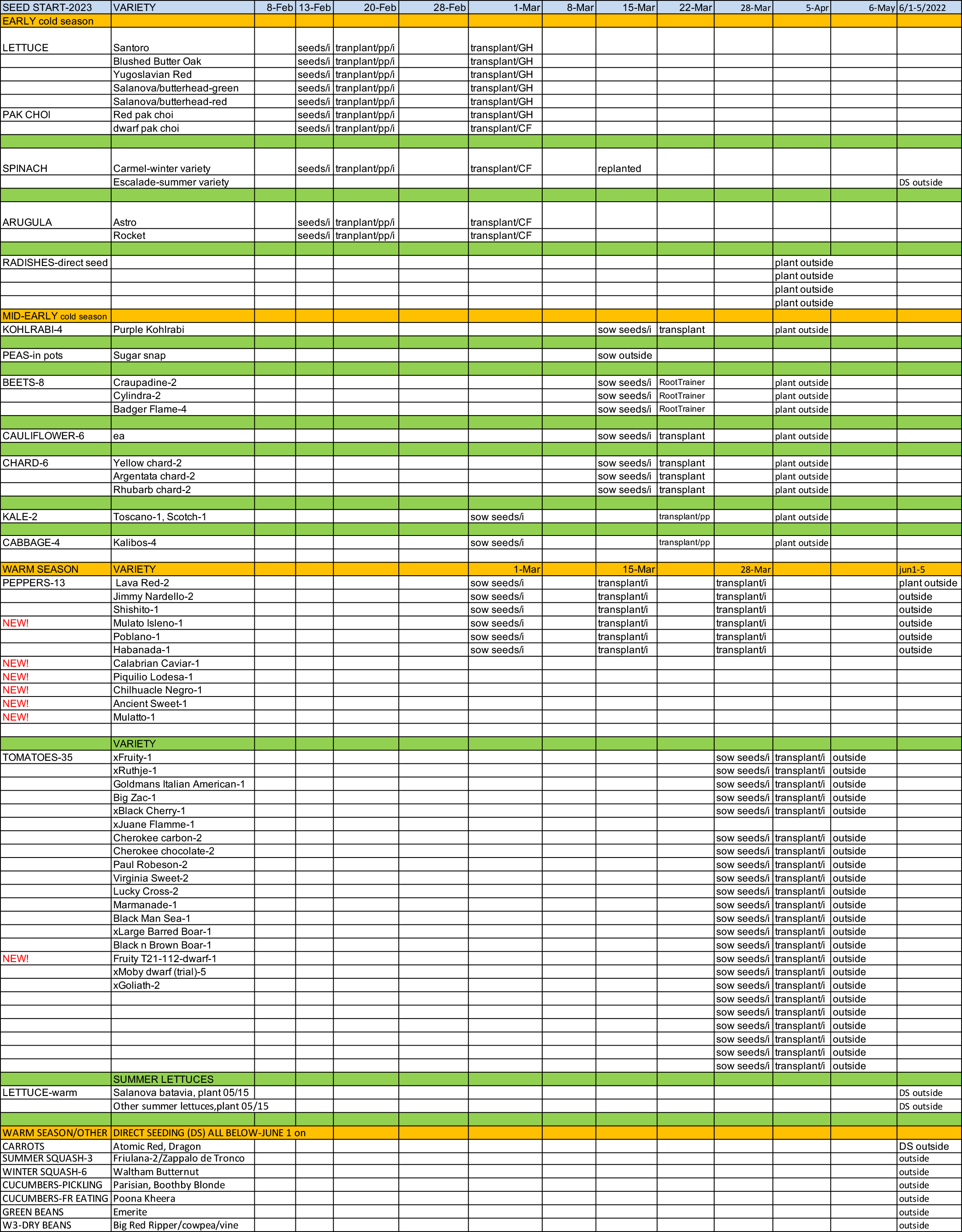
Seed Starting Schedule-2023

With all the snow outside right now isn’t it too early to start seeds inside? NO!

My radio show will air on Saturday, Feb 25 on KSFR 101.1 radio station and airs the last Saturday of every month where I give tips and advise about gardening for the following month.  March will be about my seed starting schedule which I’ve already started but many veggies can be started later too from the schedule.

I want to talk about my planting schedule for 2023. Thought you readers might be interested. Of course, the dates are not carved in stone and changes a little each year but it tells me when I should get growing and how I think when starting crops. Some are started inside and later many warm season crops are started inside and more warm season crops will be direct seeded into the ground when the ground warms up in June. If you plan to grow veggies this year, it is good to be organized. I need to see it in writing.

This may seem a bit much to make up such a detailed schedule but I grow so many varieties of veggies and they each have their own growing season so it keeps me on track. You can use mine or make your own up-you can do it simply in a notebook but I hope this will help you start to think of your planning.

You can listen to the show and pick up the notes and schedule after the show or get them here. This is shown BELOW as a jpeg, but you can print it out the pdf ( 2023 SEED STARTING SCHEDULE) I also have it as an Excel file (2023 SEED STARTING SCHEDULE for those of you who have it-that way you can adjust your own schedule)

Please note that once I plant the early cool season crops outside, I use row cover (polypropylene fabric) over them on a cold nite to keep them from freezing. I have people ask if they can use a sheet-NO and one person told me they used a sleeping bag-NO! It didn’t work! ( I told them the only way they could use that was if they were in it!)

For germination tips, go hereAlso here is (Zone 6a):  SEED GERMINATION CHART which gives the optimal soil germination temperature of crops and how long to germinate.

Later when ready to transplant tomatoes and peppers/eggplants outside, I will use wall of waters (WOWs) to help start the season earlier so if you don’t use either of those aids, then you will have to wait till danger of frost is over. These two aids are invaluable and will give you a head start on getting some of the crops outside in earlier.

I have already started INSIDE with lettuces, spinach, arugula, bok choi, and pak choi. All these will go from the germination trays to pony packs and then after they are big enough, go in either the Green house or cold frame. Seems early? YES but I want to get to harvest the cool season crops before the heat comes and they take 30-60 days to grow to harvest. Must get them out of the house before we start tomatoes inside on March 28 as we need the space inside by then!

PEPPERS

The next thing I will start are peppers inside on Mar 1 (on the schedule), because they take a long time to get sized up.  I always said wait until June 1 but if you have wall of waters (WOWs) they might help get your pepper plants outside a little sooner. Even then, it is still very cool at nite. What happens to peppers if you plant outside when it is still cold at nite? They will stall out and stop growing! And they won’t start growing again-then you would have to buy some because it will be too late to start them again.

TOMATOES

Next- will plant tomato seeds on March 28.

NOTE: Before it get’s hot in JUNE, take off the WOWs as you can fry the plants-all plants.  BUT if you don’t have WOWs, wait till June 1 to plant peppers/eggplants and May 15 for tomatoes outside.

_______________________________________________

For March-to recap

Cool season crops inside, under lights -NO heat mats early March

Warm season crops inside-Tomatoes/peppers/eggplants under lights with HEAT MATS and a THERMOSTAT will help keep the temperature at the correct germination temp. Notice peppers/eggplant seeds are planted earlier because they take so long to size up before planting outside and tomato seeds are being planted Mar 28 this year.

If this is too much info, go buy your plants ready to transplant-you can still use the schedule. Why do I grow my own varieties? Because there are so many more great varieties of veggies you can grow IF YOU START THEM YOURSELF.

_________________________________

LEGEND FOR SEED STARTING SCHEDULE below (in case you don’t know what my initials mean)

seeds/i=starting seeds inside under lights/no heat for cool season crops/warm season crops also get a heat mat.

tranplant/pp/i=transplanting up to pony packs-still inside under lights (4 or 6 cells-like what you buy flowers in)

transplant GH/CF-transplant into unheated Greenhouse/cold frame. Use row cover over crops at nites to protect from cold-I sometimes use 2 layers of row cover if very cold.

DS outside-Direct seed outside

I write notes all over the schedule so I see what I did for next year. For instance, I changed my cold season crops (lettuces/spinach/arugula) to a later date. No reason except I didn’t check last year’s dates and am late, but not too late. I try to be done with them when it gets too warm in the green house or cold frame which is usually around late April-early May before they bolt. Bolting is when they produce a flower stalk which makes them bitter. I either compost them then or feed them to my chickens. I don’t like bitter greens.

2023 SEED STARTING SCHEDULE (EXPAND TO SEE BETTER OR JUST DOWNLOAD ONE OF THE THE FORMATS)


Happy New Year!

Ok, I for one am glad 2022 is over and looking forward to a new year and a new growing season. But I have much to be grateful for despite my dismal yield of tomatoes last season. So instead of looking at the negative which there is plenty of that in the news, I’m going to focus on the positive from last year’s garden. So here are some of the successes in 2022:

-Because we had such a good rainy season (monsoons), my annual flowers (in fact all my flowers, perennial and annual flowers were absolutely fantastic. All the annual seeds I threw out on the ground (I didn’t even start any inside last season) came up and in fact I had to thin out some of them to keep from overcrowding. I don’t think I have had a more beautiful flower garden inside the veggie garden.

-Actually most veggie crops did well for me except the tomatoes. All cool season crops continued to produce very well throughout the summer because of those rains and cooler temperatures-kohlrabi, kale, chard, lettuce, onions, potatoes did great.

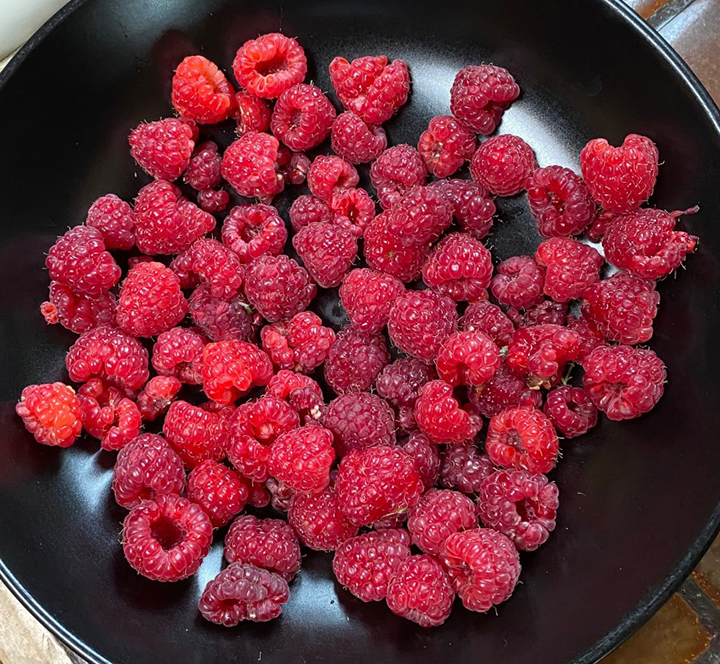
-The raspberries and finally the blackberries  produced LOTS of berries, again because of the rains. Still, no salmonberries or honeyberries last season but am hoping for their berries to show up this year.

-My winter and summer squash did exceptionally well with very little disease-I grow butternut squash and Friulana summer squash because they usually don’t get many (if any) squash bugs. Only one butternut squash out of 8 squash got them but it is interesting to note that all the butternuts were crowded in one bed (as in overflowing) so they were all very close together and only one plant got them and none of the rest got them and no squash bugs or disease in the Friulani summer squash plants either.

-I grew Yukon Jack potatoes in 2021 and that harvest was dismal. But in that same bed I had 5 volunteer potato plants that came up and produced very well and most were good sized spuds. I guess I missed some of the teeny-tiny potatoes during the previous year but again with all the rain, it was a good harvest.

-My carrots were bodacious! I still have about 10 lbs stored from this last season. I really liked the ‘Dragon Purple carrots with their dark purple skins and bright reddish orange flesh inside.

-The Italian dry pole bean variety, Casalbuono di Panzareidd, a white bean with red splashes was super productive and super tasty.

So as we enter the new year with many new growing possibilities, I get excited with new hope for a great 2023 growing season. I wish you all a happy new year where you all prosper and flourish in your gardening and personal lives.

The heat is on

I don’t know about you, but I’ve been feeling the heat lately and try to get out early in the morning and sometimes a little in the evening in the veggie garden if it cools down. So my gardening time is limited to when it is cooler. Of course it’s not as hot as where I grew up in Phoenix, AZ (I escaped)! Above is the forecast thru July 28 for Santa Fe. Looks like it’s going to cool down a little.

With this heat wave it is time to water your garden a little extra. Water your garden either first thing in the morning or last thing in the evening in addition to your normal watering. Today is the last day of temps in the 90s-tomorrow is suppose to be 89-still hot for here and then the temps drop to mid 80s. To see if my plants need extra water, I stick my finger in the soil up to my second digit and if it is dry when I pull it out and the soil doesn’t stick, it’s time to water. If it comes out wet, and the soil sticks to it, it still has good moisture. Also a real sign your plants need water is if they start to wilt. I try not to let them wilt. Plants in pots can dry out very quickly so water them 2x/day when it is hot.

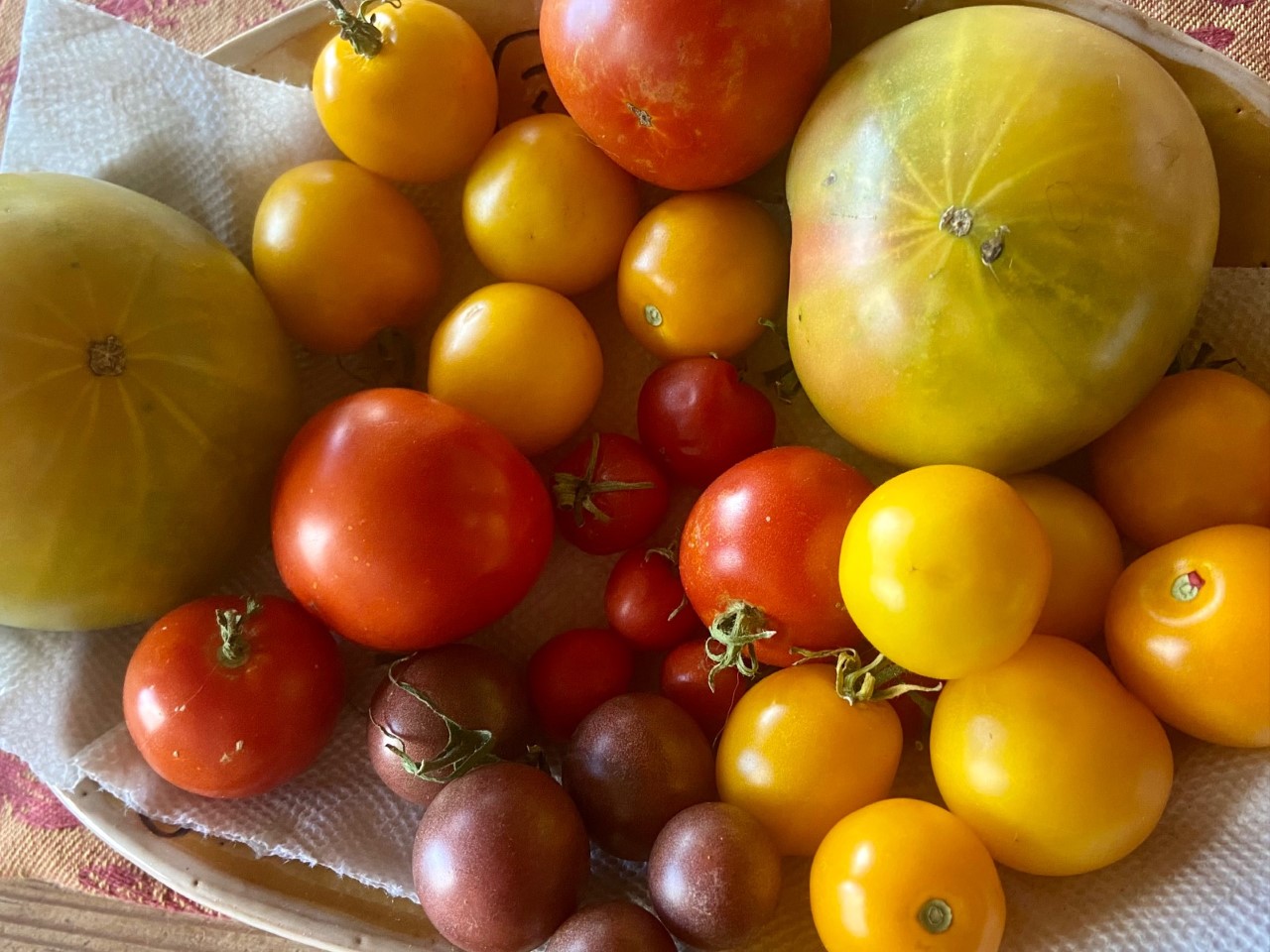
One good thing is the tomatoes are just starting to come on. I now have a bowl of them on the kitchen table. I know they won’t set fruit when temps reach 92 degrees but they will keep producing blossoms and will set fruit once the temps cool down. And once they set some fruit, they don’t mind some heat. Some of my early varieties set their fruit in June. That’s why I try to plant so early-this year June 2nd, to give them a chance to set some fruit before the heat really sets in and they get blossom drop. But of course, that means putting them in wall of waters so they can deal with freezing nights that early in the season, but I don’t mind if I can get some tomatoes a little earlier. After all, it’s been since last November since I’ve had some home grown tomatoes. The wait was worth it!

COVID strikes

I’m not looking for sympathy but in case you were wondering why I haven’t’ posted lately or approve comments, it’s because I had been sick with COVID. It lasted 20 days for me and I was sicker than a dog. I took Paxlovid pills and was starting to feel better when I started to feel bad again. Turns out I had a relapse. Hence the 20 days. I had my vaccinations and one booster and was going to get the second booster the week I got sick. I had escaped it for 2.5 years but went to a party in June and wasn’t as good as I should of been, pulling my mask down and pushing it up frequently. Turned out that 17 out of 30 people got COVID from that party. So be careful folks-wear your masks. I know we all are experiencing burnout but the new variations are extremely contagious and you don’t want to get Omicron, whatever version-it’s no picnic (at least for me).

So now that I’m over it, I’m finally returning to the garden (Yay!) and will post what’s up in the garden in July. I got lots to catch up on! Stay tuned.

What’s up in the veggie garden

Yesterday:

Elodie Holmes and I took off all of the wall of waters off 24 tomato plants and put the cages on them and the row cover over them to protect the plants from the beet leafhopper which can transmit Curly Top Virus to the tomato plants and kill them out here in the Southwest. All this in the FRIGGING HORRIBLE WIND. What a challenge! The winds have been horrible all spring-worse than usual and there seems no end in sight. A great big thank you to Elodie to help me on her day off!

Other things I’ve been busy with in the garden this week:

-Planted 7 planted peppers in wall of waters (WOWs). Peppers need protection from the cold nites and the WOWs provide protection. They are a great spring extension but must be taken off when it gets hot, sometime later in June.

-Planted a new dry bean (Sondrio Select-vining type) that Chris Salem gave me to help her grow out. It is hard to find in the US.

-Planted 2 varieties of cowpeas to grow out for William Woys Weaver to help keep his supply of seeds fresh. He is one of the biggest seed savers of rare varieties of seeds in the US. The seeds are Big Red Ripper, a vining variety and Risina del Trasiorfino, a rare bush variety of cowpeas from Italy.

-I built and installed successfully a new drip timer system and it is working well with no leaks. The old drip timer system really needed to be replaced. Plus I finally put on a sediment filter for our hard water out here that will hopefully make all the drip lines last longer (they can get clogged with our hard water). Also put in almost all new drip lines in the garden.

-I’m growing from seed inside the greenhouse all the butternut squash and summer squash seeds as Roly Polys tend to eat the seedlings right when they break ground as they germinate but won’t touch them when they are about 3 inches tall, so this is a way to thwart them.

Today:

-I will direct seed cucumber seeds and will put Sluggo Plus on the ground where the seeds will come up to keep the Roly Polys from eating them. The reason I’m starting the squash seedlings inside the greenhouse and not the cukes is because I have way too many cuke seeds to start. Sluggo Plus (not Sluggo) is great for keeping the Roly Polys away.

-I’m going to direct seed some Royal Corona bean seeds outside AFTER I weed the area I want them in.


Fall veggie garden tour-2021-Nice to see it when it was in it’s prime!

2021 was a year of abundance in the garden as we had much needed rain from monsoons and almost everything thrived. Here is the fall garden tour that I filmed in September 2021. I held off posting this till now as I like to revisit the garden to remind me of what the garden looked like in it’s glory. Now in January the garden is dead, dead, dead so it’s nice to see it when it was thriving. Something to dream about again!

Garden starting to wind down

I noticed this week, the garden is starting to wind down except for the tomatoes which are still kicking ass.

The raspberries, grapes and blackberries will continue being harvested this month as well.

The potato leaves are starting to yellow which is a sign that once they (almost) die, they will be ready to harvest. I’m thinking 2-3 more weeks before they are ready.

The green beans are basically done and the dry beans leaves are yellowing and the pods are starting to dry out on the vines. Once they are dry, I will pick them all and store them until winter when I will shell the dry beans inside on a winter nite. Too busy right now with harvesting tomatoes!

The poblanos, Jimmy Nardello, Espellette and Lava Red peppers are continuing to ripen and I’m harvesting them as they ripen. The cucumbers are starting to slow down.

The Butternut winter squash are starting to turn color to their tan color but will be several more weeks. The summer squash harvest is bonkers. Looking for victims and new ways to use them!

The onions can get a little bigger before harvesting.

The cauliflowers an beets are harvested, while the kale and chards are loving the cool weather.

My garlic and shallots that were planted last October were harvested in June.

Butternut winter squash

Here is a winter squash I really like-Butternut squash. I’ve mentioned it before but it’s worth repeating.

Butternut squash doesn’t usually attract squash bugs. I’ve grown the very sweet Waltham Butternut, an Italian variety called Rogosa Violina and a huge variety called Tahitian Butternut-all don’t seem to attract squash bugs, at least in my garden and all have the wonderful flavor we associate with butternut squash.

It also doesn’t attract squash vine borers. The stems are solid and the squash vine borer like to lay it’s eggs in hollow stem varieties of both winter and summer squash. 100 days to harvest so if you plant right now, you may get to harvest as it will be ready right at the end of our season.

2019 Garden pics!

Here are some pics of my garden this year. Now that we are in September, I wanted to capture it in all it’s glory before it’s gone. I’ve worked hard tweaking out the infrastructure with new framed beds and weed barriers and wood chips in the paths this year. Having retired from the Santa Fe Farmers Market two seasons ago has allowed me to do more in the garden. I also added some perennial fruit like raspberries and blackberries since I don’t need space for 125 tomato plants anymore! By mid-October or sooner, it will be toast with the first frost so might as well enjoy it while I have it. I have an abundance of flowers this year that I grew for my edible flower class and besides being beautiful and edible, they attract many beneficial insects and pollinators. Hope you enjoy it as much as I do!