What is the difference between heirloom and hybrid tomatoes?

Heirloom tomato-Paul Robeson

So I researched the difference between heirloom and hybrid tomatoes because I wanted to be really clear about those differences and found some interesting information I would like to share. In fact this should apply to all heirloom vs hybrid veggies not just tomatoes but since I sort of specialize in tomatoes (and pumpkins) I’ll address it from that viewpoint.

HEIRLOOMS

Heirloom tomatoes are seeds that have been  grown for a number of years, saved and passed down for generations.  All heirloom plants are open pollinated (OP) which means it is able to produce seedlings with all its attributes just like its parent plant. Why should we grow heirlooms? Simply put because they taste better. They might not look as pretty as they tend to crack or get catface scratches because of their thin skin and they can be more disease prone but it’s hard to beat the flavor of a heirloom tomato!  This is why you don’t see a lot of them in supermarkets as they don’t transport well  and might not be pretty-in otherwords they are not as marketable on a commercial level. Last year I picked mine the day before going to our Santa Fe Farmers Market to ensure the best flavor and many of them I had to handled very carefully so as not to crack them but oh what flavor. And you know the patrons of Farmers Markets don’t care how they look-they care how they taste.

HYBRIDS

Gardeners, farmers and plant breeders have been cross-pollinating varieties to get certain desirable traits they are looking for such as color, texture, disease resistance and taste, etc. for years. They try to get the best features of both parent tomatoes.  These are called hybrid tomatoes. Hybrids also occur naturally as well in nature but hybrids whether man made or by nature are not as stable in that they may not reproduce plants with identical traits.

Hybrids should not be confused with GMOs (genetically modified organisms)  which can be any plant, animal or microorganism which has been genetically altered using genetic engineering techniques. Hybrids are not potentially harmful to us and in fact have been popular since the early 50s’. True to American nature,  it became how they looked-not how they taste on a commercial level. Now don’t get me wrong, I grow a few hybrids every year because they generally tend to be more disease resistant and the actual tomato looks good but I only grow some in case I have a disasterous year with my heirloom tomatoes. And some hybrids taste as good as heirlooms, some look better too but overall give me a heirloom tomato anytime.

What is a GMO vegetable?

Now I mentioned  in the previous post, most giant pumpkins are hybrids and not GMOs. So what is a GMO vegetable? GMO stands for Genetically Modified Organisms, which means any food product that has been altered at the gene level.

Now farmers and gardeners have been crossbreeding different species of plants since Luther Burbank pollinated one flower of a plant with another flower of another plant to create a plant or vegetable with certain desirable traits that produce heartier, better tasting, or more beautiful crops. These are called hybrids.

The concern here is with modern genetic engineering, genes from an animal, plant, bacteria, or virus are inserted into a different plant, altering irreversibly, the genetic code, (blueprint) of the organism that received the gene. What a scary thought! This would be like taking a flounder gene and inserting it into a tomato gene to create a tomato with a longer shelf life (this is true-they are doing this)!

Franken food pumpkin head

To think that we are crossing different species (think animal with a plant or virus with a plant) is outrageous. I don’t want to worry if some vegetable I’m growing will rise up and bite me on the butt while I’m working in the garden! No wonder they have the nickname of “Franken Foods”!

We should all be demanding to know what foods in our store are GMOs or contain GMOs and demand the stores remove them. Who knows what the hell these vegetables  and products will do to us in years to come…

GIANT VEGGIES!

GIANT VEGGIES!

Finally, I can start to talk about giant veggies as I will start the pumpkins this month inside. Here is some background information on some giant vegetables so you will understand them. Later in another post, I will get more specific on which giant veggies I am growing.

All or most of the giant pumpkins, giant squash, giant marrow (look like BIG zucchini) and  giant tomatoes where people want to BREAK RECORDS AND GET THEM OFFICIALLY WEIGHED are listed by the weight/grower’s name and year. So for example: the new world record pumpkin holder is held by a woman named Christy Harp who broke the record last year-so her pumpkin is listed as 1725 C. Harp 09. This means her pumpkin weighed 1725 lbs, her name is C.Harp and 09 is the year it was grown.

Here is a pic of her with her world record pumpkin. This pumpkin came from a genetic line of very big pumpkins, so those of us after records look at the parentage of each seed to give us what we think are the best odds of growing certain traits-ie size, shape, or color and weight. Now you don’t have to go to  any special weigh-offs or buy any specific seed from a grower unless you want it recorded.

There are some varieties of these vegetables that are  known to grow very BIG. If you plant these, you will grow some very big vegetables maybe not  a world record but big.  None of these are GMOs but almost all are hybrids.
Here are some varieties of  giant vegetables  to get you started that will give you the potential to grow em BIG!

GIANT PUMPKINS-If you don’t want too big, try Big Max pumpkins where you have the potential to grow a 100 lb pumpkin but hands down the Atlantic Giant  Pumpkin variety is the one most grown-you can get it generically like I did my first year from amazon.com (I grew a 225lb pumpkin that year) or you can join some giant pumpkin clubs and/or organizations and buy or ask to get some specific seed that has been grown by one of the big growers. It’s a whole different thing or as Christy Harp said about giant pumpkin growing, “It’s a hobby gone mad”! The interesting thing is many giant pumpkin growers are growing them organically. Now isn’t that cool! One of the most important things I learned from some growers is to create really healthy soil.

GIANT TOMATOES-Some varieties you can purchase through the catalogs are:
Big Zacs, Giant Belgiums, Delicious and many more to grow 3 lb plus maters.

MARROWS-They aren’t generally grown here in the states but are big in Europe and I’m not sure why. Their seeds are harder to get here. I got one seed from a grower in the Netherland that I will try this year. It was 76 lbs. We’ll see how big it’s off spring gets or if it will even do well here.

more cool season crops in!

Well the weather is going to be beautiful here this weekend. YEA! It’s going to be in the 70’s temperature wise in the daytime. Both the veggie plants indoors and me are anxious to get in the garden!  They are taking over the house! It’s still too early to get the warm season plants in the ground as the nights are still cold but now ALL the cool season crops are now in my raised beds outside up by the house.  Lettuce, spinach, arugula, mesclun, orach (mountain spinach), cauliflower, broccoli, kale, chard, bunching onions, carrots and beets.

transplanted tomatoes again

On  April 4 I transplanted some tomatoes in my 4″ pots up to gallon size. They went  “shocky” as I didn’t have room to keep them under the lights even though I gave them Thrive. So I had to build another lightbox on Tuesday to house them and now they are good again. I guess they got a little cold.  Here is a picture of them in the gallon size now. Notice I put some bamboo supports for the stems that I tied with garbage bag twist ties. That way I can relax the twist ties as the stems get bigger.

April 4-tomatoes transplanted to gallon size-doing well

I still have 36 more tomatoes to transplant by this weekend up to gallon size!  This will be the last transplant before putting them in the soil. With about 75 plants, I will give some away to my friends who grow tomatoes! I also changed my planting soil now for the gallon size. Now it is Sungro 702. See picture here.

Sun Gro Metro Mix 702 growing medium

Here is a pic of the ones I will transplant this weekend. I still have some tomatoes left in 4″ pots that won’t need transplanting before going into the ground as I started them later. Notice in the picture below that I raised up the smaller plants on the right side of the pic by putting them on another upside down container. I do this so the smaller plants are at the  same level of the higher ones so they are the same distance away from the lights. Otherwise they would be further away from the lights and could get spindly. Keep your plants within 2 ” of the lights to keep this from happening.

tomatoes in 4″ pots need transplanting

Learn from my mistakes when starting tomatoes!

UGH!  I made 2 mistakes with my newly transplanted tomatoes last week. So I want to share the mistakes and how I luckily remedied them.
MISTAKE #1- After I watered the tomatoes from the bottom tray where they sit in, (which is a good thing), I forgot to drain the water from the pan all day and all night (too much standing water can suffocate the plants)

MISTAKE #2- Secondly I forgot to cover them with the reflective insulation at night to keep them warm while the house cools down. So not only did they sit in the water all day and all night but they got cold as well. In the morning they were slightly wilted and turned a little purple (turning purple means they can’t access the phosphorus from the cold soil.) Last year I had this problem with the tomatoes turning purple, being stunted and being too cold and have really paid attention this year except this one time. I didn’t get a picture of them purple..

rock phosphate powder

So I drained the water away and read if tomatoes turn purple that we should water some rock phosphate in (which is a good organic source of phosphorus) and put them under the lights to get warm.  This happened a week ago and they have snapped out of it and look good, I lucked out! So now I have given all the baby tomatoes some rock phosphate and they are doing really well. I think I’m going to need to transplant them again before I put them in the ground.

tomato plants after the rock phosphate

Here they are now after the rock phosphate- they have really grown since planting them on March 1. I’m hoping weather permitting, I will sneak them in the ground by April 15th, which is a month before the last frost date like last year. This really gives them a head start on the season, especially for those 80+ days tomato plants.

Another tip to not have those skinny, thin stems on your baby plants is to lightly brush them with your hand everyday and it will stimulate them to make stockier stems.

cool season vegetables planted

This week I finally planted one of my raised beds up by the house. But first I prepped the soil by digging in 3 inches of composted horse manure-then I planted spinach, snow peas, cauliflower, lettuce, arugula, lettuce and mesclun seeds. Then I put the existing drip system  in place that I will use after it stops freezing at night. Afterwards I covered the bed with medium weight row cover. For now, I hand water right through the row cover which is nice as it doesn’t disturb the seeds and gives protection from the cold at night and the rabbits when the seeds sprout. I’ll take pictures as soon as they come up.

I struck gold!

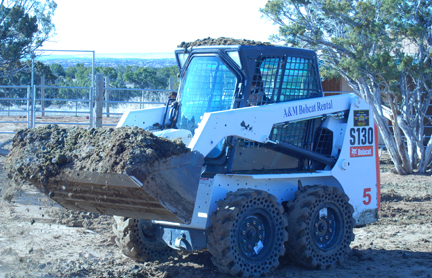
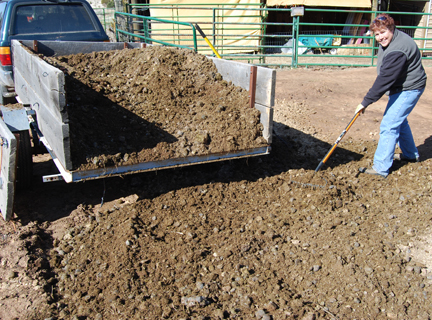
Well we got about 14 yards of composted horse manure yesterday most of which went into Bri’s Giant Pumpkin Patch with enough left over to replenish the regular garden. I struck gold-brown gold! It was fun driving the Bobcat.  I want one of these! Here are some pics.

driving the bobcat

getting ready to dump the load

dumping the load into the trailer

spreading it into the new giant pumpkin patch

Composted horse manure

Bri-1996-2009

Since I lost my beloved horse, Bri, last October to colic, I don’t have any more horse manure for the garden or my compost piles. My neighbor called me and said they were renting a Bobcat for the weekend and offered it to me to take all of their horse manure after they got done with their projects. They have about 4 years of it so it should be well composted. Today I went over and got a lesson in driving the Bobcat. Fun! Tomorrow I will get up early and start loading my trailer with it and making runs to my garden. I’m delighted as I made a new area for the giant pumpkins last fall and tilled some manure in but it needs more so I will amend it with this new stuff . I also need some for the new area where the tomatoes will go. I rotate my tomatoes to not be in the same place for three years so they will go where the pumpkins were last year. I can’t wait to get this stuff-it’s like gold! I will take some pics of the project tomorrow. Who would think one could get so excited over poop!

2009 giant veggie garden video

The real story of Phil the groundhog!

Phil's little brother Bobbi

On February 2, 2010 Punxsutawney Phil the groundhog from England, came out of his burrow on Gobbler’s Knob and saw his own shadow and predicted 6 more weeks of winter.

Behind Phil’s back, his little brother, Bobbi a radical left wing groundhog, one of the original Chicago weathermen group, currently living in Ireland, forecasted 8 more weeks of winter! Bobbi who has long been jealous of his older brother’s notoriety is currently planning a coup on Gobbler’s Hill. Stay tuned for more updates next year!

Yes the snow is back again and  I am spending too much time inside and not in the garden! The forecast is for more snow today and on Saturday. Meanwhile I am busy inside planting seeds and transplanting my tomatoes, peppers and eggplants.  Starting to run out of space under the lightbox so some will go out by the windows soon. Just read that we are up 137% for water precipitation for the year so far compared to last year. Should be a great spring for wildflowers!

Sorry for this but I got to have a little fun while waiting to get in the garden!

Romanesco Broccoli

I am starting some Romanesco broccoli seeds from Seed Saver’s Exchange, which if it will grow here, should be beautiful as shown. The apple green spiral pattern looks fantastic and they say the flavor and texture is better than regular broccoli. Grown and prized in Italy. The only drawback is it’s length of time and it likes cool weather. Great! Maybe I should grow it in the winter then but I’m gonna try it anyways!

Mr. flicker must eat!

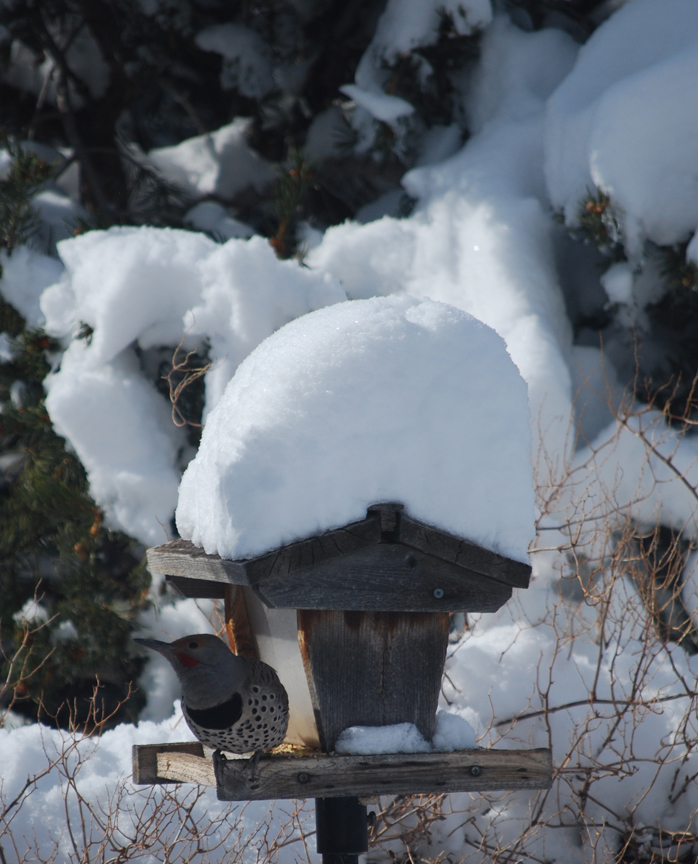
Ok, enough of the white stuff! Went out after work Friday night Mar.20th and drove home in a blizzard whiteout. Pretty scary! Yesterday, Saturday morning, it looked like this but that didn’t stop this flicker from coming to the feeder to rest before he went to the suet feeder to eat. We have 5 flickers staying here this spring. I’m curious if they are done with winter too! Inside the plants look good..

The secret of carrots and beets in winter!

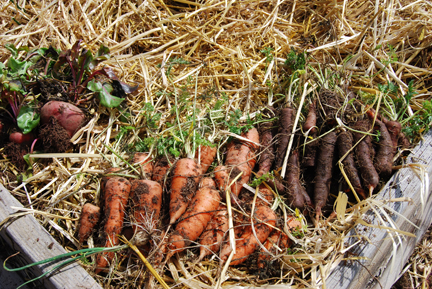
A couple of days ago was beautiful here so I went out and took out the last of my carrots and beets from last year so I can start some new ones for this year. I’ve been taking them out all winter even though it has been really cold here. The secret? I covered them last fall with about a foot of straw and they have been doing nicely under all that insulation. The ground never froze. Here are the carrots after I pulled off the straw and just before I dug them out.

The next picture is the freshly dug out carrots and beets. Notice I grew both purple and orange carrots. I planted all these last spring!

This picture- they are cleaned up in the kitchen. I love those purple carrots-really sweet tasting. They are purple on the outside and orange inside. Awesome!

And lastly is a picture of the chard from last year doing nicely. I will leave it in and cover it back up and will uncover it when it warms up. Chard is one of those vegetables that will come back each year if protected. And another bonus is the rabbits don’t know it exists under all that straw!

Just transplanted tomatoes

Last year was my first try at growing tomatoes from seeds and I really struggled with them. They were small, stunted and turned purple. So I have done some things different this year. First I didn’t start them so early. I waited until the first week of March to plant them instead of Feburary. Second, I put the lights within 2″ of the plants at all times. Third I put up some reflective insulation which looks like silver bubble wrap all around the lightbox to keep the heat in during the day and for reflection. Fourth, I put some sheets of the insulation on top of the light box at night to keep more heat in. Fifth, I put aluminum foil on the base of the light box where the tomatoes sit on. Both the reflective insulation and the foil really make the light bounce around and give the plants more light. Sixth, the tomatoes are on a timer so the lights go off at 10:30 pm and back on at 6:30 am so they get 16 hours of light and 8 hrs of darkness. I learned in my MG class that plants need darkness to help with photosynthesis. So last year’s tomatoes turned purple as they got cold and couldn’t absorb phosphorus.  But not this year. I transplanted  about a week ago my first batch of tomato seedlings out of their small cell into 3″ pots. These are some pics of the first batch.

So far they are doing well. Today I transplanted the second batch that was ready. I read somewhere that you should transplant tomatoes when their first true set of leaves come out (the very first baby leaves when it germinates are called cotyledon leaves but these are not the first true leaves-the next set is) but I waited until the second set of true leaves came out and I think they’ll do better.

I buried the stems up to the cotyledon leaves and gave them some Thrive to help with the transplanting. Look how much they have grown already!