Jimmy Nardello peppers

A lot of people have been asking if they can pick the Jimmy Nardello pepper while it is green or wait for it to turn red. Answer: WAIT TILL IT’S RED.

This is one of my favorite peppers to grow and it isn’t hot at all but is a very sweet, red pepper. The Jimmy Nardello pepper is a fairly long, skinny, thin-walled pepper that is sweeter than a lot of other ‘sweet’ peppers. It’s an heirloom that “came to Seed Savers Exchange by Jimmy Nardello, whose mother brought the seeds to the United States when she emigrated with her husband, Guiseppe, from the Basilicata region of Italy in 1887.” It is a frying pepper but I like it on the BBQ as well. It is easy to grow here in Santa Fe and is prolific. But you let them turn bright red before picking them and eating them.

Cylindra and Chiogga beet harvest

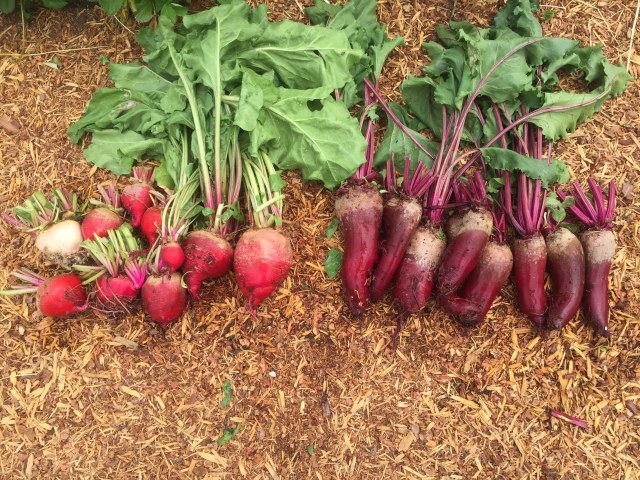
Chiogga beets on the left and Cylindra beets on the right

I just harvested my beets I planted in the spring and got 13 lbs! I grew two heirloom varieties- Cylindra and Chiogga.

The Cylindra beet is originally from Denmark although the seeds are available in the states as well. They are a rather long, sweet buttery beet which is great when sliced. It is a dark red and actually grows a little out of the soil so they are easy to see when they are ready for harvest. One of my favorite varieties of beets.

CHiogga beets are striped insideThe Chiogga (pronounced kee-OH-gee-uh) is an Italian heirloom that was establish in the 1840s. It is a round beet that has beautiful pink and white concentric stripes inside and the flavor is sweet as well-another favorite of mine.

I’m going to start more from seed for a fall harvest. Anybody got some great recipes for beets?

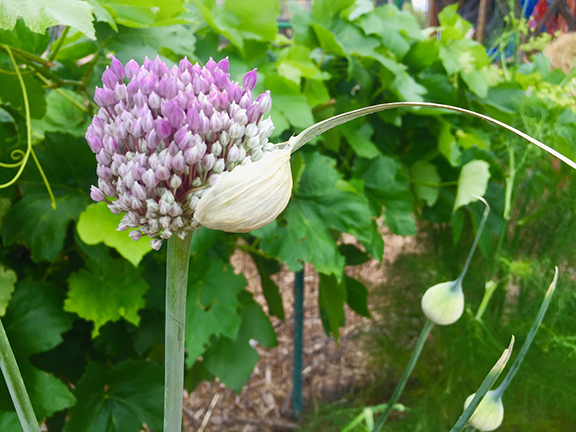
leeks gone wild!
I grew leeks for the first time last fall and didn’t harvest them before the seed heads formed about a month ago. I read they are too woody at that stage and I can leave them to flower.  If I do this, I’ll have many volunteers next year. Well that sounded good so I let them go.

The flower is gorgeous and attracts many beneficial bugs. Glad I left them in…

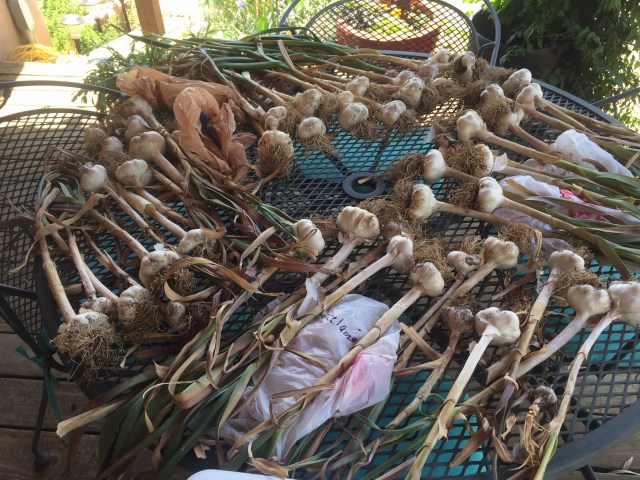
Garlic!

Well, we harvested garlic this last Wednesday at the Master Gardening Vegetable Demo Garden. We had planted 4 varieties last fall, I believe in October.

It is now ‘curing’ on my outside table in the shade of our portal where it is protected from the rain (what rain?) or should I say, potential rain.

Curing is the process of drying out the outer papery layers on the garlic bulb and takes around 3 weeks. If it rains (lol) I will cover it with a tarp so it doesn’t get wet as that would ruin the garlic. Never get garlic wet. It needs to be in a dry, airy, shady location while it is curing.

Curing and then storing garlic allows you to extend your summer harvest of garlic well into winter… and my favorite thing about garlic is that it still stays fresh long after it’s been cured. When you harvest, don’t clean the dirt off the heads. You can do that later but never with water-just brush the dirt off the heads.

Also soft- necked garlic can be braided while the leaves are still soft, (if you like) and the heads are drying out. Hard neck cannot be braided as the stem (think neck) is too stiff. When it is done curing, I will cut off the stems about an inch above the heads and store in a cool dark place in the pantry.

As to my own garlic, it isn’t quite ready to harvest yet. How do I know? It needs to have about half the leaves die back before digging it out to harvest and I’m about 2 weeks away. I love the smell of garlic and can hardly wait to harvest my own!


Tomatoes planted on May 24-latest ever for me

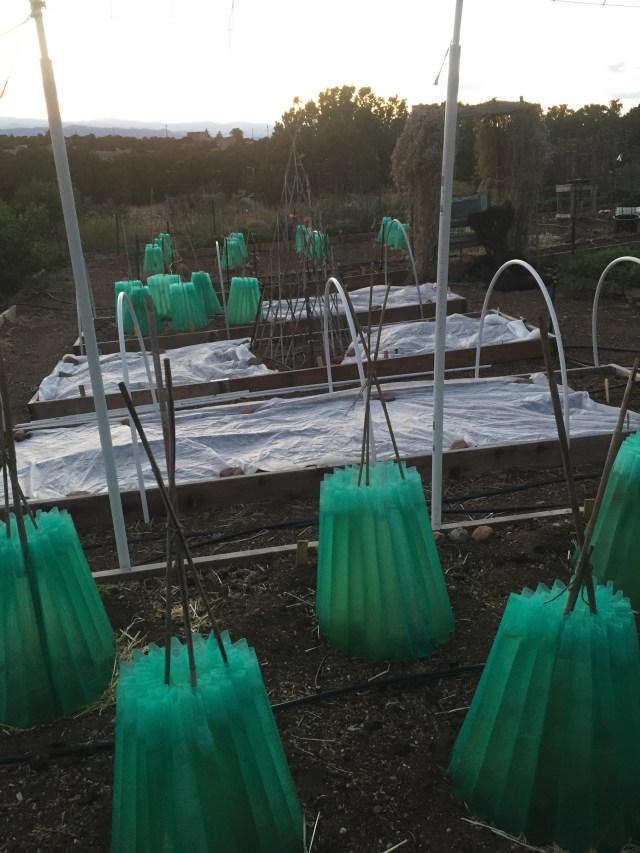
Well now it is June 6 but want to catch up with what’s going on in the garden. All 31 of my tomato plants were planted in Wall of Waters on Friday, May 24. I had a wonderful crew-Bob, Tom and Janine (yes another Jannine!) and me. I hurt my good knee and was hobbling around so I am grateful for their help. Many thanks!

We got it done so quickly that we also planted some Italian beans by seeds, transplanted pepper plants (in wall of waters too), and transplanted some cabbage. With so much cold we’ve been having, I was happy to get them in when I could on a beautiful, warm, non-windy day. The beets and onions were planted 2 weeks before and are doing well. They could handle the cold.

Since that time I have been busy trying to get the last of the veggie garden in. More dry beans, winter squash, summer squash and cucumber seeds are now in the ground and I’m awaiting their germination. Yesterday I planted sweet potato slips. I have still have carrots and flowers to plant. Almost there!

The weather is now in the high 70s to 80 degrees- in the day and in the mid 50’s at night. Amazing how it goes from winter (last week it was snowing) to summer weather in just a few days.


Tomato plants transplanted into pots

This past Friday, April 19, all the baby tomato seedlings were transplanted from the germination trays into 2.25 pots where they will stay until we plant them outside. There are 155 total tomato plants.

My main helper, Linda Archibald has been doing this with me for about 4 years and this year Tom Pollard joined us to learn how to do it all. It took us 4 hours to transplant them. Thank you folks! There were 4 tomato no shows which isn’t bad for how many we planted. It is amazing how fast the seedlings grow since it has only been 16 days since we planted seeds.

We use Moonshine potting soil from Agua Fria Nursery to grow them in-amazing stuff as everything grown in takes off really fast. So now they are off the heat mats and still inside under lights that will be 3 inches away from the tops of the tomatoes. I put the lights close so they grow sturdy stems. If you put the lights higher they can get too tall and lanky. As the plants grow, I raise up the lights with them. I will actually have around 28 tomato plants and Linda will have 59! The rest are orders. Looks like it’s going to be a big year for tomatoes for Linda! I hope she buys another freezer to store all that sauce she’s gonna be making! I’m hoping to get them out in early May again this year but Mother Nature will decide when they will go out, not me!

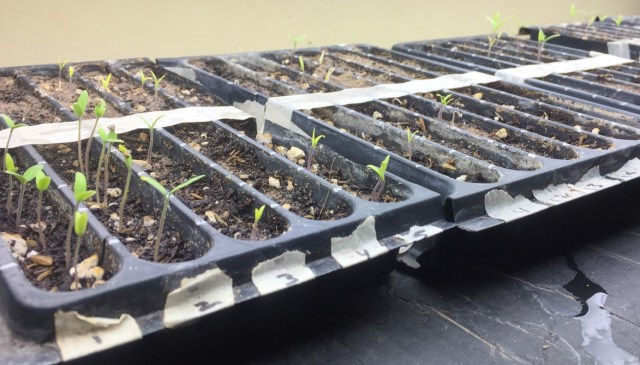
Tomato seeds starting to come up April 9th

The tomato seeds are starting to germinate in their trays. It has taken only 5 days!  Still more to germinate but many are already up. A few haven’t germinated so I will replant if they don’t come up in a few days. They are under fluorescent ‘daylight’  T-8 lamps that are in a standard 48″ fluorescent light fixture that I got from Home Depot. They are also on heat mats and I have a heat mat thermostat set to 80 degrees. The heat mats and thermostat I got at Amazon. I never use to use a thermostat but one year without it, the temperature went to 100 degrees and the seeds fried. With a thermostat, it controls the temperature perfectly to whatever is the optimum temperature for each crop. In this case, the optimum range for tomato seeds for germination is between 70-85 degrees.

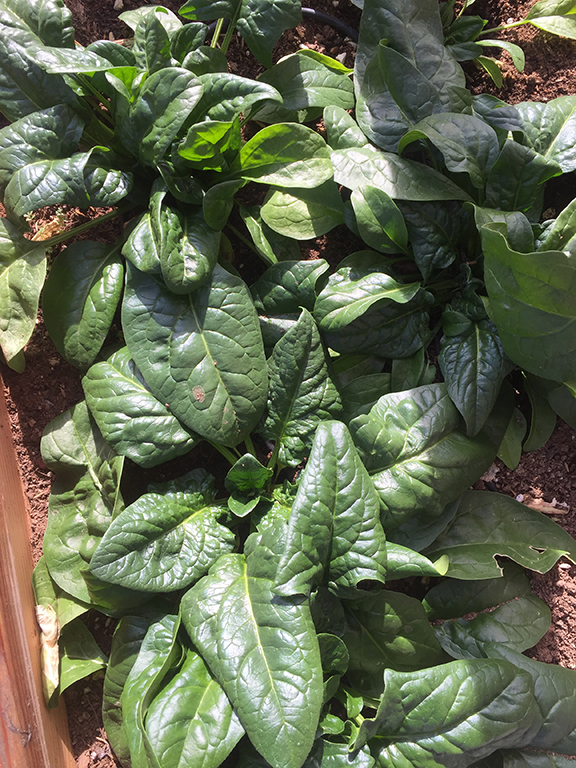
Winter spinach!

Nothing is better than spinach in the winter-sweet and tender. These pics were taken on November 23. I harvested all the outer leaves as they were slowing down their growth when the days got shorter and won’t start growing again till Jan 15. I harvested (two) 2-gallon bags of spinach!


Even the big leaves are tender. And it lasts a long time in the refrigerator!
Still good in late December. The variety is Carmel.


I still have the plants in my coldframe and hope they make it through winter. If they do, I’ll get 2-3 more harvests in spring. As of this storm last week, they were still alive. With this El Nino weather pattern, we had some much-needed moisture in the form of snow. Having been in an extended drought last year, this moisture is welcomed indeed. And now another storm is hitting us tonight on New Year’s Eve. We shall see how much snow it will dump by tomorrow. Today’s high was 25°F and tonight’s low is 15°F although it has gotten down to 5°F at night this last week.


Winter is here early

Fall harvest-tomatoes, Tahiti Butternut squash, Bradford watermelons and Craupadine beets

I just heard last night’s snow was the earliest on record for Oct 14th in Santa Fe. The weather apps have said it was going to be 27°F last night. Woke up this morning to a light snow, ice and the temperature was 24°F here. Harvesting has been intense the last few weeks. Why is there always so much to pick in the end? The only annual crops left are a few kale, beets and cabbages outside in the main garden and greens in the greenhouse and cold frame. I’m not sure how they fared as I wasn’t able to go out and check today, and in truth, with 34°F for a high, I was in no hurry to see if they made it. They were covered with winter weight row cover with the hopes they make it and I will check tomorrow. I was more concerned the barn animals were ok with this first cold snap and made sure all the heaters in the water tanks were working and the chickens had their heat lamps on. I guess winter is here.

Butternut winter squash-doesn’t attract squash bugs

Here is a winter squash that doesn’t attract squash bugs. I’ve grown the very sweet Waltham Butternut, an Italian variety called Rogosa Violina and this year a variety called Tahitian Butternut-all don’t seem to attract squash bugs, at least in my garden. And I grew these because I had read they don’t attract them.

In the last post, I talked about Rugosa Friulana, a summer squash that doesn’t attract squash bugs, so now we have both a winter and summer squash that don’t attract these pesky bugs. Try these two types next year for more carefree squash!

Rugosa Friulana Zucchini-doesn’t attract squash bugs

Rugosa Friulani

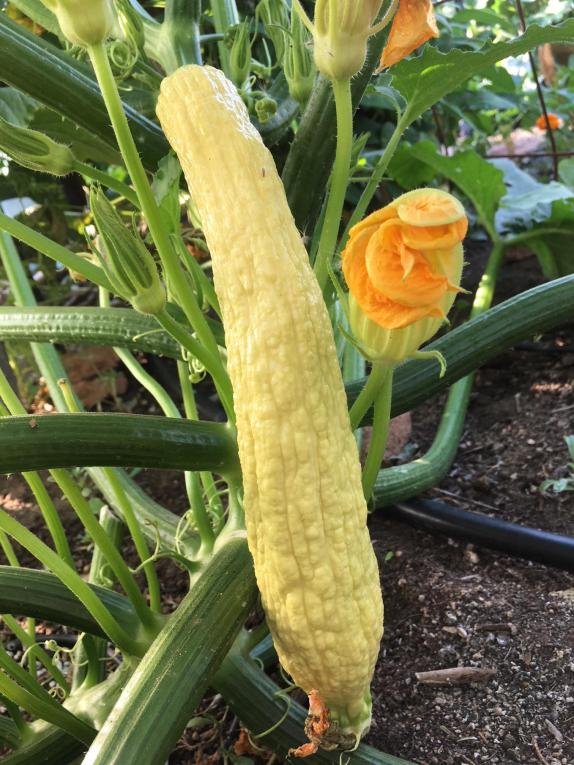
I’m trying a new variety of zucchini this year called Rugosa Friulana. It is a yellow, warty zucchini. It is growing 5′ away from my favorite green zucchini, Costata Romanesco. Both are Italian varieties. I thought I’d grow both and compare them.

COMPARSION

BUGS
I covered both plants with row cover after planting by seeds in late May. Male blossoms always appear first with squash, and then the female blossoms (with their little fruit attached at the base of the flower) appear. After the female flowers appear, I uncovered them both so the bees could get in to pollinate them. By keeping them covered early on, I avoided the Squash Viner Borer which appears earlier in the season and is gone by the time the female blossoms appears.

-The Costata Romanesco attracts squash bugs and I pick the adults and eggs off of the plant.

The Rugosa Friulana DIDN’T ATTRACT SQUASH BUGS IN MY GARDEN. That fact alone will make me grow it again.  It’s only 5′ away Costata Romanesco, so you’d think it would attract the squash bug but it didn’t. How thrilling is that!

PRODUCTION
-The Costata Romanesco started producing zucchini 2 weeks ago-mid-July

-The Rugosa Friulana just produced the first fruits now-Aug 7. Not that much difference.

Costata Romanesco

HARVEST

Harvest when Friulana is 6-8″ long. I have let them get bigger but they got woody and hard skinned so harvest earlier when they are smaller. The one in the picture is bigger than 8″.

TASTE
Now comes the taste test. I sliced both and sauteed them in olive oil with only garlic salt.

The Costata Romanesco tends to have less dense flesh and has a sweet nutty flavor. When you slice it into discs, it has beautiful fluted sides. It has always been my favorite.

The Rugosa Friulana has denser flesh when you cut into it (I like that) and has a slightly different flavor (hard to describe but kinda nutty too). When you cut it into discs, it also has ruffly sides from the warts. I like it just as well.

So if you only want to grow one zucchini plant, you might consider Rugosa Friulana– very flavorful and squash bug resistant.

Both are really good but just knowing Rugosa Friulana might not attract squash bugs  makes me want to grow it again. What a pleasant surprise!

LATER NOTE: Someone wrote me and said they did get squash bugs with it but I have not had that problem. So I should say it is squash bug resistant. That is still good enough for me.


Harlequin Bug Control

Harlequin bug. Photo courtesy Hobby Farms

I’ve got a lot of questions from people about an orange and black bug attacking their food crops. It’s called a Harlequin bug and it is a bad one for our vegetable gardens. You need to hand-pick them off right away as they can decimate your  vegetable garden. They particularly like crops like cabbage, broccoli and mustard but will attack squash, beans, corn, asparagus, or tomatoes. I pick them off and put in a bucket of soapy water just like for squash bugs. Funny But I don’t remember them in years past but they are here now. Some people are reporting picking off hundreds of them! So don’t wait, get on it NOW.

Read more at Gardening Know How: What Are Harlequin Bugs: How To Get Rid Of Harlequin Bugs https://www.gardeningknowhow.com/plant-problems/pests/insects/get-rid-of-harlequin-bugs.htm


Monsoons are here!! Free your tomatoes!

Some of my new dwarf tomatoes-about 3′ tall, loaded with blossoms and some tomatoes and looking good!

TOMATOES ARE FREE! FREE AT LAST!

Now that I’ve had 3 days with some rain and lots more in the forecast, and no leafhoppers in sight, I decided to free the tomatoes. If you still see leafhoppers in your garden, I’d wait a few more days. And of course some of you have already taken the row cover off but I like to err on the side of caution.

Now that they are free, I placed straw over the ground around the tomatoes so no dirt shows. This is done to keep the Early Blight fungal spores from getting on the lower leaves from overhead watering or even the rain. I noticed two tomato plants had Early Blight starting so I immediately cut off the yellowing leaves on the bottom, and trimmed all lower branches, making sure no leaves touch the dirt or straw. I disinfect my trimmers between trimming plants with 10% bleach-about 2 tablespoons in a container big enough to put my hand and the trimmers inside it since I’m reaching in around the leaves and it is contagious between plants.

Tomorrow I will spray all the tomatoes with Serenade, a biological fungicide that will help prevent Early Blight. Sure looks good to see the tomatoes instead of row cover! Finally I can see my garden grow!

Back home in the garden

Beans from Italy coming up nicely under row cover in a bamboo teepee

After a wonderful trip to Italy, I’m now back in the garden trying to get it finished. Seems I got a lot of dry beans in Tuscany at a Florence Farmers Market and have planted 4 different varieties-Fagioli Zolfini, Fagioli Piatellini Nuova, Fagioli con L’Occhio (a black-eyed pea) and Borlotti. These are dry bush beans. I love dry beans as I just have to plant them and after they are up, give them water and you don’t pick them till the end of the season after they dry. Not too many bugs bother them either at my place. They make great soups and stews in winter. So looks like this is the year of the bean.

But I have planted many other interesting crops this year as well.  Other new veggies/fruits include the Bradford watermelon, Tahiti Butternut, a yellow zucchini called Rugosa Fruilana, Craupadine beets and my Fuggle hops and artichoke came back from last year and are doing well. Also 15 bare root raspberries I planted this spring are all up and doing nicely-the variety is Polona-I got them from Nourse nurseries online. My dream is to have so many raspberries I get sick of eating them (never!) And I’m starting a new thornless blackberry (Triple Crown) area in the garden. I got some beautiful 2 gal plants from Newmans for only $15.

And of course I have more tomatoes than I need but have cut down drastically since I am not at the Santa Fe Farmers Market. This year I’m growing more dwarf tomatoes than regular tomatoes and some of them are trials for Craig Lehouiller. All my tomatoes are caged and have row cover wrapped around them to protect them from the Beet leafhopper which passes a deadly virus to them here in the southwest called Curly Top Virus. The row cover is also great for protection from hail storms. It will come off when the monsoons arrive. Hope they do well and can’t wait to taste them. I haven’t eaten a tomato since last November when my crop finished as I won’t eat store-bought tomatoes. Guess I’m a tomato snob.

I’ve actually cut down the garden by 30% this year due to our drought. Pray for rain (no hail please!)


Root Trainers-unique propagating trays

Fava beans in Root Trainer

I started using ‘Deep Root trainers’ last year for my fava beans and other bean crops that need deep cells or for plants that don’t want the roots disturbed when planting. The cool thing about them is that the cells are 5 inches deep and shaped like a clamshell, with two sides that open up like a book.  There are 8 sections total that fit snugly in a tray to hold them upright that comes with the kit. They are great as they have grooves that keep the roots growing straight instead of circling in the cell and strangling the plant. They also air prune when they hit the bottom of the cell.  No need to transplant into another pot, just plant them out in the garden. You just put seed starting soil in each cell, pat it down and put the seeds in. The only drawback is the plastic clamshells are very fragile and must be handled super carefully to keep from cracking but knowing that, I am careful and have them for three years so far. You can get them through Amazon. Get the 5″ deep ones, NOT the 3″ ones.

Pictured above are fava beans in their cells, 6 are already planted in the ground. Just carefully open the clamshell and slide them out into your hole in the ground with no root disturbance for those sensitive plants that hate to be transplanted.

Craupadine beets started in Root Trainer

I also used root trainers with a hard to germinate french variety of beet called ‘Craupadine’. It is probably the oldest beet in existence. I have not had much luck with germination when planting these seeds directly in the ground so I decided to try them in the rootrrainers this year and have much better germination although still spotty. I thought being a root vegetable, they probably would not like to have that main root disturbed. I think they will do well. I won’t wait till the plants are too big.  I am planting them outside after the first true leaves (cotyledon leaves) come out. So far 27 have germinated which is more than I have ever grown at one time.  They are ready for transplant above. I am so excited as these are the sweetest beets I’ve ever eaten. The french farmer markets cook them over a smokey fire in foil and serve them still warm.