Organic farmers win in court case against GMO farmers

Some GMO crops are called Franken Foods

Just read about a court decision against GMO farmers whose crops contaminate organic farmers crops. Let’s hope this will continue within the judicial system throughout the country for other organic farmers whose crops get contaminated by GMO farmers.

‘The Minnesota Court of Appeals recently ruled that a large organic farm surrounded by chemical-laden conventional farms can seek damages for lost crops, as well as lost profits, caused by the illegal trespassing of pesticides and herbicides on its property instead of the organic farmer getting sued by the GMO farmers and corporations.’ To read the story: the Minnesota Court of Appeals recently ruled that a large organic farm surrounded by chemical-laden conventional farms can seek damages for lost crops, as well as lost profits, caused by the illegal trespassing of pesticides and herbicides on its property.

Read the whole story here: http://www.naturalnews.com/033216_GMO_contamination_lawsuits.html#ixzz1jf7zs2Yq

How to make compost bins the easy way!

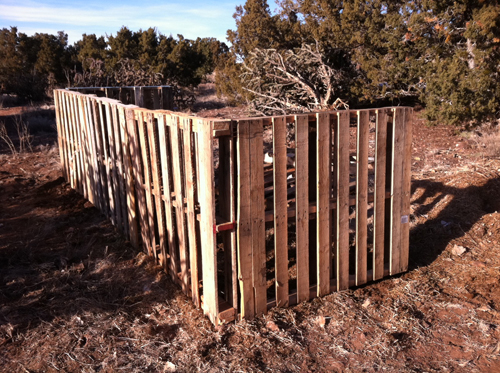
I do both vermicomposting (worm farming) and traditional composting. These bins are for traditional composting. Making compost bins is easy. Yesterday I made 3 new compost bins in 2 hours. It’s easy using pallets as they are free (I got my from ‘The New Mexican’ building- turn onto the frontage road of the interstate at the outlet mall road) and it’s great to recycle them.  In fact the only thing you’ll need besides the pallets is some baling wire (the kind for coyote fencing), pliers and some wire cutters. Get pallets that are all the same size and not broken so they have a clean look.

The first thing you need to do is get 7 pallets.  Three for the backs, 2 on each end and 2 for the inside to make 3 interior spaces. That way you can put your rawest materials in the first bin and then when needed you turn it into the next bin when it has somewhat decomposed and then turn again into the last one for finished compost. Find a place to your compost bins and rake the area clean but you don’t have make the ground spotless because you are going to bury it anyways.

Drag them into position and start with 2 pallets to make a corner. Standing them up, put one pallet onto the first back piece and wire them together on the top and bottom. Use the pliers to really tighten the wire so they are not floppy. Now the 2 pallets should stand upright without you holding them up. Now it’s easy to wire the rest.

Next wire another pallet to the one on the back on both the top and bottom and then the last one on the backside. Then connect another one to make another corner.

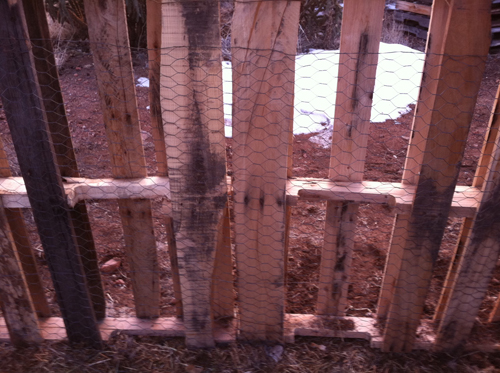
Next put chicken wire across the expanse of the inside. This is to help keep the rough materials from falling into the walls of the pallets. After I put in the center dividers, I’ll put more chicken wire in each section.

Here’s a look from the inside so far. Notice the two pallets left to make the dividers for 3 sections.

Next wire  the two other pallets dividing the expanse into thirds which is easy. I wire them where each pallet connects on the backside. Now you are ready to make compost which I will address in another post.

working on greenhouse

GREENHOUSE PROGRESS-slow…

In October, I scored some glass panels from our friend, Kate, who replaced her garden room windows and offered them to me. Thanks Kate! In early November, when I rented the Bobcat, I cleared the land to get ready for the greenhouse. It will be 16′ x 12′ interior space when done.  In December we had some really cold nights that started the ground to freeze but it has warmed up a little in January so far. Here is the progress for now..

Jan 7- Beautiful day 50°F. Been beautiful for 2 weeks now. Caleb came over with his JACKHAMMER and we started digging the holes out for the greenhouse posts. We need 8 holes dug. Two of which are in frozen ground. Hence the jackhammer. We got 4 holes done, 2 holes almost done (need to dig them out 2 more inches each) and 2 that are gonna be a bitch because they are in the shade and really frozen. Wonder how far the ground is frozen before we reach thawed ground.

Jan 8-Cold and snowy. Not a lot of snow but can’t do any garden digging today. Hope it warms up again. If we can get the posts set, then I can go out and start to frame the greenhouse on nice winter days.

Jan 9-Looks like it will be in the 40’s for this next week. Not sure when the ground will warm up enough again to work on the post holes. Wah! I would like to get it done by spring to start some seeds inside-March/April. Perhaps this is wishful thinking…sigh.

New tomato contest this year

Hey! I just got a notice for a giant tomato contest for anyone interested in looking into submitting one of your BIG tomatoes this year. The website-PlantYourOwn.com is running its 1st ever giant tomato competition. Click here for details. The contest is simple……just grow a big tomato!!! Signup ends March 1st, 2012. I might have to join!

Winter Pictures in Santa Fe

One must only look around to see the beauty that winter provides. Sometimes I think I have to look harder to see how beautiful it is in winter but then all I have to do is LOOK-really look-just open up my eyes and SEE.  At first glance it seems everything is dead but plants are only sleeping, waiting for the spring winds to wake them up. The earth, she is resting, gathering her strength, renewing herself for another season. Winter provides us time to rest and reflect and I like that.

We are having a mild winter this year and have gotten some good moisture so far but not a lot of snow. Today when the weather reached 50°F, I decided to walk my land and took some pictures. I hope you enjoy them as much as I do.

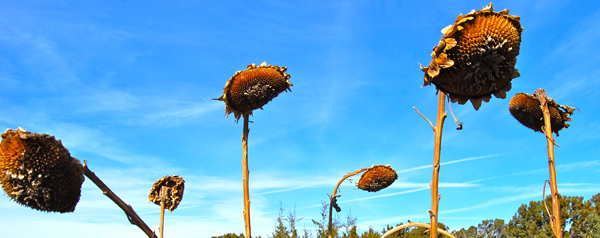
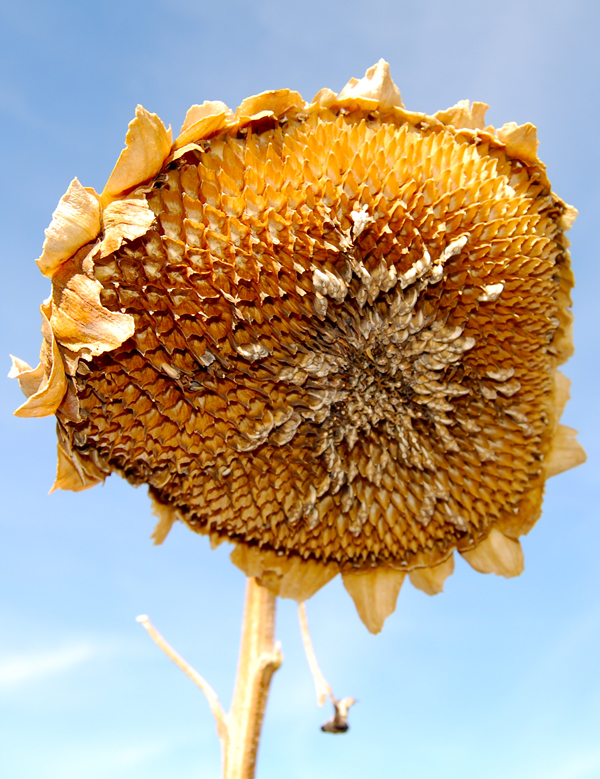
Are they alien spaceships? Nah-their just sunflower heads in wintertime.

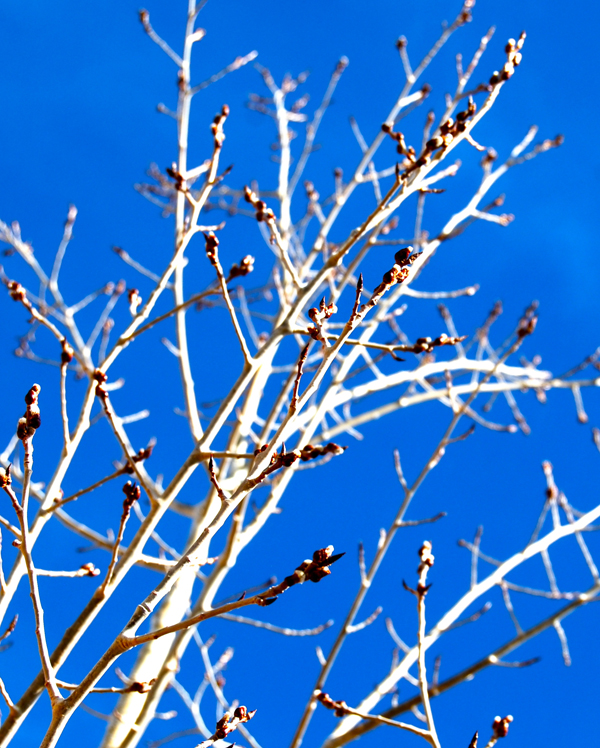
Aspen branches budding out against winter blue sky

Here is a new red birdhouse acquired at the ‘Recycle Art Show’ here in Santa Fe just waiting for the birds to nest in spring!

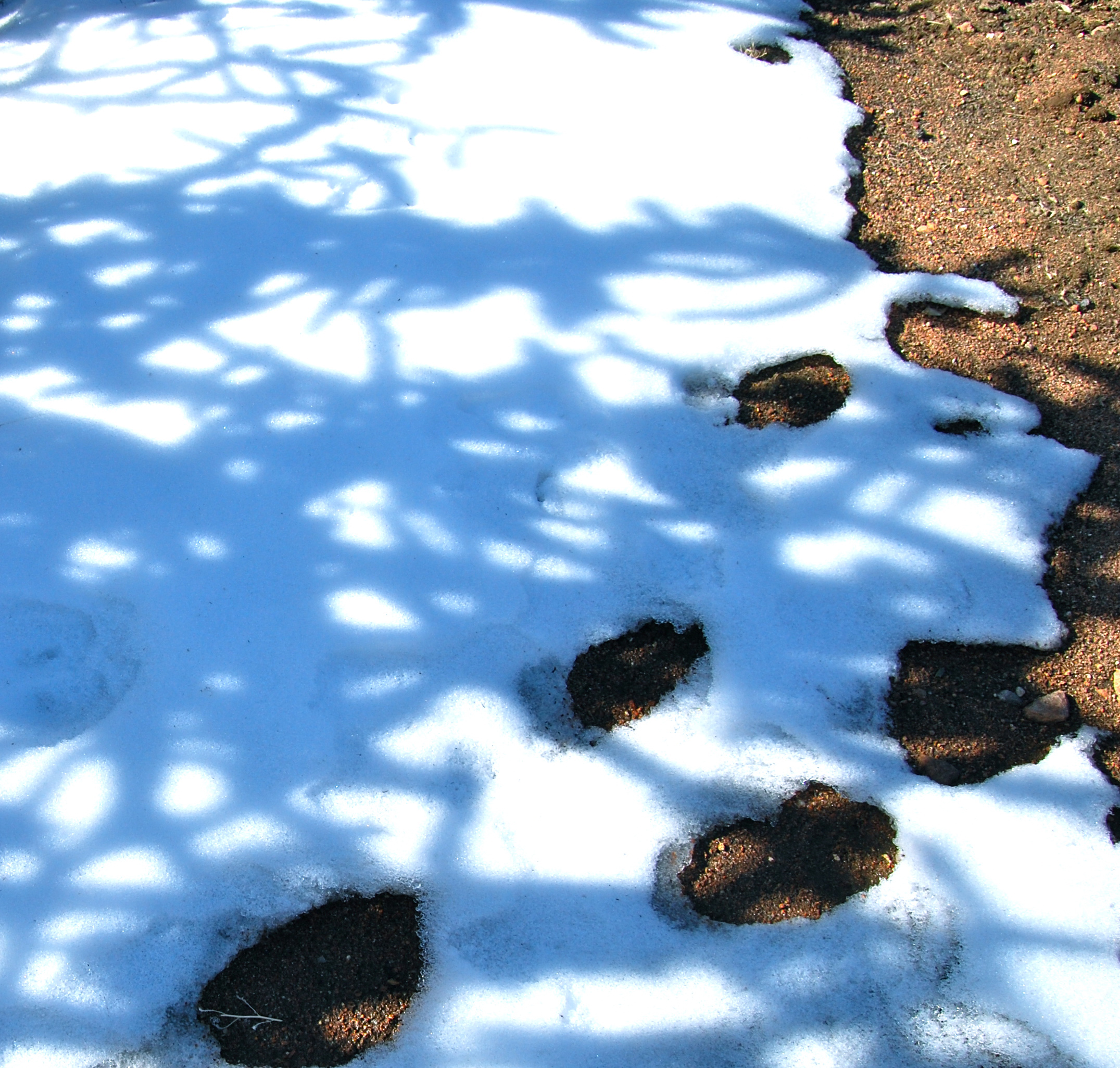
I liked the patterns of the shadows on the snow.

One of our birdie friends, a Flicker resting on a fence post-Isn’t he beautiful!

Aster flowers and snow in winter.

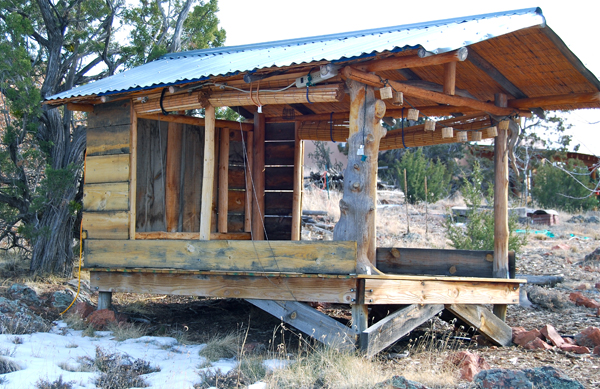
The Tea House is my little getaway where I like to chill out in the summer but it is lonely in the winter

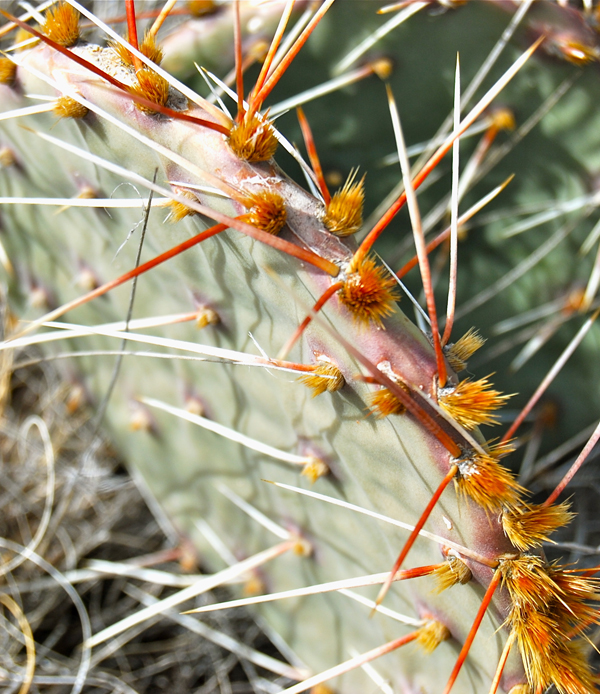
I don’t like cactus but this prickly pear cactus is so beautiful!

This moss rock lives out by the Tea House

Went by the bees today and they were enjoying the 50° weather too-catching some sun rays! This is called bearding when they ball up outside the opening.

This prickly pear variety had lots of pinks on it. I liked the color against the moss rock and snow

This is a closeup of some lichen on granite. Sometimes it is bright yellow like shown here.
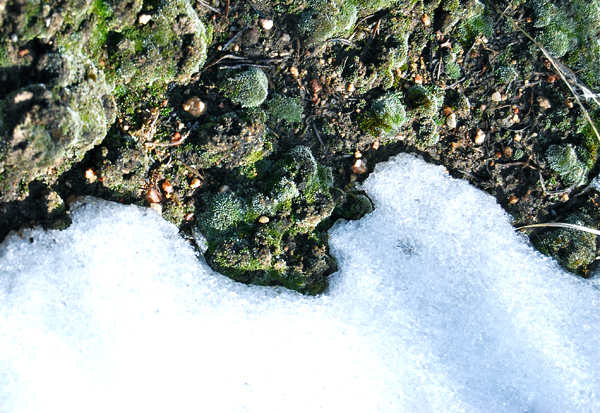
Snow and some kind of really cool moss.

I found these coyote dens on the side of a bluff but decided not to get closer. Check out the footprints around them. No wonder we hear them at night-they are so close! Glad my goaties and chickens are well protected…

Here is one of the sunflower heads I left in the garden last fall. The birds have gotten almost all of the seeds out of it.

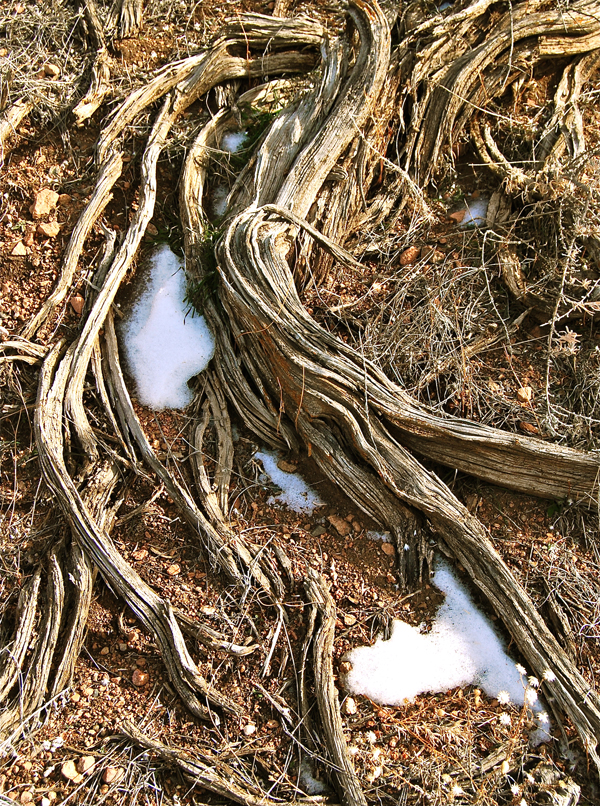
I love this old Chamisa root system.

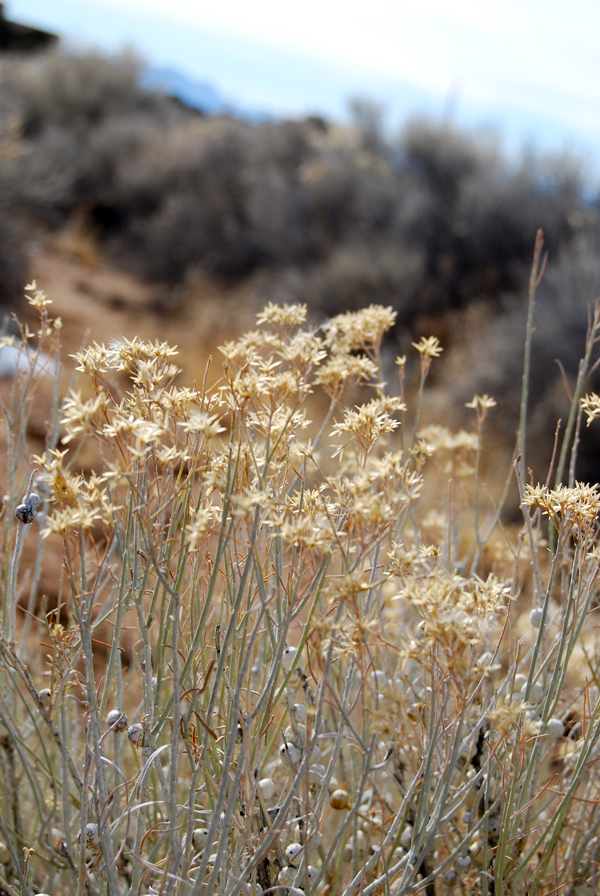
I like the he blue-grey stalks and dried flowers of the Chamisa plant.

The fruits of the Cholla cactus are beautiful. I use to hate Chollas because when you walk by them, they seem to jump on you and have barbed spines that are tough to pull out. But now I’ve come to appreciate them as they provide food for the bees with their beautiful magenta flowers in spring.

This is what the native Buffalo Gourd looks like in the winter. The gourd starts out as a green gourd, then turns yellow and will mellow to a beautiful ochre color as it dries. Their skin is too thin for making anything out of them but I still like to collect them on walks.

.

Happy New Year!!

Happy New Year to all my gardening buddies! Just want to thank all of you who have checked out, read or follow my blog this year-all 31,000 of you! (compared to last year-7500 visitors).  As we grow together I hope more of you share your experiences with me on my posts this coming year-that’s how I learn too! I look forward to sharing another year of gardening with you all throughout the seasons this year 2012. May all your lives be fertile!!


Happy Holidays everyone!

Now that the season is over, I want to wish all of you a happy holiday. Hope you had a great gardening year and don’t forget to have gratitude for this past year. Thanks for all you received good and bad as it makes us all better and appreciate things more. Some of you had a rough year and some of you had a good year but no matter what you’re still here right? Give thanks. We get yet another opportunity to get it right…

Herbs De Provence

I love my herb garden even though it is sleeping now covered under a blanket of straw. This past season, I had to start over because many of the herbs died from that bitter cold winter we had last year. I didn’t realize how much I use them in the kitchen. I babied the new plants all summer. In the fall I picked a few of the herbs for drying and friends gave me lots as well.  I made bundles using a rubber band at the base of the stems and hung them upside down to dry.  After they dried, I put them in plastic bags and squished them by hand so the dried leaves fell off in the bag leaving me holding most of the stems. I took out the remaining stems, poured them into 1/2 pint jars, labeled them and put them in the pantry. I also have smaller jars of herbs that I keep close by in the kitchen on a shelf ready to use for cooking. There is nothing nicer than the aroma of the fresh air-dried herbs unless it is using them in your kitchen when you cook.

I may have to buy this  just to get the beautiful little ceramic crock!

My dried herbs wouldn’t be complete without my favorite blend of herbs, Herbs de Provence, which is a mixture of some common herbs created in the 1970s found in the southeast tip of France, where it borders Italy and includes all the French Rivera. These herbs should be used during cooking, not put on afterwards. It is a mixture of thyme, marjoram, savory, rosemary, tarragon, basil and lavender flowers. It can be used on vegetable stews, grilled meats, fish and oven roasted meats and vegetables. Crushing this mixture on a whole chicken and then roasting it with some fresh root vegetables is simply divine in the middle of winter. The smells that come out of the oven are fantastic and the taste is even better. There is no set formula for making Herbs de Provence but a mixture of the herbs above is basic. Many people put in oregano instead of marjoram and fennel instead of tarragon. You can add others as well. Here is a recipe below for making Herbs de Provence:

Herbs De Provence

2 TLB thyme

2 TLB marjoram

2 TLB savory

2 TLB rosemary

2 TLB basil

1 TLB tarragon

Mix it all together and store it in a jar.  If you don’t grow your own herbs, you can still make this combination from your jars of herbs or you can buy it. I just find homegrown herbs fresher and more flavorful. Magnifique!

Winterizing perennial vegetables

Strawberry patch shown here in July need protection now

We should winterized our perennial vegetables and fruits. I have rhubarb, asparagus and strawberries. I already winterized my rhubarb, covering it with some straw and the leaves have died back under it but the roots are protected under the straw. Next I’ve been waiting for the asparagus ferns to turn brown and they just started so now I can cut them back to 3-4 inches high and cover them with straw too. Lastly I have a pretty big strawberry patch (about 8 feet x 40 feet) and was most concerned with it as I almost lost it last year when I did NOTHING to winterize it. So after the -20°F we had last winter, I want to make sure I help it for this winter. I’m going to cover it with about 6-8 inches of straw this year. It’s leaves are still green with the underside of them red. This week I will cover them for the winter. DON’T FORGET TO WATER YOUR PERENNIALS THIS WINTER as well especially if we don’t get any snow.

Worm Farming-Vermicomposting

Finished vermicomposting area

Last spring when I planted my tomatoes I put worm castings in each hole before I put the plant in. Worm castings are a form of composting that are from (do I dare say it?) WORM POOP! I paid $25.00 for a 5 lb bag for this POOP at one of our local nurseries and I thought, next year I’m going to do this myself and save the money. Plus you don’t have to turn it like regular composting (now there is an idea I like-less work)! Worm castings protect the plants from soil borne diseases, conditions the soil and is a mild natural fertilizer with 1% Nitrogen. People also use it in their compost teas for their plants. I created a vermicomposting area a few weeks ago in my abundant free time (lol)! Here’s how I did mine.

I found out we need a certain type of earthworm called a Red Wiggler (decided not to show the worms-not a pretty sight!). It is a different from our regular earthworm (although they are great in the soil as well). This red wiggler worm has a huge appetite and will eat manures, peanut hulls, oak leaves, humate and other ingredients such as kitchen scraps-non meat-they are vegetarians!! lol

I put together an outdoor vermicomposting area right next to the chickens so they can go to work! Some people put them in special bins inside their people house (not chicken house) so they don’t freeze. Forget that noise-although if you don’t mind…

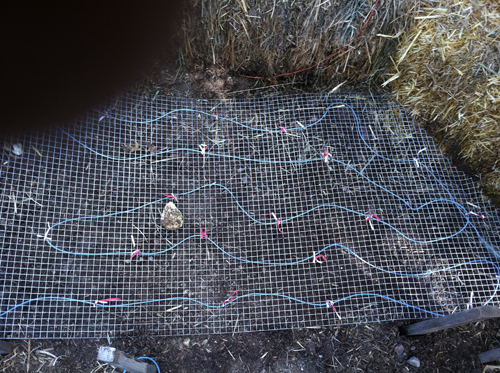
I decided to use straw bales to ‘frame’ my outside area. I heard they will go into the straw in winter and lay their eggs and they come back (I think they freeze and their babies come back) when it’s warmer but I had this soil cable that will keep the soil about 70°F and decided to try it to keep them from freezing this winter and keep them working. (Crack that whip!)  We’ll see if it works this winter. Here I put the cable down (above pic) .

Then I put some hardwire cloth over it and wired it on with some twistie ties from my garbage bags. Make sure the wire is underneath the hardwire cloth. I did this so when I shoveled the compost out later, I won’t accidentally cut the wire.

Next I covered the wire with straw and newspaper to make a bedding for my new wiggly friends. I wet down the area so the materials were damp but not soaking wet. Worms like their environment moist but haven’t learned to swim yet!

After that I put some food down for them. What else but pumpkin! I have lots of that! Looks like they won’t starve this winter! (I heard they love pumpkin-good thing!)  I wonder if someone talked to them and the worm said, “We love pumpkin”. I mean how do we know for sure ?!! I also put in some old chicken manure, squash and coffee grounds for variety! Then I had a friend give me some of these wigglers and I put them on top of this so they would burrow in and feast! I forgot to take a picture of this and when I went back less than 1 minute later to take a picture they were already ‘down under’ this stuff.

Last I put more straw over the whole pile and wet it again so everything was moist. Now I check every week and pull up the top layer of straw and add more ‘food’ as needed. Also be sure to keep pile moist so sprinkle with water periodically. This winter when the hoses are frozen I will take a sprinkling can out to wet it. If you don’t get a soil cable, don’t worry, just follow the rest of this post.

One last thing to make it easy to separate the worms from their castings next spring, I divided my vermicomposting area in half and put a board between the two sections-you can see this in the very first picture at the top of this post. They are in the left section now and later when I see the castings I will stop feeding them on the left side and put the food on the right hand side. The worms will migrate over to the new food source leaving the castings for me to take (at least that’s the theory). I hope they are reading this too!

So now I’m a worm farmer! I can’t wait till next spring to get my very own free worm poop! YEE HA!!

Fall Garden Projects-First up-putting the pumpkin patch to rest

Horse manure on top of pumpkin patch

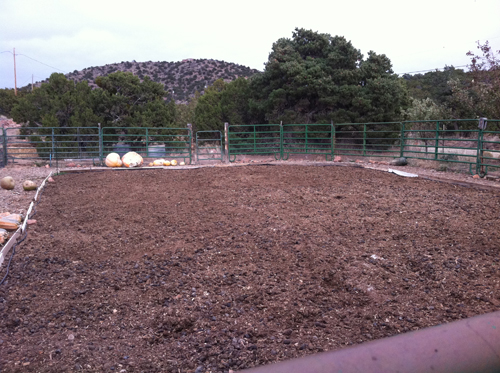
I’ve been really busy this fall around the garden since the Pumpkin Bash. It seems like I never have time to do any projects when the garden is going so I try and get some of the projects done in the fall before the dead of winter. Last week cleaned out the pumpkin patch and then I rented that Bobcat where I spread out about 4 yards of horse manure on top of it. I really needed to dig it in or it would blow away before spring.

giant rototiller-16 hp

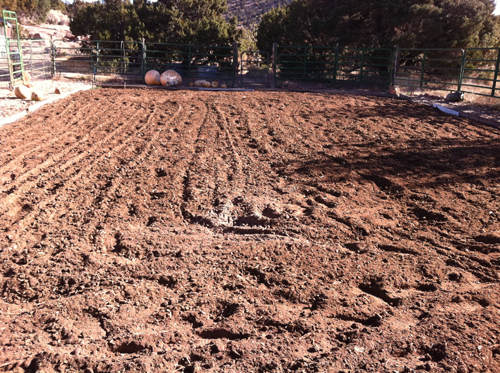
So yesterday I rented a giant rototiller (16 hp) and plowed in the 4 yards of manure, 50 lbs dried molasses (it smells so sweet), 50 lbs mushroom compost (are we cooking here?), and 50 lbs of gypsum (for calcium-makes strong bones, I mean strong plants!) in the pumpkin patch.

final pumpkin patch done

Now it looks so beautiful and is ALMOST ready for next spring! I still have to dig in some leaves (in the holes where I will be planting the pumpkin plants next spring) and a little (I mean very little) composted chicken manure to start the decomposition process so they can decompose over the winter and become leaf mold or should I say leaf gold by spring. This will be the third year for this pumpkin patch and boy what a difference three years makes when you add amendments each year. It’s starting to look good and the rototiller just cut through it fluffing it up together. I don’t like to rototill very much because of how hard it is on the soil microbes but felt that I needed to do it for now since this dirt was so void of any organic material and hard as a rock. I think after this year I’ll won’t have to do it again. I will add more mychorrizial next spring to help replenish the soil microbes.

Bobcat madness!

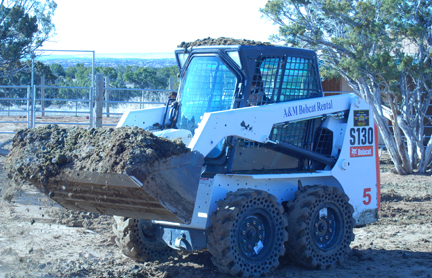
I rented a Bobcat yesterday to regrade the driveway. It was bad. Really bad. How bad? Well a friend said it was like a third world road! We had 2 storms this summer with torrential rain that wiped it out. The ground was still damp from that little snow storm  and perfect for working it. Anyways I had to rent the Bobcat for a whole day. It only took about 3.5 hrs to do the driveway and then I thought hmm, what can I do with it now?! At that moment, Javier pulled up with 2 trailer loads of horse manure, so I spread it out over the pumpkin patch that I had just cleaned up the day before. How fortuitous!  Then I went out to what will be the new garden addition (say what?!) on the back of the existing main garden. I know I said I was done adding on but I’m trying to get a three-year rotation for my tomatoes. I had cactus, piles of dirt, old compost bins and a lot of junk over there just on the other side of the long gourd tower. Well I took the Bobcat and ripped out the cactus, smoothed out the area, removed the junk and cactus, and spread out the old compost inside a couple of hours. Still had some time left so I ran it over to the area I want a greenhouse and leveled it out, removed rocks and cactus and dug up old tree stumps that would have been right in the middle of it. I had to get out of the Bobcat to push  a big piece of cement and some tree stumps into the bucket and dropped a big tree stump on my big toe loading it. Not sure but it’s either broken of severely bruised. I’ll figure that out tomorrow as I am dirt tired as I say.

Phew! Got it all done under 8 hours!

How to collect heirloom tomato seeds

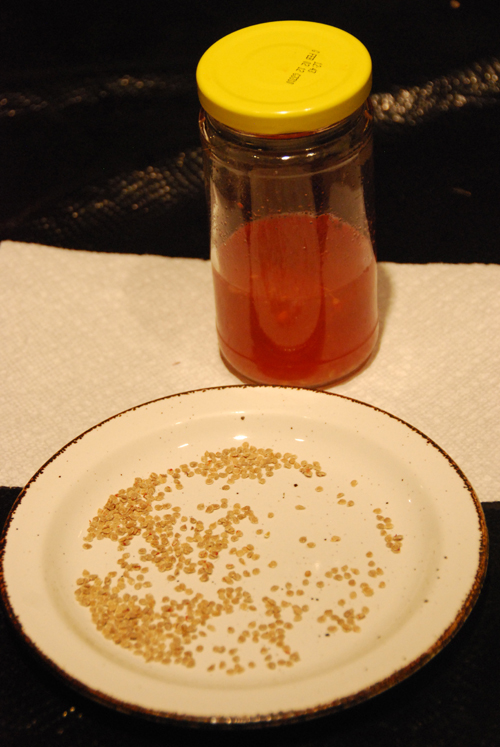
Tomato seeds fermenting in a jar. On the plate are some dried seeds.

I don’t collect hybrid tomato seeds as they may not grow back true.What that means is they may revert back to one parent or the other that they were crossed with. Heirloom tomatoes will grow back true.

The only heirloom tomato seeds I collect are from my giant tomatoes as I’m trying to get some seeds that do well in our high desert and give me some big, really big tomatoes. Last year I got 3 tomato seeds from a giant grower who grew a tomato over 7 lbs in Ohio. This year I got a pretty large tomato from one of those seeds. I kept the tomato which measured 19 inches in diameter and almost weighed 3 lbs and recently got the seeds. I will try some of these seeds next year as well as other big tomato seeds that I got from another grower this week.  Here’s how you can collect your favorite heirloom tomato seeds.

To collect tomato seeds, cut the tomato open, squeeze and scrape out all the seeds and put them in a little jar with some water. Then put the lid on. Try to not get too much pulp in with them. The seed/water mixture will start to ferment in a couple of days and it might bubble a little which is good. The fermentation will remove the slime on the seeds and the seeds will fall to the bottom of the mixture. When almost all the seeds are on the bottom, pour out the liquid, seeds and pulp through a fine sieve, removing the pulp. Keep rinsing until only the seeds are left. Spread them out on a paper towel to drain the excess water and then put them on another paper towel to finish drying. Before the seeds dry completely I move them around so the paper doesn’t stick to them. After they are thoroughly dry, put them in a ziplock baggie, label and store. You can keep any heirloom tomato seeds this way.

My only concern with collecting tomato seeds is if you plant cherry tomatoes too close to the heirloom tomato you want to keep, they may cross-pollinate so think about where they will be in your garden next spring and don’t plant them right next to each other. Tomatoes aren’t pollinated by bees but by the breeze or are self pollinating. Tomatoes originally came from South America and honeybees came from Europe or Africa so tomatoes aren’t native plants to the honeybee hence they aren’t interested which actually makes pollination easier to control.

Time to Collect Seeds

Cosmos, scarlet runner beans, rattlesnake beans, pumpkin, sunflower, zinnias and tomato seeds drying out to be saved-check out my tomatoes in the upper right corner-still have a few and its Nov 7th!

I should have put this post before the previous one. Now that our summer garden is done, we should start collecting any seeds we want before we tear out the garden and add amendments in the fall. I have left many flowers and beans to dry on the vine so I can collect their seeds.This has saved me TONS of money and is a fun thing to do.

After I collect them, I put them in open containers (cereal bowls or cookie sheets)- not plastic bags until they are thoroughly dry or they will mold and go bad. After they are dry, you can then put them in ziplock baggies. Be sure you date and label the bags so you know in future years what is what. The rule of thumb is seeds will stay usually viable for 2-3 years, sometimes more but the germination rate goes down as they get older-so use your older seeds first next year. Having said that, my only giant squash seed I grew this year came from a 07  seed and germinated and grew beautifully. I thought what the heck, I’ll try it anyways and it set a state record!

-I haven’t bought zinnias, cosmos, nasturtiums, sunflowers, marigolds, scarlet runner beans and rattlesnake beans in several years since I’ve saved their seeds.

-Of course I do keep my giant seeds of all varieties-giant pumpkin, squash, and marrow

-I will also keep all the gourd seeds but must let them dry out before we cut them open to get the seeds-otherwise the gourds will rot.

-I don’t save the seeds from my cucumbers as I grow many varieties and they are pollinated by bees so there is a good chance they have crossed.

–I don’t keep some hybrid seeds as they may not grow back true. That means they may revert back to one parent or the other.

-I only keep seeds from a few heirloom tomato plants as I grow cherry tomatoes and they easily cross with other tomatoes that are close and I don’t want to mix them up with my favorite tomatoes.

What to do with a Giant Pumpkin? putt, putt, putt..

You can make them into boats and have a regatta!