NEW! ‘Veggie Gardening 101’ radio show starts Jan 14

I’ll be on the Santa Fe Master Gardener’s Gardening Journal radio show with host Christine Salem twice a month now. My original show gives tips and advice about what to do in a vegetable garden each month as the gardening season progresses. This assumes you have an existing vegetable garden.

We are adding a Vegetable Gardening 101 show. It seems we have many people here in Santa Fe that either have never started a garden or haven’t had success here in our challenging garden area. Many want to be successful organically growing their own food and need help on where to start. So I will take us from the beginning through planning and building a garden, creating good soil, raised beds vs in-ground beds, starting seeds, transplanting plants, varieties that grow well for beginners and even harvesting tips. This will be more basic info but even advanced gardeners might benefit from some of the tips I’ll be giving.

Go here to listen to past radio show podcasts and pick up awesome information -https://giantveggiegardener.com/radio-show/

Here’s the rundown:

SHOW #1—my regular radio show-‘Monthly Veggie Garden Tips’

Where:  airs on KSFR 101.1 on the Garden Journal

When: on the last Saturday of each month

Time: from 10:00-10:30am

Topics: What to do in our gardens for each month, problems that arise and solutions

SHOW #2—my NEW radio show-‘Veggie Gardening 101′

Where: airs on KSFR 101.1 on the Garden Journal

When: on the 2nd Saturday of each month

Time: from 10:00-10:30am

Topics: Beginning vegetable gardening from start to finish and everywhere in between.

Garden Journal

journalIt might be good at the end of the year to review what happened in your garden and/or hopefully you took some notes last season. You can refer back to it instead of relying on your memory on what worked and didn’t work for future years. If you don’t like writing it down than use your computer. I still keep a notebook on when I start seeds, put them in ground, etc but I’m using the computer and my phone more and more these days for my garden notes. I like to go around throughout the season and especially at the end of the season before everything is torn out and make notes on my phone while things are still fresh, then I go back and enter them in on my computer where the pieces of the puzzle fall in place and are sometimes are very revealing as to what happened that year.

So this coming season if you haven’t been keeping a journal, write down important things like did you amend your soil, when you first planted seeds, when the first frost-free day actually occurred and did a late freeze sneak in, when you transplanted seedlings outside, did you protect them,  how hot was the weather and for how long, how cold were the nights, how much rain did we get and did it do any damage (hail), which pests and disease were particularly bad, which plants did well, were they prolific, how long you could harvest certain crops, how long was the season and when the first frost got us.

Sounds like a lot of work? Not really. It’s just recording your OBSERVATIONS through the season and by doing it, you will become a better gardener. It helped me realize a few years back that one variety of tomato got Early Blight for 3 years in a row while the other tomato plants did not (it seemed susceptible to EB- I don’t grow that variety anymore) and that this past season, I could have started my seeds indoors much earlier than I did.

Make a seed box

seed-box2

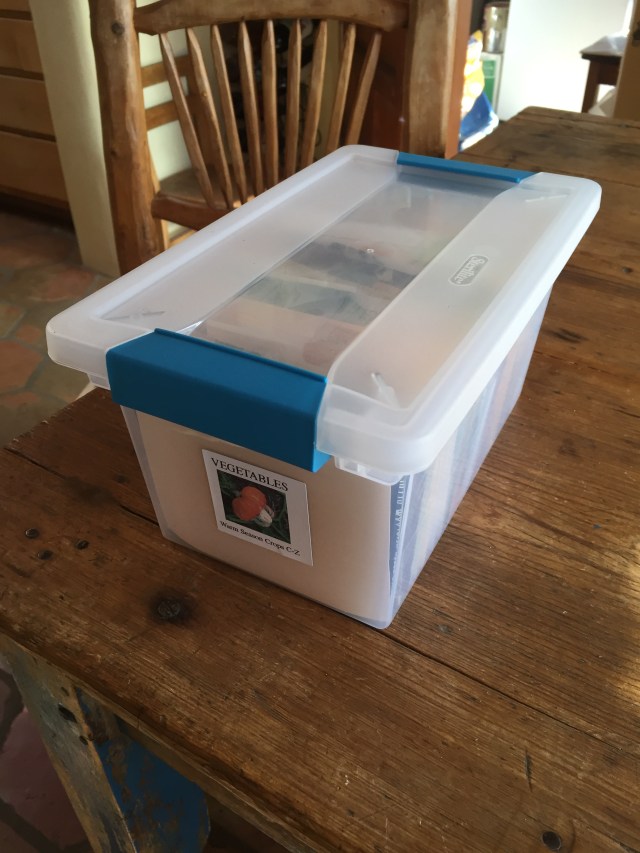
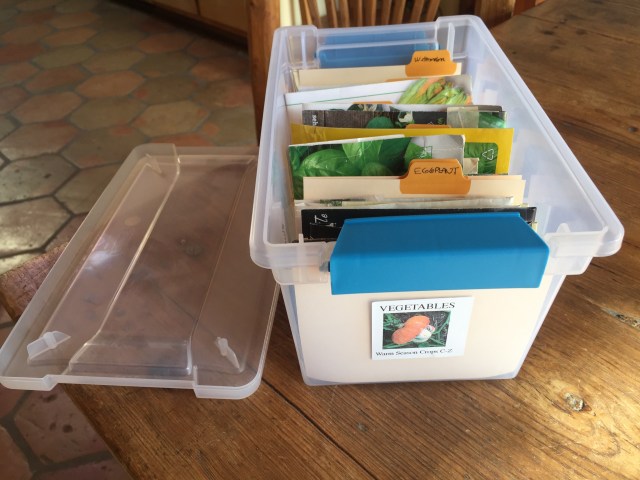
I have my saved seeds everywhere. I had them in cardboard boxes which have seen better days. Some got wet, some got chewed by mice where I keep them in a shed. I needed to get better organized and wanted better protection from the elements and mice so I found some boxes with lids with clasps.

seed-box1

After that, I got some cardboard dividers for the different varieties of vegetable seeds. I had to trim them down to fit in the box and I had to fold over some of the seed packages so they would fit inside. I also made some labels for each box like Cold Season varieties, Warm Season varieties and many other categories. So far I have 6 boxes done. Nice project for winter.

2016 Garden Review

bean-pole-and-beets

2016 GARDEN REVIEW

Here is what happened in my garden in 2016. Wow-what a weird but interesting year mother nature threw at us.  It looks like over and over again I could have planted earlier in hind site.

PLANTING SEEDS INSIDE INFO-for those of you who want to plant your own seeds

BATCH 64_MOONSHINEI use a seed starting soil called Metro mix 300 from Agua Fria Nursery. I plant seeds in very small seed flats (see here). I transplanted up 2 times using a soil mix called Moonshine, also available at  Agua Fria Nursery. Growth was unbelievable with this stuff. I grew my best tomato transplants ever this past year. All warm crop seeds were planted and brought inside and placed on heat mats and under lights as it is too cold to keep them in an unheated greenhouse. All cool season crops were brought inside and under lights but no heat mat, they germinate at a lower temperature.

APRIL
Normal spring weather pattern. Cold one day and warm the next. Windy.

Tomato seeds were planted on April 15 which is late BUT it worked because I used the soil mix Moonshine when transplanting up to a 4 pak from the seed flats (see post above). Moonshine makes everything grow faster.  I think I should have planted the seeds on March 25.

Eggplant and pepper seeds were planted on April 15th with the rest of the tomato seeds and they should have been planted 10 weeks before putting them outside in the ground.  So that means I should have planted them on March 15 to plant them outside by June 1. I’ll remember that this year!

Basil, kale and chard seeds were planted in early April. Did well but I should have started the seeds in March. Transplanted 2x before being planted outside in early May.

MAY
May was warmer than usual. No late frosts. Windy as usual.

-Potatoes were planted May 3. Could have planted them sooner.

Tomatoes were transplanted to 2″ pots on May 6.

Tomato plants were transplanted outside in wall of waters by May 24. This was late but they caught up as the soil was warmer.

– The soil was too cold for any other warm season crops to be direct seeded.

low-tunnel-2016-Kale, chard and onions were transplanted outside in early May. Probably should have put them outside in late April as they can handle cold nights with row cover over them. Need to remember that! Transplanted all different types of basil outside in late May under shade cloth.

Beets and carrots were direct seeded in early May. Germination of Detroit Red beet was good but poor for Craupadine beets. Will plant Craupadine seeds inside next year to hopefully get better germination. My two best beets grown so far have been Detroit Red and Cylindra. I only planted Atomic red carrots this year-good germination. Soil temp can be from 50°-80°F for good germination of these crops.

JUNE
June was a hot month averaging 94 degrees with little rain and lots of winds.

Pepper and eggplant were transplanted  in garden with row cover protecting them from June 1-4 when the soil was warmer, not May 15. I have experienced them going into shock if planted earlier when the soil is still cold.

-Leeks and basil plants were transplanted with shade cloth over them in early June. They both loved the semi-shade and the basils didn’t flower so fast in the heat-huge harvest of them this year. My three favorite basils were Genovese (or Italian) Thai and Lime Basil (had to grow this one from seed). I grew Lemon basil as well but I have enough lemon scented herbs with lemon verbena and lemon thyme, so I will pass on that one next year.
wow-pic-for-blog-The wall of waters came off the tomatoes in early June and the plants had their drip lines put around the plants, straw was placed around their wells to help retain water, tomato cage put on and immediately put row cover over all the rows of tomatoes to keep the leafhopper from biting them and giving them a disease called Curly top Virus.

Eggplant/pepper plants were transplanted outside by June 9th with row cover over them. They loved the warm days throughout the season this year.

sluggo-plus-Warm season crops like beans and cucumbers were direct seeded outside in June. I had a big problem with rolly pollys eating the seedlings as soon as they sprouted. Planted seeds for both crops 3x and only when I used Sluggo Plus did the problem go away and it’s organic too. But the cucumbers didn’t have enough time to grow to fruit and I never got good pollination due to the hot days in June, July and August. No pickles this year. Wah!

-Instead of a green pole bean, this year, I tried a new pole bean called Marvel of Venice and I didn’t like it at all. They were suppose to be yellow but by the time they turned yellow, they were tough and not much flavor. Will not plant them again.

JULY
July was stinking hot averaging 94 degrees with no monsoons. The heat affected the plants adversely. We never get this hot day in and day out in July.

-I was expecting the monsoons to come by the second week in July and they did not. July was very hot averaging 94 degrees and blossom drop was extensive on tomato, cucumber, squash and bean plants—so very little fruit set. I didn’t take off the row covers on the tomato plants because the leaf hopper bug which likes dry, hot windy conditions and (transmits Curly Top Virus -CTV) was still present. I thought OMG, am I going to have to keep the row cover on all season? Luckily August weather changed.

Summer squash got a wilt this year and it wasn’t from the squash vine borer as they were covered with row cover. They died before getting any fruit. Can you imagine, I had to ask people for summer squash this year!
rogosa-violina-butternut1

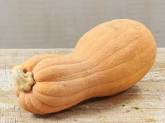
Butternut Rugosa Violina

Waltham Butternut and Butternut Rugosa were my winter squash this year. Both did well. I heard they don’t get squash bugs and for me it was true, I didn’t have any squash bugs on them which was great. Good varieties to grow if squash bugs are your nemesis. I will grow them again.

-My giant pumpkins once again couldn’t set blossoms in late June-early July when they should and didn’t set any fruit until August because of the heat and by then it was too late to get big-my biggest was the size of a basketball! Once again foiled. Will try next year again!

AUGUST
The monsoons finally came in August but not a lot. Still, it cooled down things.

Tomato blossoms finally set but we lost 2 months of growing time. Took off the row covers once it cooled down. Unfortunately, when the monsoons came, the nights got cold- in the low 50’s which slows down the growth of tomatoes but at least I had tomatoes! By mid August I had 2 boxes of tomatoes which wasn’t enough to warrant going to the Farmers Market. Normally I have 6+ boxes mid August increasing to 10-12 boxes by the end of August. Not so this year.

-The peppers and eggplants however, loved the heat and were very prolific this season.

-Kale and onions did very well, they don’t mind the heat or the cold!
thumb_img_9273_1024

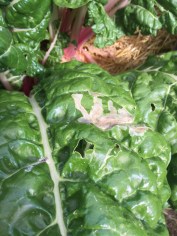
chard leafminer damage

Chard got leaf miners and I battled them all summer but still harvested a lot.

Turned off drip lines to Giant pumpkins, summer squash in August as they didn’t do well.

-Weeds, oh yea, weeds-they were prolific once the rain did come and I didn’t get on them right away so the battle was on but since I decided I wasn’t going to market and wasn’t on any tours this year, I decided to not be so diligent about weeds and picked them at a more leisurely pace to just enjoy the garden. Plus I went on more flyfishing trips this past summer!

SEPTEMBER
Weather much cooler with some rain. Cold nighttime temperatures slowed growth of tomatoes

-This month the tomatoes continue to grow but more slowly and harvest continues. Only lost 2 plants out of 40 plants to CTV disease this year. Because of little rain, fungal disease was at an all time low which usually hits the tomatoes in Aug-Sept.

-Planted my gorgeous garlic. Varieties were Chenok Red, Music and German White + some Stanley garlic from the SF Farmers Market. Hope they do well next summer at harvest time. Usually I plant garlic in October but I taught a garlic class in Sept and put them in then.

-Beets and Carrots-did well and started harvesting in Sept.

-I didn’t use any organic fungicides or insecticides this year as pressure was lite.

OCTOBER
Wonderful warm fall-best ever which gave the veggies a chance to produce more fruit to harvest

-Harvesting of chard, beets, carrots, potatoes, peppers and tomatoes were good.

-Potato size during harvest this month were smaller. I think I should have watered them more. Will try a bigger variety next year. i tried them in Potato bags and directly in the soil. No difference.

Kale got aphids worse-sprayed them with water and still harvested a lot. The really bad ones with aphids I gave to the chickens-they loved it!

NOVEMBER
Unbelievabley no hard freeze until Nov 9th! I haven’t seen it this warm in November-normally we get a hard freeze in October but not this year!

-Harvested everything left in the garden by end of November-chard, kale, carrots, beets, tomatoes, leeks, winter squash.

DECEMBER
Pretty normal December weather but not much precipitation.

-Cleaned out garden but didn’t have time to add compost to beds. Will add it next spring.

______________________________

FRUIT
This year was pretty good for fruit. By far the most prolific fruit this year were apples.

Strawberries- did ok but I’d like to amend the beds this year for better production.

Rhubarb did well until I lost one to a fungal disease called red leaf disease. I still have one left which is actually enough.

Apricots-Since we didn’t get a late frost this year, we had a little apricot crop (very little) but hey, it’s been 7 years since I’ve had ANY apricots. Got about 8 jars of apricot jam from them. I just enjoy the tree as a shade tree mostly.

Grapes-My Himrod grapes did great this year. Loved them.

Raspberries-This was the first season for them (they were planted last fall) so production was low.

Blackberries-Just planted in the spring. They got established and hopefully I will get some next year. Looking forward to it.

Apple trees-They were very prolific in the fall as we didn’t get a late frost this year. Dried many apples and this year made hard apple cider.

Plum trees and peach trees did not do well and I will replace them next year (they are old) with better varieties of peach and pear trees that will do well here. Will get them from Tooleys Trees in the spring.


Happy Holidays!

wreath1Today I woke up to a white Christmas. It’s been quite a few years since I’ve seen snow on Christmas day. Not a lot,  but a few inches is great! What a great time to make a fire, curl up with some book you’ve been meaning to read or dig in to your new seed catalogs arriving daily and dream of your future garden you’ll be planting this spring. I love doing research either with books or on the internet during the winter months when I actually have time to absorb some of it. I think my brain started out the size of a melon and has now shrunk to probably the size of an orange if retaining info is the guide! So I better enjoy this cold weather because soon enough the growing season will be upon us.


Seed Catalogs/2017

catalogs-2017

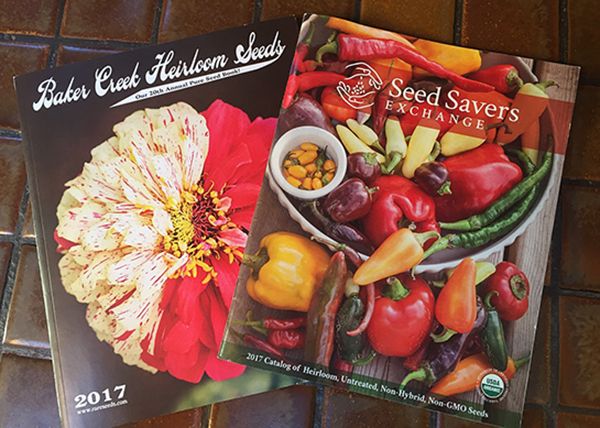
My top two seed catalog picks

Even though it’s not 2017 yet, many of you are now getting your seed catalogs in for 2017 season. I just updated for 2017 my favorite seed and garden catalogs. I have many favorites besides the two above. Here they are:

GOOD SEED LIST:

THESE SEED CATALOGS/COMPANIES ARE GREAT. THEY DO NOT BUY ANY SEEDS FROM SEMINIS, A SUBSIDIARY OF MONSANTO AND ARE MY FAVORITES.

Seed Saver Exchange—As a SSE member I want to support this non-profit organization who is dedicated to CONSERVING and promoting heirloom varieties of veggies, flowers, fruits and herbs. It’s catalog is wonderful with many varieties of seeds that are hard to find or have been kept in families for generations. http://www.seedsavers.org

Baker Creek Heirloom Seeds—It features beautiful pictures of many varieties of heirloom vegetables, flowers and fruits, some of which are very unusual and rare. It gives wonderful descriptions and history of where each variety originated. Check them out. www.rareseeds.com

Southern Exposure Seed Exchange– recommended by Baker Heirlooms as another good source for heirlooms. Has many hard to find vegetable seeds. http://www.southernexposure.com/

Wild Boar Farmsspecialize in fantastic OP varieties of tomatoes. wildboarfarms.com
No catalog-go online to order.

Baia Nicchia Farm—specialize in more fantastic OP varieties of tomatoes. Created the Artisan Seed Series of tomatoes in Johnny’s Seeds catalog. Support their company for certain select seeds not available anywhere else and go to Johnny’s for the rest of their Artisan tomato seeds. Support their breeding work by buying directly from them. https://store.growartisan.com/
No catalog-go online to order.

Secret Seed Cartel—specialize in unique, unusual or rare seeds of peppers and tomatoes from Europesecretseedcartel.com
No catalog-go online to order.

Wild Garden Seeds—My new go to catalog for wonderful greens and lettuce www.wildgardenseed.com/ (I use to think they sold in bulk only,  but they sell smaller quantities as well. The packet price listed on top of catalog pages)

John Scheepers Kitchen Garden Seeds—Sells many wonderful hard to find heirloom seeds like Argentata chard and French gray shallots. http://www.kitchengardenseeds.com/

Kitazawa Seed CompanyOldest seed company in America specializing in Asian vegetable seeds. http://www.kitazawaseed.com/

Irish Eyes Garden SeedsGet your different types of potatoes here. http://irisheyesgardenseeds.com/

Native Seed/SEARCHfabulous seeds by native people in the southwest. www.nativeseeds.org/

Hudson Valley SeedThe Hudson Valley Seed Library is an amazing source for heirloom and open-pollinated garden seeds and beautiful garden-themed contemporary art. http://hudsonvalleyseed.com/

Peaceful Valley (Grow Organic)—I get all my row cover and most of my growing supplies from here.www.groworganic.com

Johnny’s Selected Seeds—provides hybrid, heirloom and OP seeds, tools, information, and service. A general all-purpose catalog packed with more than just seeds. www.johnnyseeds.com

There are many other good seed companies that do not buy their seed stock from Seminis.  To see more good seed companies that may be among your favorites, go here. If your favorite seed company is not listed, call them if you are interested.

My favorite tomato for 2016!

lucky-cross1

I always plant several new varieties of tomatoes each year and the winner hands down for 2016 was:

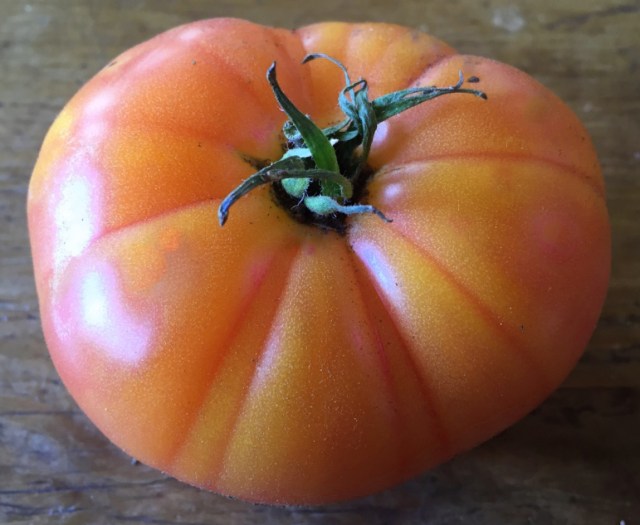
LUCKY CROSS

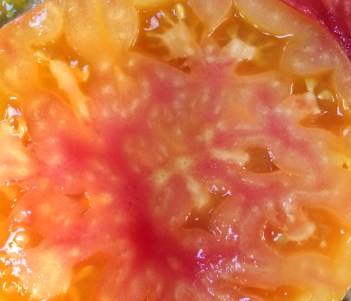
lucky-cross-insideIt is a fantastic yellowish tomato with pink blush outside and inside as well. Sometimes they were more yellowish with pink overtones and sometimes more pinkish with some yellow overtones. No matter the color, it has an exceptional sweet flavor like a Brandywine. It never cracked or got diseases and was very prolific. It is a potato leaf variety. I haven’t been this excited about a tomato for a long time. It now beats my beloved Virginia Sweet tomatoes which are prone to cracks and diseases.

When I did some research on this tomato, the variety originally came from Craig LeHoullier (author of Epic Tomatoes). He stated it came from a Brandywine and an unknown bee-produced cross and had the luck to grow it out with these great attributes.  You can read the story of it from him here. No wonder I thought it tasted like a Brandywine! It is now a stable open-pollinated (OP) tomato and will grow out the same each generation. I saved some of the seeds from this beauty and will definitely grow it next season.

Cold Weather Continues in Santa Fe

This past weekend was pretty decent weather wise but is due to change again midweek with a big cold front coming in. Yeow! The nights will be colder with temps dropping in the teens again. This winterlike weather has caught me off guard although I don’t know why! It’s certainly time for colder weather here but I guess I was lulled by the wonderful, warm days we had in November until a few days ago.

My garden does not look like this. This was last year's pic after it was cleaned up!

My garden does not look like this—it is a mess this year! This was last year’s pic after it was cleaned up!

So knowing this, I rushed out to the garden last week and started pulling up all the dead tomato plants. I have to pull them before the soil freezes or I won’t be able to remove them until spring. Last Thursday, I yanked the last of them out—37 dead tomato plants in their cages, sprawled everywhere. Not a pretty site! But at least the roots are pulled out of the ground. I still have to take the plants out of the cages and clean up the ground and add compost. Ay, caramba!

It is best to clean up our gardens in the fall earlier (listen to your own words, Jannine) and remove any dead plants and debris so they don’t harbor bad bugs for the winter. I am really late this year but it will get done.

I also harvested the last of the carrots, beets, kale and leeks last week so the garden is officially kaput although clean up will continue next week.

After the garden is cleaned up, I will tuck myself inside with the new catalogs coming in and dream about next season’s garden!

Growing Season for 2016/Fall Harvest

fall-harvest-crop_nov-2

Fall harvest in 2016-tomatoes, beets, carrots and kale are just a few of the vegetables still being harvested here on my micro-farm

This has been a most remarkable growing season this year. In fact, I can’t remember in all my 21 years here of weather like this. After two months of unseasonably hot summer weather at the beginning (when the tomato blossoms dropped because it was too hot) and then two months of very cool summer weather (when the tomatoes didn’t want to ripen because they need heat to ripen once they are set) we now have been in an unbelievably wonderful fall. Nice and warm in the 70’s in the day and cool but not freezing nights.

But all this is going to change very quickly now that we are in November. Weather prediction is for it to change to colder weather. Like duh, it’s NOVEMBER dude! Of course it will get colder! My fruit is done-apples (we made hard cider!), apricots, grapes, strawberries and raspberries are done here. Most of my warm season crops are gone (cucumbers, squash, peppers, eggplants, pumpkins, corn, etc. except the tomatoes, my favorite crop!)

Meanwhile the fall harvest continues with tomatoes still ripening (at least this week) and all the cool season crops are kicking it and should be for quite some time if I cover them with winter weight row cover. The kale is going gangbusters, cabbage is ready, onions and potatoes are ready to harvest, carrots and beets are ready to be dug out too and chard is busting out all over.  My broccoli and escarole I planted in August at my fall garden class are almost ready too. Then pantry is bursting and the refrigerators and freezers are overflowing too! Enjoy what we still have left of this season!

Extending the Season-Making a Low Tunnel

low-tunnel-2016

These broccoli transplants were put in on Aug 24, 2106

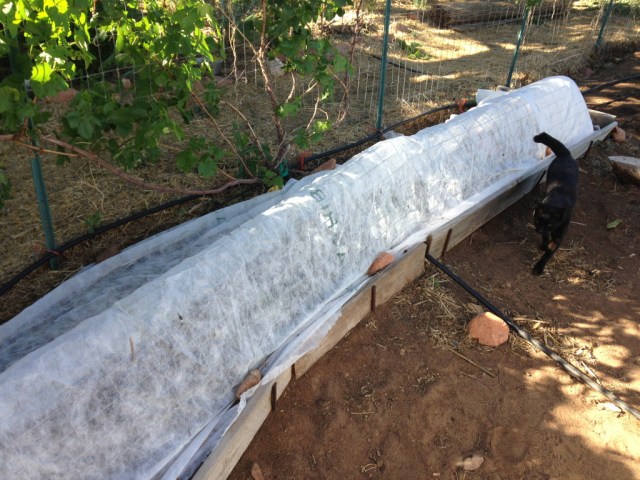
I taught a class in late August on Planting for a Fall Harvest where I showed the students you don’t have to have a Greenhouse to extend the season. You can also have a cold frame or even simpler is what I call a low tunnel. Now with the cold nights, you definitely need something over your new fall transplants.

low-tunnel-before-row-cover

Here is the frame of the low tunnel before row cover-just fencing material curled into a u-shape ready for plants underneath it

I like to make my low tunnels out of 2″ x 4″ fencing or even concrete reinforcement wire.  I just open up the fence roll, cut off enough so it will be curved above my plants and turn it upside down on the soil.

img_3998_1024

row cover over the low tunnel protects crops at night

Cover it with winter weight row cover (1.0 ml).  I put rocks on mine to keep it from blowing away. Now you have a secure low tunnel that will protect your plants during the shoulder season that is closing in on us quickly. What is a shoulder season? It is the time of year when the temperatures can drop quickly at night near freezing and then heat up in the day. The temperature shifts can swing wildly during the shoulder season. We have a shoulder season in spring and fall. By making a low tunnel, you can extend the season and grow vegetables like spinach, arugula, kale, lettuce, bok choy, mustard, mesclun, radicchio and other cool season crops much later. Fall is a great time to plant cool season crops and it’s not too late if you get transplants now. It might be too late if you start from seed unless it’s lettuce. Try to pick varieties that are cold tolerant.

What’s with all these green tomatoes?

tomato_green tomatoes

I’ve lived here for 21 years and have never seen the tomatoes ripen this late. In fact the majority of them in my garden are still green. I have a few sungolds and black cherry tomatoes and one Pink Berkley Tie Dye and a couple of red ones ripen but that’s it-the rest are still green on the vine.

tomato_healthy plants

The plants are big and healthy. So what’s happening here?

Problem #1
The first problem was we had a hot June (except for one weekend) and an unbelievably hot July here with day after day of 92+°F. Why does that matter? Tomatoes won’t pollinate themselves over 92°f-they drop their blossoms, which is commonly known as blossom drop. They will keep producing blossoms but won’t set them producing tomatoes until it’s cooler. So we lost a whole month, putting us behind schedule.

Problem # 2
So once the monsoons thankfully came in, it got cooler and now we have green tomatoes in various stages of ripening. But suddenly, it got even cooler. So much so that it is starting to feel like autumn in August with temperatures dropping at night into the 50’s and daytime temps are much lower in the 70s. So although the tomatoes can’t have extreme heat to set fruit, they need heat to ripen. With cooler temps, it takes longer for tomatoes to turn red, or yellow, or black or whatever color they should be when ripe.

Normally I show up at the Farmers Market middle of August with 6-8 boxes of tomatoes that then increases to 15-20 boxes every week.

tomatoes_first harvest

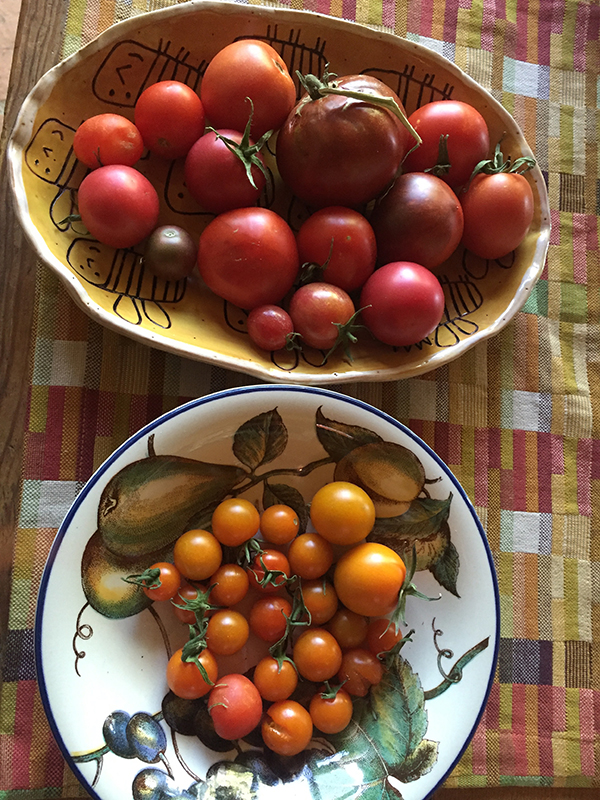
Here is what I have now. Only 2 little bowls of tomatoes, getting a bowl a day-hardly enough to go to market with.

Now it is a race to get some tomatoes to ripen before our first frost which usually comes in October but one year it came in early September. Let’s hope not this year!

Last year I decided to slow down and take a little time off (farmer’s burnout) and that I might not go to the market as much nor grow as many tomatoes either. I have 40 tomatoes this year (lost three to curly top virus) so now I have 37 compared to 125 tomato plants last year. I guess I made a good choice as I’m not sure how long into Sept it will be before I have enough to go to market if at all before a frost.

Kitchen Garden & Coop Tour this Sunday August 7th!

 “Another great tour with 5 outstanding homes for 2016. Anyone interested in beautiful vegetable gardening and sustainable living should go to this. I’ve gotten some great ideas for my garden from these tours”
The Tomato Lady

HG TOUR LOGO

The 6th Annual
Kitchen Garden and Coop Tour
Sunday, August 7, 2016
9 am to 3 pm

Home Grown New Mexico’s – Main Fundraising Event! Come support us so we can continue to provide all of our great classes! (We are a 501c-3 Non-Profit Corporation run solely by volunteers, so your ticket may be tax-deductible)

_____________________________________________________

2016 KITCHEN GARDEN & COOP TOUR

Date: August 7, 2016

Time: 9 am-3 pm

Location: Various locations around Santa Fe, NM (see MAP below)
Fee: FREE to members/ $25 per person for non-members

For more detailed info on the tour and the properties go here: Home Grown New Mexico Kitchen Garden & Coop tour

See five kitchen gardens in Santa Fe. Pick up ideas that you can use at your place or just enjoy these beautiful, edible and functional landscapes. COME GET INSPIRED FOR YOUR GARDEN!

The properties this year feature many gardening ideas—beautiful vegetable gardens, herb gardens, potagers, fruit and nut trees, backyard chicken coops, goats, beehives, backyard composting, green house, a neighborhood community garden with goats, edible landscapes and rainwater harvesting systems.  They range from small properties to large properties in town in Santa Fe. The owners will be at each location with Master Gardeners to answer gardening questions and support the event.

Get Map Here: 2016 Kitchen Garden Tour map-revised (Please note this map was revised as of Aug 3)

Weeds-Not all that bad?

Photo courtesy of Permaculture Reseach Institute

Purslane-Photo courtesy of Permaculture Research Institute

I just read an article about weeds and how they are not all bad and in fact serve a purpose. I know this and yet I still do pull a lot of them but I leave some as well, like purslane which is a great food source and has more Omega 3’s than salmon. I just try to pull it before it flowers and goes to seed. I have friends which come by regularly and we harvest them. I pull the other ‘weeds’ around them but leave them.

We define ‘weeds’ as a plant growing in the wrong place. Now I still have my share of weeds to pull from my gardens (and am doing so right after I write this) but this article opened my eyes about the benefits of weeds too. I really enjoy reading the info sent out from the Permaculture Research Institute and became a subscriber. Check them out. So in the meantime, if you want a great excuse to NOT to pull weeds, read this article from them, written byJonathon Engels, WORKING WISELY WITH WEEDS.

Organic Pesticide and Disease Control Class Review

class pests picToday I taught the Organic Pesticide class and added Disease Control too as we are or will  be dealing with pests and disease soon in the middle of the gardening season. The class was great and we had good comments from some of the attendees. I talked about what’s going on the our gardens now and what insect and disease controls we can implement. Attached is the pdf from the class for anyone who wants to know what I do.

ORGANIC PEST and DISEASE CONTROLS

Also attached is the pdf with photos of certain insects that may be attacking our plants now as well. This is in color so it would be a great reference for you to keep when you need to identify a bug you may think is a pest.

CLass pests pics

I recommended the book, Good Bug, Bad Bug for everyone to get which is a great ID book that will show which ones are good beneficial bugs and which ones we consider pests and what crops they attack.  I got mine at Amazon.

Good Bug Bad Bug book

Then we walked around the community garden and looked for plants that are being attacked or are sick and I showed everyone the plants so hopefully it will help them go back to their gardens and look at their plants and see what is going on.

Other than the heat, I thought the class was great. Thanks to all 20 of you that attended!

What’s wrong with my tomato plant?

This has some excerpts from an earlier post in 2015 in June and new info as well in 2016. We are experiencing heavy pressure from the Beet Leafhopper which transmit a virus called Curly Top Virus (CTV) to tomato plants now in 2016. Please read below.

Photo credits: curly top disease - photo courtesy of http://ucanr.org/blogs/blogcore/postdetail.cfm?postnum=3352

Curly Top Virus (CTV) on tomatoes
Last year, the Beet Leafhopper which transmits ‘Curly Top Tomato Virus’ was rampant in our gardens and devastated many of our tomato plants. I lost only 1 plants out of 125  in 2015 to it but only because I take extraordinary measures to protect them. Here is some information on the beet leafhopper, how to identify it, symptoms and how to protect your plants.

The Beet Leafhopper flies in on the winds in early June through early July, jump on the tomato plants and taste them. It is a big problem in the Southwest and inland in California where it is hot. They don’t even like to eat tomato plants but sample them, transmitting the disease in the process, then fly off to visit other plants.

Identifying Beet Leafhoppers
The beet leafhopper is very small-about 1/8 inch long, pale green to light brownish green and has wings that look like a tent when folded up vs spread out like a moth. See photo on left. They come when conditions are dry, hot and windy. Sound familiar? This is typical June-early July weather here in the greater Santa Fe area.

You will know if they are in your garden as they come in and when you walk around your garden, you’ll see jumping little green bugs that fly off when you walk by. Then they leave—flying to the next garden. Because of this, you can’t really spray anything to get them because they hop so fast and only stay in the garden a short time—here today, gone tomorrow. By the time you notice something is wrong with your tomato plant, they are long gone. It takes about 2 weeks for symptoms to show up.


Symptoms
Your tomato plant leaves will start to curl and the underside of the leaves and veins will turn a purplish color.

curly top virus_helthy plant

Tomato Curly Top Virus-beginning stages on left and advanced stages on right


The leaves then start to wilt and the plant will look stunted. You might think it needs water but it doesn’t, it is sick and won’t recover. There is no cure for tomato plants with this disease. ‘Curly-Top Virus’ is only transmitted from bug to plant and is NOT transmitted from plant to plant hence you will see a healthy plant next to a sick plant. The pictures above show 2 plants with curly top. The first one is beginning to be sick with curly leaves and the veins will turn purple.  The second plant in the picture is advanced.

There is NO CURE for this virus and if your tomato (or pepper for that matter) shows signs of the disease, you should pull the plant. You could leave the plant in BUT if another wave of leafhoppers come by and a healthy leafhopper bites your sick plant, it only takes 10 minutes in 90°F weather for it to be able to transmit the disease to one of your healthy plants. The best thing to do is pull any sick plant and dispose of it. I don’t compost ANY tomato plant that shows disease.

Here are some remedies:
• Leafhoppers do not like shade and if your plants are partly shaded, that may help keep them off but since most of us grow tomatoes in full sun that might be difficult.

Create a physical barrier with row cover

Put row cover over tomato plants

• The main thing I do is create a physical barrier between the bugs and the plants.  I now cover all tomato plants with row cover until the bugs leave. Wrap the row cover around your tomato cage and put a piece on top of the cage BEFORE they come. I observe they either leave or are suppressed after the monsoons come in July when it is cooler and wetter. After the monsoons roll in, I take off the row covers BUT NOT UNTIL THEN.  I hope they come in soon as they are late right now. Tomatoes are self pollinating so they aren’t pollinated by bees or other pollinators. Another thing I’ve noticed is many of my purple or black tomato varieties seem to get hit hard. I wonder if they give off something that attracts the leafhopper? Right now all of my tomatoes are covered.

• Lastly you could put out some tomatoes later in the season after the bugs leave but you’ll have to put in early season varieties so you can still harvest before the season ends. I buy gallon size at that point so as not to be too far behind. Agua Fria Nursery still has 1 gallon tomatoes as of now. A couple of years ago when I was out at the Santa Fe Community Garden, I noticed many rows of sick tomato plants but one row of perfectly healthy plants and when I asked about them, it turned out they were put out about a month later than the rest of them and by then the leafhoppers were gone.

Dry, sunny, windy weather are perfect conditions for the leafhoppers so look out this summer-conditions are ripe again until the monsoons come!

_______________________________

IMPORTANT NOTE:Now there are three cases where you may think you have curly top virus but may or may not have it.

Denver Downs Farm, Anderson, SC; High temperature on black plastic; lower leaves only.

Physiological Leaf Roll-Photo courtesy Clemson University

The first condition that may not be Tomato Curly top Virus is Physiological Leaf Roll that can happen on some tomatoes and could be caused by various factors including stress and that is not necessarily curly top-if you plant has rolled leaves but no purple veins as shown above, it possibly has physiological leaf roll and look for why it may be stressed. It is getting enough water, too much water, too much nitrogen? Also drought, pruning, root damage and transplant shock can all be reasons for leaf roll. For more info on this condition go here.

purple tomato_purlple leaves

Phosphorus deficiency in tomatoes happen when the weather is still cold-not in June.

The second condition is early in the season, not now. Sometimes the leaves turn purple when it is still cold outside. This is a phosphorus deficiency. This never happens in June or later when it is warm but more in May if you plant early and it is still cold outside.

The third condition (no pic) is if you are growing a purple or black variety of tomato your plant may have purple veins  so don’t pull it unless it start to looks sick with the curly leaves and looks like it needs water.