Final 2011 Seed Lists

FINAL 2011 SEED LISTS (updated)

I’ve researched and updated the seed list I posted earlier about a month ago and thought some of you might like to know where I buy either the seeds or in some cases, the plants ready to transplant here in Santa Fe. So first I created a legend with abbreviations for each seed/nursery and then put them at the end of each seed listed.  Hope this makes it easier for you so you don’t have to figure it out. I also show which tomatoes Amy Goldman’s ‘The Heirloom Tomato’ book recommends which I use as my ‘tomato bible’! I’ve put this in my page section called ‘Seed Lists’  at the top of the blog for later reference.

Here is the legend:
AFN-Agua Fria Nursery (plants)-1409 Agua Fria Street/Santa Fe, NM/505-983-4831
SFGHSanta Fe Greenhouse (plants)-2904 Rufina Street/Santa Fe, NM/505-473-2700
BHBaker Heirloom (seeds)
SSESeed Saver Exchange (seeds)
TSTerritorial Seeds
JSKGJohn Scheepers Kitchen Garden
KSKitazawa Seed (seeds)
WCSWest Coast Seeds (seeds)
CGCooks Garden (seeds)
TFTomato Fest (seeds)
TGTomato Growers (seeds)
TTTotally Tomatoes (seeds)

2011 TOMATOES

HEIRLOOMS

PLUM STYLE
*AG/San Marzano-red plum/80 days/AFN (plants) or BH, SSE, (seeds)

BI-COLOR
Striped German-bicolor-SFGH (plants)
*AG/Gold Medal-bicolor-75-80 days-BH (seeds)
*AG/Ananas Noir-recommended by friend-BH, SSE (seeds)

BLACK OR PURPLE
Paul Robeson-black/75-85 days-AFN (plants)
Cherokee Purple/80 days-AFN (plants)

RED
*AG/Pantano Romanesco-red/70-80 days-BH,TF(seeds)
*AG/Costoluto Genovese-red/78 days-TG(seeds)
*AG/Goldsman Italian American-red-BH (seeds)
*AG/Brandywine/AFN (plants)

CHERRY TOMATOES
*AG/Black Cherry-black/75 days-AFN (plants)
*AG/Green Grape-green/AFN (plants) or SSE (seeds)

HYBRIDS-I grow a few hybrids
Lemon BoyAFN (plants)
Park’s Beefy Boy-red-70 days-AFN (plants)
Sun Sugar-yellow cherry-62 days-TT (seeds)

* AG-recommended by Amy Goldsman’s book, ‘The Heirloom Tomato’

2011 VEGGIE LIST

BEANSRattlesnake bean snap OG (remarkably flavored pole bean)-SSE (seeds)

PEPPERShishito (Japanese non hot pepper)-AFN (plants) or KS(seeds)

SUMMER SQUASH-ZUCCHINICostata Romanesco (best tasting zuke around)-BH (seeds)

WINTER SQUASH- Galeux d’ Eyesines and Red Warty Thing (that’s what it’s called!)-BH (seeds)

EGGPLANT-Fairy Tale (best sweet, no bitter taste and soft skin eggplant I’ve tasted)-AFN (plants) or TS (seeds)

CUCUMBERSParisian Pickling, De Bourbonne, Boothsby Blonde, Poona Kheera, Armenian and Parade– I grow cukes for either taste or which variety is best for different types of pickles-all BH (seeds) except Parade-SSE (seeds)

CORN-not this year (I’ll get it from our Farmers Market)

LETTUCES–Provencal Mix, Mesclun Mix, Buttercrunch, Yugoslavian Red, Santoro Lettuce, and Little Gem-CG (seeds)

SPINACH–Bloomsdale-CG (seeds)

CARROTS-Purple Haze CG (seeds) and Scarlet Nantes-SSE (seeds)

ARUGULA-Apollo-SSE (seeds)

BOK CHOY-Extra Dwarf Pak Choy-BH (seeds)

CHARD-5 Color Silverbeet-SSE (seeds) and Argentata Swiss Chard-JSKG (seeds)

PEAS-Dwarf Sugar Gray-SSE, Oregon Spring II-BH (seeds)

2011 GIANT PUMPKINS & GIANT VEGGIE LIST

2010 GIANT PUMPKINSall came from private growers
895 Grande 08 (1016 Daletas x 1385 Jutras)
421 Cabossel (895 Grande x self )
1046 Grande 10 (901 Hunt x 1385 Jutras)

GIANT GREEN SQUASHall came from private grower
903 Noel 07 (848 McKenzie x self)

GIANT MARROW (like giant Zucchini)-all came from private growers
206.5 Wursten 09 or 75.4 Wursten 09
43 Cabossel 10

GIANT TOMATOES
7.18 N. Harp 09 (5.58 Timm x open)-private grower
5.416 N, Harp 09 (5.58 Harp x open)-private grower
Big Zac/TT (seeds)

GIANT PEAR GOURDprivate grower
89 Scherber 10

LONG GOURDprivate grower
96″ Scherber 10

GIANT SUNFLOWERS
Titan-SSE, BH (seeds)

2011 EDIBLE FLOWER LIST
Following is the list of edible flowers that will be planted or are already on the property:

Borage

Calendula-Orange King-BH (seeds)

Chives-AFN (plants)

Cilantro-AFN (plants)

Dill-AFN (plants)

Lavender (in existing different area)

Marigold-Lemon Gem-TS (seeds) this is the only edible marigold

Nasturtiums-Tip Top -CG (seeds)-prettiest nasturiums

Pansies-get them anywhere

Violas-get them anywhere

Roses (in different existing area)

Black Oil Seed sunflower (for the birds!)-WCS (seeds)

2011 HERBS-Following is a list of herbs that will be planted or exist on the property
Basil-new SHGH (plants)
Lime Basil-new-SFGH (plants)
Thai Basil-new-SFGH (plants)
Oregano-exists
Thyme-exists
Lemon Thyme-exists
Chives-exists
Dill-usually self seeds
Marjoram-new-SFGH (plants)
Mint-exists
Sage-exists
Lavender-exists

How to Make a Coldframe

My coldframe

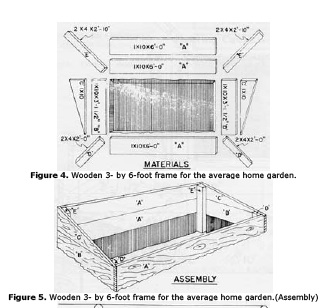
A dear friend of mine, Kim, asked me if I would explain how to build a coldframe while there is still time before planting time in early Spring. There are many designs available online to make a coldframe or hot bed. Here is the coldframe plan (as a pdf) that I basically used when building my coldframe with a few small exceptions. Now mine isn’t super refined as you can see in the photo but seems to be working! (Be sure you look at the pdf because there is a lot more information in it). As you look at the plan, it’s pretty self explanatory but here is what I did for the sides and the bottom inside.

one page of the coldframe plan

I used 2 inch x 10 inch lumber for the bottom section all around and another 2″x10″ section for the top side slanted pieces. Cutting the diagonal piece is easy, I drew a line from one corner across diagonally to the other corner and cut on the line then I used one piece for each side on top of the bottom piece. The only thing I did differently is I put one more 1 x 2 inch piece vertically in the middle on each side  (screwed in-see photo not diagram) and in the back to join the top and bottom piece together. I added a 2 x 4  (long) piece on the lid that I screwed in (not tightly) so I can raise and lower the lid and prop it up vertically (see the piece holding up the lid on the right side). In the photo you notice I taped BIG bubble wrap (not small bubbles) with duct tape on on the inside of the plexiglass lid to add extra insulation in the dead of winter. I also divided mine into two sections.This isn’t in the plan but in the left section I started with hardwire cloth on the bottom to keep out gophers. Then I added dirt and compost on top of the hardwire so I could plant in it but the soil isn’t heated. The right side has a garden heating cable. I attached the cable with twist ties to the hardwire cloth that is cut out to fit the bottom. Then I turned over the hardwire cloth so now it is on top and place it on the bottom. I did this so I can’t put a spade through the cables while digging around in the dirt when planting. Then I put dirt on top like the other side. So the right side is a contemporary hot house when I plug in the heating cable (which I haven’t done yet). I will use it to heat the soil to a temperature so the seeds will sprout. A traditional hot house has a dug out area where ‘hot’ green manure is placed into. Then on top of that is the dirt that you would put your plants or seeds in. The manure gives off heat as it composts, heating the soil just like the heating cable. Now I love the idea of the manure and doing it naturally but I don’t want to have to replace it every year so I chose the heating cable. I will use an extension cord to bring power from the house. I’m experimenting with the non-heated and heated side to see if it really makes a difference in early Spring. If it does, I’ll heat the left side too next year.

Last time I reported, the right side which I planted with transplants in November, is still doing well while the left side where I planted transplants in January all died in the -20°F we had one night (except the parsley which survived) which is interesting cause I don’t even like parsley! I think the left side all died while the right side didn’t because they did not have any time to grow roots while the right side planted in November did. Remember I haven’t heated the right side yet so I know that wasn’t a factor. Anyways I’m sure the plans will help you more than my description!

Keeping a Vegetable Gardening Journal for Each Year

Pumpkin Journal (left), and Vegetable Journal (right)

You might consider keeping a fruit and vegetable journal for 2011. I actually have 2-one for giant veggies and one for the regular veggies. In this you could put the date you start your seeds outdoors, in your greenhouse, and inside with information like temperature of soil, air, temperature inside what day you started, how long it took to germinate, what the weather was like during this time period, what varieties you started, how much water you supplied, if you presoaked any seeds, etc and then continue this journal throughout the season as to how the varieties do,  when they blossom or when you get your first fruit, what pests or diseases appeared and when, what you did to rectify the issues, what varieties were your favorites and why, etc. I bought a nice notebook (something you will want to keep-not just loose sheets of paper that get lost) that I have kept for the last 3 years and add to it for each new year. Every few days I put down what is happening in the garden in the evening when I have some time. I have found it invaluable in future years to look back (in winter) to help me determine what I would do the same and what I would change for the new season. You’ll be amazed at what you will read the next year.

Closeup of Vegetable Journal

I’ve been trying to tweak out my timetable for starting my seeds inside and have referred back to the journals. For instance, 2 years ago I started seeds inside in February and found for me that was too soon-just too cold and I had to replant a lot of seeds in March. Especially tomatoes-they don’t like cold nights (or days) and get stunted and the leaves turn purple. This is because of a phosphorus deficiency where it is not available to plants when the soil and air temp is too cold. Read my post, ‘Learn from my mistakes when starting tomatoes!’ on how to remedy this. Also for you greenhouse people read this forum from Organic Gardening. Luckily that year, I was able to sneak a lot of the ones I had restarted out in mid April with protection because of the mild winter we had even though the plants were smaller- but they were not leggy.

In contrast, last year I planted seeds inside under lights in early March (thinking I had waited long enough to start). But we had such a harsh cold spring that the plants (which looked great) had to stay inside too long and got too tall because I couldn’t put them out till much later (many plants in June) because of really cold nights (27° F till June 6th). How would I have remembered this and what I did differently without a journal. Every year is brings new challenges to us growers in Santa Fe, NM so having a journal that I can refer back to is helpful. Besides it’s fun..

Favorite Vegetable Gardening Books

Here are some of my favorite gardening book to read and reread for reference throughout the year for regular and giant vegetables. Just click on each book to see it larger. All of these can be found at amazon.com.

10 things to Do in February For the Garden

We may not be able to get out in our gardens right now but it is time to get busy with things to do to get ready for the garden. March will be seed starting time and there will be lots to do before for that. I will be elaborating on some of these items over the next few posts as I see there is moe info I can offer.

1. Go over your current seed supply. Organize it. Get rid of any seeds over 3 years old unless you froze them. Fresh seeds are essential for good germination. Older seeds have less success of germinating.

2. Decide which vegetables you want for this year and order any seeds you may need to get from seed catalogs.

3. Talk to your local nursery to see what they might be growing this year. I give a list to mine and they tell me what they are growing so I don’t duplicate. I prefer to let them do the growing, it’s just that I want to grow so many different varieties that they might not have so I have  to start some by seed.

4. Stock up on any fertilizers, amendments, compost, nutrients, mycorizzial, and biomicrobes you may need for veggies. i.e- tomatoes, giant pumpkins

5. Check your grow light boxes to make sure they work. Get new bulbs if necessary.

6. Check grow heating mats to make sure they work and get more if necessary. Last year I had one and ordered another as my seed growing expanded.

7. Purchase soil seed starting mix. I use Metro Mix 100 to start seeds. This stuff is great. The water doesn’t roll off the ‘dirt’ like many seed starting soils

8. Clean and sterilize any containers you plan to reuse for seed starting or transplanting seedlings. Use a 10% bleach to water ratio to rinse off the containers.

9. Buy any containers you may need for seed starting/transplanting. Most gardening stores sell up to 3″ in the peat pots. If you want a 4″ peat pot, go to Territorial Seeds. They are the only ones that have that size. I need them for my giant varieties cause they grow so fast. I also like the flats that have a raised lid. good for germination.

10. Read at least one good gardening book your interested in each month during the winter. I’m almost finished with ‘Four Season Gardening’ by Eric Coleman and just ordered ‘The Compost Tea Brewing Manual’ by Elaine R. Ingham.

What Gardeners Do In January

So what do Gardeners do in January? 20 things to do this month…

1. Unplug your outdoor holiday lights and your ready for next year. (Notice I didn’t say put them away)

2. Drink Martinis (nice warm drink) by the fireplace.

3. Put away holiday stuff. Keep out your gardening gifts all over the house.

4. Read gardening books and catalogs by the fireplace. Leave them out too. Your significant other will love you for this..

5. Watch weather (say isn’t that a cloud-oooh I think it looks like a pumpkin up there-do you see it?)

6. Make snow vegetables instead of a snowman. See if your neighbors can tell what they are..

7. Ogle seed catalogs (by the fireplace). Put stickies all over them.

8. Take dog for a drag (they don’t like to walk in snow).

9. Order more seeds (by the fireplace). As if we don’t have enough.

10. Guess how high your utility bill will be this month. Sit by the fireplace more and turn the thermostat down.

11. Get lots of firewood inside before that next storm. Buy green firewood-lasts longer..

12. Find your growing light boxes (or make them if you haven’t). Use full spectrum fluorescent lights instead of grow lights. Same difference and much cheaper. Drag them inside this month to set up and freak out your significant other.

13. Shovel snow outside (getting in shape for spading next Spring-notice I said getting).

14. Get heating mats for your grow boxes-a must have if you start seeds indoors. Nice to sit on too.

15. Layout next year’s garden on your computer (by the fireplace). I use GrowVeg.com. Really fun. Free for the first 30 days and then you can pay if you like it (not much-small price to pay for so much fun)

16. Insulate your grow boxes so they don’t loose so much heat at night inside. I buy a roll of metallic bubble wrap and wrap it around all 4 sides (one side removable in front so I can get to the plants) and a section for the top that I completely remove in the day and lay back on at night. Wrap your dog or cat in the leftover metallic wrap-you’ll enjoy it-they won’t.

17. Schedule when each veggie can go out (by the fireplace). I use a garden planner from a wonderful blog-Skippy’s Vegetable garden. How’s that for obsessive? Hey you gotta do something inside all those months!

18. Thank your significant other for putting up with your obsession. They might be ok with next growing season (hey at least try)

19. Toss that plant you didn’t plant outside and didn’t have the heart to get rid of last fall that is now full of aphids. (where do they come from anyways?)

20. Make your significant other read your blog. (As if they don’t put up with enough gardening stuff)

BONUS: Look up more gardening/pumpkin info on line. I call it gardening/pumpkin porn. (hey you gotta research this stuff, right?)

Happy New Year to all my obsessive gardening friends!!!

eggplants and peppers in

I planted the shishito and padron peppers and the fairy eggplants. I still have to plant the Thai yellow egg eggplants that are just begging to go into the ground. They have been inside under lights since March-April and I have been trying to wait patiently till the nights warm up but I’m afraid I’m not very good at waiting. I guess I got spoiled last year with such a mild Spring. Everything was planted and up by now. Not this year!   Today was the right time.

When planting the shishito peppers one of mine already has small peppers and it is still May! It is one of the ones I started in March. Peppers love heat. Today is going to be 81 degrees so they should love that!

cool season vegetables planted

This week I finally planted one of my raised beds up by the house. But first I prepped the soil by digging in 3 inches of composted horse manure-then I planted spinach, snow peas, cauliflower, lettuce, arugula, lettuce and mesclun seeds. Then I put the existing drip system  in place that I will use after it stops freezing at night. Afterwards I covered the bed with medium weight row cover. For now, I hand water right through the row cover which is nice as it doesn’t disturb the seeds and gives protection from the cold at night and the rabbits when the seeds sprout. I’ll take pictures as soon as they come up.

2009 giant veggie garden video