This week and particularly tomorrow is HOT temperature wise. I went out a little later this am and only lasted 1 hour. Trying to get winter and summer squash seeds in their prospective beds. I had to redesign and replace the drips but I burnt out before actually getting the seeds in. So I will get up early tomorrow and finish the job-then I am done with putting in the garden! Well not exactly but should get easier. Right now there are lots of seeds out in the garden covered with row cover to keep birds/mice from eating anything as it comes up. I can water right on top of the row cover which will keep the seeds from moving around, especially flower seeds which were broadcast across an area.
Garden Lecture June 12
Garden almost in…
So I hope you all have been busy planting in May and now in June. I just took the last wall of waters (WOWs) off the tomatoes as it is going to get very hot mid week and I didn’t want to fry them inside the WOWs. So I recommend you take them off as soon as possible, if you haven’t already. Typical of our weather, our outside temps go from cool to HOT very fast in June.
I previously planted cabbage, cauliflower, broccoli, chard, beets, carrots and radishes-all in one bed. I call it my ‘cool season’ crops bed. The french breakfast radishes we harvested yesterday but still have watermelon radishes (my favorite) almost ready to harvest. That bed has been covered in row cover to keep it cooler.
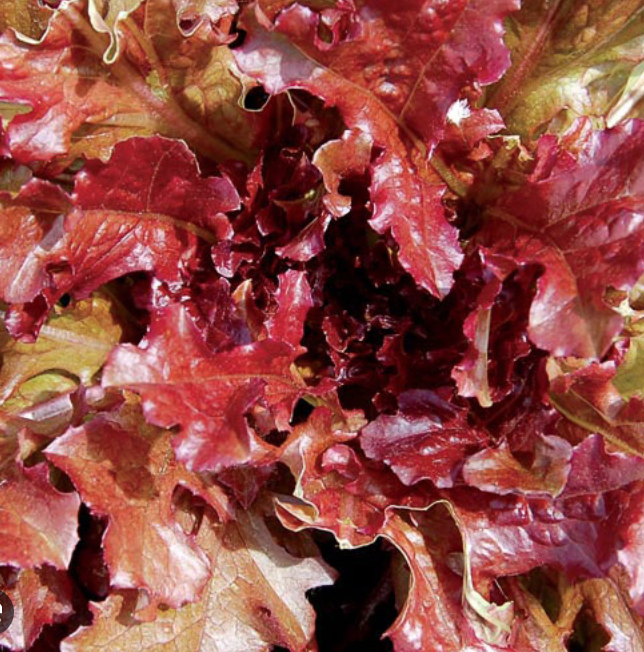
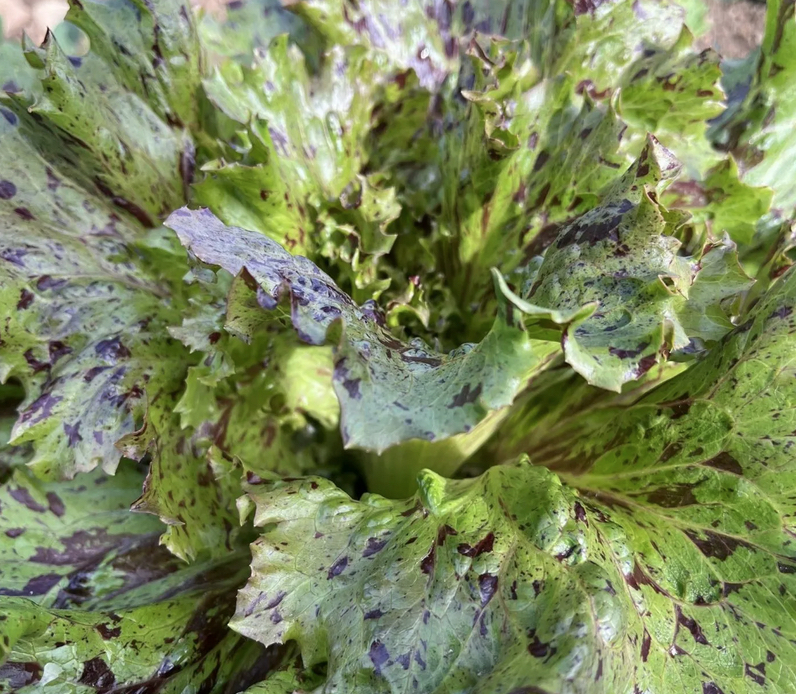
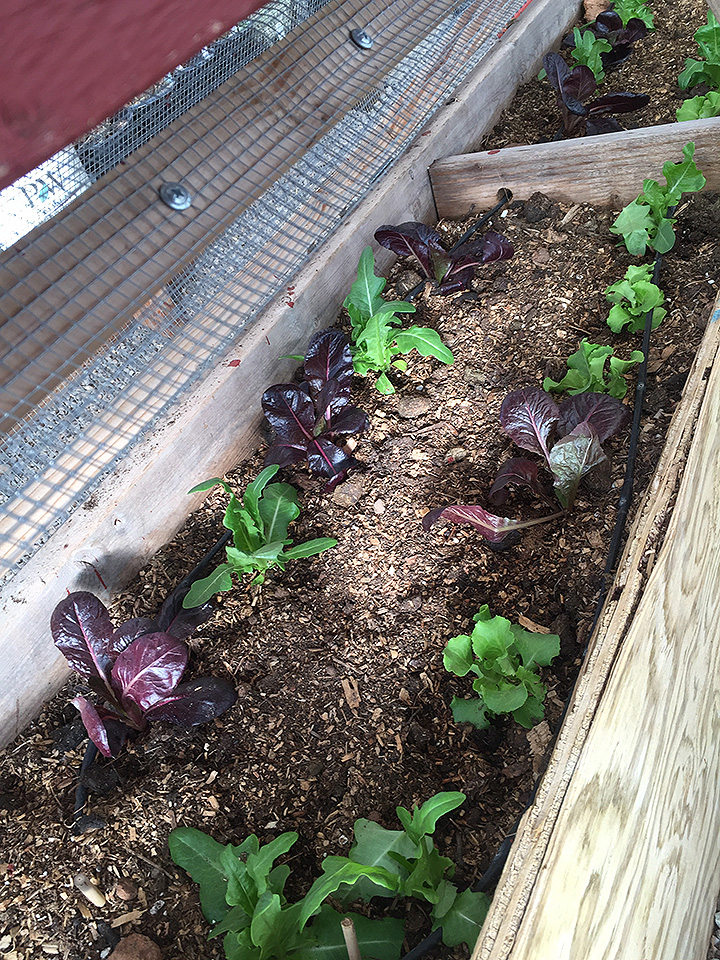
All lettuces/spinach have been harvested in the green house and the green house is now shut down for summer as it gets too hot in there. Since we had such a cool spring, they lasted much longer than I expected. A bumper crop of lettuce!
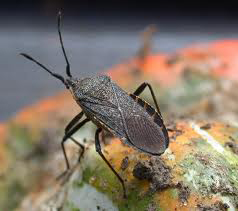
I also covered my tomato plants with row cover around their cages to keep the beet leafhopper from biting the plants, giving them Curly Top Virus and killing them. It’s an extra step but well worth it.
I will take off the row cover when the monsoons come-usually the week after July 4 although weatherpeople say maybe the monsoons will come June 15-hopefully we will get them this year. There are tons of pics on this site of how I cover them. Go to the tomato section on the right side of the blog under vegetables.
I put my peppers in their raised bed last Friday 05-31-24 and put row cover over their frame to keep them warmer when nighttime temps drop.
I also planted seeds for all flowers in May and beans, cucumbers and summer squash this week-june 5. Winter squash seeds will go in by the weekend as soon as I finish pulling a few weeds and adding lots of compost to a newer bed as squash loves aged compost.
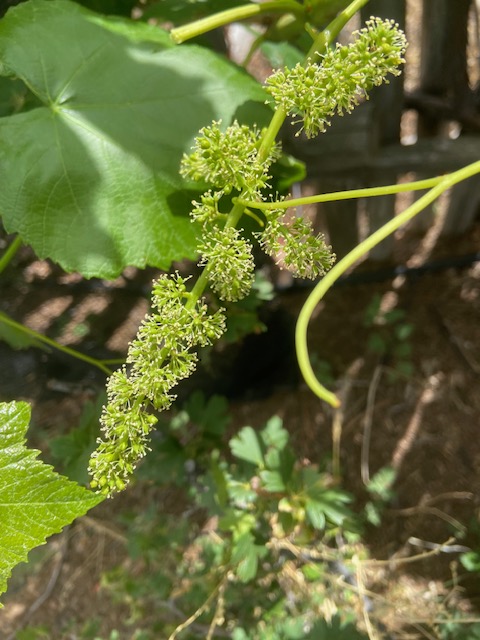
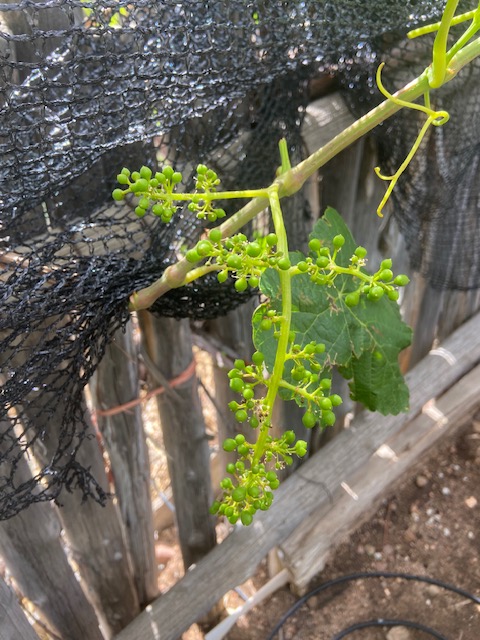
Meanwhile the grapes have their flowers and baby grapes started, blackberries and raspberries are growing but no fruit yet (too early) but we did get our first strawberries of this season this week-just a handful but tons more on the way. They are June bearing strawberries. I transplanted my rhubarb in early May as it was in too much shade so don’t know if I’ll get any of that this year.
The garlic and shallots I planted last fall should be ready this month to harvest.
Although only the flower seeds have germinated, all beans and cukes should germinate by next week. and the squash the week after. I can already see them in my mind’s eye…
Garden lecture tomorrow-May 11
Just to let you know I’m giving a presentation on vegetable gardening tomorrow.
When: Saturday May 11, 2024
Where: Santa Fe Fairgrounds in the extension building classroom
Time: 9:15-10:15
Be on time as it will be crowded and seating is limited.
The Extension Building is a separate building is on left as you walk towards the main buildings. Parking is in dirt lots as you drive in.
The whole garden fair will be fantastic-come all!
Rodent Control Tip
I’m a birder and we feed the birds and noticed in one of the bird seed stores that they offer a seed cylinder with hot chili flavor. I thought it was some kind of NM chili gimmick but they told me at the store that squirrels do not like hot chili but birds can’t taste heat so I bought it and it’s true! What does this have to do with vegetable gardening?
I noticed last year in my main garden, that mice came and ate holes in my sweet peppers but NOT the hot peppers I grew, so this year I will make a hot pepper solution and spray the sweet peppers with it in hopes the mice or rats will leave them alone. Maybe hot pepper solution will keep the critters off other crops as well. I have read about making hot chili spray before so this is not my idea but have never tried it and through the power of observation last year, thought I should.
I haven’t confirmed this spray yet, but am currently trying pepper solution inside my greenhouse on the lettuce. I sprayed it as I noticed something nibbled on the lettuces after we planted them. I want to see if it keeps rodents away. So far it seems to be working. I only hope the spray washes off and we can eat the lettuce when ready!
PEPPER SPRAY RECIPE
CAUTION_WEAR A MASK/GLOVES-so you don’t inhale the peppers and wash hands when done. I made a solution by buying 2 Habanero and 4 Serrano peppers and ground them in some water in my blender. I think any hot peppers will work. Then I poured them in about a gallon of water and heated it up to infuse the water. Later, I let it cooled and strained it through a fine mesh strainer that I also lined with butter muslin so only the liquid came through. I put it in a hand sprayer to use and added a couple of drops of dish soap to make it adhere to the plants more. Hope it works on all kind of veggies the mice like! I will update you how this ‘tip’ works or not in the long run.
April is here. Where have I been? Starting Plants Inside
April is here. Where have I been? I had 2 rotator cuff tendons and bicep tendon surgery on Dec 12 with the idea I will be gardening by June (and flyfishing too). The bicep tendon is attached to a bolt that was screwed into my humerus bone. It’s been a long hard recovery-I am in physical therapy since then but progress is slow, slow, slow. For awhile it felt non-existent, but I have turned a corner and am slowly getting better. For 2 months, I was in a sling but now have 2 hands to work with but still not allowed to raise my arm up over my head yet.
Progress.
And now gardening season is upon us. But I have been able to do a few things regarding gardening!
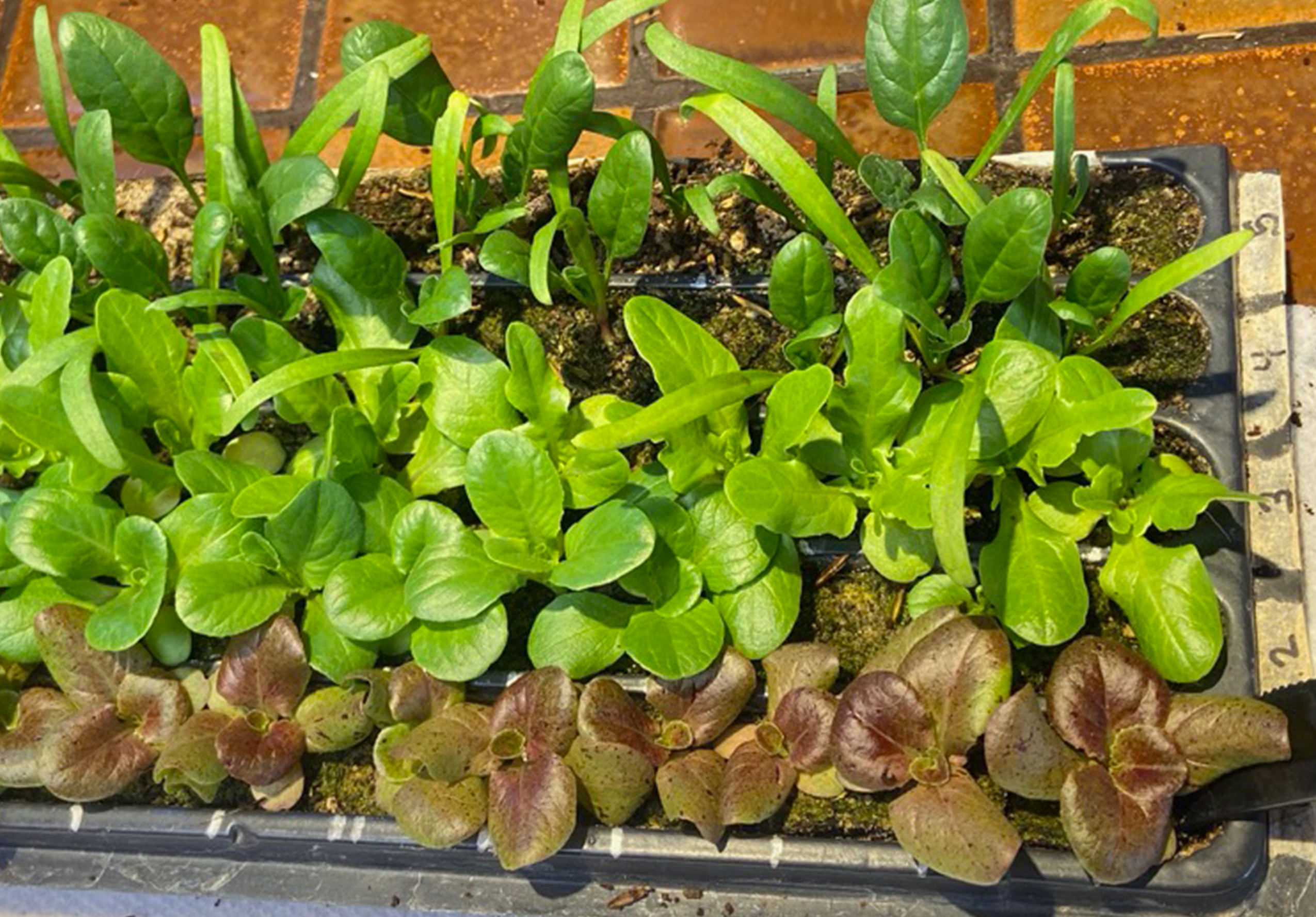
To catch up-I started in March, cool season crops inside under grow lights (with no heat) like lettuces, spinach, cauliflower, bok choi, cabbage, Chinese broccoli, herbs and beets. Many have already been transplanted to 2 1/4″ pots where they will get bigger until I transplant them outside.
The lettuce and spinach are already transplanted into my greenhouse. I opened up the greenhouse (as I had button it down in winter) but now on some days, it can get pretty warm inside so i took off the panels to let more air through the screened windows. I have 2 fans in there (on timers that turn on/off automatically) to blow the hot air out and turn off in the evening. Plus I put row cover on at nite over the lettuces/spinach to keep them from freezing. I pull it back in the day unless it is freezing inside (rarely). My cold frame got messed up in the wind so I probably won’t use it this yea or until I can fix it.
Tomato/peppers were also started inside as well in March, in germination trays on heat mats inside, under lights. I transplanted the tomato plants to 2 1/4″ inch pots where they will stay till I plant them outside sometime in May. I decided not to grow out tomato plants for other people this year.
It’s good to have 2 hands/arms available now (limited) but should be good by June.
Create a Garden Hotbed using an Old French Technique
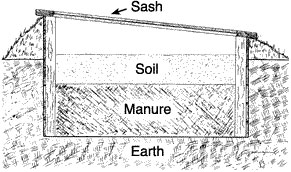
Hotbeds have been used for hundreds of years. Hotbeds are basically the same as a cold frame, but use manure with compost as a heat source in early spring. In France, when transportation was done by horses, not cars, people would take the stall litter which was a mix of manure and straw for heat and make what is called a hotbed. They surmised the bed would get warmer as the manure decomposed and they could start some crops earlier while getting nitrogen in the soil. You can use this method in greenhouses, cold frames or poly-tunnels on top of your raised beds.
The only thing is if you use horse manure, you need to ask whoever you get it from if the hay they fed the horse wasn’t sprayed with an herbicide (like Roundup). Herbicides are weed killers. You don’t want to use any manure with an herbicide in it as it lasts for 4-6 years in the soil and will kill anything you want to grow. Basically it will ruin your bed. Having said that, our hay comes from a safe source. As a thought, you could use bagged cow manure but know that it is hotter than horse manure so it should probably age a little longer-use a soil thermometer to make sure your soil is not too hot.
Looking back in my notes, here’s what I tried in January 2020-I took out all of the soil in my center raised bed in my unheated greenhouse and put the soil on a tarp to put back in one of my other beds. I then put about 14-18″ of hot horse manure and 6 inches of straw in a wheelbarrow and mixed them up. Then put the mixture in the bottom of the bed and packed it down lightly and watered it till it was moist but not soggy. I then added 6″ of homemade compost/soil on top of that leaving a couple of inches of free space at the very top of the bed for plants. Then I watered again. A few days later, I put a compost thermometer in the bed and saw that the temperature had come up substantially deep inside in the manure/straw mix. It will get from 125°-150°F in the beginning but will come down pretty quick by the time you put your transplants in later. I didn’t take the temperature at the top compost layer but the fresh horse manure/straw mix got the compost in the top layer warm, and the 6″ of the aged compost kept it from getting too hot.
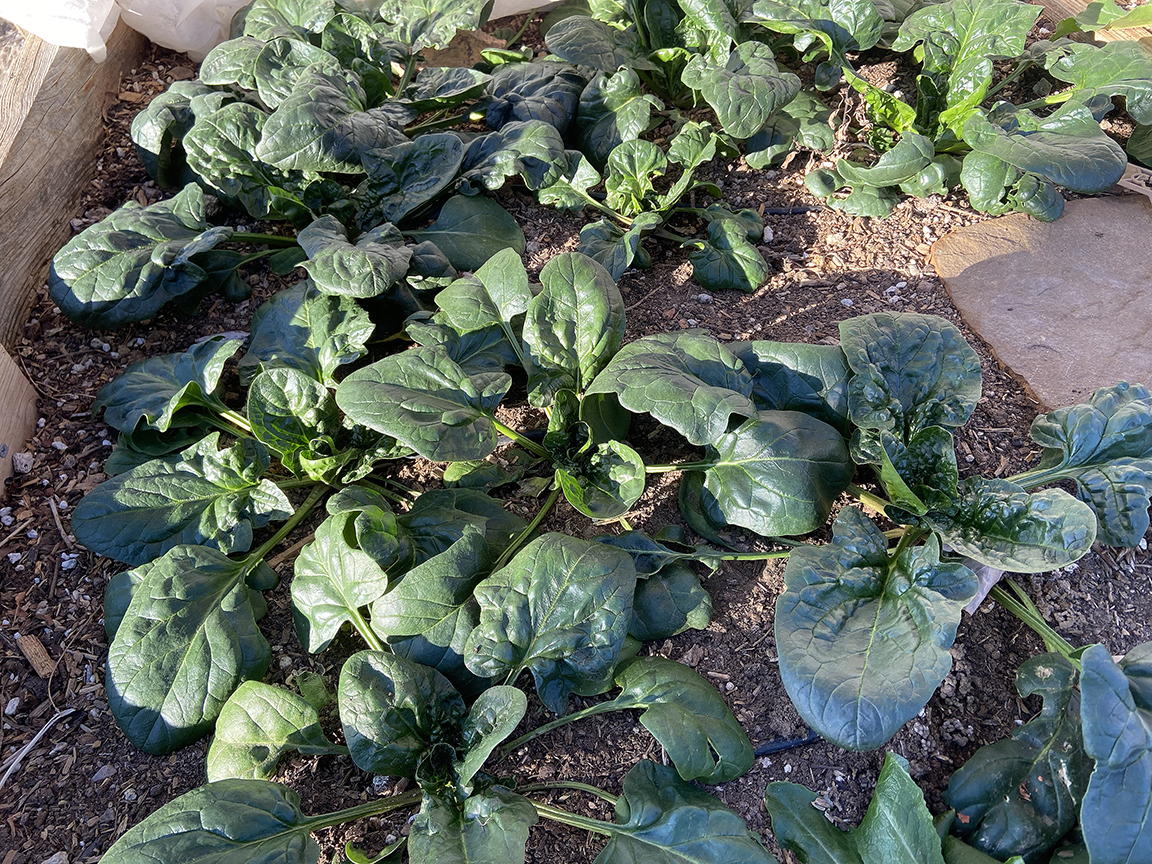
If you have a cold frame with a lid or plastic tunnel over a raised bed, you could do the same as in the top photo with spinach in it. I have one cold frame that I use in this way in the spring as well. It isn’t dug into the ground (like in the diagram above-not in my ground-too hard!)) but sits on top of the soil so I put some straw bales around the sides to add some insulation to it.
While the manure was cooking, I started lettuce/spinach seeds inside under lights (with no heat) in late January which took 3-4 weeks to get big enough to transplant in that top layer during which the soil temperature came down more as the manure mixture decomposed. Do not plant in the manure section but only the top compost/soil layer.
Once I planted them, I still had to cover the greens with medium weight row cover at night (and I double it up with layers of row cover on it if the weather was going to be very cold in the day/night (like it is now). It worked!
It was a fun project to learn how to make a hotbed and how ingenious people were in the old days!
Sleepy time for plants
When winter days are less than 10 hours a day in length, plants in the ground slow down or stop growing altogether. I’d like to think that the plants are sleeping. Eliot Coleman, who wrote The Winter Harvest Handbook, calls this time the Persephone Period. Our Persephone period here in Santa Fe is from Thanksgiving thru January 14th. What does this mean for us gardeners?
If you are thinking about transplanting plants that you started or bought into a hoop house, low tunnel or greenhouse, forget about it right now. Wait.
If you had planted greens in August for a fall harvest, you probably notice that they aren’t growing much anymore. But they should be big enough to harvest assuming you protected your cold hardy plants from our winter nights with winter weight row cover. I have 2 big cabbages still in the garden and a couple of kale that I plan to harvest this week since they won’t be getting bigger.
But plants that are small, will stay small now until Jan 14th when our daylight hours start to get longer again. Other parts of the country further north will have longer time periods of less light days. This has nothing to do with the Winter Solstice, which is the shortest day of the year but rather a time period of less light. After January 14th, daylight hours will start to get longer than 10 hours again. That’s when the plants wake up and start growing again.
So my recommendation is to hunker down with some good gardening books, get your gardening catalogs and plan next year’s garden (and get some rest too.)
2023 August veggie garden video tour
I thought you might enjoy this video I took of my veggie garden in early August 2023. When I see this video now, the garden looks pretty good. I just want to see some GREEN now instead all this white snow but I know we need as much snow as we can get due to our droughty area. Yes I said, ‘droughty’! Walk with me while I do this year’s summer tour of the veggie garden.
Dec 1 final harvests
Harvested carrots and lettuce On Dec 1, 2023
I decided I better pull out the second crop of carrots before the ground freezes sometime in December. We got 6-10 inches of snow the past few days and even more out in the open. If I had waited, I might not have gotten them out.
The first carrots I planted in late spring by direct seeding and harvested most in September. They kind of stalled out in July but came back in September when the temps were cooler. I did a succession planting of more carrots in August-Sept.
In the garden on Dec 1, the remaining carrots were covered with 12′ of snow. So I dug through the snow till I saw the row cover I had put over them when the nights got cold in November. I pulled back the row cover exposing the carrots. It brings such joy to see how well they did. I think they got so long because I had planted them in a 12′ deep raised bed that I made to grow potatoes one year. The carrots loved the extra depth.
And over in the greenhouse, I had transplanted lettuce starts in early September. I kept the greenhouse windows completely open to keep it cooler and a fan to help as well. Then when it got cold at night, I covered the lettuce with some row cover to protect them. I also buttoned up the greenhouse to keep the cold out but did open the door and some windows in the day when it was warmer. Yesterday I harvested the last of the lettuce. Some had bolted and gotten bitter. The chickens got them. But a lot was still good and hadn’t bolted so that is now in the refrigerator.
I always start lettuce seeds in January inside under lights and put them out in February in the unheated greenhouse. I just grow cold varieties in the winter and use row cover to keep them above freezing at night. So we have lettuce all the way through May. Then the greenhouse gets too hot so don’t grow anything in summer. I did a 2nd succession crop of lettuce in late August-Sept when the temps start to drop. Success! Nice to see some green (lettuce) and orange (carrots) so late when everything is covered with snow. Now the garden is truly done!
Tomatoes done November 2023
We just finished eating the last tomatoes picked in October before a frost. The last ones pictured on the left, were Large Barred Boar.
I had 6 bags of green tomatoes that ripened inside. Pretty good having homegrown tomatoes through end of November. Bittersweet in that I am glad the season is over but sad there will be no more wonderful tomatoes till next July.
I start the season in March growing out the seeds inside under lights-8 months is a long time. I won’t eat a store bought or restaurant tomato so now it’s a long wait. I have made plain tomato sauce, roasted them, dried them, used them in tomato soup, and made pasta sauces using them. My friends have given me tomato tapenade and tomato chutney they made too. Nice!
During wintertime, I will review my notes about which tomatoes did well, which had problems, which had low production, and which new ones I liked or not and why. I don’t rule out anything that didn’t do well, especially this season with no water and intense heat but will give many tomatoes a second chance. I will research the internet looking for possible new varieties to try for next year. I have a stable of tomatoes I grow every year and always try a few new ones as well.
Cleaning up the garden
So by now you have either cleaned up your garden or hopefully finishing up. I’m in the latter camp. I took out all the tomatoes and their cages before the ground freezes which historically is sometime in December. If I had waited, they would freeze in the ground and I would have not gotten them out till spring. I know because I did this once and it was no picnic getting them out later rather than sooner. Lesson learned.
Plus I’ve taken out almost everything else that is not a perennial. I continue to water the perennials by hand about once every 2 weeks and as it continues to get colder, I will lessen the watering of these. This week the nights will be in the 20’s so here we are.
The drip system was shut down and timers stored inside so they didn’t freeze at night. I still have some straw left in the beds which I’ve started raking up and storing in garbage bags as it is organic straw mulch which is hard to find. Normally I would just compost the straw and digging the rest in the beds but i can reuse this. If I had leaves, I would have dug them in as they are gold in the garden. All the perennials are either sleeping or going to sleep.
Good night sweet garden-see you next year!
Dismal veggie gardening season in 2023
Hello Folks! Where has the summer gone? I haven’t written since August and I think it’s due to the HEAT, drought and NO MONSOONS. I became depressed because I had to use so much water to keep everything alive. And even then everything struggled in the heat anyways with enough water including me! Plus I wonder, is this the future with climate change? I hope this was just a bad season.
STRUGGLES
It was a tough year in the garden for me. And even though the picture above looked great, there were many challenges this year. The kale got eaten by squirrels, radishes fried, the cabbage rotted or got eaten, the garbanzo beans fried, the pepper patch with 18 different peppers were attacked by mice who ate holes in them to get the seeds. Interesting enough the mice did not attack the hot peppers, only the sweet peppers. The mice and squirrels do not like hot peppers. The deer ate a lot of my grapes, A packrat ate some cucumbers but it didn’t matter because the heat made most of them bitter. Plus the packrat liked tomatoes too. The individual raspberry fruit actually fell apart with the heat so not good there either. I understand all living creatures need to survive and will go into our gardens and eat our veggies because they too struggled this year. I notice when we have a good year weatherwise, they don’t come into the garden so much.
GOOD NEWS
There was some good news-not all bad. The blackberries did well, the tomatoes did come in only later because of the heat and the cherry tomatoes did really well. We just now are finishing the tomatoes for the season and it’s November! The strawberries made fruit and were harvested in early June before the heat really came on. The carrots stalled out but came back once the heat left and now we are getting some great carrots! The lettuce was great in the spring in the greenhouse where the beds there are protected from mice and I replanted in the greenhouse in Sept and now have great lettuce with these cooler temps. The peppers actually did really good production wise except for the mice. Oh, and the flowers did really well which is food for my soul and the pollinators.
I will write more and post more pics in the coming days. May you have a restful off-season and dream of what will be for next season!
And so the cycle of life goes…
‘Show and tell’ garden photos-August 2023
To see descriptions, hold cursor over each image
Took row covers off tomato plants today-August 3, 2023
I promised my followers that I would tell you when I took my row covers off the tomato plants. I did this today.
Here is a video I took on July 18, 2020 but basically looks the same as today.
I have heard from several sources that we might not get a monsoon pattern setting up here in August and that alarmed me. We have never NOT (I know, a double negative) had a monsoon season in the 27 years I’ve been here and now this. I decided to chance it and take off the row covers. I didn’t see any any leaf hoppers today but that doesn’t mean anything as they are so hard to see.
So I am hopeful that they are gone. Who knows, maybe they have a limited lifespan in summers.
I’m not telling you to take them off-that is your decision, but I will deal with whatever mother nature gives us…and it is soo good to see my beautiful tomato plants! Good luck!