Lettuce-starting seeds outside

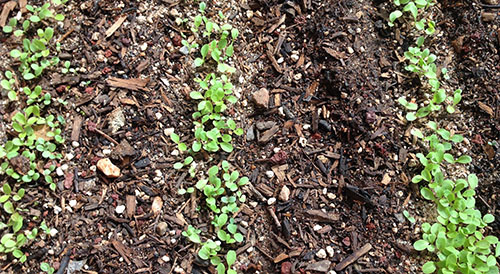
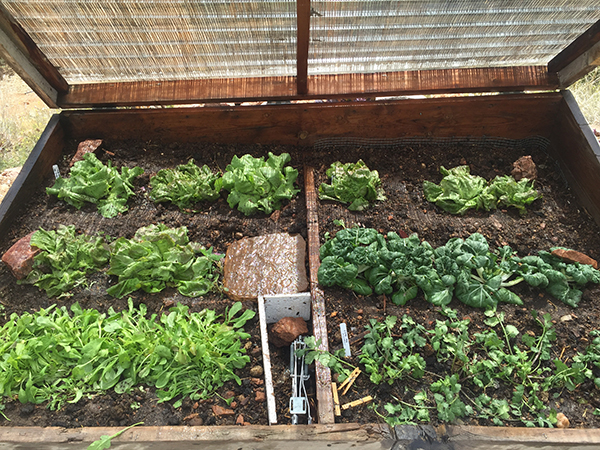
lettuce planted heavily for mesclun (cut and come again)

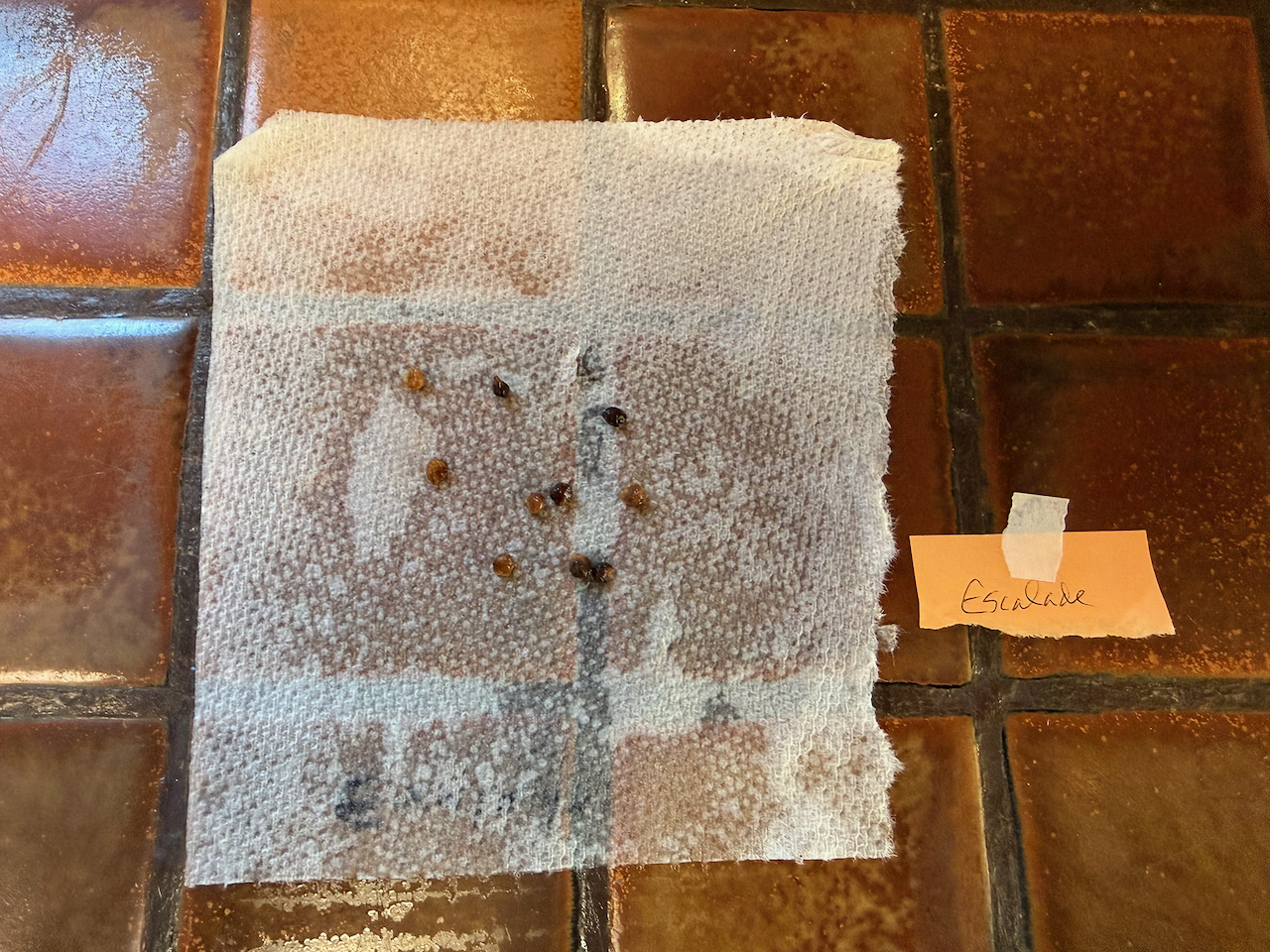
I just went through my lettuce, spinach and arugula seeds to see if the seeds are still viable. Lettuce seeds last from 1-6 years so look on your packages to see the date they were packaged.

There are several ways to grow cold season crops:outside by direct seeding or inside under lights. For this post I will discuss planting OUTSIDE. A previous post was on planting seeds inside. Two very different scenarios.

I use to plant later outside, and the crops would bolt (produce flower stalk and get bitter) as soon as we got some warm weather.

I think most people plant their lettuce, spinach and arugula way too late outside.

PLANTING BY DIRECT SEED OUTSIDE:
If you plant seeds outside in April, it will get warm sometime in May and the crops will bolt (grow flower stalks) and get bitter. I’ve learned to plant earlier. Warm temps one day and freezing cold weather on another day-fickle weather!

STARTING DATES
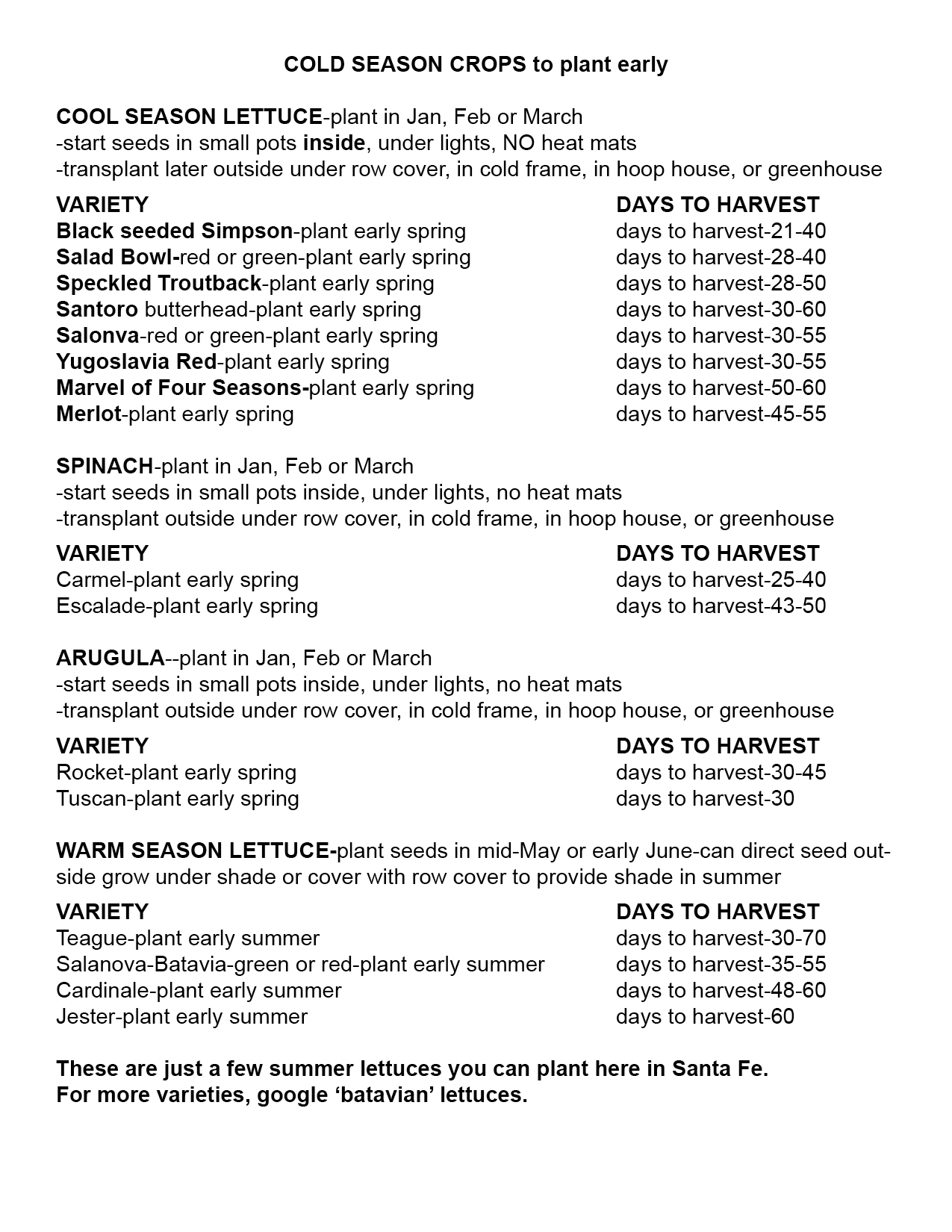
To beat planting too late, back up your start date for starting seeds (for example 30-45 days) depending on Days to Harvest for each variety (see chart below) from the time you want to start harvesting them. So if you want to start harvesting in early April, start 30 days earlier in the ground. If you see dates on the seed package or on a chart, that means you can start picking outer leaves around the earlier date and harvest whole plants on the later dates. Don’t take any leaves from the center where they are produced or you can kill the plant. Only take the outer leaves. This scenario of course depends on the soil temp when you plant. Planting outside takes longer for germination. ALSO don’t plant all the seeds at once but stagger the planting dates so you can get a continuous supply.

Here is the chart below in a pdf format for you to print:

COLD SEASON CROPS to plant early-days to harvest


SOIL TEMPERATURE
-When direct seeding outside, the soil needs to be a little warm (at least 40 degrees) or the plants may have trouble germinating. You’ll need to get either a soil thermometer or a compost thermometer.

A soil thermometer is good for taking temps in shallow soil. A compost thermometer is good for taking the temps deeper in a compost pile.  But with a compost thermometer, you can check the temp deeply in a compost pile or shallow for soil temperatures. You will not have to measure the temp deeply for greens-maybe 1-2″ deep max because you will plant them so shallow.

-Lightly loosen your soil (like 3 inches) unless you have never started a garden in which case you’ll need to dig it deeper-5-6 inches. Add compost, rake in.

-Make a row for lettuce, arugula, spinach. Plant seeds as directed on package. Add maybe a 1/4 ” of soil on top or I like to sprinkle play sand over the seeds to barely cover them. Most greens don’t need to be planted deep. You will have to water by hand with a hose or bucket till it warmer.

-Don’t forget to water everyday after planting seeds! If you do direct seed outside in early March, cover the bed with one sheet of medium weight row cover directly over the dirt where you planted the seeds. Row cover should help protect the seedlings as they come up. Cold Hardy crops can handle colder weather in early spring. On really cold nights, add 2 layers of row cover. Pull off the layers the next day when it is warmer and cover plants at night.

-In addition, if you have a raised bed, you could put some row cover over the seedlings. Place another row cover on top of the hoops, including the ends, so this will essentially add double protection. If you already have hoops, you probably can get by with just the one layer unless it will be below freezing.

I went back thru this blog and pulled another post when I did a class on growing lettuce outside.

Starting COLD HARDY VEGETABLES Super Early


How to Start Greens/lettuce seeds inside

Greens/lettuce seeds started inside January, 2026 (this is an updated post with more current info from a previous post here on my blog).

I’m trying to grow cold season crops even earlier inside in 2026. I planted some lettuce and greens seeds.
Here’s how I did it:

seed germination tray

I cut this tray into thirds but you don’t have to. You can keep the tray intact.

I like shallow containers to start SMALL seeds as it is easier to get the correct soil temperature needed for germination and I can plant a lot of seeds in a small space. Bigger pots for small seeds are harder to get the soil temperature correct. Optimal seed germination temperature for greens and lettuces it is 65-70 °F and it should take between 7-10 days to germinate.

seed starting tray_dots

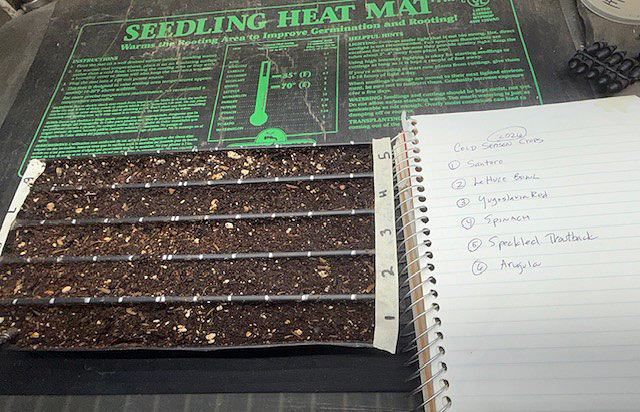
I mark each row every inch and plant a seed there

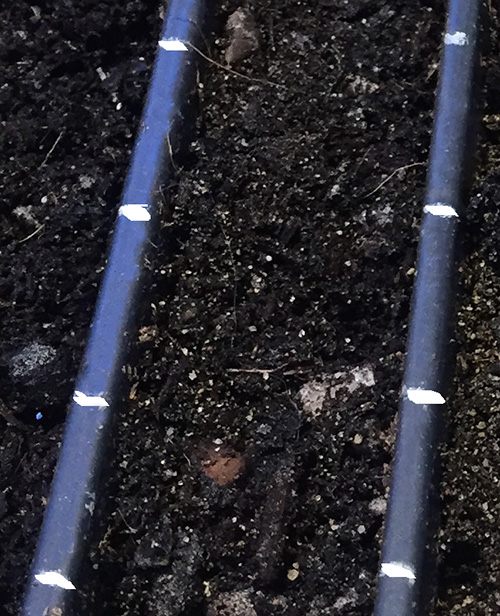
Before I put in the seeds, I marked each row with a dot (I used a silver sharpie) one inch apart so I could evenly space the seeds and that way I can also see if a seed germinated by that dot.

I use to get ‘Moonshine’ from Agua Fria nursery here in Santa Fe but now it’s called, ‘White Lightning’-same great product, a different name. Only at Agua Fria Nursery here in town. I don’t know if you can find it online. I pre-moisten the soil. Don’t plant seeds in dry soil and keep the soil moist. Picking s good soil or starter mix is important. Many people have shown me their plant basically suffocating from too wet of soil that never dried out You want planting soil that dries out and White Lightning works great. Everything germinates sooner in it.

seed starting tray_seeds

Put kiddie (play) sand on top after putting seeds in rows.

I used a pencil to make a small hole in the White Lightning and put a seed in it. Afterwards I put ‘kiddie’ play sand over each row to cover the seeds and pat it down. Small seeds can easily break through the sand when germinating. I would use bigger pots for larger seeds. You must keep the soil moist at all times till they germinate. Because the trays are so shallow, I only have to mist the pre-moisten soil with a sprayer, sometimes several times a day. You could put a clear top on it till germination happens. I never put the trays under a faucet to water as that could move the seeds around.

thermostat probeseed starting tray with thermostat

Here I have them sitting on a heat mat but I don’t turn the mat ‘on’ for greens.  For greens/lettuces I put the probe in the soil to see what temperature it is at with the thermostat. I find for greens/lettuces the lights above the seed trays provide all the heat needed to stay in that temperature range.  Here the thermostat reads 66°F. I’ll turn seedling heat mats on later for warm season crops like tomatoes which like the soil temperature much warmer for germination. The thermostat is great for controlling the temperature.

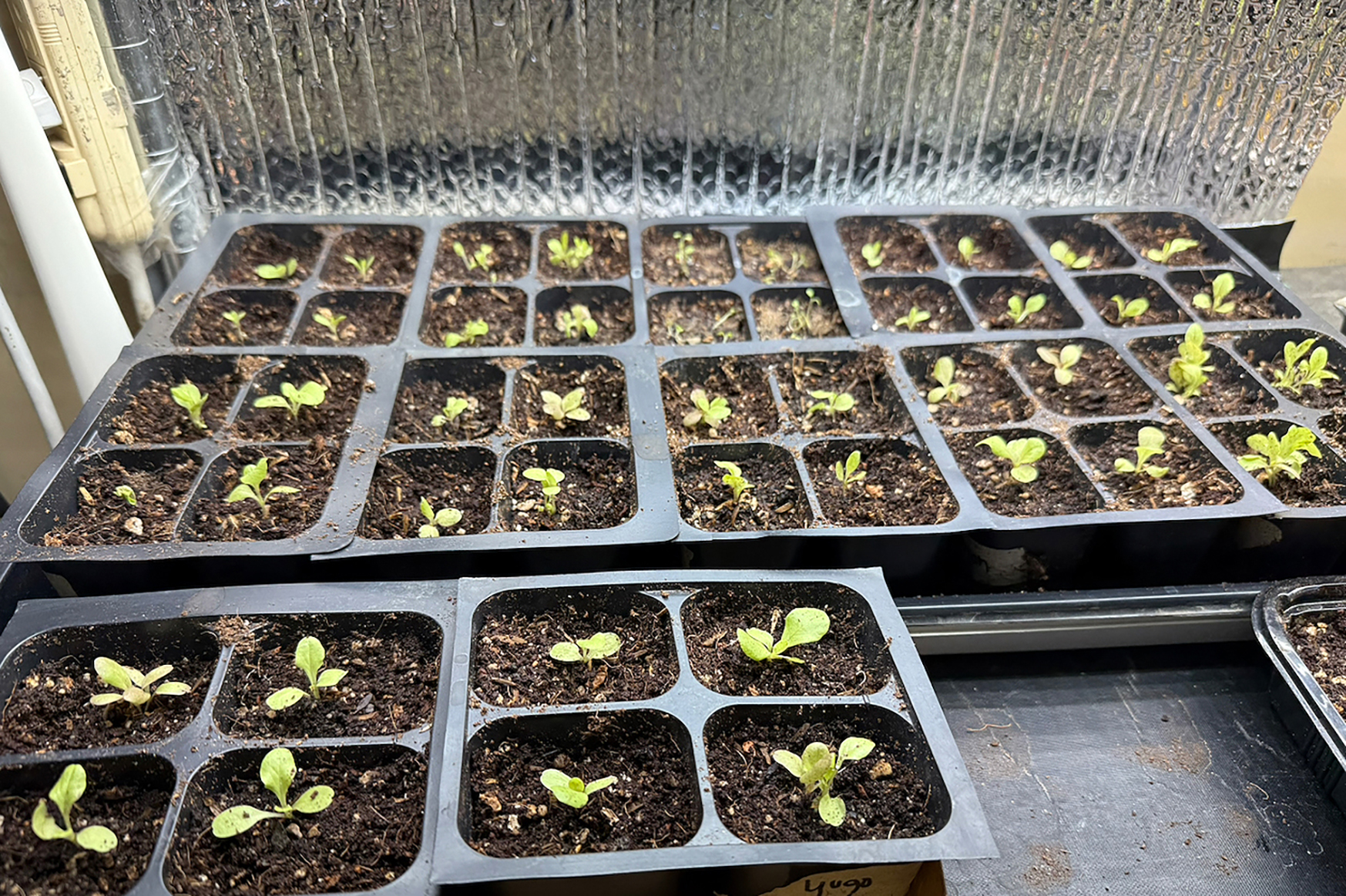
I identify each row with a number and then keep a record of what each number represents instead of trying to write down what it is on that little piece of tape. There are 12 dots so that means since there are 6 rows in each ‘mini-flat’ that there are 72 seeds in this tiny space! After they germinate and their first two true (cotyledon) leaves appear, I will transplant them each plant into a 4 pack and from there directly into a cold frame, low tunnel or greenhouse. Still too early to  throw them outside without protection.

Here is what I planted:
1-Santoro butter lettuce

2-Lettuce bowl-loose leaf

3-Yugoslavian Red lettuce-butterhead

4-Carmel Spinach and Escalade

5-Forellenschuss (SpeckledTroutback) lettuce-romaine

6-Arugula

NOTE: Cold season crops-Left is a Days to Harvest chart, to help me decide what i want to plant and when. Some plants have a much shorter days to harvest and others take longer. When it says 30-50 days to harvest that means you can start harvesting as early as 30 days after germination by taking the outer leaves. The higher number is if you want to harvest a mature head but you can harvest anytime as well. Here it is as a pdf for you to print COLD SEASON CROPS to plant early-days to harvest


And lastly, here are some previous posts on this subject from my blog here:

https://giantveggiegardener.com/?s=lettuce&submit=Search


Greens update


I grew too many greens this year. I planted more seeds than I needed because I thought the seeds might be too old so I planted more in case the germination rate was low. Guess what? They all germinated.

Lettuces have been transplanted outside in green house-Thursday Mar 23, Pak Choi, Bok Choi, arugula, spinach and a few more lettuces are going into cold frame up by house. I had to fix 2 areas from mice or bigger animal-one big hole where someone dug in from  the under a side board in my cold frame and in the green house, mice were getting inside a completely covered bed that has been mice proofed for 3 years. I dug down in the cold frame, removed the soil where it was. I used hardware cloth to block the underside and the inside and outside of the wall to block out whatever got in there. Hopefully this will solve the problem. And on the inside of the green house, where I have 2 eight foot beds that are completely covered I put self sticking window gasket on the edge of the lid and a latch where there may have been a gap for a small mouse to get through to close up that possibility. The green house looks good with no one nibbling on the lettuces. Since I just planted more in the cold frame, the verdict is out if I’ve thwarted the rascal. A few days will tell if I succeeded.

When I put the lettuces in the green house last week I forgot to look at the weather for that night before I planted them and afterwards saw the projection! It was suppose to get down to 21 degrees that night here in Santa Fe. Stupid me! I’m always telling everyone to look at the forecast before planting in early spring. The greenhouse stays about 5-10 degrees warmer than the outside air. I freaked a bit so I put down 2 sheets of medium weight row cover on top and that night I put a 3rd sheet of row cover over it, hoping they would all survive. I use medium weight row cover which has about 3-4 degree protection from freezing weather. It worked-so all of them came through beautifully. Just goes to show you I should listen to my own advice! I lucked out!

Trouble in the cold frame

I started lettuces from seeds inside under lights with NO heat which I then transplanted in the greenhouse on Feb 3rd. I also planted spinach, arugula and bok choy in the cold frame.

Everything in the greenhouse is doing great. Every nite I flip the winter weight row cover over them to protect them from the freezing nites and flip it off in the day so they get more sunlight. They are all under cages I built to keep mice out-works beautifully.

Unfortunately, in my cold frame, when I uncovered them, I don’t have any cages and mice munched 29 spinach plants (only 1 survived), 8 Bok Choys, and chomped 2 of the Arugula (I guess they didn’t like those much).

I hadn’t gone out in a few days after I planted the spinach/bok choy on Feb 3rd because the days/nites got really cold but that didn’t stop the mice! Only 1 spinach made it-the rest were eaten down to nothing. I still have 8 severely eaten bok choys and all the arugula that I re-dug up and they are back in pony packs inside again under lights to see how many will actually survive. To help with all the shock, I water with seaweed fertilizer and Vit B-1 (for plants). Meanwhile I need to tighten up the lid on the cold frame to hopefully keep them out (this coming week when weather is nicer). I will put out a few sacrificial survivors in about a week to see if the mice still get in and eat them.

Spinach is one of my favorite spring crops but must be eaten before it gets hot or it will bolt. So today I am planting more spinach seeds. Takes about 2 weeks from planting seeds to transplanting the seedlings into pony packs where they grow for another 2 weeks-so 4 weeks from planting seeds to planting outside (with protection). Let’s hope it won’t be a bad year for mice again like two years ago!

Greens in the Green House!

So my greens made it through the worst of winter (I hope) and have really started to kick in growing. They went on hold (stopped growing) from around Thanksgiving to mid-January when we had less than 10 hours of daylight. But since then the daylight hours keep increasing daily which is a signal for the plants to grow again in earnest. In case you are wondering when I planted all this, I planted the carrots, arugula and spinach last September inside the greenhouse, and the red and green lettuces I started from seed under grow lights inside my house on January 2nd and then were put out in the greenhouse in early February.

To keep the greens from freezing in the dead of winter in the greenhouse which is unheated, I’ve cover them with one layer of winter weight row cover every night and on some really cold nights (when temperatures got down to 14-17° F), I put two rows of row cover over them. One night the lettuce actually froze. But I read in Elliot Coleman’s Winter Harvest Handbook that if you don’t harvest it when it’s frozen, it may be fine by the afternoon when it warms up and sure enuf, it thawed out and is still growing great. You just can’t harvest it when it’s in a frozen state.

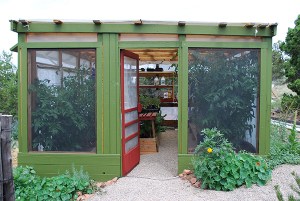
My Greenhouse a few summers ago

In the greenhouse are some carrots which aren’t very big yet (about the size of a pencil in circumference) some green and red lettuces, arugula and spinach, all of which will be harvested before the Green House (a play on the word greenhouse since my greenhouse was painted green) gets too hot. In fact when the day temperatures reach the 50’s, I put fans on to blow the heat out of the greenhouse.


Pray for heat, girls!

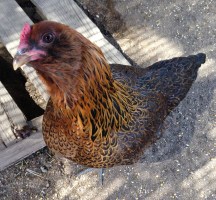
You see, I don’t worry about it being too cold but worry about it getting too HOT which will cause the lettuces and spinach to bolt (make flowers) which will cause it all to go bitter and then it is only good for our chickens who don’t seem to mind the bitterness at all. In fact I think they pray for the heat!

Looks like some of the lettuce and spinach are now big enough to pick the outer leaves while leaving the inner leaves to continue to grow. And a big bonus for me is to see so much green now already at the start of March! I love going into the greenhouse right now. Refreshing when the outdoor plants are still sleeping…

Cool season crops have begun

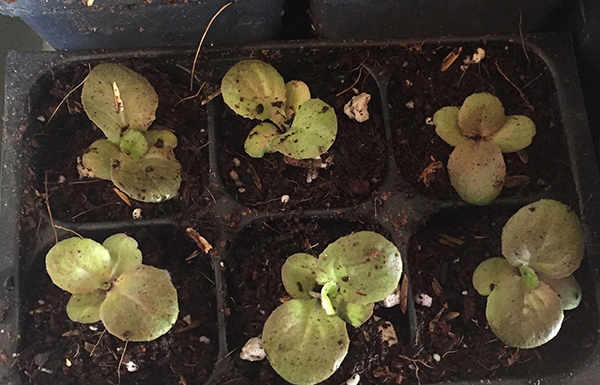
transplants-2-weeks-old

When I was looking through what I plant each year, I realized I actually grow many varieties of cools season crops (like greens/lettuce). I started some seeds of cool season crops inside under lights but no heat on Jan 17!  I never put the heat mats on for cool season crop seeds, only for warm season crops and it is way too early for them just yet.

I started:
Asian greens: bok choy, pak choy, Wasabi arugula

Lettuces: 4 Season Lettuce butterhead, Yugoslavian Red butterhead, and Santoro butterhead lettuce. Can you tell I like butterheads?!

Leeks: Solaise, King Richard and American Flag

Onions: Candy (it is an intermediate or neutral variety) which is they type of onion we have to grow here.

Spinach: Carmel-Just planted the seeds today. Still have some spinach plants that have overwinter nicely outside in a raised bed with only winter weight row cover on it. By planting a crop of spinach last fall, I’m hoping I get a bumper crop of spinach in March! The variety of spinach I like the most is called Carmel which overwinter last year and looks to do the same this year. You can get seeds from Johnny’s or plants from Agua Fria Nursery.

4-season-lettuce

four season lettuce is looking good

Today I transplanted up lettuces and Asian greens to pony pots from seed trays. The plants are looking good but need to grow more before I put them out in my green house or cold frame. You can plant outside in sunny raised beds in March but all-greenhouse, cold frames or just plain old beds will need winter weight row cover on the little starts to protect them from our cold nights.  I’m hoping to put them out by beginning of March. The varieties I grow at this time of year are very cold hardy. I’m trying to get a head start as our cool season crop season is pretty short here before it gets too hot and everything bolts. And there is nothing better than spring spinach or lettuce!

Extending the Season-Making a Low Tunnel

low-tunnel-2016

These broccoli transplants were put in on Aug 24, 2106

I taught a class in late August on Planting for a Fall Harvest where I showed the students you don’t have to have a Greenhouse to extend the season. You can also have a cold frame or even simpler is what I call a low tunnel. Now with the cold nights, you definitely need something over your new fall transplants.

low-tunnel-before-row-cover

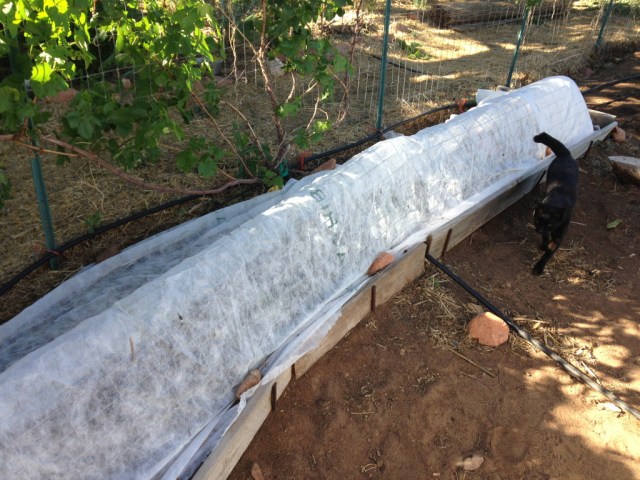
Here is the frame of the low tunnel before row cover-just fencing material curled into a u-shape ready for plants underneath it

I like to make my low tunnels out of 2″ x 4″ fencing or even concrete reinforcement wire.  I just open up the fence roll, cut off enough so it will be curved above my plants and turn it upside down on the soil.

img_3998_1024

row cover over the low tunnel protects crops at night

Cover it with winter weight row cover (1.0 ml).  I put rocks on mine to keep it from blowing away. Now you have a secure low tunnel that will protect your plants during the shoulder season that is closing in on us quickly. What is a shoulder season? It is the time of year when the temperatures can drop quickly at night near freezing and then heat up in the day. The temperature shifts can swing wildly during the shoulder season. We have a shoulder season in spring and fall. By making a low tunnel, you can extend the season and grow vegetables like spinach, arugula, kale, lettuce, bok choy, mustard, mesclun, radicchio and other cool season crops much later. Fall is a great time to plant cool season crops and it’s not too late if you get transplants now. It might be too late if you start from seed unless it’s lettuce. Try to pick varieties that are cold tolerant.

Harvest lettuce/spinach now

coldframe+04-2016

With summer here, the daytime temperatures will get hotter and hotter in June which is our hottest month of the year. It usually peaks between the last week of June and the first week of July (I know because it’s always hottest around my birthday then, and I try to leave town!)

So if you have any greens like lettuce, mesclun and spinach, you should consider harvesting what’s left of them now unless you are growing them in a shady place.  The pic above is my coldframe which should now be called the hotframe. I think I have one more harvest of all of those greens above before they BOLT. Bolting is when they put up their flower head. Once they do that, they will be bitter and only good for chickens or the compost pile.

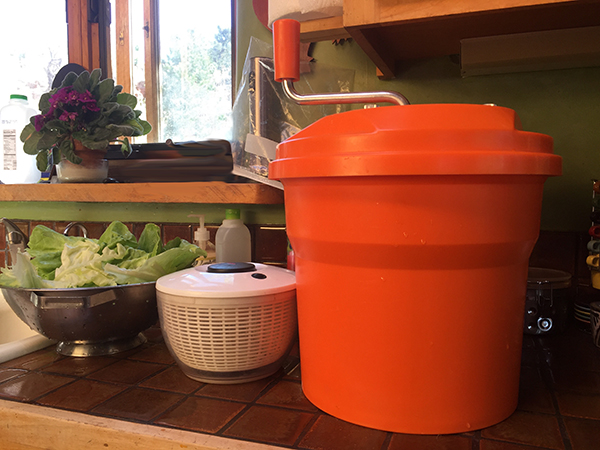
This spinner can handle lots of lettuce compared to my regular spinner!

This spinner can handle lots of lettuce compared to my regular spinner!

Here is a great salad spinner I got for a gift last year. It’s a big salad spinner. It’s a 3 gallon spinner and believe it or not, they have bigger spinners for commercial growers. I grow big lettuce (Santoro-17″ across!) and it can spin the whole head at one time. Look at it compared to my other spinner! It’s HUUUUGE and such a timer saver. I also got some BIG bags to put the lettuce in.