This was so much fun I just had to share it. I found it on you tube. It came from www.billsbigpumpkins.com . It is also on my video page and currently on my sidebar as my featured video so others can find it after this post is buried.
Category Archives: GIANT PUMPKINS
giant pumpkins ready to go

baby giant pumpkin leaves
Here is a picture of one of my baby giant pumpkins. The first leaves to come out on any plant are called cotyledons. These are the roundish ones in the picture growing on the left and right side of the plant. Notice how big they are! Most cotyledons are about the size of your fingernail. These are 3 inches across. The first true leaf is also out and is the biggest one in the picture as well as the beginning of the second one at the top of the picture. The vine will grow in the direction of the second leaf. This is good info to know as it will help you place the pumpkin in the direction you want it to grow (instead of into a fence). Notice the shape of them-they are the shape of all the rest of the leaves to come only smaller. When the leaves grow up they will be huge- 12-18 inches across! When the giant pumpkin have their first 2 true leaves, they are ready to go into the ground. Mine are ready but I’m not.
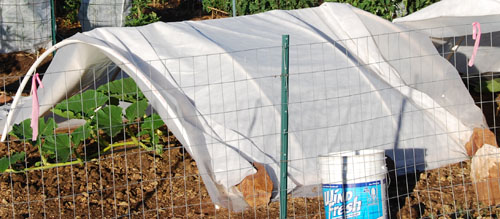
low tunnel 09
I have to partially rebuild my low tunnels that I will put the baby pumpkins in. A low tunnel is like a small hoop house only much shorter. They are meant as a temporary measure to protect the plants. I will cut them in half as I don’t think I need them to be so big this year. As soon as that happens, those puppies are going in the ground.
Giant Pumpkins ready for garden!
Here are the pumpkins and one giant marrow (kinda like a giant zucchini-they grow them in Europe). I’m planting them by tues or wed. I’m hardening them off with a little sun gradually the next few days) now that the nights have warmed up into the mid-40’s. I gave them a drink of Superthrive and seaweed fertilizer to help them with stress through the transition after I brought them in today. Now they are back in the house. Getting a late start this year-want to see if it makes any difference as it was so cold in May (many 27 degree nights, 50’s in day) and I thought they would just sit in the cold soil there anyways. Hope they catch up!
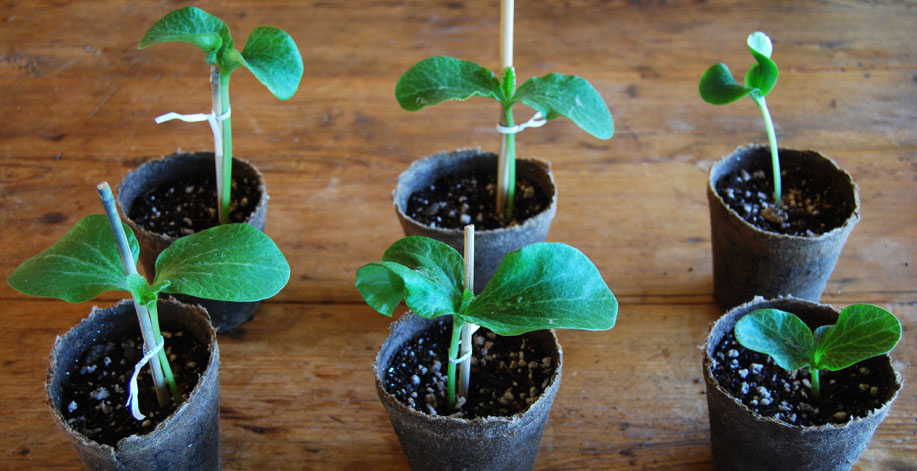
5 giant pumpkins and one giant marrow
From left- front row: 352 Cabossel 09, 949.5 N.Harp 09, 817.9 Schieder 09, form left-Back row: 1166 Mohr 09, 895 Grande 08, 73.6 Wursten 09 (giant marrow)
warm season veggies-here we come!
May 15th is fast approaching and is the average last frost date for Santa Fe and the time for putting your warm season vegetables in the ground. I sneaked some of mine in earlier but that is still a gamble in case we get one of those late frosts (we did) that plus the spring winds have been horrible this year. Never the less, I do grow some late season tomatoes that take 80-90 days to get fruit so I take the gamble on them and stick those transplants in early with the help of wall of waters and row cover. And of course my giant pumpkins take 5-6 months to grow so they need all the time they can get in the ground before that first fall frost hits even though I start them inside! So that takes care of the ones I sneak in early but what about the main vegetables crops?
For all summer squash, winter squash, cucumbers, beans, corn, I plant seeds directly in the ground (following directions on the package) as they will germinate quickly in the warm soil and will grow very quickly barring the birds from eating the seedlings. To prevent that, I put some LIGHTWEIGHT row cover (you can get it at the nurseries) over them until they are over the seedling stage and the birds aren’t interested anymore. It comes in big sheets but you can cut it up for smaller areas or it can cover the whole raised bed. Tack it down with some rocks so the wind doesn’t carry it away! Lightweight row cover is from -.01 to .03 in thickness. The handy thing is you can water right through it and it keeps bugs out.
For the majority of my tomatoes and all peppers and eggplants, I will transplant my plants that I started earlier inside or buy plants from the nurseries. When I plant them put them in a hole where I add some compost and maybe Yum-yum mix to get them going and create a well around them so the water is collected instead of running off.
So let’s talk tomatoes for a minute. Why? Well what is a vegetable garden without those homegrown, sweet tomatoes? Let’s face it, it is the main reason most of us have a vegetable garden. You want to put in tomatoes that are decent size plants. The reason being that they take a long time to grow to produce fruit and our season here is Santa Fe is so short that we need all the help we can get. Plus they take a long time to get them to a decent size which is very important to get that head start. So I started some in March and I also buy some. So as a rule of thumb, if I’m growing say an Oregon Spring tomato that takes 65 days to produce fruit, I might buy them in 4 inch pots but if I’m growing a Brandywine tomato that takes 80 days I will definitely spend the money and buy the gallon size. When deciding which tomatoes you want to grow, look at the amount of days it will take to get some fruit. When the tag or description says 80 days, that means it will take 80 days to become a mature plant that produces blossoms, and then it takes another 70 -80 days to produce mature fruit depending on pollination date. So let’s say a Brandywine plant is planted on May 15th outside, blossoms sometime in June-July, you should get some tomatoes 70-80 days later which puts us sometime in September! Why try to grow a tomato that takes that long? Flavor. The longer it takes, the better the flavor! They have more time to develop those sugars needed for great flavor. If I had a normal size garden (which I don’t but most of you do), I might try one or two of those longer varieties and I would try a few 65 day varieties and would have the bulk of my tomato varieties in the 70-80 day range. That way I hopefully will get some tomatoes early, mid and late season. That’s the thinking anyways!
So now you have everything up and growing what else can you do to help yourself get the best veggies? For one, I became a believer of drip systems a few years back after being a hand waterer for years. I put a simple drip system in and saw my yield at least double and it saves on water because it puts the water in the root zone. Another good reason for doing drip is that if you water from overhead, you could be encouraging some diseases from splashing the soil on them (there are soil borne diseases) or powdery mildew later in the season.
Next I would put a couple of inches thick of mulch in my wells (not in May when the soil is colder and your plants are trying to get warm) but by late June when it really heats up around here. Just put it over your drip system. This will help keep your water from evaporating. I like straw (not hay-it produces too many seeds) as it is lightweight and if you turn your soil over in the fall after harvest, it will break down for the next season. When you first put straw down, I do water it from the top so it won’t blow away and then let the drip work underneath it (so make sure it works before you cover it with straw).
So let’s talk fertilizer. I stay away from chemical fertilizers as they can hurt or kill your beneficial microbes that keep your soil healthy and help your plants grow and stay healthy. So stay away from Miracle Gro and the likes of that. I use more natural fertilizers-both organic fish emulsion and organic seaweed fertilizer together. The reason I use both is the fish emulsion is a general all purpose fertilizer but the seaweed has very little fertilizer but trace elements our veggies need to grow big and healthy. I put them together in a 5 gallon container and use it as a drench in my wells around the plants. Sometimes I also just spray the seaweed on the leaves for a foliar feeding. I fertilize once or twice a season except for giant pumpkins which get fed once a week. Believe it or not, as a giant pumpkin grower, they are the only fertilizers I use.
So what are you waiting for? Get busy and happy gardening!
starting giant pumpkins!!
Today I am planting giant pumpkin seeds. I will put them in 4″peat pots so that I can peel the pots away later without disturbing the roots when I transplant them. They grow really fast once they come up, so I will have to put them in the soil perhaps in 2 weeks from starting the seeds. I will transplant them once the first true leaf comes out. You can tell which way the vine will grow as it will grow in the opposite direction of the firs true leaf. This way I can place it in the soil in the direction I want it to grow. I am growing 4 giant pumpkins this year. They are: 817.9 Schieder 09, 1166 Mohr 09, 949.5 Harp 09, and the 895 Grande 08. They will go in my new pumpkin patch and I am growing another one: 352 Cabossel 09 (that’s me!) for the community pumpkin patch here in Santa Fe that I will plant when I teach a workshop May 15th. To understand what this means is the first number is the weight of the pumpkin the seed is coming from, the name is the grower’s name, and the last number is the year of the seed. So mine was a 352 lb pumpkin, my last name is Cabossel, and it was grown in 2009. That is how we giant pumpkin growers know what seed we are planting. We also look at the parents of the seeds we choose to see who they were as most of the time they come from very good “stock”. You can also just grow generic varieties that you can get from places like Amazon.com which is what I did when I started this hobby before I got serious. I grew a 225 lber from the generic variety which is fine for most people! I will try to break the state record here in NM this year. Have to beat 404 lbs…
GIANT VEGGIES!
GIANT VEGGIES!
Finally, I can start to talk about giant veggies as I will start the pumpkins this month inside. Here is some background information on some giant vegetables so you will understand them. Later in another post, I will get more specific on which giant veggies I am growing.
All or most of the giant pumpkins, giant squash, giant marrow (look like BIG zucchini) and giant tomatoes where people want to BREAK RECORDS AND GET THEM OFFICIALLY WEIGHED are listed by the weight/grower’s name and year. So for example: the new world record pumpkin holder is held by a woman named Christy Harp who broke the record last year-so her pumpkin is listed as 1725 C. Harp 09. This means her pumpkin weighed 1725 lbs, her name is C.Harp and 09 is the year it was grown.

Here is a pic of her with her world record pumpkin. This pumpkin came from a genetic line of very big pumpkins, so those of us after records look at the parentage of each seed to give us what we think are the best odds of growing certain traits-ie size, shape, or color and weight. Now you don’t have to go to any special weigh-offs or buy any specific seed from a grower unless you want it recorded.
There are some varieties of these vegetables that are known to grow very BIG. If you plant these, you will grow some very big vegetables maybe not a world record but big. None of these are GMOs but almost all are hybrids.
Here are some varieties of giant vegetables to get you started that will give you the potential to grow em BIG!
GIANT PUMPKINS-If you don’t want too big, try Big Max pumpkins where you have the potential to grow a 100 lb pumpkin but hands down the Atlantic Giant Pumpkin variety is the one most grown-you can get it generically like I did my first year from amazon.com (I grew a 225lb pumpkin that year) or you can join some giant pumpkin clubs and/or organizations and buy or ask to get some specific seed that has been grown by one of the big growers. It’s a whole different thing or as Christy Harp said about giant pumpkin growing, “It’s a hobby gone mad”! The interesting thing is many giant pumpkin growers are growing them organically. Now isn’t that cool! One of the most important things I learned from some growers is to create really healthy soil.
GIANT TOMATOES-Some varieties you can purchase through the catalogs are:
Big Zacs, Giant Belgiums, Delicious and many more to grow 3 lb plus maters.
MARROWS-They aren’t generally grown here in the states but are big in Europe and I’m not sure why. Their seeds are harder to get here. I got one seed from a grower in the Netherland that I will try this year. It was 76 lbs. We’ll see how big it’s off spring gets or if it will even do well here.
I struck gold!
Well we got about 14 yards of composted horse manure yesterday most of which went into Bri’s Giant Pumpkin Patch with enough left over to replenish the regular garden. I struck gold-brown gold! It was fun driving the Bobcat. I want one of these! Here are some pics.
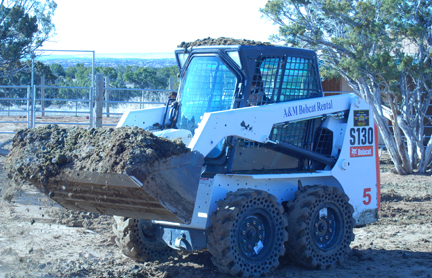
driving the bobcat

getting ready to dump the load

dumping the load into the trailer
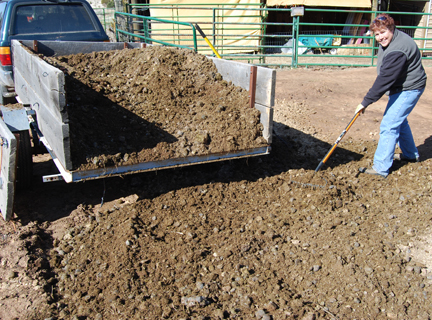
spreading it into the new giant pumpkin patch
2009 giant veggie garden video
Hercules
 Here is a picture of my largest pumpkin I grew last year. The picture on the sidebar is Hercules at 166 lbs and in this pic, Hercules actually got to 352 lbs which is the second largest pumpkin ever grown here in New Mexico. I thought you’d like to see it. This year I hope to grow a 500-600 lber with the knowledge I’ve gained and will share here on my blog as the growing season unfolds.
2010 Giant Pumpkin and Giant Veggies List
Here is a list of Giant Pumpkins and Giant veggies I am thinking of growing.
2010 GIANT PUMPKINS & VEGGIE LIST
2010 GIANT PUMPKINS
895 Grande (1016 Daletas x 1385 Jutras)
1166 Mohr (1385 Jutras x 1055 Jutras)
949 Harp (1689 Jutras 06)
1184 Barker (1631.5 McKie x 1689 Jutras)
GIANT MARROW
206.5 Wursten 09
75.4 Wursten 09
GIANT TOMATOES
7.18 N. Harp 09n (5.58 Timm x open)
5.416 N, Harp 09(5.58 Harp x open)
Big Zac (fr Totally Tomato)
Church
GIANT SUNFLOWERS
Titans
Rocky Mountain Giant Vegetable Growers (RMGVG)
I am rejoining Rocky Mountain Giant Vegetable Growers (RMGVG) today. They are an organization that promotes growing giant veggies especially giant pumpkins and squash. If you join in the beginning of the year, they will send you a bunch of giant pumpkin seeds from their growers. They are located in Colorado. For those of us who want to try to grow giant pumpkins, they are the only group in the Southwest that have official weigh-offs at the end of the year that are part of the GPC (Great Pumpkin Commonwealth). The GPC is a worldwide organization for giant pumpkin growers. If you want to get in the official world record books you must go to a GPC sanctioned weigh-off.
 giantveggiegardener

