New Gardens-new bruises!

I love hearing about someone putting in a new garden or adding on to their existing one or adding another big feature in their gardens. Are any of you doing something new and exciting in your gardens this year? I would love to hear about your projects!

For me, I’ve bitten off a lot. Between putting in a new greenhouse and adding on a huge new section, I have my hands full. And I forget I’m not 30 yrs old anymore (tell that to my brain) and my body let’s me know it too after a hard day building, hauling, shoveling, digging-you get the picture. Today I dropped a 2 x 6 on my nose while 8 feet on a ladder while working on the greenhouse. Luckily, I didn’t break it! I should own stock in Advil…

Greenhouse progress

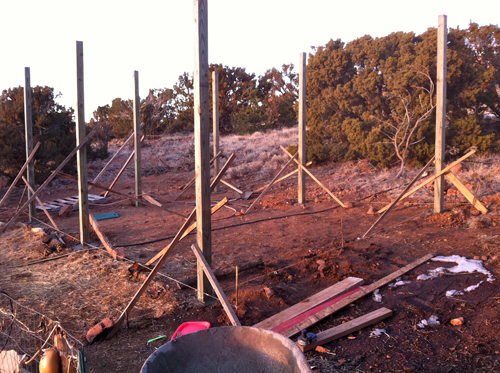
Finally progress on the greenhouse! I finished digging out 6 of the 8 holes over the last 2 weeks when we had some warm days and Caleb came by last Sunday (a week ago) and we finished digging the last 2 holes with his jack hammer. Yesterday (Friday), I set all 8 posts by myself. After consulting with a contractor friend to see if I could set the posts in cement, he told me yes but bury them in dirt afterwards to insulate them-brilliant! Boy was it a long day but nothing a warm Epsom Salt bath can’t help. I’m really happy as I can work on framing it when we have a nice day this winter-especially since I came down with a nasty cold today…

I ordered my bees!

I ordered my honeybees! They’ll be the Italian variety. Benissimo! They say the Italian bees are very docile and gentle and great honey producers. They will arrive on April 27-overnited from Honeybee Genetics in California. I will get a topbar style of hive.

What do bees have to do with vegetable gardening? Everything! With out pollinators we would have no produce. We have many pollinators-hummingbirds, moths, butterflies, native bees, some beetles and of course the honeybee.

I already have some bees on the property but they belong to a friend of mine. I have learned from him about them and excited to get some of my own. Last year I put in some bee flower gardens to provide more food for them (I will continue putting in more this year as well) and of course they have the vegetable and pumpkin gardens to get pollen and nectar from as well. I was amazed how well the bees did out here considering we did not have a good year as we only got 2 rainstorms all summer and they were late in the season as well. But after we got the rain, lots of native plants blossomed and they were ‘busy as bees’ collecting their food in the fall until winter came. Now they are mostly holing up in their hive-much like we are.

French Red Shallots

Here are some French red shallots (on the left ) and a few Dutch shallots (on the right) that I have left from summer. I grew both last year and harvested them in July. I replanted the largest bulbs of each variety this November and had these teenie French red shallots leftover. So instead of tossing them I decided to skin them,chop and freeze them for later use. The French say their shallots are the best in flavor. I read the French Gray shallots are the absolute best flavor of all shallots but I couldn’t get any this past fall-all the seed companies were sold out. I do know they did not make me cry while the Dutch ones do, almost like onions but not as strong.

Ugh! What a lot of work! I don’t know if planting the largest ones will produce larger ones than these. We will see. I know with garlic, you plant the largest cloves to get still larger cloves each year but am not sure with shallots. Here they are all skinned and chopped.

All that work for this-a mere 1/3 cup of chopped shallots. Let’s hope they will be bigger this year or I’ll stick with the Dutch shallots which are much bigger and easier to skin for my main shallots although I will try the gray shallots if I can get some. I do love growing shallots-they are so easy when planted in the fall and are delicious!

Just label it-GMO products

I am not very political but as an organic gardener and consumer, I feel this is important. I just received an email from an organization, Just Label It asking me to sign a petition being sent to the FDA to make food corps label their food IF it has GMOs in them. We are not just talking about labeling the fruits and vegetables we buy in the store (fruits and vegetables are non GMO in the US right now) but to label ALL products that have GMO products in them. If you are interested in signing it, go here. I did.

There is also a group, TRUE FOOD NETWORK, that has a GMO shoppers guide that you can download on your computer or get a free phone app to use when you are in the grocery store. I was amazed at what foods and which companies do and don’t have GMO products in them. I’m only promoting this because 1. it’s interesting and 2. we should want to know.

Genetically engineered foods are required to be labeled in 15 European Union nations, Russia, Japan, China, Australia, New Zealand, and many other countries around the world. I think we should also have the right to know if our foods have been genetically engineered. I’m not talking about making a judgement about whether it is good or bad, but just label it and let us decide for ourselves. After all if I wanted to know if a product has artificial sugar in it all I’d have to do would be to look at the label. I want the same done for any GMO food products sold here in the US.

When asked why Europe has been so successful at generally keeping out GMO foods, it has been said that the Europeans are closer to their food sources. They don’t have the big grocery stores which tend to remove the consumer from the process. They go shopping at the local markets in the streets to get their foods and don’t use as many processed foods as we do and as such are much closer in knowing where it comes from.

Now the number one way to go around this is buy everything ORGANIC but not everyone CAN (too expensive) or will so I appreciate True Food Network getting the information together to educate us. Of course what do you expect from me- an ORGANIC  gardener?

P.S.  Remember that Minnesota ruling I wrote about where I mentioned an organic California farm also won a ruling against its non organic neighboring farms for contamination of its organic crops? Well, the organic farm is Del Cabo-you know, the one that sells those small cherry tomatoes in Trader Joes and other stores. Now it becomes more personal. I see the Del Cabo brand everywhere in the grocery stores. So the next time I see the organic variety of Del Cabo tomatoes in the store (they also have non-organic) I will be reminded of the fight some of the big organic farmers (as well as the little organic farmer) are going through to give us organic produce. It all becomes more personal when you know what’s going on.

Ok, I’ll get off my box now…

The Mystery of the Calabacita Squash

Article first published as The Mystery of the Calabacita Squash on Blogcritics. Story by giantveggiegardener.

As a gardener and a cook, I’ve been searching for a particular squash seed-the Mexican Calabacita. It was the original squash used to make the famous ‘Calabacitas’ dish of squash, corn, onions and green chili here in New Mexico. Most of us now use zucchini to make this savory dish because of it’s availability, but here at the Santa Fe Farmers Market, you can buy the Calabacita squashes in early summer and then by mid summer, they are gone. They are little green squashes with soft skin and teeny weenie seeds-too small to harvest. I researched it and found that the squash originally came from Mexico but not a lot of information is out there on it. No seed catalogs have it. None of my gardening friends have any seeds. I couldn’t find it anywhere.

Then two years ago while on vegetable gardening forum here in Santa Fe, I met another gardener and during the course of our conversation after the forum, the mysterious Calabacitas squash came up. I told her of my difficulty finding the seeds. She told me she had gotten some Calabacita seeds from another farmer whose family had been here for generations.  She offered me a few of the seeds. Finally I would get some seeds! So we emailed each other and I sent her an envelope to send me some but they never came. I went by the Farmers Market where she sells produce but we kept missing each other. Another season passed and still no seeds.

This year, on the last day of my season as ‘The Tomato Lady’ at the Farmers Market where I sell heirloom tomatoes, I went by her booth and mentioned maybe I could get some of those seeds for this upcoming season. She said,” Why not buy one of the squashes now?” When she pointed them out, I said, “That’s one of them? It doesn’t look anything like the ones earlier in the season” and she remarked, “Yes that’s one of them. They are actually a type of WINTER SQUASH. We just pick them when they are really young and immature and have no seeds”. That explains it! Why I could never get any seeds from them. That is why we don’t see them later on in summer-if you let it keep growing; it will become a mature winter squash. There were several there at her booth with different colors. Some were green with orange stripes and some were salmon color with green-grey stripes. She said there really wasn’t any difference in the taste.  I ended up with the salmon-green striped one. It weighed about 15 lbs and has a squat oval shape outside and lovely orange color inside. It smelled like a cross between a cucumber and a melon.

I got the seeds and roasted the squash. To roast it, I quartered it and rubbed some oil on it and put it on a cookie sheet. Then I added a little water in the bottom of the pan so it wouldn’t dry out. I put it in the oven at 350° and placed some aluminum foil loosely over it so it would not burn. It took about an hour to cook. Afterwards, I put the flesh in a freezer Ziploc and will later cook squash lasagna with béchamel sauce.

So Calabacita squash can be used to make Calabacitas in early summer or later in the fall used in winter squash dishes.

Here is a recipe for Calabacitas from New Mexico:

1 lb or more Calabacita squash or any summer squash, cubed

3-4 ears fresh corn cut off the cob or 1 can corn

1 chopped onion

cumin to taste

New Mexico green chili to taste

Sauté the onion, add the squash and corn and sauté till tender.

Add cumin to taste. Add New Mexico green chili to taste.

How to make compost

So now that you have some compost bins, you are ready to  make compost! You’ll need to add brown (carbon) material and green (nitrogen) material for heat. For brown I use straw, old hay and leaves. For green I use chicken poo, goatie poo, horse manure but no dog or cat poo, (they eat meat), fresh grass and plant clippings (still green-not dry). Also considered green are eggshells, coffee grounds, fruits and vegetables too old to eat. You can add bloodmeal or cottonseed meal if you don’t have enough heat (nitrogen). The best ratio is 25-30 carbon (brown) to 1 nitrogen (green) commonly listed as CN: 25 or 30/1. What does this translate to in the garden bin? Use 1 part brown to 2 parts green. So add like 2 inches of brown and 4 inches of green. Do this so the pile gets hot enough to decompose into compost. It you don’t add enough green (nitrogen) then the pile will cook much slower. Add enough brown/green layers till pile is about 3 feet high. Water well between layers so pile is moist but not soggy. In about a week, if the pile is hot enough, it will reduce it’s size by about half. Sometime after that, turn it into the middle bin and water again. That way what was on the top will now be on the bottom and be able to break down faster. When the middle pile get’s half as big again, turn it into the the last bin and water again. I use the compost anywhere from the second stage to when it is totally composted.  You can also make compost tea which will add lots of nutrients and soil microorganisms back into the ground to help the plants you will grow this next season.

Here’s is a a great site that explains it all in a lot more detail and in simple terms- Home Composting Made Easy

Now one last word-it’s winter here so you may want to wait till the hose is defrosted in spring to start making compost but it can be done in winter if the green stuff is hot enough and the hose isn’t frozen. And if you make it in early spring it will be ready by planting time.

Organic farmers win in court case against GMO farmers

Some GMO crops are called Franken Foods

Just read about a court decision against GMO farmers whose crops contaminate organic farmers crops. Let’s hope this will continue within the judicial system throughout the country for other organic farmers whose crops get contaminated by GMO farmers.

‘The Minnesota Court of Appeals recently ruled that a large organic farm surrounded by chemical-laden conventional farms can seek damages for lost crops, as well as lost profits, caused by the illegal trespassing of pesticides and herbicides on its property instead of the organic farmer getting sued by the GMO farmers and corporations.’ To read the story: the Minnesota Court of Appeals recently ruled that a large organic farm surrounded by chemical-laden conventional farms can seek damages for lost crops, as well as lost profits, caused by the illegal trespassing of pesticides and herbicides on its property.

Read the whole story here: http://www.naturalnews.com/033216_GMO_contamination_lawsuits.html#ixzz1jf7zs2Yq

How to make compost bins the easy way!

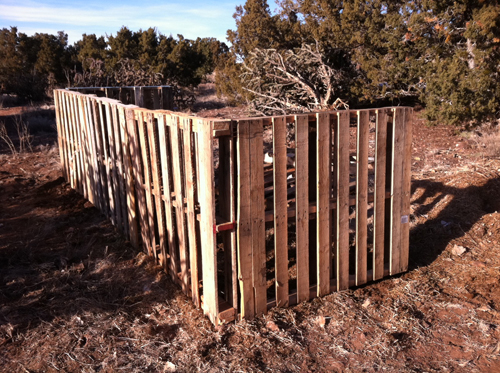
I do both vermicomposting (worm farming) and traditional composting. These bins are for traditional composting. Making compost bins is easy. Yesterday I made 3 new compost bins in 2 hours. It’s easy using pallets as they are free (I got my from ‘The New Mexican’ building- turn onto the frontage road of the interstate at the outlet mall road) and it’s great to recycle them.  In fact the only thing you’ll need besides the pallets is some baling wire (the kind for coyote fencing), pliers and some wire cutters. Get pallets that are all the same size and not broken so they have a clean look.

The first thing you need to do is get 7 pallets.  Three for the backs, 2 on each end and 2 for the inside to make 3 interior spaces. That way you can put your rawest materials in the first bin and then when needed you turn it into the next bin when it has somewhat decomposed and then turn again into the last one for finished compost. Find a place to your compost bins and rake the area clean but you don’t have make the ground spotless because you are going to bury it anyways.

Drag them into position and start with 2 pallets to make a corner. Standing them up, put one pallet onto the first back piece and wire them together on the top and bottom. Use the pliers to really tighten the wire so they are not floppy. Now the 2 pallets should stand upright without you holding them up. Now it’s easy to wire the rest.

Next wire another pallet to the one on the back on both the top and bottom and then the last one on the backside. Then connect another one to make another corner.

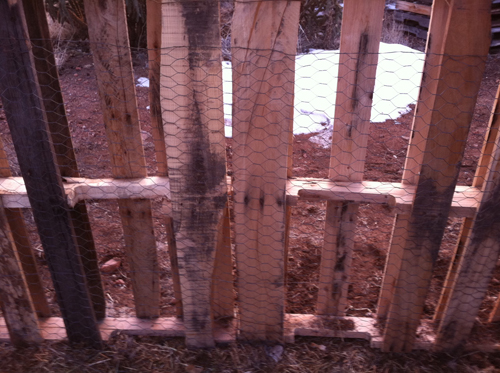
Next put chicken wire across the expanse of the inside. This is to help keep the rough materials from falling into the walls of the pallets. After I put in the center dividers, I’ll put more chicken wire in each section.

Here’s a look from the inside so far. Notice the two pallets left to make the dividers for 3 sections.

Next wire  the two other pallets dividing the expanse into thirds which is easy. I wire them where each pallet connects on the backside. Now you are ready to make compost which I will address in another post.

working on greenhouse

GREENHOUSE PROGRESS-slow…

In October, I scored some glass panels from our friend, Kate, who replaced her garden room windows and offered them to me. Thanks Kate! In early November, when I rented the Bobcat, I cleared the land to get ready for the greenhouse. It will be 16′ x 12′ interior space when done.  In December we had some really cold nights that started the ground to freeze but it has warmed up a little in January so far. Here is the progress for now..

Jan 7- Beautiful day 50°F. Been beautiful for 2 weeks now. Caleb came over with his JACKHAMMER and we started digging the holes out for the greenhouse posts. We need 8 holes dug. Two of which are in frozen ground. Hence the jackhammer. We got 4 holes done, 2 holes almost done (need to dig them out 2 more inches each) and 2 that are gonna be a bitch because they are in the shade and really frozen. Wonder how far the ground is frozen before we reach thawed ground.

Jan 8-Cold and snowy. Not a lot of snow but can’t do any garden digging today. Hope it warms up again. If we can get the posts set, then I can go out and start to frame the greenhouse on nice winter days.

Jan 9-Looks like it will be in the 40’s for this next week. Not sure when the ground will warm up enough again to work on the post holes. Wah! I would like to get it done by spring to start some seeds inside-March/April. Perhaps this is wishful thinking…sigh.

New tomato contest this year

Hey! I just got a notice for a giant tomato contest for anyone interested in looking into submitting one of your BIG tomatoes this year. The website-PlantYourOwn.com is running its 1st ever giant tomato competition. Click here for details. The contest is simple……just grow a big tomato!!! Signup ends March 1st, 2012. I might have to join!

Winter Pictures in Santa Fe

One must only look around to see the beauty that winter provides. Sometimes I think I have to look harder to see how beautiful it is in winter but then all I have to do is LOOK-really look-just open up my eyes and SEE.  At first glance it seems everything is dead but plants are only sleeping, waiting for the spring winds to wake them up. The earth, she is resting, gathering her strength, renewing herself for another season. Winter provides us time to rest and reflect and I like that.

We are having a mild winter this year and have gotten some good moisture so far but not a lot of snow. Today when the weather reached 50°F, I decided to walk my land and took some pictures. I hope you enjoy them as much as I do.
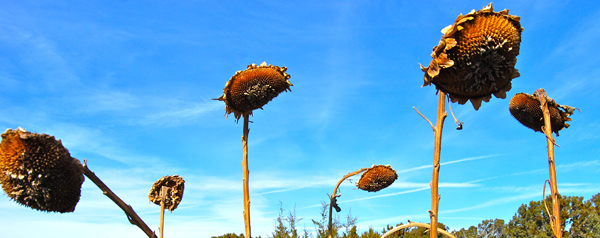
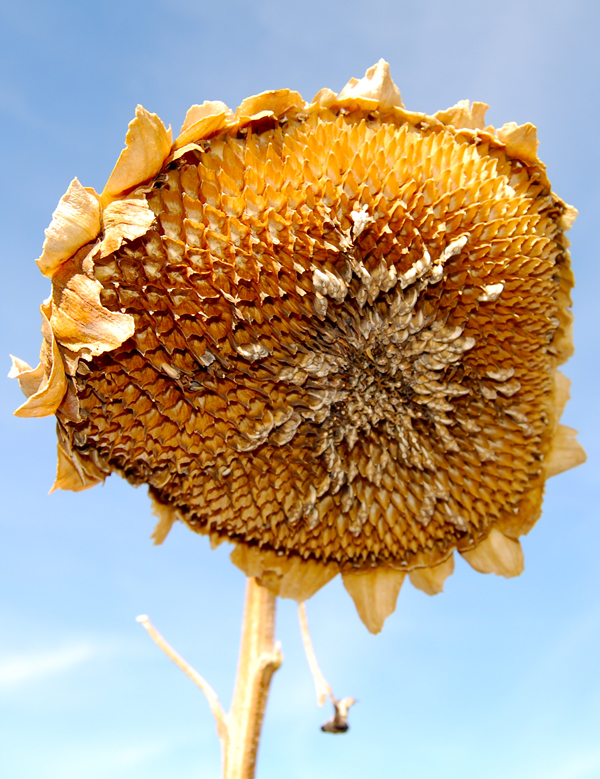
Are they alien spaceships? Nah-their just sunflower heads in wintertime.

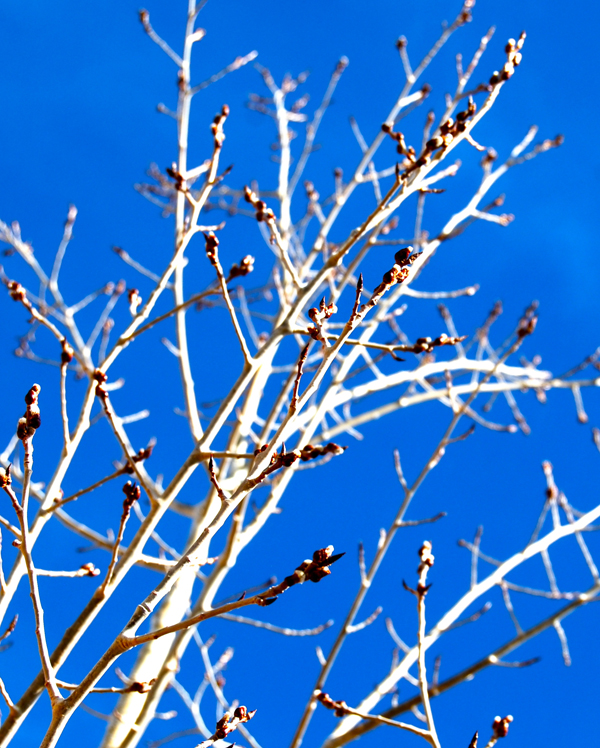
Aspen branches budding out against winter blue sky
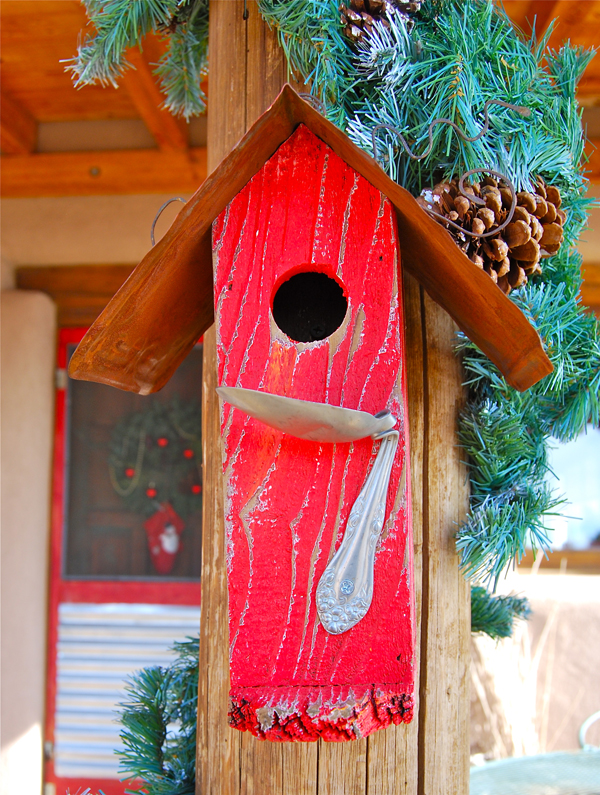
Here is a new red birdhouse acquired at the ‘Recycle Art Show’ here in Santa Fe just waiting for the birds to nest in spring!
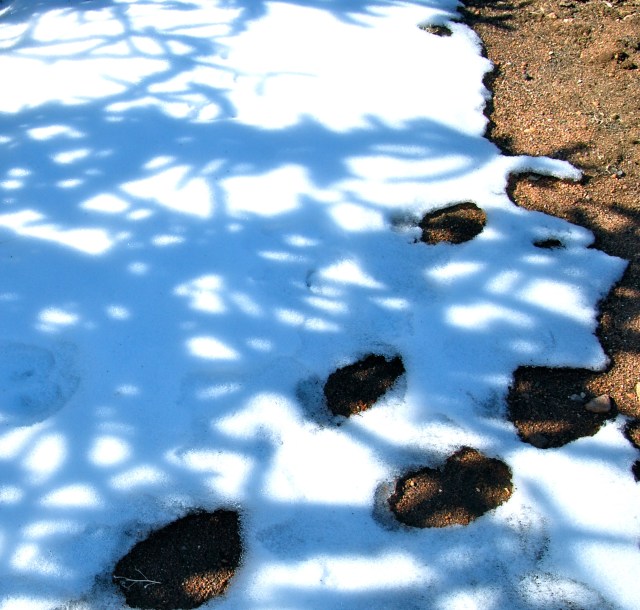
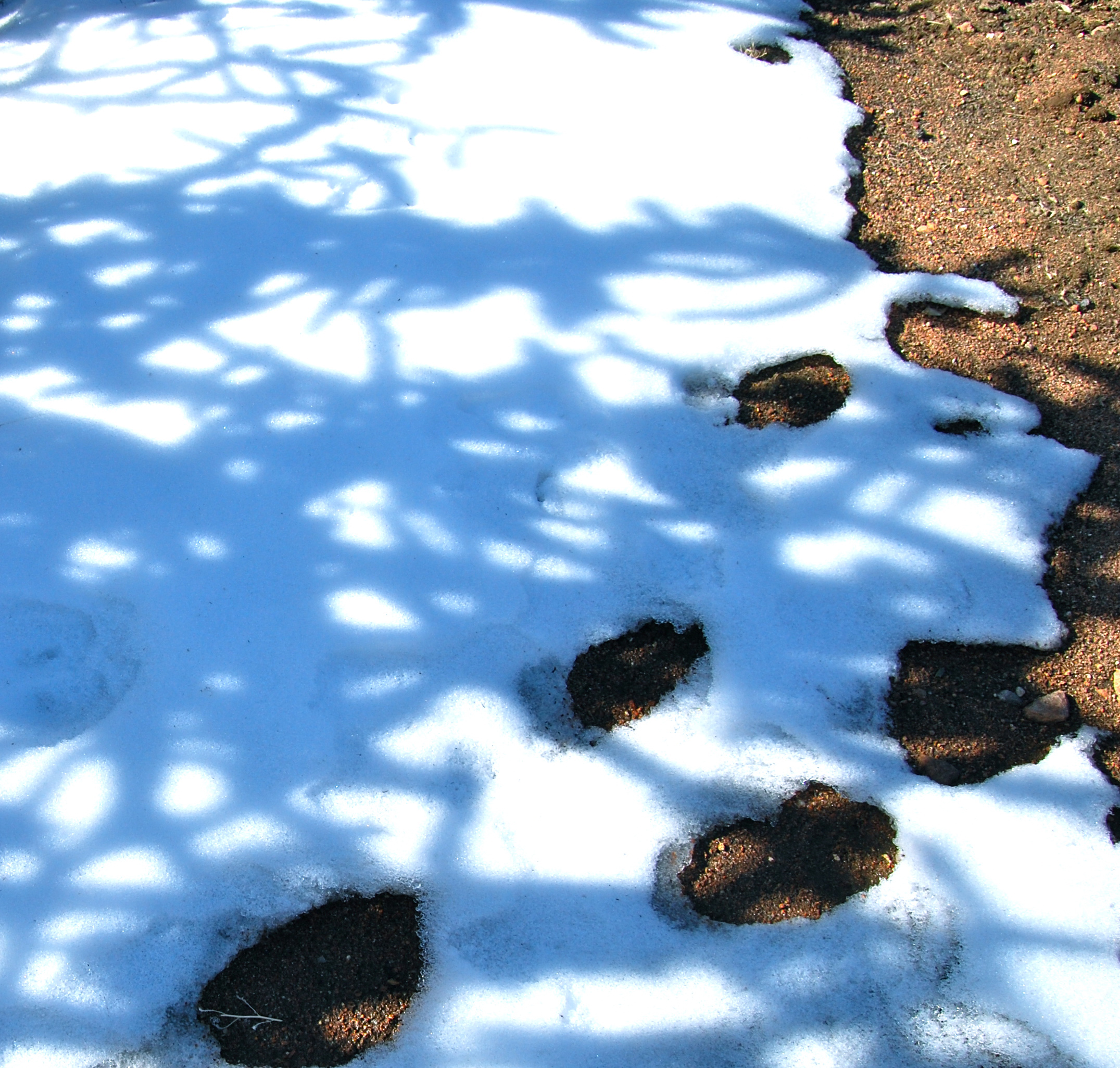
I liked the patterns of the shadows on the snow.

One of our birdie friends, a Flicker resting on a fence post-Isn’t he beautiful!

Aster flowers and snow in winter.
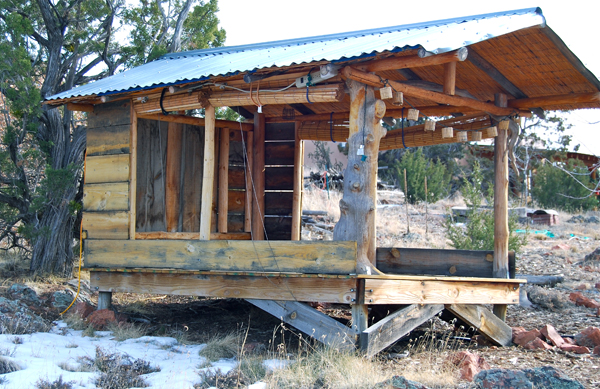
The Tea House is my little getaway where I like to chill out in the summer but it is lonely in the winter
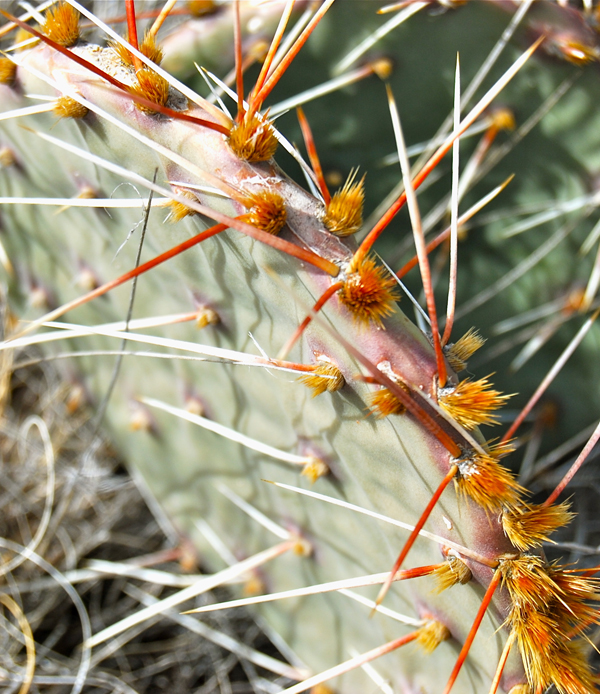
I don’t like cactus but this prickly pear cactus is so beautiful!
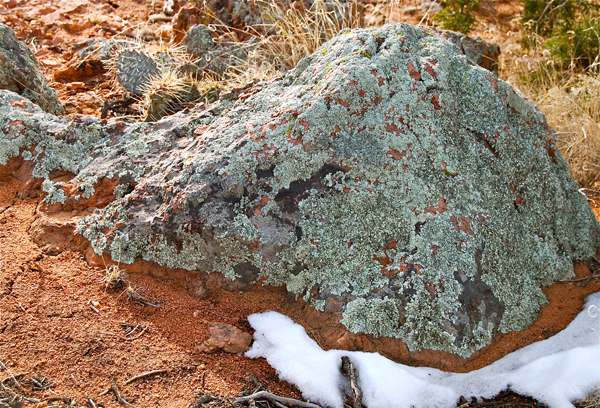
This moss rock lives out by the Tea House

Went by the bees today and they were enjoying the 50° weather too-catching some sun rays! This is called bearding when they ball up outside the opening.

This prickly pear variety had lots of pinks on it. I liked the color against the moss rock and snow
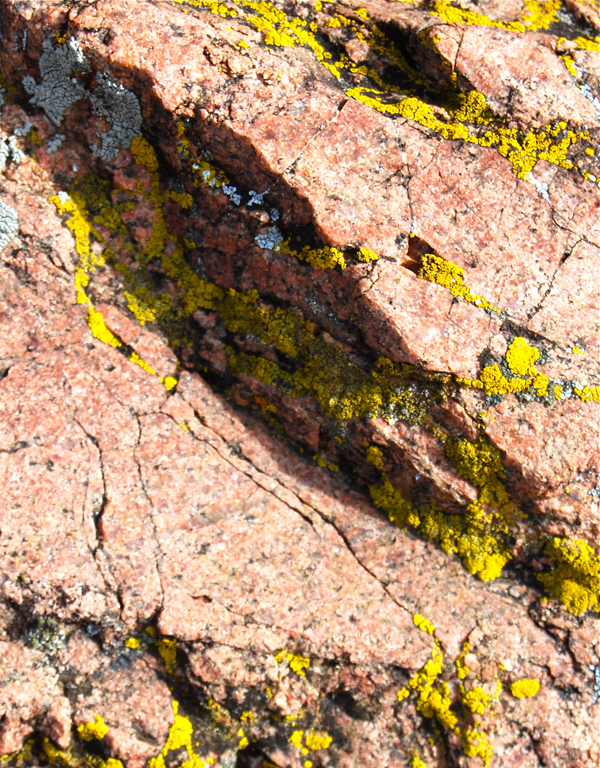
This is a closeup of some lichen on granite. Sometimes it is bright yellow like shown here.

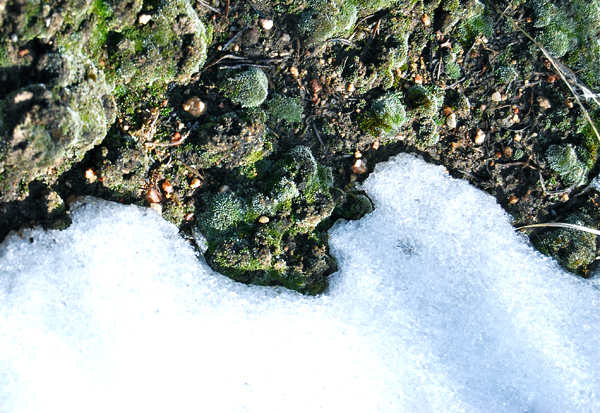
Snow and some kind of really cool moss.
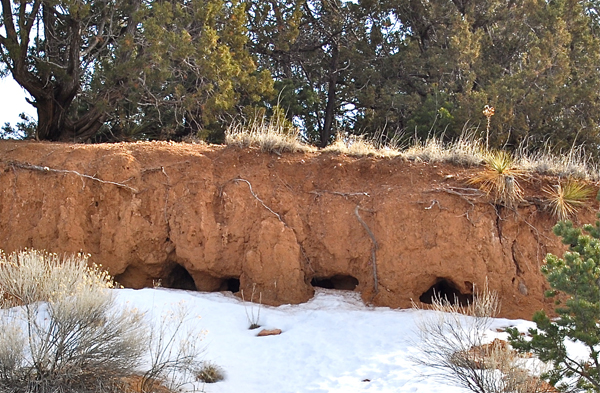
I found these coyote dens on the side of a bluff but decided not to get closer. Check out the footprints around them. No wonder we hear them at night-they are so close! Glad my goaties and chickens are well protected…

Here is one of the sunflower heads I left in the garden last fall. The birds have gotten almost all of the seeds out of it.

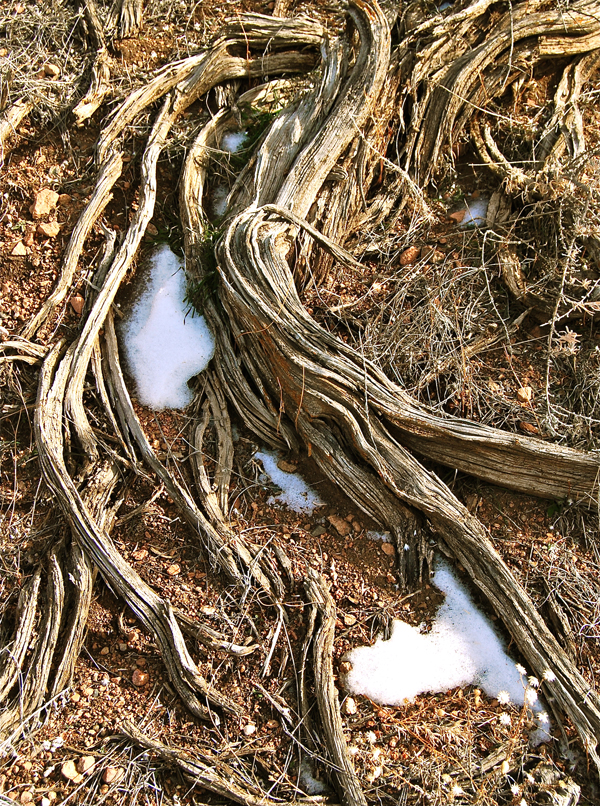
I love this old Chamisa root system.

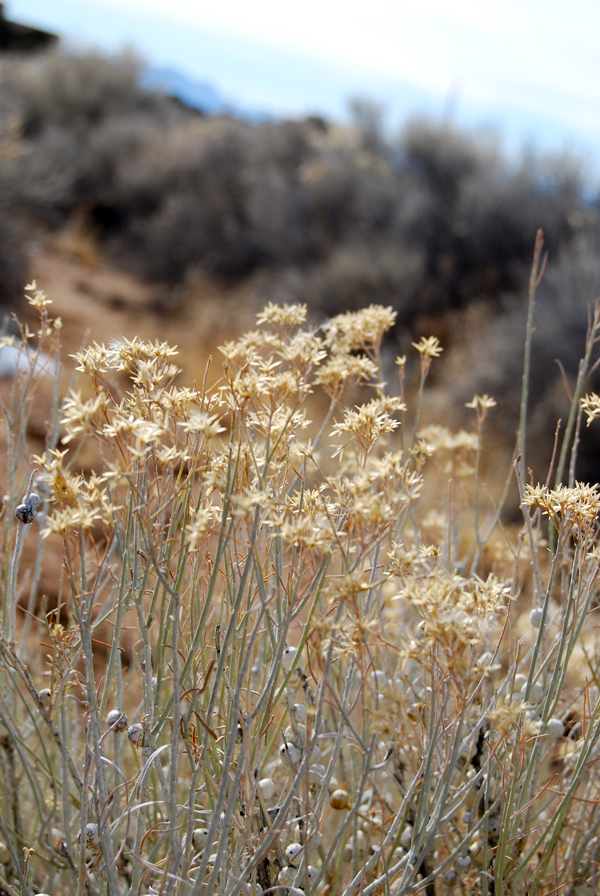
I like the he blue-grey stalks and dried flowers of the Chamisa plant.

The fruits of the Cholla cactus are beautiful. I use to hate Chollas because when you walk by them, they seem to jump on you and have barbed spines that are tough to pull out. But now I’ve come to appreciate them as they provide food for the bees with their beautiful magenta flowers in spring.
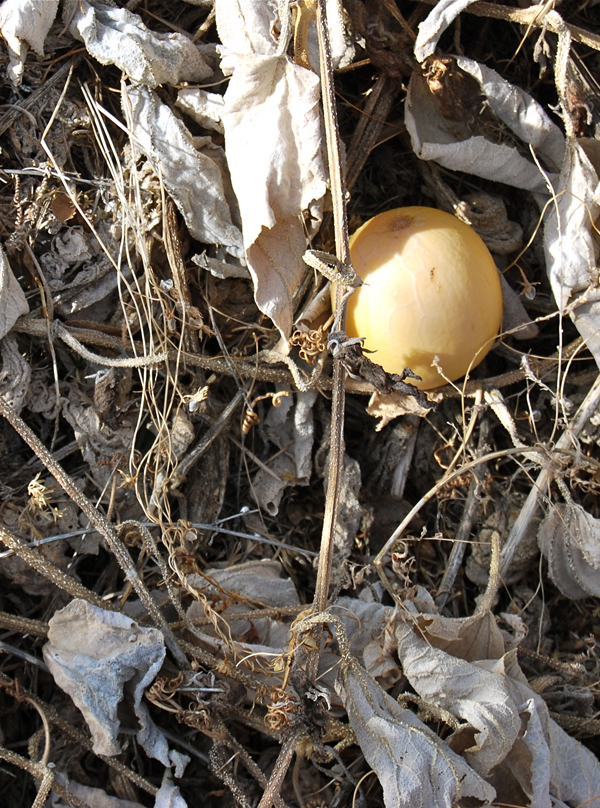
This is what the native Buffalo Gourd looks like in the winter. The gourd starts out as a green gourd, then turns yellow and will mellow to a beautiful ochre color as it dries. Their skin is too thin for making anything out of them but I still like to collect them on walks.

.
Happy New Year!!

Happy New Year to all my gardening buddies! Just want to thank all of you who have checked out, read or follow my blog this year-all 31,000 of you! (compared to last year-7500 visitors).  As we grow together I hope more of you share your experiences with me on my posts this coming year-that’s how I learn too! I look forward to sharing another year of gardening with you all throughout the seasons this year 2012. May all your lives be fertile!!