Fall Vegetable Planting Schedule

Fall harvest. We only wish our gardens were this GREEN! Photo courtesy of http://gardening.ktsa.com

Ok, so now since it is time to plant my fall veggie garden, here is my planting schedule

FIRST-WHAT TO PLANT AND WHEN

Depends a lot on what you like to eat. Below is MY list of what I want to plant for a fall garden. Some of these are already growing in the summer garden and will be ready to harvest soon like the carrots and beets so I must decide if I want more in the fall.  All of these planting dates are estimates depending on the variety you grow and are based on planting outside, not in a greenhouse. Look on your package of seeds or on the plant label for seedlings for accurate harvest times and go backwards from Oct 3 for Santa F+ add 14 days.

JUNE

Fennel (Finnochio-bulb type)-Sow seeds mid June. OPPS! Missed this. The short cool days of fall are even better for fennel than spring. You can still plant this (IN JULY) as it likes cool nights although the bulbs may be smaller since we missed it’s prime planting date.

JULY-AUGUST


Asian Greens/Bok Choi- Sow seeds mid July. Can handle light frosts. Harvest days depends on variety. Look on seed package.

Beets- Sow seeds in mid July-early August. Can handle freezes but must mulch with thick straw or row cover. 45-65 days to harvest.

Broccoli- Sow seeds early July-mid July. Can handle light frosts. 55 days to harvest.

Broccoli raab- Sow seeds in early July-mid July. Can handle light frosts. 45 days to harvest.

Carrots- Sow seeds in early July-mid August. Can handle freezes but must mulch with thick straw or row cover. 70-80 days to harvest.

Chard- Sow seeds late July-. Can handle some light frosts. Cover with row cover when it gets cold to extend season. 50-60 days to harvest

.

Kale- Sow seeds early July. The short cool days of fall are even better for kale than spring. Kale that is established will last well into winter and can survive below freezing temperatures down into the 20s.

Lettuces- Lettuce baby- Sow seeds in early-August. Seedlings will need consistent moisture and shade from the afternoon sun on hot days. Cover when it gets cold to extend season but it will not survive freezing temps. 45 days to harvest depending on type and variety.


Peas- Sow seeds in early-July-mid-July. Likes cool but not freezing weather. 60-75 days

.

Radish- Sow seeds late July. 30 days to harvest.

AUGUST


Spinach- Sow seeds early-August. The short cool days of fall are even better for spinach than spring. Spinach that is established will last well into winter and can survive below freezing temperatures down into the 20s although it will stop growing. Why doesn’t it freeze? It produces an alcohol inside-alcohol won’t freeze! 45 days to maturity.

Endive, Escarole-Sow seeds early August. The short cool days of fall are even better for these than spring.


Lettuces- Lettuce head – Sow seeds in anytime August. Seedlings will need consistent moisture and shade from the afternoon sun on hot days. Cover when it gets cold to extend season but it will not survive freezing temps. 45 to 60 days to harvest depending on type and variety.


Mesclun mixes- Sow seeds in early-August. Seedlings will need consistent moisture and shade from the afternoon sun on hot days. Cover when it gets cold to extend season but it will not survive freezing temps. 45 to 60 days to harvest depending on type and variety.


Arugula- Sow seeds in mid-August-late August. Fast growing. Can handle some light frosts. 
30-40 days to harvest.


Kale- Sow more seeds mid August. The short cool days of fall are even better for kale than spring. Kale that is established will last well into winter and can survive below freezing temperatures down into the 20s

OCTOBER


Garlic-Sow largest cloves anytime in October after the first frost. Harvest in late-June-July

Shallots-Sow largest bulbs anytime in October after the first frost. Harvest in late-June-July.

I’m 

not a big fan of kale, endive, escarole and collards, but went ahead and listed them as I know many of you like them. Cabbage and cauliflower take too long to grow for me. Forgetaboutit!

SECOND-WHERE TO PLANT


Do you have garden space close to your house for easy watering and harvesting as it gets colder? This is important to consider if your main garden is far away from your home. I have two places to plant them now. My cold frame and my raised beds up by the house. If I ever get my greenhouse done, I’ll have another great place for veggies but for now I’ll plant in my two spaces.
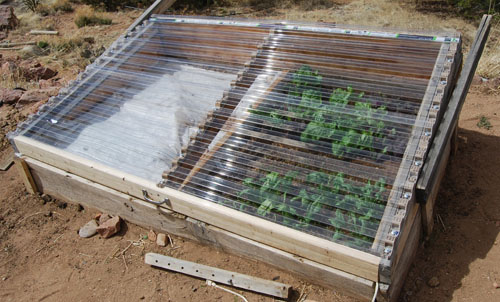
Cold frame in previous year

My first space is my cold frame up by the house. Since it is too hot now, I think I will have to put some shade cloth over it to keep plants cooler inside. Also I want to get one of those automatic vent openers that will open the lid if the temps get too hot and close it when it gets too cold.
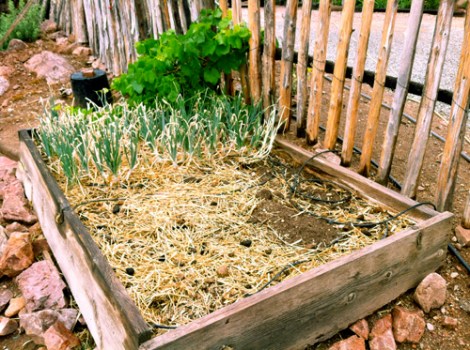
The shallots will soon be done in this raised bed and I will use it for fall planting

My second space is the raised beds also up by the house. Raised beds are great as they keep the soil warmer in the fall when it is getting cooler. Since I already pulled all the garlic in these raised beds, I will plant a few cold hardy vegetables in them and then plant garlic and shallots between them come October. The beauty of having some garden space close to the house is when it does get cold, I won’t have to walk down to the main garden to water and harvest. I can just get a watering can and go right outside the house. Also I can replace the light row cover that I keep my cool season crops under (keeps the critters and bugs away) with a heavy row cover on the beds if a sudden frost comes up. The cool season crops will be picked by the time winter hits and the garlic and shallots will sleep till spring!

Thinning and preparing mesclun/greens-keeping your homegrown greens fresh!

Here are my steps to thinning and preparing mesclun so it doesn’t WILT in your refrigerator. In fact you can use this method after you clean any greens in ANY STAGE from microgreens to full grown lettuce and greens from the garden or store bought.

The MOST IMPORTANT THING if you are growing any greens is to PICK THEM FIRST THING IN THE MORNING when they are fresh-not the heat of the day, OTHERWISE THEY WILL BE WILTED NO MATTER WHAT YOU DO (are you listening Lava?). During this first stage of mesclun, it is a little more labor intensive. (After the leaves grow more, you will just cut off the tops above the crowns so they can grow back and there will not be much dirt since you are not pulling these out by the roots.)

Here is the mesclun in my salad bowl I made. Notice they are very cramped with not much dirt showing. I need to thin these out so the leaves can get bigger without overcrowding.

Thin out the mesclun. The goal here is to have some dirt showing to give the remaining leaves some room to grow.

Now the mesclun (first thinnings) are like microgreens and are ready to clean. Notice the roots are still on them. You can cut them off or eat them if you rinse well. Here I’m leaving them on. Of course you could just feed them to the chickens or throw them out but I don’t like to waste them plus they are yummy! You would pay big bucks for just a tiny bit of microgreens in the stores.

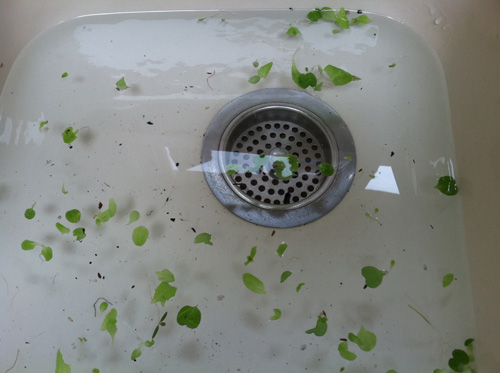
Here is the mesclun at the first rinse. I first clean my sinks out with bleach so I know they are clean. I suppose you could use big bowls to rinse instead. I filled my sink with COLD WATER from the faucet. Notice the leaves float on top while the dirt mostly sinks to the bottom. From here I gently scoop out the leaves trying to leave the dirt on the bottom of the sink or bowl and transfer them to the other side of the sink full of water for the second rinsing. By the way, rinsing this way is way easier than using a colander.  It works really well for spinach too. This way removes the dirt that can stay in a colander.

Second rinse-Notice most of the dirt is gone at the bottom of the sink after I  have removed the leaves.

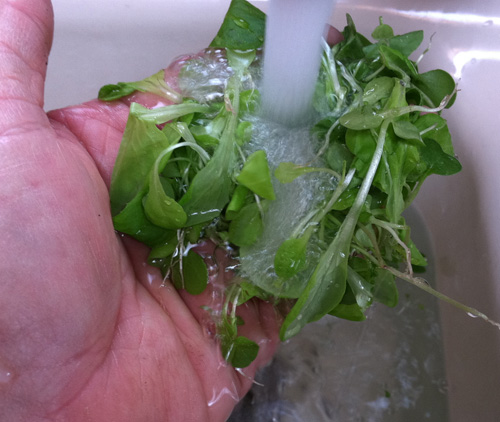
At this stage I do one hand rinse in case their is more dirt trapped on the roots. Then I put them into…

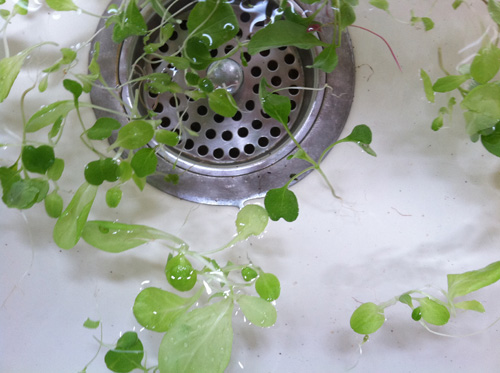
The last rinse- notice the dirt is gone. Rinse more if you still have dirt.

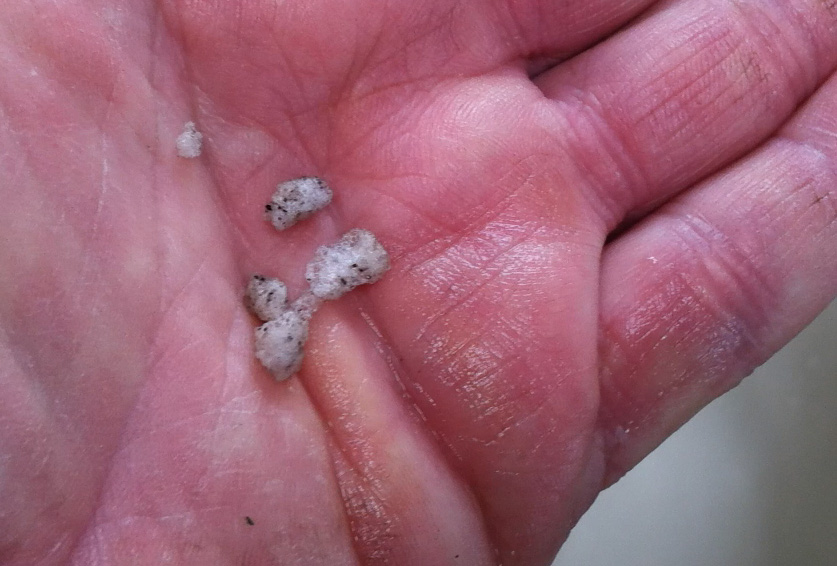
Since I grow the lettuce bowl inside, I use seed starting mix and you need to look out for the perlite that is in it as it can float in the water instead of sinking like the dirt-so be on the lookout for it. Just scoop them off the surface of the water before you do each rinse. It would be a little too crunchy in my salad!

Now the leaves are ready for the spinner. Just don’t pack it too full as the leaves are very delicate. Spin it in small batches and..

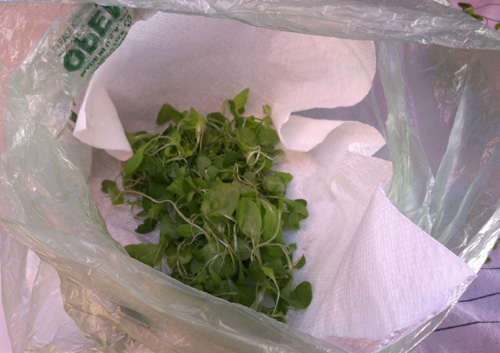
gently place it in a loose plastic bag (not ziploc) lined with a dry paper towel. Then this next trick is very important. I learned it from reading Dorie Greenspan’s book,  Around My French Table where you…

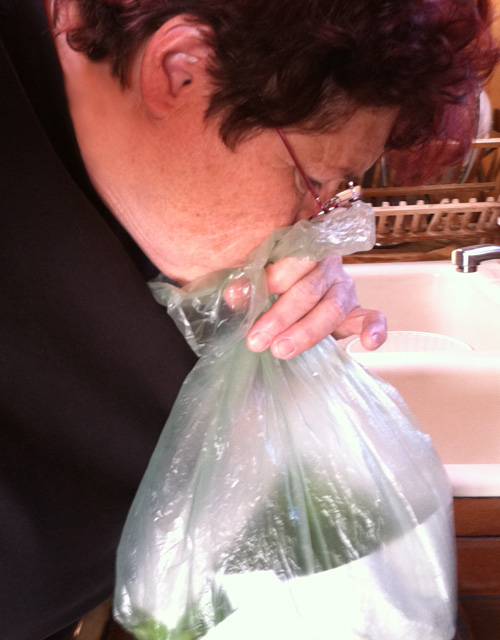
squeeze the bag so there is only a small opening and blow into the bag with your breath. This will fill the bag with carbon dioxide (which we expel) and then blow it up till it is full and..

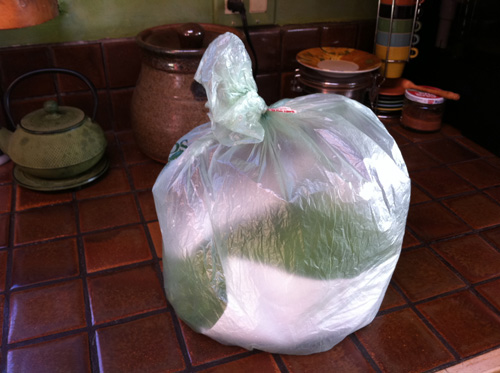
tie off with a twistie tie so the air doesn’t escape and put into your refrigerator. YOUR GREENS WILL STAY FRESH FOR ABOUT A WEEK. Be sure you blow into it each time you get some greens out before putting it back into the refrigerator again. This takes up a little more room in your refrigerator but is worth it. No more homegrown wilted greens! Pretty cool trick, huh?!

Seed starting INSIDE

I’ve been planting seeds INSIDE for a couple of weeks now. Here is my update on my seed starting endeavors this spring so far.

PEAS-Not everything is successful-My pea seeds I planted inside have NOT done well as I had hoped. They are barely coming up now inside so I planted more outside and if these make it, I will add to the other seeds that I planted outside on Saturday. I think the heating mat was too hot for them so I put them on a table under the lights but with no heat. We will see..

FAVA BEANS-I’m so excited-I’ve never grown fava beans before but are trying them this year. I sprouted fava beans that I got from that Homegrown seed swap and bought some more that I got from Spanish Table Market here in Santa Fe. The companies would like to say that the ones they sell you to eat are different then the ones they sell you to grow.  If they are treated then that would be true but so far I have not found that to be the case. They are both sprouting just fine. Today I saw three of them breaking ground in their little pots on the heat mat under the lights. Once up I will transplant them outside as they like the cold. I’ll talk about them later.

CHARD, BOK CHOY seeds planted-MAR 13-The chard and bok choy germinated in 2 days!

BORAGE seeds planted-MAR 13-Germinated in 3 days!

MORE LETTUCE-seeds planted-MAR 13-just starting to come up

SPINACH seeds planted inside as well as outside -MAR 13-Not up yet

TOMATOES-seeds planted today-Sunday, MAR 18-planted 27 different varieties! Hope to put them out 8 weeks from now-mid May or sooner. Last year I planted tomato seeds inside on Mar 21.

POTATOES-I’ve been chitting them for a week now. Chitting is getting the potato eyes to sprout.

The next major inside seed starting will be in 2 weeks-Basil, oregano, marjoram, zinnias and probably a lot more.

Winter Spinach Recovered from Rabbit Damage

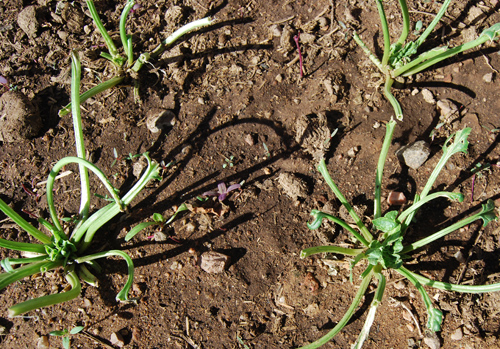
Spinach eaten by rabbit (funny it didn't eat the stems)-March 13

Remember the severely eaten spinach I showed last month (March 13)? Now that the cold frame is repaired I can keep the rabbits out again.  No more feasting on my spinach! While the cold frame was damaged and open to rabbits, I kept some row cover over the damaged spinach and I held it down with rocks. The rabbits couldn’t get to it and the spinach made a glorious recovery! Had spinach and cheddar omelet yesterday with it! I should be able to get more meals out of the spinach as it is doing great and we have lots of time before the heat comes and it bolts.

Spinach recovers in less than a month


Plant peas, spinach, and arugula on St. Patrick’s Day

Today is ST. PATRICK’S DAY- TIME TO PLANT PEAS, SPINACH AND ARUGULA. I always plant them right around now and use the holiday as a reminder. I stayed home today to recoup after putting Butch down. Getting my hands in the soil is always grounding for me. Lots of things to do right now regarding gardening. Here are some of the things I did today.

COLDFRAME-I inspected the rabbit damage to see if the spinach seedlings are salvageable. All but one of them are starting to grow back from the crown which were undamaged. I planted seeds of the following in the coldframe:

SPINACH-Bloomsdale-45 days in the other half of the coldframe.

CHARD-I didn’t know (or remember) that chard is a biennial (meaning two years) but spends it’s second year mostly growing to produce seed which is why they never seem to produce as big of leaves the second year. I will pull them and plant more chard seeds-white variety.

OUTSIDE RAISED BED-Checked the outside raised beds by the house. Last fall I I dug some old horse manure into one of them and it looks great. I planted the following seeds and covered them with row cover to keep the rabbits from them:

PEAS-Dwarf Grey peas and Oregon Sugar Pod II-60 days

SPINACH-Bloomsdale-45 days and a giant variety of spinach (there I go again!) called Monstrueux de Viroflay-50 days

BUTTERHEAD LETTUCE-Yugoslavian Red-40 days

MESCLUN-Provencal mix-40 days

CILANTRO

CUTTING LETTUCE-a new super red variety of  called Sea of Red-40 days

ROMAINE-Paris Island Cos-68 days

ARUGULA-Apollo-30 days

IN THE SECOND RAISED BED- Took out the last of the carrots from fall that overwintered. They should be extra sweet! The garlic I bought at SF Farmers Market last fall is coming up in it. Lightly dug in some Yum-Yum Mix in the remainder of the bed as I’m going to plant more carrots, beets and shallots which are heavy feeders and need some extra fertilizer especially if you are putting them back in the same area. I will plant:

CARROTS- Purple Haze and Danvers

BEETS-Detroit Dark Red-60 days, Bulls Red Beet-50 days and Early Wonder beet-48 days

DUTCH SHALLOTS-picked up some Dutch Red Shallots while I wait for the French shallots to arrive. Should be a good taste test at harvest time.

MAIN GARDEN-I hooked up the hose and watered the strawberries and the asparagus. Underneath the layer of dried leaves in the strawberry bed I see new leaves starting to grow from the crowns. The asparagus is either dead from our very cold winter or they haven’t started growing yet, we will see..

Time to Plant Spinach!

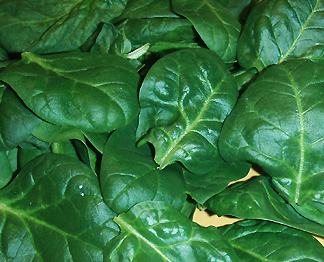
Fresh Picked 'Melody' Spinach

I direct seed spinach here in Santa Fe as soon as our soil is workable. I will get it in this weekend weather permitting. I always seem to wait too long but not this year!

If you have a soil or compost thermometer or if you don’t have one, you should consider getting one (I have a compost thermometer as it is longer in length), check your soil as spinach will germinate when the soil gets between 55-60 degrees. Spinach likes it cold and it has a short season here. For most varieties as soon as it gets warm, it will bolt like a cat and go to seed. We generally won’t be able to get spinach by mid May so I like to replant every few weeks to get a continuous crop instead of a large crop all at once for as long as I can. Luckily for us spinach grows quickly and most varieties reach maturity 4-6 weeks from seed.

Spinach likes to eat as it is a heavy feeder so a good dose of fish emulsion and seaweed fertilizer after it is up will really help it. If you have overwintered some spinach, fertilize it as soon as it starts to grow.

There are 3 kinds of spinach: Savoy (crinkly, thick glossy leaves) Semi-savoy (less crinkly), and Smooth Flat leaves. Here are some varieties for each type:

Savoy:
Bloomsdale
Regiment

Semi-Savoy:
Tyee
Indian Summer
Melody
Teton

Smooth Flat Leaf:
Giant Nobel
Olympia
Bordeaux

If you are direct seeding, plant your seeds about 1/2 inch deep, either in rows or broadcasting them like you would a mesclun mix and just keep thinning them out, eating them along the way. If you haven’t tried fresh grown spinach, you’re in for a treat. Don’t wait too long or you’ll miss this wonderful green.