Treat Early Blight when it shows up

Early Blight is a fungal disease that attacks tomato plants starting on the bottom leaves of the plant and works it’s way upwards.  The leaves start turning yellow and get blotchy with brown areas. If left unchecked, it can take over your plant killing it although it won’t die immediately and there are things you can do to reduce it.

Where does it come from? It comes from water splashing soil up onto the lower leaves. The culprit is a bad soil fungus (there are good soil fungus as well).

But before I write about how to treat this disease, I do this first. I always trim off the lower branches so they are not touching any soil and I put straw under each plant so the soil can’t splash up on the tomato leaves. In fact I put straw over the whole bed as the tomato plants get bigger. Water splashing up from hand watering your plants or even rain can splash soil up on the lower branches. But I never cut off branches that have flowers! Flowers=tomatoes! The picture above shows a plant with the lower branches trimmed off and straw over the soil. Underneath the straw is my drip system. The goal is to keep the soil from splashing up and the fungal spores will start to go upwards from the bottom of the plant.

There are several things you can immediately do to help with this disease when you see it

1. The first thing you do is trim off the affected branches where the leaves are yellow.  This week I trimmed all the lower branches off my tomato plants paying particuliar attention to the ones that had a few leaves just starting to yellow with EB (Early Blight). This year I had 3 out of 20 plants showing the beginning of EB. Me bad-I didn’t add the straw or trim them up after I removed the wall of waters earlier. I also tie a ribbon on the diseased plants so I can keep a close eye on them. I’d much rather deal with Early Blight than Curly top virus (which is always fatal and not much we can do about it). At least you can control Early Blight. Keep trimming up your plant as needed.

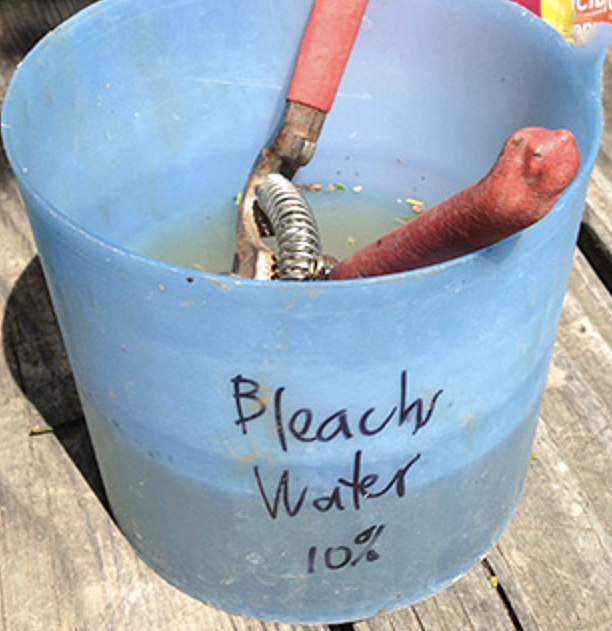
ALWAYS DISINFECT YOUR CLIPPERS IN BLEACH WATER BEFORE GOING ON TO PLANTS THAT DON’T HAVE IT-it is contagious!

2. Beside cutting off diseased branches, trim any branches to make sure they don’t touch the ground

3. Stake  or tie up any branches that might touch the ground.

4. Mulch with straw underneath the plant so the soil can’t splash up on plant when it rains or if you water overhead.

5. I have used a product called Serenade in the past, but it is no longer available. If you have some discard it as the ingredients only lasted several years.

So now I use Monterey Complete Disease Control which I have had good luck with in curtailing or slowing down the disease. Follow instructions. Spray in early evening both on top and UNDERNEATH the leaves.

I also use this for keeping Powdery Mildew at bay on all squash plants.

IT’S TIME! Take your row covers off of your tomatoes

IT’S TIME! Take your row covers off of your tomatoes! Monsoon season has arrived! I’ve been gone on a flyfishing trip but kept up with the weather news. Just got back last night. So today I will be taking off all the row covers off the tomatoes. Then I can see the plants again-yay!

Here is a link to a time lapse video I did taking off the covers several years ago-Enioy!


Tomatoes are in-FINALLY!

Tomatoes in wall of waters (wow) May 23, 2025

Today Elodie and Bob and myself planted 18 tomato starts today.THANK YOU! YOU BOTH ARE THE BEST!

I grew them from seeds inside the house under lights and heat mats since early spring. The tomatoes are so happy to be free-FREE at last! I don’t think I’ve ever put them in so late.

I was suppose to plant them on Monday but the weather was horrible and the nightime temp was down to 31 degrees at our house so I’m glad I waited. It was so cold and windy this past week-what a difference a few days can make. No need to stress them out.

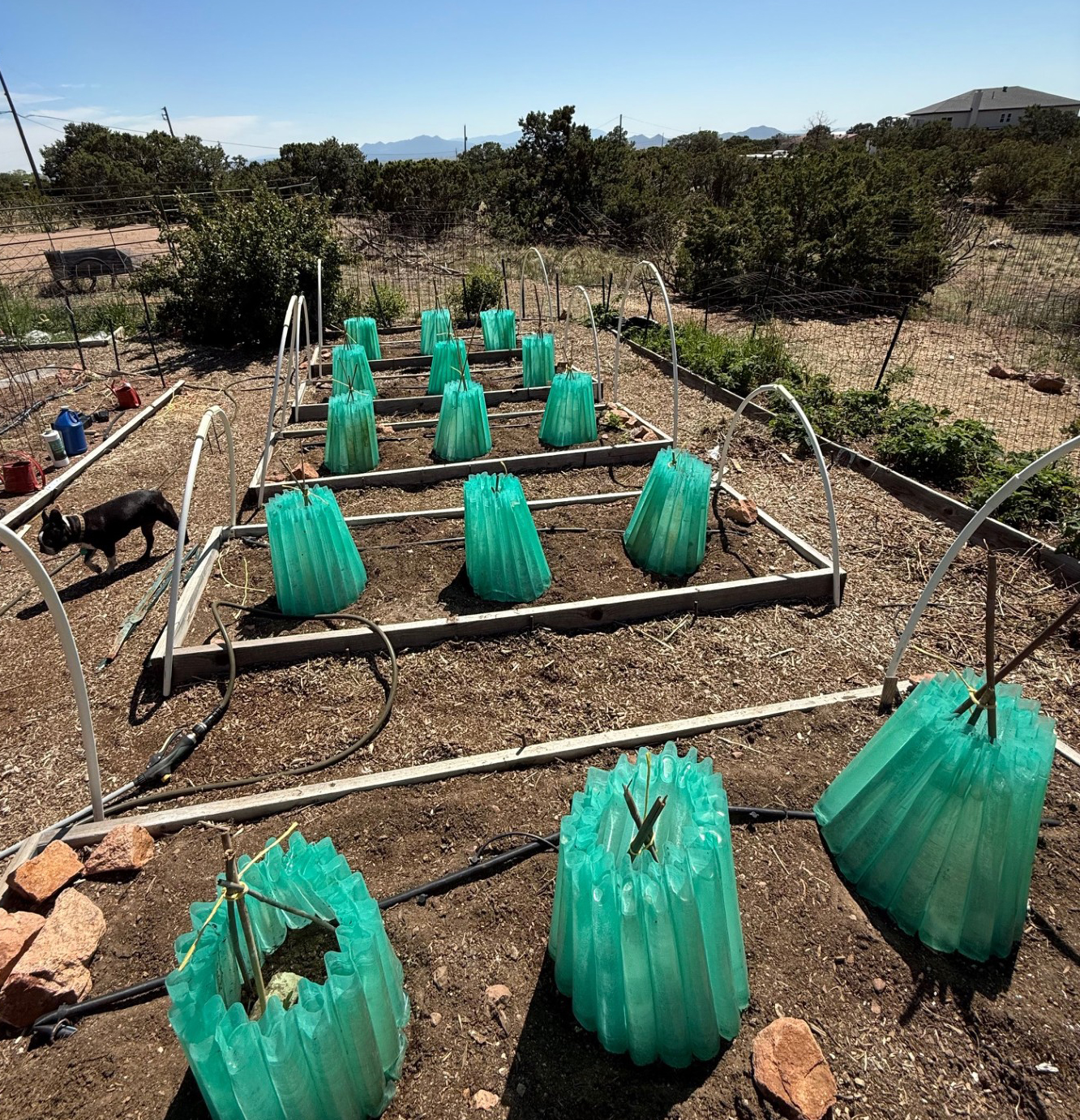
We did plant them in wall of waters (WOWs) out in the veggie garden to help with our cold nights. I will take off the WOWs sometime in June when the plants either reach the top of the WOWs or the temperature gets into the 90’s. You don’t want to leave them on when it gets hot-you could fry them. But the weather has warmed up nicely and today the high is 80 today and a low of 48 degrees tonight. Perfect temps!

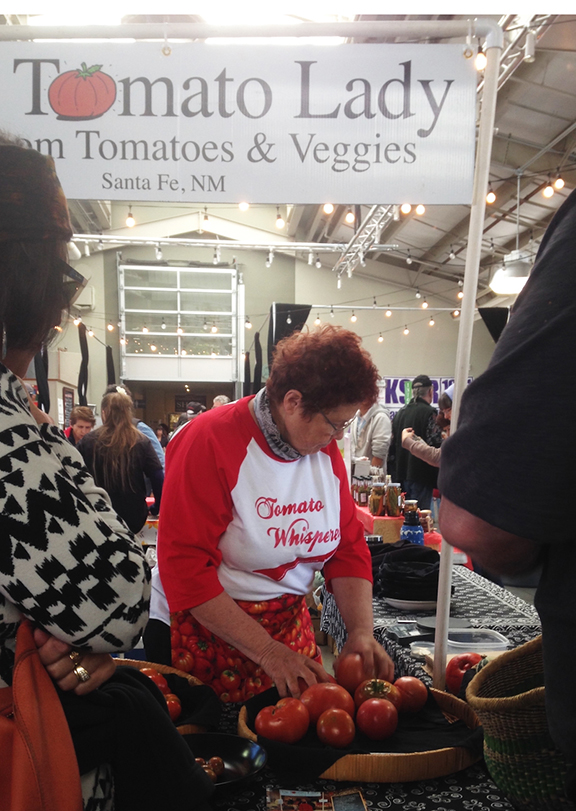
18 tomatoes is smallest number of tomato plants I’ve ever planted. Back when I was at the Santa Fe Farmers Market selling tomatoes, I use to grow 120 tomato plants and would sell out by 11 am. I’m so glad I retired from the Farmers’ Market after ten years there. Farmers work hard!

Now it’s a more reasonable pace. As I’ve gotten older, I realize I need to slow down a little and I’m glad I listen to my inner voice (sometimes). With age comes wisdom (well, maybe a little!)

Wall of Waters-what they are and how to use them

A

Wall of waters (WOWs)

Wall of waters are season extenders to use to protect plants. I use mine as plant protectors in the spring to get certain plants like tomatoes and peppers out earlier in the season when they are smaller than what is normally recommended and cold at night.  Never use them in summer when it is hot-you will ‘cook’ your plant inside them.

What are wall of waters (WOWs)?

When the cells are filled up with water, they keep the plants warm by heating up in the daytime and releasing the heat for the plant at night. Wall of Waters are about 11″ tall so your plant will need to be small enough to fit inside to get protection.

Any taller plants will not be protected if they extend past the top of the wow. It acts as insulation to protect tomato plants from cold, rain, snow and wind.

Always put them around your plant in the morning, on a sunny day, so the water has time to heat up to protect them at nite.

Why do I do this?

-Living in a short growing season area, I can get plants outside earlier, knowing they will be protected from a freezing nite-actually down 26 degrees (I’ve even read it can protect to lower temps!) By using them, I can transplant my tomatoes outside earlier. The last few years, I’ve shaved off about 2 weeks from my schedule. I use to put my tomatoes out around May 15th which is the supposed first frost FREE day here in Santa Fe, NM-Zone 6B. Now I sneak them in the first week of May but maybe not this year with the wild temperature swings. And they work beautifully. This means that I will get ripe tomatoes sooner than if I waited for the outside temps to warm up before planting outside.

-The other thing they do is offer protection from our WIND, which can be ferocious in the spring and thrash your crops.

-And I even used them for my pepper plants too, which are even more cold sensitive than tomatoes. I will wait to plant pepper plants this year till the first week of June. Both tomatoes and peppers are warm season crops. You could even try them for eggplant starts. Wall of Waters come in a 3-pack. There are also many me-too products of wow that should be fine.

You can see the video here of how to use the wall of waters. Notice I plant the tomato in the ground, make a well around the plant, put drip line around the plant if you are using drip, and then put a 5 gallon bucket inverted over the plant, and put your empty wow over the 5 gallon bucket. This helps keep it from tipping over and squishing your plants when you start to fill the plastic cells with water. I usually do 2 cells on one side, and then go across to the opposite side and fill 2 cells and then start to fill the other cells around adjusting the wow to stand straight till all cells are filled up and then reach in and pull out the bucket and the wall of water will stand up. Because I live in a windy area, I also put some bamboo stakes inside right up against the wow on the inside but do not pierce it. This helps fight against the wind from knocking the wow over.

Be sure you take off the wows when it gets hot in June as leaving them on can fry your plants (remember the walls are heating up and it could get really hot inside). I only use these as an aid to get plants out earlier in spring.

-Let them dry out after you are done and store your wow’s in some kind of mouse-proof container to keep mice from eating holes in them in the off season.

Row cover-what is it and how to use it

One of two of my favorite aids to use in the garden

If you look at my vegetable garden throughout the season, you will see lots of white row cover over everything newly planted in my garden especially in spring when first planting crops out.

What is it? How can you use it? Where can you get it?

What is row cover?

Row cover, also called Remay as it is also called is a polypropylene material that you put over your crops or plants for protection from cold, to keep animals out and to help plants acclimate to our environment. Rain or water can go through it and sun comes thru although reduced if you get mid or heavy weight. It is not like a sheet, which doesn’t protect our plants. You’ll need to protect them in some kind of mouse proof container in the winter or the mice will eat holes in them. I store mine in a garbage can in the winter.

It comes in several ‘weights’

winter weight– is for when you need the most protection down 4-6 degrees below freezing. It lets in about 70% of light. I don’t use winter or heavy weight  anymore and  I would never use this weight in summer, the plants don’t need that heavy of material. I want more light to come through in the summer. My go-to now is medium weight.

medium weight– The medium weight of this row cover is 0.50-0.55 oz.
Medium weight covers allow 85% light transmission and provide frost protection down to 28 degrees. Medium or heavy covers is what should be used during our winters (that’s if you have crops then).

I use medium weight the most, especially in late spring and early summer when I’m first planting seeds and transplanting plants outside. If the night is going to be really cold, sometimes I double up the medium weight at night and fold it all back in the day. So if you only want to buy one weight, get this one. No matter what, always fold back the row cover so light can reach it in the day time and cover it back up at night if you have freezing temperatures. This exception is if it is below freezing in the daytime. Then keep it covered for that day. It lasts 2-3 years depending on the wind ripping it up.

light weight-I never use this as it tears up too easily in our spring winds. Waste of money.

How to use row cover

-I use it to protect new transplants from our high altitude sun. Also offers protection from wind.

-I use it to cover seeds I direct plant in the ground to help keep the ground from drying out.

-I use it to keep some plants (especially newly planted) from getting sunburned.

-I use it as a physical barrier to keep bugs that will damage plants off of them.

-I not only use it to protect newly planted plants but also when I put direct-seed like corn or beans in the soil, I put it over the crop-it protects from birds eating the seeds, giving them a chance to germinate. I uncover them when the sprouts are 3-4 inches tall. Birds just love corn and bean sprouts!
-I just lay a sheet of row cover directly over my plants, tacking it down with rocks or 2 x 4 wood so it doesn’t blow away. If you have a cold frame or want to use it on a raised bed, it helps to put some PVC hoops over the bed and then cover the hoops completely with heavy plastic for more protection with the plants inside with the row cover on top of them. You will need to uncover the plants in the daytime and cover at nite AND you need to vent the ends of your mini hoop house to let heat out in the day. You can google how to make a mini hoop house this way. Not hard to do and it let’s you get some crops in sooner.

Vegetable Garden Tour with the Tomato Lady

On August 31, my vegetable garden was in the Santa Fe Extension Master Gardener’s private garden tours. People had lots of questions. I thought it might be helpful to address them on my blog so everyone would have access to the information I shared.

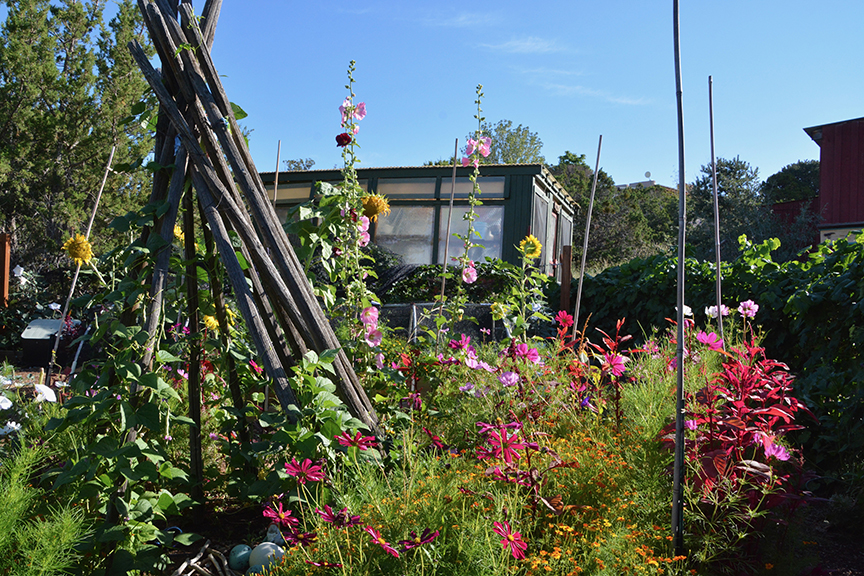
When you walk into the vegetable garden, there are immediately two beds with many annual flowers-cosmos, zinnias, hollyhocks, red amaranth, sunflowers and marigolds. More flowers will attract pollinators and beneficial bugs.

Gem Marigolds
This one was most asked about. You can buy seeds on line. This variety keeps flowering, creating huge bouquets of little flowers. I let them dry in the fall and shake them where I want them to reseed the next year.


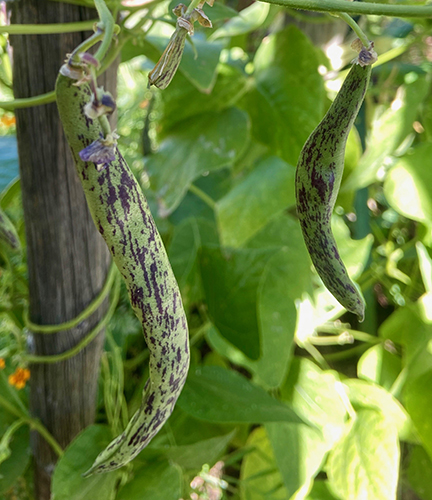
Rattlesnake beans Around a big pole teepee are Rattlesnake beans, (green bean) which are very heat tolerant. Great for our warm climate.


Kalibos Cabbage
A beautiful red cone shaped cabbage. The head gets very big and when I want to harvest it, I need a sawzall to cut it off at the stem because it is so thick! It has a sweet mild flavor.


Fertilizers
All the vegetable/berry plants are fertilized once a month with a combo of fish fertilizer and liquid seaweed sprayed on the leaves with a hand-held one-gallon sprayer.


Diseases
I use Monterey Complete Disease Control (organic) for Early Blight and Septoria on tomatoes and Powdery Mildew on all cucurbits. I add this with the fertilizers above and spray everything all at once. Also rotate crops every year to help suppress diseases.


Insecticides
For the last several years I haven’t used insecticides. I grow many flowers that attract beneficial bugs that help keep the bugs under control. But when I do have bad bugs, I use organic Neem in a hand held sprayer. Spray in morning to avoid possibly burning the leaves.


Pests
I use snap traps on gophers, mice and rats.


Shade Cloth
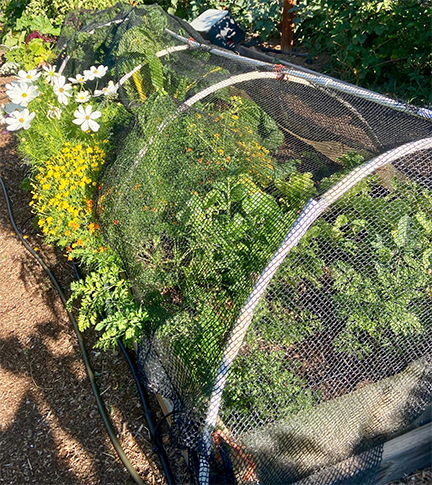
I put 30% shade cloth over almost all my plants.

I get it at johnnyseeds online. I like shade cloth because it keeps most hail out, keeps many moths out of my garden (like cabbage moths) and provides relief from the sun for our vegetable plants-even full sun plants. You’ll have to get it online as the local big box stores have 80-90% shade cloth which is too dark.


Hose
I know this seems like a weird subject, but we’ve all experience hoses that heavy and kink. This is the best hose ever-it NEVER KINKS. Don’t be fooled by its smaller diameter and light weight; this is a great hose and worth every penny. Because it’s expensive, I always bring it inside in the winter. I bought the 500 series at Water Right Hose It can also be found on Amazon.


Soil Amendments
Making good soil is the most important thing you can do for an abundant garden. Here’s what I do:

Compost
Every year I put 2” of compost I make on top of my beds in the spring and lightly dig it in. We have such bad soil out here in our area that I think this is the most important thing to do each year. If you do this, you’ll make healthy soil in a few years. If you don’t make compost, you can buy some locally here in Santa Fe from Reunity Resources. They don’t use horse manure so it is herbicide free.

Whenever you buy compost from soil yards, ask if they use horse manure to make it. Can they guarantee their compost to be herbicide free? Bagged compost is usually fine. Many hay growers spray their hay crops with commercial herbicides similar to RoundUp. If it is in horse manure to make compost, It will kill your crops and ruin your soil.

Azomite
Every 3-4 years I get Azomite from Amazon. Provides minerals and trace elements that plants use up from the soil. It is in powder form and in spring, I sprinkle it over all my annual beds and lightly dig in and for perennial plants  I sprinkle it around the base of plants or over the foliage and water in.

More questions? Email me at jcabossel@hotmail.com


Squash tips-dealing with squash vine borers and squash bugs

This is an updated and expanded post on squash bugs that I posted in 2011.

It’s squash season! I get a lot of questions about how to control squash bugs and squash vine borers. They are a veggie gardener’s nemesis. I have read and tried several things and think a few help. Here’s a list of things you might try to control squash bugs and squash vine borers.

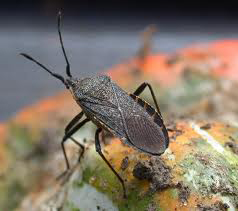
Learn to identify squash vine borer and squash bugs


squash bug


SQUASH BUGS
Squash bugs attack both summer and winter squash. They are here now. They pierce it and suck out the juices. If left unchecked, they can take over and destroy the plant.  The key to control is catching them right away. Here are some things to try:


-Learn to identify male flowers vs female flowers on squash plants so you know when to remove row covers.

-Plant squash that is somewhat resistant to squash bugs. I’ve grown many varieties of squash but have found some seem to resist squash bugs while others attract them.

Summer squash-I grow the variety Friulana, a yellow zucchini style squash, which don’t seem to attract as many squash bugs.

Winter squash-I grow Butternuts which don’t seem to attract as many squash bugs

-Completely cover plants with med weight row cover till the female flowers appear, then remove the row cover so bees can pollinate them. Still check your plants weekly.

Squash bugs life cycle from egg to nymph is 7-10 days so keep ahead of them by inspecting every week BEFORE they hatch.

-Hand pick every 7 days and remove eggs, nymphs and adults from leaves. Put in bucket of soapy water. Then cover plants again with row cover if no flowers.

-Rotate squash into different beds every year. They may not find you. First time squash growers generally get the first year free of squash bugs. Afterward the bugs find you and the battle is on.

Plant late-like the first couple of weeks of July-you may miss their lifecycle.

Spray with Azamax which contains a Neem product that has anti-feeding properties. It helps somewhat.


squash vine borer

SQUASH VINE BORER
It comes in July. It bores into the main stem around the base of the plant to lay its eggs which then turn into larvae inside the vine and eat it from the inside. Look for sawdust like  particles around base if plant suddenly wilts. You can try to slit the vine parallel  (not across it) and dig out the grub and then tape the wound shut. It may survive.

Here are some things to try:
Once again cover them with row cover until pollination needs to happen.

Wrap aluminum foil around the base of the vine for about 12 inches to keep them from attacking the base of the vine.

Also bury the vine with dirt or mud covering the main vine.

I find keeping squash plants covered with row cover really helps in that I don’t have to battle the bugs till the flowers appear.

Create a Garden Hotbed using an Old French Technique

Hotbeds have been used for hundreds of years. Hotbeds are basically the same as a cold frame, but use manure with compost as a heat source in early spring. In France, when transportation was done by horses, not cars, people would take the stall litter which was a mix of manure and straw for heat and make what is called a hotbed. They surmised the bed would get warmer as the manure decomposed and they could start some crops earlier while getting nitrogen in the soil. You can use this method in greenhouses, cold frames or poly-tunnels on top of your raised beds.

The only thing is if you use horse manure, you need to ask whoever you get it from if the hay they fed the horse wasn’t sprayed with an herbicide (like Roundup). Herbicides are weed killers. You don’t want to use any manure with an herbicide in it as it lasts for 4-6 years in the soil and will kill anything you want to grow. Basically it will ruin your bed. Having said that, our hay comes from a safe source. As a thought, you could use bagged cow manure but know that it is hotter than horse manure so it should probably age a little longer-use a soil thermometer to make sure your soil is not too hot.

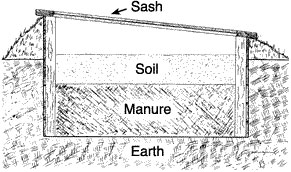
Looking back in my notes, here’s what I tried in January 2020-I took out all of the soil in my center raised bed in my unheated greenhouse and put the soil on a tarp to put back in one of my other beds. I then put about 14-18″ of hot horse manure and 6 inches of straw in a wheelbarrow and mixed them up. Then put the mixture in the bottom of the bed and packed it down lightly and watered it till it was moist but not soggy. I then added 6″ of homemade compost/soil on top of that leaving a couple of inches of free space at the very top of the bed for plants. Then I watered again. A few days later, I put a compost thermometer in the bed and saw that the temperature had come up substantially deep inside in the manure/straw mix. It will get from 125°-150°F in the beginning but will come down pretty quick by the time you put your transplants in later. I didn’t take the temperature at the top compost layer but the fresh horse manure/straw mix got the compost in the top layer warm, and the 6″ of the aged compost kept it from getting too hot.

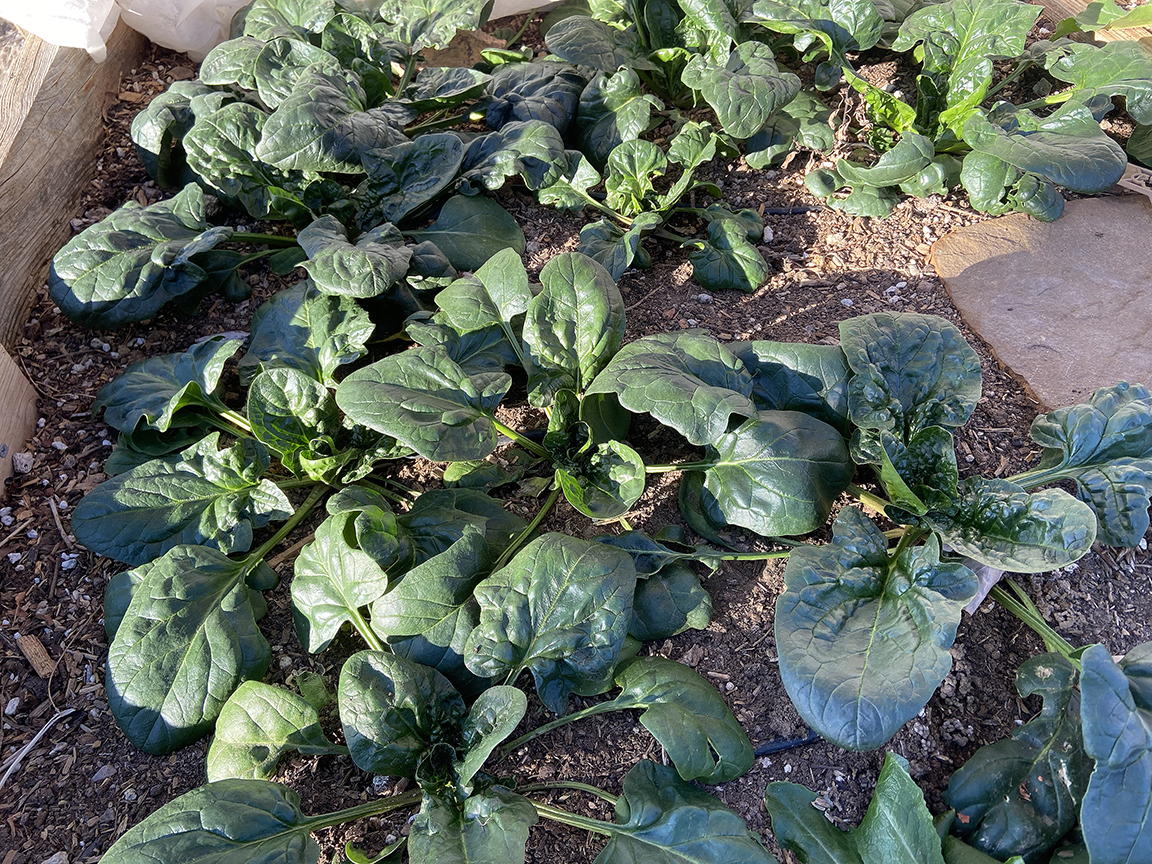
If you have a cold frame with a lid or plastic tunnel over a raised bed, you could do the same as in the top photo with spinach in it. I have one cold frame that I use in this way in the spring as well. It isn’t dug into the ground (like in the diagram above-not in my ground-too hard!)) but sits on top of the soil so I put some straw bales around the sides to add some insulation to it.

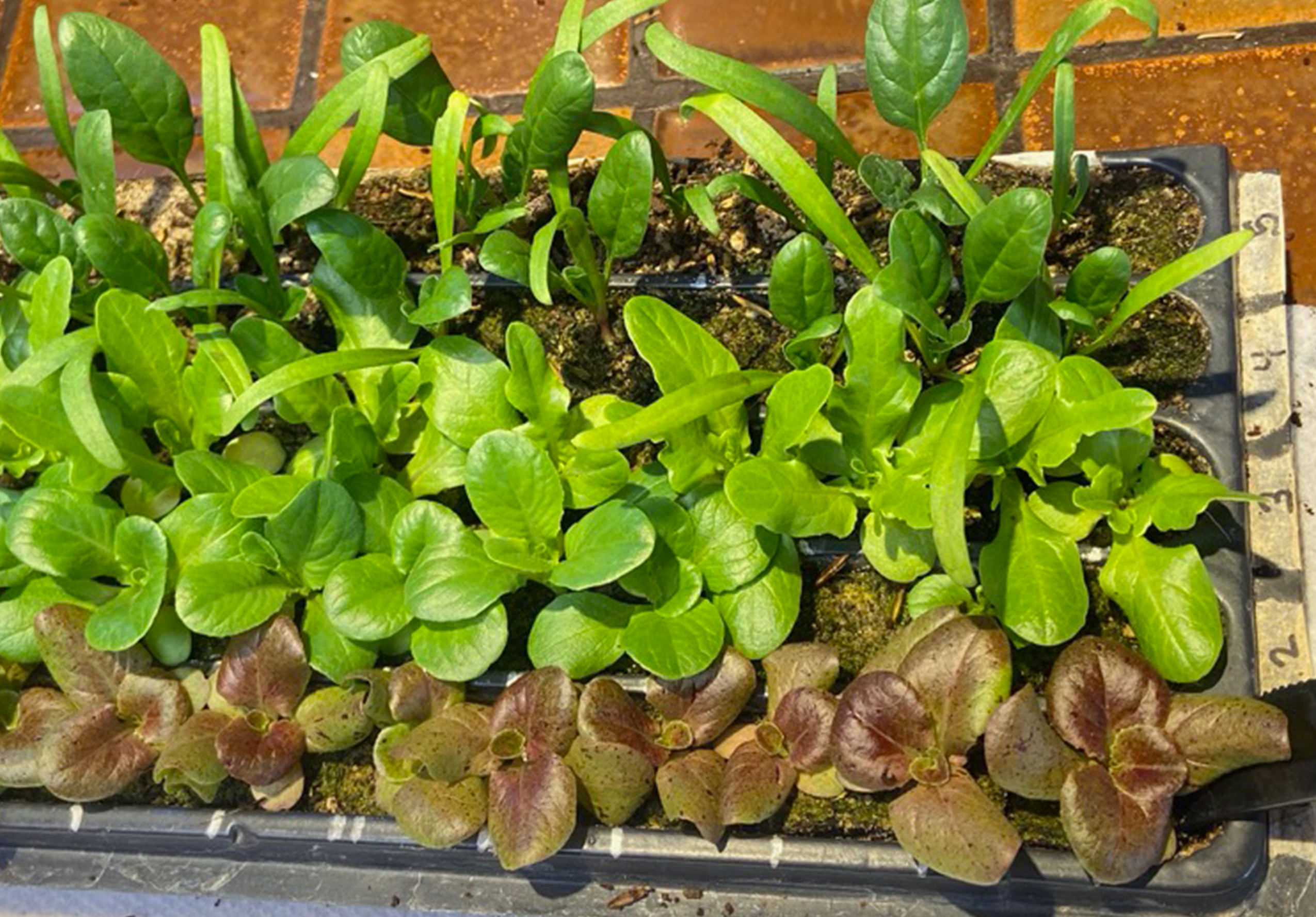
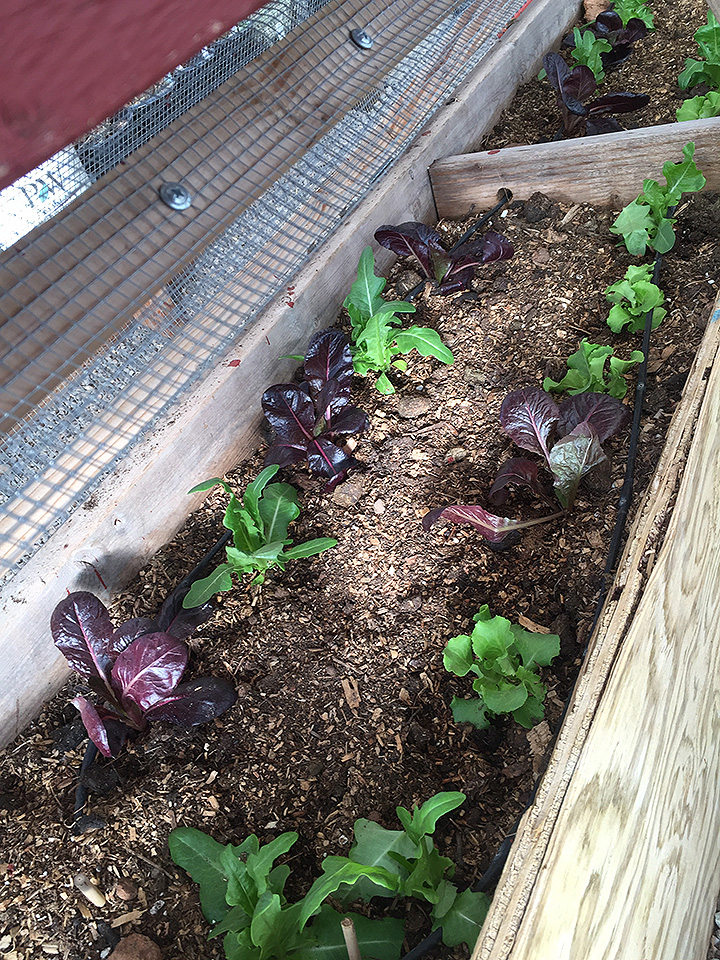
While the manure was cooking, I started lettuce/spinach seeds inside under lights (with no heat) in late January which took 3-4 weeks to get big enough to transplant in that top layer during which the soil temperature came down more as the manure mixture decomposed. Do not plant in the manure section but only the top compost/soil layer.


Once I planted them, I still had to cover the greens with medium weight row cover at night (and I double it up with layers of row cover on it if the weather was going to be very cold in the day/night (like it is now). It worked!

It was a fun project to learn how to make a hotbed and how ingenious people were in the old days!

Sleepy time for plants

When winter days are less than 10 hours a day in length, plants in the ground slow down or stop growing altogether. I’d like to think that the plants are sleeping. Eliot Coleman, who wrote The Winter Harvest Handbook, calls this time the Persephone Period. Our Persephone period here in Santa Fe is from Thanksgiving thru January 14th. What does this mean for us gardeners?

If you are thinking about transplanting plants that you started or bought into a hoop house, low tunnel or greenhouse, forget about it right now. Wait.

If you had planted greens in August for a fall harvest, you probably notice that they aren’t growing much anymore. But they should be big enough to harvest assuming you protected your cold hardy plants from our winter nights with winter weight row cover. I have 2 big cabbages still in the garden and a couple of kale that I plan to harvest this week since they won’t be getting bigger.

But plants that are small, will stay small now until Jan 14th when our daylight hours start to get longer again. Other parts of the country further north will have longer time periods of less light days. This has nothing to do with the Winter Solstice, which is the shortest day of the year but rather a time period of less light. After January 14th, daylight hours will start to get longer than 10 hours again. That’s when the plants wake up and start growing again.

So my recommendation is to hunker down with some good gardening books, get your gardening catalogs and plan next year’s garden (and get some rest too.)

Tomatoes done November 2023

We just finished eating the last tomatoes picked in October before a frost. The last ones pictured on the left, were Large Barred Boar.

I had 6 bags of green tomatoes that ripened inside. Pretty good having homegrown tomatoes through end of November. Bittersweet in that I am glad the season is over but sad there will be no more wonderful tomatoes till next July.

I start the season in March growing out the seeds inside under lights-8 months is a long time. I won’t eat a store bought or restaurant tomato so now it’s a long wait. I have made plain tomato sauce, roasted them, dried them, used them in tomato soup, and made pasta sauces using them. My friends have given me tomato tapenade and tomato chutney they made too. Nice!

During wintertime, I will review my notes about which tomatoes did well, which had problems, which had low production, and which new ones I liked or not and why. I don’t rule out anything that didn’t do well, especially this season with no water and intense heat but will give many tomatoes a second chance. I will research the internet looking for possible new varieties to try for next year. I have a stable of tomatoes I grow every year and always try a few new ones as well.

Cleaning up the garden

So by now you have either cleaned up your garden or hopefully finishing up. I’m in the latter camp. I took out all the tomatoes and their cages before the ground freezes which historically is sometime in December. If I had waited, they would freeze in the ground and I would have not gotten them out till spring. I know because I did this once and it was no picnic getting them out later rather than sooner. Lesson learned.

Plus I’ve taken out almost everything else that is not a perennial. I continue to water the perennials by hand about once every 2 weeks and as it continues to get colder, I will lessen the watering of these. This week the nights will be in the 20’s so here we are.

The drip system was shut down and timers stored inside so they didn’t freeze at night. I still have some straw left in the beds which I’ve started raking up and storing in garbage bags as it is organic straw mulch which is hard to find. Normally I would just compost the straw and digging the rest in the beds but i can reuse this. If I had leaves, I would have dug them in as they are gold in the garden. All the perennials are either sleeping or going to sleep.

Good night sweet garden-see you next year!

Took row covers off tomato plants today-August 3, 2023

I promised my followers that I would tell you when I took my row covers off the tomato plants. I did this today.

Here is a video I took on July 18, 2020 but basically looks the same as today.

I have heard from several sources that we might not get a monsoon pattern setting up here in August and that alarmed me. We have never NOT (I know, a double negative) had a monsoon season in the 27 years I’ve been here and now this. I decided to chance it and take off the row covers. I didn’t see any any leaf hoppers today but that doesn’t mean anything as they are so hard to see.

So I am hopeful that they are gone. Who knows, maybe they have a limited lifespan in summers.

I’m not telling you to take them off-that is your decision, but I will deal with whatever mother nature gives us…and it is soo good to see my beautiful tomato plants! Good luck!

Class followup

GARDEN CLASS FOLLOWUP

Here is the handout with the class notes from Tuesday:

2023 FALL VEGETABLE PLANTING

I also had someone ask me about the 2 Perennial Chard-Spinach and Perennial Arugula which is called Sylvetta that I talked about. You can google them to see which seed companies might still have some for this year. You just have to give them a space where they can come back each year. I am just now trying them so I don’t know how they will do but hope they will do well in my garden and yours.

Fall Garden Class August 1

Hard to believe but it is time to start your fall veggie garden! Fall is one of the easiest season to grow veggies. Please join me, “The Tomato Lady”, to learn how to plant a successful fall garden. Presented by the Santa Fe Extension Master Gardeners

Planting Your Fall Vegetable Garden

DATE: Tuesday, August 1st, 5:30- 7:30 p.m.

LOCATION: Southside Library 6599 Jaguar Dr. Santa Fe, NM

COST: FREE!

Free seeds will be available from the Seed Library located in the Southside Library

HOPE TO SEE YOU THERE!

July Garden- Tomato Update

Last year’s Black Cherry tomatoes. They are still green right now.

In case you wondered what happened to me, I have been super busy putting in the garden in May and June. The garden is now completely in. I just noticed I haven’t posted since March. Sorry-the garden called.

So instead of giving you what’s been going on in the garden all at once, I will break it down into several posts.

Let’s start with my favorite crop, TOMATOES!

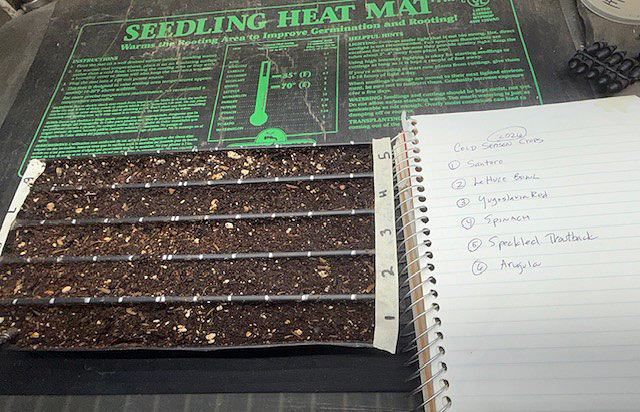
I started my tomato seeds inside on a heat mat, under lights on April 14th. The tomatoes have been in the ground since May 10th. I put them in young. I don’t wait for them to get to gallon size. They seem to adjust better outside when I put them in younger.

I consider that date kinda late since I usually try to put them in the ground the first week of May. We had a cold snap the first week of May so I waited. I always put them in the ground with wall of waters around them for protection from cold nights, especially when I put them in early. My goal is to get them to set some fruit before it gets too hot. They are out of the wall of waters now (one must take them out when it gets hot and it is hot 90°F+ right now and they are protected from the beet leafhopper under MEDIUM WEIGHT row cover NOT heavy weight which will hold in too much heat at this point. Funny I hadn’t seen any leafhoppers until we got hotter. Now they are here. Keep your tomato plants completely covered until the monsoons come. Looks like it is coming in later than last year but hopefully within the next 2 weeks. I’m tired of looking at the plants with row cover over them, but whatch you gonna do? To take them out now could spell the end to many of your tomato plants, so keep them covered. Leafhoppers bite the plant and give them a deadly virus hence the cover. And since tomato plants are self-pollinating, they can be covered.

I did see some of the plants set their fruit (earlier before the heat set in) when I peaked inside the covered cages. And more will come so I don’t worry. Just wish the extreme heat would end.

When the heat reaches 92°F and above, the tomatoes will drop off their blossoms. This is called blossom drop. They will set the blossoms into fruit when the temps are lower than 92°F. Tomatoes continuously put out blossoms. Once the fruit is set, the plants aren’t picky about high temperatures and the tomatoes are not likely to fall off. Then we get to worry about other things-more diseases, bugs etc. but not while they are covered…

I try to grow some early mid and late season varieties of tomatoes so I get some throughout the season. Here is a list of my tomato varieties this year 2023:

CHERRY TOMATOES
Ruthje-red pointy-as sweet as Sungold-65 days to harvest
Moby dwarf (trial)-yellow-63 days to harvest
Black Cherry-black-65-75 days to harvest
Fruity-cherry-red-65 days to harvest

EARLY SEASON
Large Barred Boar-bicolor-65 days to harvest
Goliath-red-65 days to harvest
Large Barred Boar-bicolor-65 days to harvest

MID-SEASON
Black Sea Man-black/purplish-75 days to harvest
Cherokee Carbon-Black/purple-75 days to harvest
Cherokee Purple-brick color-75 days to harvest
Marmanade-Red-67 days to harvest
Juane Flamme-orange-70 days to harvest
NEW! Abraham Brown-black/brown-75 days to harvest
Paul Robeson-black/brick color-75 days to harvest

LATE SEASON
Lucky Cross-yellow-74 days to harvest
Big Zac-red-80 days to harvest
Virginia Sweet-yellow bi-color-80 days to harvest
NEW! Giant de Bolzano-red-80 Days to harvest
Goldman’s Italian American-red paste-85 days to harvest