Butternut winter squash

Here is a winter squash I really like-Butternut squash. I’ve mentioned it before but it’s worth repeating.

Butternut squash doesn’t usually attract squash bugs. I’ve grown the very sweet Waltham Butternut, an Italian variety called Rogosa Violina and a huge variety called Tahitian Butternut-all don’t seem to attract squash bugs, at least in my garden and all have the wonderful flavor we associate with butternut squash.

It also doesn’t attract squash vine borers. The stems are solid and the squash vine borer like to lay it’s eggs in hollow stem varieties of both winter and summer squash. 100 days to harvest so if you plant right now, you may get to harvest as it will be ready right at the end of our season.

Friulana summer squash-a big winner!

friulana squashIt’s not too late to plant zucchini or summer squash as you will still get lots this season. I’m totally smitten with Rugosa Friulana summer squash. I’ve written about it before but feel its worth mentioning again.

You can get seeds from Seeds from Italy. It takes 40-60 days to harvest so there is still plenty of time to grow from seed. If you let it get large, it will be ‘woody’ and is better harvested small from 6-7 inches.

Two reasons I really like this summer squash. First, it has a wonderful sweet, nutty taste with dense flesh and doesn’t get ‘watery’ when cooked down. Second, it doesn’t attract squash bugs in my garden. I can’t say this for every garden but everyone I give it too has had the same experience. I don’t know why they don’t mention it in the description, but that is a really another big reason for me to grow it. Anything to make my work easier in the veggie garden is good. I don’t know about squash vine borers as I always keep all squash covered early in the season with row cover when the squash vine borers are out and about. I take it off when the blossoms appear. Try it-I think you will be come a big fan of it too.

PS: Some of you have mentioned that your Friulana summer squash did attract squash bugs so I can’t make a definite statement that it won’t attract them because in some gardens it evidently does. But I do feel that I have less problems with this variety regarding squash bugs but appreciate your imput regarding this variety.

Monsoons coming early?

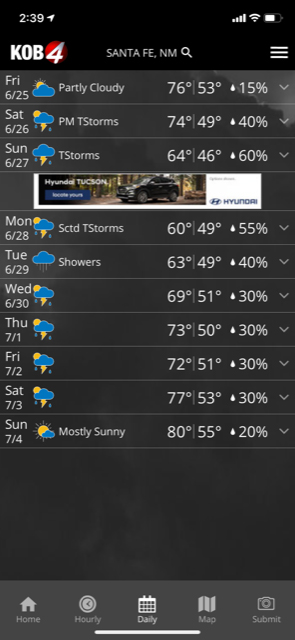
thumbnail_IMG_3690 copyIt’s getting cooler this coming week and it looks like we MIGHT be starting the monsoons early (that will be a first!) BUT I’m not taking the row covers off the tomato plants just yet. I want the monsoon pattern to really set up-not just a few scattered showers.

row coverI will post here on this blog when I do take them off. You could be a gambler and take them off early but I figure I’ve waited this long and don’t want to chance it. I can hardly wait to take them off but must have patience!

Heat is brutal on veggie garden


weather-thermometer-hot-thermometer-hot

Except for  last night, the heat has been brutal. Last nite was actually chilly but it is going to be hot again the rest of the week. The temps have  been in mid-high 90’s and with the unrelenting wind and UV factor due to our elevation, I’ve found I needed to cover everything in the veggie garden as the newly transplanted starts were not happy.

I planted my peppers and left them uncovered for half an hour and when I came back, some of the leaves fried and died.  I had to immediately add protection in the way of row cover to add a little shade. Same with winter squash, except it only took 5 minutes in the sun before the leaves started dying. So I immediately covered them with row cover and also added some shade cloth for a few days till they adjusted. They all need more water too. As the weather gets cooler, we can remove the rest of the row cover.


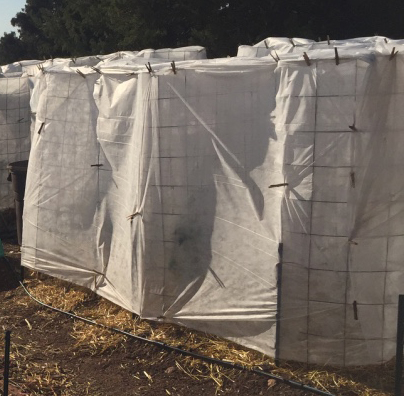
row cover over tomato plants

However the tomatoes which I planted on May 11th, are cozy in their cages wrapped with row cover (as seen above) as we need to keep a physical barrier between the dreaded beet leafhopper and the tomato plants. The leafhopper bites the plants and gives them a deadly virus. We should be able to remove the row covers off the tomato cages once the monsoons come the leafhopper disappears.


RAIN1AHard to grow anything in our sometimes harsh environment and isn’t getting any easier with our global warming.  The temps are getting hotter again this week but in the low 90’s. I’ve found the end of June thru the first week of July is usually the hottest part of the year here in Santa Fe. Then the monsoons are suppose to come and give us moisture and cooler temps.

 Last year, we only got 2 monsoon storms in July and then NO RAIN the rest of the season. I was forced to water more without the monsoons. We’ve been in an EXTREME drought the rest of the year. With help from the universe, we will hopefully get a monsoon season this year.

Pepper time!


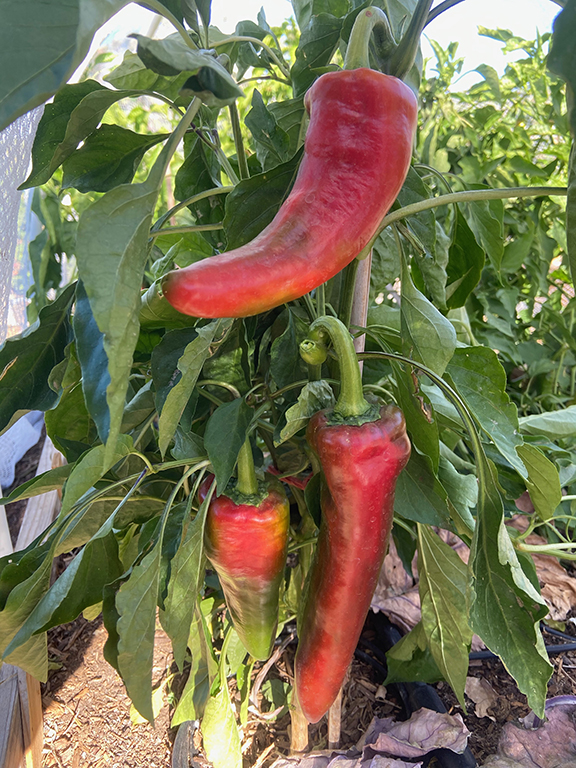
Lava Red Italian pepper

Lava Red Italian pepper became a favorite of mine last year. It is a variety of Corno di Horno red pepper-sweet. This one came from a friend (named Lava) who gave me some seeds from a German Farmers Market and she didn’t know the exact variety so I named it after her. You can find other Corno di Horno varieties at nurseries.

I know many of us have been waiting to put peppers out in their gardens, well wait no longer! I usually wait till June 1 to put them because I wait till the day temps are in the 70’s and the NITE temps are in the mid 40’s. When I look at the 10 day forecast today,  we are there.

temp peppersI plant my peppers in wall of waters-WOWs.  (yes, just like I plant my tomatoes) because even in the mid 40’s, it is still very cool for a pepper at nite. This will reduce transplant shock and warm the interior of the WOW’s to help keep the peppers warm at nite. Peppers HATE being cold and if planted too early without protection, they might stall out. By that I mean they just stop growing and nothing will kick start them again-they will just sit there and nothing happens. I learned the hard way and have had to go buy more pepper plants when I first started growing peppers and planted too early. When I plant in WOWs now, I never have that problem anymore. I always plant them on a sunny day in the morning so the WOWs can heat up. I will keep them in the WOWs until it gets stinking hot here sometime in June-then I take the WOWs off as they usually don’t reach the top of the WOW. Wall of Waters are used as a spring aid but don’t keep your peppers or tomatoes in them all season. They also help us by providing wind protection too in the spring, which has been bad this year. Wind can really beat up any tender seedling-another good reason to use WOWs.

You can get them or a me-to one at Agua Fria Nursery here in town or at Amazon. So put them in now but give them the protection they need from the wind and the cold nites for best results.

Lettuce begin or end?


lettuce May 6, 2021

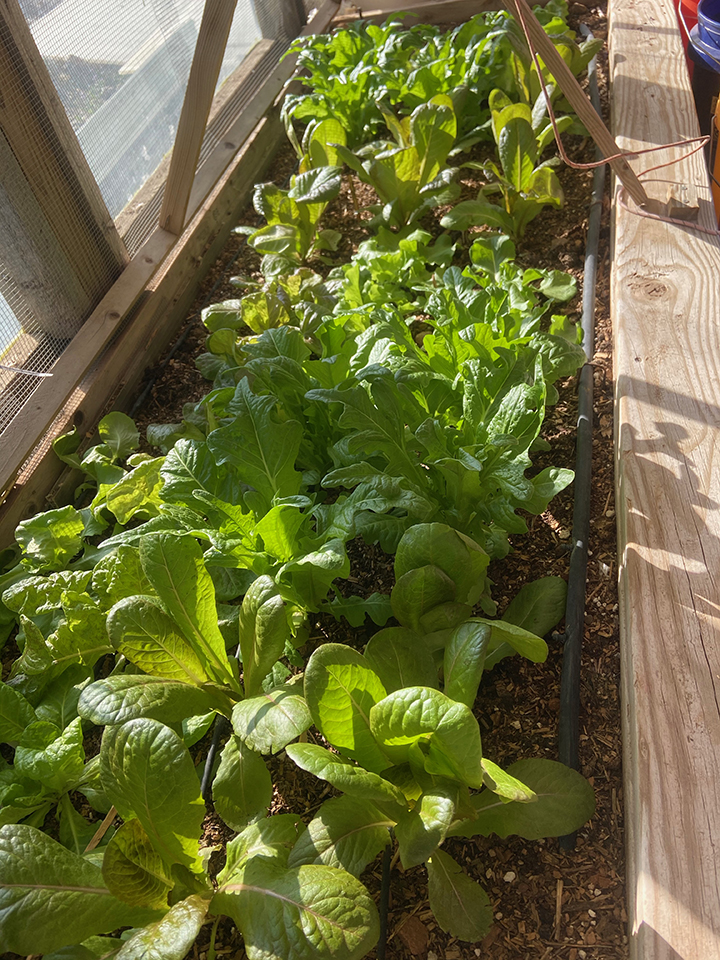
Cool season lettuces in green house May 6, 2021

Some of you are just beginning to grow lettuce and for some people you will be ending growing this delicious cool season crop. This year I grew in my greenhouse Cimarron romaine, Santoro butterhead, Bunte Forellenschluss, Yugoslavian Red butterhead and Italienischer oakleaf. I also grow Salanova lettuce which the mice are enjoying. (Trying to keep them out). These all do well while it is cool in spring but when it gets hot, they will bolt. I started them inside, under lights, no heat back in the end of February and yesterday it almost got to 90°F inside-way to hot for them. I’ve been harvesting them since late March and have had 4 harvests. I just harvested today (probably my last due to upcoming heat). I only put row cover on them during a predicted freeze for protection now that it appears freezing nites are over.

lettuce_bolting

Lettuce bolting

What is bolting? It’s where the plant puts up a tall stalk in the center and starts to flower which is called bolting. Bolting is ok if you plan to save the seeds but if you want to eat it, pick lettuce before it bolts as the lettuce will get bitter. If you wait too long, you can compost it or if you have some chickens, feed it to them as they still love it even though it is too bitter for most people. If it has flowers, you’ve waited too long.

harvest outer leaves

Harvest outer leaves and let grow back


To harvest, I take the lower outer leaves and leave the center (where they produce the leaves) intact. That way they can grow back for more harvests. The other way to harvest is cut off the whole head off which I might do when I think they are going to bolt.

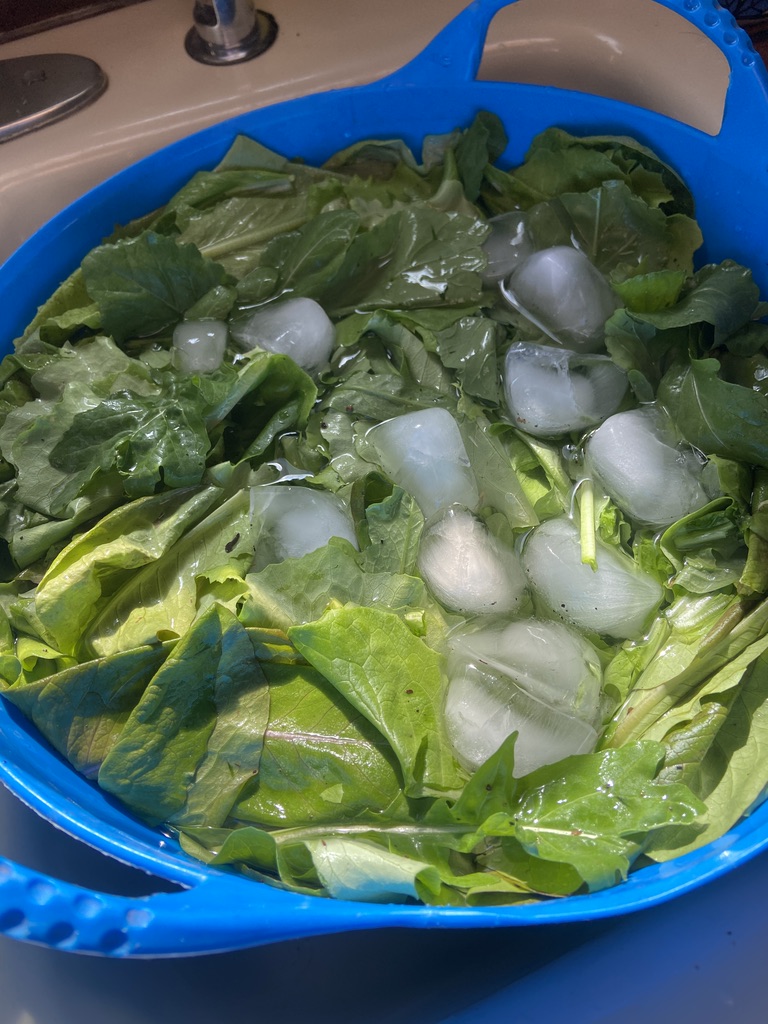
harvested lettuce in cold water with ice cubes

Then I take it and put cold  tap water in the container with your freshly harvested lettuce and add a few ice cubes to get the water really cold and it will perk up and suck up a lot of the water.

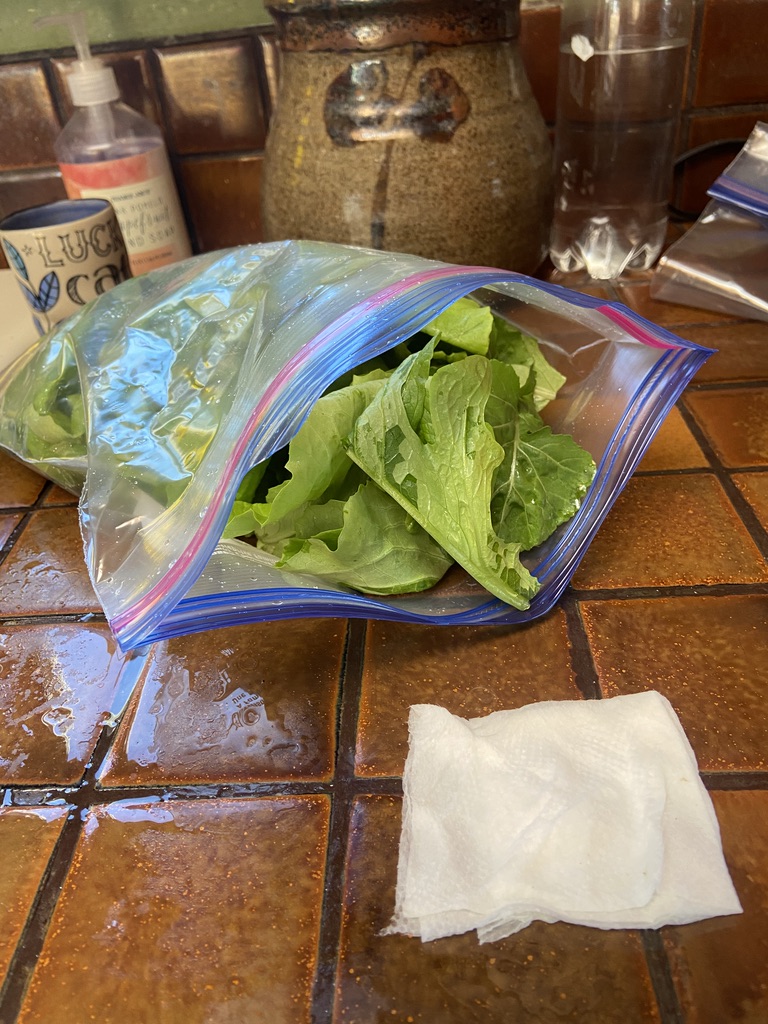
clean lettuce in ziplock and wet paper towel to put inside

I after rinsing it to clean and draining it, I put it in plastic baggies loosely-don’t stuff it tight and I like to wet a paper towel with cold water, fold it over several times till it makes a small square, squeeze out the excess water and put it in the bag that you’ve closed up tight and in the crisper-it lasts much longer. The night before I want to harvest, I water the lettuce well and I harvest it EARLY in the morning the next day before the heat sets in. Never harvest when it is hot or it will be wilted and you will be disappointed. All of this applies to spinach and arugula as well.

If you’ve already planted lettuce or are just starting outside from seed, you should put row cover right on top of it to provide shade and keep out rodents, which also love it. Row cover at night will also add protection from any late freezes we get. I use a medium weight row cover (also called Agribon) about .5 mil in thickness with 85% light transmission. No winter weight row cover (.9 to 1.2mil) now which would not provide enough light and would hold in too much heat for the plants. You want rain (HA!) and air to get thru it and you can water right thru it too. To keep rodents out, I lay 2×4 boards all around the edges of the row cover to secure it from wind and rodents. And definitely plant in a shady part of your garden now for sure or make your own shade as mentioned above.

So is lettuce season coming to an end yet? Well, yes and no. The cool season lettuces will definitely be finishing up soon as it gets hotter but there are varieties of SUMMER LETTUCE that you can plant that will resist bolting if grown under shade. These are called Batavian or Summer Crisp lettuces. Look these up on the internet for varieties you can buy and where. I will write about them and how they do here in the summer and what varieties I have tried in the next post. Stayed tuned…


April roars in-cold ‘n windy

The time between spring and summer where one day it’s gorgeous and the next day/night too cold is called the shoulder season-one day winter and the next day summer. This April has been miserable so far in my opinion. We’ve had a few nice days with warmer weather and just when we get excited about putting in this season’s vegetable garden, the weather turns for the worst. I got lots of veggies to plant out this year and some to sell/give away.

wind

Windy and cold. COLD AND WINDY!! Tonite, Thursday, April 15– Monday, April 27, every night is BELOW freezing-that’s 5 days! What happen to our 40 degree nights and 65+ degree day temperatures. Plus gale force wind is  between 25-40 mph-day and night! Waah!  And looking further out, it remains in the low 30’s until Saturday, April 24. That’s 9 days of miserable weather all together.

Of course all this will change (probably overnight) to hot and dry weather and I will regret all of this when it gets hot in June. Where is the precipitation in the form of rain or snow? I’ll take any that nature has to offer. She seems very stingy right now. Does it seem like things are out of control? Definitely. Or at least I can’t control them! That is the plight of the vegetable gardener-we have to deal with the unexpected and make adjustments.

This means many things get put on hold. Like attaching the drip timers.  Freezing nights can crack the little diaphragms that are in the timers so I have to wait to put them out till the night time temps get above freezing.

Hardening new veggies off outside will have to wait a little longer. Meanwhile they will be safe indoors.

Planting my cool season crops out right now? Nope. Sure they can handle some cold nights, but do I really want to push them out to a cruel and harsh world after being cozy inside all spring growing up? Nah. I can wait a little longer, but my patience is growing short and yet I know if I push too hard, I will regret it with stunted plants or worse frozen ones and starting over. I will try to put them out next week.

And warm season crops like tomatoes, eggplants and peppers-forget about em right now. They are set to be transplant outside from mid-May to June. The last 2 years I was able to sneak out the tomatoes with wall of waters protection in early May, so we will see what this May brings.

When I do put in those first cool-season crops like kale, beets, chard, spinach I will cover them with row cover at night to give them a chance. If I had gotten them out earlier in the warm spell, they probably would have adjusted just fine but I missed that window. So now I wait. Patience.


I already have cool season lettuces growing in the greenhouse and cold-frame and they are doing well and are fully adjusted to the temps because they have protection from the wind and the cold plus I will cover them with row cover on the below freezing nites. I’m not worried about them.

Meanwhile I have a house full of plants, waiting to go out. Patience. I’ve been patient all year with CV but the good news is, I’m still here!


MARCH MADNESS!

Where as March is known as March Madness for basketball followers here in the US, I think of March as a time to get busy in the garden-definitely March madness!

Here is a list of things to do in the garden for March:

-Finish your garden plans! What are you growing this season?

-Finish ordering your seeds or getting your seeds if you haven’t already. Better hurry-many seed companies are getting behind in orders again.

-If you like to grow your own seedlings (and you should) get your light table and heating mat out (if you haven’t already). Use T-5 (better-more energy efficient)or T-3 florescent lights. I use the ‘daylight’ ones-gives your seedlings the whole spectrum of light waves. They produce less ‘leggy’ veggies.

-Start tomato seeds 4-6 weeks indoors before May 15. I will start mine on March 23 this year with the idea to set them out in early May (weather permitting) in wall of waters. If you don’t have wall of waters, you’ll have to wait till after May 15 to plant them whether you buy them or grow your own. Pepper and eggplant seeds should be planted 8-10 weeks indoors before May 15. Same goes for peppers and eggplants. I don’t put out those transplants till JUNE 1 in wall of waters as they hate cold nights and can stall out if you try to sneak them in earlier. Trust me-I’ve learned the hard way.

-Get your soil tested to see what amendments you might need to add to it. I do mine every 2-3 years.

-Put compost/amendments on your garden beds and lightly dig or rake in.

-Hurry up and finish pruning your fruit trees. Not much time left. EEK! I better do this now!

-Prune back your raspberries (within 3-4 inches of ground), prune your blackberries (better google this one depends on the variety you are growing), thin out your ‘mother’ strawberries. Strawberries slow way down when you leave in the mother plants and you want to make room for the newer plants (which produce more fruit), trim back your grape plants (this again is how you started as to how to prune now-google your variety). EEK! I better do this now!

-Spray your fruit trees with dormant oil before their buds turn color to smother any dormant bugs. EEK! I better do this now!

-WATER your trees and plants.

-Plant COOL SEASON vegetable seeds like peas, OUTSIDE on ST. PATRICK’S DAY or later.  Some varieties include lettuces, spinach, arugula, bok choy, broccoli/cauliflower, cabbage, peas, radishes, mustard, kale, fava beans and other greens. Cover them with row cover at night for those freezing nights. And don’t forget to keep watering them for good germination. Tomorrow (St. Patrick’s Day)- green seed planting day and green beer!

All the bees died

We found the bees dead on the bottom of the hive.

Beekeeping in Santa Fe area can be tough

The bees died in our second hive this winter which we discovered a couple of weeks ago. They left 8 bars of honey so it wasn’t from lack of food-they originally had 16 bars. I think they didn’t have enough bees in their colony going into winter to keep them warm but not really sure why they died-just a guess. No Varroa mites. No obvious signs of problems.

Our first hive which did so well last summer got robbed out of honey by other bees when their numbers went down from wanting to swarm so much. We ended up splitting that hive 3 times. We could of let them swarm (which any good beekeeper would try to discourage them from doing) so we split the hive to keep them from swarming. Bees want to swarm when they are feeling good-when the number of bees inside the hive are growing and they need more room. Kinda like outgrowing your apartment. This is a normal thing to do. Bees wanna swarm-Beekeepers split the hive. You don’t want half your hive going off and settling under someone’s portal. If we hadn’t split them, they would swarm anyways and then you lose all the bees in the swarm.

Honey saved from bees-33 jars but we already gave away several jars in case you count!

When we discovered they died and left all this honey, we filtered it and jarred it-33 jars! It is so sad for me when I see all those jars of honey when they worked so hard to make it. But it won’t go to waste. I don’t think we have harvested honey in about 4 years. You have to leave enough honey for them every year to get through winters here and it has been slim pickens with not that many blossoms because of all these droughts. Still, they did produce a good amount of honey.

Here is a little Honeybee facts-more with some interesting info on honeybees. Did you know that a single bee produces 1/12 of a teaspoon of honey in it’s lifetime! That’s all. This should make you appreciate the bees the next time you use honey in your tea or on your toast.

Yesterday I ordered more bees for this season. They seem to live 2-3 years here, so we will start over with them again. Northern NM is such a 😒 hard place to raise bees!

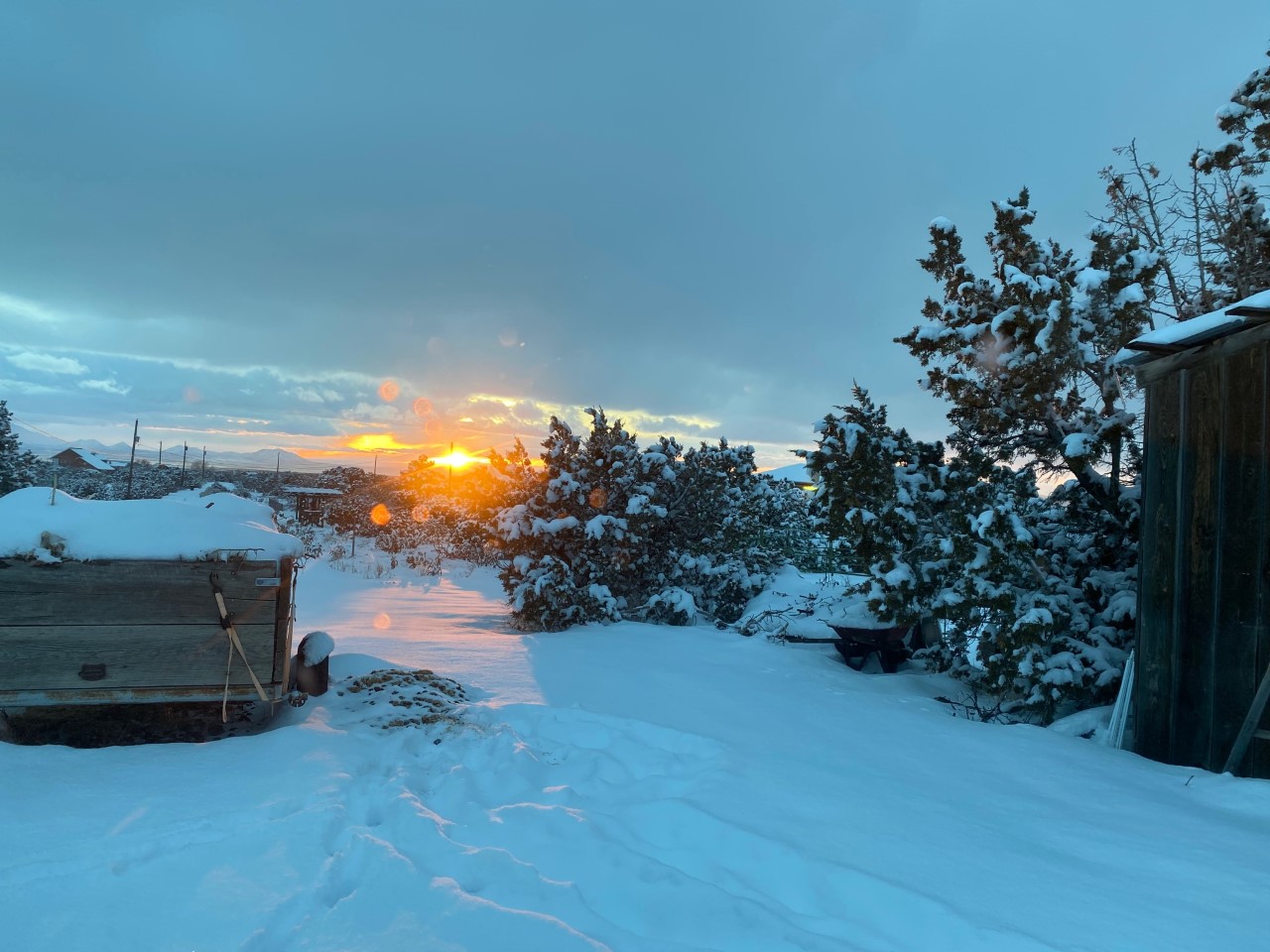
Winter snow! February 16-18

Last week we got 7-8 inches the first day and more in the following 2 days that measured 12 inches total. This was great moisture for all our trees and perennial plants that so desperately need moisture in our dry winter. Plus it gave me time off from hand watering. I water in the winter about one time a month with a hose to keep plants/trees going thru the winter or if we are lucky enough to get snow, I get some time off! 12 inches of snow equals about 1″ of moisture.

Above is a winter veggie garden tour taken about a week ago. The garden is sleeping now except for the perennial fruit such as strawberries, raspberries, blackberries, grapes, and rhubarb, which still need some water through the winter. Plus I can’t forget the fruit trees! I just had to get these pics on the blog of our winter snow we had last week!


2020 garden gratitude

gratitude photo_courtesy-of-markromeromusic.jpg

I want to say Happy Holidays to you all and hope this New Year finds you and your family safe and healthy.

I don’t know about you, but I am ready for 2021 and excited about the new year. Hopefully we can all come together as one nation, one world, instead of being divided and polarized. It is important to treat people with respect, hear them and work together with each other.

In times like these, I need to focus on what I am grateful for. It is easy to get bogged down in all the negativity we’ve had this year and there has been a lot. But the blessings have been great too-especially in the garden. I have many things to be grateful for but will focus on garden gratitude for this post. Hey, I’m still here right? Now that’s a huge blessing and my family has been ok too-another bonus.

My garden did really well this year and for that I am immensely grateful as it kept me busy and at a more relaxed pace since I wasn’t going anywhere. Time to actually enjoy being there.

VEGETABLES

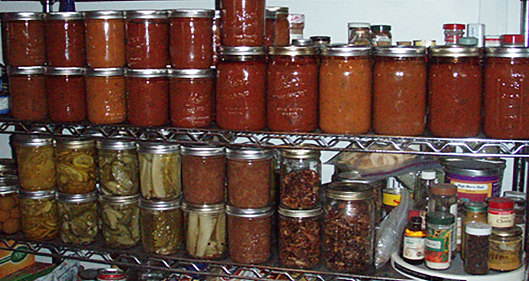
I canned about 39 jars of pickles this year-15 Cornichons, 8 pickle relish and 16 bread n butter pickles. Many of which I now have given away.

As  I mentioned in the last post, I canned 251 lbs of tomatoes into 52 jars of different pasta sauces which was exhausting but I’m really happy to have it in the pantry and have enough to give lots away as well.

Besides all that tomato canning, I had lots of tomatoes that I roasted, and of course ate many lbs fresh as well and sold some too. So grateful I had a bountiful tomato harvest this year compared to last year’s dismal harvest.

So grateful the canning is done for the year!

I grew 6 BIG Kalibos Red cabbage- I gave away 5 and only kept one for myself since they averaged 6-7 lbs each.

I had unbelievable amounts of kale and chard. Sold some, ate lots and blanched lots in 2-3 cups increments that I froze in freezer bags which is nice to drag out of the freezer and throw in a dish or soup all winter as needed.

I had many Waltham butternut squash that I grew for Claufatis Cafe here in town for their infamous butternut soup which is so good I could drink it or lick the bowl (or both)! Don’t remember how many lbs, but it was a lot!

Plus I had lots of my new Lava Red peppers that were super prolific. I had wanted to grow Jimmy Nardello peppers but my seeds didn’t germinate and the nurseries didn’t have any plants, so I grew this long red Corno di Toro type that I got seeds from my friend Lava, in Germany. Since she didn’t know which variety of pepper this was, I just call it Lava Red pepper. Seems fitting with her name! My new favorite red pepper!  See, sometimes when I am forced to grow something else because of the seed and plant shortage this past spring, I ended up with something new and exciting! Plus a friend did give me some Jimmies he grew as well.

Plus I got many carrots, beets, lettuces, spinach, summer squash, garlic and shallots.

FRUITS
Some fruits were great and some not as good this year.

The apple trees did produce a lot but dropped most of them-I suspect due to the drought. But Koko the horse and the goatie things in the barn were grateful and loved all of them!

The apricot tree really shined as a shade tree but did not produce this year which is nothing new. But hey, I’m grateful for any tree that can grow here-we have more droughts here in the past few years than I can remember. My new pear, peach and plum tree are too new to produce but I can dream about how it will be in the future.

The strawberries had a decent harvest but I will need to thin them next year to produce more.

But the real stars were the grapes and blackberries-grateful for a wonderful harvest this year.

One of the best thing is I was able to keep up on the harvest for everything this year.

And then there were the raspberries… Unbelievable harvest this year. So much so, that again I invited some friends to come pick as my freezer was full. 19 gallon bags of raspberries in the freezer.

It’s good to be grateful and reflective at the beginning of the new year before I get headless in the garden again!

251 pounds of tomatoes!

Well I figured out that I canned 251 lbs of tomatoes this year. I made 52 jars of different pasta sauces (Puttanesca, Penne alla Vodka, Fantastico spaghetti sauce and Fruiti di Mare sauce. Each one has it’s own unique flavors. Plus I made plain old tomato sauce and Texas BBQ sauce.  I’m well stocked for the year and gave many jars away to friends. Truly a labor of love!

Cheesemaking in the Alps!

Here is a YouTube video that my friend, Lava sent me on cheesemaking in the Alps. Another friend of hers made a video of her daughter making cheese on a bigger scale then I have ever done. The video is really interesting because you see her process (in fast forward) and also see the cows and the surrounding Alps. Really great video. Also lets you know what’s involved in the cheesemaking process.

Every winter I make cheese. I do it in the winter because I’m always too busy with the garden the rest of the seasons. Last year I made a Butterkäse cheese on Dec 28th. It seems every winter I get a hankering to make some cheeses. This December I’m making a cheese called Raffine which I started Dec 21 and is similar to a Camembert but differentnot quite as soft and no bloomy rind. It only takes 28 days till it is ready to eat, which is really quick and good for my short attention span! I hope to make several cheeses in 2021.

My friend Bob asked me If I ever tried making a Parmesan cheese. The answer is NO, because it takes 18-24 months to age before it is ripe enough to eat. That is why it is so expensive because the aging process takes so long. What if I waited all that time and it didn’t turn out? EEEk! What a waste of time.

So I make cheeses that are aged and ripe anywhere from 1 month—6 months. I once made a Gouda. The Dutch in the Netherlands pronounce it Houda (Howda) and it was really good but takes 4-6 months till ready. That’s about as long as I have the patience to wait for a a cheese to be ready. But it’s well worth it when done.

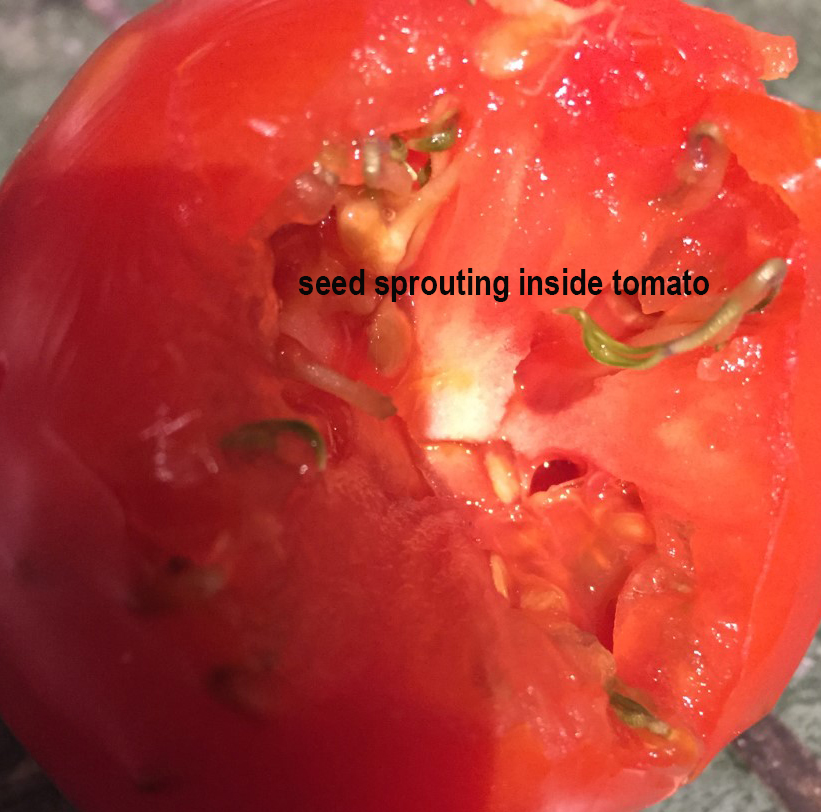
Tomatoes seeds germinating inside the tomato!

Here’s something you don’t see everyday. Two different people have contacted me about a tomato they each had that was sprouting seeds INSIDE the tomato. Both people said the tomatoes were older. When they cut into their tomatoes, they found tomato seeds prematurely sprouting inside. I haven’t seen that before and had to research it out.

It’s called Vivipary which means ‘live birth’.  It is the phenomenon that involves seeds germinating prematurely while they are still inside the fruit, in this case tomatoes. It most often happens when the fruit is old. Normally the gel around the tomato seeds prevents the seed from germinating inside but it’s not limited to just tomatoes.

Read more at Gardening Know How: What Is Vivipary – Reasons For Seeds Germinating Prematurely https://www.gardeningknowhow.com/garden-how-to/propagation/seeds/what-is-vivipary.htm

The Importance of Seed Saving

I’ve saved seeds from some of my favorite heirloom or open-pollinated (OP) vegetables especially during covid-19. But I wish now that I had saved more. Next year we might have another seed shortage as we’ve had in 2020. When I went online this week to one of the major seed companies, I already saw ‘out of stock’ on some varieties. Is it because the seed companies just haven’t gotten the seeds in stock or they had some crop failures or maybe their farmers couldn’t get enough help to save seeds due to CV? Are they are coming out late? Who knows. No matter, as I found it alarming that seed companies who would normally have their new seeds by now are ‘out of stock’ on some seeds-not all, but some.

Now that the season is over, and I’ve cleaned out my garden and the last tomatoes are gone (I did save some tomato seeds), I thought are there any more vegetables I still have from the garden where I can still save some of the seeds so late?


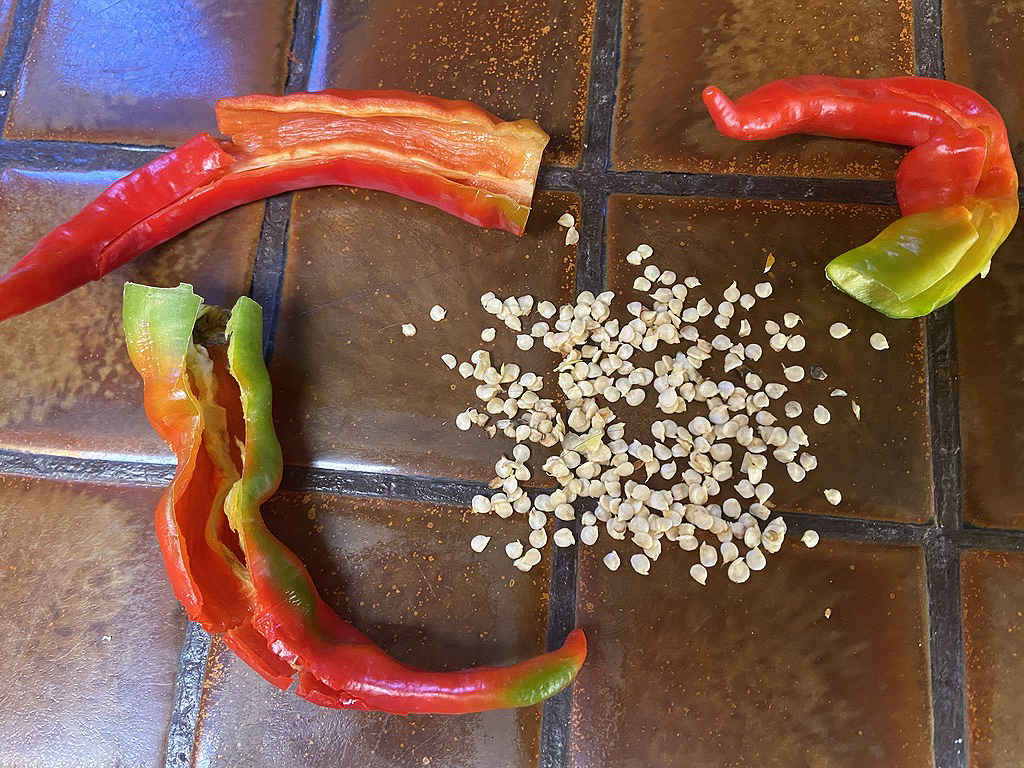
The answer for me was yes. I found some Jimmy Nardello peppers that I grew that were stuck in the back of the refrigerator. My seed stock didn’t germinate last year as it was too old. The nurseries were sold out too. I was lucky that a friend had some extras and gave me some. So, in case I couldn’t buy seeds for next year, I took a couple of those Jimmy peppers, cut them open, and saved the seeds. Pepper seeds are easy to save. You just have to take the seeds out and dry them for a few weeks on a paper towel or wax paper till they are really dry-you don’t have to do anything special to save them except keep them from blowing away. Then store in plastic baggie, envelope or some other container.


Beans are another easy crop to save. I’ve saved both green and dry bean varieties. What’s the difference when saving those two? Nothing! I still have to wait til they dry in the pod before taking the seeds. I have some Di Casalbuono Panzariedd dry beans that I shelled (see picture above) and now they are in glass jars, just waiting to go into that Instapot this winter.

I also have one Waltham butternut winter squash left. I can save the seeds from it once I cut into it. They are a little more messy as you have to remove the stringy stuff and the seeds are a bit slimy but I will wash the seed slime off and then let them dry out on wax paper before storing.

So besides saving seeds from some vegetables you grew (that you liked), I feel it’s important for us to save seeds for future growers and to continue vegetable varieties. Who knows, maybe you’ll discover a new variation of a variety. If the world ran out of seeds, we’d all get hungry pretty quick.

I also noticed that the price of many seeds seem to be higher this year in the seed catalogues which is another good reason to save your own seeds.

Remember to only save heirloom or open-polinated vegetables as hybrids will not grow out true to the same variety. Could you grow a hybrid seed? Of course, but you just wouldn’t know what it might turn out to be.

I know it might be too late for many of you this year but start to think about saving seeds in the future. This CV, if nothing else, shows us we can’t take much for granted. Save seeds-save money.