Santa Fe Garden Club Lecture


Today I did a 2 hour lecture on starting tomatoes from seeds for the Santa Fe Garden Club. I explained how to start the seeds, how to transplant them into bigger pots, what ingredients I use in each potting hole when planting outside and much more. Then they planted some of their own seeds. Nice class. Nice people. I am going to start my tomatoes inside on March 25.

Attached are the lecture handouts from the class for those who requested them:

STARTING TOMATO SEEDS INSIDE

2018 TOMATO INFORMATION SHEET

2018 Tomato Growing 101 Class

Not much time left before the first class!

TOMATO GROWING 101-Season Long Course—starts Mar 25-Aug 5

Do you want to learn how to grow great heirloom tomatoes organically from start to finish? Think of the money you can save by learning to grow your own heirloom tomatoes from seed. Plus you can try new varieties that are not sold in the nurseries.

These hands-on classes will emphasis learning how to grow tomatoes successfully throughout the season. Participants will learn how to grow tomatoes from their seeds, what starting mix to use, what soil to transplant in, how to handle the delicate seedlings when transplanting up, how to produce sturdy plants. Lighting systems will be discussed and your seedlings will stay under lights at my farm under my care until time to plant outside when you will take your plants home to plant outside in your garden.

All planting materials, seeds, soil, amendments and pots supplied while growing them at the farm. Class participants will get a workbook with printed material added at each class to help them be successful throughout this growing season and as a reference for years to come. Students will get hands-on experience by planting to gain confidence and will come back to learn how to prune them, make compost tea, how to identify diseases and pests and how to control them.

Participants must sign up for all classes at once. Course payable at sign up for a total of $150. Class size is limited-10 students max. This takes a commitment. No partial classes.

____________________________________________

To register for the class is an easy two-step process:

1. Fill out the CONTACT FORM below and hit the submit button. Then to pay:

2. TO PAY: click the PAY PAL button (below the contact form). You don’t need to have a paypal account.  They will process credit cards too.

Step 1: Fill out this CONTACT FORM:

Name(required)
(required)
Phone(required)

Step 2: TO PAY: Purchase all 6 classes for $150 here

Buy Now Button
____________________________________________

HERE IS A PDF OF THE SCHEDULE BELOW. PUT THIS SCHEDULE IN YOUR CALENDAR AND PRINT IT SO YOUR DON’T FORGET!

2018_TOMATO GROWING 101 CLASS SCHEDULE

____________________________________________

Review the class schedule:

2018 TOMATO GROWING 101 CLASS SCHEDULE

Section 1
HANDS-ON LEARNING OF HOW TO START TOMATO SEEDS/CARING OF THE YOUNG SEEDLINGS AND TRANSPLANTING UP/PREPARING SOIL IN GARDEN

Class 1 
Sunday, March 25nd—10 am to 12 noon

Learn how and why to plant tomato seeds/how to pick your varieties, what soil medium to use, learn about germination troubles and how to avoid them/hands-on planting your seeds

Class 2
Sunday, April 15th—10 am to 12 noon

Transplanting up to 4” pots/changing the type of soil, adding amendments for great the sturdiest stems, how to deal with transplant shock and learning how to maintain your plants.

______________

Section 2
LEARN HOW TO TRANSPLANT THE TOMATO PLANTS OUTSIDE IN THE GARDEN /LEARNING ABOUT SOIL AMENDMENTS/TAKING YOUR PLANTS HOME

Class 3
Sunday, May 6th—10 am to 12 noon

Participants will learn how to transplant their tomato plants out in the garden, how to prepare planting hole and what amendments to add when planting for better growth of tomatoes. Discussion and demo of how to use wall-of-waters (WOW) and how to set them up properly. After learning how to do all this, students will take home their plants to be planted in their own garden.

___________________

Section 3
THEY’RE IN THE GROUND, NOW WHAT?
THE NEXT STEPS FOR TOMATO GROWING SUCCESS

Class 4
Sunday, June 3th—10 am to 12 noon

HANDS-ON: Participants will learn how and when to remove wall of waters, how to control leafhoppers, learn about tomato cages-what works and doesn’t work, saving water by mulching and using a drip system, using organic fertilizers, using row cover as protection.

Class 5
Sunday, July 15—10 am to 12 noon

Removing row cover. Trimming and pruning your tomato plants, the pros and cons of sucker control and how to remove them. Learn to make compost tea. Identifying beginning problems, which organic fungicides and insecticides to use as the season goes on if needed.

__________________

Section 4
MAINTAINING YOUR PLANTS-PRUNING TECHNIQUES, IDENTIFYING AND CONTROLLING DISEASES AND PESTS AND HARVESTING

Class 6
Sunday, August 5th—10 am to 12 noon

Participants will continue learning how to maintain their plants, more pruning techniques, harvest techniques, and identify tomato diseases and pests and how to control them organically.

Dwarf Tomato Project Trials

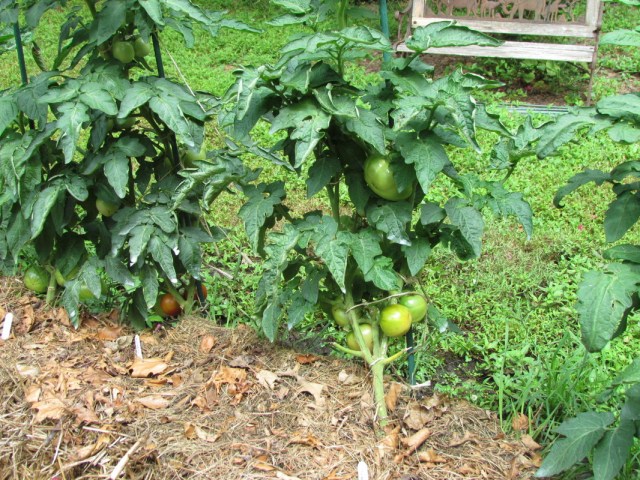
One of the things I’ll do in the garden this year is I’ve been invited to become involved in the Dwarf Tomato Project trials. They needed some tomato growers in the US to grow out some of their tomatoes from seeds from their project and keep detailed info on how they do in our short growing season. These are open-pollinated tomatoes that are not released to the public yet as they need to stabilize these new tomato varieties before they get released.

I became interested because  Craig Lehouiller, a tomato grower who wrote the book, Epic Tomato and created the Purple Cherokee tomato, is in charge of the project here in the Northern Hemisphere. Someone else is in charge of the Southern Hemisphere down in Australia. They gave me 3 different cherry tomato seed packets to grow for this season.

Dwarf tomatoes are not determinate tomato plants but are indeterminate tomato plants that stay shorter but the tomatoes are not necessarily smaller, just the plant. I thought this would be a good for people who have a limited space or maybe just a patio. They can be grown in the ground or even in five gallon pots. And you won’t need a huge cage. Many are created with crosses from tomatoes I love, like Brandywine with another variety.

In addition to trialing these tomatoes,  I also got some of his already released dwarf tomato seeds (about 20 varieties have been released so far) that I bought from Victory Seeds. I am anxious how they will grow and taste too. Stayed tuned when I report back about how this project develops. Very excited!

Watering in early spring- how much in a greenhouse, hoop tunnel, or cold frame?

Just got a great question from the earlier post. How much do I water in winter-early spring in my greenhouse? Not very much. Since I don’t have the drip systems on and I don’t want to empty hoses that might freeze, I fill up 5 gal buckets, leave them inside the GH and then fill up my watering can from them and water the plants. Five gal buckets are kinda heavy for me (40 lbs) so I prefer to transfer the water to a watering can. Or just fill up a watering can from your house and refill as needed. The only problem is my greenhouse is too far from my house to keep refilling a watering can from the house. Notice the white row cover on the side, ready to go back on the greens tonight when it gets cold.

This time of year is called the ‘shoulder season’—not quite winter and not quite spring-with extreme temperature swings from day to night. There is no set formula for watering because one day the temperature can be 60°F and the next day in the 40’s°F or even 30’s°F. Same with nighttime temperatures.  Or you structure might really heat up in the day if you forget to open the doors or plastic on the ends or open the cold frame. So there are lots of variables that will affect how much to water. I really watch the plants and the soil in regards to watering when I have to do it by hand. Does the soil appear damp after your last watering even though its been maybe 4-5 days? Don’t water. Do the plants look like they need water? Are they looking stressed? Wilted? Water! The cooler it is, the less you have to water. I don’t water till the soil FEELS dry when I put my finger in it around a plant. But I can tell you this, you will be watering much less than in the heat of summer.


Greens in the Green House!

So my greens made it through the worst of winter (I hope) and have really started to kick in growing. They went on hold (stopped growing) from around Thanksgiving to mid-January when we had less than 10 hours of daylight. But since then the daylight hours keep increasing daily which is a signal for the plants to grow again in earnest. In case you are wondering when I planted all this, I planted the carrots, arugula and spinach last September inside the greenhouse, and the red and green lettuces I started from seed under grow lights inside my house on January 2nd and then were put out in the greenhouse in early February.

To keep the greens from freezing in the dead of winter in the greenhouse which is unheated, I’ve cover them with one layer of winter weight row cover every night and on some really cold nights (when temperatures got down to 14-17° F), I put two rows of row cover over them. One night the lettuce actually froze. But I read in Elliot Coleman’s Winter Harvest Handbook that if you don’t harvest it when it’s frozen, it may be fine by the afternoon when it warms up and sure enuf, it thawed out and is still growing great. You just can’t harvest it when it’s in a frozen state.

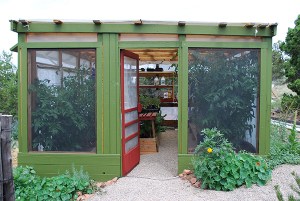
My Greenhouse a few summers ago

In the greenhouse are some carrots which aren’t very big yet (about the size of a pencil in circumference) some green and red lettuces, arugula and spinach, all of which will be harvested before the Green House (a play on the word greenhouse since my greenhouse was painted green) gets too hot. In fact when the day temperatures reach the 50’s, I put fans on to blow the heat out of the greenhouse.


Pray for heat, girls!

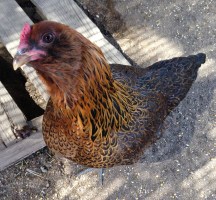
You see, I don’t worry about it being too cold but worry about it getting too HOT which will cause the lettuces and spinach to bolt (make flowers) which will cause it all to go bitter and then it is only good for our chickens who don’t seem to mind the bitterness at all. In fact I think they pray for the heat!

Looks like some of the lettuce and spinach are now big enough to pick the outer leaves while leaving the inner leaves to continue to grow. And a big bonus for me is to see so much green now already at the start of March! I love going into the greenhouse right now. Refreshing when the outdoor plants are still sleeping…