Garden almost in…

So I hope you all have been busy planting in May and now in June. I just took the last wall of waters (WOWs) off the tomatoes as it is going to get very hot mid week and I didn’t want to fry them inside the WOWs. So I recommend you take them off as soon as possible, if you haven’t already. Typical of our weather, our outside temps go from cool to HOT very fast in June.

cool season crops

I previously planted cabbage, cauliflower, broccoli, chard, beets, carrots and radishes-all in one bed. I call it my ‘cool season’ crops bed. The french breakfast radishes we harvested yesterday but still have watermelon radishes (my favorite) almost ready to harvest. That bed has been covered in row cover to keep it cooler.

All lettuces/spinach have been harvested in the green house and the green house is now shut down for summer as it gets too hot in there. Since we had such a cool spring, they lasted much longer than I expected. A bumper crop of lettuce!

tomato cages covered with row cover.

I also covered my tomato plants with row cover around their cages to keep the beet leafhopper from biting the plants, giving them Curly Top Virus and killing them. It’s an extra step but well worth it.

I will take off the row cover when the monsoons come-usually the week after July 4 although weatherpeople say maybe the monsoons will come June 15-hopefully we will get them this year. There are tons of pics on this site of how I cover them. Go to the tomato section on the right side of the blog under vegetables.

pepper

I put my peppers in their raised bed last Friday 05-31-24 and put row cover over their frame to keep them warmer when nighttime temps drop.

I also planted seeds for all flowers in May and beans, cucumbers and summer squash this week-june 5. Winter squash seeds will go in by the weekend as soon as I finish pulling a few weeds and adding lots of compost to a newer bed as squash loves aged compost.
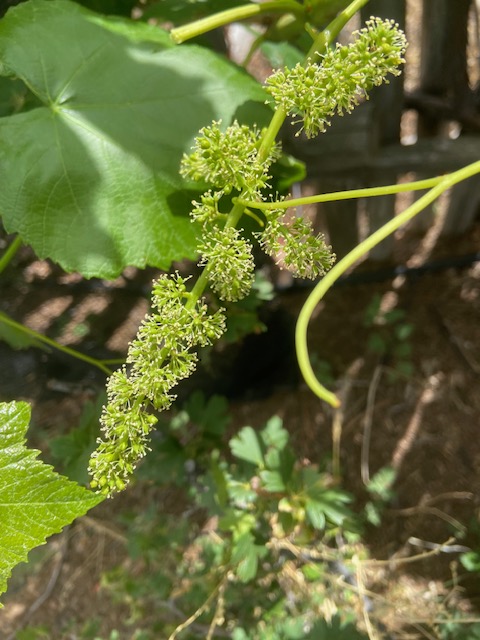
grape flowers
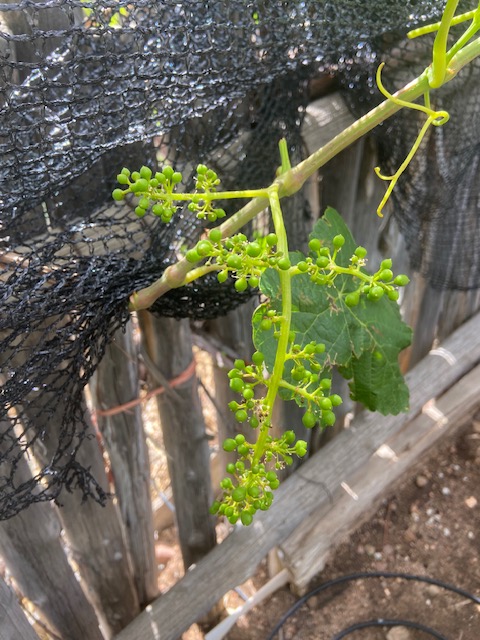
grapes forming

Meanwhile the grapes have their flowers and baby grapes started, blackberries and raspberries are growing but no fruit yet (too early) but we did get our first strawberries of this season this week-just a handful but tons more on the way. They are June bearing strawberries. I transplanted my rhubarb in early May as it was in too much shade so don’t know if I’ll get any of that this year.

The garlic and shallots I planted last fall should be ready this month to harvest.

Although only the flower seeds have germinated, all beans and cukes should germinate by next week. and the squash the week after. I can already see them in my mind’s eye…
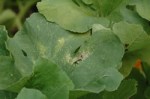
More on squash bugs..

Squash bugs are around my squash and pumpkins right now. I go out AT LEAST ONE TIME A WEEK and go hunting for adults, nymphs and eggs. I know the ADULTS LIKE TO HIDE DOWN AT THE BASE OF THE PLANT or underneath the leaves. I take the hose and spray the whole plant and at particularly at the base which is covered in straw. The adults come running up the stems of the leaves to escape the water. Then I pick them off with my hand. I hate handling bugs barehanded so I use gardening gloves. I either squish them on the ground or put them in a bucket of soapy water where the adults drown.  No mercy.

I then look at EACH LEAF of the plant to see if there are any EGGS ON THE UNDERNEATH SIDE OF THE LEAVES, usually in the “v” where the veins form. If I find them, I either tear off the whole leaf (if I have a lot of leaves) or I tear out just the section that has the eggs and put them is a bucket of soapy water where they will smother. THE EGGS WILL BE DARK LIKE ROOTBEER WHEN THEY ARE READY TO HATCH, so get them EARLY.

I also look for the GRAY NYMPHS WHICH ARE USUALLY UNDERNEATH THE LEAVES OR ON THE STEMS. If I find a few I squish them. If I find a lot, I take the whole leaf off because they are fast and I can get them all. Then I put them in the soapy water.

Squash bugs go from EGGS TO NYMPHS IN 7-10 DAYS, so we should look for eggs about every 7 days to catch them from turning into nymphs. I do this on the weekend when I have more time. The squash bug PRODUCES ONE NEW GENERATION EACH YEAR but of course if each squash bug lays 15 eggs on each leaf they chose to deposit their eggs on, then all those newly hatched nymphs will lay more-but not this year. The nymphs will grow into adults this year but will not lay eggs. They will overwinter and lay their eggs next year.

So my thinking is if you get the adults now and the eggs now, then next year you should have way less squash bugs (I’m assuming we might miss a few) and of course if we get them all, in theory we should have none next year.

I keep my plants covered early in the season with row cover until they flower but now that they are flowering, I must uncover them so the bees can pollinate them. The key is to be REALLY DILIGENT ABOUT FINDING THEM BEFORE THE EGGS HATCH. After they hatch you can easily be overcome by the nymphs. Most people don’t keep up on the inspections and then the problem magnifies tenfold-so keep up on them. The hunt is on!

Some people spray Sevin on the plants. I prefer to go organically, so if I get a major problem, I would use Neem which is somewhat helpful but picking them off is the best way to control them.

All pictures courtesy of University of Minnesota. For more info on squash bugs, go to their site:  http://www.extension.umn.edu/distribution/horticulture/M1208.html