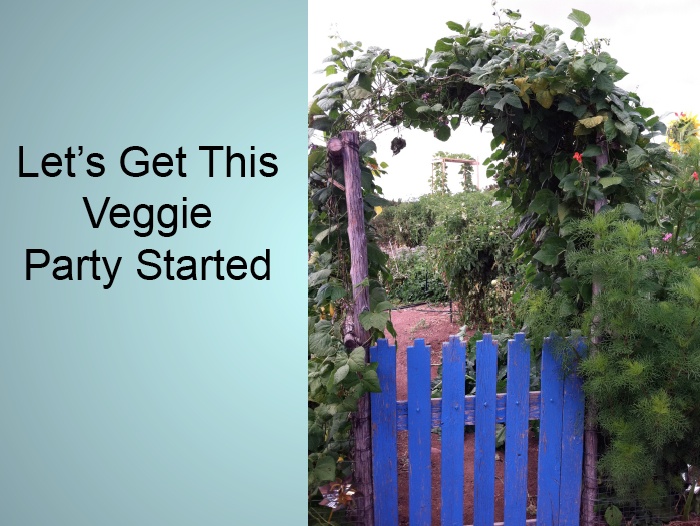
Every year for the past few years, I film my veggie garden usually in the fall when harvesting slows down. The garden won’t be at it’s prime but it’s when I’m not so headless. Next year I will try to film it in it’s prime. I like to see it in the winter to inspire me as to what might be for next season, to see a little green, dream about next year’s garden and refresh my brain as to how it looked. Of course every year is different which is actually exciting.
In the garden everything did well except the tomatoes. The flowers were especially wonderful and for the first time in many years, I got lots of carrots. I attribute that to the rain we had this summer.
This year after looking at the film again, I noticed how much Early Blight infected my tomato plants. Usually I start spraying the plants with Copper fungicide (use to spray with Serenade which is no longer available) early before I see it as a preventative but this year I got behind because I had Covid for 20 days and never really caught up. This is a good lesson for me especially if we have a rainy growing season like we did this year. Rain exacerbates Early Blight with it’s humidity and moisture. Early Blight can hit our tomato plants when water splashes up from the ground onto the lower leaves. Early Blight spores live in the ground and when they splash up on the lower leaves, they colonize and spread upwards. If you want to know more on Early blight on my website, go here: giantveggiegardener.
Happy planning for next year-Hope you enjoy this video!
With all that blessed rain comes new problems for veggie gardeners-mainly fungal diseases are on the rise.
WOW! This has been a great monsoon season this year. Last year we had 2 tiny monsoon storms and then they disappeared and we went into an extreme drought. This year, we have gotten more rain than I can remember in many years. Every week we get a significant amount of rain and 2 weeks ago we got 2.5 inches of rain in 1.5 hours. It was torrential. Those of us on the southeast side of Santa Fe have gotten most of the rain while those on the west side of town haven’t gotten much.
TOMATOES-EARLY BLIGHT: I already trimmed the tomato plants so no leaves touch the ground, put straw around each plant so no dirt is showing, but I still have started to see Early Blight (EB) on a few of the tomato plants. Early Blight fungal spores live in the ground and when rain splashes the dirt up on the lower leaves, the fungal spores start to colonize on the lower underside of the leaves. They become blotchy with the lower leaves getting big yellow splotchy areas. This is Early Blight. Without doing anything, it will spread upwards and go up through the plant and eventually kill it. But we can control it. I use to use Serenade, a biological fungicide that has other micro-organisms that colonize on those leaves and crowds out the EB spores. But now we can’t get Serenade anymore. I don’t know why but can’t find it anywhere. So I’ve turned to 2 other products. One is called Cease, which has the same ingredients as Serenade but is way more expensive and the other is Copper Fungicide which has copper in it which helps suppress the EB disease but you shouldn’t spray the soil as it can affect the earthworms-keep it on the foliage.
The way to control it is: trim off all lower branches that show signs of EB. Be sure to dip your cutters in a solution of 10% bleach to water. I just put a little in a small container of water and dip the shears and your hand into it BEFORE moving to the next plant. EB is contagious between plants so disinfecting your cutters between plants will make sure you don’t spread it.
SQUASH-POWDERY MILDEW: Another fungal disease on squash and pumpkin plants is Powdery Mildew. If your leaves start to die and get a powder on them, you should spray them on top and underside of leaves with a fungicide. Again copper fungicide, Neem, Baking soda/water mix, GreenCure. My favorite IS Green Cure as it works pretty fast. Spray any of the affected plants at 2-3 times with any o the above to get rid of it.
OTHER PROBLEMS
TOMATO-BLOSSOM END ROT: There are other problems arising from too much rain (is that possible out here in the southwest?!) Tomato blossom rot is from too much water, or uneven watering or not enough calcium in the soil (leached out because of too much rain). It is not a fungal disease but rather a deficiency of calcium in the tomato. It appears on the bottom of the tomato and is a sunken brown lesion. You can cut it out and eat the rest of the tomato if the whole fruit is not impacted.
Keeping the soil evenly moist helps. If we get a big rain, turn off your drip system for a day or two. You can also do a foliar spray on the plants with a kelp (seaweed) solution. But usually it will correct itself thru time. Adding calcium in the form of bone meal, oyster shell powder or gypsum — to the soil when you plant usually helps prevent this problem from developing.
Powdery mildew has appeared on my squashes-both winter squash and summer squash. Powdery Mildew is a fungal disease that affects many plants from roses to squashes. Infected plants display white powdery spots on the leaves and stems that eventually will cover the leaves of the plants if left untouched. Powdery Mildew grows well when the monsoons come into Santa Fe. The higher humidity and moderate temperatures are idea for powdery mildew. Also how we manage our gardens can cause it to go rampant. For instance, I planted my winter squash too close to some other plants essentially crowding them. Plus fearing a hail storm this summer, I covered it with some hoops and row cover, holding the heat and humidity underneath creating a perfect environment for powdery mildew. It usually shows up in late August through September.
Controlling it depends on when we catch it. If we let it go too far, it will destroy the plant in which case we should pull the plant and destroy or bag it for refuse. Do not put it in you compost pile and spread the disease around. If it has just started, indicated by the white spots on the leaves, you can spray it with a fungal disease spray like Green Cure. Green Cure is my favorite spray for Powdery Mildew as it is quite effective in halting its progress but you will have to spray it 2-3 times depending on how advanced it is on the plant. We should jump on it as soon as we see it and not wait till it gets out of hand.
Wednesday we got two huge storms where hail was between the size of quarters and ping-pong balls in some places. I’ve never seen hail that big here in Santa Fe. Sorry for the blurry picture but our hands were shaking! Lots of damage was done in many people’s gardens, destroying or severely damaging many vegetables and fruits. Whole leaves were torn off or plants shredded. Most of mine were spared as I had the vegetable plants covered with row cover, and it took the hit instead of the plants.
Believe it or not some plants will come back and be ok for those of you hit hard. We will be a couple of weeks behind but the season is not necessarily over. Check your plants and if the center of it where new growth comes from is intact, it will probably grow back so don’t be so quick to pull it. I will wait for about a week to see if they show signs of new growth. If they do, I will trim back the damaged foliage but not before. Remember their root systems were not hurt so they have a good chance to recover.
Meanwhile I would spray a fungicide on them as they are weakened and more susceptible to disease, especially fungal diseases like early blight and powdery mildew with all this wet weather. You could use Neem, OR Copper spray OR Serenade to help ward off fungal diseases. All are organic.
I’ve been totally busy teaching classes lately and the last class I taught was the Santa Fe Master Gardener Intern Class on Vegetables. All I can say to the interns is hang in there. Yes there are some difficult classes to get through but there are some great instructional classes as well that are like a breath of fresh air. It wasn’t till I became a Master Gardener that I really blossomed as a gardener. And now I am a rabid gardener! The knowledge you will continue to gain afterwards, the contacts, camaraderie and friendships you will develop will help you grow as well as the plants you will be growing! Hopefully you enjoyed and learned a lot from the Vegetable class. (Yes it was my favorite class when I was an intern!) So for those of you who couldn’t come to class or aren’t in the program but are interested, here are the information sheets. I want to make them available to all.
INFORMATION SHEETcovers what the differences are between an Heirloom, Hybrid and GMO plant and explains what mycorrhizae fungi is and how it helps plants grow.
HERBSis a list of perennial and annual herbs we can grow here in Santa Fe.
PLANTING TOMATOESandPLANTING SQUASHboth address how to transplant them into the garden and some of the things I add to help grow these beautiful vegetables and also how to help thwart the dreaded squash vine borer and squash bugs.
SEED STARTING DATE CALCULATORfromJohnny’s Seedsis the same one from the previous post but if you didn’t read it, then here it is. A great tool for when to start seeds or transplant them into the garden.
And now if you will excuse me, I will continue starting my seeds inside! Perfect day-cold, windy and snowy!
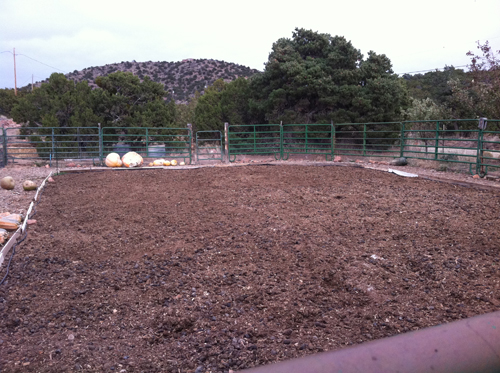
I’ve been really busy this fall around the garden since the Pumpkin Bash. It seems like I never have time to do any projects when the garden is going so I try and get some of the projects done in the fall before the dead of winter. Last week cleaned out the pumpkin patch and then I rented that Bobcat where I spread out about 4 yards of horse manure on top of it. I really needed to dig it in or it would blow away before spring.
giant rototiller-16 hp
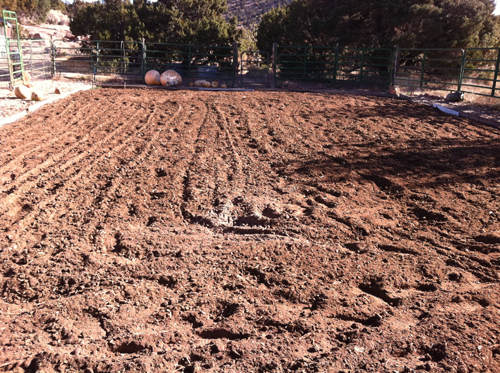
So yesterday I rented a giant rototiller (16 hp) and plowed in the 4 yards of manure, 50 lbs dried molasses (it smells so sweet), 50 lbs mushroom compost (are we cooking here?), and 50 lbs of gypsum (for calcium-makes strong bones, I mean strong plants!) in the pumpkin patch.
final pumpkin patch done
Now it looks so beautiful and is ALMOST ready for next spring! I still have to dig in some leaves (in the holes where I will be planting the pumpkin plants next spring) and a little (I mean very little) composted chicken manure to start the decomposition process so they can decompose over the winter and become leaf mold or should I say leaf gold by spring. This will be the third year for this pumpkin patch and boy what a difference three years makes when you add amendments each year. It’s starting to look good and the rototiller just cut through it fluffing it up together. I don’t like to rototill very much because of how hard it is on the soil microbes but felt that I needed to do it for now since this dirt was so void of any organic material and hard as a rock. I think after this year I’ll won’t have to do it again. I will add more mychorrizial next spring to help replenish the soil microbes.
Someone just wrote me if I knew a source for Mycorrhizal (also called Mycorrhizae) products here in Santa Fe. So I thought I’d respond in a post in more detail as well as reply to him in the comment sections.
Mycorrhizal is a fungi that help protects plants from many diseases and drought like conditions. It forms a symbiotic relationship with the roots, making water and soil mineral nutrients more available to the roots of a plant while the plant feeds the mycorrhizae sugars it produces. It is found in nature in most UNDISTURBED soils. Gardens do not have undisturbed soil- we work the soil to various degrees adding amendments and tilling soil.
There are two main types of Mycorrhizal.
ECTOMycorrhizal works on more woody crops like trees. I don’t use it myself on my trees.
ENDOmycorrhizal works for most (90%) but not all vegetable crops (some crops do not respond to any Mycorrhizal like Brassica crops, spinach and beet crops). I used myco products for both my giant pumpkins and tomatoes in previous years but will also try it on all my curcubit crops this year as well as they seem to get the most diseases and the prices seem to be coming down on mycorrhizal products as it starts to become mainstream.
I just saw that Santa Fe Greenhouse has some Mycorizzial products. I bought ‘BUSHDOCTOR MICROBE BREW’ (by Foxfarm products) from SFGH and will try it this year. It is a liquid. It says on the directions to use 2 tsp/gal of water every 2 weeks as a drench. I think a bottle would last the whole gardening season for most people. I can’t remember what it cost (I bought it a month ago), but didn’t seem like it was exorbitant. I use to have to order myco on the internet so I’m anxious to see how it works. The Microbe Brew also has a bunch of soil bacteria and microbes in it besides the Mycorrhizal that will be good for the soil and plants as well. All these things help the plants either protect or fight off diseases-all organically.



 giantveggiegardener