Winter Solstice This Saturday, Dec 21

Photo courtesy of agwaycapecod.com

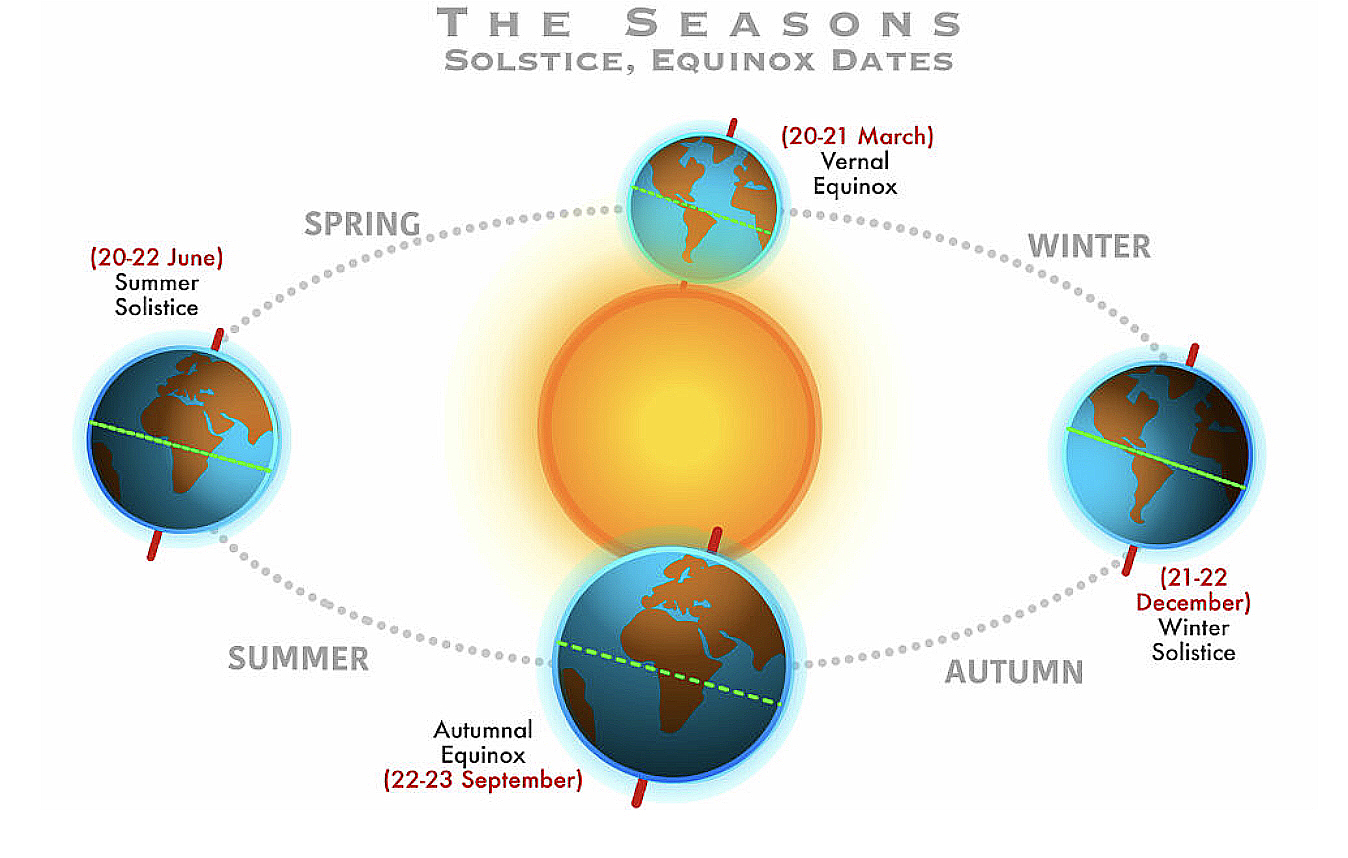
Winter Solstice is upon us here in the Northern Hemisphere occurring on this Saturday, December 21 at 2:21 am MT in 2024. It is the shortest day and longest night of year in the Northern Hemisphere.

It will be Winter Solstice here in the Northern Hemisphere and is reverse in the Southern Hemisphere (summer).

The Earth’s has a tilt of 23.5 degrees off vertical axis (vertical would be from North Pole to South Pole.) This gives us our seasons. In the winter the sun is furthest away from us here in the Northern Hemisphere and in the summer (Summer Solstice) it is closest to us as as the earth is tilted either away or towards the sun. The sun still rises in the east and sets in the west, it’s the angle that changes.

The most direct sunlight shifts between a band of latitudes, specifically between the Tropic of Cancer and Tropical of Capricorn, throughout the year, with it closest to the Tropic of Capricorn on Winter Solstice.

Here in Santa Fe, as a gardener, I always notice how far south the sun is in winter and how far north the sun is in the summer. This orientation affects how and where we plant our crops. And although most of us are not growing crops in the winter, it is good to note where the sun is for us.

We have a passive solar home where the sun comes in our southern windows all winter, heating our tile floors and providing extra warmth but in the summer the angle of the sun shifts north, shining in our north facing window and the south side of the home stays cooler not receiving any sun on our floors.

Many countries have celebrations surrounding Winter Solstice.

Pagan Traditions

Pagan traditions in parts of Europe celebrated the solstice through gatherings like the Germanic Yuletide, where the Wild Hunt was believed to roam the skies. Scandinavians honored the Norse god Odin during the festival of Jul (Yule).

Indigenous Traditions

Indigenous cultures, such as the Inuit and various Native American tribes, had ceremonies and rituals tied to the solstice. These often involved storytelling, drumming, and ceremonies to honor the change of seasons and the renewal of life.

While it’s dark, the day also marks the “returning of the sun,” and many celebrate the day as a symbolic time of rebirth or a time to celebrate light.

I look forward to longer daylight and use this time to rejuvenate myself and reflect on my gardens and plan the new gardening season.

Part of this post regarding the photo and traditions courtesy of agwaycapecod.com.
 

Glass Gem corn experiment

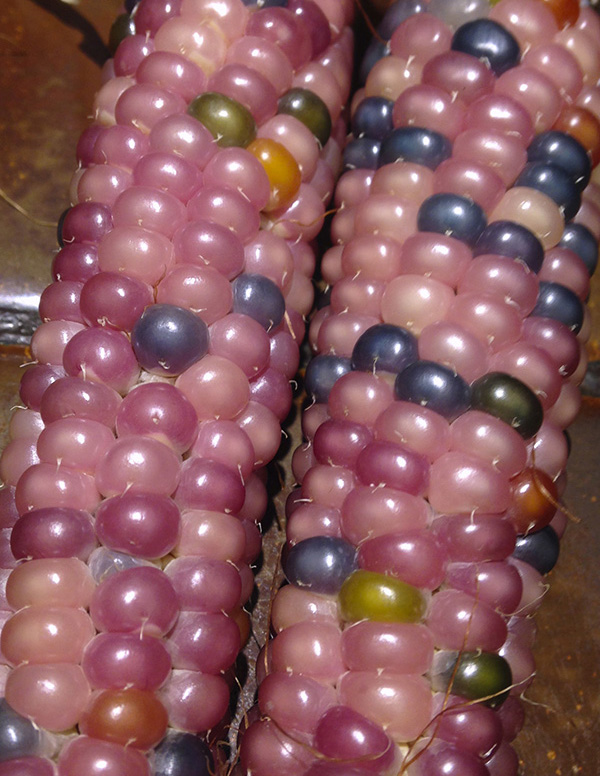
Glass Gem corn 1

I like to do experiments in the garden and try different things. Last year I grew for the first time Glass Gem corn which you can read about in my post Glass Gem corn. When I harvested it at the end of the 2014 season, I got fantastic colors when I picked it. It truly is a special corn. But of all the many ears of corn with different colors, I got only little 2 ears of a gorgeous pink color which was like no other. I saved the pink kernels and cataloged all the colors i harvested which you can see in my post, Glass Gem corn colors. It was the only corn I grew and no neighbors grew corn so I feel reasonably certain that it is pure. This year in 2015, I decided to grow out those pink kernels and only them. I wanted to see if I would get more pink ones. Now since all the glass gem corn cross-pollinated with themselves, one would think I might get a great mix of colors this year again with such a big genetic pool, but not so.

glass gem corn ears pink

The majority of the corn was pink! Out of those 2 ears of pink corn (didn’t plant all the kernels), I got 27 ears of corn this year. I got 18 pink (3 not shown). That’s 66%. The pinks were in many different shades of pink as well.

glass gem corn ears mixed

I also got 6 mixed colors with very little pink if any and 3 more that were predominantly pink but had some purple in them too. If you include the other predominately pink ones as well, then that would be 77% of the corn I planted was in the pink family. That astonished me.

So what would happen if I planted the pink that I got this year for next year? Would I then gt 100% pink? Probably not. I think I would have to keep growing it out for about 5 years to keep eliminating any other color genes but it was a great experiment. Now there is something to be said about maintaining diversity. It tends to make stronger strains but I just might try it again next year in 2016 from this year’s corn and see what happens!

UV light – bees – and gardening

UV morning glory folded

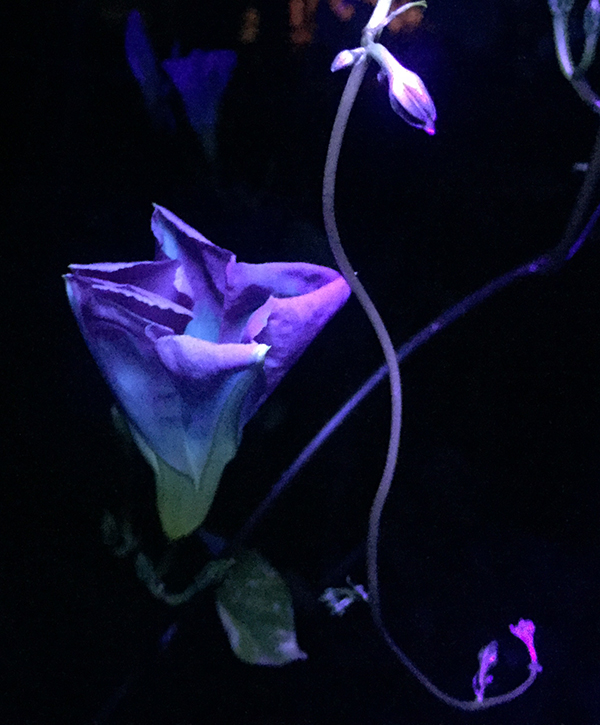
UV light on a folded morning glory

Being a beekeeper, I’ve been fascinated that bees can see a broader spectrum of light than we can see with our eyes. Bees can see ultraviolet (UV) light and always wondered how flowers might look to them with their UV vision and why they like certain flowers. I read that some flowers have UV colored runways that attract bees and other insects to land on them and lead them toward the pollen and nectar in the center of the plant. This was created by the flowers to help with pollination. Ingenious isn’t it?  Mother Nature really knows what she’s doing! We see the sky as blue but bees see the sky as Ultraviolet (UV). What color is ultraviolet? Well, it is the next ‘color’ past violet in the color spectrum. We can see violet but ultraviolet is invisible to us because we don’t have cones in our eyes that can see UV light. As an artist, this is fascinating to me. I would love to be able to put on a pair of glasses (kind of like the glasses we get when we go to the 3_D movies but see UV light instead).

Then I read that one can spot tomato hornworms with a UV light. Ah ha! First I didn’t know that about hornworms and second I didn’t know there are UV portable lights! After investigating UV lights I got a UV flashlight just before the last frost came and ran down that night to see what the flowers looked like in the garden even though most of them were finished. I knew the hornworms were gone by then also so I’ll have to ‘see’ if that is true next year but it makes sense because white really glows with a UV light and the tomato hornworms have some white stripes on them.

This slideshow requires JavaScript.

Anyways there I was holding the flashlight in one hand and trying to take pictures in the other hand in the cold night. There weren’t many flowers left but I got a few and the results were interesting. Some glowed in the UV light and some did not. I can’t wait till next year when the flowers are all out. I will be taking lots of pictures with the UV light. Of course I’m also anxious to see if the flashlight helps spotting the hornworms on the tomato plants!

Check this short video out:
Insecta Spectra
Simulated Butterfly and Bee vision